
REVIEW · FOOD & DRINK
Mustard-Guided Manufaktur Sightseeing, tasting and factory sales
Mustard tours can sound plain, then this one gets weirdly interesting. You’ll see how Quedlinburg mustard ties to a former horse stable setting and how seasoning, smell, and even a medicinal angle all fit together in one guided stop. Then you finish with factory sales you can actually use that day.
I especially like the hands-on feel: you don’t just hear about mustard, you get to taste it and compare yellow and brown varieties. The small group size (up to 25) keeps the experience relaxed, and the table setup includes plenty of space, plus hand disinfection. One consideration: if mustard smell triggers you, or if you have a mustard allergy, this is not the experience for you, and a mask is mandatory.
If you want a focused, practical hour in a real working manufactory, this tour is a good match. It runs on set days, so plan around the time window rather than expecting lots of daily departures.
In This Review
- Key highlights you’ll actually care about
- Former horse stable, real mustard making, not a museum act
- One hour to learn the mustard basics (and the parts people skip)
- The guided manufactory visit: what you’re really gaining
- Tasting yellow versus brown mustard, plus the sensory stuff
- After the tour: factory sales that let you take the lesson home
- Price and value: is $14.82 per person fair?
- Practical timing and location tips in Quedlinburg
- Group size, spacing, and mask rules you should plan for
- What kind of traveler will love this most?
- Who should skip it?
- Should you book the mustard guided tour in Quedlinburg?
- FAQ
- What days and time does the guided mustard tour run?
- How long is the experience?
- Where do I meet for the tour?
- How much does it cost, and how big is the group?
- Do I need to wear a mask, and is it safe if I have a mustard allergy?
- What is the cancellation policy?
Key highlights you’ll actually care about
- Former horse stable production: mustard-making in the former horse stable of the Dippe seed company site
- History plus practical use: mustard framed as both seasoning and remedy
- Guided tasting: you try mustard and get a sense of differences, including yellow versus brown
- Factory sales right after: mustard, chili paste, and herb salt available at the manufactory shop
- Small group feel: max 25 people, with extra attention to spacing and table setup
More forks and glasses around Germany
- Reil, Mosel: Guided organic wine tasting and cellar tour★ 4.8 · 84 reviews
Former horse stable, real mustard making, not a museum act
Walking into the Quedlinburger Senf-Manufakturehemaliger Hof der Dippe-Saatgut AG at Neuer Weg 23, you’re in a place with a built-in story. The tour centers on mustard production in a former horse stable setting, so it already feels more grounded than the usual “look but don’t touch” factory experience.
What makes this location valuable for you is the way it supports the tour’s theme. Instead of presenting mustard as a vague condiment, the space reinforces that this is work, tools, and process, not theater. You’ll be able to connect the history they explain to the physical reality of how mustard is produced there now.
One hour to learn the mustard basics (and the parts people skip)
This is a tight tour, about 1 hour, and it doesn’t waste time. You’ll get an introduction to the history of the Quedlinburg mustard factory, then shift quickly into what mustard is used for beyond table flavor.
The way they frame it matters. You’ll learn about mustard as a seasoning agent, and also as something described with medicinal possibilities. Even if you treat that part as “interesting claims” rather than personal health guidance, it gives you a fuller context for why mustard culture developed the way it did.
You’ll also get sensory talk that you can apply instantly. The tour is set up so you think about taste, smell, and feel, not just names and dates. That makes the tasting feel like a mini lesson with a real outcome.
The guided manufactory visit: what you’re really gaining
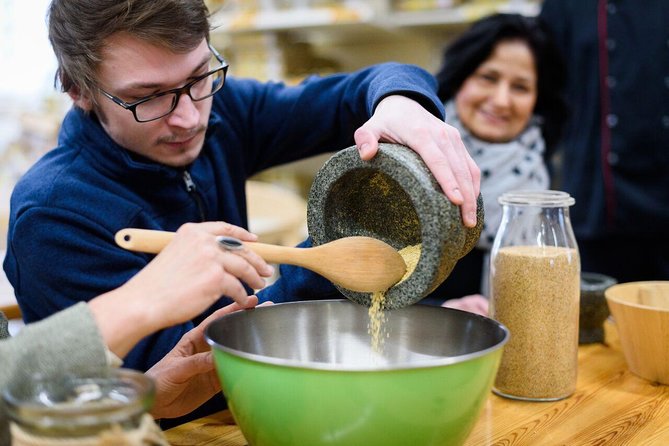
Once the intro is done, you move into the manufactory itself. This is where the tour becomes more than a lecture. You get to see how mustard production happens in that former stable setting, which helps you understand why mustard has such a distinct character compared with other condiments.
Even though the exact step-by-step process isn’t spelled out in the info you get, the point of the visit is still clear. It connects the history and the “why” to the “how,” so you can follow what you’re tasting later. When a tour does this well, tasting stops being random and starts being meaningful.
A practical bonus: you’re not stuck standing in a cramped crowd. The tour notes mention generous table setting for spacing and hand disinfection available on site. For a short experience, that small comfort factor makes a big difference.
Tasting yellow versus brown mustard, plus the sensory stuff
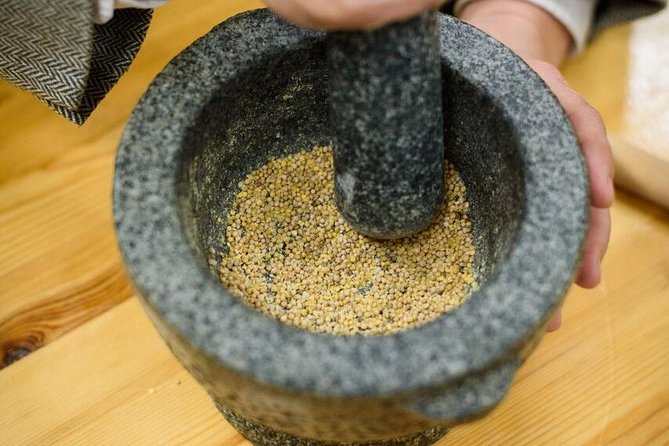
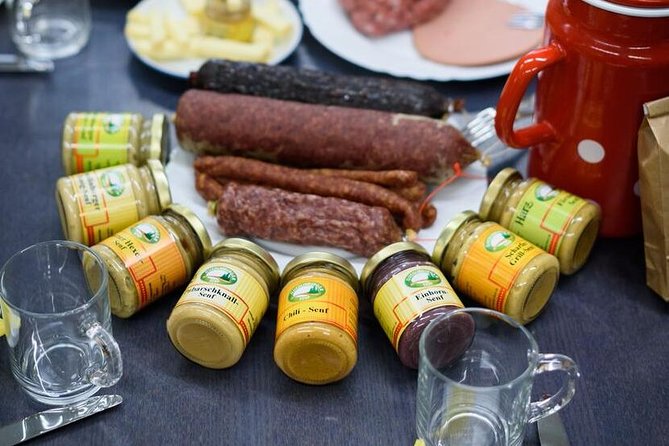
The tasting portion is the heart of the experience. You’ll be guided through trying the mustard fresh, and you’ll also be encouraged to notice differences, including yellow and brown mustard.
This comparison is more useful than it sounds. Yellow mustard often comes across as milder and smoother in flavor, while brown mustard tends to taste deeper and more robust. The tour’s aim is to help you taste those differences and then understand where they make sense in real meals. If you’re the type who always buys the same jar and wonders why it never tastes quite right, this is a fast fix.
The tour also emphasizes sensory experience: smell, feel, and taste. That matters because mustard is one of those foods where aroma is a major part of the flavor. If you pay attention to how it smells before you taste, you’ll likely understand why it hits the palate the way it does.
Important note: mustard allergy sufferers should avoid this tour. Also, if masks are hard for you, keep in mind the tour requires a mouth/nose mask.

After the tour: factory sales that let you take the lesson home
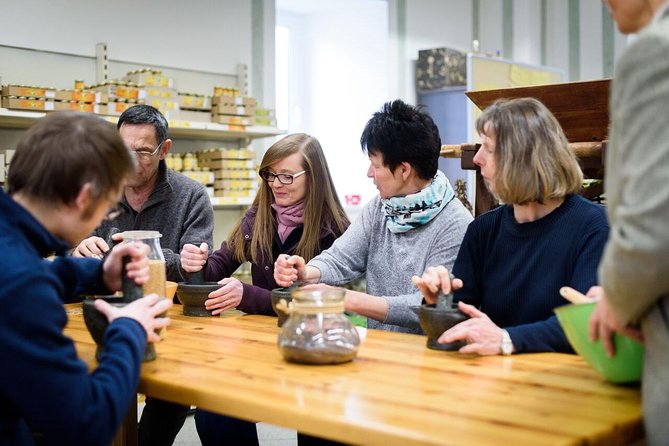
You finish with factory sales of their products: mustard, chili paste, and herb salt. This is not a “tour gift shop” moment where you’re forced to browse. It’s a direct continuation of the tasting, so you can buy what you actually just learned to notice.
For value, I like that the price is tied to an experience, not only shopping access. At about $14.82 per person for roughly an hour, you’re paying for guided history, a manufactory visit, and a tasting, and the sales are a bonus at the end.
Here’s how to turn the sales stop into a smart purchase:
- Decide what you want to use mustard for, like sandwiches, roasted vegetables, or quick sauces
- If you enjoy heat, look at the chili paste option
- If you want flavor with less “mustard tang,” the herb salt can be a practical kitchen staple
Even if you only buy one item, you leave with something you can test at home right away. That gives the tour a payoff that lasts longer than the hour.
Price and value: is $14.82 per person fair?
At $14.82 per person, this sits in the “easy to justify” category for an organized, guided factory experience. You’re paying for several things bundled together: the history intro, the manufactory visit, and the tasting, then the products are available for purchase.
Where this feels like good value is the structure. A lot of similar tours stretch time or focus mostly on retail. Here, the core is a tight guided flow in about an hour, and the tasting directly supports the sales stop after.
Small group size also helps you feel the value. With a maximum of 25 travelers, you’re less likely to get lost in the back row, and the tour description even calls out spacing and distance via table setup.
Practical timing and location tips in Quedlinburg
The tour runs three times a week: Tuesday, Friday, and Saturday at 11:00 am. That means you should build your day around it rather than squeezing it between other plans.
The meeting point is specific: Quedlinburger Senf-Manufakturehemaliger Hof der Dippe-Saatgut AG, Neuer Weg 23, 06484 Quedlinburg, Germany. It also ends back at the meeting point, so you avoid that annoying uncertainty of where you’ll be left after.
It’s near public transportation, which is a nice advantage in a town where walking and short transit connections often make more sense than long rides. If you’re coming from elsewhere in town, you can plan a simple route to this address and then stay nearby after the tour for lunch or shopping.
Group size, spacing, and mask rules you should plan for
This is where I appreciate the clear, practical rules. The tour notes say there’s hand disinfection available and enough distance due to generous table settings. Wearing a mouth/nose mask is mandatory, and they also mention that a service animal is allowed.
For you, that means you’re not guessing what to bring or what the space will feel like. If you’re planning a comfortable visit, bring your mask and be ready to keep it on during the experience.
Also keep in mind the group limit of 25. If you’re traveling in a larger group, you might want to coordinate ahead, since the small max can affect availability on popular days.
What kind of traveler will love this most?
This tour is best for a certain type of curiosity. If you like food with a story, and you’re the sort of person who reads the back label and then actually uses the product, you’ll get a lot out of it.
You’ll also enjoy it if you want an efficient, low-stress way to experience a working food business. The format is straightforward: history intro, manufactory visit, tasting, then shop.
It can be a good choice if you’re short on time in Quedlinburg. With only about an hour, it fits neatly into a day without demanding a half-day commitment.
One more match point: based on the experience’s overall feedback tone, the delivery style is friendly and the atmosphere feels relaxed. The tour focuses on covering the theme in a versatile way, so you’re not stuck with one-note information.
Who should skip it?
Skip it if you have a mustard allergy. This is explicitly stated, so don’t gamble.
Also consider whether the theme might be uncomfortable for you. The tour centers on smell and taste of mustard, and masks are mandatory. If either of those is a problem, you’ll have a harder time enjoying the experience.
Lastly, keep expectations aligned with the format. It is a compact one-hour experience, not an all-day deep factory course.
Should you book the mustard guided tour in Quedlinburg?
Yes, if you want a small-group, food-focused tour that ends with products you can use immediately. I’d book it if you like tasting different mustard styles, want a quick lesson that connects history to everyday flavor, and you enjoy leaving with something practical in your bag.
Don’t book it if mustard allergies apply, or if you strongly dislike mustard smell and taste. Also be aware that you only get set departures (Tue, Fri, Sat at 11:00 am), so timing matters.
If you’re looking for an hour that’s genuinely about mustard and not just a long walk through a shop, this is a strong pick.
FAQ
What days and time does the guided mustard tour run?
The tour and factory sales run three times a week, on Tuesday, Friday, and Saturday at 11:00 am.
How long is the experience?
The tour lasts about 1 hour.
Where do I meet for the tour?
You start at Quedlinburger Senf-Manufakturehemaliger Hof der Dippe-Saatgut AG, Neuer Weg 23, 06484 Quedlinburg, Germany. The activity ends back at the meeting point.
How much does it cost, and how big is the group?
The price is $14.82 per person, and the group size is limited to a maximum of 25 travelers.
Do I need to wear a mask, and is it safe if I have a mustard allergy?
A mouth/nose mask is mandatory, and hand disinfection is available. Mustard allergy sufferers should avoid the tour.
What is the cancellation policy?
Free cancellation is available. You can cancel up to 24 hours in advance for a full refund. Cancel at least 24 hours before the experience start time for the refund.
Plates and Steins in Germany
Everything else we filed on Germany
- Kayak or SUP tour on the water through Saarbrücken
★ 5.0 · 12 reviews - Braunschweig: Alpaca Trekking Tour
★ 4.7 · 14 reviews - 1h Berlin-Cruise with 140 year old electrified steamship
★ 5.0 · 14 reviews - Mustard-Guided Manufaktur Sightseeing, tasting and factory sales
★ 4.5 · 24 reviews - Alpaca hike in the Barnimer Feldmark
★ 5.0 · 34 reviews - Dresden: Paddle Steamer Winter Cruise to Pillnitz
★ 4.5 · 178 reviews
Food & Drink, side by side.
 ★ 4.7Cologne: Brewery Tour with 3 Kölsch Beer TastingsFrom $323,108 reviews
 ★ 4.7Hamburg: St. Pauli Highlights Guided Tour with Beer for 18+From $292,353 reviews
 ★ 4.7Hamburg: Elbphilharmonie Plaza and HafenCity Food TourFrom $691,711 reviews
 ★ 4.5Bavarian Beer and Food Evening Tour in MunichFrom $871,575 reviews
 ★ 4.7Düsseldorf: Brewery Tour with Alt Beer TastingsFrom $321,523 reviews
 ★ 5.0Classic Mike’s Bike Tour daily @ 11.30 incl Beer Garden & SurfersFrom $421,246 reviews
 ★ 5.0Berlin Center Food Tour with 8+ Authentic Local TastingsFrom $1181,227 reviews
 ★ 4.4Düsseldorf: Altbier-Safari Beer Walking TourFrom $431,150 reviews
Other lists this tour is on