
REVIEW · GERMANY
Premiumstadtführung (historische Altstadt und Schlossberg)
Old streets, big stories, and a climb to the Schlossberg. What makes this tour work is the mix of famous landmarks and smaller, character-filled corners, all wrapped into a tight 2-hour walk starting at Quedlinburg’s market square.
I love how close you get to Quedlinburg’s 1100-year arc of life. You’ll pass the town hall area, major churches, and those recognizable half-timbered facades that make the historic center feel human, not staged. One heads-up: the route includes cobblestones and a steeper Schlossberg section, so wear grippy shoes, especially in wet or wintry weather.
In This Review
- Key Highlights at a Glance
- Quedlinburg in Two Hours: Old Town Plus Schlossberg
- Where the Tour Starts: Quedlinburger Marktplatz and the City Information
- Old Town Stops You’ll Actually Remember
- Town Hall Area and Market Square Context
- St. Benedikti and the Church Layering
- Schuhhof and Those Medieval Passages
- Hölle and the Fun of Place Names
- Blasii Church and the Half-Welfare Museum
- Schlossberg: Klopstock-Haus, the Feininger Museum Area, and Stiftskirche St. Servatii
- Klopstock-Haus and Cultural Connections
- Museum Lyonel-Feininger and Creative History
- Schlossgarten and a Breather
- Stiftskirche St. Servatii, But Not Inside
- Half-Timbered Houses: What You’re Really Learning to See
- Famous Personalities and the Story Behind the Names
- Food Recommendations Without Forcing a Meal
- Weather, Cobblestones, and the Schlossberg Reality Check
- Price and Value: Is $10 Fair for Two Hours?
- Who Should Book This Tour (and Who Might Skip It)
- Should You Book Premiumstadtführung: Historische Altstadt und Schlossberg?
- FAQ
- Where does the tour start?
- How long is the Premiumstadtführung tour?
- What language is the guided tour in?
- What is included in the tour?
- Are we allowed inside St. Servatii?
- Does the tour run in bad weather?
- Is the route easy to walk?
- How much does the tour cost?
- Is it free for children?
- Are there refunds and flexible booking options?
Key Highlights at a Glance
- UNESCO World Heritage focus on Quedlinburg’s historic core and Schlossberg
- About 1,100 years of history, told stop by stop instead of dumped as facts
- Half-timbered architecture in lots of styles, not just one postcard view
- Landmarks with names you will remember like Stiftskirche St. Servatii and the town hall area
- A small-feeling group experience that supports questions and back-and-forth with your German-speaking guide
- Kids up to 16 are free, which is rare value for a guided walk
Undecided? The closest Quedlinburg write-ups we have are these.
- Night Watchman Tour through Quedlinburg★ 4.5 · 1,040 reviews
- Quedlinburg: Guided City Highlights Walking Tour★ 4.5 · 353 reviews
- Quedlinburg: Historical Old Town Evening Walking Tour★ 4.5 · 148 reviews
- Quedlinburg UNESCO World Heritage Group Tour (private)★ 4.6 · 32 reviews
Quedlinburg in Two Hours: Old Town Plus Schlossberg
This is a guided walking tour of Quedlinburg’s UNESCO World Heritage Site, with a special emphasis on the historic old town and the surrounding Schlossberg area. The timing is designed for reality: you get a structured route with meaningful stops, but you are not stuck all day.
If you like history you can see, this format is a good match. Instead of only describing how old buildings might have looked centuries ago, your guide points out what is still there today, why it matters, and how the pieces connect across the centuries. The result is a “you can walk it” education.
The price, listed as $10 per person, also makes it easier to justify. In many places, a two-hour guided walk costs noticeably more, and you often get less than a full loop of key sights. Here you cover both the market square cluster and the Schlossberg viewpoints and landmarks.
Where the Tour Starts: Quedlinburger Marktplatz and the City Information
You begin directly at the Quedlinburg city information on Quedlinburger Marktplatz. Look for the city info sign in green. At the agreed time, you will meet your guide there and show your ticket.
This matters more than it sounds. When a tour starts on the right square, you avoid “where do we go first?” confusion and you can settle into the walking rhythm fast. From the market square, Quedlinburg’s historic core feels close and readable, which helps when the tour starts pointing out buildings you might otherwise miss.
If you arrive early, take a moment to scan the immediate area so street names and landmarks make sense when your guide starts connecting them.
Old Town Stops You’ll Actually Remember
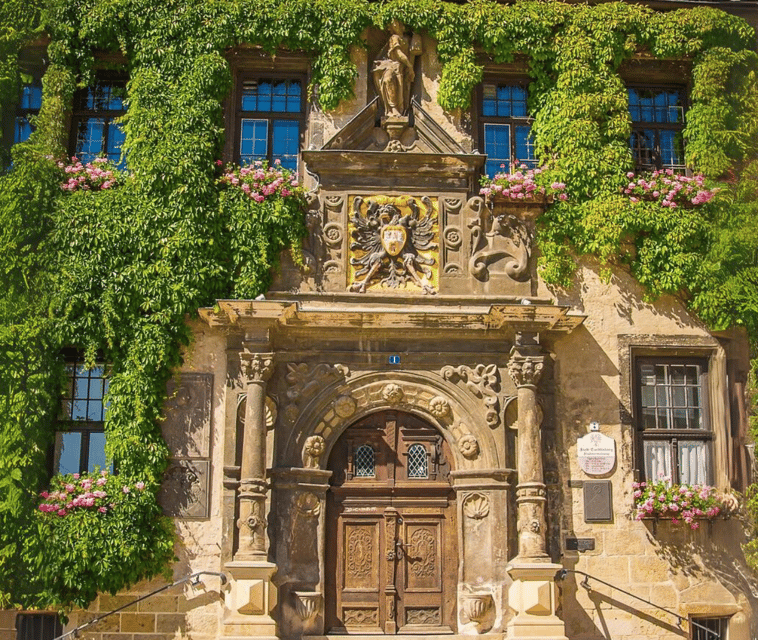
The first stretch is built around Quedlinburg’s key historic anchors and the kind of medieval streets that make the place feel lived-in. The tour covers the town hall area and a sequence of churches and alley spaces, each one helping you understand what shaped the town.
Town Hall Area and Market Square Context
The town hall area sets the tone. You start with civic power, the kind that organizes a town’s rhythm. Your guide uses this early stop to anchor the rest of the walk, so later churches and houses feel less random.
Even if you are not a “government history” person, it helps you frame the rest of what you see. When you understand what Quedlinburg was, the half-timbered buildings stop being just pretty facades and start behaving like evidence.
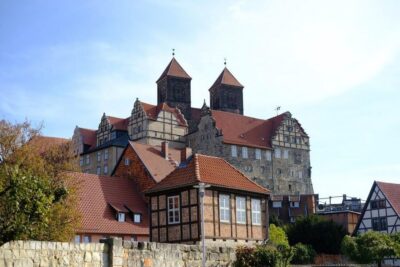
St. Benedikti and the Church Layering
You’ll visit the market church of St. Benedikti. Churches like this often mark more than religious life. They show how communities built, repaired, and invested over time.
The value of having a guide here is simple: churches can look similar if you just glance. With a storyteller, you learn what to notice and why it connects to the town’s timeline.
Schuhhof and Those Medieval Passages
The Schuhhof stop is one of those places that reminds you Quedlinburg did not grow only around big plazas. These side spaces are where daily life happened and where the medieval street pattern still influences what you experience today.
As you walk, keep an eye out for how buildings align to the street. Those small angles and narrow passages help you imagine the town’s old movement patterns. It is also where half-timbered visuals start to feel varied rather than repetitive.
Hölle and the Fun of Place Names
You also pass Hölle. Yes, it is an attention-grabber name, and names like this often signal how old communities talked about certain places, activities, or characteristics. Even when you do not know the exact story, the stop can steer your attention to details you might otherwise overlook.
This is the kind of stop that turns a walk into a route, because it gives you mental hooks. You are not just seeing buildings, you are collecting references.
Blasii Church and the Half-Welfare Museum
Next comes Blasii Church and the Half-Welfare Museum. The museum stop adds an extra layer: rather than only admiring stonework, you get a focused angle on how people organized care and support through the centuries.
This works well for practical travelers. If you want to understand a place without spending hours inside a building, a museum stop on a guided route can be the best tradeoff: structured context without losing the momentum of the walk.
Schlossberg: Klopstock-Haus, the Feininger Museum Area, and Stiftskirche St. Servatii
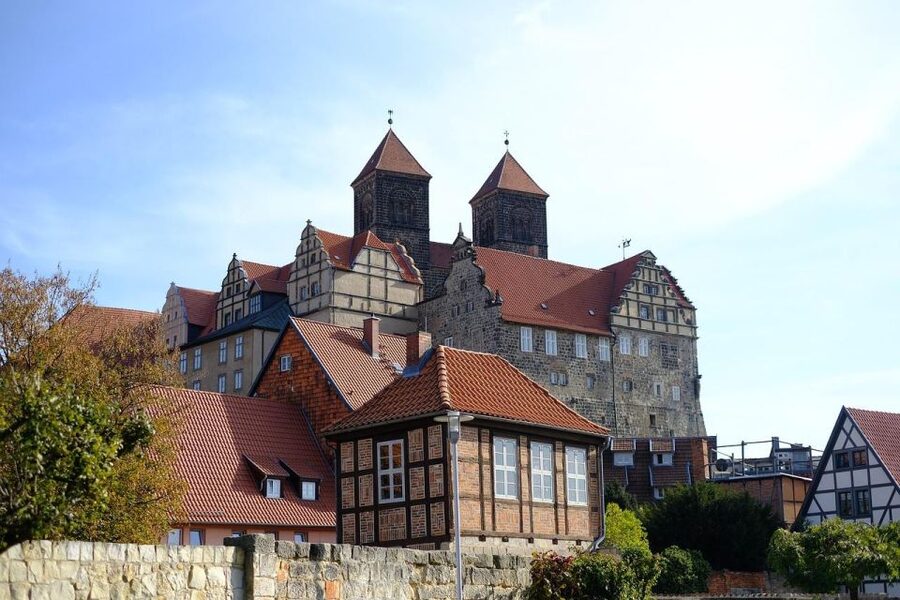
After the old town loop, the tour shifts to the Schlossberg area. This is the highlight for many people because it puts Quedlinburg’s story on a slightly higher stage, with a different feel to the buildings and views.
And here is the practical part: Schlossberg includes a steeper section. Combined with cobblestones, it is not hard, but it is not “casual stroll” either. Bring shoes with grip. On wet days, that becomes even more important.
Klopstock-Haus and Cultural Connections
On the Schlossberg tour you visit Klopstock-Haus. The name matters. Stops like this help connect Quedlinburg to famous personalities tied to the town. That personal connection is one of the reasons this tour feels more memorable than a generic old town walk.
You are not just learning that Quedlinburg is old. You are learning who mattered there and how culture shaped what the town kept, celebrated, or built around.
Museum Lyonel-Feininger and Creative History
You also include the Museum Lyonel-Feininger area on the Schlossberg route. Even if your interest is more in streets than museums, this stop gives you a bridge between medieval Quedlinburg and later layers of identity.
It also adds variety. Half-timbered streets are one visual language. A creative museum connection changes the tone and keeps the tour from feeling repetitive.
Schlossgarten and a Breather
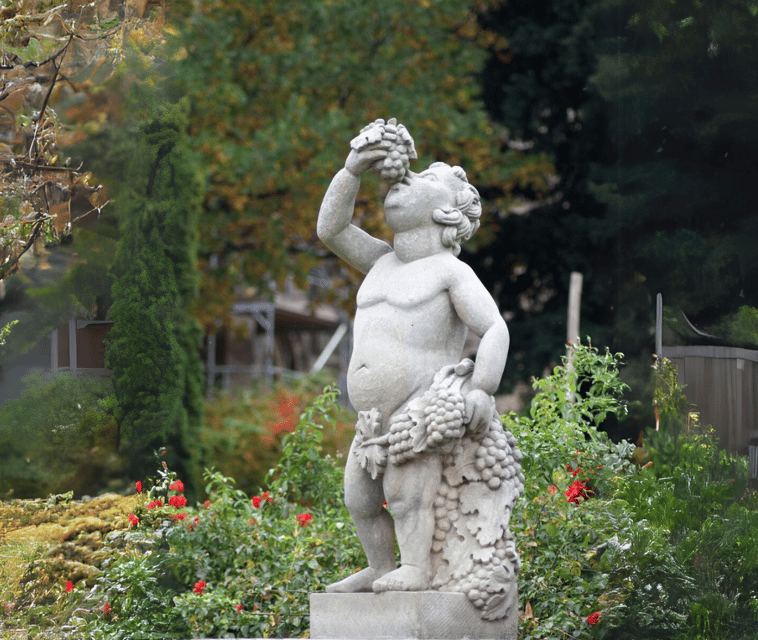
The tour includes Schlossgarten. This is a nice “reset” moment in the middle of the climb and landmark hopping. It helps you step out of pure architecture mode and absorb the setting, even if you are mainly here for the sights and stories.
Use this time to catch your breath, drink water, and get your bearings before the final church-focused stop.
Stiftskirche St. Servatii, But Not Inside
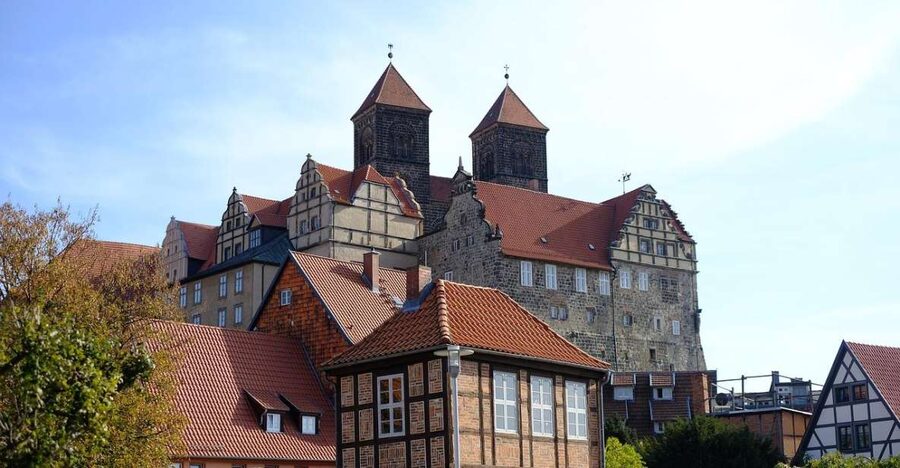
The Schlossberg finale includes Stiftskirche St. Servatii. This is a major landmark on the hill, and your guide uses it as a culmination point, tying the route together.
One detail that matters: the tour does not include entering the collegiate church from the inside. So if you love interior church time, consider planning a separate visit on your own. For this tour, the emphasis is on the exterior landmark experience and the surrounding historical context.
Half-Timbered Houses: What You’re Really Learning to See
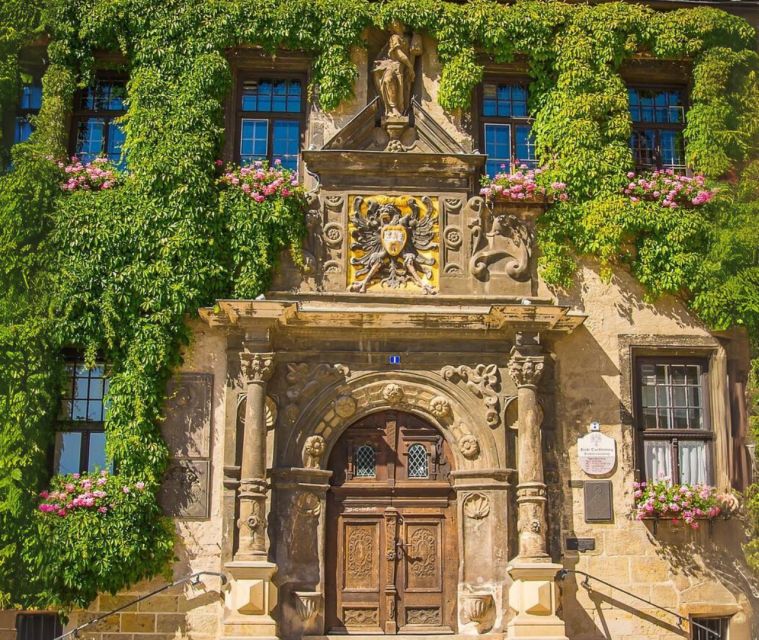
Quedlinburg’s half-timbered architecture is the kind of thing you can photograph all day. But a guided walk changes what you notice.
You learn to recognize that half-timbering is not one look. You start seeing diversity in layout and character across buildings. Some structures feel lighter, some heavier. Some facades read like carefully managed street fronts, while others show a more intimate, human scale.
Your guide also helps you connect these visuals to the idea that the UNESCO designation is not just about one structure. It is about an entire historic environment where buildings, streets, and landmarks make a coherent story across generations.
I also like that the tour includes a mix of civic, religious, and cultural stops. That matters because half-timbered streets alone can be “pretty but confusing.” Here, the other landmarks give the buildings a purpose.
Famous Personalities and the Story Behind the Names
This tour highlights famous personalities from Quedlinburg. You feel this especially through stops like Klopstock-Haus and the Lyonel-Feininger museum area.
Why does that help you as a visitor? Because names give you something to remember. After the tour, you will recall a few anchors, not just a blur of timber lines.
If you enjoy “culture as context,” you’ll appreciate how those stops shift the story from medieval town life toward later cultural identity. It makes the UNESCO designation feel less like a label and more like a living timeline.
Food Recommendations Without Forcing a Meal
Included in the tour is a presentation of culinary hotspots and recommendations. This is not a restaurant stop. Your guide gives you direction on where to eat, which is especially useful in a place where some options may be seasonal.
Practical tip: if you’re going in winter, plan your meals a little more deliberately. One past visitor noted that in January, lots of restaurants were closed and lunch options were limited. Even if that exact situation is not always the case, it is a good reminder to not assume you will find a full choice list on demand.
Bring this mindset and your food plans will feel calmer, not stressful.
Weather, Cobblestones, and the Schlossberg Reality Check
The tour runs regardless of weather in rain or sunshine. That means you should assume you will walk outside, even if the sky does not cooperate.
Also assume cobblestones. They look charming, but they can be slippery. Add the steeper Schlossberg section and you get a route that rewards proper shoes.
One winter traveler experience stood out for me as a warning sign: on extremely slippery conditions on the Schlossberg, the tour may be affected. I would treat that as a “be prepared” note, not a reason to cancel plans. If the forecast is rough, wear grippy footwear and consider building a little buffer time so you can adjust if the guide has to reroute or reschedule.
Price and Value: Is $10 Fair for Two Hours?
At $10 per person for a 2-hour guided walk, this tour is strong value on paper, and the structure supports it. You get a guided route that includes multiple historic anchors, the Schlossberg segment, and a set of specific included stops rather than a loose wander.
The main value is not only the sightseeing count. It is the storytelling payoff. The tour is designed to connect market square landmarks, churches, named street areas, and half-timbered architecture into a coherent sense of time.
If you are short on time in Quedlinburg, this is also a practical “best use of your hours” option. You cover the core you need to understand the town, and you leave with enough context to explore on your own afterward.
And if you travel with kids, the pricing gets even better: children and adolescents up to 16 years are free.
Who Should Book This Tour (and Who Might Skip It)
This tour is a great fit if you:
- want a quick, guided way to understand Quedlinburg’s UNESCO old town and Schlossberg
- enjoy half-timbered architecture but want context, not only photos
- like asking questions and getting explanations from a live German speaking guide
- want an affordable guided option at $10 with a full route plan
It might be less ideal if you:
- expect church interior time for St. Servatii (this one does not include entry inside)
- have mobility concerns that make cobblestones and a steeper section challenging
- need a fully flexible, weather-proof plan (the tour runs in rain, and Schlossberg conditions can matter)
Should You Book Premiumstadtführung: Historische Altstadt und Schlossberg?
Yes, if you want a focused introduction to Quedlinburg with a route that hits the major historic themes in a manageable time. The combination of market square start, church and civic stops, half-timbered visual variety, and a Schlossberg finish gives you a clean “understand the town fast” pathway.
Book it if you are the type of traveler who likes your sightseeing organized and explained. Skip or rethink if you specifically want interiors, or if cobblestones and uphill sections are a deal breaker.
If you do book, go with grippy shoes and a light daypack. Then you can enjoy the real point of the tour: leaving with a mental map of Quedlinburg that still makes sense the next time you look at those timber facades.
FAQ
Where does the tour start?
The tour starts in front of the Quedlinburg city information on Quedlinburger Marktplatz. The city information has a green sign, and you are expected at the agreed time to show your ticket.
How long is the Premiumstadtführung tour?
The tour lasts about 2 hours.
What language is the guided tour in?
The live tour guide speaks German.
What is included in the tour?
The tour includes a historical old town route with stops such as the town hall, St. Benedikti, Schuhhof, Hölle, Blasii Church, and the Half-Welfare Museum, plus a Schlossberg route including Klopstock-Haus, the Museum Lyonel-Feininger, Schlossgarten, and Stiftskirche St. Servatii. It also includes recommendations for culinary hotspots.
Are we allowed inside St. Servatii?
No. The tour does not include visiting St. Servatii collegiate church from the inside.
Does the tour run in bad weather?
Yes. The tour takes place regardless of weather, in rain or sunshine.
Is the route easy to walk?
It includes cobblestone paths and a steeper section on the Schlossberg. Sturdy footwear helps.
How much does the tour cost?
The tour is listed at $10 per person.
Is it free for children?
Yes. The tour is free for children and adolescents up to 16 years.
Are there refunds and flexible booking options?
The activity offers free cancellation up to 24 hours in advance for a full refund, and it also offers a reserve now, pay later option.
Everything else we filed on Quedlinburg
- Quedlinburg: Guided City Walk – Highlights tour (private)
★ 4.7 · 12 reviews - Quedlinburg UNESCO World Heritage Group Tour (private)
★ 4.6 · 32 reviews - Quedlinburg: Historical Old Town Evening Walking Tour
★ 4.5 · 148 reviews - Quedlinburg: Guided City Highlights Walking Tour
★ 4.5 · 353 reviews - Premiumstadtführung (historische Altstadt und Schlossberg)
★ 4.4 · 627 reviews