
REVIEW · THURINGIA
Quedlinburg: Guided City Walk – Highlights tour (private)
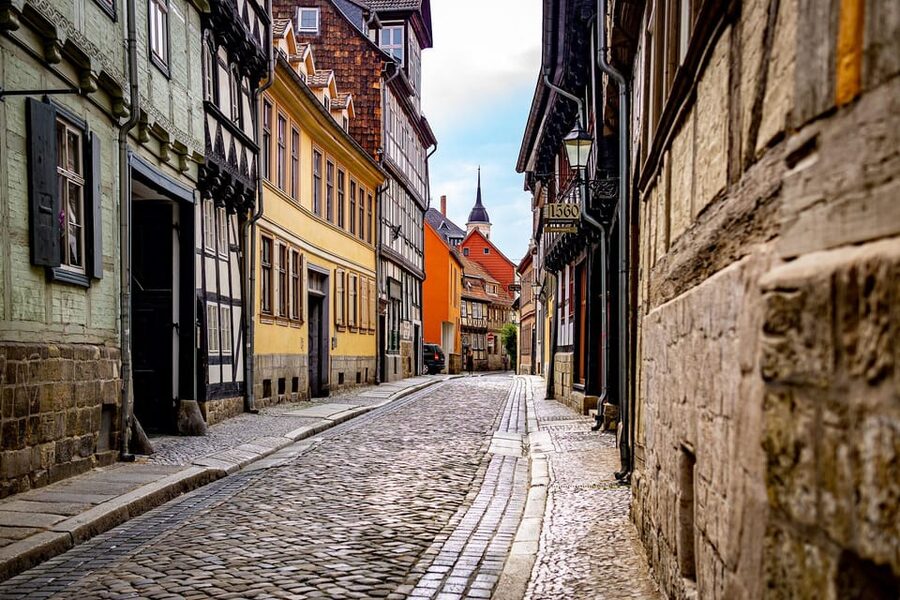
Quedlinburg feels like walking through a time machine. In just 2 hours, this private highlights walk threads together UNESCO street scenes, major churches, and the castle hill area, all with a clear timeline from Henry I to today.
I especially like how easy it is to see the town’s main medieval anchors without getting lost in details. The guide format works well when you want a fast, solid orientation to a historic place.
You’ll also love the emphasis on specific famous people tied to Quedlinburg, like Erxleben, Klopstock, and GutsMuths, because it makes the town’s past feel human, not just old-stone tourism. One drawback to consider: it’s a short tour, so if you prefer lots of free time at one sight or a lighter, less detailed pace, you may find the emphasis depends on the guide’s style and your group’s questions.
In This Review
- Key highlights to watch for
- Quedlinburg in Two Hours: Medieval Streets and 1,100 Years from Henry I
- How the walk starts at Market Square and ends at Castle Garden
- Town hall, St. Benedikti, and the squares that anchor UNESCO Quedlinburg
- Half-timbered museum, Schuhhof, and Hölle Blasii Church
- Castle hill route: Klopstock house, Museum Lyonel-Feininger, and St. Servatii
- Price and logistics: Private tour value at $141 per group
- What to expect on the ground: cobbles, rain, dogs, and German-only guidance
- Who this private Quedlinburg highlights walk suits best
- Should you book this tour? My honest decision guide
- FAQ
- Where is the meeting point?
- How long is the tour?
- Is the tour private?
- What language is the guide?
- What sights are included around the old town and castle hill?
- Is entry to the collegiate Church St. Servatii included?
- Is the tour wheelchair accessible, and what about the walking surface?
Key highlights to watch for
- 1,100 years from Henry I to the present, explained as a walking story
- Town hall, St. Benedikti, Schuhhof, and Hölle Blasii Church as key landmarks
- A focus on more than 2,000 half-timbered houses, not just one pretty street
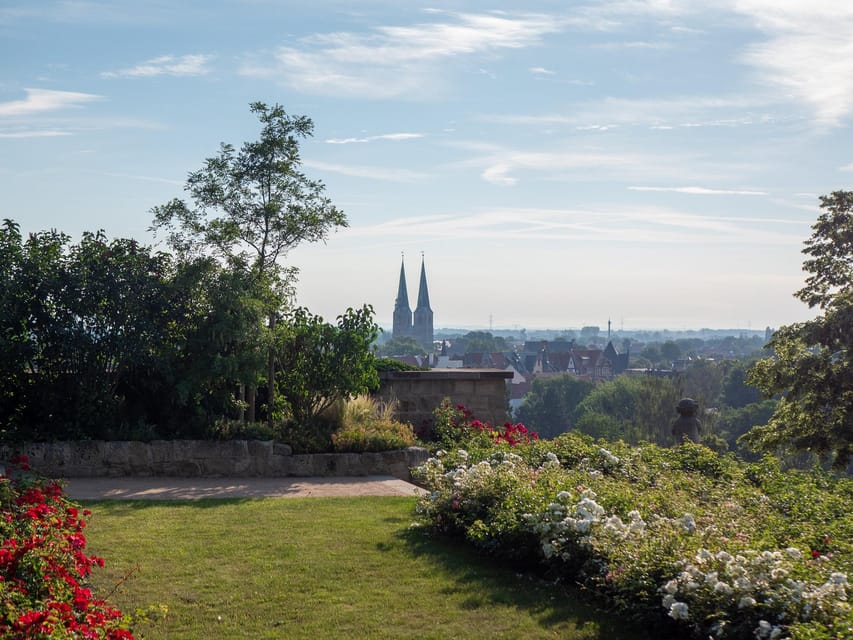
- Castle hill viewpoints and finishes at the castle garden, right by St. Servatii
- A private group experience with a live German guide and time for questions
- Rain or shine touring, with cobblestones and a steeper climb to the hill
Other Thuringian towns we have written up
- Quedlinburg: Guided City Highlights Walking Tour★ 4.5 · 353 reviews
- Quedlinburg: Historical Old Town Evening Walking Tour★ 4.5 · 148 reviews
- Quedlinburg UNESCO World Heritage Group Tour (private)★ 4.6 · 32 reviews
- Quedlinburg: Guided City Walk – Highlights tour (private)★ 4.7 · 12 reviews
Quedlinburg in Two Hours: Medieval Streets and 1,100 Years from Henry I
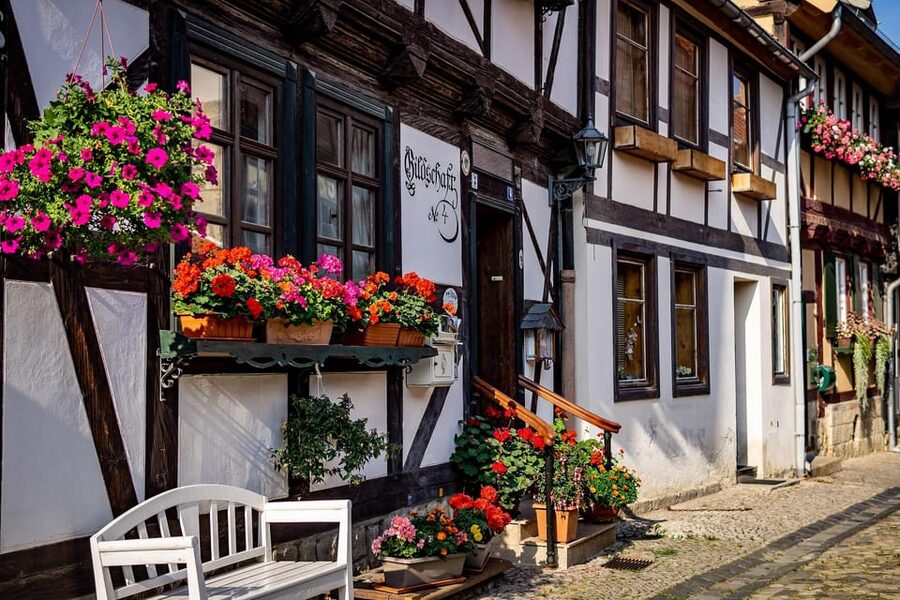
Quedlinburg’s whole pitch is simple: it is a UNESCO World Heritage town where medieval streets and half-timbered homes are still part of everyday life. This guided highlights walk is designed to help you connect the shapes of the town to the centuries they represent. You get a timeline that runs from Henry I, and then moves toward more modern Quedlinburg life.
The tour doesn’t treat history like a lecture. Instead, the guide points out what you can actually see in front of you, town hall to church squares, and then the castle hill area. If you like history that explains why a building exists where it does, this format fits.
I also like the way the guide includes famous names tied to Quedlinburg, such as Erxleben, Klopstock, and GutsMuths. Even if you only vaguely know one or two of those names, it helps you understand why locals take pride in their town’s legacy.
One small practical note: it is a short walk. You’ll cover a lot, but you won’t get to linger the way you might on your own. Think of it as your orientation that makes later exploring more satisfying.
How the walk starts at Market Square and ends at Castle Garden
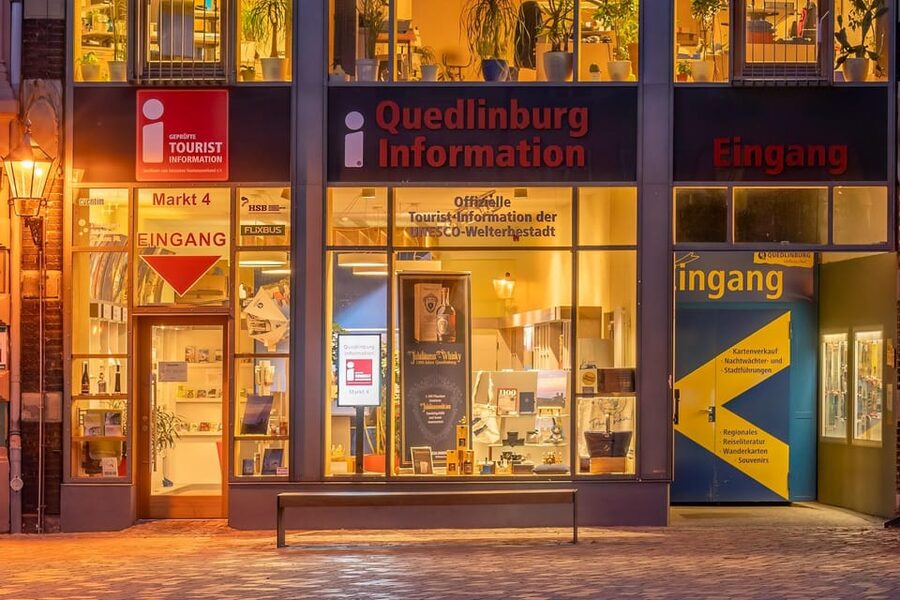
You begin right where most people naturally start: at Quedlinburg-Information on the market square. The guide meets you there, wearing a name tag on a yellow loop (so you can spot them fast). No voucher exchange is needed, just show or hand it to your guide.
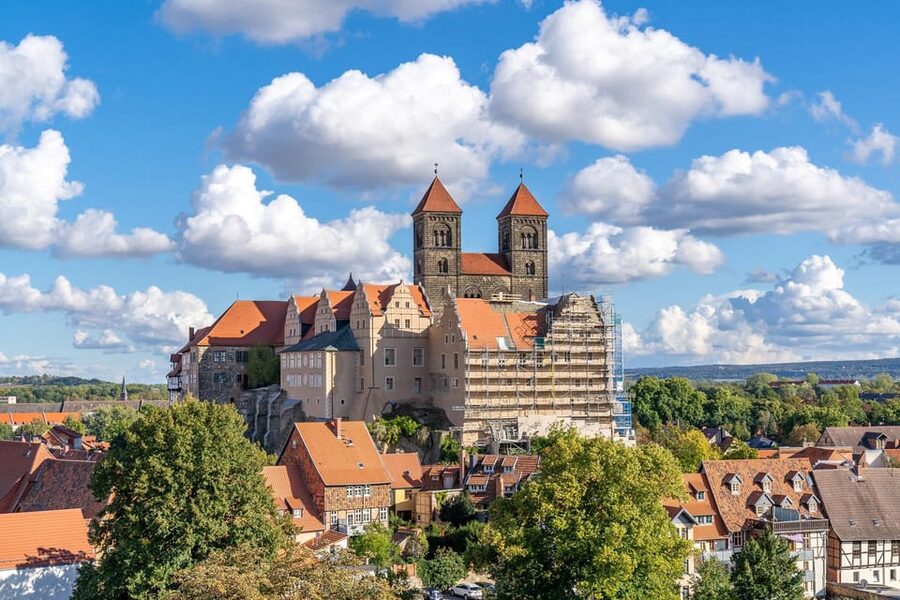
The walk is structured so you are not wandering in circles. You start in the town’s center and move through the historic core, with the end point placed at castle hill. The finish is Quedlinburg Castle Garden, near the collegiate Church St. Servatii, which is the tour’s big “you’re here” moment.
That ending matters because castle hill changes the way you read the whole town. Even from street level, you can sense how the town’s layout supports the hill’s significance. Finishing in the garden area gives you a logical place to pause, take photos, and decide if you want to step further.
Also, the tour is run rain or shine. That’s good for planning, but it means you should expect slick cobbles at times. Bring shoes you trust on uneven ground.
Town hall, St. Benedikti, and the squares that anchor UNESCO Quedlinburg
The tour’s first big draw is that it targets the town’s most recognizable anchors. You pass the town hall along the main old-town route, which helps you orient immediately. From there, the market church St. Benedikti becomes a natural focal point, since churches like this usually sit at the heart of a medieval town’s civic and religious life.
What I like about this approach is that it teaches you how Quedlinburg’s streets “work.” You are not just seeing buildings in isolation. You are learning how squares and key structures connect, so later when you look back at a street corner, it feels more intentional.
St. Benedikti also gives you a solid landmark for understanding scale. In medieval towns, the church often functions as a visual anchor, and the guide can help you see the relationship between the church and the surrounding half-timbered fabric.
Then you move onward to smaller stops that keep the walk feeling varied instead of repetitive. In this part of town, your eyes tend to search for timber frames, door shapes, and small changes in street rhythm. A good guide helps you notice those details without turning the walk into a checklist.
Half-timbered museum, Schuhhof, and Hölle Blasii Church
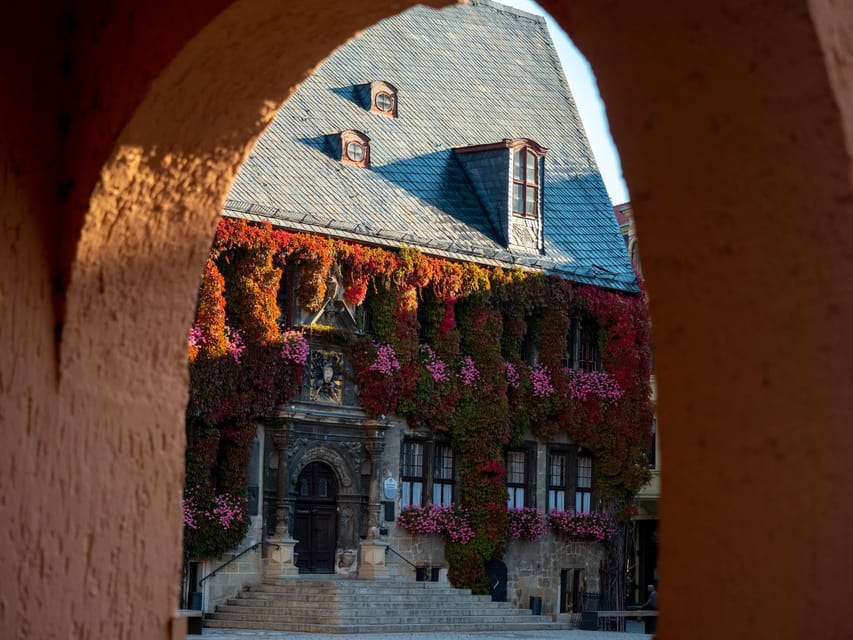
Quedlinburg’s UNESCO value is not only about one famous monument. It’s about the overall collection of historic structures, especially the half-timbered houses. This tour leans into that reality by including a stop at the half-timbered museum, plus time along places like Schuhhof and Hölle Blasii Church.
Schuhhof is one of those names you’re glad you learned during the tour, because later you’ll see it again and understand it as part of the historic fabric, not just a label on a street sign. It also helps break up the walking day, giving you a sense of how different parts of the town connect.
Hölle Blasii Church adds a different texture to the route. When you bounce between a market church and a more specific church stop, your brain starts mapping the town’s religious and community geography. That makes Quedlinburg feel less like a museum and more like a lived-in historic town.
The half-timbered museum stop is particularly useful because it supports the big number you hear during the highlights: Quedlinburg’s collection includes more than 2,000 timber-framed houses. Seeing and learning what makes these buildings special helps you recognize the differences between facades later, even when you’re walking on your own.
If you’re the type who likes to photograph details, this section is good for it. Just pace yourself, because cobbled paths can slow you down and it’s easy to trip while you’re watching your footing and your camera at the same time.
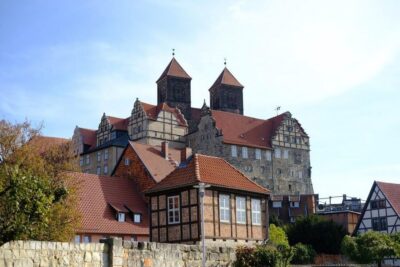
Castle hill route: Klopstock house, Museum Lyonel-Feininger, and St. Servatii
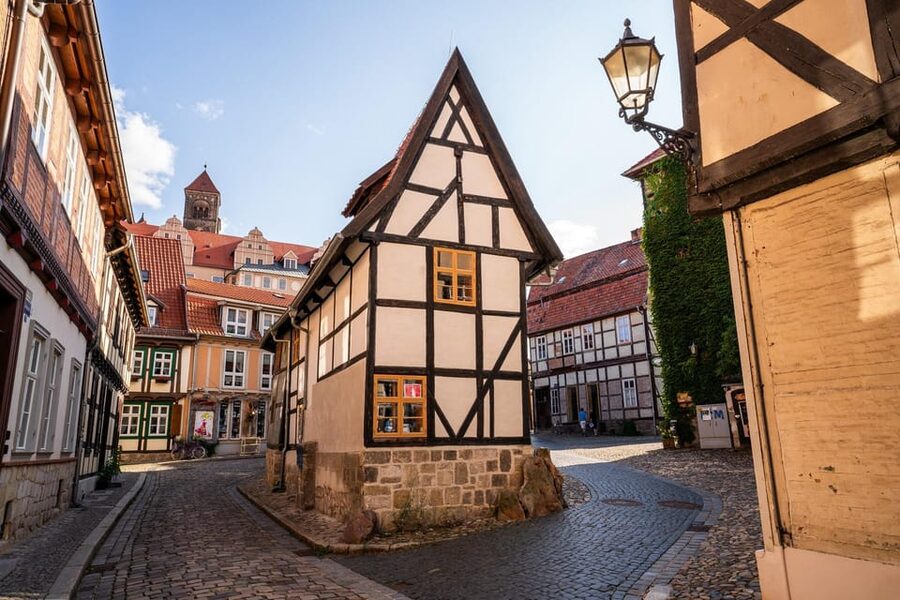
The uphill part is the reality check of the tour. You’ll walk cobbled paths, and there’s a rather steep route up to castle hill. It’s manageable for most people, but it matters if you have limited mobility or you’re carrying heavy bags.
On castle hill, the highlights shift from street-level architecture to connections between people, culture, and place. You’ll pass Klopstock house, then continue along the route toward Museum Lyonel-Feininger. These stops give the tour a “Quedlinburg beyond the Middle Ages” feeling without losing the historic core.
Then you arrive near collegiate Church St. Servatii. Here’s the practical catch: entry to St. Servatii is not included. That doesn’t mean you miss the main sight. It means your guide brings you to the doorstep, and you have the opportunity to visit it yourself if you want.
Finishing at the castle garden is smart. It gives you a decompression moment after the climb. If the weather is clear, you can usually feel the benefit of that height, even without going into a formal viewpoint structure.
This is also where the guided story tends to click for many people. By the time you’re at castle hill, you’ve seen the civic center, learned about church anchors, and now you understand why the hill sits at the center of the town’s identity.
Price and logistics: Private tour value at $141 per group
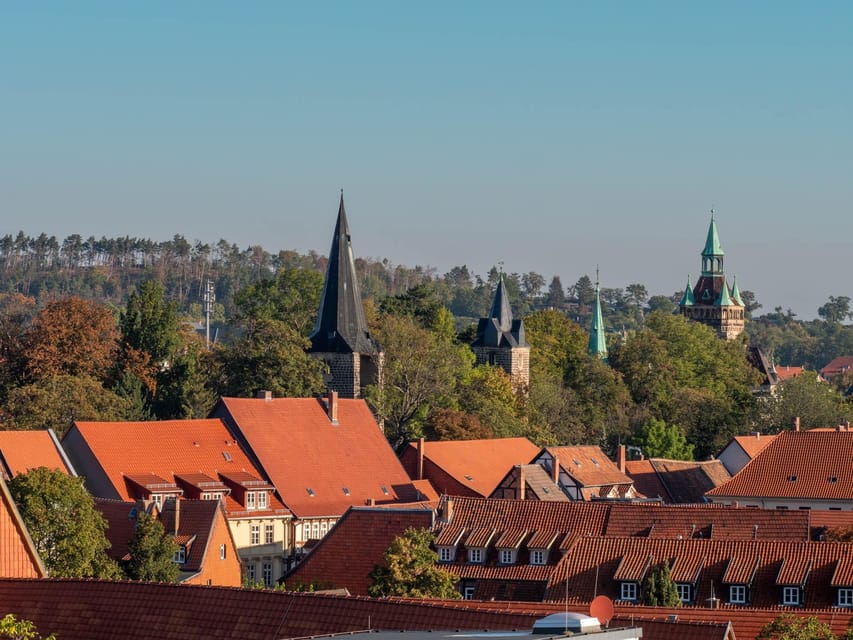
The price is $141 per group for up to 12 people, and the tour lasts 2 hours. That structure is what can make or break the value for you.
If you’re booking solo or as a couple, you’ll pay the full group rate, so it’s more expensive than an open-group city tour. But you still get something you cannot easily buy elsewhere: a private, walking-focused route through the historic core with live interpretation in German. For many couples, the “pay once, see the highlights, ask questions” approach is worth it.
If you can fill a small group, the math gets much easier. With more people sharing the group rate, the per-person cost drops quickly, and you essentially buy a custom pace. Even if the itinerary is set, a smaller private group often means your questions get answered instead of being rushed past.
Timing is also practical. Two hours is long enough to cover major stops, but short enough that you can still build a day around the visit. After the tour ends at castle garden, you’re already positioned to continue on your own without a big commute.
Logistics are straightforward: meet at Quedlinburg-Information on the market square, follow the guide with the yellow-loop name tag, and you’ll start immediately.
What to expect on the ground: cobbles, rain, dogs, and German-only guidance
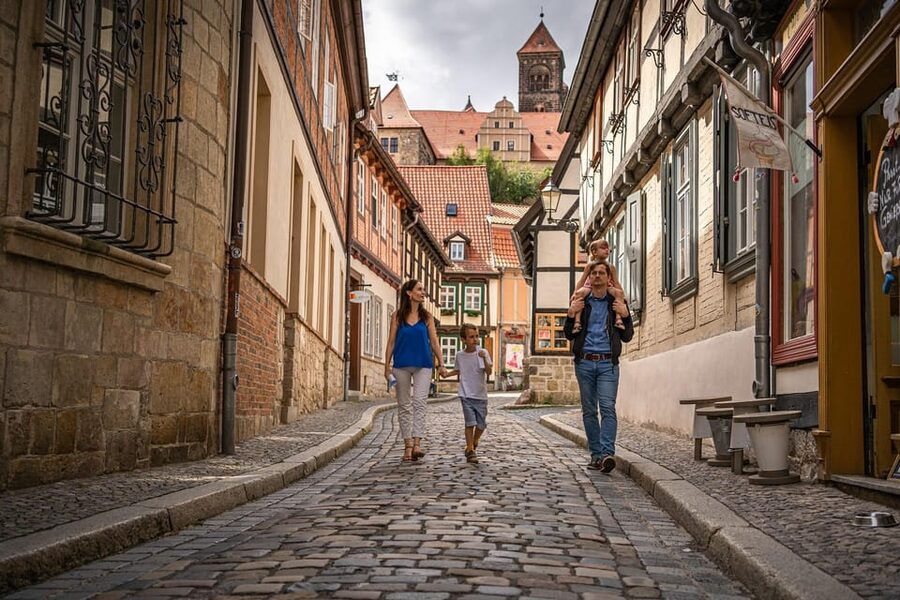
This is a walking tour. You’ll encounter cobblestone paths, and there is a steep climb up castle hill. That combination means smart shoes are not optional. If it’s wet, give yourself extra time and move slowly on the uneven sections.
The tour runs rain or shine. That’s a good thing for planning, but it also means you should dress for weather. Layering beats bringing something bulky that blocks your movement on stairs or narrow historic lanes.
The guide is German-speaking. If you only manage basic German, you might still get value from the visual tour format, since the stops are clear and the guide points things out. If you speak German comfortably, you’ll likely get the most from the explanations about the town’s centuries and the famous names tied to Quedlinburg.
Dogs are welcome on the tour. That’s not always the case with historic walking routes, so it’s a meaningful plus if you travel with a companion animal.
Wheelchair accessibility is listed as available. Still, the cobblestones and steep sections mean the practical experience can depend on your setup. If wheelchair access is important for you, it’s smart to confirm how the route handles the climb to castle hill.
Who this private Quedlinburg highlights walk suits best
This tour is a strong match for you if you want a guided orientation that hits the town’s most important spots in a tight time window. You’ll like it if you enjoy learning why places matter, not just what they’re called.
It’s also a good fit for first-time visitors to Quedlinburg. The route is centered on landmarks such as the town hall, market church St. Benedikti, half-timbered museum, and the castle hill finish. After this, you’ll know where to wander next.
If you’re traveling with a small private group, the format helps you manage questions and personal interests better than an open-bus crowd. One of the best aspects is that the guide brings the town’s story forward in a way that feels responsive.
That said, keep one expectation in check: it’s a highlights tour, not a slow, detailed study of only one building. There may be times when the guide spends more time on one stop than you would personally choose, especially if your group asks lots of related questions.
Should you book this tour? My honest decision guide
Book it if you want a high-value introduction to Quedlinburg’s UNESCO core, with clear stops, a guided timeline from Henry I to today, and explanations tied to what you see as you walk.
Skip it or consider another style if you hate steep climbs, prefer long stays inside churches or museums, or you need the tour to be conducted in a language other than German. Also, if you want a very customized route that avoids any single stop taking too long, you’ll want to set that expectation early.
If your goal is simple, see the highlights, learn the story, then keep exploring on your own, this private 2-hour walking tour is an easy yes.
FAQ
Where is the meeting point?
Meet at Quedlinburg-Information on the market square. Your guide wears a name tag on a yellow loop.
How long is the tour?
The guided city walk lasts 2 hours.
Is the tour private?
Yes, it is a private group tour.
What language is the guide?
The live guide speaks German.
What sights are included around the old town and castle hill?
You’ll pass the town hall area, market church St. Benedikti, Schuhhof, Hölle Blasii-Church, and the half-timbered museum. On the castle hill route, you’ll include stops along Klopstock-house, Museum Lyonel-Feininger, the castle garden, and the collegiate Church St. Servatii area.
Is entry to the collegiate Church St. Servatii included?
No, entry to St. Servatii is not included, though the tour ends near it so you can visit if you want.
Is the tour wheelchair accessible, and what about the walking surface?
Wheelchair accessibility is listed. You should also expect cobblestoned paths and a rather steep path up castle hill.
Seeing Quedlinburg in One Go
Pavements of Quedlinburg
Through Thuringia and the Harz
Everything else we filed on Quedlinburg
- Quedlinburg: Guided City Walk – Highlights tour (private)
★ 4.7 · 12 reviews - Quedlinburg UNESCO World Heritage Group Tour (private)
★ 4.6 · 32 reviews - Quedlinburg: Historical Old Town Evening Walking Tour
★ 4.5 · 148 reviews - Quedlinburg: Guided City Highlights Walking Tour
★ 4.5 · 353 reviews - Premiumstadtführung (historische Altstadt und Schlossberg)
★ 4.4 · 627 reviews
Weimar Erfurt and Thuringia Tours, side by side.
 ★ 4.7Erfurt: Old Town Guided Walking TourFrom $151,617 reviews
 ★ 4.7Weimar: Old Town Guided Walking TourFrom $111,080 reviews
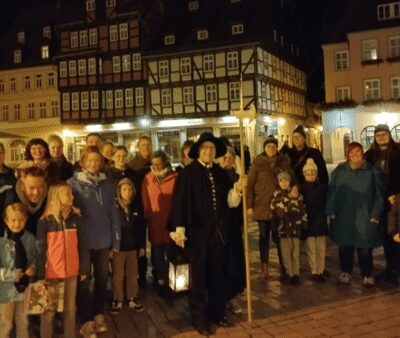 ★ 4.5Night Watchman Tour through QuedlinburgFrom $131,040 reviews
 ★ 4.8Erfurt: Guided Tour of The Petersberg CitadelFrom $12674 reviews
 ★ 4.7Goslar: Tausend Schritte durch die AltstadtFrom $16417 reviews
 ★ 4.5Quedlinburg: Guided City Highlights Walking TourFrom $11353 reviews
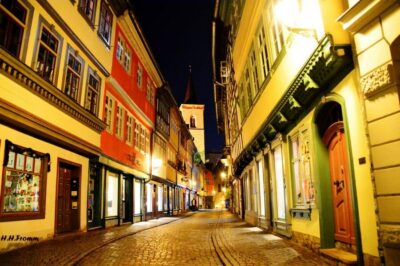 ★ 4.7Erfurt: With Night Watchman Schwalbe through the Old Town, including tastingFrom $18297 reviews
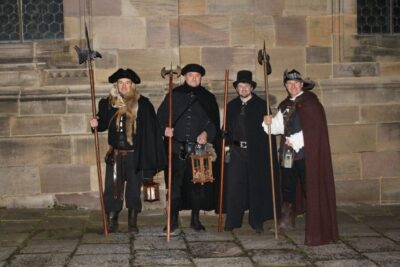 ★ 4.5Fulda: Night Watchman TourFrom $23167 reviews
Other lists this tour is on