
REVIEW · STUTTGART
Tübingen: Private Guided Walking Tour
Tübingen’s story feels close enough to touch. On this private 90-minute walk, you move through the medieval streets along the Neckar while a modern university town keeps the pace human and real. I especially like the way the guide turns places into people, with humor and local charm that make the town feel lived-in, not like a museum label.
The tour’s focus is history plus storytelling, so if you want only dates, names, and a lecture-style approach, this may not be your best match. One more practical note: the meeting point is right by the tourist office, so arriving a few minutes early saves you time if you are unsure where to stand.
In This Review
- Key things you will notice on this tour
- Why Tübingen works so well on foot
- Starting at Neckarbrücke 1, then easing into the old town
- The Stockerkahn tradition: a local riverboat story you can’t skip
- Eberhard Karl’s University: scholarship that shows up in street life
- Notable residents, scholars, and the human side of Tübingen
- Castle Hohentübingen: why the landmark matters more than the steps
- World War II survival: how memory shows up in today’s town
- The guide makes or breaks the experience, and here it’s a strength
- 90 minutes is the right speed for a first-time Tübingen visit
- Price and value: $280 per group can be either a steal or a splurge
- Who this tour suits best
- A smart plan for booking and making the most of it
- Should you book this private walking tour?
- FAQ
- How long is the Tübingen private guided walking tour?
- How much does the tour cost?
- Is this tour private or shared?
- What languages are available?
- What is included in the price?
- Are entrance fees included?
- Where do we meet for the tour?
- What is the cancellation policy?
- Can I reserve and pay later?
- Is the tour flexible in what it covers?
Key things you will notice on this tour
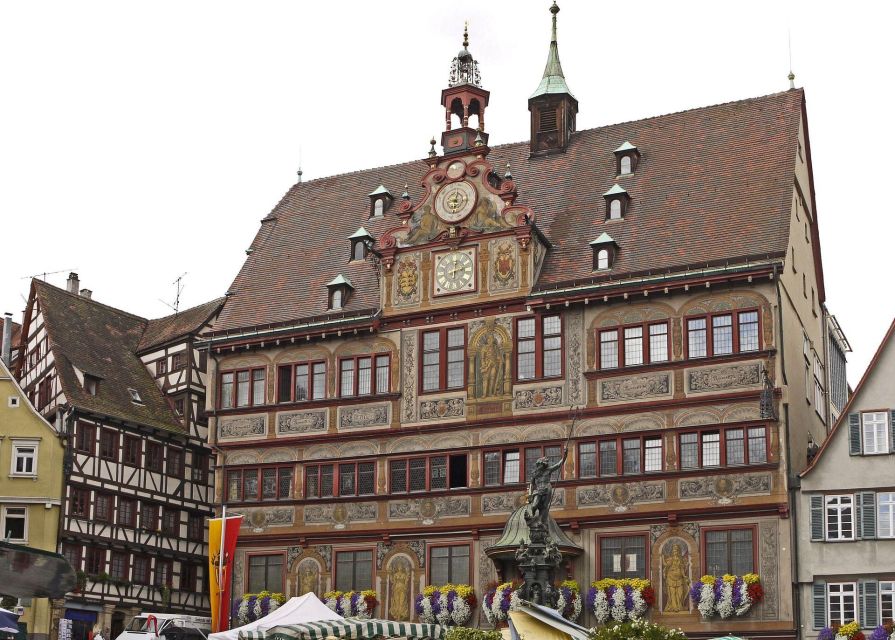
- Neckar old-town walk with medieval street texture: The route stays centered on Tübingen’s well-preserved core and river setting.
- Stockerkahn tradition: You get the local river-boat angle, not just scenic views.
- Eberhard Karl’s University in everyday context: Student life and major scholarship show up as part of the town’s identity.
- Castle Hohentübingen as a landmark story: The castle’s place in the local narrative is the point, not an expensive add-on.
- World War II survival and rebuilding memory: The guide connects what you see today to what the city endured.
Other Swabian days we have reviewed
- Tübingen: Private Guided Walking Tour★ 5.0 · 8 reviews
Why Tübingen works so well on foot
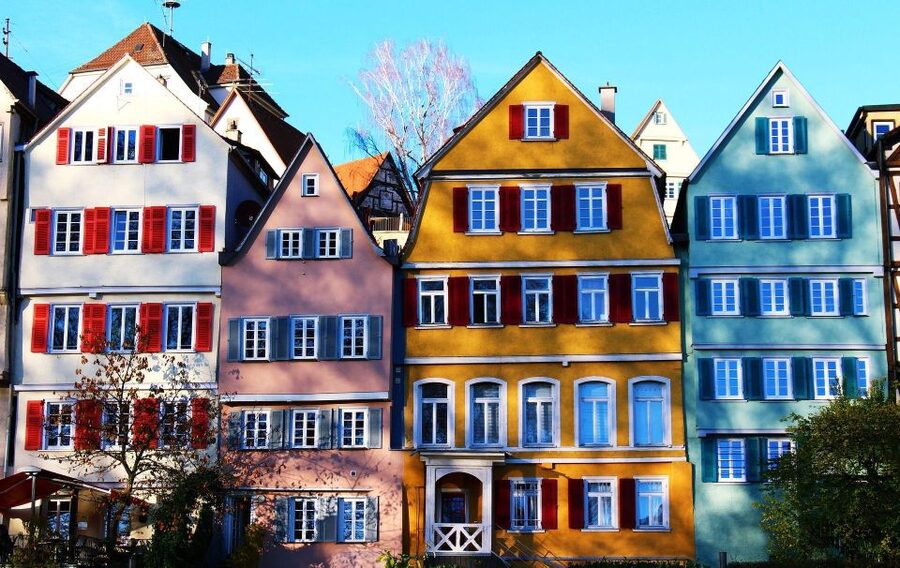
Tübingen is the kind of town where walking gives you more than moving by bus. The Neckar valley setting matters: you get the river as a thread through everything, and you feel how the medieval center and university life share the same streets.
In less than two hours, a good guide can do something powerful here: connect eras without turning the walk into a checklist. The best tours help you read the town like a book, and this one leans into that. You are not only seeing landmarks, you are learning how the town’s choices shaped its survival and reputation over time.
Starting at Neckarbrücke 1, then easing into the old town
You meet at in front of the tourist office at Neckarbrücke 1, 72072 Tübingen. That location is smart because it puts you near the river right away. From the bridge area, the town’s geometry makes sense fast, and it becomes easier to understand why so much of Tübingen’s life has been tied to the Neckar.
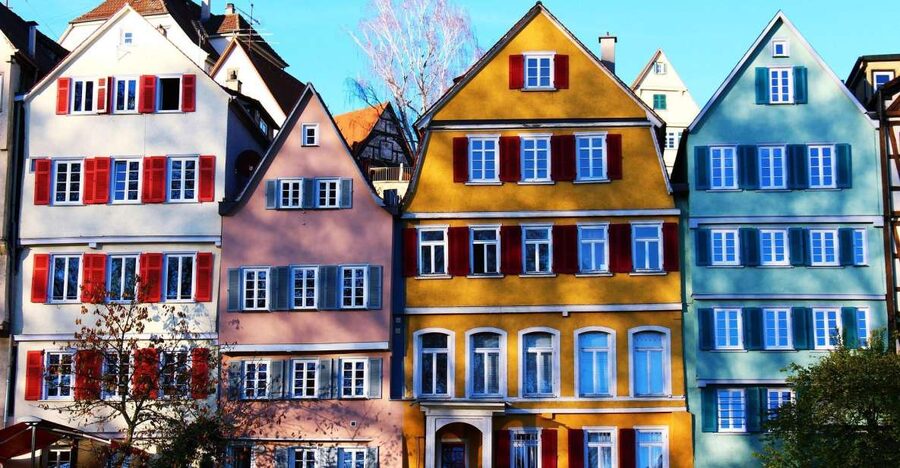
From there, you walk into the old town that dates back to the Middle Ages. The emphasis is on the well-preserved medieval center, so the route naturally slows down when the guide wants to point out how the streets reflect the 15th and 16th century feel. If it is your first time in Germany or your first time in a university town, this kind of start helps you get your bearings quickly.
Practical tip: if weather is questionable, you are still out in the open for a 90-minute span. I’d treat this as a walk-first experience. Bring a rain layer and expect that the guide may adjust the order or pacing to keep things comfortable.
The Stockerkahn tradition: a local riverboat story you can’t skip
One of the most distinctive parts of this tour is the Stockerkahn tradition. Instead of stopping at a generic riverside viewpoint, the guide gives you the local angle on how river life shaped the town.
What you take away is not only that Tübingen has a river, but that the river has a tradition and a rhythm. Those details matter because they explain why the Neckar is more than scenery. When your guide ties the Stockerkahn idea to everyday life and the town’s identity, you start noticing how river towns think differently than cities that grew around land routes.
Even if you are not into boats, this section is useful. It gives you a cultural layer that is easy to remember when you later walk around on your own.
Eberhard Karl’s University: scholarship that shows up in street life
Tübingen’s modern identity is inseparable from its university. The tour highlights Eberhard Karl’s University, one of Germany’s older and most famous universities, and you learn how scholarship shaped the town’s character over centuries.
The key is that you do not just hear that the university is old. You connect it to the atmosphere around you: students, ongoing academic culture, and the way the town’s institutions create a steady flow of ideas. That makes the walk feel “current” even when you are standing in medieval surroundings.
If you like your history with context, this is where the tour shines. University towns can feel like they belong only to campuses and textbooks, but here you get the sense that the academic world is woven into the street-level experience.
Notable residents, scholars, and the human side of Tübingen
A big part of the tour is learning about notable residents and scholars who shaped Tübingen. This is more than name-dropping. The guide’s job is to show you why certain people mattered and how their influence connected to the town’s direction.
This kind of storytelling works especially well in a place like Tübingen because the physical town has continuity. You can stand in the old center and understand how old institutions set patterns that lasted long after the specific individuals were gone.
In a similar vein, you also get the Protestant education angle, focused on the Protestant collegiate in Tübingen and its notable students. It helps you understand how religion and learning interacted in the town, and why educational institutions became a signature of Tübingen’s identity.
Castle Hohentübingen: why the landmark matters more than the steps
The tour includes Castle Hohentübingen, Tübingen’s famous local landmark. Even if you never go deep into castle interiors, you still get something valuable: a sense of why the castle belongs in the town’s story.
A castle above town is never only about views. It is about power, protection, and how communities organized themselves. When the guide explains the castle’s history, you start seeing the old center and its layout as part of a larger system, not just separate “pretty sights.”
This also helps you later on your own. Once you understand the castle’s role, you can look back from different points around the town and make sense of what you are seeing.
World War II survival: how memory shows up in today’s town
One of the tour’s more serious themes is the resilient history of how Tübingen survived World War II. The guide doesn’t treat the topic like a detached chapter. Instead, the walk frames it as part of the living city you see now.
That matters for two reasons. First, it turns WWII from an abstract historical event into something tied to real streets and real community outcomes. Second, it helps you understand why certain places feel preserved, why other stories feel complicated, and why rebuilding and continuity can shape a town’s personality for generations.
If you are the type who appreciates reflection as part of travel, you will likely value this section. If you prefer only uplifting or only entertainment-based sightseeing, you may want to mentally pace yourself here and be ready for a more sober tone.
The guide makes or breaks the experience, and here it’s a strength
This is a private group tour, with a local professional guide who stays with your group only. In practice, that means you can ask questions and keep the pace aligned to your interests without feeling like you are getting rushed between stops.
The most praised element is the guide’s storytelling style. You will hear examples of guides like Michael using a Swabian dialect and packing the tour with anecdotes and charm. Another guide named Frau Schwelling is also noted for interesting, humor-forward explanations.
That comedic, human delivery is not just a personality perk. It changes how you remember what you learn. Places like medieval streets, university legacies, and WWII memory can blur together on a standard walking tour. Humor and character help you keep each thread separate in your mind.
One consideration: this approach tends to be more narrative than lecture. A commenter noted that the style is not ideal for people who want only numbers, dates, and facts. If that is your main preference, you might still enjoy the walk, but set expectations that the delivery is story-based.
90 minutes is the right speed for a first-time Tübingen visit
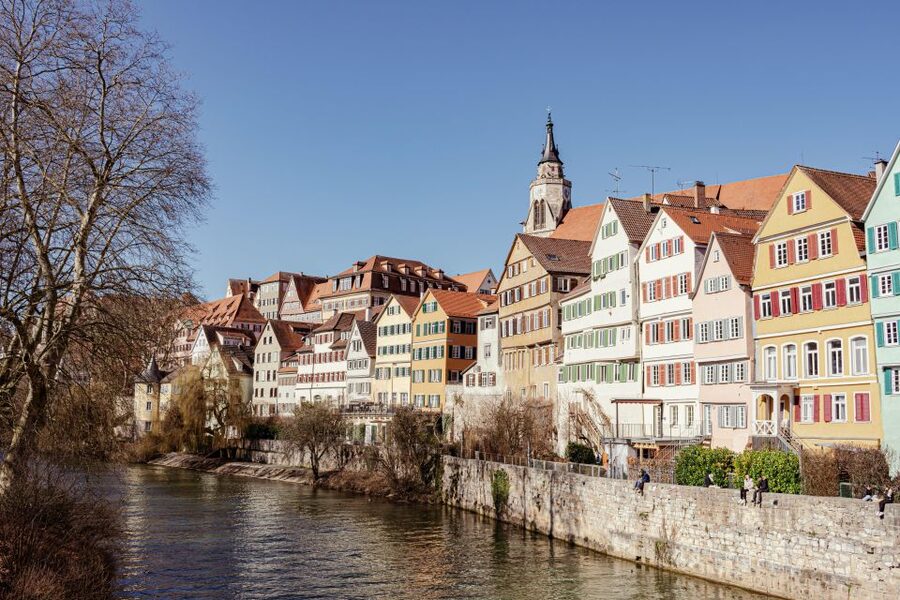
The duration is 90 minutes, which is long enough to cover major highlights without dragging. For me, that length is a sweet spot in a compact town because it keeps you in motion but still gives the guide space to slow down at the points that matter.
With a private group, the pacing feels even smoother. If your group includes mixed ages, it helps to have a time limit. It prevents the tour from turning into a long endurance walk and makes it easier to plan dinner or a second self-guided stroll.
Also, you are outdoors for much of it. If you are visiting in colder months, wear layers. If it rains, treat it as a weather-friendly walking day, not a reason to abandon the plan.
Price and value: $280 per group can be either a steal or a splurge
The price is $280 per group up to 15 for 90 minutes. That matters because the value changes based on how many people you bring.
If you fill the group near 15 people, the cost per person is about $19. If you travel as a small party of 4, it’s about $70 per person. So the best value tends to show up when you are splitting the group cost with friends or family.
What you are buying is not a museum ticket. You are buying guided interpretation of Tübingen’s main themes: medieval streets, Neckar life including Stockerkahn tradition, university influence, WWII memory, and Castle Hohentübingen context. For many people, paying for one guided pass saves hours of guesswork and helps you enjoy the town more during the rest of your stay.
If you are a solo traveler, this can still be worth it if you strongly prefer a private, story-led walk. Just be honest about what matters most to you: flexibility and local narration, versus spending less and wandering on your own.
Who this tour suits best
I think this tour fits best if you like a guided walk that mixes history with character. It works especially well for:
- First-time visitors who want the big picture of Tübingen in a short time
- Groups who appreciate humor and a personable guide style
- People who want the Neckar, the university feel, and the castle story connected together
- Families or small friend groups who benefit from a private pace
If you want a strict academic history format with lots of names, dates, and dates-only detail, you might prefer a more lecture-style tour. That does not mean you will not learn things, but the emphasis is on storytelling and town atmosphere.
A smart plan for booking and making the most of it
This tour is offered in English and German, and it is a private group. Since the guide can likely customize on the spot, it helps to think about what you care about most before you start, even if you only share a quick preference at the beginning.
For example, if your group is most excited about Castle Hohentübingen, you can ask for extra emphasis around the landmark story. If your group is most curious about WWII resilience or the Protestant collegiate, mention that early so the guide can shape the conversation.
Finally, check your timing. 90 minutes is ideal when you want orientation before exploring on your own later. If you already know the town well, consider how much you will gain from the specific themes like Stockerkahn and the WWII narrative.
Should you book this private walking tour?
Book it if you want Tübingen explained in a way that feels like you are hearing stories from someone who genuinely enjoys the town. The combination of medieval streets, Stockerkahn tradition, university life at Eberhard Karl’s University, and the focused stops on Castle Hohentübingen and WWII memory is a strong mix for a short visit.
Skip it only if your ideal tour is strictly factual in a lecture tone, with no room for humor or personality. Otherwise, it is a practical choice because it saves time, gives you context, and leaves you with a town you can actually navigate and remember.
FAQ
How long is the Tübingen private guided walking tour?
The tour lasts 90 minutes.
How much does the tour cost?
It costs $280 per group, up to 15 people.
Is this tour private or shared?
This is a private group tour. Your group has a guide who will be with you only.
What languages are available?
The tour is available in English and German.
What is included in the price?
A local professional guide is included. The guide can also customize the tour with your group on the spot.
Are entrance fees included?
No. Entrance fees are not included.
Where do we meet for the tour?
Meet in front of the tourist office at Neckarbrücke 1, 72072 Tübingen.
What is the cancellation policy?
You can cancel up to 24 hours in advance for a full refund.
Can I reserve and pay later?
Yes. You can reserve now and pay later.
Is the tour flexible in what it covers?
Yes. There is possible customization on the spot with your local guide.
Across Swabia
Everything else we filed on Tubingen
- Tübingen: Private Guided Walking Tour
★ 5.0 · 8 reviews
Stuttgart and Swabia Tours, side by side.
 ★ 4.4Stuttgart 24-Hour Hop-On Hop-Off Sightseeing Bus TourFrom $281,647 reviews
 ★ 4.8Stuttgart: Mercedes-Benz Museum Entry TicketFrom $181,400 reviews
 ★ 4.7Ulm: City Center Walking Tour with Minster VisitFrom $11831 reviews
 ★ 4.5Tickets SWR Fernsehturm StuttgartFrom $14674 reviews
 ★ 4.5Stuttgart: Guided Ghost Walking TourFrom $17662 reviews
 ★ 4.8Sinsheim: Technik Museum Day Pass and IMAX 3D TicketFrom $35616 reviews
 ★ 4.2Stuttgart: Museum of Illusions Entry TicketFrom $16507 reviews
 ★ 4.1Stuttgart: Vineyard Tour by Covered WagonFrom $46217 reviews
Other lists this tour is on