
REVIEW · TOURS
4 hours tour “The Best of Berlin”
Berlin can feel like a book you need a guide for. This private 4-hour tour strings the biggest landmarks into a clear story, from the modern capital to the city’s toughest chapters. You get hotel pickup and drop-off, plus an English-speaking guide who helps you read what you’re seeing without turning it into a lecture.
I love the pacing and focus on essentials, since you hit Brandenburg Gate, the Holocaust Memorial, the Berlin Wall at East Side Gallery, and Checkpoint Charlie in a single morning. I also like the hands-on approach, including an interactive tablet and supporting images that make the history easier to grasp fast.
One thing to consider: this is a highlights tour, not a slow museum day. You’ll spend about 10 to 20 minutes at most stops, so if you want deep, extended time inside any site, you’ll likely need a separate visit.
In This Review
- Key highlights worth your attention
- Why this 4-hour Best of Berlin route makes sense
- Price and what you’re really paying for
- Pickup, timing, and how the private format helps
- Stop 1: Brandenburg Gate and Pariserplatz
- Stop 2: The Holocaust Memorial and why it’s not just a photo stop
- Stop 3: Gendarmenmarkt for beauty, then contrast
- Stop 4: Bebelplatz and Micha Ullmann’s book burning memorial
- Stop 5: Neue Wache, war and dictatorship victims
- Stop 6: Reichstag Building and what the Parliament represents
- Museum Island area: seeing the five museums as a cluster
- Stop 7: East Side Gallery and the Berlin Wall as living art
- Stop 8: Checkpoint Charlie and the east-west divide
- The interactive tablet and old photos that make it click
- Who this tour is best for
- Book it or skip it? My practical recommendation
- FAQ
- How long is the Best of Berlin tour?
- What time does the tour start?
- Is pickup from my hotel included?
- Is this a private tour or shared?
- What language is the tour offered in?
- How many people are in a group?
- Are there admission fees for the stops?
- What is the cancellation policy?
Key highlights worth your attention
- Hotel pickup and drop-off so you spend less time figuring out transit and more time looking around
- Private group experience with only your party, which makes it easier to adapt the pace
- Free admission stops listed across major landmarks and memorials
- Interactive tablet and historic photos to connect streets and structures to real events
- A tight route that covers Berlin’s turning points, from symbols of power to the wall and the divide
Undecided? The closest Berlin write-ups we have are these.
- Berlin: Reichstag, Dome and Government District Guided Tour★ 4.7 · 18,288 reviews
- Berlin: 1-Hour City Tour by Boat with Guaranteed Seating★ 4.3 · 16,993 reviews
- Berlin: Boat Tour Along the River Spree★ 4.4 · 11,252 reviews
- Discover Berlin Half-Day Walking Tour★ 5.0 · 9,624 reviews
Why this 4-hour Best of Berlin route makes sense
Berlin is huge, and its story is even bigger. The trick is not to try to see everything, but to see the right things in a logical order. That’s what this tour does. You start near the city’s iconic government backdrop, then move to memorial sites that explain what happened and why the city remembers. After that, you cover the aesthetics of central squares, the trauma of Nazi propaganda and repression, and the physical reminders of the Cold War.
I especially like how the route balances the heavy with the human scale. Brandenburg Gate and the surrounding Pariserplatz area give you a feeling for Berlin’s official center. Then you move to the Holocaust Memorial and other memorials that force you to slow down and think. Later, you shift to the Berlin Wall story at East Side Gallery, and you close with Checkpoint Charlie, which helps you translate the east-west divide into something you can picture.
The tour is also designed for real life. It’s about 4 hours total, starting at 10:00 am, so you can still plan the rest of your day. And because it’s private, you’re not stuck listening to a one-size-fits-all script when you’re trying to make sense of a city with layers.
Price and what you’re really paying for
The price is $643.36 per group, up to 6 people, for about 4 hours. That number looks big if you’re thinking per person, but the value changes once you do the math. If you fill all 6 seats, it works out to a little over $100 per person for a private, guided half-day.
What you’re buying is not just driving and a checklist. You’re buying a guide who can connect landmarks into a coherent story, plus the convenience of pickup and drop-off. In Berlin, time is money because distances and public transport transfers can eat up your day. This tour protects your schedule, which is especially useful if you only have a short window or you’re juggling jet lag.
Also, the tour is booked well in advance on average, which tells me it’s a popular slot for first-time visitors who want structure. That can be a sign the route hits a sweet spot: enough major sights to feel like you saw Berlin, but short enough to keep the day from collapsing.
Pickup, timing, and how the private format helps
The tour starts at 10:00 am, and pickup is offered from your Berlin hotel, with drop-off at the end. You also get a mobile ticket, which makes last-minute logistics easier. Since it’s a private tour, only your group participates, so the guide can adjust pacing without the pressure of matching other people’s interests.
This is where private tours can be worth the cost. In a group setting, you often feel trapped into the route. Here, the tour is described as customizable, so you have a chance to steer the day toward what you care about, within the overall highlights structure.
There’s one practical trade-off. Because you’re covering multiple sites quickly, you’ll want to come ready. Wear comfortable shoes, expect frequent short walks, and be okay with spending less time at each stop than you would on a self-guided day. The tour works best when you think of it as a fast, guided orientation that tells you what’s worth your deeper follow-up later.
Stop 1: Brandenburg Gate and Pariserplatz
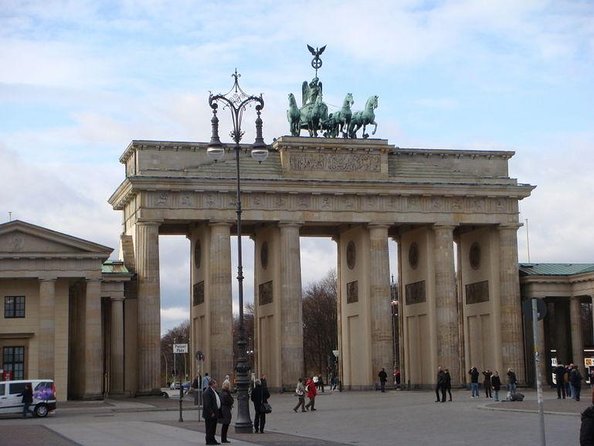
You begin at the Brandenburg Gate area, including the buildings around Pariserplatz. This is a classic Berlin start for a reason. It’s a broad, symbolic place, tied to Germany’s political identity and the country’s shifting chapters in the 20th century. Standing here with a guide matters because the architecture and the surrounding layout can look like a postcard until someone gives you the context.
Around this part of central Berlin, you can learn how Berlin presents itself, then watch the route pull you toward the places where the city’s ideals collided with reality. The tour gives this stop about 10 minutes, which is just enough time to get oriented and take in the scale without turning it into a long photo break.
One practical note: this area can be busy depending on the day. If you’re the type who hates crowds, you’ll want to be mentally ready for it and focus on the moment the guide is explaining, not just on wandering.
Stop 2: The Holocaust Memorial and why it’s not just a photo stop
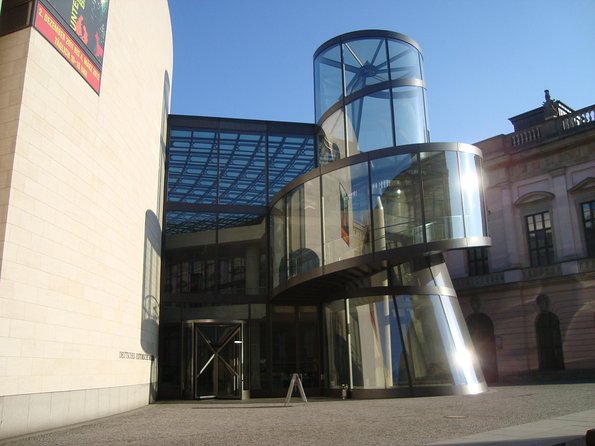
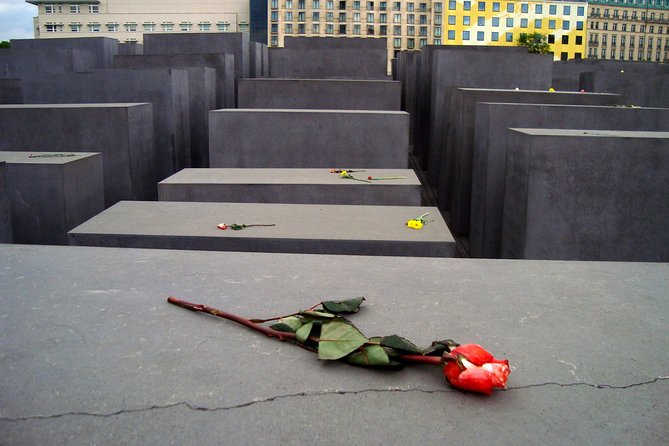
Next comes the Memorial to the Murdered Jews of Europe, often called the Holocaust Memorial. This stop is about 20 minutes, and the admission is listed as free. What you’ll get from a guided visit here is not a speech. It’s help reading what the memorial is asking you to feel, and why the design is built to disrupt comfort.
The memorial’s effect is personal. Even on a short visit, it tends to slow people down, because it’s hard to treat it like a normal monument. A good guide helps you connect it to the broader story of Berlin: how the city became a stage for persecution, genocide, and state violence, and why remembering is part of how modern Germany thinks.
If you’re sensitive to heavy topics, give yourself permission to step back mentally. The tour timing is short, but you can still take the moment at your own pace within that guided framework.
Stop 3: Gendarmenmarkt for beauty, then contrast
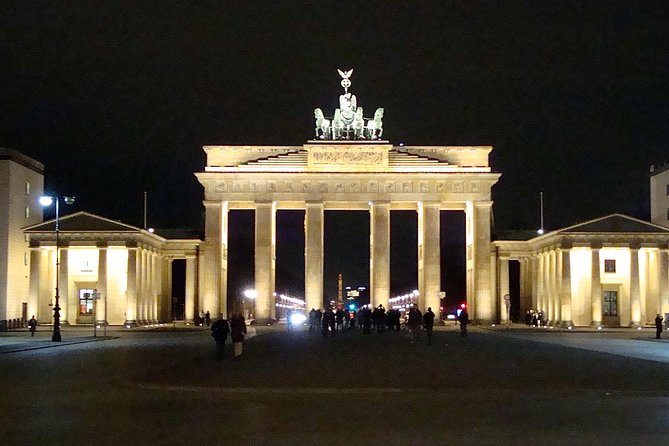
Then you get a change of scene at Gendarmenmarkt. This is one of Berlin’s most eye-catching squares, with the German and French cathedral buildings and the Konzerthaus framing the space. The stop is about 10 minutes, and admission is listed as free.
This part of the route does something important. It reminds you that Berlin is not only memorials and rubble. It’s also a city that invested in architecture, public space, and culture. But it also sets up contrast for what comes next. You go from a memorial that forces reflection into a square that feels orderly and classic, and that contrast makes the next stops hit harder.
If you love photos, aim for quick shots when the guide is done explaining, so you can keep your mind on the connections rather than getting stuck in camera mode.
Stop 4: Bebelplatz and Micha Ullmann’s book burning memorial
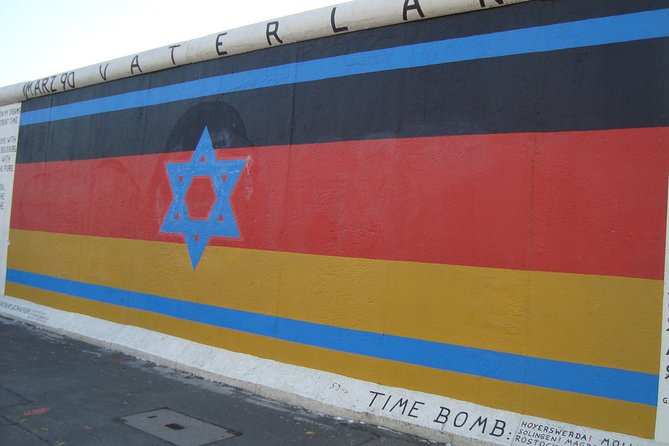
At Bebelplatz, the tour focuses on the memorial to the Nazi book burning by Micha Ullmann. Admission is listed as free, and the stop is about 10 minutes. This is one of those moments where the guide’s framing really matters, because the point can be missed if you just treat it as a marker.
The historical idea here is brutal: books, ideas, and culture were targeted as part of the Nazi agenda. The memorial is designed to make that message tangible, and your guide helps translate it into something you can understand quickly.
This stop is also a nice bridge between the Holocaust Memorial and later Cold War sites. You can start to see a pattern: ideology turned into policy, and then into action. Berlin’s streets carry these messages in plain sight, but only a guide can connect the dots cleanly in a short time.
Stop 5: Neue Wache, war and dictatorship victims
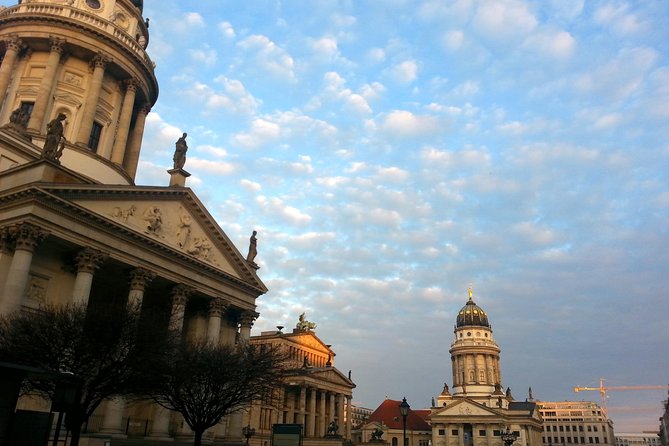
The next stop is Neue Wache, described as the Central Memorial of the Federal Republic of Germany for the Victims of War and Dictatorship. Admission is listed as free, and the time is about 10 minutes.
Why it’s worth your attention: this memorial is broader than a single event. It points to the idea that suffering came from multiple sources, including war and dictatorship. Even in a fast tour, you can leave with a clearer understanding of how Germany chooses to remember, not just what it remembers.
This is also a good stop for anyone who wants more than one type of memorial. The Holocaust Memorial is specific, Bebelplatz is focused on censorship and propaganda, and Neue Wache adds another layer about victims and state violence.
Stop 6: Reichstag Building and what the Parliament represents
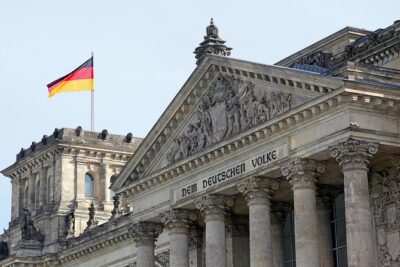
You then reach the Reichstag Building, the German Parliament. The stop is about 20 minutes, and admission is listed as free. This is another symbolic location, and it helps to have context here. Parliament is where democracy is supposed to work, and Berlin’s modern identity is tied directly to how power is handled, watched, and held accountable.
In a tour like this, Reichstag time is also about orientation. You’re not trying to read every detail. You’re getting a sense of how the city’s political center fits into the story you’ve already been hearing.
A small practical tip: because this is a longer stop than some others, use the full time. Look for what your guide points out, then take your photos after the explanation. Your photos will make more sense later.
Museum Island area: seeing the five museums as a cluster
After Reichstag, the tour includes the five museums on the island. The listing doesn’t name a specific museum for this stop, but it’s still useful. Museum Island helps you understand how Berlin invests in culture and education, and it gives you a visual sense of how far the city moved from the years of division and destruction.
This stop matters because it changes your mental map. You’re no longer only thinking about suffering and political power. You’re also seeing the institutions that helped rebuild identity after the worst chapters.
In a short tour, don’t expect deep coverage of each museum. Instead, use this stop to decide what you want to return to later, if anything.
Stop 7: East Side Gallery and the Berlin Wall as living art
Next up is East Side Gallery, the open-air gallery with murals on the Berlin Wall. This stop is about 20 minutes, and admission is listed as free. This is where the tour gets visual in a different way. Memorials ask you to reflect. East Side Gallery shows you how people turned a barrier into a canvas.
A guided walk here is helpful because the murals do not exist in a vacuum. They connect to the idea of freedom, resistance, and the post-wall redefinition of Berlin. Even if you only take a short look, you’ll likely leave with a stronger sense of what the wall meant and why its physical presence mattered.
If you’re into photography, keep your expectations realistic. You’ll get time for photos, but this is not a long street festival. It’s a quick, guided stop that helps you see the biggest themes before you wander on your own later.
Stop 8: Checkpoint Charlie and the east-west divide
The final major landmark is Checkpoint Charlie, the most famous checkpoint between east and west parts of Berlin. The stop is about 10 minutes, and admission is listed as free.
This part of the tour is about translation. When you stand at a place like this, you need someone to help you picture the stakes that were involved in crossing borders, and the confusion and fear that surrounded daily life. A short stop can still be meaningful if your guide connects it to the broader story you’ve already built during the morning.
I like ending with a site that feels immediately recognizable. It gives your brain a clean closure point. You leave with names you can remember and locations you can point to later, even if Berlin’s streets keep unfolding in every direction.
The interactive tablet and old photos that make it click
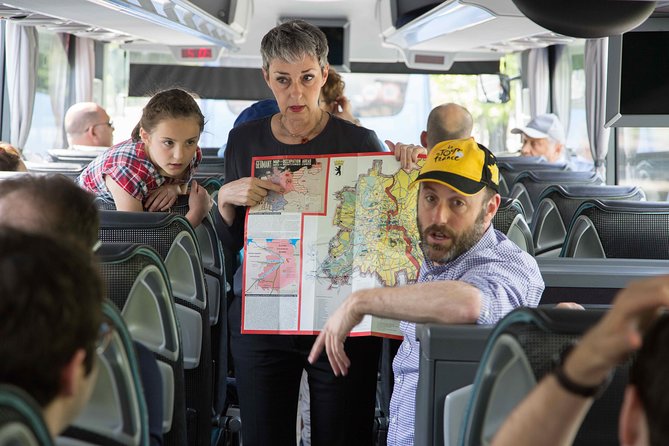
Two reviews highlight the same thing in different words: the guide puts serious effort into how the story is presented. One key detail is using a tablet with interactive images, and another is preparing old photos to show historical scenes while you stand at modern locations.
That approach is practical. Berlin has a way of changing quickly. Buildings get renovated. Streets get repaved. Whole areas transform. Without visual aids, it’s easy to feel like you’re reading captions under monuments. With old photos, you can compare then and now, and the city stops feeling abstract.
If you’re the type who learns by seeing, this tour’s method helps. You’re not only listening to facts. You’re matching them to what’s in front of you. That turns a short highlights tour into something you remember, instead of something you forget by dinner.
Who this tour is best for
This tour is a strong fit if you want a structured half-day overview. You’ll like it most if:
- You’re visiting Berlin for the first time and want the headline sites in a logical order
- You value guidance but you do not want an all-day museum grind
- Your group wants private time to ask questions and adjust the pace
- You prefer a route with key memorials included, not only the photogenic stuff
It may be less ideal if your main goal is deep immersion at one museum or you want long time inside specific buildings. The format is built for efficient orientation. Think of it as your setup day, then pick your follow-up visits based on what resonates.
Book it or skip it? My practical recommendation
If your goal is to understand Berlin’s story, not just collect landmarks, I think this tour is a smart choice. The value comes from three things: private group convenience with pickup, a tight 4-hour route through both iconic and meaningful sites, and an interactive teaching style that uses images to make the past visible.
I would book it when you have limited time, you want to feel oriented quickly, and you want memorial stops included in a respectful, guided way. I’d skip it if you already know Berlin well and you’re craving long, slow time at fewer sites. In that case, you might get more value building your own day around one or two neighborhoods.
FAQ
How long is the Best of Berlin tour?
It runs for about 4 hours.
What time does the tour start?
The start time is listed as 10:00 am.
Is pickup from my hotel included?
Yes, pickup is offered, and drop-off at your Berlin hotel is included.
Is this a private tour or shared?
It’s a private tour/activity, so only your group participates.
What language is the tour offered in?
The tour is offered in English.
How many people are in a group?
The price is per group up to 6 people.
Are there admission fees for the stops?
The listing shows admission ticket free for the included stops.
What is the cancellation policy?
Free cancellation is available. You can cancel up to 24 hours in advance for a full refund, and changes inside 24 hours are not accepted.
Everything else we filed on Berlin
- Private Photo Tour in Kreuzberg
★ 5.0 · 3 reviews - Kreuzberg Private Walking Tour: Immigrants, Artists & Hipsters
★ 5.0 · 3 reviews - Berlin’s Jewish Heritage: Private Tour of the Vibrant Jewish District
★ 5.0 · 3 reviews - Individual city tour Berlin for max. 8 persons
★ 5.0 · 3 reviews - Berlin & The Third Reich Private Guided Tour
★ 5.0 · 3 reviews - Private Analogue Photography Experience in Berlin
★ 5.0 · 3 reviews
Tours, side by side.
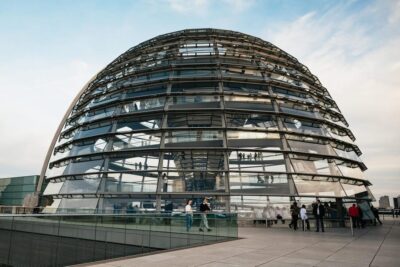 ★ 4.7Berlin: Reichstag, Dome and Government District Guided TourFrom $1818,288 reviews
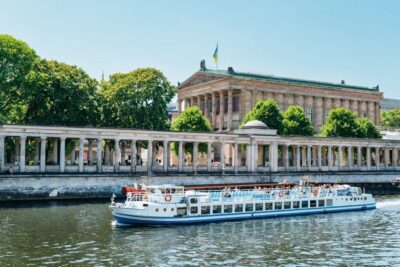 ★ 4.3Berlin: 1-Hour City Tour by Boat with Guaranteed SeatingFrom $2516,993 reviews
 ★ 4.7Hamburg: Sex and Crime in St. Pauli Tour for Ages 18+From $29515,447 reviews
 ★ 4.7Dresden: Semperoper Tickets and Guided TourFrom $1812,102 reviews
 ★ 4.4Berlin: Boat Tour Along the River SpreeFrom $3411,252 reviews
 ★ 5.0Discover Berlin Half-Day Walking TourFrom $249,624 reviews
 ★ 4.3Berlin: Hop-on Hop-off Bus Tour with Live CommentaryFrom $228,579 reviews
 ★ 4.7Berlin: Government District around the Reichstag Guided TourFrom $2848,447 reviews