
REVIEW · CITY TOURS
Individual city tour Berlin for max. 8 persons
Berlin can feel like a living museum. This private 3-hour tour strings together the landmarks you keep seeing in photos, then gives you the quick context to understand what you are looking at, from the Brandenburg Gate to Checkpoint Charlie. I especially like the small group setup (max 8) and the fact that you get a real guided route instead of hopping on and off transit alone. One thing to consider, though, is the tour hits many places in a short time, so you should expect photo stops and fast orientation more than long stays inside.
I also like that the guide work is built for questions and different ages. In one recent group of eight, ages 17 to 77, the guide Katherine was described as charming, attentive, and able to answer questions during the full 3 hours. The only practical drawback I see for most people is that snacks and bottled water are not included, so plan to grab something before you start (or bring your own).
If you want a simple way to get your bearings in Berlin without missing the big political and cultural touchstones, this is a strong option.
In This Review
- Key highlights you should care about
- Why this Berlin private tour hits the sweet spot
- Price and logistics for up to 8, with pickup and an air-conditioned vehicle
- From Brandenburg Gate to Reichstag: the political spine of Berlin
- Museum Island, the President’s seat, and the Berlin Palace view
- Nikolaikirche to the French church: squares, refugees, and an old-city feel
- Potsdamer Platz and the Wall: the longest graffiti remnant
- Embassy District to Victory Column, then Gedächtniskirche in the west
- Checkpoint Charlie and Scheunenviertel for the human scale
- What guide quality looks like on this route
- How to make the most of a 3-hour pace
- Should you book this Berlin city tour for your trip?
- FAQ
- How long is the Berlin private city tour?
- How many people can join this tour?
- Does the tour include pickup in Berlin?
- What language is the tour in?
- Is this a private tour or a shared group tour?
- Is a mobile ticket included?
- Are entrance fees included?
- Are snacks or bottled water included?
- Is transportation included, and is the vehicle air-conditioned?
- Can I cancel for free, and how far in advance?
Key highlights you should care about
- Private for up to 8 people: easier pace and more chances to ask questions.
- Pickup in Berlin: you tell them where you are, and they bring the tour to you.
- English language tour with a full 3-hour guided loop across central sights.
- Museum Island time with World Heritage context plus famous displays like the Pergamon Altar and Nefertiti.
- Berlin Wall in one visit: you see the longest preserved remnant, fully painted with graffiti art.
- Classic East and West contrasts: Brandenburg Gate and Reichstag, then Gedächtniskirche in the west.
The wider Berlin sightseeing pile
- Berlin: 1-Hour City Tour by Boat with Guaranteed Seating★ 4.3 · 16,993 reviews
- Berlin: City Sightseeing Hop-On Hop-Off Bus Tour★ 4.1 · 4,233 reviews
- Berlin: 1-Hour City Sightseeing Cruise★ 4.4 · 2,210 reviews
- Berlin City Hop-on Hop-off Tour with Optional Cruise★ 3.5 · 1,155 reviews
Why this Berlin private tour hits the sweet spot
Berlin is big, and the stories are layered. This tour is designed for people who want the must-sees, but also want a thread connecting them. You move through the city in a way that helps you understand division and reunification, shifts in power, and the human side of what happened here.
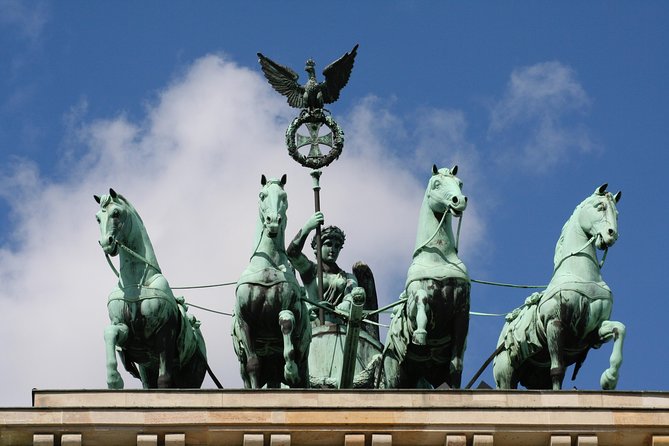
I like the structure because it mixes symbolism with practical landmarks. You start with the Brandenburg Gate, the kind of place you can photograph instantly, but you also learn what it meant as a symbol of division and reunification. Then you end up at checkpoints and neighborhoods that feel more personal than just looking at grand buildings.
The pacing is also realistic. With about 3 hours total, you cannot expect to read every plaque or linger at every facade, but you do get enough stop time to connect the dots and decide what deserves your next day.
Price and logistics for up to 8, with pickup and an air-conditioned vehicle
The price is $447.44 per group up to 8 people for about 3 hours. That works out well if you have a small group, or if you are traveling with family or friends and want a shared experience with less stress than planning multiple public-transport legs.
Included basics are what you would want for Berlin comfort: air-conditioned vehicle and private transportation. You also get a mobile ticket, and pickup is offered from the location of your choice in Berlin, as long as you send the exact address. The tour is offered in English.
What is not included is just as important for your planning. Snacks and bottled water are not provided, and entrance fees are not included. That does not mean you cannot see things for free, because several stops are listed with free entry, but you should still expect that some locations may require paid admission if you want to go inside.
Booking is often done in advance, with an average booking time of 21 days. If you are traveling in a busy season or have a specific start time in mind, it pays to lock it in earlier rather than later. Also, free cancellation is available if you cancel far enough in advance, so you are not stuck if plans shift.
From Brandenburg Gate to Reichstag: the political spine of Berlin
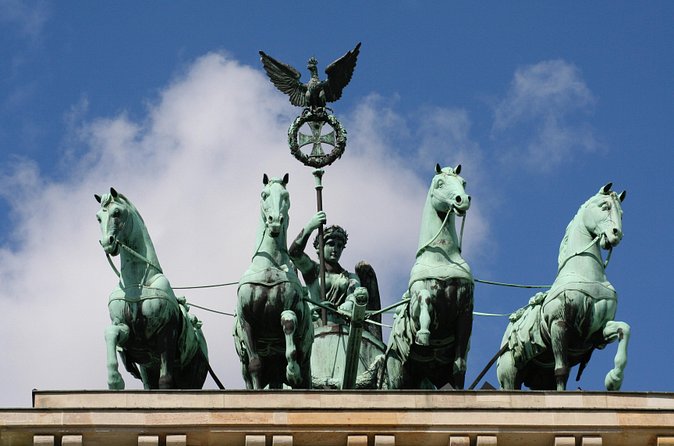
The tour begins at the Brandenburg Gate, and that start matters. It is Berlin’s most famous landmark, and the point is not just the photo. You learn how the gate functioned as a symbol of division and reunification, which gives it meaning beyond a landmark.
From there, the route shifts into the historic-center boulevard vibe. You will move along a classic central avenue lined with lime trees, with elegant cafés and an equestrian statue of Frederick the Great. This segment also ties in big institutions you can recognize from posters and textbooks, including Humboldt University and the German Historical Museum area, plus the place of Nazi book burning. Even if you only see these from the outside, the guide framing helps you connect architecture to events.
Next comes the Berlin State Opera. You get the quick idea of what makes it special, including the note that it was recently painstakingly restored and that Daniel Barenboim is the principal conductor. It is a useful stop if you want cultural context alongside political history.
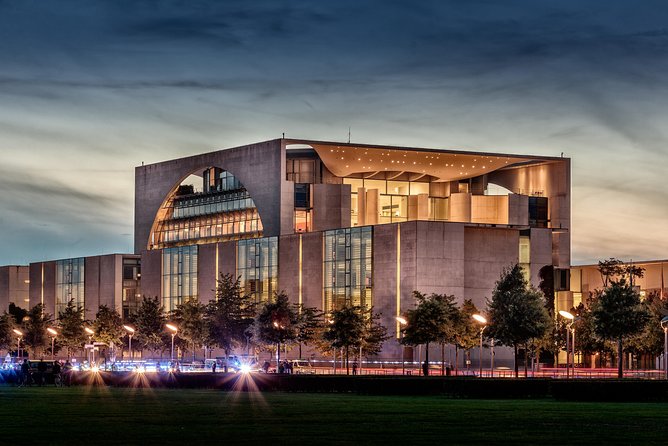
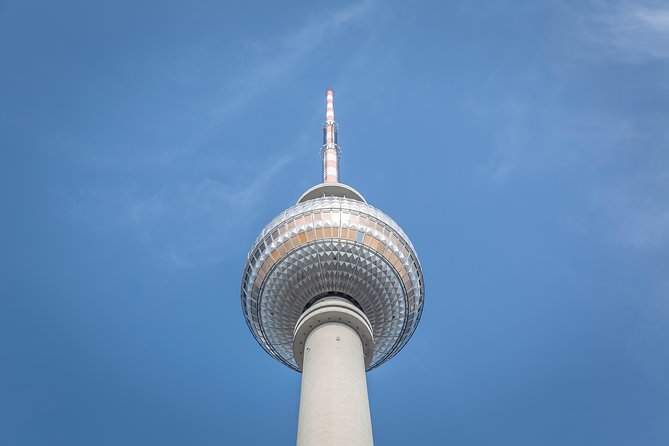
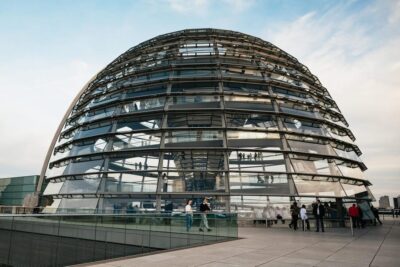
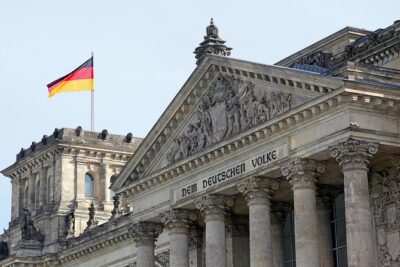
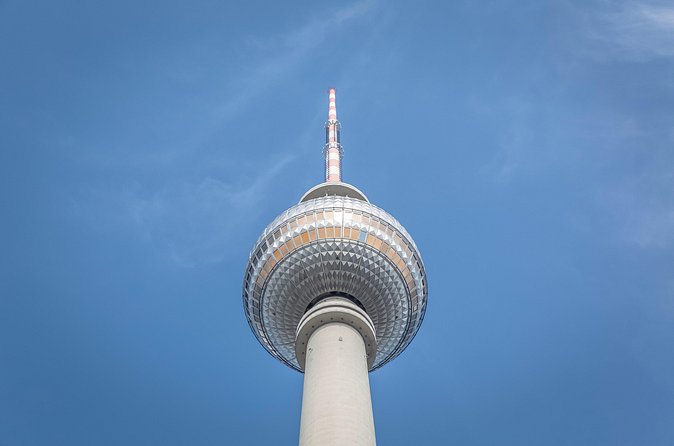
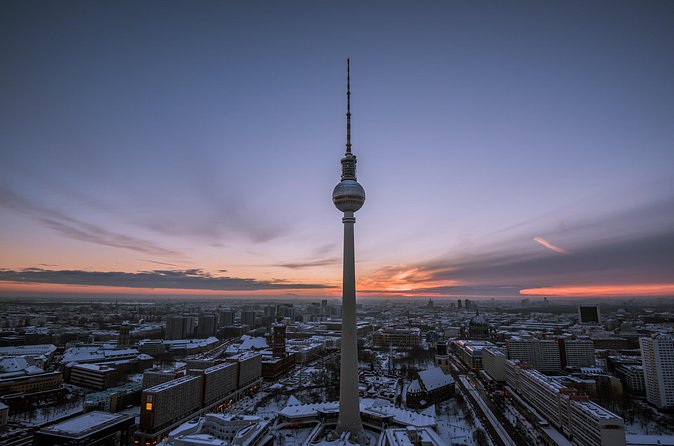
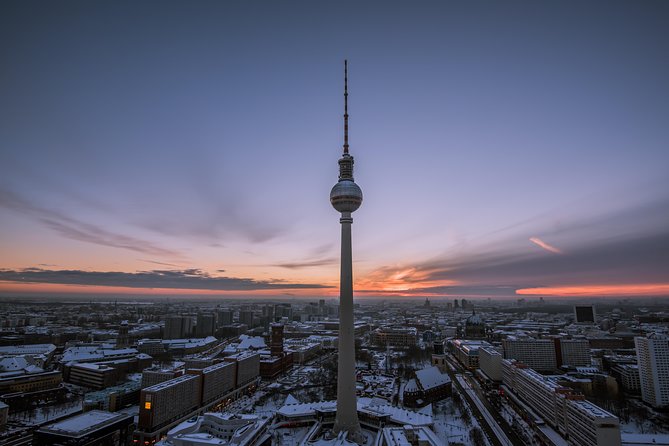
Then you get a look at the city’s tallest tower, followed by one of Berlin’s key power addresses, the Reichstag. This stop is about changeable German history, and it helps that the Reichstag is still the seat of the German parliament. From there, you can also see the Federal Chancellery and other government buildings, so your mental map of the political core clicks into place.
A practical consideration: because the tour moves from landmark to landmark in a tight window, you will likely spend more time taking photos and looking outward than reading every detail at ground level. If you love slow travel, treat this as your orientation day and plan a deeper return visit later.
Museum Island, the President’s seat, and the Berlin Palace view

After the government core, the tour steers you toward cultural landmarks with major artifacts attached to them. Museum Island is World Heritage, and it is also the kind of place where knowing what you are seeing makes a big difference. You will hear about five major museums on the island, and you will specifically connect to famous items like the Pergamon Altar and Nefertiti.
This stop is valuable even if you do not go inside. Most people already recognize the names, and the guide helps you place them within Berlin’s geography and museum layout. That means when you come back later for a ticketed visit, you will know how the pieces fit together.
Then the tour includes the neat seat of the Federal President. The key detail here is that it was formerly a summer palace of the Prussian kings. That little historical note is the kind of framing that makes a simple exterior stop feel more meaningful.
Next, you pass by Berlin’s main station, the newly built crossing station described as the largest in Europe. This is one of those stops that helps modern Berlin feel real, not just postcard-era buildings. It is a quick reminder that the city is not stuck in the past.
The route also includes the reconstructed palace with a magnificent Baroque façade, described as a 500-room palace that now houses museums. You learn it was once home to princes, kings, and emperors for centuries, and the guide connects that long timeline to what you see today. From this area, you also get a good view of the Berlin Cathedral.
If you are the type who likes an easy mental checklist, this stretch is perfect. It takes you from political power to museum culture to modern transit, without forcing you to do the planning yourself.
Nikolaikirche to the French church: squares, refugees, and an old-city feel
After the museum and palace area, the tour heads toward the cradle of Berlin, the oldest part of the city center around Nikolaikirche. You can picture it as a cozy pedestrian zone with pretty cafés today, which makes the transition from state power to everyday life feel natural.
Then you move to the French church in one of the most beautiful squares in Europe. The point is not just the setting. You also learn about French religious refugees in Berlin, which shifts the tone from courtly history to the lived stories of people who came here for safety.
These stops work especially well for travelers who get a little lost when Berlin only feels political. The guide framing makes the city’s social history feel part of the same conversation, not a separate topic. You finish this section with your eyes open to how Berlin’s neighborhoods grew from both hardship and hope.
A useful mindset here: this tour is giving you context fast. Your job on the next day is to pick which theme you care about most, politics, museums, refugees, or the modern city, and then go deeper.
Potsdamer Platz and the Wall: the longest graffiti remnant
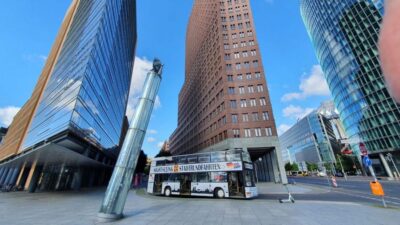
Potsdamer Platz is a name you will recognize, and the tour uses that familiarity well. The location was once described as the busiest square in Europe, and now it is a modern district with shops, cafés, and restaurants designed by world-famous architects. Even if you do not stop to shop, the place helps you feel Berlin’s reinvention.
Then comes one of the most memorable moments on the route: the longest preserved remnant of the Berlin Wall, painted completely by graffiti artists from all over the world. That detail matters because it shows how Berlin repurposed a physical wound into a visual language. Instead of treating the Wall as only a memorial object, you are invited to see how artists have turned it into a public canvas.
This is also a good moment to take stock of what you learned earlier. The tour starts with division and reunification at the Brandenburg Gate, and by the time you see the Wall remnant, the theme becomes concrete. You can look at what is left, and you can connect it to how Berlin rearranged itself after that era.
Time is limited, so expect a focused look. If you want longer contemplation, plan a separate walk back to the Wall area later on your own.
Embassy District to Victory Column, then Gedächtniskirche in the west
Next you move into the Berlin Embassy District. The guide highlights how the area still has old messages from the pre-war period mixed with hypermodern buildings of varied styles. It is a quick way to show that Berlin did not erase earlier eras, it built over them and around them.
Then you reach the Victory Column. The description you get is clear: it recalls the victories of the Kingdom of Prussia. This stop helps you understand that not all monuments are about neutral tourism. Some are tied to specific power and specific eras, even when they look clean and photogenic from afar.
To close out this arc, you head west to Gedächtniskirche. This landmark is a ruin that reminds visitors of the terrible destruction of Berlin in World War II. The emotional weight is built into the design, and the guide’s framing helps you see it as remembrance, not just a damaged building.
This west-and-east contrast is one reason the tour works for so many people. You are not stuck in one Berlin. You get the city’s shifting mood, from government grandeur to the Wall, then to a skyline of memories and modern building shapes.
Checkpoint Charlie and Scheunenviertel for the human scale
Checkpoint Charlie is the next major stop, and it lives up to its reputation as the most famous border crossing in Berlin. You spend a short time here, focused on seeing the place and understanding why it mattered as a symbol of the boundary line that divided the city.
Then the tour shifts toward Scheunenviertel, the former Jewish quarter. The emphasis is on experiencing the area and seeing old Berlin backyards. That is a meaningful change from monument-heavy stops, because backyards are where you imagine daily life.
The practical upside is that this segment helps you round out the tour beyond big government locations. It gives you a neighborhood feel, and it helps you remember that Berlin history is not only about policies and buildings, it is about communities and what they lived through.
If your itinerary is packed with museum tickets later, this neighborhood time gives your brain a reset. It is less about grand exteriors and more about the texture of the city.
What guide quality looks like on this route
The best part of this tour, according to recent firsthand experiences, is the guide presence. In one group of eight with ages ranging from 17 to 77, the guide Katherine stood out for being charming and for keeping everyone engaged during the full 3 hours. The guide also answered questions, which is huge in a tour like this because Berlin can feel like too much information at once.
That is also why the small group format matters. When you have up to 8 people, it is easier for the guide to adjust pacing and address questions on the fly. You get more back-and-forth than you would on larger tours.
You are also likely to enjoy this if you value listening. The guide is not just pointing, the guide is explaining, and the stops are arranged so the themes build. You can ask about what you saw earlier, and you can connect it to what is coming next without feeling lost.
How to make the most of a 3-hour pace
Because it is a compact tour, I would treat this as an orientation and story day. Wear comfortable shoes. Bring a camera if you like photos, but also bring patience for short stop times where you look, learn, and move on.
Since snacks and bottled water are not included, you should plan for that. Grab something before pickup, or bring your own small snack if you prefer. It also helps to travel with a charged phone, because you have a mobile ticket and you will likely use your phone for photos and quick reference while you wait for the next stop.
Also think about timing. You will start when you choose, but the day will be structured around the route. If you have a museum ticket later the same day, consider building in buffer time because the schedule is designed as one continuous experience.
One more practical point: with pickup offered at your address, make sure you share the exact location where you want to begin. That prevents delays and helps the vehicle get you efficiently.
Should you book this Berlin city tour for your trip?
Book this tour if you want an efficient, guided walkthrough of Berlin’s big landmarks in a private group of up to 8. It is especially worth it if you are short on time, want a clean day-one orientation, or prefer learning with a guide instead of stitching together multiple transit routes.
You might skip it if you want to spend long hours inside museums or you hate fast photo stops. This is built for context and seeing many key places in a short window, not for a slow deep museum day.
If you want the best match, plan to use this as your starter loop. Then return on your own to the spots that felt most meaningful, whether that is the Wall remnant at Potsdamer Platz, the Reichstag area, or Museum Island for a ticketed visit.
FAQ
How long is the Berlin private city tour?
It lasts about 3 hours.
How many people can join this tour?
It is for a maximum of 8 people per group.
Does the tour include pickup in Berlin?
Yes. Pickup is offered, and you choose the start location in Berlin by providing the exact address.
What language is the tour in?
The tour is offered in English.
Is this a private tour or a shared group tour?
This is a private tour. Only your group participates.
Is a mobile ticket included?
Yes, a mobile ticket is included.
Are entrance fees included?
No. Entrance fees are not included. Some stops are listed with free admission, but entrance fees in general are not part of the package.
Are snacks or bottled water included?
No. Snacks and bottled water are not included.
Is transportation included, and is the vehicle air-conditioned?
Yes. Air-conditioned vehicle and private transportation are included.
Can I cancel for free, and how far in advance?
Yes, you can cancel for free up to 24 hours in advance for a full refund.
Seeing Berlin in One Go
Everything else we filed on Berlin
- Private Photo Tour in Kreuzberg
★ 5.0 · 3 reviews - Kreuzberg Private Walking Tour: Immigrants, Artists & Hipsters
★ 5.0 · 3 reviews - Berlin’s Jewish Heritage: Private Tour of the Vibrant Jewish District
★ 5.0 · 3 reviews - Individual city tour Berlin for max. 8 persons
★ 5.0 · 3 reviews - Berlin & The Third Reich Private Guided Tour
★ 5.0 · 3 reviews - Private Analogue Photography Experience in Berlin
★ 5.0 · 3 reviews
City Tours, side by side.
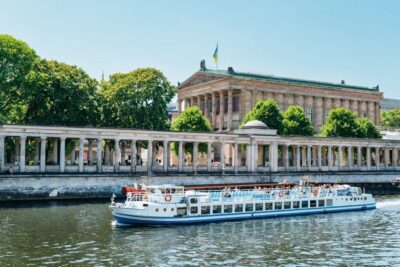 ★ 4.3Berlin: 1-Hour City Tour by Boat with Guaranteed SeatingFrom $2516,993 reviews
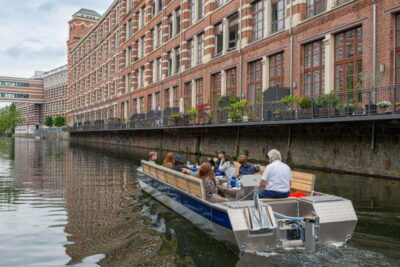 ★ 4.7Leipzig: City History Canal Sightseeing Tour on a MotorboatFrom $186,232 reviews
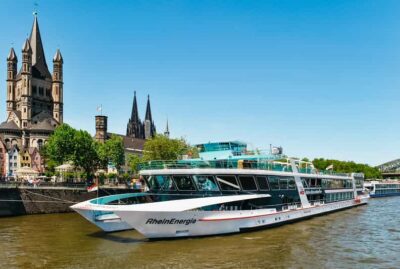 ★ 4.3Cologne: Panoramic City CruiseFrom $235,698 reviews
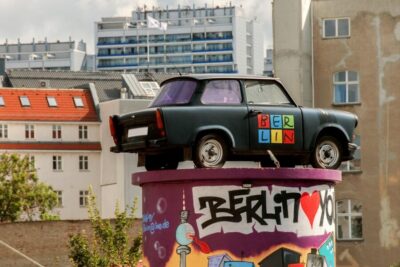 ★ 4.1Berlin: City Sightseeing Hop-On Hop-Off Bus TourFrom $254,233 reviews
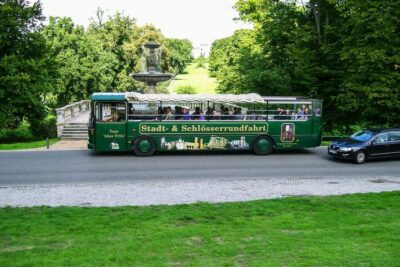 ★ 4.7Potsdam: City and Castles TourFrom $293,721 reviews
 ★ 4.1Düsseldorf: City Sightseeing Cruise on the RhineFrom $232,954 reviews
 ★ 4.5Bremen: City Center Guided Walking TourFrom $142,709 reviews
 ★ 4.7Freiburg: Gässle, Bächle and More City TourFrom $132,632 reviews
Other lists this tour is on