
REVIEW · BERLIN
Kreuzberg Private Walking Tour: Immigrants, Artists & Hipsters
Kreuzberg changes fast, so you need a guide who can explain it. This private 3-hour walk in Berlin follows the neighborhood’s street art and Turkish culture while also connecting the dots to its rough past and what’s coming next.
I like that the tour is built around real landmarks, like the Oberbaumbruecke and the old Wall traces, instead of generic photo stops. I also like the pace option, since a good guide makes the walk feel like a conversation, not a checklist.
One possible drawback: this is a private tour for a maximum of 10, so it can cost more if you’re traveling solo or as a small group.
If you want the short version, this is a smart way to see Kreuzberg’s left-bank-to-left-field mix, and still understand why it matters.
In This Review
- Key things to notice on this Kreuzberg private walk
- Kreuzberg, SO36, and an Oberbaumbruecke meeting point that sets the tone
- Cost, group size, and what $450 buys you in real life
- A historian guide who keeps the walk human (and not just factual)
- Berlin Wall traces and the Memorial, where the past feels physical
- SO36 and Orianienstrasse, where counterculture has street-level history
- Viktoriapark: the calm pause that makes the politics easier to absorb
- The future of Kreuzberg: riverside development and the pressure of change
- Getting around in 3 hours: what to expect from the pace and routes
- Who should book this Kreuzberg private tour, and who might skip it
- Should you book this Kreuzberg private walking tour?
- FAQ
- How much does the Kreuzberg private walking tour cost?
- How long is the tour?
- Is this a private tour?
- Where do we meet the guide?
- What’s the typical route like?
- What ticket or admission is included?
- Do I need to use public transport?
Key things to notice on this Kreuzberg private walk
- A historian guide, not just a local show-and-tell, helps you make sense of the neighborhoods shifts
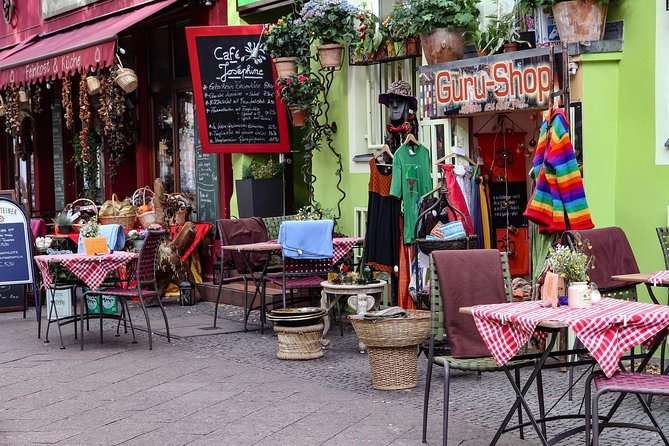
- Street art meets immigrant everyday life, including Turkish businesses and market culture
- Berlin Wall leftovers appear in context, so it feels less like a monument and more like a living scar
- SO36 and Orianienstrasse bring the counterculture story to the street, including historic clashes tied to anarchists and police
- Viktoriapark adds a needed pause, so the tour isn’t all pavement and politics
- The finish turns toward the future, including a looming riverside development that could push gentrification further
Deeper into the painted backstreets
- Berlin: Alternative Berlin Walking Tour★ 4.6 · 1,204 reviews
- Berlin: City Street Art Guided Walking Tour★ 4.8 · 886 reviews
- Berlin: 3-Hour Street Art Tour★ 4.7 · 778 reviews
- Kreuzberg: Culinary Food Tour★ 4.5 · 770 reviews
Kreuzberg, SO36, and an Oberbaumbruecke meeting point that sets the tone
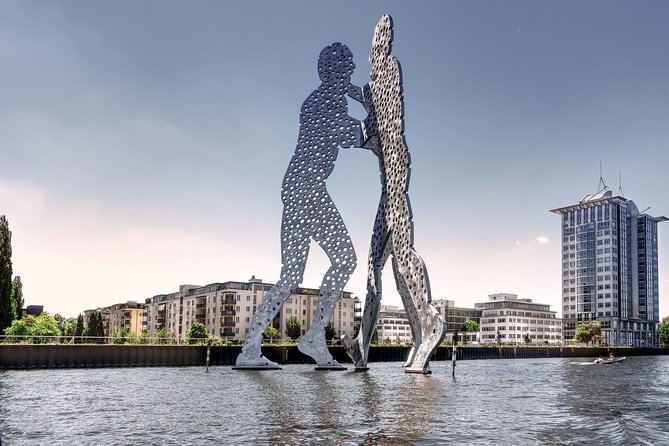
Most Berlin neighborhoods have one big identity. Kreuzberg has several, and they overlap in the same block. The tour starts you off with the Oberbaumbruecke, a double-decker bridge over the Spree River that instantly feels like Berlin, not a theme park version of Berlin. From there, you move toward the heart of SO36, named after the neighborhood’s former postal code and longtime nickname for eastern Kreuzberg.
This opening stretch matters. It’s where you get the geography of the story, and you begin to see why this area attracted artists, outsiders, and later, the kinds of celebrities and trendsetters who want to be near the action. The guide uses the views and street layout to explain how the “rough-and-tumble” reputation happened in the first place, then how it keeps evolving.
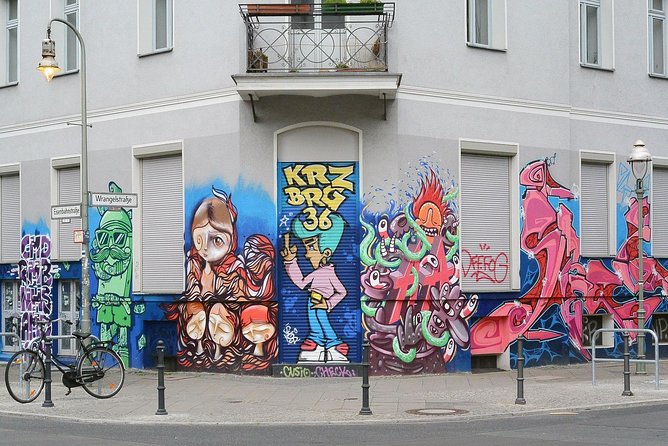
You’ll also notice that Kreuzberg is not one single vibe. There are quiet corners, busy storefronts, and murals that look like they’ve been there forever. When a historian explains what was happening around those same spaces in the past, the neighborhood stops feeling random.
Cost, group size, and what $450 buys you in real life
The price is $450 per group with a maximum of 10 people. On paper, that’s a lot. In practice, it can be a good value if you spread it across a few travelers, or if you want a guided experience that’s more flexible than a large public group tour.
Here’s the real trade-off to think about: private tours are best when you’ll actually use the “private” part. With this one, that means asking questions, moving at a comfortable pace, and getting help reading what you see on the street art walls, not just being told what to look at. A private historian guide also makes it easier to tailor the emphasis, like putting more weight on the immigrant mix, or more on the Wall-era story.
Also, the tour uses a mobile ticket and is set up for walk-and-route movement. It’s not described as one long nonstop hike. You’ll likely use public transport a few times, because some stretches are simply too far to make sense on foot during a 3-hour window.
If you’re a solo traveler, you’ll want to think carefully about whether you’re paying mostly for the guide. If you’re traveling with a couple friends or family, the math tends to improve, and you get a much more comfortable group size than big-bus tours.
A historian guide who keeps the walk human (and not just factual)
One of the most praised parts of this experience is the guide. Many people come away talking about Klaus specifically: friendly, fun, and able to work with the group pace. That might sound like a small detail, but it changes the whole feel of Kreuzberg. Street art and neighborhood politics are both things where context helps. When you’re not rushed, you have time to look closely and ask why something is painted, or why something was built where it is now.
Another practical win: Klaus also points you toward food, like knowing where to get awesome spaetzle. That kind of tip is worth more than it sounds. When you’re walking through a creative neighborhood, you want to eat nearby, without wasting your energy hunting.
The tour is also described as historian-led, which means you’re not only hearing “cool facts.” You’re getting cause and effect: why abandoned buildings ended up as creative spaces, how different waves of migration shaped everyday business life, and what happened when Cold War suppression changed public life and local identity.
Berlin Wall traces and the Memorial, where the past feels physical
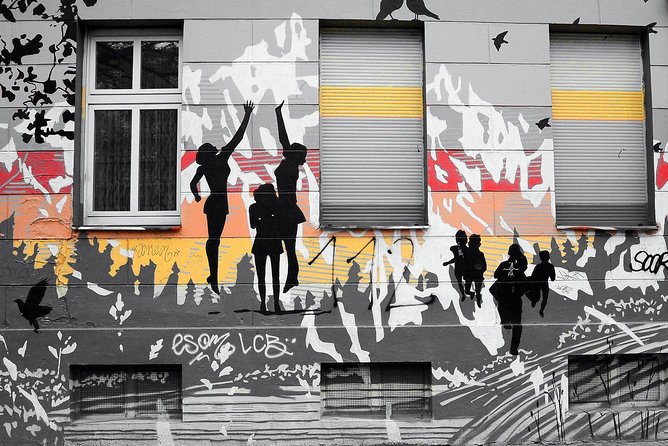
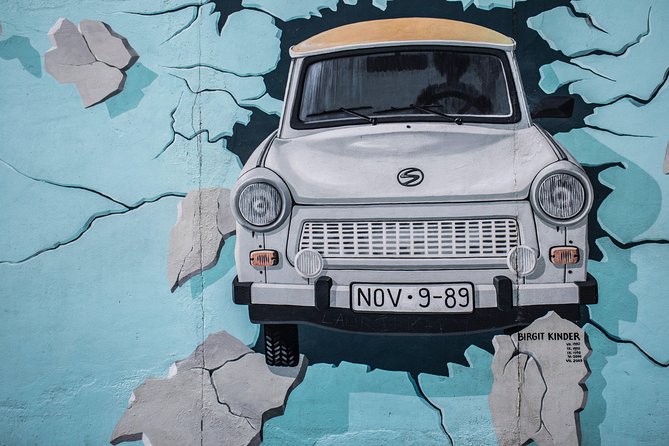
A major stop centers on the Memorial of the Berlin Wall. This part of the route is important because it slows the tour down just enough to let you process what you’re seeing. Berlin Wall leftovers can look like background details if you only glance at them. With a guide, you learn to treat them like evidence.
From there, the tour keeps moving through the neighborhood’s transformation story, with stops that connect Wall-era suppression and division to the later creative occupation of space. You’ll also pass by street art-filled walls and areas where buildings or parcels were repurposed into art spaces.
The key value here is perspective. You’ll see that Kreuzberg’s street art culture wasn’t created in a vacuum. It grew from a mix of real history, available space, and a community that learned how to adapt when the city itself was changing rules.
Practical tip: if you’re the kind of person who likes photos, take a few at the memorial, then put the camera down for a minute. The goal is to let the explanation stick, because the wall story connects directly to what you’ll see later in the day around SO36.
Other walking routes through Berlin
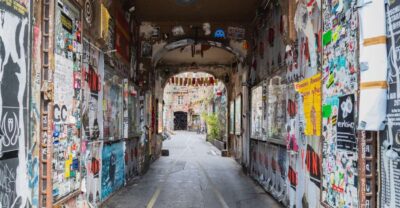
SO36 and Orianienstrasse, where counterculture has street-level history
After the Wall-focused moment, the tour turns toward SO36 and the streets around it, including Orianienstrasse. This is where Kreuzberg starts to feel like a neighborhood you could actually live in. You’ll find lively, eclectic shops and cafes, but you’ll also hear the deeper background behind why this area became known for a certain kind of creative stubbornness.
Orianienstrasse has a name with history, linked to the Dutch Princely House of Orange. But the reason people remember it is that it became a stage for conflict around the turn of the century, tied to clashes between Berlin’s anarchists and police.
That matters because Kreuzberg’s counterculture story is not only about art. It’s also about resistance, improvisation, and pushing back against authority. When the guide connects those historic street battles to later creative communities, the neighborhood starts to feel like one long conversation across decades.
You’ll also travel past areas where street art is built into the walls. Some murals can look like they’re simply aesthetic until you learn how the neighborhood’s mix of abandoned buildings and creative repurposing gave artists both space and audience. Then it clicks. The art isn’t just decoration. It’s part of how people claim a place.
Viktoriapark: the calm pause that makes the politics easier to absorb

Halfway through, there’s time for Viktoriapark, one of Kreuzberg’s best-known green spaces. This isn’t just a “nice break.” It helps you reset. When you’ve been walking past dense street life, markets, and intense historical topics, a park gives your brain a breather.
Think of Viktoriapark as a contrast lens. You can see the neighborhood’s edges, feel the air change, and then return to the street with better focus. It also makes the route feel more realistic, because a good neighborhood tour is supposed to reflect how people actually move through the city, not how a tour bus would.
If you like photography, parks are where you can get a different kind of Berlin picture, one that isn’t only walls and windows. And if you’re traveling with family, this park stop is often the part that keeps kids engaged without forcing them to sit still for too long.
The future of Kreuzberg: riverside development and the pressure of change
The tour ends by bringing you to the question that’s on everyone’s mind in Berlin neighborhoods like Kreuzberg: what happens next?
You’ll learn about future plans for Kreuzberg, including a riverside development project that could speed up gentrification. That’s the part I appreciate most, because the story doesn’t stop at murals and memories. It turns toward decisions being made right now.
This ending approach is valuable for travelers because it gives you a framework. When you leave Kreuzberg with your eyes open, you’ll start noticing how new development changes rent pressure, storefront turnover, and the kind of customers a street attracts. You’ll also notice how long-standing communities sometimes respond by protecting their identity, organizing locally, or resisting in small everyday ways.
It’s a heavier note than some “hip neighborhood” tours, but it also makes your experience feel grounded. You’re not just collecting photos. You’re understanding the forces that will shape what you see the next time you return.
Getting around in 3 hours: what to expect from the pace and routes
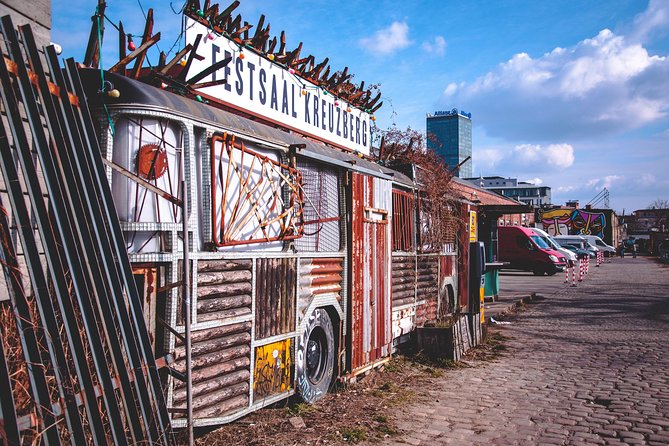
This is a 3-hour private walking tour, and it’s not described as one long endurance trek. You’ll use public transport a few times because certain gaps between key sites are too far to make sense on foot within the time limit.
That is good planning. It keeps the tour from turning into a hurried march. It also reduces the chance you’ll feel exhausted right before you reach the best parts, like SO36 or Viktoriapark.
Wear comfortable shoes. Kreuzberg sidewalks can be uneven, and you’ll likely be stepping off and on transit. If you’re the type who easily gets cold, bring a light layer, since weather can shift across a river view and park stop in the same afternoon.
There’s also an optional bike rental listed as 10 EUR per person, but it’s not included. If you like biking and you’re comfortable mixing with city traffic, you might consider it separately. For most people, the walking-and-transit style is the easiest match for a 3-hour window.
Who should book this Kreuzberg private tour, and who might skip it
This tour is a strong fit if you want:
- A neighborhood story that links street art, immigrant life, and historical events into one explanation
- A guide who can slow down and go at your pace, which matters in a place like Kreuzberg
- A mix of landmarks and lived-in streets, including the Oberbaumbruecke start, the Wall memorial stop, SO36 sites, and Viktoriapark
You might want to choose something else if:
- You prefer purely visual street art tours with minimal history. This one is built around a historian’s context.
- You’re traveling solo and the group price doesn’t feel worth it. Private tours can be best when shared.
The best pairing is travelers who enjoy asking questions and reading neighborhoods like text, not just scenery.
Should you book this Kreuzberg private walking tour?
Yes, if you want Kreuzberg with context and you value a guide you can talk to. The biggest draw is the combination of street-level creativity and historical explanation, capped by a clear look at how development pressure may reshape the area.
The guide quality is a standout. Klaus is highlighted for being friendly, knowledgeable, and good at matching the group pace, plus the practical food tip about spaetzle. That blend of story and real-world help is exactly what makes a neighborhood tour worth your time.
If you’re deciding between a generic Kreuzberg walk and this private historian-led format, I’d lean this way. You get more clarity, fewer wasted stops, and a better sense of what you’re seeing beyond the surface.
FAQ
How much does the Kreuzberg private walking tour cost?
It costs $450.00 per group, up to 10 travelers.
How long is the tour?
The tour lasts about 3 hours.
Is this a private tour?
Yes. It is described as a private tour with a maximum of 10 travelers.
Where do we meet the guide?
The meeting point is Schlesische Str. 18, 10997 Berlin, Germany.
What’s the typical route like?
You start in Kreuzberg near the Oberbaumbruecke, then visit key points connected to SO36, see Memorial of the Berlin Wall, and include a stop at Viktoriapark. The tour also discusses future plans for Kreuzberg.
What ticket or admission is included?
A mobile ticket is included, and the listed admissions for the stops are free.
Do I need to use public transport?
You will need to use public transport a few times, since some distances between key sites would be too far to walk. Optional bike rental is available but not included.
Pavements of Berlin
More Painted Walls and Backyards
Everything else we filed on Berlin
- Private Photo Tour in Kreuzberg
★ 5.0 · 3 reviews - Kreuzberg Private Walking Tour: Immigrants, Artists & Hipsters
★ 5.0 · 3 reviews - Berlin’s Jewish Heritage: Private Tour of the Vibrant Jewish District
★ 5.0 · 3 reviews - Individual city tour Berlin for max. 8 persons
★ 5.0 · 3 reviews - Berlin & The Third Reich Private Guided Tour
★ 5.0 · 3 reviews - Private Analogue Photography Experience in Berlin
★ 5.0 · 3 reviews
Street Art and Alternative City Tours, side by side.
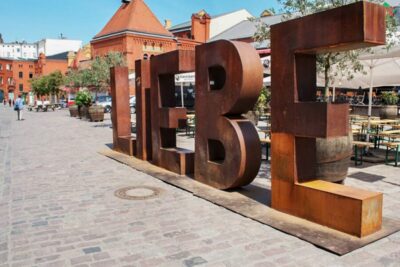 ★ 4.6Berlin: Alternative Berlin Walking TourFrom $291,204 reviews
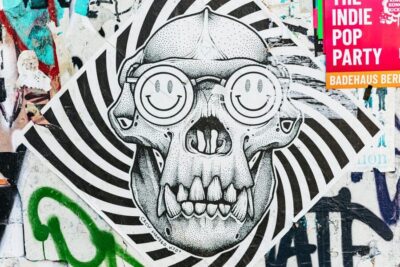 ★ 4.8Berlin: City Street Art Guided Walking TourFrom $23886 reviews
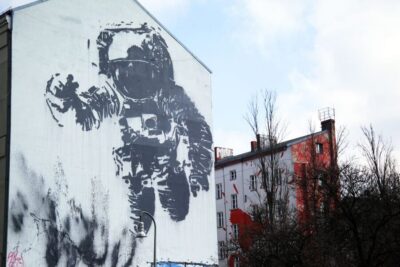 ★ 4.7Berlin: 3-Hour Street Art TourFrom $23778 reviews
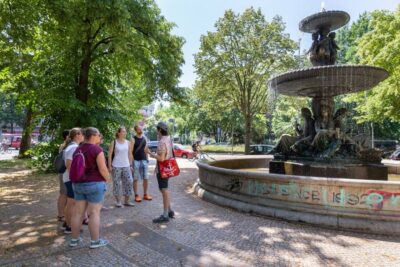 ★ 4.5Kreuzberg: Culinary Food TourFrom $589770 reviews
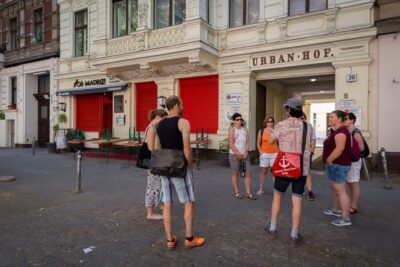 ★ 4.7Berlin: Kreuzberg Guided Walking Evening TourFrom $27555 reviews
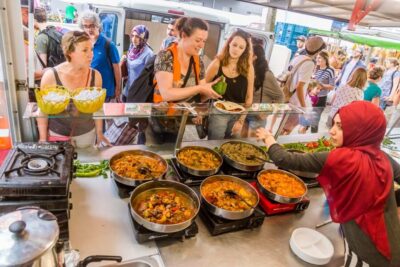 ★ 4.7Berlin: Alternative Bike Tour of Kreuzberg & FriedrichshainFrom $41548 reviews
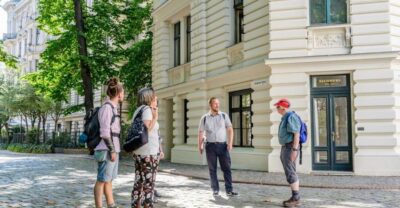 ★ 4.9Berlin: 2.5-Hour Walking Tour through Kreuzberg 61From $23525 reviews
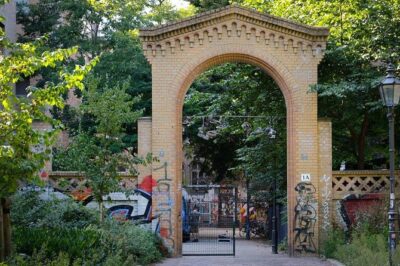 ★ 5.0Berlin Off-the-Beaten-Path Walking Tour: Kreuzberg, Mitte and FriedrichshainFrom $30412 reviews
Other lists this tour is on