
REVIEW · CITY TOURS
All of Berlin (city panorama)
Berlin can feel huge at first glance.
This 4-hour city panorama tour strings together major landmarks in one logical loop, with a local Spanish guide explaining what you’re seeing as you go. You start near the Berlin TV Tower, grab a mobile ticket, and spend your time looking at buildings and squares instead of building an itinerary. It’s an efficient way to get your bearings across central Berlin.
I especially like how much you cover without rushing. You hit big-name places like Alexanderplatz, Berlin Cathedral area stops, Gendarmenmarkt, Checkpoint Charlie, and Brandenburg Gate in a single morning. I also like the guide style, with lots of history tied to each stop, the kind of context that helps the city make sense rather than just look pretty.
One thing to consider: it’s Spanish only, and the day is walk-heavy. If you do not feel comfortable with longer walking, or if Spanish is a deal-breaker, you may want a different format.
In This Review
- Key highlights and practical takeaways
- Starting at Berlin TV Tower: quick orientation, fast context
- Alexanderplatz to Nikolaiviertel: fountains, councils, and Berlin’s older heartbeat
- Berliner Dom and Lustgarten: big architecture and the “why is this here?” moments
- Unter den Linden and Bebelplatz: opera beauty meets a cold 20th-century reminder
- Neue Wache to Gendarmenmarkt: memorial art and Berlin’s harmonized square
- Checkpoint Charlie to Potsdamer Platz: Cold War edges and modern Berlin momentum
- Holocaust Memorial to Brandenburg Gate: meaning, then the final big vista
- Price and value: why about $25.58 makes sense for a 4-hour tour
- Who should book, and who should choose another option
- Should you book this All of Berlin city panorama tour?
- FAQ
- Is this tour offered in Spanish?
- How long does the tour last?
- Where does the tour start and where does it end?
- Do I need to buy tickets for each stop?
- Do I get a mobile ticket?
- Is it okay for people who can walk but want to go at an easy pace?
Key highlights and practical takeaways
- A smart “first Berlin” route that covers central icons from Alexanderplatz to Brandenburg Gate
- Spanish-only local guidance with strong historical commentary, led by guides like Juan
- Mostly free admissions at stops, so you keep control of your budget
- Walkable areas you miss by bus, including stretches and viewpoints cars cannot use
- Memorial stops with explanation, including Neue Wache and the Holocaust Memorial
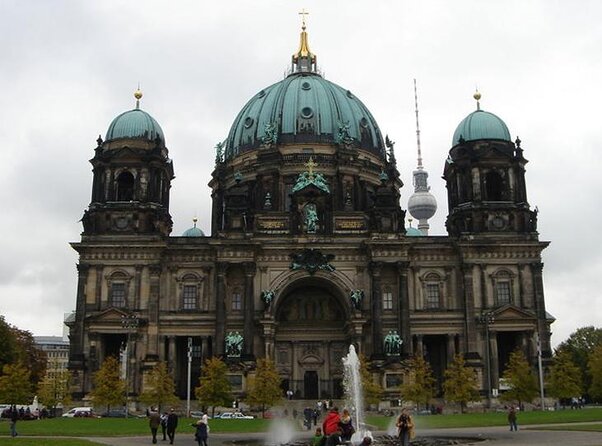
- Small-group feel with a maximum of 25 people
The wider Berlin sightseeing pile
- Berlin: 1-Hour City Tour by Boat with Guaranteed Seating★ 4.3 · 16,993 reviews
- Berlin: City Sightseeing Hop-On Hop-Off Bus Tour★ 4.1 · 4,233 reviews
- Berlin: 1-Hour City Sightseeing Cruise★ 4.4 · 2,210 reviews
- Berlin City Hop-on Hop-off Tour with Optional Cruise★ 3.5 · 1,155 reviews
Starting at Berlin TV Tower: quick orientation, fast context
The tour begins at the Berlin TV Tower area, right by Panoramastraße 1A. That’s a good move, because Alexanderplatz and the city center can feel overwhelming if you start randomly. Your guide sets the scene early, helping you understand the square’s role and what you’re looking at, including the look and layout around the TV Tower entrance.
In the first chunk, I like that you do not just stand and take photos. You get the “why” behind the space, then you move on while it is still fresh in your mind. That small habit makes the rest of the tour click, because later stops reference earlier ideas.
Alexanderplatz to Nikolaiviertel: fountains, councils, and Berlin’s older heartbeat
You start at Alexanderplatz and immediately zoom in on recognizable landmarks. The tour also includes the Neptune Fountain at the center of the square, where the point is less about the photo and more about what the statue symbolizes. It’s one of those quick stops that actually teaches you how to read a city, because fountains often carry messages about identity and pride.
Next comes the Rotes Rathaus, the red building tied to the council of Berlin. You get brief but useful context about how the city administration fits into the wider story of Berlin’s governance. Admission is not included here, so if you had planned to go inside, you will need to decide on the spot whether that’s worth the extra cost and time.
The tour then swings toward a UNESCO world heritage complex of buildings and museums, focusing on the entrance and the general significance of the area. Even without a deep museum detour, the stop helps you understand why this part of Berlin matters as an official cultural zone.
Then you shift into Nikolaiviertel, often described as one of the more original-feeling parts of Berlin. The guide connects the area to roughly 800 years of foundation, and you spend time thinking about the meaning of St Georg in the middle of the square. This is where the walking tour starts to feel like more than a checklist, because the vibe of Nikolaiviertel is different from the big civic squares.
Potential drawback here: if you are expecting lots of free time to linger at every stop, this portion can feel tight. The pacing is purposeful, but you will still want comfortable shoes and patience.
Berliner Dom and Lustgarten: big architecture and the “why is this here?” moments
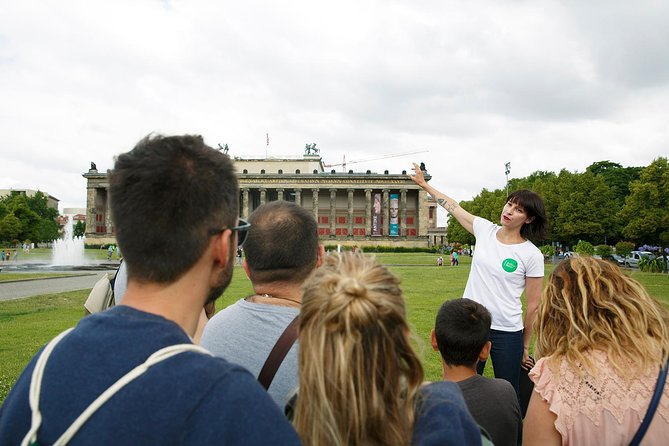
From Nikolaiviertel, the tour heads to Berliner Dom, with time to appreciate the cathedral’s dome and decoration. The guide’s goal is to link the building to its history and explain who made it possible, so you are not just admiring stonework in a vacuum.
Right after that, you reach Lustgarten, a central green space with a name that tells you something if you know what to ask. The tour includes the reason of the name and what makes the area notable, which helps you see Lustgarten as more than a patch of grass between major sights.
This is also a good stage for the “Berlin in layers” theme. You move from a historic-feeling neighborhood, to a grand religious monument, to a central park space with royal and civic associations. Even the way the tour frames the transitions makes the city feel organized.
The itinerary then brings you to a main street that used to be a royal way from the palace to the Tiergarten. Today it is one of the most visited stretches in Berlin, and your guide helps connect that past to the present movement and crowd energy. You are basically walking the route of power and then watching it become everyday city life.
Unter den Linden and Bebelplatz: opera beauty meets a cold 20th-century reminder
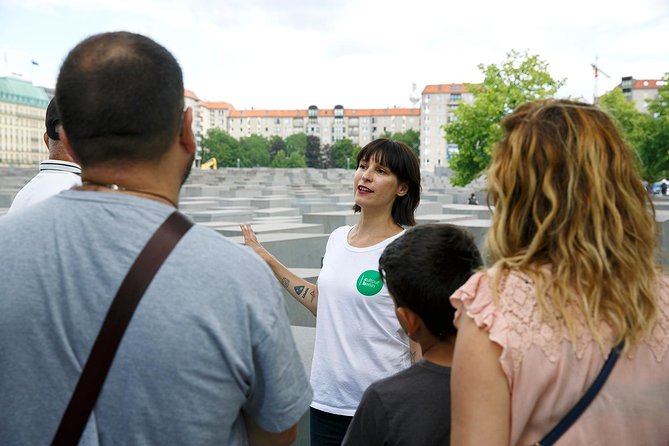
Unter den Linden is where Berlin’s “signature boulevard” energy really shows up. The tour includes the Staatsoper Unter Den Linden, letting you admire the opera house while your guide explains the cultural importance of the building and its place on the street.
Then the route goes to Bebelplatz, and this stop turns the volume down in the best way. You learn why the square mattered in the 20th century, what memorial sits in the middle, and why Hitler’s propaganda minister played an important role at this location. This is a heavy subject, but the stop is designed to make the location meaningful, not just scary.
I appreciate how the guide treats this as historical geography. Instead of lecturing from a distance, you are standing in the exact space where the story unfolded, so the explanation feels grounded.
Practical note: you might feel like you want to read everything slowly here, but the tour keeps moving. If you are sensitive to intense historical topics, plan a quieter evening afterward.

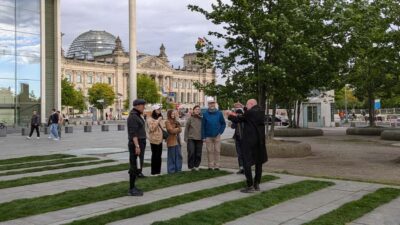
Neue Wache to Gendarmenmarkt: memorial art and Berlin’s harmonized square
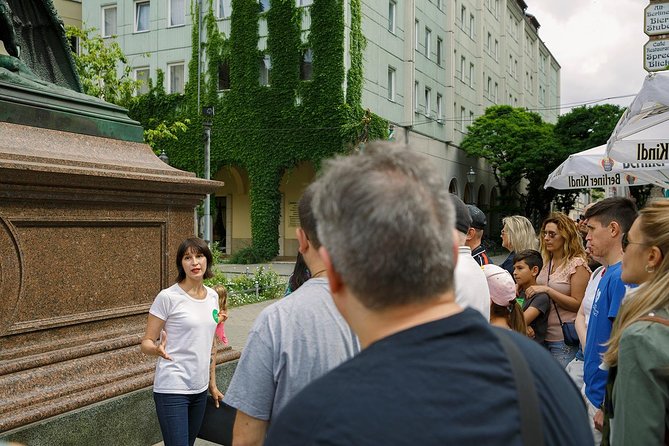
At Neue Wache, the tour focuses on a memorial adapted to different times of history and includes attention to a piece of art by Käthe Kollwitz. This stop can be the emotional center of the walk for many people because it connects art and remembrance in a straightforward way. The stop includes admission here, so you are not guessing about whether you can go in.
Next comes Gendarmenmarkt, often treated like a centerpiece square in central Berlin. The guide frames it as Berlin’s most beautiful public square, and you get time to look at the ensemble of the concert house plus two church buildings with towers. What matters here is the layout and the “harmony” your guide points out, which is easier to understand when you stand in the middle of it rather than read about it later.
This is also where the tour gets a bit more visually pleasing without going soft on history. You can walk the same route and experience both the reflective memorial moments and the elegant civic design, back to back.
Checkpoint Charlie to Potsdamer Platz: Cold War edges and modern Berlin momentum
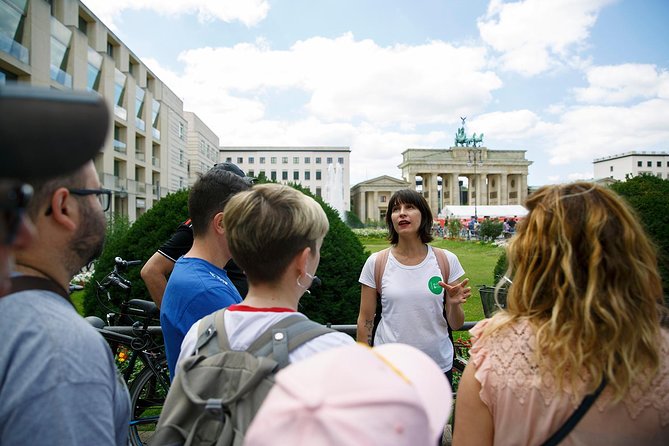
Then it’s time for Checkpoint Charlie. Your guide explains it as a reminder of the former border crossing, the Cold War, and the partition of Berlin. You spend enough time here to connect the physical location with how Berlin worked as a divided city, not just as a symbol.
Right after that, the tour includes looking across the area with a focus on historical context. Even if you only catch a few sightlines, the explanation helps you understand why this part of Berlin is referenced so often in stories about the Cold War.
Potsdamer Platz comes next, and the tour gives you a quick “from beginning to today” viewpoint. You see how the place shifted into one of the most modern areas in Berlin right now. It’s a helpful contrast after Checkpoint Charlie because it shows how quickly Berlin can move from division to new life, at least in the way the city redeveloped the space.
You will feel the difference in atmosphere here. The street energy changes, and the guide’s framing helps you recognize that Potsdamer Platz is about both history and modern reinvention.
Holocaust Memorial to Brandenburg Gate: meaning, then the final big vista
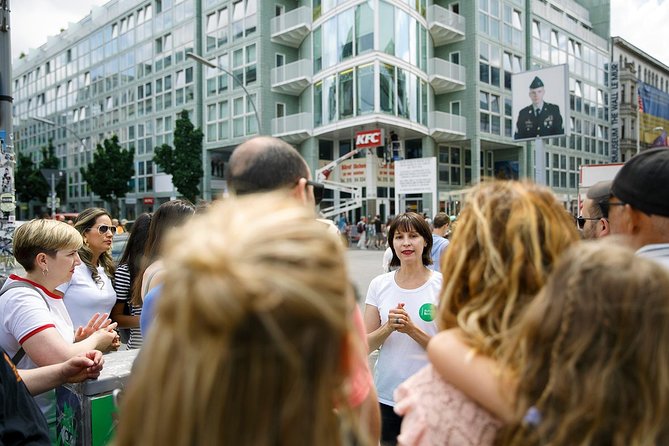
The Holocaust Memorial is a stop you should treat with focus. The tour includes time to try to understand the meaning of the author, and it positions the memorial as an important site next to Brandenburg Gate. If you’ve visited Berlin before, you still may find this one lands differently because you are given a framework for interpreting what you see.
Finally, you wrap up at Brandenburg Gate, with a view toward the Tiergarten, the Parisien square, and the Adlon Hotel. Your guide brings you back to what the place represents and the history connected to it, turning the last stop into a “big picture” conclusion.
I like this ending format. By the time you reach Brandenburg Gate, you have already spent hours learning about Berlin’s squares, architecture, governance, and memory sites. The gate does not feel random at the end, it feels like the culmination.
Price and value: why about $25.58 makes sense for a 4-hour tour
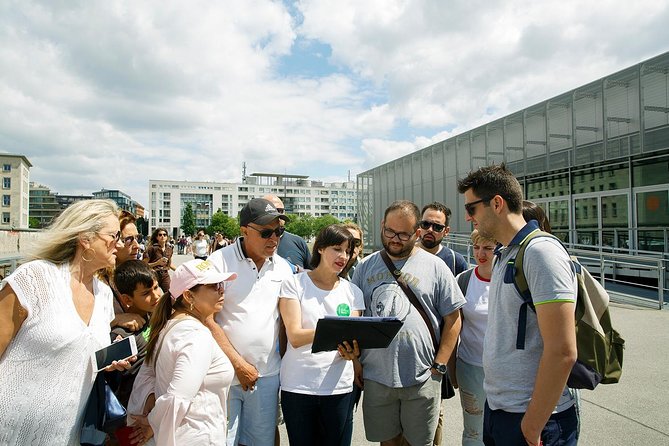
At $25.58 per person for about 4 hours, this is priced for value if you care about efficiency. You are not paying for private transportation, and you are not buying a full-day ticket that covers everything inside museums. Instead, you are paying for guided orientation plus commentary across multiple high-impact stops.
The biggest value is time saved. You avoid the messy part of first visits: figuring out routes, deciding what to prioritize, and trying to find coherent meaning between landmarks. With a guide like Juan providing lots of historical info, the tour becomes a shortcut to understanding Berlin’s structure and themes.
It also helps that many stops have admission listed as free. Rotes Rathaus is not included, but Neue Wache is included, so you are not paying admission fees across the board.
This is also a small group experience, capped at 25 people. That matters because your guide can still keep the flow manageable, and you are not lost in a crowd.
One timing note: it’s often booked around a month in advance. If your dates are tight, it’s smart to lock it in early rather than assume you can grab it last minute.
Who should book, and who should choose another option
This tour is a strong fit if you want a high-coverage overview of central Berlin and you like learning through guided walking. It works well for first-timers, people with limited time, and anyone who wants to see major sights like Brandenburg Gate without spending hours planning.
It’s also a good choice if you appreciate the mix of styles: big squares, cathedral architecture, civic landmarks, and memorials. You get a balanced route that shows Berlin as both a modern city and a place shaped by painful events.
If you should think twice: it’s not recommended for people who cannot walk properly for long distances. The route is built for movement. Also, since it’s operated by Spanish guides and just in Spanish, language needs to be a match for your comfort level.
If you fall into either category, you may prefer a route that is shorter, offers more frequent rest breaks, or comes in another language option.
Should you book this All of Berlin city panorama tour?
I’d book it if you want a guided, efficient way to understand central Berlin in one morning or early day. The combination of major landmarks, stop-by-stop context, and a guide who brings history into focus makes the $25.58 price feel reasonable for what you get.
I would not book it if walking long distances is a problem or if Spanish-only is too limiting. In those cases, you can still see Berlin, but you would probably be happier with a tour that better fits your pace or language needs.
If you want an organized path from Alexanderplatz to Brandenburg Gate, with memorials included and explained, this one does the job. It’s the kind of tour that leaves you with a mental map of the city, not just photos.
FAQ
Is this tour offered in Spanish?
Yes. The tour is operated by a Spanish-speaking local guide and the tour is just in Spanish.
How long does the tour last?
It lasts about 4 hours.
Where does the tour start and where does it end?
It starts at the Berlin TV Tower meeting point at Panoramastraße 1A, 10178 Berlin, Germany, and it ends back at the same meeting point.
Do I need to buy tickets for each stop?
Many stops are listed as free. Rotes Rathaus is not included, and Neue Wache is included.
Do I get a mobile ticket?
Yes, the tour uses a mobile ticket.
Is it okay for people who can walk but want to go at an easy pace?
The tour is not recommended for people who are not able to walk properly for long distances, since the route is designed for walking between stops. Service animals are allowed.
Seeing Berlin in One Go
Everything else we filed on Berlin
- East Berlin: City of Shadows Walking Tour
★ 5.0 · 11 reviews - Berlin: Die Stachelschweine – Frank Lüdecke – Träumt Weiter
★ 4.7 · 11 reviews - Potsdam Day Trip from Berlin with a Local: Private & Personalized
★ 4.0 · 11 reviews - An Introduction to Berlin Walking Tour
★ 5.0 · 11 reviews - DJ for a Day: Learn to Mix Like a Pro in Berlin
★ 5.0 · 11 reviews - 2-H Segway Sightseeing Tour Berlin
★ 4.5 · 11 reviews
City Tours, side by side.
 ★ 4.3Berlin: 1-Hour City Tour by Boat with Guaranteed SeatingFrom $2516,993 reviews
 ★ 4.7Leipzig: City History Canal Sightseeing Tour on a MotorboatFrom $186,232 reviews
 ★ 4.3Cologne: Panoramic City CruiseFrom $235,698 reviews
 ★ 4.1Berlin: City Sightseeing Hop-On Hop-Off Bus TourFrom $254,233 reviews
 ★ 4.7Potsdam: City and Castles TourFrom $293,721 reviews
 ★ 4.1Düsseldorf: City Sightseeing Cruise on the RhineFrom $232,954 reviews
 ★ 4.5Bremen: City Center Guided Walking TourFrom $142,709 reviews
 ★ 4.7Freiburg: Gässle, Bächle and More City TourFrom $132,632 reviews
Other lists this tour is on