
REVIEW · FRANCONIA
Bamberg: Immersive Medieval Tour
Bamberg turns history into something you can almost smell, from mead to witches’ ointment stories. I love the way the tour gives you a clear path through Bamberg’s standout landmarks while still keeping it personal, and I also like that you get hands-on tasks, not just facts. A fair caution: this tour is in German and it asks you to play along, so it may feel like more theatre than textbook if that is not your thing.
You start off with a glass of delicious medieval met, then you get pulled into daily life as either a noble lady or a simple craftsman. That role assignment changes how you see the streets, because you end up noticing the practical details that make medieval towns work.
At the same time, Bamberg’s center can get crowded at certain times of year, and this tour walks on mostly side lanes to keep things manageable. Still, it is outdoors for much of the experience, so dress for real weather, especially in winter.
In This Review
- Key takeaways
- Why Bamberg’s Medieval Layout Hits Hard
- Getting Started at Geyerswörthstraße 5 With Mead and Medieval Rules
- Town Hall to Romanesque Cathedral: Where 11th-Century Bamberg Lives
- A small drawback to keep in mind
- Becoming a Noble Lady or Craftsman, Then Doing It for Real
- The value of the hands-on moments
- Fire, Witches’ Ointment, and Daily Life Stories in a UNESCO Town
- What I’d watch for
- How Bamberg Shaped Central European Cities, Not Just Its Own Streets
- Route Style: More Side Streets, Less Crowd Pressure
- Price and Value: Is 23 USD for 75 Minutes Worth It?
- Who Should Book This Tour, and Who Might Not
- Quick Practical Checklist Before You Go
- Should You Book the Bamberg Medieval Tour?
- FAQ
- How long is the Bamberg medieval tour?
- What is included in the ticket price?
- Where do I meet the guide?
- Is the tour guided and in which language?
- Is mead included, or do I need to buy it?
- Are alcohol or drugs allowed?
- What are the cancellation terms?
- Can I reserve without paying right away?
Key takeaways
- Met welcome: you get a glass of medieval mead to start the tour right.
- Roleplay, not lecture: you take on a noble lady or craftsman role for the full 75 minutes.
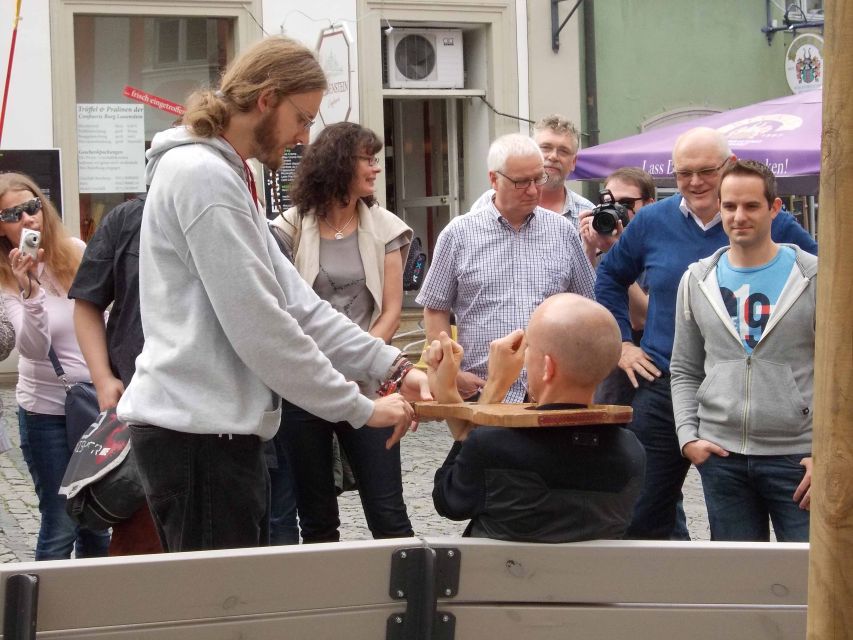
- 11th-century anchors: Bamberg’s town hall and Romanesque cathedral are part of the route.
- Hands-on tasks: you may collect water from wells and ignite embers with a fire striker.
- Street-level perspective: the route favors smaller side streets over main-square crowds.
- German-led: a live guide leads in German, so plan accordingly.
Other Franconian towns worth the train
- Bamberg: Guided Beer History Tour with Optional Tasting★ 4.6 · 772 reviews
- Bamberg: City Highlights Walking Tour★ 4.6 · 679 reviews
- Bamberg: Guided Historical Culinary Tour★ 4.6 · 461 reviews
- Bamberg: Immersive Medieval Tour★ 4.7 · 232 reviews
Why Bamberg’s Medieval Layout Hits Hard
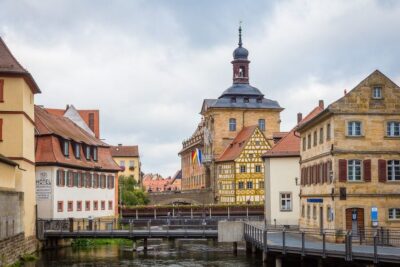
Bamberg is a UNESCO World Heritage Site, and this tour uses that setting in a smart way. Instead of asking you to memorize dates, it has you walk through the kind of town structure that made early European cities function, then explains why it mattered.
I like tours that help you see urban design, and this one does. Bamberg was chosen by German emperor Henry II in the 11th century as a second Rome, and the guide connects that big idea to everyday life, building by building, street by street.
And here is the practical payoff for you: Bamberg can look like a pretty postcard until you understand its medieval logic. Once you know what to look for, the town hall, the Romanesque cathedral, and the older streets stop being scenery and start becoming evidence.
Getting Started at Geyerswörthstraße 5 With Mead and Medieval Rules
You meet at Tourismus- und Kongressservice Bamberg, Geyerswörthstraße 5, 96047 Bamberg. From there, the tour wastes no time on mood. You get greeted with a glass of medieval mead, and the guide sets the tone with medieval-flavored props and stories.
The mead is not just a perk. It is a quick way to pull you into the period before the tour starts talking about Henry II and 11th-century Bamberg. If you are the type who needs a hook before you can focus, this is a good one.
One note on the rules: alcohol and drugs are not allowed, but mead is included in the tour. So think of the mead as part of the experience, not as permission to bring or consume anything else. If you have questions about what you can carry, ask before you go.
Town Hall to Romanesque Cathedral: Where 11th-Century Bamberg Lives

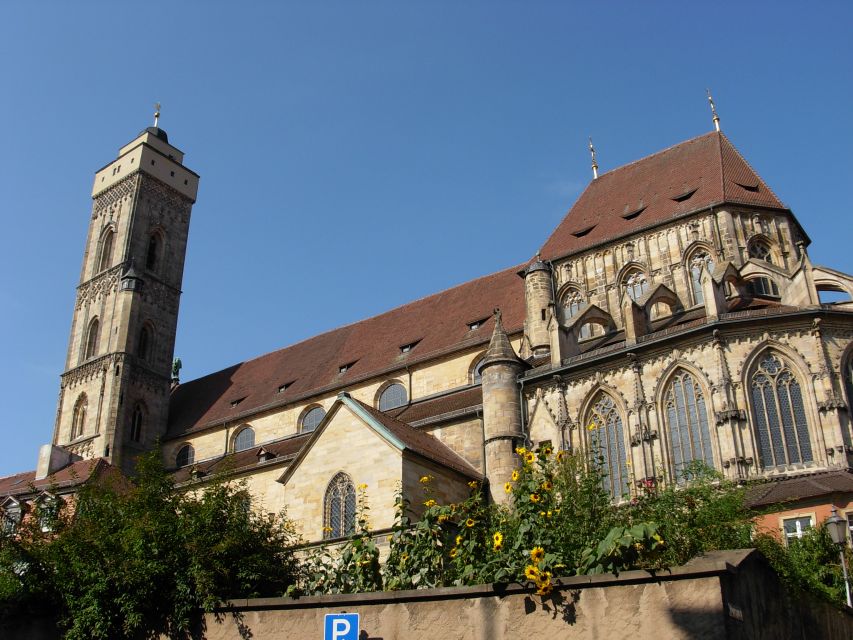
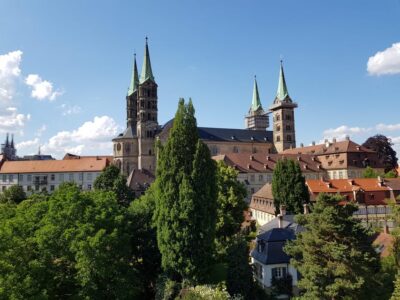
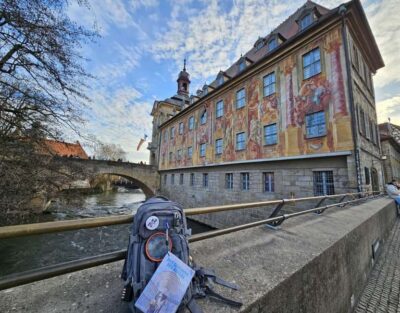
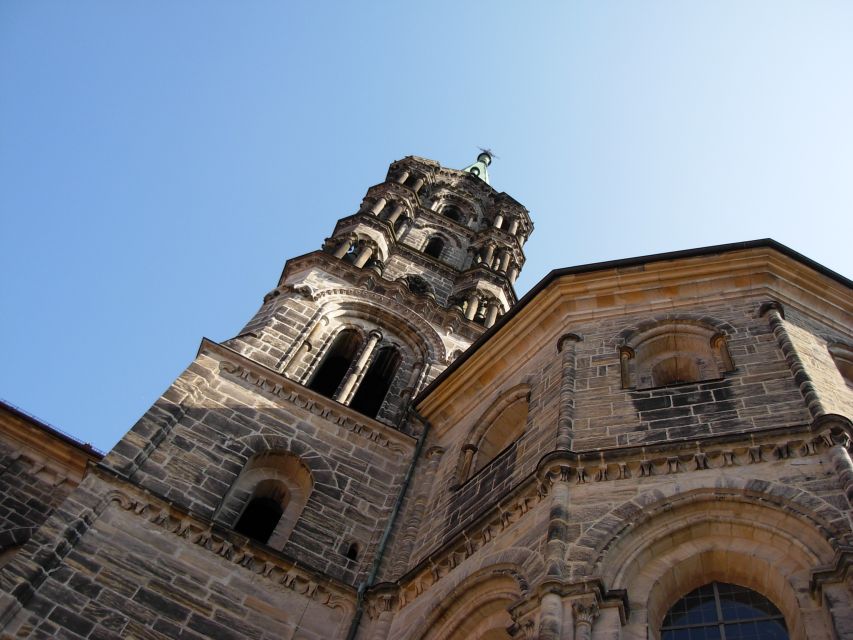
The route centers on Bamberg’s well-preserved medieval structures, including the colorful town hall and the city’s ancient Romanesque cathedral. Even if you only have an hour and a bit, these stops give you strong “anchor points” for what Bamberg still retains from the Middle Ages.
What makes this sequence work is that it balances civic and spiritual power. The town hall helps you picture how the city governed itself and how urban life was organized. Then the Romanesque cathedral brings you into the larger medieval worldview, where religion shaped daily rhythms and expectations.
You also learn how the town’s architecture influenced central European urban form and evolution. That matters because you will start noticing patterns that repeat across the region, not only in Bamberg.
A small drawback to keep in mind
Because the tour is only 75 minutes, you will not get museum-level time at each building. This is a “get the meaning fast” route. If you want to linger, take photos slowly, and read every plaque, plan to add independent time after the tour.
Becoming a Noble Lady or Craftsman, Then Doing It for Real
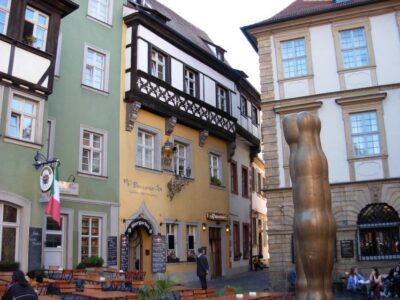
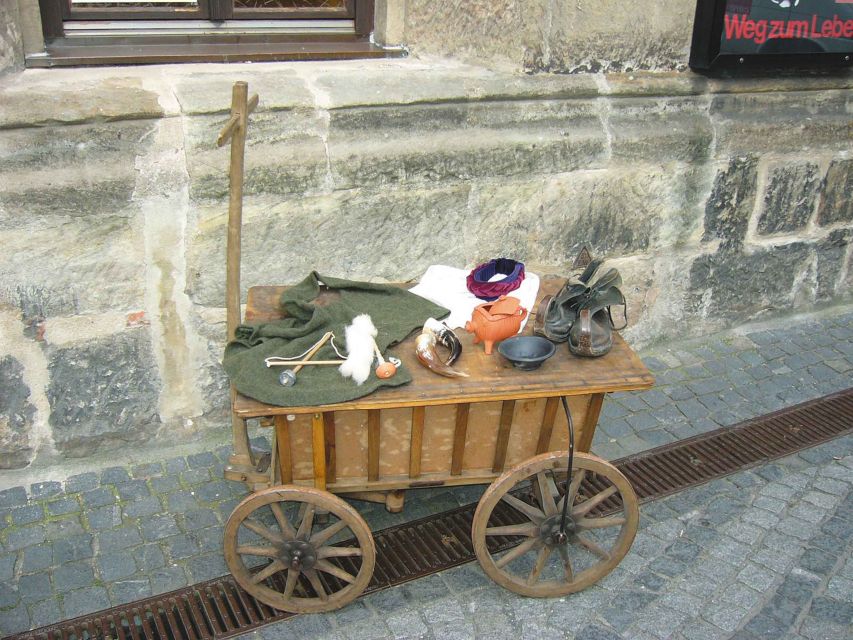
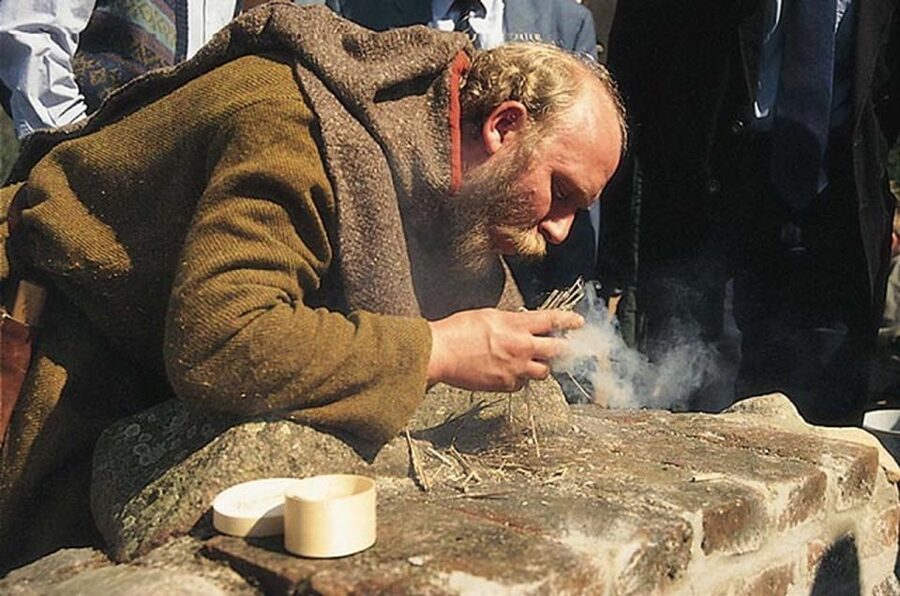
Here is where the tour earns its high marks. You do not just dress up in your mind. You actually get invited to act out roles and interact with period-inspired elements, like collecting water and using a fire striker.
The tour’s “witches and demons” angle sounds dramatic, but the best part is how it reframes ordinary life. You get stories that connect fear, superstition, and everyday survival, without turning the experience into pure horror.
You might be asked to take on the role of a noble lady or a simple craftsman, and that role switch does something useful. It changes the kinds of details you notice, because a craftsman’s perspective makes you think about work and tools, while a noble lady’s perspective pushes you to think about social order.
The value of the hands-on moments
Props can feel gimmicky on some tours. Here, the hands-on parts are practical: you are meant to understand effort. Collecting water from wells forces you to think about medieval supply and labor. Igniting embers with a fire striker makes you realize how controlled fire really is, and how much skill the process required.
If you learn best by doing, this is one of Bamberg’s best “short time, big understanding” formats.
Fire, Witches’ Ointment, and Daily Life Stories in a UNESCO Town
The tour blends medieval magic themes with real architectural landmarks, and that mix is the point. You are in a UNESCO World Heritage setting, but the stories keep pulling you back to something human: how people lived, loved, and died.
The mention of witches’ ointment is a good example. It signals that you are not only hearing about rulers and wars. You are dealing with folk beliefs, household practices, and the kind of thinking that shaped what people feared, trusted, or tried to treat.
This style can be surprisingly effective for learning. When the tour gives you a quick “why people believed this” frame, you can understand medieval life as a system of explanations, even if you do not share the beliefs.
What I’d watch for
If you are very sensitive to spooky themes, check your comfort level before booking. The material is clearly presented in an intentionally medieval, supernatural tone. It is usually light enough to stay fun, but you should know it is part of the experience.
How Bamberg Shaped Central European Cities, Not Just Its Own Streets
One reason this tour feels more worthwhile than a basic city walk is that it talks about urban form. Bamberg’s architecture influenced central European urban evolution over the centuries, and you learn that idea in a way you can carry around in your head.
This is where you start making connections. Instead of thinking of old buildings as pretty leftovers, you see them as planning decisions. Streets, layouts, and civic structures become clues to how towns grew, how people moved, and how power and trade worked.
And once you understand that, you can visit other towns in the region with more confidence. You will recognize patterns sooner, and you will know when something is a medieval foundation or a later addition.
Route Style: More Side Streets, Less Crowd Pressure
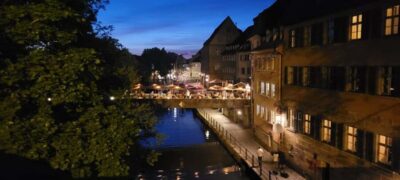
One of the best practical insights from the experience is that the tour tends to focus on side lanes rather than forcing you into the busiest areas. That is especially helpful around Advent market season and on weekends, when Bamberg’s center can feel crowded.
For you, that means you get a better chance to hear the guide, look closely at buildings, and enjoy the medieval stories without constant interruptions. It also makes the walk feel more like a guided exploration than a traffic-filled shuffle.
A winter note from the experience: guides may be out in very cold conditions, and you should dress for it. One guide carried props in extremely cold weather, so assume the tour will not slow down just because it is icy.
Price and Value: Is 23 USD for 75 Minutes Worth It?
At about $23 per person for 75 minutes, you are paying for a short, story-led walking tour with included mead and hands-on elements. If you compare it to standard guided walking tours that mainly talk, this one gives you more “activity” per minute.
You also get three things that are hard to quantify until you try them: a guided roleplay framing, physical interaction with medieval-style tools, and a structured route through major medieval landmarks. That combination is the value.
If your priority is deep scholarly history, this may feel brief. But if your priority is understanding Bamberg fast and experiencing medieval daily life as a guided scenario, this price is fairly reasonable.
And since the tour is only 75 minutes, it fits neatly into a day plan. You can do it early for orientation, then spend the rest of your time exploring at your own pace.
Who Should Book This Tour, and Who Might Not
This tour is a strong fit if you like:
- hands-on learning, even in small doses
- medieval storytelling with roleplay elements
- Bamberg landmarks like the town hall and Romanesque cathedral, seen through a different lens
- quick history that feels connected to daily life, not just timelines
You might want to think twice if:
- you do not speak German well, because the guide is live and the tour is in German
- you prefer quiet, self-guided sightseeing without participation
- you are uncomfortable with supernatural themes like witches’ ointment stories
Quick Practical Checklist Before You Go
Plan for an outdoor walking experience, even though it is not a long tour. Wear warm layers if you are going in winter. Bring comfortable shoes, because roleplay often means stopping, turning, and moving a bit more than a typical “stand and listen” walk.
Also, keep in mind the rules: alcohol and drugs are not allowed. If you are tempted to bring extra drinks, skip it and let the included mead do its job.
Finally, arrive at the meeting point on Geyerswörthstraße a few minutes early so you are not scrambling to find your group.
Should You Book the Bamberg Medieval Tour?
If you want Bamberg history with energy, this tour is an easy yes. The start with mead, the roleplay angle, and the hands-on medieval tasks make it feel like you are learning through experience, not just hearing facts. It is also well suited to people who want the medieval core of Bamberg in a tight 75-minute window.
I would book it if you enjoy guided storytelling and you are comfortable with German-led content. If German is a challenge or you prefer strictly quiet sightseeing, choose a different kind of tour so you can enjoy Bamberg on your terms.
Overall, for the time and price, it is a smart way to turn Bamberg from pretty old buildings into a working medieval town in your mind.
FAQ
How long is the Bamberg medieval tour?
The tour lasts 75 minutes.
What is included in the ticket price?
You get a guide, an immersive style of tour, and a glass of mead.
Where do I meet the guide?
Meet at Tourismus- und Kongressservice Bamberg, Geyerswörthstraße 5, 96047 Bamberg.
Is the tour guided and in which language?
Yes, it has a live tour guide, and the tour is in German.
Is mead included, or do I need to buy it?
Mead is included, and you are greeted with it at the start of the tour.
Are alcohol or drugs allowed?
Alcohol and drugs are not allowed.
What are the cancellation terms?
Cancel up to 24 hours in advance for a full refund.
Can I reserve without paying right away?
Yes, you can reserve now and pay later.
Around Franconia, Reviewed
Everything else we filed on Bamberg
- Bamberg: Bar & Club Tour with free Shots & VIP entry
★ 4.5 · 25 reviews - Bamberg: Where Hollywood dreams and movies are born
★ 4.5 · 26 reviews - Bamberg Countryside Breweries Beer Hike Food Experience
★ 5.0 · 27 reviews - Bamberg Private Walking Tour With A Professional Guide
★ 4.5 · 27 reviews - Outdoor Escape Game with puzzle backpack Bamberg: The Secret of the Horseman
★ 4.7 · 39 reviews - Bamberg Free Walking Tour
★ 4.7 · 84 reviews
Bamberg Wurzburg and Franconia Tours, side by side.
 ★ 4.6Bamberg: Guided Walking TourFrom $143,202 reviews
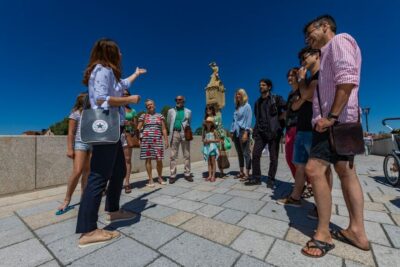 ★ 4.7Regensburg: Guided City Walking Tour of the Old TownFrom $181,395 reviews
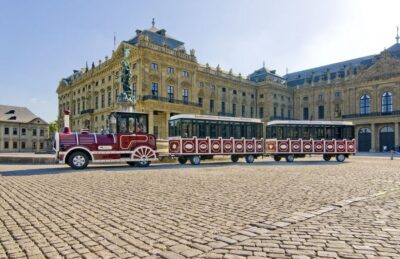 ★ 4.4Würzburg: City Tour with the Bimmelbahn TrainFrom $121,322 reviews
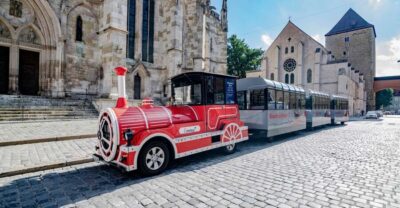 ★ 4.3Regensburg: City Tour with the Bimmelbahn TrainFrom $121,010 reviews
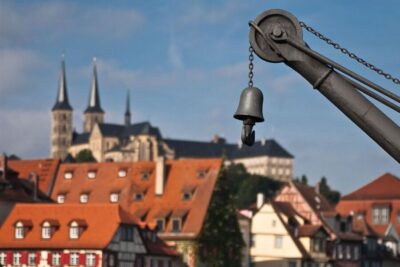 ★ 4.6Bamberg: Guided Beer History Tour with Optional TastingFrom $21772 reviews
 ★ 4.6Passau: Crystal Ship Sightseeing CruiseFrom $24705 reviews
 ★ 4.6Bamberg: City Highlights Walking TourFrom $14679 reviews
 ★ 4.6Regensburg: Klinger’s Sightseeing Boat Tour to WalhallaFrom $23507 reviews
Other lists this tour is on