
REVIEW · FRANCONIA
Witch Trials in Bamberg
Bamberg has alleyways with dark secrets. This 1.5-hour witch trials walk takes you through the old town and points out the kinds of clues that show how a community turned fear into accusations. You’ll learn why the 17th century persecutions in Bamberg were not the easy stereotype people imagine, and how the city’s story is handled today.
I especially like how the tour focuses on the human mechanism behind the witch hunts, not just spooky legends. You’ll also get to the medieval prison called Lochgefängnisse, and that alone gives the history a hard edge you can feel. One drawback to consider is that the tour is conducted in German, so if you are not comfortable in German, you may miss some of the nuance.
In This Review
- Key takeaways before you go
- Witch Trials in Bamberg: What This Walk Really Teaches
- Meeting on Domplatz for a Fast Start
- From Schöne Pforte to Old Court Bamberg: The City as a Clue
- Old Alleys and Guided Stops: How the Story Moves
- Geyerswörth Palace: Why Landmarks Belong in Dark History
- The Trudenhaus and Lochgefängnisse Stops: Prison History You Can Feel
- Hidden Clues of the Witch Hunt and the Link to Nuremberg
- Ending at the Malefiz-Haus Site: Looking at How the City Moves On
- Value for $15: Short Time, Tight Focus
- Who Should Book This Witch Trials Walk
- Should You Book Witch Trials in Bamberg?
- FAQ
- How long is the Witch Trials in Bamberg tour?
- How much does the tour cost?
- What language is the live guide?
- Where do I meet the guide?
- Is the tour wheelchair accessible?
- What is included in the tour price?
- Is there free cancellation?
- Where does the tour finish?
- Does the tour cover witch hunt history beyond Bamberg?
Key takeaways before you go
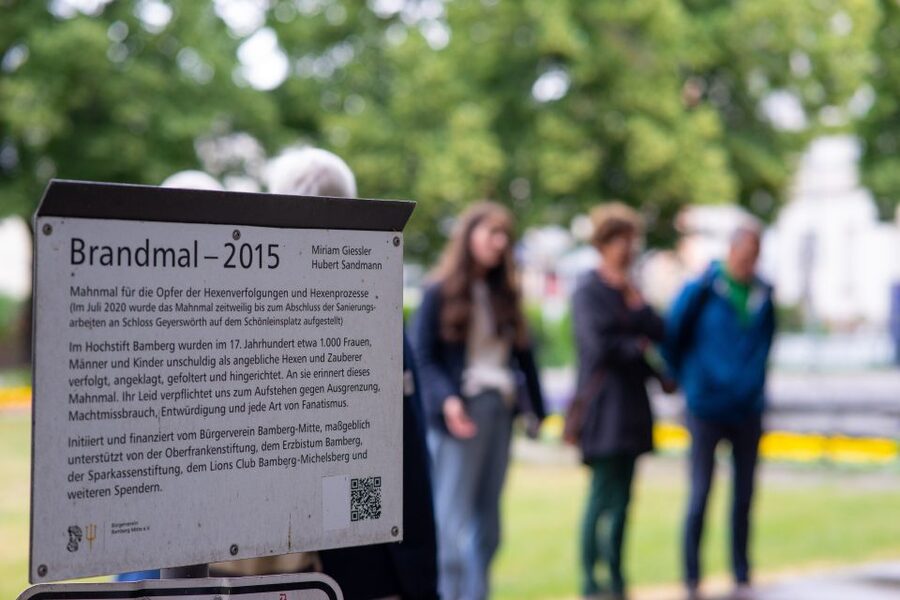
- Follow the old alley route and learn how Bamberg’s streets connect to the witch hunt story
- Hidden clues about the persecution show how accusations spread beyond any single group
- Trudenhaus and Lochgefängnisse themes bring the prison system into focus
- Nuremberg witch hunt history is included, giving you regional context
- A short, walk-and-talk format keeps the pace moving through multiple guided stops
Other Franconian towns worth the train
- Bamberg: Guided Beer History Tour with Optional Tasting★ 4.6 · 772 reviews
- Bamberg: City Highlights Walking Tour★ 4.6 · 679 reviews
- Bamberg: Guided Historical Culinary Tour★ 4.6 · 461 reviews
- Bamberg: Immersive Medieval Tour★ 4.7 · 232 reviews
Witch Trials in Bamberg: What This Walk Really Teaches
Bamberg’s witch trials were not a distant fairy tale. In the 17th century, hundreds of citizens were targeted, and the persecution reached across social ranks. The tour’s big value is that it quietly fights the cliché that witch hunters only went after outcasts or elderly women. Instead, the story covers men and women from different classes, even people with local power.
If you care about real history, this matters. The point is not to shock you. It’s to show you how a society can decide that certain people are dangerous, and then act like it is doing justice. That is the kind of lesson that sticks, even after the walk is over.
And yes, the subject is heavy. You are talking about persecution, prisons, and lives derailed by fear. I think that is exactly why the tour is worth doing with your eyes open, so you can take in the details without treating it like theater.
Meeting on Domplatz for a Fast Start
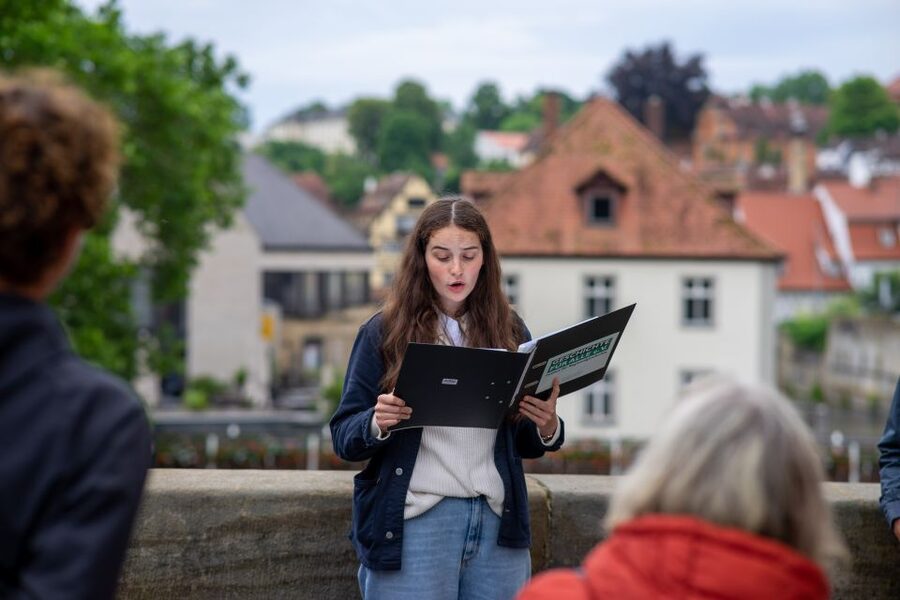
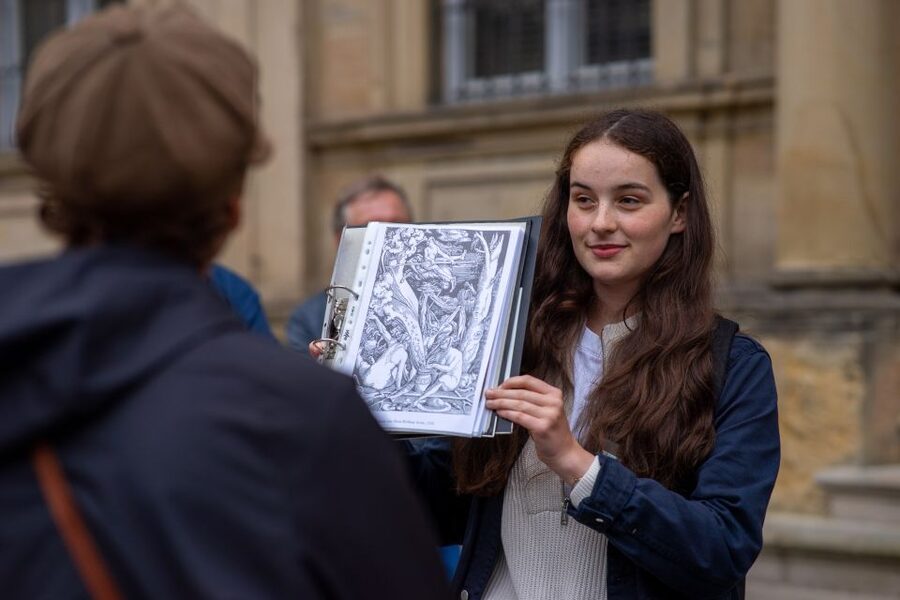
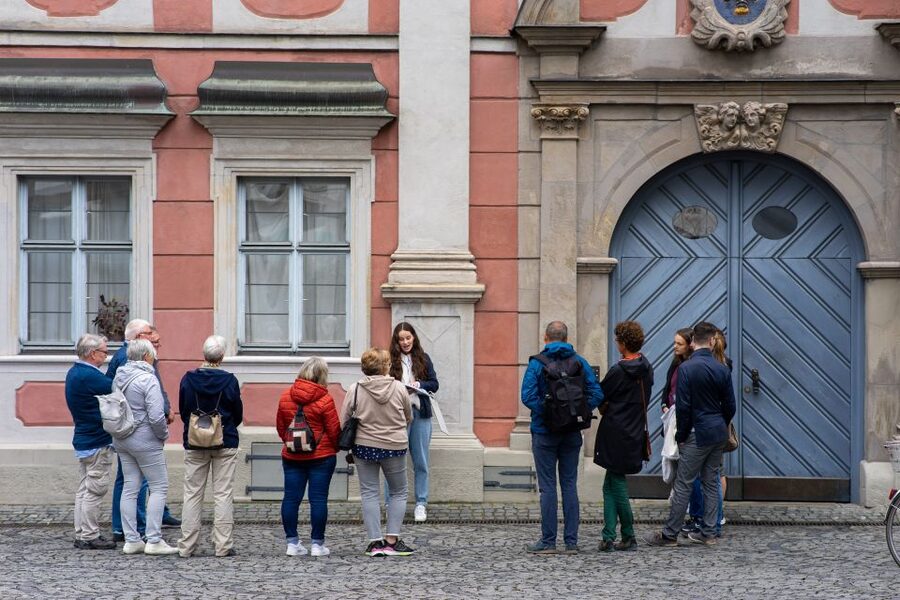
You meet on the cathedral square, Domplatz, in front of the entrance to the Alte Hofhaltung. The guide will be holding a picture folder and wearing a name tag for Geschichte Für Alle e.V., so you should be able to spot them quickly.
This kind of meeting point helps you get oriented right away. Domplatz is central enough that you can arrive, regroup your thoughts, and step into the old-town setting without a long commute first. The route is built around short segments on foot between guided stops, so you are not stuck marching for a full stretch before the story clicks in.
If you are planning your day, keep in mind the tour lasts 1.5 hours. You do not need a half-day buffer, but do plan to stay present for the whole thing, since each stop builds on the last.
From Schöne Pforte to Old Court Bamberg: The City as a Clue
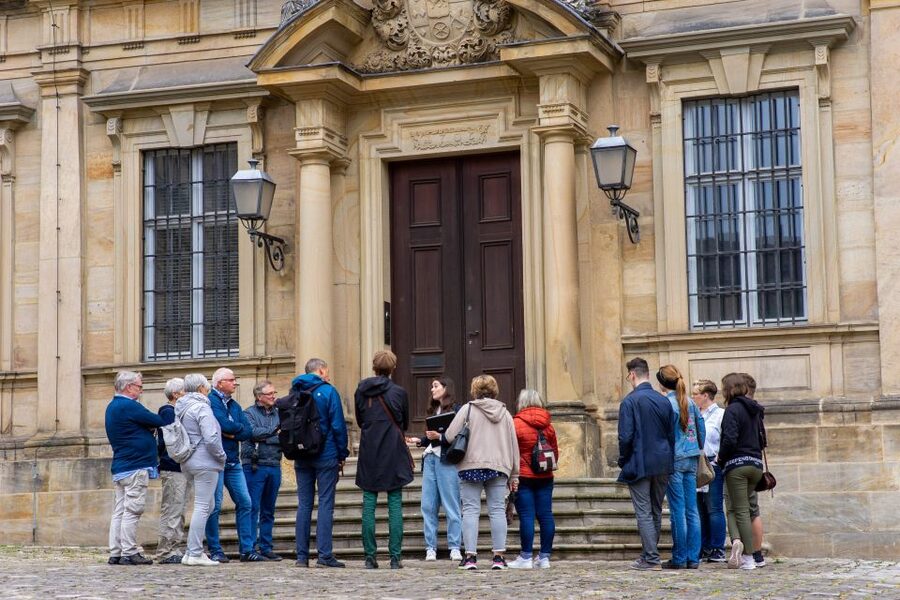
The walk begins near Schöne Pforte and moves into the old-town core, with a guided segment at Old Court Bamberg. This is where the tour starts turning place names into evidence. In good city history tours, buildings are more than scenery. Here, they act like anchors for what people believed and how decisions were made.
At Old Court Bamberg, you should expect the guide to connect the witch hunt story to Bamberg’s local institutions and everyday life. The tour is not limited to one dramatic episode. It treats witch persecution like a system, something that can take root when a community believes the danger is real and urgent.
What I like about starting here is that it gives you a baseline. Before you see prison history, you understand the atmosphere that made imprisonment and sentencing feel plausible to those in authority. That context makes later stops more than just grim sightseeing.
Old Alleys and Guided Stops: How the Story Moves
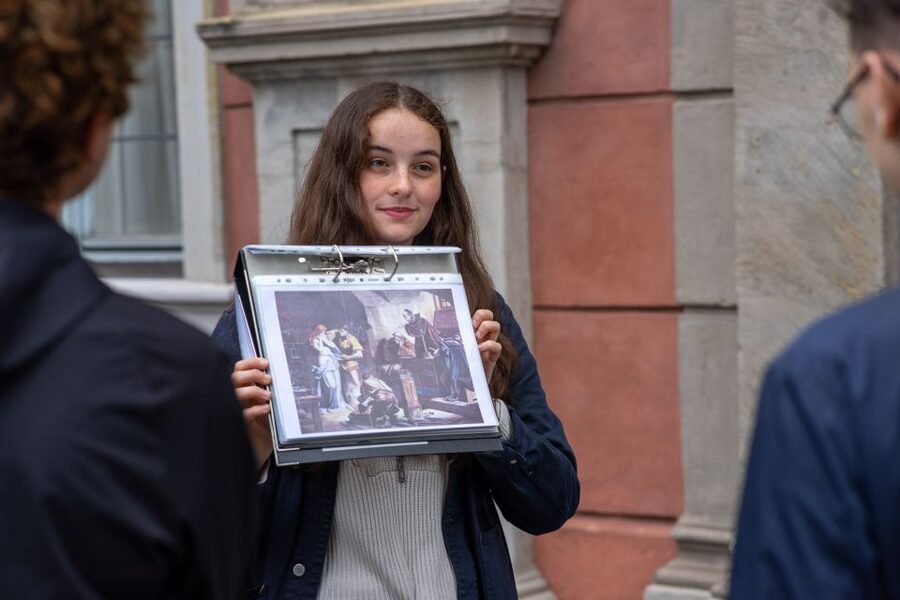
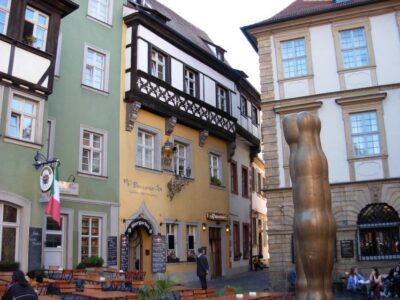
Between each main stop, there are short walking breaks. Think in small hops rather than long transfers, with minutes between guided segments as you weave through the old alleys. This matters because it keeps the tour from becoming one long lecture. You get just enough motion to stay alert, then the guide resumes with the next piece of the puzzle.
Another plus: the tour is designed to be quick enough that you do not have to drag your energy. Even in cold weather, the pace can still feel manageable because it stays focused and never wanders into filler.
One practical consideration is that you will be walking on foot outdoors. If you are sensitive to chilly conditions, bring layers. And if your legs are not great on uneven cobblestones, go slower and choose comfortable shoes.
Geyerswörth Palace: Why Landmarks Belong in Dark History
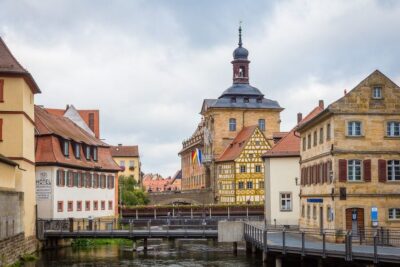
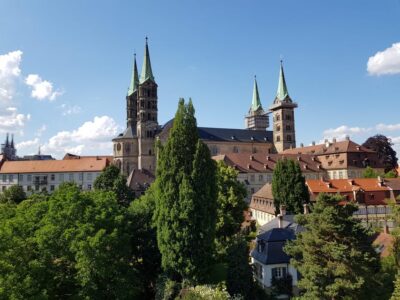
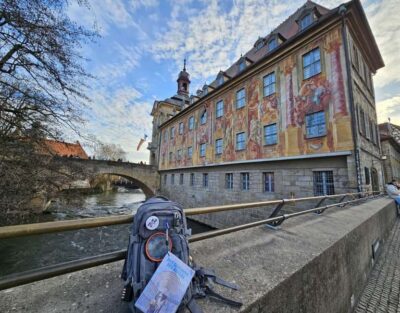
The route includes a guided stop at Geyerswörth Palace. Even though the tour is centered on witch hunts, it treats landmarks as part of the larger story, not as background props. In other words, the palace stop helps you see how prominent places and power structures can sit near ordinary lives, even when the city turns cruel.
From a value perspective, I find that important. A lot of history tours focus on one dramatic theme. This one keeps expanding the frame, so the persecution feels tied to Bamberg as a functioning city, not just a tragic footnote.
You should expect the guide to connect what you see in front of you with what the story is saying about authority, belief, and the speed at which accusations could escalate.
The Trudenhaus and Lochgefängnisse Stops: Prison History You Can Feel
This is the part many people remember, and for good reason. The tour highlights the medieval prison called Lochgefängnisse, and it also brings in the idea of the witch prison known as the Trudenhaus. The way the story is framed is blunt: anyone who ended up in the Trudenhaus was as good as lost.
That kind of detail changes the tone of the walk. Instead of wondering what people feared, you confront what they faced. And that makes the tour more than a spooky walk through old streets.
I also like that the tour does not reduce the story to one villain or one simple explanation. The prison system is presented as part of how accusations became consequences. Even if you already know the basics of witch hunts in Europe, seeing this topic tied to a specific medieval prison setting is where the story becomes concrete.
One word of caution: this is not a light stop. If you feel uncomfortable with topics involving persecution and imprisonment, be honest with yourself before booking. You can still go, but go prepared to sit with it.
Hidden Clues of the Witch Hunt and the Link to Nuremberg
A key promise of the walk is that you will discover hidden clues of the witch hunt, and you will also learn about the history of witch hunts in Nuremberg. That is smart because regional patterns matter. Witch persecutions did not happen in a vacuum, and they did not stay confined to one town’s borders.
What you gain by connecting Bamberg to Nuremberg is a clearer sense of context. You stop thinking of the story as random misfortune and start seeing it as a broader historical pattern that could travel, adapt, and repeat. That is part of what makes this tour feel like history, not legend.
This also helps you ask better questions while you are there. When you understand that witch hunts had wider reach, you can pay attention to how the guide explains evidence, accusations, and social pressures.
In practical terms, the guide also seems to keep an interactive style. Based on what people highlight, the guide can answer questions clearly and in detail, which is ideal when you are dealing with complicated topics.
Ending at the Malefiz-Haus Site: Looking at How the City Moves On
The walk finishes at the Standort des Malefiz-Haus von 1627 bis ca. 1650, a site connected to the period’s Malefiz-Haus. Ending at a specific historical location is helpful because it gives you a final physical marker for everything you learned.
This is where the tour ties into the other big promise: how the city has dealt with the story until today. Even without turning the topic into a lecture, ending on a place tied to punishment and justice encourages you to think about memory. How does a community remember what happened? What does it emphasize or leave vague?
If you like tours that end with a moment of reflection instead of a hard stop, this one does that. It leaves you with a better sense of how Bamberg’s identity includes both beauty and brutality.
Value for $15: Short Time, Tight Focus
At $15 per person for about 1.5 hours, this tour looks like very good value if you want serious storytelling without a big time commitment. You are paying for a trained guide, a structured route through multiple meaningful locations, and a focused theme that goes beyond common myths.
This pricing makes sense for a walk where the biggest cost is interpretation, not transportation. You are not taking a bus. You are spending your money on how the guide connects the dots between old town streets, Bamberg’s witch persecution, the prison story around Lochgefängnisse and Trudenhaus, and the Nuremberg context.
Also, the tour is kept short enough that you can fit it around other Bamberg highlights. If you are touring Bamberg for architecture, beer halls, or the river views, this adds a different kind of depth.
Who Should Book This Witch Trials Walk
This tour is a strong fit if you like history that is specific and grounded in places. If you enjoy walking tours but you are tired of generic facts, you’ll probably appreciate the way this one builds a narrative through Bamberg’s old alleys and key sites tied to the persecution.
It is also a good match if you want to understand why witch hunts were not limited to one stereotype. The tour’s framing covers people across social groups, even officials, which challenges the usual simplified story.
If you are traveling with someone who prefers cheerful history, you might consider whether this subject will land well. And if you do not speak German, you may want to think twice, since the live tour guide is German and the experience is built around that narration.
Should You Book Witch Trials in Bamberg?
I’d book it if you want a compact, place-based tour that takes the witch trials seriously, connects Bamberg to the wider regional story in Nuremberg, and brings you to the Lochgefängnisse prison setting. The price for 1.5 hours feels fair, and the guide’s ability to handle questions can make the topic clearer instead of darker for the wrong reasons.
I’d skip it if you cannot handle persecution and imprisonment topics, or if German-only narration would frustrate you. For everyone else, it is one of those tours that makes Bamberg feel real, not postcard perfect.
FAQ
How long is the Witch Trials in Bamberg tour?
The tour duration is 1.5 hours.
How much does the tour cost?
The price is $15 per person.
What language is the live guide?
The live tour guide speaks German.
Where do I meet the guide?
You meet on Domplatz in front of the entrance to the Alte Hofhaltung. The guide will have a picture folder and a name tag for Geschichte Für Alle e.V.
Is the tour wheelchair accessible?
Yes, the tour is wheelchair accessible.
What is included in the tour price?
The tour includes a guided tour by a trained tour guide through the history of Bamberg.
Is there free cancellation?
Yes, free cancellation is available up to 24 hours in advance for a full refund.
Where does the tour finish?
The tour finishes at the Standort des Malefiz-Haus von 1627 bis ca. 1650.
Does the tour cover witch hunt history beyond Bamberg?
Yes, it includes history of witch hunts in Nuremberg as part of the walk.
Around Franconia, Reviewed
Everything else we filed on Bamberg
- Bamberg: Bar & Club Tour with free Shots & VIP entry
★ 4.5 · 25 reviews - Bamberg: Where Hollywood dreams and movies are born
★ 4.5 · 26 reviews - Bamberg Countryside Breweries Beer Hike Food Experience
★ 5.0 · 27 reviews - Bamberg Private Walking Tour With A Professional Guide
★ 4.5 · 27 reviews - Outdoor Escape Game with puzzle backpack Bamberg: The Secret of the Horseman
★ 4.7 · 39 reviews - Bamberg Free Walking Tour
★ 4.7 · 84 reviews
Bamberg Wurzburg and Franconia Tours, side by side.
 ★ 4.6Bamberg: Guided Walking TourFrom $143,202 reviews
 ★ 4.7Regensburg: Guided City Walking Tour of the Old TownFrom $181,395 reviews
 ★ 4.4Würzburg: City Tour with the Bimmelbahn TrainFrom $121,322 reviews
 ★ 4.3Regensburg: City Tour with the Bimmelbahn TrainFrom $121,010 reviews
 ★ 4.6Bamberg: Guided Beer History Tour with Optional TastingFrom $21772 reviews
 ★ 4.6Passau: Crystal Ship Sightseeing CruiseFrom $24705 reviews
 ★ 4.6Bamberg: City Highlights Walking TourFrom $14679 reviews
 ★ 4.6Regensburg: Klinger’s Sightseeing Boat Tour to WalhallaFrom $23507 reviews
Other lists this tour is on