
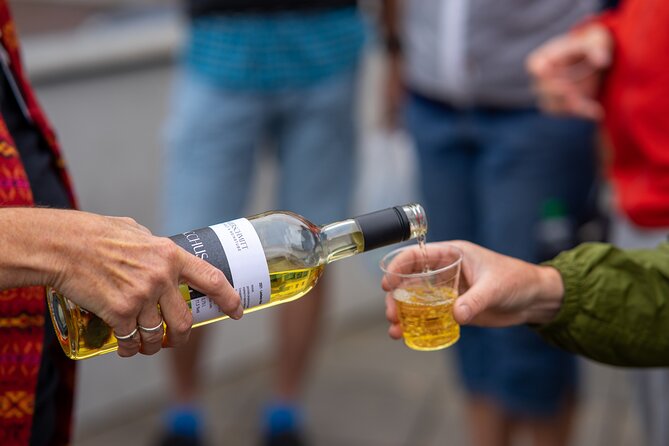
REVIEW · FRANCONIA
Culinary-historical walk through Bamberg
Beer and bites, right in Bamberg’s streets. This 2-hour culinary-historical walk threads through the Regnitz waterways and Bamberg’s brewing tradition, with tastings along the way and a beer finish at Eckerts Wirtshaus.
I love how the tour mixes tastes with clear context, from a meat-forward first stop at Am Kranen to beer-focused stops that make the brewing story feel real. I also love the route itself, it moves from market life to brewery landmarks, including the smoked beer world of Schlenkerla. The one drawback to consider: this is a German-speaking tour, so if you need lots of English explanations, plan accordingly.
In This Review
- Key highlights worth your attention
- A beer-first story of Bamberg’s food world
- Price and timing, and why this feels like good value
- Where you start: Am Kranen and medieval eating habits
- Grüner Markt: guessing games and scent samples at the weekly market
- Michelsberg and the wine chapter: from Igor Mitoraj to the brewing era
- Untere Brücke and Little Venice: the Regnitz as a lifeline
- Schlenkerla Rauchbierbrauerei: smoked beer and brewing tradition
- Pfahlplätzchen and the cellar saying: go where the beer lives
- Eckerts Wirtshaus finale: choose your beer in a classic inn
- How group size and ticket format affect your experience
- What kind of traveler will enjoy this most
- Should you book Culinary-historical walk through Bamberg?
- FAQ
- How long is the Culinary-historical walk through Bamberg?
- What is the price per person?
- What time does the tour start?
- Is the tour in English?
- Where do I meet the group?
- Where does the tour end?
- Is the ticket mobile?
- How big is the group?
- Is anything included at the end of the tour?
- What is the cancellation policy?
Key highlights worth your attention
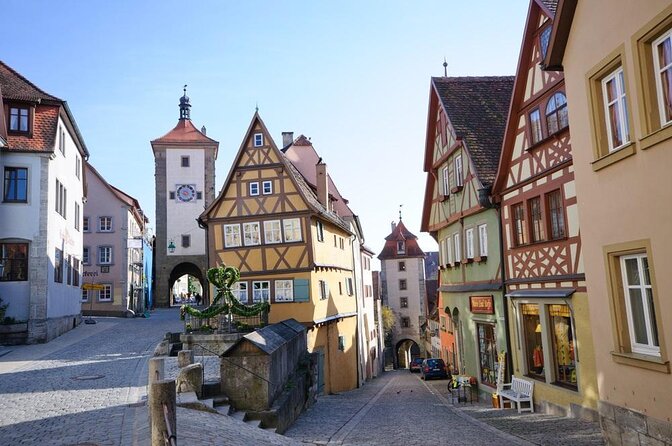
- Hörnla tastings twice, so you get a feel for more than one version of Bamberg’s snack culture
- Smoked beer at Schlenkerla Rauchbierbrauerei, with a direct look at a famous historic brewery setting
- Regnitz “waterways to food” storytelling, including Untere Brücke and the Little Venice angle
- Market immersion at Grüner Markt, with guessing games plus scent samples that teach you how medieval people shopped and ate
- A classic inn finale at Eckerts Wirtshaus, where you can pick a beer you want to try (included)
Other Franconian towns worth the train
- Bamberg: Guided Beer History Tour with Optional Tasting★ 4.6 · 772 reviews
- Bamberg: City Highlights Walking Tour★ 4.6 · 679 reviews
- Bamberg: Guided Historical Culinary Tour★ 4.6 · 461 reviews
- Bamberg: Immersive Medieval Tour★ 4.7 · 232 reviews
A beer-first story of Bamberg’s food world
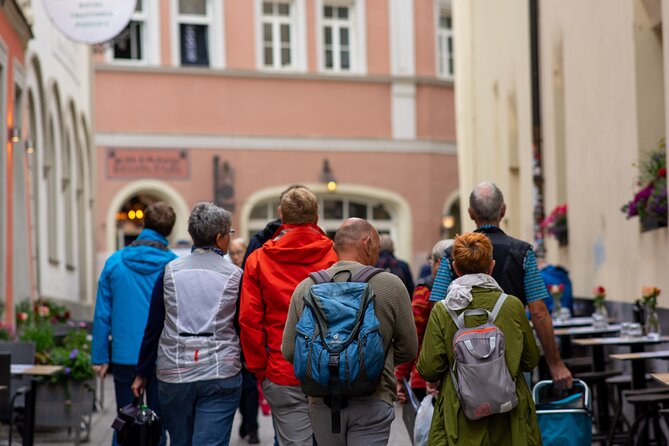
Bamberg has long been linked with beer, but the tour’s big idea is that brewing is only part of the food story. You get a timeline feel, including the surprising point that Middle Ages Bamberg was also a wine town. And then the guide brings you back to the present day, where beer becomes the third “stream” in the city’s story, more powerful than the other two Regnitz branches.
That mix is what makes this tour more than a simple snack crawl. You walk through real corners of the Old Town, and every stop ties back to something you can taste, see, or smell. When the history lands on your tongue instead of just in a sentence, it sticks.
Price and timing, and why this feels like good value
At $28.92 per person for about 2 hours, this is priced like a focused specialty experience, not a long, full-day tour. The value comes from what you actually get: guided stops across multiple food-relevant locations, plus tastes that include meat at the start and beer at the end. The final stop includes a beer choice at Eckerts Wirtshaus, so you do not have to “guess” whether you will get enough to justify the ticket.
It also runs in the afternoon, with a 4:00 pm start. That timing is helpful if you want something that fits between lunch and evening plans, without needing a full day commitment. And it is booked fairly ahead of time, so if you know your dates, it makes sense to lock it in rather than play chicken.
Where you start: Am Kranen and medieval eating habits
You meet at Alter Schlachthof, Am Kranen 1. The first moments set the tone: the guide welcomes you and frames how people ate in the Middle Ages, with a special focus on meat.
This is a smart opening. Most modern visitors expect “bread and beer” when they hear medieval Germany, but this tour starts by reminding you that meat mattered. You taste something right away, so you are not waiting until the beer stops to understand the food angle. It also gives you a baseline for what comes later, because the tour keeps shifting between daily food habits and the brewing culture that eventually took center stage.
Practical note: come a bit early so you can settle in and start on time. This kind of group walk works best when you are not rushing at the first stop.
Grüner Markt: guessing games and scent samples at the weekly market
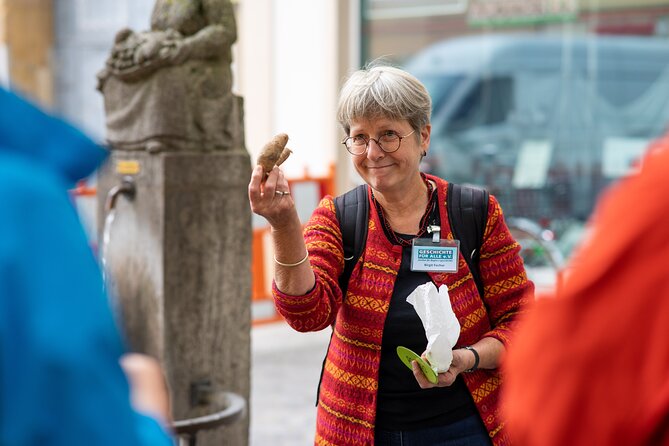
Next you head to Grüner Markt, where the tour slows down into market mode. You get historical context about Bamberg’s weekly market and how its long-running role shaped local eating and buying.
What I like here is the hands-on format. You do guessing games and scent samples, so you experience the idea of shopping and preparing food in a way that is easy to remember. It is not just “here is a market, isn’t it pretty.” The tour nudges you to think about how smells guide choices, even before modern packaging takes over.
A possible consideration: scent samples can be more or less pleasant depending on your comfort level. If you are sensitive to strong smells, give yourself a moment to decide how close you want to stand during the sample portion.
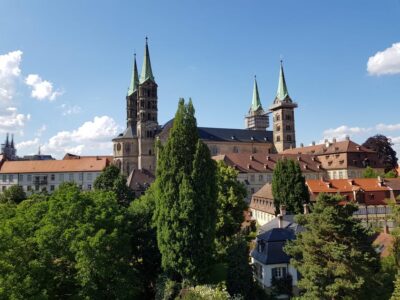
Michelsberg and the wine chapter: from Igor Mitoraj to the brewing era
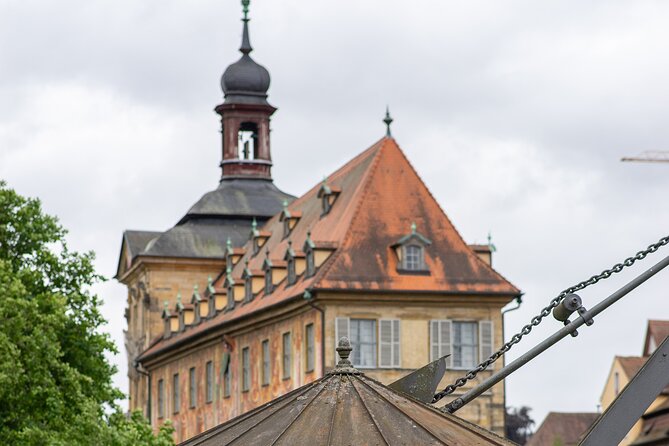
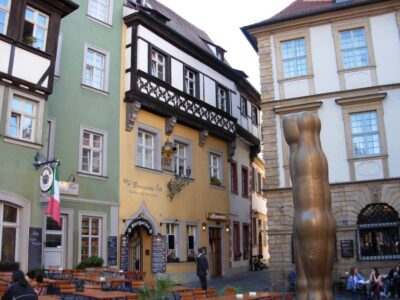
One of the tour’s best tricks is the way it flips the usual Bamberg script. At Igor Mitoraj Centurione I, you get reminded that Bamberg is famous for beer, but in the Middle Ages it was also a wine town. The guide ties that point to the view of the monastery on Michelsberg, so you are learning with a sightline, not just a fact.
Even if you already knew Bamberg as a beer city, this stop helps you understand why “beer everywhere” was not always the default. The tour has you test the wine angle, which makes the city feel like it evolved, not like it was frozen in amber.
And because you are standing at an art landmark while the guide talks about brewing and wine, it gives you a different kind of atmosphere shift. That matters on a short walking tour, you want variety, not the same tone in every sentence.
Untere Brücke and Little Venice: the Regnitz as a lifeline
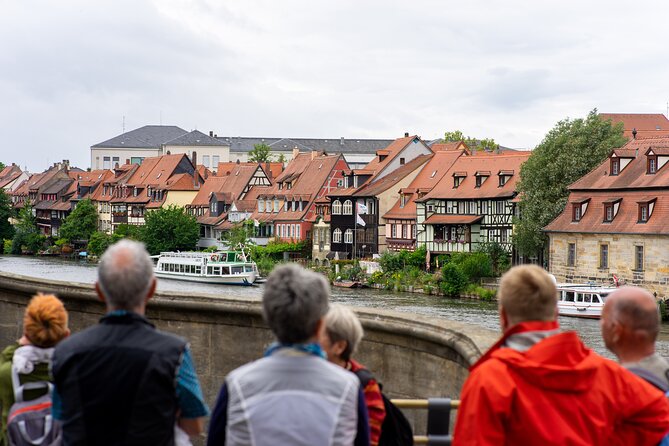
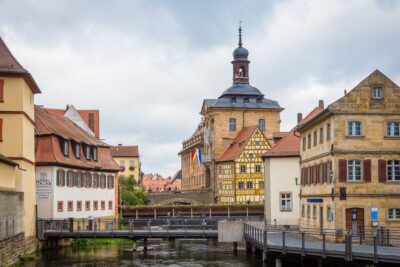
Then comes Untere Brucke, where Bamberg’s nickname as Little Venice makes practical sense. You stand where the city’s waterways show their role, with stories about the Regnitz as a lifeline.
The tour also points you toward the backdrop of the former fishermen’s houses from the 17th century. That detail does more than add atmosphere. It helps you connect why food and water traditions travel together. If waterways are how people move goods and catch food, then brewing, markets, and daily eating all have a reason to cluster nearby.
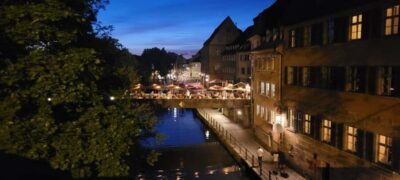
This stop is a good one for photos, but also for thinking. When you look at the bridge, you can see how the tour’s “streams” theme works: the Regnitz branches shape the city, and the guide adds beer as the third major stream in Bamberg’s identity.
Schlenkerla Rauchbierbrauerei: smoked beer and brewing tradition
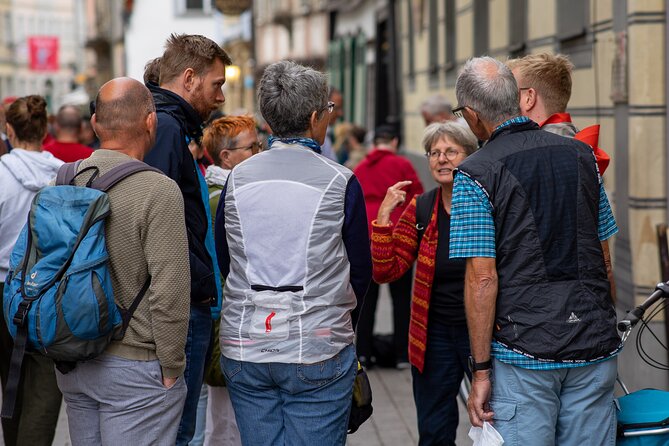
At Schlenkerla, Rauchbierbrauerei, the tour turns unmistakably toward beer. You get a view of the historic Schlenkerla smoked beer brewery and learn how Bamberg’s brewing art grew into a signature that reaches far beyond the city limits.
This is the stop that many people wait for, and it earns the attention. Smoked beer is not a casual flavor, it is a tradition you can recognize, and the tour sets you up to understand what you are tasting in a broader context. It also helps that the setting is historic and visual. You are not just hearing about process. You are in the same kind of environment where that process developed and became famous.
What to expect: this is one of the most “beer-forward” parts of the walk. If you are not a huge fan of smoked flavors, you might want to pace yourself at the tastings earlier in the tour so the experience stays fun.
Pfahlplätzchen and the cellar saying: go where the beer lives
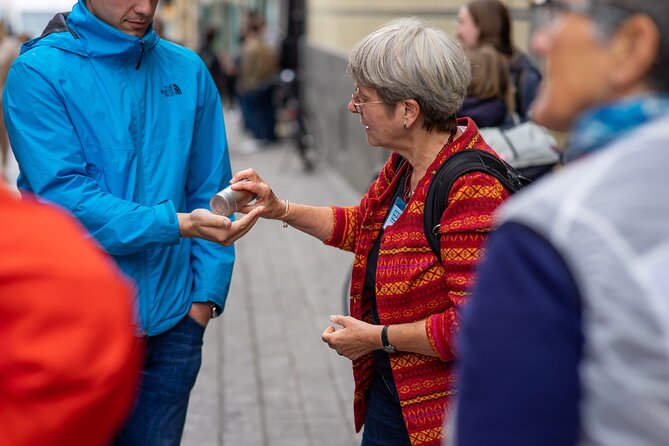
At Pfahlplätzchen, you get a phrase-based stop, tied to the idea of going to the cellar. The tour has you follow that saying after you have been strengthened by another delicious taste.
This is one of those moments where the tour is teaching you how to read a place. In Bamberg, cellars and storage are not a boring footnote. They are part of how beer culture survives over centuries. The guide uses the cellar idea to connect what you are tasting to how beer is kept, handled, and treated as a craft.
If you like tours that include not just “what to eat” but also “how a city organizes taste,” this stop will click. It turns beer from an item on a menu into something tied to real spaces.
Eckerts Wirtshaus finale: choose your beer in a classic inn
The tour ends at Eckerts Wirtshaus, Ob. Mühlbrücke 9. This is where the walking tour turns into an inn experience. Your final portion includes a beer of your choice, and the guide makes the point that you can see the brewing art through the way locals select and enjoy their beers.
This ending matters for two reasons. First, it gives you control. You can match your beer choice to your taste, instead of being stuck with whatever you were served earlier. Second, it keeps the tour from feeling like a drive-by. You finish in a setting that feels like a natural extension of what you learned on the street.
If you want to keep the story going after the tour, this is the perfect place to do it. You will already have the vocabulary and context for what you are ordering.
How group size and ticket format affect your experience
The tour is set for a maximum of 30 travelers. That size is big enough to feel like a social group, but small enough that you should still hear the guide and follow along at each stop.
You also get a mobile ticket, and confirmation arrives at booking time. The practical upside is you are not scrambling for paper. Still, do double-check you have the ticket screen ready when you meet, because the first stop is where the tour starts shaping your expectations.
The route is near public transportation, so you are not trapped if you get delayed. Still, since it is about moving between specific points in the Old Town, give yourself a little buffer.
What kind of traveler will enjoy this most
This tour is ideal if you like food history that stays human. You do not just hear dates and names. You taste, smell, and look at places tied to brewing, markets, and everyday meals.
It also works well if you want a manageable, high-signal activity. Two hours is long enough to feel like you learned something real, but short enough that you can still enjoy Bamberg afterward on your own.
Best match:
- You enjoy beer culture and want the story behind it, including smoked beer at Schlenkerla
- You like interactive formats, guessing games and scent samples included
- You want an afternoon plan that ends with a sit-down moment at a real inn
Possible mismatch:
- You need an English-speaking guide, since the tour is German-speaking
Should you book Culinary-historical walk through Bamberg?
If you like tours where food history shows up in your senses, I think you should book this. The route is built around Bamberg’s signature themes, beer and the city’s waterways, with smart variety at the market and a useful twist about Bamberg’s wine past. Ending at Eckerts Wirtshaus with an included beer choice is the kind of practical finish that makes the ticket feel worth it.
Skip it only if the German-speaking format would frustrate you. Otherwise, this is a fun way to turn Bamberg from a pretty postcard into a place where you understand how people ate, bought, brewed, and shared flavors across centuries.
FAQ
How long is the Culinary-historical walk through Bamberg?
It lasts about 2 hours.
What is the price per person?
The price is $28.92 per person.
What time does the tour start?
The start time is 4:00 pm.
Is the tour in English?
This is a German-speaking tour.
Where do I meet the group?
The meeting point is Alter Schlachthof, Am Kranen 1, 96047 Bamberg, Germany.
Where does the tour end?
The tour ends at Eckerts Wirtshaus, Ob. Mühlbrücke 9, 96049 Bamberg, Germany.
Is the ticket mobile?
Yes, it uses a mobile ticket.
How big is the group?
The tour has a maximum of 30 travelers.
Is anything included at the end of the tour?
Yes, at the conclusion at Eckerts Wirtshaus, you can choose a beer, and that is included.
What is the cancellation policy?
You can cancel for a full refund up to 24 hours before the experience starts.
Pavements of Bamberg
More German Plates
Around Franconia, Reviewed
Everything else we filed on Bamberg
- Private Guided Walking Tour of Bayreuth With A Professional Guide
★ 5.0 · 3 reviews - Bamberg – Excursion to Seehof Palace
★ 5.0 · 3 reviews - Culinary-historical walk through Bamberg
★ 4.0 · 7 reviews - Bayreuth Scavenger Hunt and Sights Self-Guided Tour
★ 5.0 · 7 reviews - Free Walking Tour Bamberg
★ 4.5 · 9 reviews - Bamberg: Altenburg Burg Tour
★ 4.1 · 10 reviews
Bamberg Wurzburg and Franconia Tours, side by side.
 ★ 4.6Bamberg: Guided Walking TourFrom $143,202 reviews
 ★ 4.7Regensburg: Guided City Walking Tour of the Old TownFrom $181,395 reviews
 ★ 4.4Würzburg: City Tour with the Bimmelbahn TrainFrom $121,322 reviews
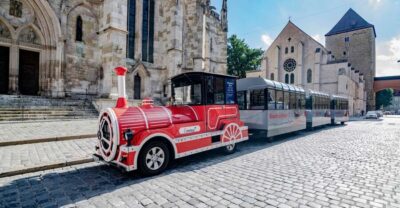 ★ 4.3Regensburg: City Tour with the Bimmelbahn TrainFrom $121,010 reviews
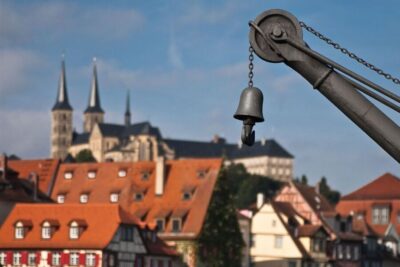 ★ 4.6Bamberg: Guided Beer History Tour with Optional TastingFrom $21772 reviews
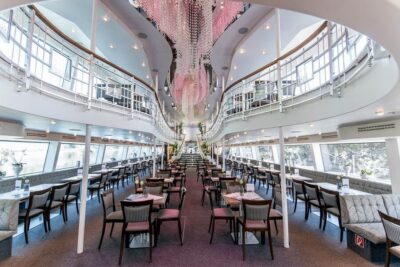 ★ 4.6Passau: Crystal Ship Sightseeing CruiseFrom $24705 reviews
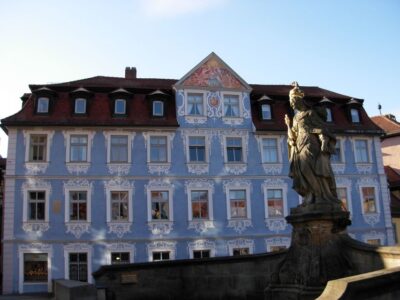 ★ 4.6Bamberg: City Highlights Walking TourFrom $14679 reviews
 ★ 4.6Regensburg: Klinger’s Sightseeing Boat Tour to WalhallaFrom $23507 reviews
Other lists this tour is on