
REVIEW · 3-HOUR EXPERIENCES
Berlin: 3-Hour Private Tour in French or Italian
Berlin is best when you know where to point. This private 3-hour tour lets you choose the stops that matter most, from the Brandenburg Gate to Berlin Wall remnants. You get an air-conditioned ride with microphones, so you can actually hear the story instead of guessing it from street corners.
What I like most is the built-in flexibility. You are not stuck with a cookie-cutter loop, and the guide can adapt when you want a slight change of direction. The second big win is the VIP feeling of a small group, plus clear narration, with guides who speak French or Italian. One caution: with only three hours, you have to pick your priorities, because entrance fees are not included and you likely will not have time for long stops inside every landmark.
In This Review
- Key points at a glance
- A smooth, small-group Berlin ride with microphones
- How you shape the 3 hours, stop by stop
- Reichstag and the Government Quarter, the modern start of your story
- Unter den Linden and Brandenburg Gate, the classic Berlin alignment
- Main Train Station and Transport Berlin, where the city meets the world
- Museum Island, Staatsoper, and Philharmonie, culture without the museum marathon
- TV Tower and skyline views, the quick way to get oriented
- Nikolaiviertel and Gendarmenmarkt, pretty streets with a purpose
- Potsdamer Platz, the modern crossroads of Berlin
- Berlin Wall remnants, your history anchor
- Memorial Church, a WWII and memory stop that hits
- Charlottenburg Palace and Bellevue Palace, where Berlin looks ceremonial
- KaDeWe and Kongresshalle, two very different Berlin energies
- Synagogue stop and personalization with your language choice
- Price and value for up to 8 people
- Practical tips to make the most of this 3-hour plan
- Who this private Berlin tour fits best
- Should you book this private Berlin sights tour?
- FAQ
- What is the duration of the tour?
- Is this a private tour, and what is the group size?
- Which languages are the live guides available in?
- Where does pickup and drop-off happen?
- Are entrance fees included?
- How does cancellation work?
Key points at a glance
- Private group up to 8 with a dedicated driver/guide, so questions do not get lost in the noise
- Air-conditioned vehicle plus microphones, great for hearing history without cranking your neck
- Choose your own landmarks from a long list, with room for 1-2 stops you steer toward
- Iconic Berlin stops like Reichstag, Brandenburg Gate, Unter den Linden, Museum Island, and more
- Berlin Wall and WWII to Cold War context explained clearly, not as a memorization exercise
Undecided? The closest Berlin write-ups we have are these.
- Berlin: Reichstag, Dome and Government District Guided Tour★ 4.7 · 18,288 reviews
- Berlin: 1-Hour City Tour by Boat with Guaranteed Seating★ 4.3 · 16,993 reviews
- Berlin: Boat Tour Along the River Spree★ 4.4 · 11,252 reviews
- Discover Berlin Half-Day Walking Tour★ 5.0 · 9,624 reviews
A smooth, small-group Berlin ride with microphones

This tour is designed for people who want a clean overview without the chaos of public transport. After pickup in Berlin city center, you meet a driver who is holding a sign with your last name, then you roll out in a private sedan or minivan. The vehicle is air-conditioned, which matters in real Berlin weather, not just in brochures.
The guide also uses microphones, which sounds like a small detail until you are standing outside a major landmark and the wind decides to be the loudest person in the group. With a private setup for up to eight people, you get the kind of back-and-forth that group tours usually skip.
How you shape the 3 hours, stop by stop
The best part is that you choose which sights to focus on. You start from Berlin city center, then the plan works as a mix of landmark highlights plus selection time for the stops you most care about.
You will see a set of top options depending on your choices, with 1-2 stops at locations of your selection. That structure is smart, because Berlin is large and timing is everything. If you try to “do everything,” you end up with a lot of walking photos and not enough understanding. If you pick with intention, three hours can feel surprisingly complete.
Here is how I suggest you pick:
- If it is your first time in Berlin, start with big orientation markers: Brandenburg Gate, Reichstag area, and a Berlin Wall stop
- If you care about architecture, choose a cluster like Unter den Linden plus Museum Island and/or Staatsoper
- If you want a “real city” mix, include Potsdamer Platz and Gendarmenmarkt, then add one history anchor
Reichstag and the Government Quarter, the modern start of your story
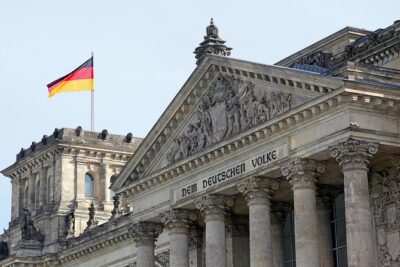
One of the anchor stops you can choose is the Reichstag, plus the newer buildings in Berlin’s Government Quarter. Even from outside, the Reichstag area gives you a sense of how Germany presents itself today, after the upheavals of the 20th century.
This is also a powerful place for your guide to connect dots. Berlin’s political center changed shape repeatedly across WWII and the Cold War, and the Government Quarter shows what “after” looks like. If you are the type who likes to understand why a city looks the way it does, this stop is usually a high-return choice in the limited time you have.
A practical note: entrance fees are not included. If you want to go inside specific buildings, you would need separate planning, so think of Reichstag as a best-seen-from-outside orientation stop unless you confirm entry plans separately.
Unter den Linden and Brandenburg Gate, the classic Berlin alignment
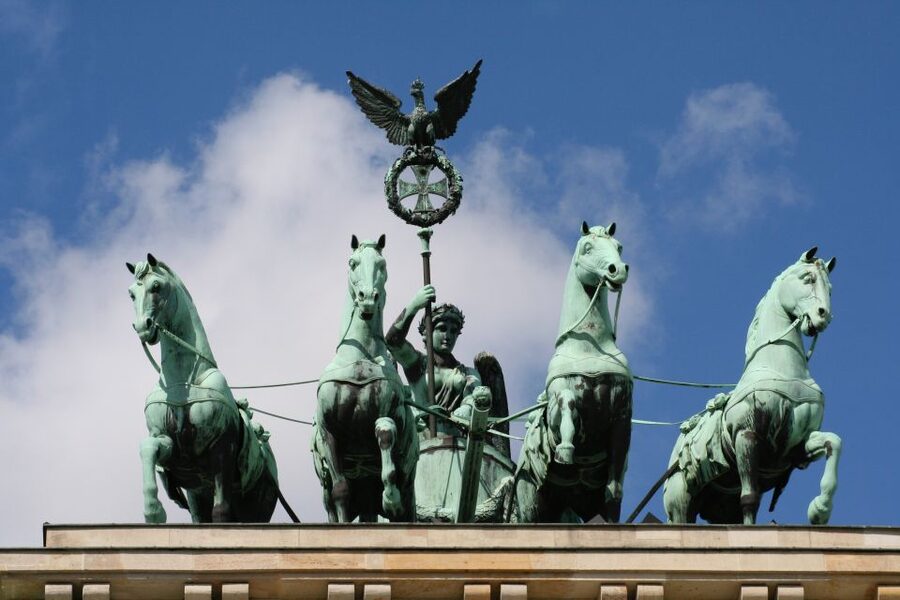
You can include Unter den Linden and the Brandenburg Gate, which is about as “Berlin” as a single set of streets and stonework can get. Unter den Linden helps you orient fast. It is a long north-south spine that makes it easier to picture how the city’s center developed.
The Brandenburg Gate is the visual headline. Your guide can explain why it matters in the WWII and Cold War timeline, not just as a postcard landmark. This is where history often turns from names and dates into something you can actually see.
Want a smarter photo moment? Ask the guide for the best quick angles you can get without spending your entire tour stuck on one spot. With three hours, you want photos that support your understanding, not photos that replace it.
Main Train Station and Transport Berlin, where the city meets the world

The Main Train Station is not everyone’s first pick, but it can be a great addition if you are connecting Berlin to the rest of Germany. It gives you a sense of how modern Berlin functions, and it can act like a “reset point” between older districts and newer areas.
If your day includes arrivals or departures, fitting it into your tour can make the whole trip feel less stressful. You go from travel mode to city mode without feeling lost.
This is one of those stops you will enjoy most if you ask your guide one or two questions on what changed over time and how Berlin’s layout supports movement today.
Museum Island, Staatsoper, and Philharmonie, culture without the museum marathon
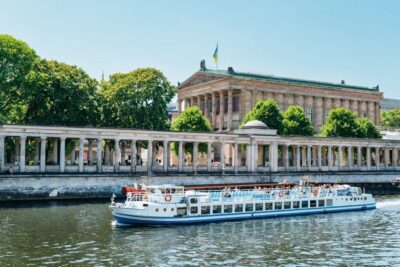
You can choose Museum Island and also the Staatsoper and/or Philharmonie area. This part of Berlin reads like a timeline of taste: grand public culture, classical performance spaces, and the kind of city planning that says art is a core institution, not an accessory.
Museum Island is especially useful if you want a concentrated “Berlin culture zone” without committing to multiple museum tickets. You get the sense of place, and your guide can frame why these buildings are clustered here in the first place.
The Staatsoper and Philharmonie can be great if you enjoy architecture and want a feel for Berlin’s formal cultural landmarks. As always, entrance fees are not included, so think of this set as a viewpoint and context stop unless you deliberately plan entry on your own.
TV Tower and skyline views, the quick way to get oriented
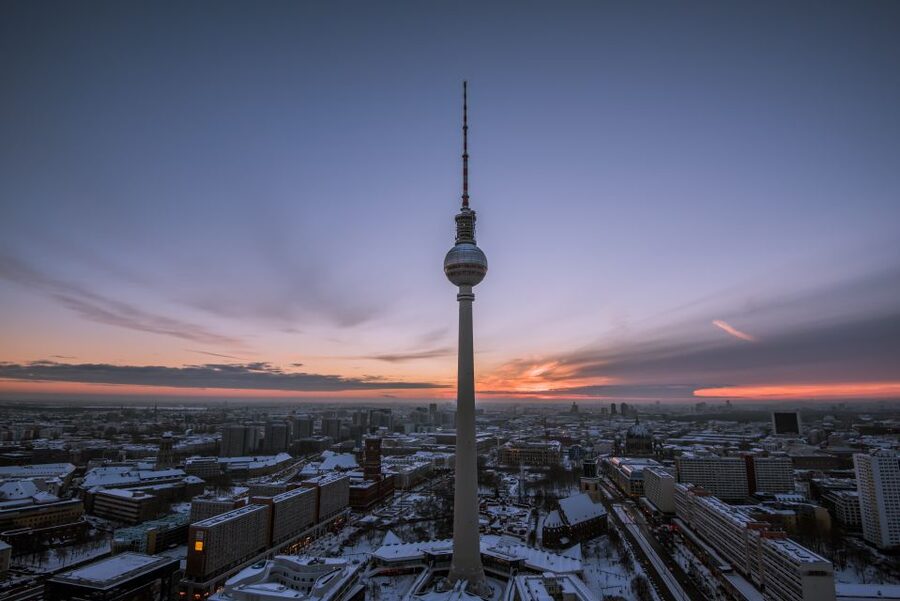
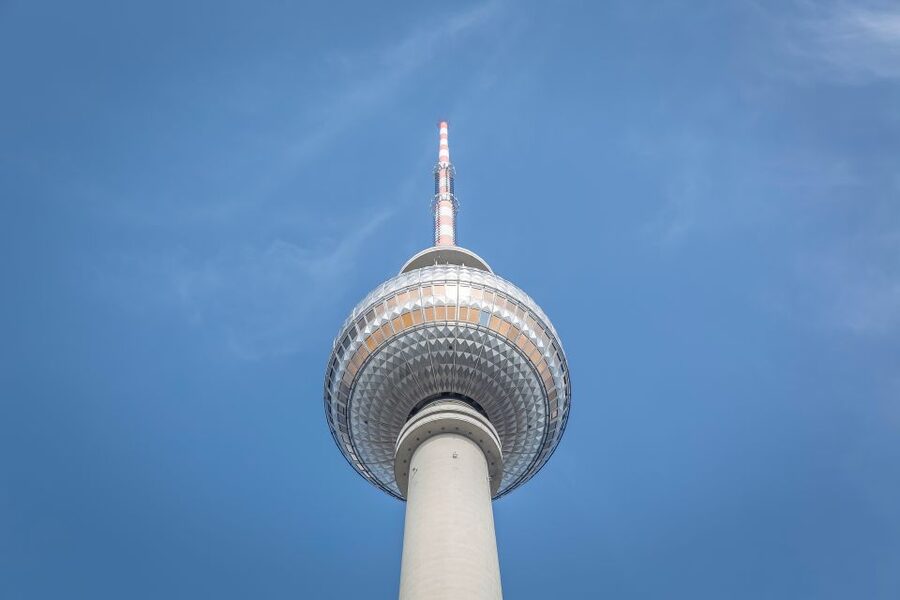
A choice stop is the TV Tower. Even if you do not go inside, the area around it gives you a strong sense of scale. This is useful if you want your Berlin geography to snap into place.
In a short tour, skyline orientation is a cheat code. Once you understand where the tall landmarks sit, the rest of the city stops feeling random.
Again, entrance fees are not included, so this is best treated as a powerful exterior stop plus explanation, not a guaranteed “go up” experience.
Nikolaiviertel and Gendarmenmarkt, pretty streets with a purpose
If you want some Berlin charm in the middle of the history stops, you can include Nikolaiviertel and/or Gendarmenmarkt. Nikolaiviertel tends to give you a more old-center feel, with a calmer, more human scale than some other major districts.
Gendarmenmarkt is one of Berlin’s most visually striking squares. It is the kind of place that makes you understand why people love walking in the city center even when they only have limited time.
The key advantage here is balance. You can pair a heavy WWII or Cold War stop with a calmer, beautiful square, so you leave the tour with both understanding and an emotional reset.
Potsdamer Platz, the modern crossroads of Berlin
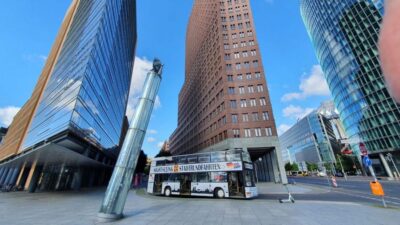
You can include Potsdamer Platz. It is a great contrast stop because it shows Berlin as a living modern city, not only a memorial city.
Your guide can help connect the dots between what used to be here and what you see now. With three hours, you need at least one “present-day Berlin” stop so the story does not feel stuck in the past.
If your interests lean contemporary architecture or city energy, this one usually earns its place.
Berlin Wall remnants, your history anchor
No short Berlin tour makes sense without a Berlin Wall moment. You can visit the remains of the Berlin Wall, and this is where your guide’s job becomes the most important.
A Wall stop is not just a photo opportunity. It is where you learn how division shaped daily life, movement, and how the city rebuilt itself after the Cold War. The best guides explain the human impact, not only the political facts.
If you are choosing between multiple landmarks, this is the one I would protect on your schedule unless you already plan a longer Wall-focused tour elsewhere.
Memorial Church, a WWII and memory stop that hits
You can also include the Memorial Church (often known as the Kaiser Wilhelm Memorial Church area). This landmark is a physical reminder, and it can be an emotionally intense stop, depending on how you take it in.
Your guide can connect this memory space to WWII destruction and Berlin’s later identity. In a short time window, memory sites can feel heavy, but they are also some of the most effective stops for understanding why Berlin chose to remember the way it does.
Plan your expectations. This is not a “light sightseeing” moment, but it often turns into a highlight.
Charlottenburg Palace and Bellevue Palace, where Berlin looks ceremonial
If palaces interest you, you can include Charlottenburg Palace and/or Bellevue Palace. Palaces are not just old buildings. They help you see how power and taste were expressed in different eras.
Charlottenburg Palace can add a classic sense of grandeur to your tour, balancing the more hard-edged history stops. Bellevue Palace provides another layer of political and ceremonial Berlin.
Entrance fees are not included, so treat these as strong exterior and context stops unless you confirm entry plans separately.
KaDeWe and Kongresshalle, two very different Berlin energies
Two choices that may surprise you are KaDeWe and the Kongresshalle.
KaDeWe is a major shopping and department store stop. Since food and drinks are not included, this works best if you want to browse or use it as a practical break point, not if you expect your tour to cover a meal.
The Kongresshalle is historically tied to the Nazi era. It is a serious site, and your guide should be able to explain what it meant, what happened to it afterward, and how Berlin re-contextualized spaces from that period.
This pairing can work well because it gives you two Berlin voices in one window: consumer modern life and the layers of political history embedded in architecture.
Synagogue stop and personalization with your language choice
The tour can include a synagogue stop as one of the selectable sights. Because the listing does not specify which synagogue, your guide can clarify what you will see on the day.
Language matters here. This is a French or Italian guided tour, and the experience is designed so you can follow the story without constantly switching mental gears. One review highlighted a guide named Cristina, praised for being very kind and flexible, with a VIP feel. Another noted a French-speaking guide with excellent French who adapted the route when requested.
That adaptability is the point. If you know what you care about and you speak your language choice clearly, the guide can shape the tour around you.
Price and value for up to 8 people
The price is $542 per group up to 8, for a 3-hour private tour. That is about $68 per person if you fill the group, and more if you are fewer than eight. Still, the value tends to land well when you compare what you get: private transport, a dedicated driver/guide, and guided interpretation with microphones.
The value is not only the destinations. It is the compression of Berlin’s story into a guided narrative you can actually use. In three hours, that kind of context can save you from spending the rest of your trip piecing together the past on your own.
Two cost caveats. Entrance fees are not included, so your total trip cost depends on what you choose to enter. Also, if you are the only couple or solo in a larger group booking, you may feel the price more strongly, simply because private tours are inherently about convenience and time.
Practical tips to make the most of this 3-hour plan
Because the route is flexible, you should arrive with decisions. Pick 3 to 5 landmarks you genuinely want, then rank them. The guide will help you stitch them into a realistic route for the day.
Wear comfortable shoes. Even when you are mostly riding, you will likely do short walking moments around major stops like gates, squares, and memorial areas.
If you care about specific themes, tell the guide early. For example, history through the Wall and WWII memory stops is one strong arc. Culture stops like Museum Island and Philharmonie is another. Mix them, but choose your anchor so you do not end up with only scattered highlights.
Finally, ask for quick orientation moments. In Berlin, where street names and districts can feel confusing at first, a guide-led “place it in the bigger picture” moment can be the best souvenir you take home.
Who this private Berlin tour fits best
I think this tour is a strong fit if:
- You have limited time and want Berlin’s big landmarks plus context fast
- You prefer a private group up to eight instead of a crowded group tour
- You want guidance in French or Italian and can follow history better in your language
- You like adjusting plans on the fly when you spot what you want to prioritize
It might be less ideal if you want a deep, multi-day museum-and-entry itinerary. This is short and focused on seeing and learning, not doing long indoor visits at every stop.
Should you book this private Berlin sights tour?
If your goal is to get oriented and understand Berlin’s WWII and Cold War story while still seeing the iconic sights, I would book it. The big reasons are the private format, the air-conditioned ride, and the guide-led flexibility that helps you choose the right mix for your interests.
I would hesitate only if you already planned a detailed Wall-focused tour and you are determined to spend a lot of time entering buildings. For first-time visitors, couples, and small groups who want a “smart overview with VIP comfort,” this is a solid way to use a half-day wisely in Berlin.
FAQ
What is the duration of the tour?
The tour lasts 3 hours.
Is this a private tour, and what is the group size?
Yes, it is a private group. The group size is up to 8 people.
Which languages are the live guides available in?
The live tour guide is available in French or Italian.
Where does pickup and drop-off happen?
Pickup and drop-off are included in Berlin city center. If you request pickup outside the city center, there is an additional fee.
Are entrance fees included?
No. Entrance fees are not included.
How does cancellation work?
You can cancel up to 24 hours in advance for a full refund.
Everything else we filed on Berlin
- Private Photo Tour in Kreuzberg
★ 5.0 · 3 reviews - Kreuzberg Private Walking Tour: Immigrants, Artists & Hipsters
★ 5.0 · 3 reviews - Berlin’s Jewish Heritage: Private Tour of the Vibrant Jewish District
★ 5.0 · 3 reviews - Individual city tour Berlin for max. 8 persons
★ 5.0 · 3 reviews - Berlin & The Third Reich Private Guided Tour
★ 5.0 · 3 reviews - Private Analogue Photography Experience in Berlin
★ 5.0 · 3 reviews
3-Hour Experiences, side by side.
 ★ 4.5Munich 3-Hour Guided Bike TourFrom $401,731 reviews
 ★ 4.8Hamburg 3-Hour Bike TourFrom $441,353 reviews
 ★ 4.6Bremen: 3-Hour Beck’s Brewery TourFrom $281,091 reviews
 ★ 5.0Berlin Highlights 3-Hour Bike TourFrom $42948 reviews
 ★ 4.6Munich’s Beer Halls and Breweries: 3-Hour Guided TourFrom $50928 reviews
 ★ 4.8Cologne: 3-Hour Guided Bike TourFrom $50878 reviews
★ 4.9Berlin Highlights: 3-Hour Bike TourFrom $37809 reviews
 ★ 4.7Berlin: 3-Hour Street Art TourFrom $23778 reviews