
REVIEW · TOURS
Berlin and Car Culture Tour
A car story you can walk. This 3-hour Berlin tour strings together automobile history and today’s electric future, with stops that range from early invention to modern mobility debates. I really like how the route connects the big ideas to real city landmarks, and I also like that it stays practical, with clear time blocks and included entry tickets. One thing to consider: you still need your own public transport ticket for Berlin’s AB zone, since the tour does not include transit.
The format is straightforward. You start at Potsdamer Platz, then move to Leipziger Platz and finish in Moabit, with a group kept to a maximum of 30 people. English-speaking guiding is included, and you’ll get a mobile ticket, so you can focus on the walk and the discussion instead of paperwork. Based on the positive comments I’ve seen about guide Martin Sacan, the storytelling and organization are a major draw, but it’s still a sightseeing walk, so wear shoes you trust.
In This Review
- Key reasons to go
- Cars, traffic, and the future in 3 hours
- Potsdamer Platz: from the first automobile patent to Germany’s oldest traffic light
- Leipziger Platz: electric cars, the Tesla angle, and the combustion-engine debate
- Moabit: the longer finish and the car-culture storytelling section
- Price and tickets: what $50.57 really buys
- Meeting point, route flow, and how to make the timing work
- What the small group size changes for your experience
- Who this tour is perfect for
- Should you book this Berlin and Car Culture Tour?
- FAQ
- How long is the Berlin and Car Culture Tour?
- What is the price per person?
- Is the tour offered in English?
- Do I need an admission ticket?
- Do I need a public transport ticket?
- Where does the tour start?
- Where does the tour end?
- Is the ticket mobile?
- How big is the group?
- What is the cancellation policy?
Key reasons to go
- Potsdamer Platz tie-in to Karl Benz and the oldest traffic light in Germany
- Leipziger Platz electric-car stop, including a look at a Tesla built near Berlin
- A longer Moabit segment that leans into classic car culture and car talk
- Small group size with a maximum of 30 people
- Entrance tickets included, but you bring your own AB zone transit ticket
Undecided? The closest Berlin write-ups we have are these.
- Berlin: Reichstag, Dome and Government District Guided Tour★ 4.7 · 18,288 reviews
- Berlin: 1-Hour City Tour by Boat with Guaranteed Seating★ 4.3 · 16,993 reviews
- Berlin: Boat Tour Along the River Spree★ 4.4 · 11,252 reviews
- Discover Berlin Half-Day Walking Tour★ 5.0 · 9,624 reviews
Cars, traffic, and the future in 3 hours
If you think Berlin car culture is only about today’s traffic jams, this tour gently corrects that. The best part is the way it uses the city as a timeline. You’re not just looking at plaques. You’re getting the “why” behind the changes, from early patents and the first big reactions to new technology and the arguments that follow.
At a glance, it’s about 3 hours and runs in English, usually with a small group (up to 30). That matters because car history is a topic where good pacing helps. If everyone is stuck waiting, the story falls apart. Here, the structure by stop keeps things moving without feeling rushed.
The other big value point is that the tour includes the entrance ticket to all places you visit. The tour still needs your Berlin transit plan, though, because the AB zone ticket is not included. I’ll talk more about that in the practical section.
Potsdamer Platz: from the first automobile patent to Germany’s oldest traffic light
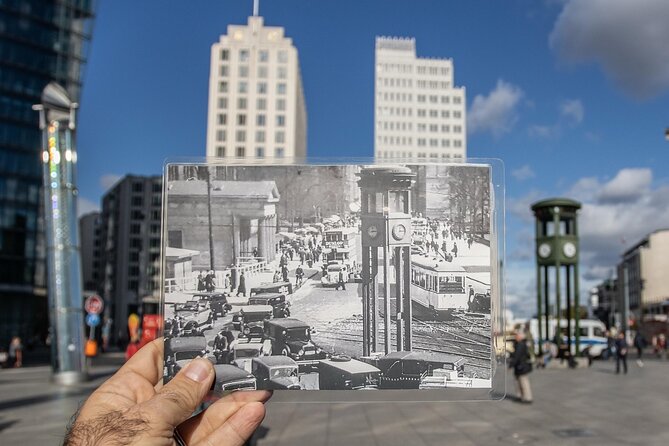
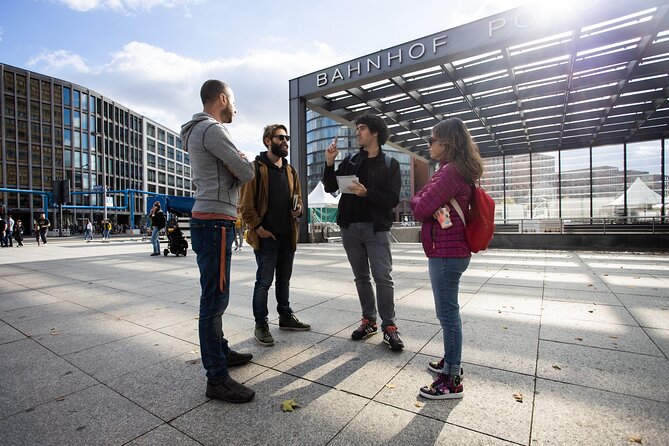
Potsdamer Platz is a strong starting point because it’s easy to picture how cars and cities started shaping each other. The tour begins a few meters from the spot tied to a historic milestone: Berlin issued the patent for the first automobile in history. That’s a big claim, and the tour takes it seriously, giving you context for why the arrival of the automobile mattered so much.
Right there nearby, you also get a look at the oldest traffic light in Germany. This is a clever pairing. You don’t just hear that cars arrived. You see what happened next: cities had to learn how to manage speed, crossings, and safety. Traffic signals are one of those unglamorous inventions that changed everything, and it’s great to have them pointed out instead of walking past them.
Then the story shifts to Karl Benz’s invention and the furor it caused. That reaction piece is important. If you only focus on the technology, you miss the human side: new tools can trigger anxiety, excitement, and stubborn arguments. The tour nudges you to think about how disruptive innovations move through society.
What could be a downside here? It’s a shorter stop (about 30 minutes), so you’ll want to pay attention early. If you’re the kind of person who likes to read every sign in silence, this may feel like you’re moving fast at first.
Leipziger Platz: electric cars, the Tesla angle, and the combustion-engine debate
At Leipziger Platz, the tour pivots to modern mobility. The tone becomes more discussion-based, because this is where the questions get sharper. Are electric cars the real future, or is it partly political? When will combustion engines truly be finished?
This is not just a lecture. You’ll take a look at advanced electric cars of the present, and you’ll get in the cars as part of the experience. That hands-on bit changes how you understand the technology. Seeing a car through glass is one thing. Sitting in it is another. It turns “the future” into something physical and believable.
A highlight is the mention of a Tesla manufactured near Berlin. You’ll see the Tesla connected to that local production. That gives the tour a strong Berlin link, because it’s not importing the story from elsewhere. It’s asking you to notice how global brands tie into local industry.
Is there any possible mismatch? If you’re only here for the oldest-car history and you have zero interest in electric tech, Leipziger Platz may feel like the tour’s most argumentative stop. But if you like debate, that’s where the energy lands.
Moabit: the longer finish and the car-culture storytelling section
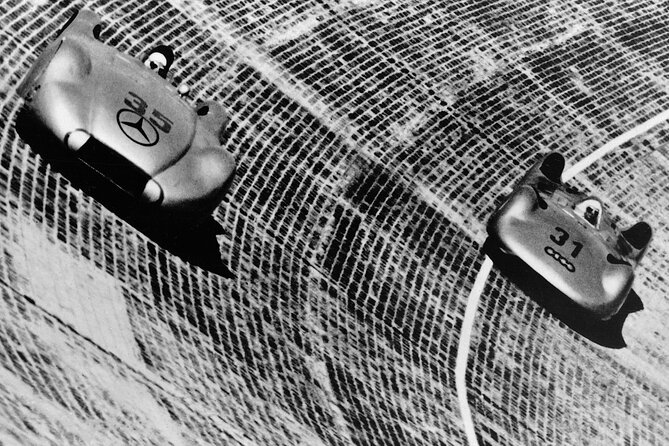
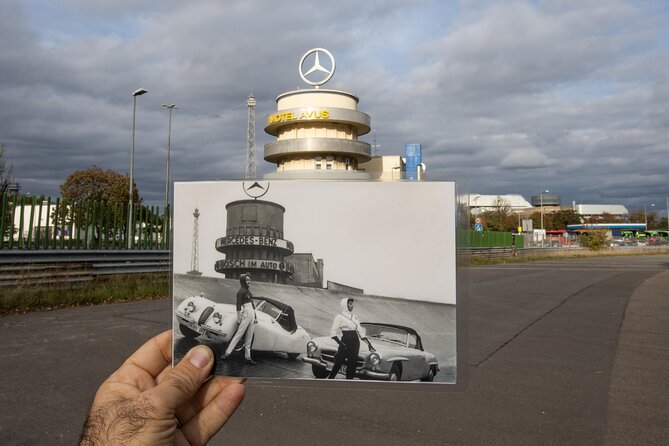
The final stop in Moabit takes the longest time at about 1 hour 30 minutes. That’s a big clue about what the tour wants you to absorb. Instead of rushing to another highlight, you get time to focus on car culture as something that lives in the city, not just something from old textbooks.
The tour frames Moabit as a place to enjoy the best motor timeless jewels that live in Berlin. That wording hints at classic-car energy and appreciation for design and mechanical personality. Even without a focus on one specific model name, you should expect a more reflective segment, where the guide’s storytelling matters as much as the visuals.
This is also where your guide can shape the mood of the whole tour. The comments about Martin Sacan point to a very specific strength: he’s praised for expertise and passion, and for making the city’s past feel alive through storytelling. If that style matches your learning preference, the Moabit time block is where you’ll feel it most.
The practical takeaway for you: set aside your phone-scrolling brain for this last part. If you pay attention, you’ll leave with a clearer sense of how Berlin treats cars as culture, not just transportation.
Price and tickets: what $50.57 really buys
The price is $50.57 per person, and the big reason it’s decent value is the inclusion of entrance tickets to the places you visit. That can add up quickly on city tours, especially when multiple stops include paid entry.
But the tour does not include the daily transit ticket for Berlin’s AB zone. You’ll need it for getting to the start and continuing through the day, since the tour itself is not a private car transfer.
Here’s how I’d plan it:
- Bring an AB zone public transport ticket ready before the tour starts.
- Use the meeting point at Potsdamer Platz 10, 10785 Berlin as your anchor.
- Plan your return route after the tour ends at Berlin BeusselstraßeBeusselbrücke, 10551 Berlin, Germany.
Also, the tour is offered in English and uses a mobile ticket. That means you should make sure your phone battery is happy. Not glamorous advice, but it matters.
Meeting point, route flow, and how to make the timing work
The tour starts at Potsdamer Platz 10 and ends at Berlin BeusselstraßeBeusselbrücke. It’s a point-to-point walk, not a loop. That’s good, because you get forward momentum, but it also means you should map your return after the tour rather than assuming you’ll come back to where you began.
Duration is listed at about 3 hours, and each stop has its own time block:
- Potsdamer Platz: about 30 minutes
- Leipziger Platz: about 30 minutes
- Moabit: about 1 hour 30 minutes
That pacing is a real benefit. It keeps your brain engaged because you’re not stuck in one theme too long. It also means you should arrive ready to listen at stop one, because the history pieces move quickly.
One more scheduling note: the tour is often booked about 12 days in advance on average. Popular English tours in Berlin can sell out, so it’s smart to reserve early if you have fixed travel dates.
What the small group size changes for your experience
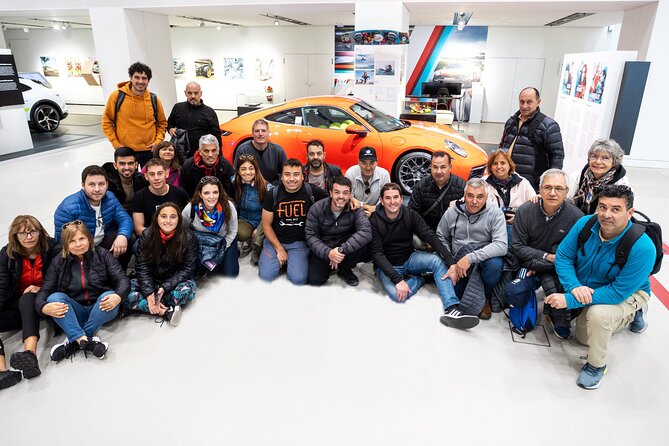
With a maximum of 30 travelers, you avoid the “too many voices” problem. You’re more likely to get the kind of interactive feel that works well for car debates. Electric mobility questions tend to spark real opinions, and with a smaller group, you have a better chance of the guide keeping the conversation moving instead of shutting it down.
Service animals are allowed, and the tour is near public transportation, which helps if you need flexibility around the day.
And since it’s English, you can expect clear explanations rather than a simplified version of the story. The strongest comments about Martin Sacan highlight just that kind of clarity through storytelling and detailed insight.
Who this tour is perfect for
This tour fits best if you fall into at least one of these buckets:
- You want automobile history in Berlin, not just general sightseeing.
- You like technology discussions, especially the electric vs combustion conversation.
- You enjoy a guide who tells stories that connect invention to city life.
If you’re a total car-nerd, you’ll probably leave wanting more, which is a good sign. If you prefer museums and quiet reading, the most interactive stops may feel a bit too talk-heavy, but the route still offers enough variety to keep you interested.
Should you book this Berlin and Car Culture Tour?
My take: book it if you want a guided Berlin walk that links inventions, traffic systems, and today’s electric car questions into one coherent experience. The value is strong because the entrance tickets are included, the tour runs in English, and the guide is repeatedly praised for expertise and passion, especially storytelling and organization.
Don’t book it if you only care about modern cars and hate history, or if you’re expecting a long sit-down museum style deep reading. This tour is active, timed, and built around conversations at each stop.
If you do book, I’d prepare two things: get your AB zone transit ticket sorted ahead of time, and wear comfortable walking shoes for the 3-hour route. Then show up ready to think about cars as a culture, not just a machine.
FAQ
How long is the Berlin and Car Culture Tour?
The tour lasts about 3 hours.
What is the price per person?
The price is $50.57 per person.
Is the tour offered in English?
Yes, it is offered in English.
Do I need an admission ticket?
The tour includes the entrance ticket to all places visited.
Do I need a public transport ticket?
Yes. You need a daily transport ticket for Berlin AB zone, since it is not included.
Where does the tour start?
The meeting point is Potsdamer Platz 10, 10785 Berlin, Germany.
Where does the tour end?
The tour ends at Berlin BeusselstraßeBeusselbrücke, 10551 Berlin, Germany.
Is the ticket mobile?
Yes, the tour uses a mobile ticket.
How big is the group?
The tour has a maximum of 30 travelers.
What is the cancellation policy?
You can cancel for a full refund up to 24 hours before the start time. If you cancel less than 24 hours before, the amount paid is not refunded. A minimum number of travelers is required, and if that minimum is not met, you will be offered a different date or a full refund.
Everything else we filed on Berlin
- Private Photo Tour in Kreuzberg
★ 5.0 · 3 reviews - Kreuzberg Private Walking Tour: Immigrants, Artists & Hipsters
★ 5.0 · 3 reviews - Berlin’s Jewish Heritage: Private Tour of the Vibrant Jewish District
★ 5.0 · 3 reviews - Individual city tour Berlin for max. 8 persons
★ 5.0 · 3 reviews - Berlin & The Third Reich Private Guided Tour
★ 5.0 · 3 reviews - Private Analogue Photography Experience in Berlin
★ 5.0 · 3 reviews
Tours, side by side.
 ★ 4.7Berlin: Reichstag, Dome and Government District Guided TourFrom $1818,288 reviews
 ★ 4.3Berlin: 1-Hour City Tour by Boat with Guaranteed SeatingFrom $2516,993 reviews
 ★ 4.7Hamburg: Sex and Crime in St. Pauli Tour for Ages 18+From $29515,447 reviews
 ★ 4.7Dresden: Semperoper Tickets and Guided TourFrom $1812,102 reviews
 ★ 4.4Berlin: Boat Tour Along the River SpreeFrom $3411,252 reviews
 ★ 5.0Discover Berlin Half-Day Walking TourFrom $249,624 reviews
 ★ 4.3Berlin: Hop-on Hop-off Bus Tour with Live CommentaryFrom $228,579 reviews
 ★ 4.7Berlin: Government District around the Reichstag Guided TourFrom $2848,447 reviews