
REVIEW · GERMANY
Berlin and National Socialism: Berlin under Nazism
Berlin tells the Nazi story in stone. This 4-hour, Spanish-led route links together the buildings and memorials tied to the Third Reich, so the city stops feeling like random stops and starts feeling like a timeline. I especially love the admission tickets included for major sites, and the way guides like Júlia and Helena explain the context clearly, often using photos and videos to help it click.
One possible drawback to weigh: this is a heavy, emotionally focused tour route, so if you want only upbeat sightseeing, you might feel the tone shift quickly.
In This Review
- Key takeaways before you step inside
- Why Berlin under Nazism makes history feel real
- Price and logistics you should plan around
- Bundestag: seeing reconstruction after destruction
- The Memorial to the Sinti and Roma: why this part matters
- Soviet Memorial Tiergarten: remembering the Battle of Berlin
- Tempelhof: the airport that helped shape modern movement
- Topography of Terror: the clearest museum-style stop
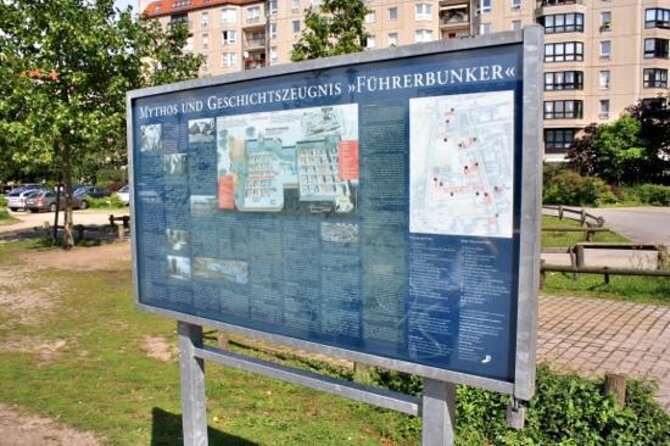
- Fuhrerbunker area: ending at Hitler’s last refuge
- How the guide style changes everything (and why Spanish helps)
- Getting the most from the 4 hours without burning out
- Who should book Berlin under Nazism, and who should consider an alternative
- Should you book this tour?
- FAQ
- How long is the Berlin under Nazism tour?
- What language is the tour guide?
- What does the ticket price include?
- Where does the tour start and end?
- What time does the tour begin?
- Is public transportation included?
- How large is the group?
- Is there free cancellation?
Key takeaways before you step inside
- A focused Third Reich route that connects politics, war, and memory in one run
- Entry included at key places such as the Sinti and Roma memorial and Topography of Terror
- Spanish-speaking guides known for respect, attention, and clear explanation (Júlia, Helena, Celia come up a lot)
- Memorials you should not skip including the Porraimos of the Sinti and Roma
- Berlin’s multiple layers show side-by-side, from parliamentary life to wartime scars
- A manageable group size (up to 25) that helps the pacing stay human
Undecided? The closest Berlin write-ups we have are these.
- Berlin: Reichstag, Dome and Government District Guided Tour★ 4.7 · 18,288 reviews
- Berlin: 1-Hour City Tour by Boat with Guaranteed Seating★ 4.3 · 16,993 reviews
- Berlin: Boat Tour Along the River Spree★ 4.4 · 11,252 reviews
- Discover Berlin Half-Day Walking Tour★ 5.0 · 9,624 reviews
Why Berlin under Nazism makes history feel real
Berlin can overwhelm you with dates, names, and monuments. This tour’s strength is that it picks one brutal chapter, the Third Reich and its aftermath, then walks you through the places where that chapter left marks. You end up seeing how ideology, violence, and propaganda connect to real locations, not just textbook descriptions.
I also like the balance of where the tour sends you. It is not only about Hitler’s world. You also visit memorials tied to the genocides carried out under Nazi rule, plus war memorials that reflect Berlin’s endgame in 1945. That mix matters, because it turns the story from a single villain into a system, with consequences that spread far beyond one regime.
Finally, you get a practical kind of value for time. Four hours is not long, but it is long enough to move beyond “I stood in front of a plaque” mode and into “I understand what I am looking at” mode.
Price and logistics you should plan around
At $25.54 per person, you are paying for a guided route that strings together multiple key stops without you hunting down tickets for each one. Since admission is included at major sites, the cost starts to feel fair, especially compared with trying to piece together entries on your own on a short visit.
A few logistics points will help you have a smoother day:
- The tour starts at the Berlin TV Tower area (Panoramastraße 1A) at 10:00 am and ends at the Memorial to the Murdered Jews of Europe.
- You get a mobile ticket, which is handy, especially for check-in.
- The AB transport ticket is not included, so you’ll want to have your transit sorted before you go.
Group size is capped at 25 travelers, which usually means you can hear the guide and ask questions without the whole experience turning into a fast conveyor belt.
Bundestag: seeing reconstruction after destruction
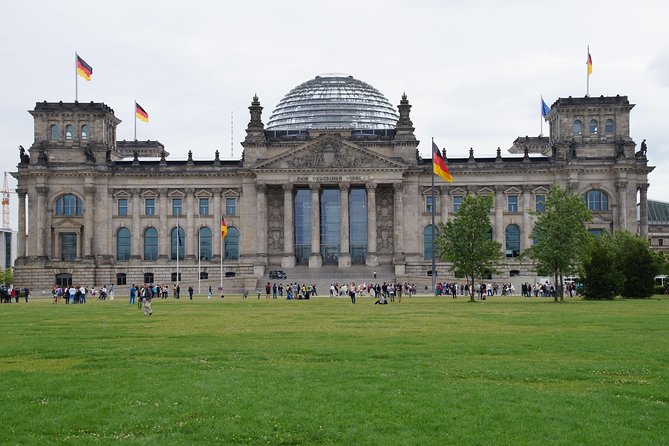
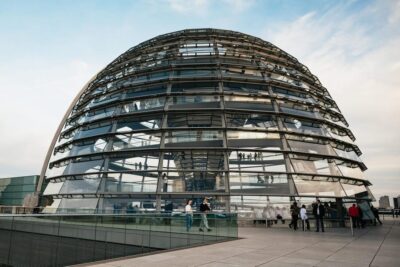
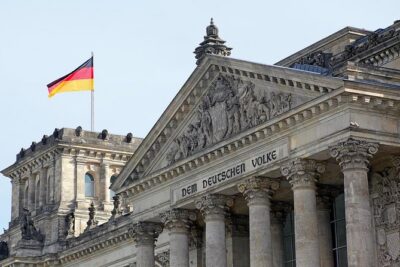
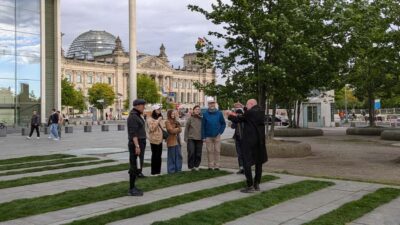
The tour opens with the Bundestag area, anchored by the story of a ruined building that later became the modern German parliament. The key idea here is resilience and political renewal, but with scars still in view. The ruined structure was protected from the elements and partially renovated in the 1960s, but it was after German reunification, on 3 October 1990, that a full reconstruction began under architect Norman Foster, finishing in 1999.
Why this stop works for your understanding: it shows that Germany’s postwar story was not only about courts and trials. It was also about rebuilding institutions and redefining what public power should look like. Standing at this kind of site, you get a concrete sense of time jumping forward from wartime devastation to modern democratic life.
What to watch for: pay attention to the contrast between what the building became and what it had been. Even if you only spend about 20 minutes here, the story is the kind that changes how you interpret the rest of the route.
The Memorial to the Sinti and Roma: why this part matters
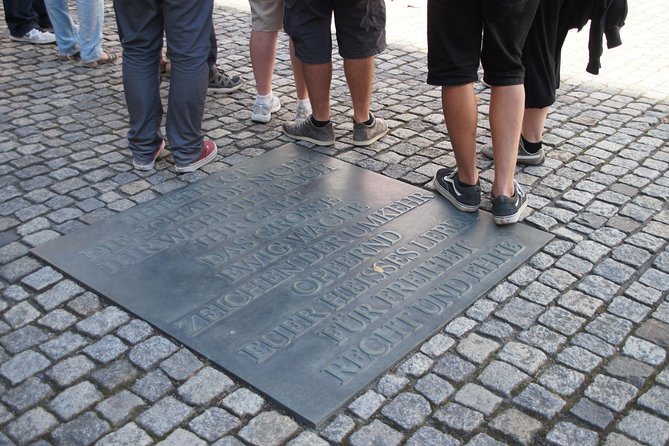
Next comes the Memorial to the Sinti and Roma Victims of National Socialism, dedicated to the memory of those murdered in Porraimos, the Nazi genocide of the European Sinti and Roma. The monument is tied to an estimated range of 220,000 to 500,000 victims.
This stop is essential because it corrects the most common “Nazism equals one storyline” mistake. The Nazi genocide was not limited to one group or one category of victims. If you only focus on political events, you can miss how vast and targeted the violence actually was.
Even with a short time window, you can still get something real out of it: read the memorial as a statement about recognition. It is not there to shock you into feeling sad, it is there to keep memory active and public.
Soviet Memorial Tiergarten: remembering the Battle of Berlin
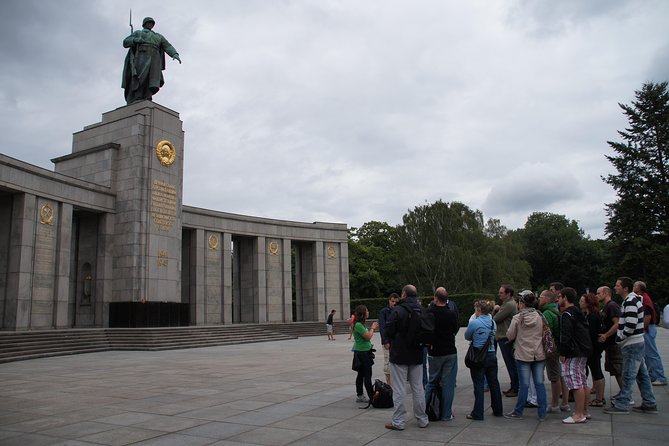
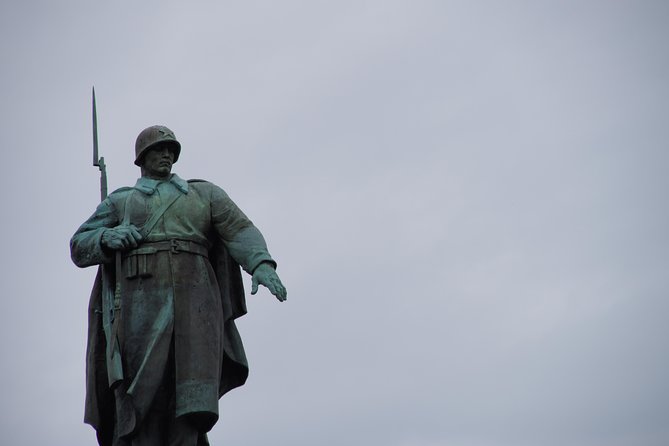
The Soviet Memorial Tiergarten is one of Berlin’s war memorials erected by the Soviet Union. It commemorates Soviet war dead, with special attention to the 80,000 soldiers of the Soviet Armed Forces who died during the Battle of Berlin in April and May 1945.
Why this matters on a Third Reich themed tour: it reminds you that the Nazi regime’s end came through a brutal, multi-sided war. Berlin was not only a political stage. It was a battlefield, and its outcome was paid for in human lives from multiple armies.
If you tend to focus only on Nazi actions, this stop helps you re-balance the picture. War has an aftermath, and memorials are how countries argue for what the war meant, who should be remembered, and what sacrifice should be honored.
Tempelhof: the airport that helped shape modern movement
Tempelhof is not usually the first place people think of when imagining Nazi Germany, but that is exactly why it is a useful stop. Tempelhof Airport was a major early 20th-century aviation hub. In 1926, with ten flights daily, it was the largest airport in Europe.
Even in a short visit, the airport story can help you understand the period’s bigger theme: modern systems, speed, and scale. Airports represent logistics and reach, and in 20th-century history, those capabilities get used for both ordinary travel and wartime purposes.
What you can do here: let the guide’s framing connect the dots between infrastructure and power. You are not learning aviation trivia. You are learning how modern movement can serve different agendas depending on who controls it.
Topography of Terror: the clearest museum-style stop
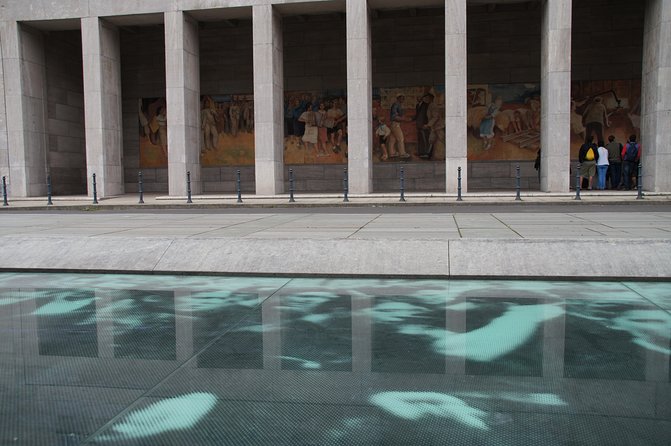
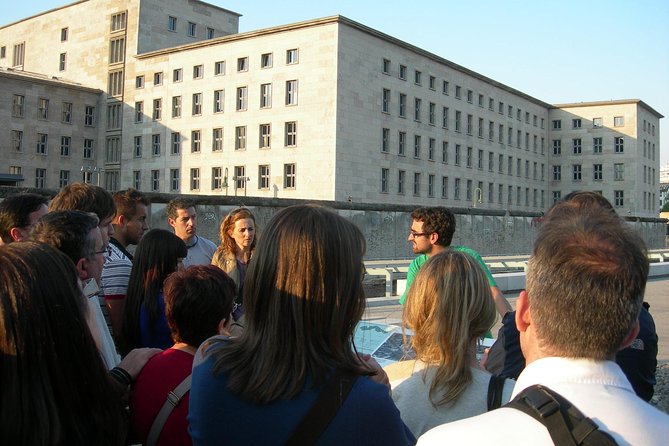
The Topography of Terror stop is one of the tour’s core learning moments. It is an indoor and outdoor history museum in Berlin, and the tour includes admission tickets here.
This is where the route usually becomes more than a walk. A museum format helps your brain organize what you heard outside. Instead of relying only on buildings and street signs, you get material that tries to explain how the Nazi terror apparatus worked and how it spread.
What makes this stop valuable for most people is the blend of outside space and museum space. If you like facts with visuals, this is often the kind of place where the information feels easier to absorb than a purely outdoor memorial.
One caution: it is easy to skim when you are cold or tired. If you want the “I get it now” feeling, slow down. Take in a few panels well instead of rushing through everything.
Fuhrerbunker area: ending at Hitler’s last refuge
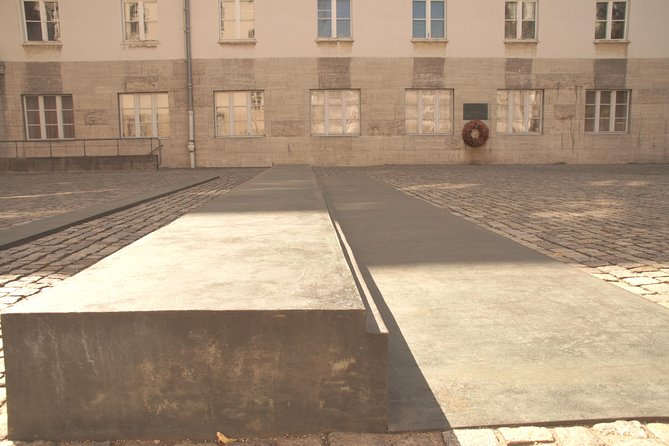
The tour concludes with the area around the Fuhrerbunker, where Hitler had his refuge during his last hours alive. The time here is short, about 15 minutes, but the subject is among the most emotionally charged on the route.
This stop can be hard to hold. Not because it is unclear, but because it is so tied to death and collapse. I suggest treating it like a closing chapter, not like a curiosity stop. Let the guide place it in sequence, so you understand what the bunker represented as the regime fell apart.
If you are sensitive to intense history, plan a gentle buffer afterward. After you finish, consider doing something quiet nearby, so the day does not end with you bouncing straight into nightlife or shopping.
How the guide style changes everything (and why Spanish helps)
A big theme in the feedback is the way guides explain with care. Names like Júlia, Helena, and Celia come up with consistent praise for professionalism, attention, and respect when dealing with tragic events. That kind of delivery matters on this topic. If your guide rushes, the emotional weight and the historical meaning can get lost.
Another detail that stands out: guides often use photographs and videos to help you visualize what you are hearing. That is not just entertainment. It helps you connect the dots between what a place looks like today and what happened there in the past.
Because the tour is Spanish-speaking, you can spend less energy translating in your head and more energy understanding the timeline. If you are a Spanish speaker visiting Berlin, this alone can be the difference between “I saw things” and “I understood things.”
Getting the most from the 4 hours without burning out
A route like this moves from politics to memorials to museum learning to a final, grim closing site. That means you should manage your attention, not just your time.
Here are a few smart ways to make it work:
- Bring a few questions ahead of time, like how the regime went from power to genocide to collapse.
- Don’t feel pressured to memorize every number. Focus on what each place is trying to tell you.
- Wear comfortable shoes. You’ll be standing and walking between multiple stops for the full approximate 4-hour experience.
- Use the museum stop wisely. Spend more time there than you think you need, then let the rest of the day support that context.
And emotionally, give yourself a moment after Topography of Terror, before moving to the Fuhrerbunker area. A short pause can help you absorb instead of just process.
Who should book Berlin under Nazism, and who should consider an alternative
This tour is a strong fit if you want a guided path through the Third Reich era without piecing it together on your own. It is also a great option if you prefer city walking with structured context, since the stops are intentionally chosen to support the story line.
It suits history-minded visitors, students, and anyone who wants to understand German history better through specific places, not just general summaries. The fact that admission is included at major points makes it especially practical for a first trip to Berlin.
Consider another option if you are looking for a relaxed, light day. This route includes genocidal memory and war memorials, and the ending at the Fuhrerbunker area is not casual.
Should you book this tour?
Yes, you should book if you want a focused, easy-to-follow way to understand Berlin’s Third Reich story, with Spanish guidance and key admission tickets included. This is also a smart choice if you are trying to make the most of limited time, since you hit multiple must-see sites in about four hours and finish near the Memorial to the Murdered Jews of Europe.
I would especially book if you like learning from a guide who can explain complicated history with respect and clear framing, using visual aids when helpful. Just be sure you are ready for the subject matter. This is not a “fun facts” tour, it is an understanding tour.
If you want, tell me your dates and whether you prefer museums or outdoor memorials more, and I can suggest the best way to pair this with other Berlin sights the same day.
FAQ
How long is the Berlin under Nazism tour?
It lasts approximately 4 hours.
What language is the tour guide?
The tour includes a Spanish speaking guide.
What does the ticket price include?
Admission tickets are included for the stops that require them.
Where does the tour start and end?
It starts at Berlin TV Tower, Panoramastraße 1A, 10178 Berlin, and ends at the Memorial to the Murdered Jews of Europe, Cora-Berliner-Straße 1, 10117 Berlin.
What time does the tour begin?
The start time is 10:00 am.
Is public transportation included?
No. The AB transport ticket is not included.
How large is the group?
The tour has a maximum of 25 travelers.
Is there free cancellation?
Yes, you can cancel for a full refund up to 24 hours in advance of the experience start time.
Everything else we filed on Berlin
- East Berlin: City of Shadows Walking Tour
★ 5.0 · 11 reviews - Berlin: Die Stachelschweine – Frank Lüdecke – Träumt Weiter
★ 4.7 · 11 reviews - Potsdam Day Trip from Berlin with a Local: Private & Personalized
★ 4.0 · 11 reviews - An Introduction to Berlin Walking Tour
★ 5.0 · 11 reviews - DJ for a Day: Learn to Mix Like a Pro in Berlin
★ 5.0 · 11 reviews - 2-H Segway Sightseeing Tour Berlin
★ 4.5 · 11 reviews