
REVIEW · TOURS
Berlin Battlefield Tour – Operation Berlin 1945 (Small Group)
Berlin’s streets still remember the final days. I love how this small-group battlefield walk links major landmarks like Moltke Bridge and the Reichstag to the fighting that shaped the end of the war. You also get clear storytelling, plus bottled water and rain ponchos if you need them. One possible drawback: the content is heavy and you’ll be moving around Berlin for the full 2.5 hours.
This runs about 2 hours 30 minutes, starting on the southern side of Berlin Hauptbahnhof and ending at Weidendammer Brücke. It’s offered in English with a maximum of 15 people, so questions stay in the conversation and the pacing feels human.
In This Review
- Key highlights worth showing up for
- A battlefield tour that turns landmarks into a timeline
- Starting at Hauptbahnhof, then orienting yourself fast
- Moltkebrucke, the Soviet axis of advance, and the logic of brutal fighting
- The Bundeskanzleramt stop, also known as the Himmler House
- Platz der Republik: measuring the 300m crossing
- Reichstag: Hitler’s final moments and banner No. 5
- Weidendammer Brücke and the last intact Spree crossing
- What a max-15 group really changes
- Timing, walking, and how to stay comfortable
- Price and value: $54.01 for a focused Berlin battle route
- Getting there and leaving: where the tour starts and ends
- Should you book the Berlin Battlefield Tour, Operation Berlin 1945?
- FAQ
- How long is the Berlin Battlefield Tour – Operation Berlin 1945?
- How much does the tour cost?
- What language is the tour offered in?
- How large is the group?
- Where does the tour start and where does it end?
- Is the tour near public transportation?
- Does the tour provide anything for rain?
- What is the cancellation policy?
Key highlights worth showing up for
- A tight, 2.5-hour battle-route that focuses on the final push in Berlin rather than a broad-history lecture
- Moltke Bridge orientation using the Soviet 3rd Shock Army axis of advance as your mental map
- The Himmler House stop that turns a landmark into a story about point-blank artillery and room-to-room fighting
- Platz der Republik as real distance where you mentally measure a 300m crossing before the Reichstag
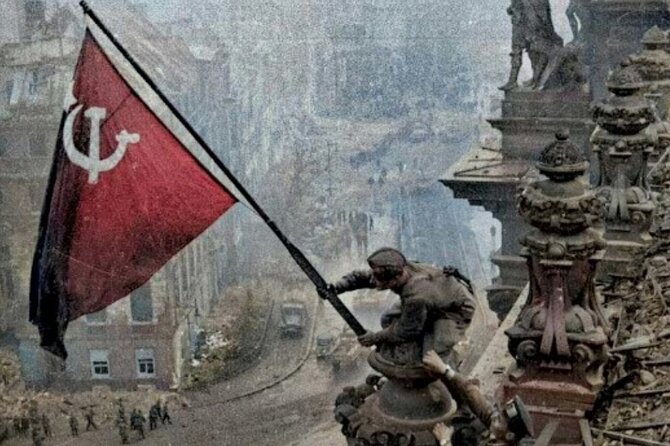
- Reichstag roof moment with the stories of Sergeants Yegorov and Kantariya and the meaning of banner No. 5
- Weidendammer Brücke as the last intact crossing over the Spree, tied to the May 1 breakout attempt
Undecided? The closest Berlin write-ups we have are these.
- Berlin: Reichstag, Dome and Government District Guided Tour★ 4.7 · 18,288 reviews
- Berlin: 1-Hour City Tour by Boat with Guaranteed Seating★ 4.3 · 16,993 reviews
- Berlin: Boat Tour Along the River Spree★ 4.4 · 11,252 reviews
- Discover Berlin Half-Day Walking Tour★ 5.0 · 9,624 reviews
A battlefield tour that turns landmarks into a timeline
Berlin can feel like a city of layers. This tour gives you one focused layer, the last stretch of WWII, and it moves you through the places where the battle lines tightened.
What makes this kind of tour useful is that it’s not just facts. You walk, stop, and get a short explanation that helps you picture what it would have felt like to advance, defend, and survive in the same streets you’re standing in now. The best version of this experience is when your guide connects each site to the next one, so the map in your head keeps updating.
And yes, it is grim. You’ll be dealing with siege-era violence and decisive final days, not postcard history. If you’re the type who likes heavy context with clear structure, you’re in the right place.
Starting at Hauptbahnhof, then orienting yourself fast
The tour begins at Ella-Trebe-Straße 9, right by Berlin Central Station. You start on the southern side of the modern Hauptbahnhof, with a short introduction that sets the scene before you start walking.
This matters more than you might think. Berlin has lots of big, modern sightlines, and it’s easy to lose your bearings when you’re trying to imagine 1945 movement. A quick orientation helps you turn the route into something you can follow, instead of just a sequence of stops.
After that, you move toward Moltke Bridge. Even though the stops are brief, the pacing is designed so you don’t need museum-style time to get the story.
Moltkebrucke, the Soviet axis of advance, and the logic of brutal fighting
Moltke Bridge is the first major “battlefront” anchor. It’s an ornate red sandstone structure, and it became the scene of some of Berlin’s most brutal fighting.
Here’s the practical value: you don’t just hear that fighting happened. You orient yourself to the Soviet 3rd Shock Army’s axis of advance. That one detail gives you a mental line, so when the guide talks about the challenges for the Soviets and the German defenders, you can start picturing why the approach was so hard.
Look at the bridge as a choke point. In siege warfare, a location like this isn’t just scenery. It is geometry, crossings, control points, and exposure time. You’ll probably find that your understanding sharpens when you treat it like a piece of a wider approach plan, not a standalone landmark.
This stop is also short, which is good if you want momentum. If you’re the type who can stand and read every plaque, you may want to add extra time later on your own.
The Bundeskanzleramt stop, also known as the Himmler House
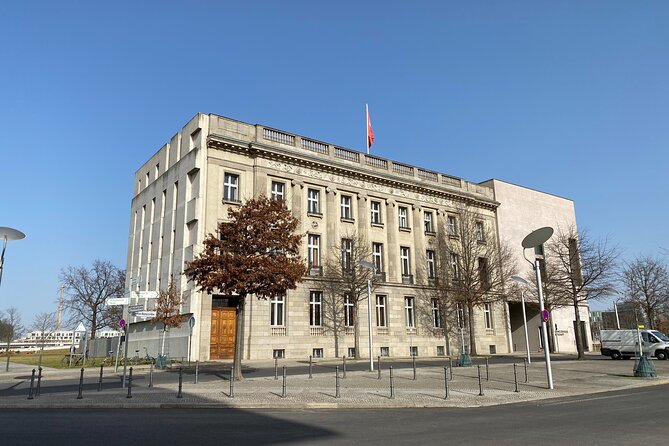
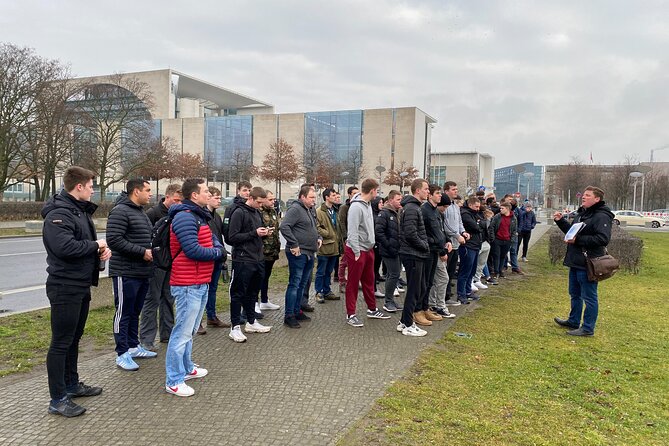
Next you cross Moltke Bridge and head to the Bundeskanzleramt area, where the tour discusses the building that was nicknamed the Himmler House. In the old diplomatic quarter, it functioned as the then Interior Ministry.
The key moment here is the discussion of Soviet artillery barrage at point blank range, followed by the horrific room to room fighting that took place inside. That sequence is what makes this stop powerful: it’s not only about external battle movement. It’s about what happens when the conflict moves into buildings and turns interior space into a battlefield.
A drawback to consider: because the stop focuses on intense, close-quarters conflict, the tone can feel emotionally heavy. If you’re bringing younger kids, you might want to gauge how they handle WWII content before you go.
Still, if you want a tour that connects the map to the lived reality of fighting, this is one of the most meaningful parts of the route.
Platz der Republik: measuring the 300m crossing
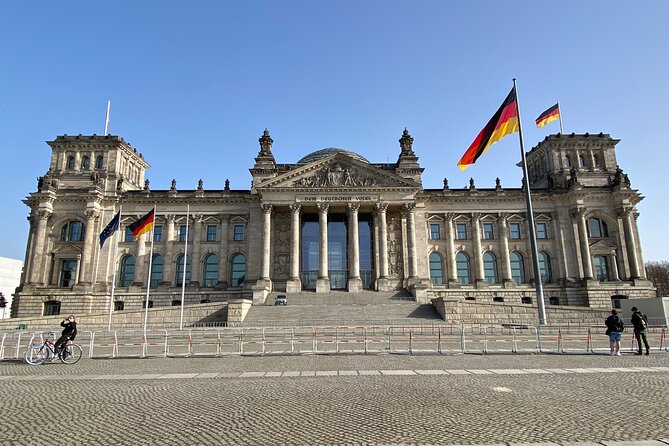
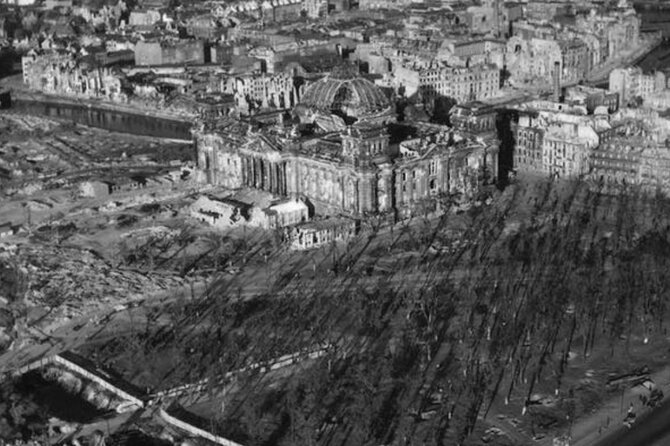
Continuing forward brings you into what the tour frames as no-man’s-land. You stand on the former Königsplatz and take stock of a 300m moon scape that the 207th and 150th rifle divisions would have had to cross before reaching the Reichstag.
This is where the tour becomes especially “you can actually use this.” Distance is hard to understand without context. When you stand on the ground and hear about a 300m gap, the story stops being abstract and becomes a problem you can mentally solve: how far is that, what would it mean under fire, and why would defenders have had advantages at the far side.
It’s also a reminder that battles are often shaped by small details: sight lines, terrain, and the time it takes to cover a short distance when everything is worse than you can imagine.
This stop is brief, about ten minutes, so plan to keep your eyes up and ask questions if something clicks but you want more clarity.
Reichstag: Hitler’s final moments and banner No. 5
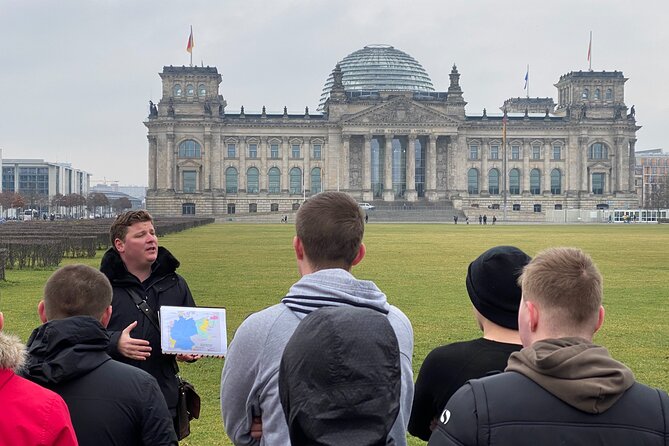
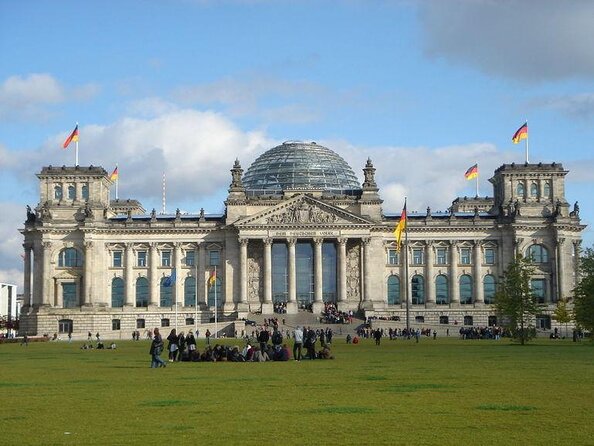
As you walk toward the Reichstag, the tour connects the route to Hitler’s final moments in the Führer bunker, said to be only a few hundred meters away. That proximity detail helps you understand why the Reichstag mattered so much at the end.
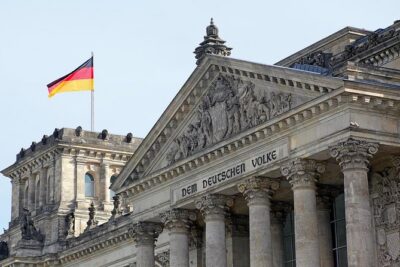
Then you arrive at the foot of the Reichstag and hear two specific stories: Sergeant Yegorov and Sergeant Kantariya, and how they raised special banner No. 5 on the roof, marking the end.
This is one of those moments where the tour earns its keep. Many WWII walking tours skim the surface. Here, you get names and a specific symbolic act, and you can connect that to the building you’re looking at. It’s history with a focal point.
Practical tip: spend a few extra seconds looking up and around once you get there. The tour gives you the story, but you’ll absorb it faster if you also take in the scale of the structure and think about why a roof banner would be so visible.
If you’re taking photos, be mindful that this is a serious site. Keep it respectful and quiet while the guide is speaking.
Weidendammer Brücke and the last intact Spree crossing
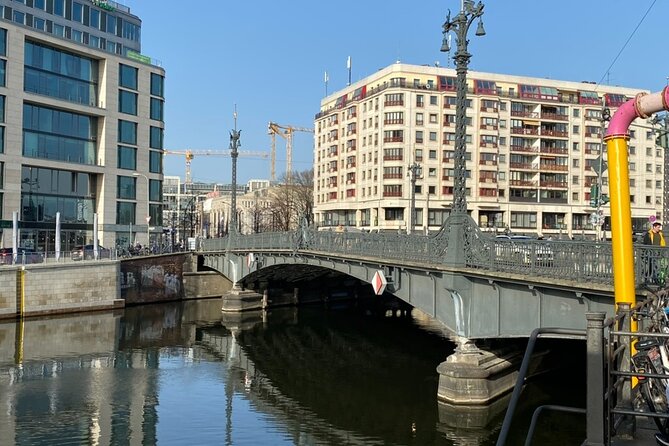
Finally, you head to Weidendammer Brücke. During the final days of the Battle of Berlin, the bridge was one of the few bridges still intact over the Spree.
The story at this stop centers on the night of May 1, 1945, when the bridge became the scene of terrible carnage after a breakout attempt from the Führerbunker.
This ending matters because it turns the tour into a full arc. You start at a major transit hub and end at a specific crossing point, tied to the final escape attempt and the collapsing situation around the bunker.
The tour ends at the bridge, near the domed German breakout site area. Even if you don’t linger long, you leave with a clear sense of how the battle tightened and why bridges and crossings were so decisive.
What a max-15 group really changes
With a maximum of 15 travelers, the vibe is different from the big coach tours. You aren’t competing for attention, and you’re more likely to get answers tailored to what you’re curious about.
The standout from the experience is how much room you get for questions. When you care about WWII details, the small-group format can turn a walking tour into an actual conversation, not just a one-way talk.
In particular, the guide experience seems to be a big part of why the tour lands well. I’d expect guides like Jochen to keep the story coherent, handle follow-ups, and talk in a way that works for both casual history fans and people who want deeper, in-the-weeds context.
If you’re traveling with a friend or family member who likes to ask questions, this format is a big win.
Timing, walking, and how to stay comfortable
This is about 2 hours 30 minutes total, with stops that average around ten to twenty minutes each. That’s short enough to fit into a busy Berlin day, but long enough that you’ll want comfortable walking shoes.
Berlin weather can be unpredictable, and this tour specifically requires good weather. If it’s canceled due to poor weather, you’ll be offered a different date or a full refund.
The good news: the tour provides bottled water and rain ponchos if needed. That means you’re not scrambling for supplies mid-walk. Still, I recommend bringing a light layer, since you’ll be outside and moving through different areas.
Also, it’s offered in English, and you’ll have a mobile ticket. That cuts down on time spent figuring out paper confirmation.
Price and value: $54.01 for a focused Berlin battle route
At $54.01 per person, this tour isn’t a budget toy, but it also isn’t priced like a private specialist day. You’re paying mainly for three things: a guided storyline, time on foot, and the small-group format.
A big value signal is that the stop sites are handled without paid admission ticket costs for you. Bottled water and rain ponchos are included too, which matters more than it sounds if you get an unexpected drizzle.
Is it worth it? If you want a structured 1945 battlefield route without piecing together distances and context on your own, yes. If you only want broad WWII background, you might feel it’s too focused. But if your goal is to understand how the end game unfolded across specific places, the route is the product.
One more value point: average booking happens about 27 days in advance. That’s a hint that dates can fill, especially for English-speaking slots. If you’re set on a particular day, I’d book sooner rather than later.
Getting there and leaving: where the tour starts and ends
Start at Ella-Trebe-Straße 9, 10557 Berlin, on the southern side of Hauptbahnhof. That’s a central anchor point, and it makes the first part easier because you can get there using major transit lines.
The tour ends at Weidendammer Brücke, 10117 Berlin. The bridge is about 50m from the S+U Friedrichstraße train station, so you’re not stuck far from transport when you finish.
When I plan a tour like this, I like having a clean exit. You can hop back onto the rail network quickly and still have time to see other Berlin sights after.
Should you book the Berlin Battlefield Tour, Operation Berlin 1945?
Book it if you want a tight, story-driven walk through major 1945 locations, with a guide who keeps the narrative moving from bridge to building to the final crossing. This tour is especially suitable if you like history with names, distances, and clear cause-and-effect.
You should also book it if you appreciate small-group pacing. Max 15 travelers is a real difference here, and it makes Q&A part of the experience instead of a rare add-on.
Skip it, or at least think twice, if you’re not up for heavy WWII subject matter or if you prefer long museum time over walking outdoors. Also remember it requires good weather, so if you’re visiting during a period of frequent rain, you may want flexible plans.
If you want one practical decision rule, go with this tour when you have a half-day style window and you want Berlin’s WWII ending mapped onto real streets. You’ll leave with a route you can picture later, not just a collection of disconnected facts.
FAQ
How long is the Berlin Battlefield Tour – Operation Berlin 1945?
It lasts approximately 2 hours 30 minutes.
How much does the tour cost?
The price is $54.01 per person.
What language is the tour offered in?
The tour is offered in English.
How large is the group?
The tour has a maximum of 15 travelers.
Where does the tour start and where does it end?
It starts at Ella-Trebe-Straße 9, 10557 Berlin, and ends at Weidendammer Brücke, 10117 Berlin.
Is the tour near public transportation?
Yes. The tour ends about 50m from the S+U Friedrichstraße train station.
Does the tour provide anything for rain?
Yes. Bottled water and rain ponchos are provided if needed.
What is the cancellation policy?
You can cancel for free up to 24 hours in advance for a full refund. If it’s canceled due to poor weather, you’ll be offered a different date or a full refund. If it’s canceled because the minimum number of travelers isn’t met, you’ll be offered a different experience or a full refund.
Everything else we filed on Berlin
- East Berlin: City of Shadows Walking Tour
★ 5.0 · 11 reviews - Berlin: Die Stachelschweine – Frank Lüdecke – Träumt Weiter
★ 4.7 · 11 reviews - Potsdam Day Trip from Berlin with a Local: Private & Personalized
★ 4.0 · 11 reviews - An Introduction to Berlin Walking Tour
★ 5.0 · 11 reviews - DJ for a Day: Learn to Mix Like a Pro in Berlin
★ 5.0 · 11 reviews - 2-H Segway Sightseeing Tour Berlin
★ 4.5 · 11 reviews
Tours, side by side.
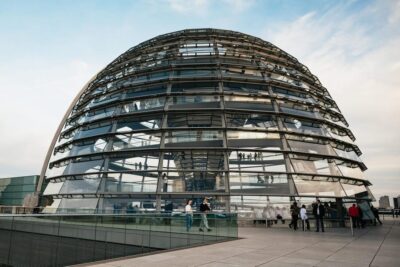 ★ 4.7Berlin: Reichstag, Dome and Government District Guided TourFrom $1818,288 reviews
 ★ 4.3Berlin: 1-Hour City Tour by Boat with Guaranteed SeatingFrom $2516,993 reviews
 ★ 4.7Hamburg: Sex and Crime in St. Pauli Tour for Ages 18+From $29515,447 reviews
 ★ 4.7Dresden: Semperoper Tickets and Guided TourFrom $1812,102 reviews
 ★ 4.4Berlin: Boat Tour Along the River SpreeFrom $3411,252 reviews
 ★ 5.0Discover Berlin Half-Day Walking TourFrom $249,624 reviews
 ★ 4.3Berlin: Hop-on Hop-off Bus Tour with Live CommentaryFrom $228,579 reviews
 ★ 4.7Berlin: Government District around the Reichstag Guided TourFrom $2848,447 reviews