
REVIEW · TOURS
Berlin during Nazism – Tour in Italian
Nazism leaves marks in every corner. This Italian guided tour connects key Berlin sites tied to the Third Reich with a clear, human scale story line. I like that it keeps the focus on real places, not just big political talk, and I also like the small group feel that gives you more direct attention from the guide.
My favorite part is how the route balances persecution with documented resistance and Jewish landmarks in the Scheunenviertel area. The one drawback to consider is that the subject matter is heavy, so if you want a lighter Berlin day, this may not match your mood, and it is specifically in Italian.
Plan on a compact walk over about 3 hours, starting at Potsdamer Platz and ending at Hackescher Markt. Bring a day ticket for public transport zones AB, and wear shoes that can handle uneven sidewalks, because this is not a sit-down tour.
In This Review
- Key things to know before you go
- What you are really seeing in Nazi-era Berlin
- Price and value: about $27.87 for 3 hours of guided storytelling
- Where the tour starts and how the walking route works
- The meeting point at Potsdamer Platz, then straight into context
- German Resistance Memorial Center and Operation Valkyrie
- The T4 Memorial: Nazi euthanasia program victims and the danger of ideology
- Anhalter Bahnhof ruins and the death trains (1942-1945)
- Scheunenviertel Jewish Quarter: living heritage and targeted destruction
- The New Synagogue (Neue Synagoge) as a symbol of community
- The Alter Judischer Friedhof: a cemetery, then and now
- Museum Blindenwerkstatt Otto Weidt: the Berlin Schindler story
- How the guides in Italian keep a hard day understandable
- Practical tips: what to bring and what to expect on your feet
- Is this the right tour for you?
- Should you book Berlin during Nazism in Italian?
- FAQ
- FAQ
- What language is the tour offered in?
- How long is the tour?
- How much does the tour cost?
- Where does the tour start and end?
- Is admission included for the sites on the itinerary?
- Is food or drinks included?
- Do I need public transportation tickets?
- What kind of ticket do I receive?
- Is free cancellation available?
Key things to know before you go
- Small group (max 20) so you get more time for questions and slower, clearer explanations
- All weather operation means you should dress for Berlin conditions, not tour fantasy weather
- Free entry at each stop listed on the route helps the cost feel more reasonable
- Focused Nazi-era sites include the German Resistance Memorial Center, the T4 Memorial, and Anhalter Bahnhof ruins
- Jewish Quarter connection with stops around the New Synagogue and the Old Jewish Cemetery area
- Otto Weidt story connects Jewish survival and work as resistance in a very specific way
Undecided? The closest Berlin write-ups we have are these.
- Berlin: Reichstag, Dome and Government District Guided Tour★ 4.7 · 18,288 reviews
- Berlin: 1-Hour City Tour by Boat with Guaranteed Seating★ 4.3 · 16,993 reviews
- Berlin: Boat Tour Along the River Spree★ 4.4 · 11,252 reviews
- Discover Berlin Half-Day Walking Tour★ 5.0 · 9,624 reviews
What you are really seeing in Nazi-era Berlin
Berlin is not a single monument you visit and leave behind. On this tour, the city becomes a map of decisions, systems, and targeted persecution, because each stop is tied to a real location and a specific phase of events. That structure is what makes the experience feel grounded.
You also get a steady shift in perspective. The route moves from the rise of Nazi power to resistance, then into the mechanisms of harm, and finally into the Jewish sites that survived as living memory. It is organized enough to follow, but not simplified into slogans.
Price and value: about $27.87 for 3 hours of guided storytelling
At $27.87 per person for about 3 hours, this is priced like a city walk with professional interpretation, not a museum-only ticket. What boosts the value is that the guide is included, the tour is in Italian, and the stops listed are marked as admission ticket free. That means you mostly pay for expertise and time, not extra site fees.
Another value factor is the group size limit of up to 20 travelers. Even if you are not the type who asks lots of questions, a smaller group usually means fewer dead moments while you wait for everyone to regroup. And because the stops are short, your guide can keep the pace tight without losing clarity.
Food is not included, so plan a snack or meal around this day. Otherwise, you will be tempted to grab something quick and end up rushing your own reflection time.
Where the tour starts and how the walking route works
The tour meets at Potsdamer Platz 10, 10785 Berlin, and you finish at Hackescher Markt, 10178 Berlin. The schedule lists a start time of 10:00 am, and it runs for about 3 hours total.
You will use public transport in practice, since the stops are spread across central Berlin. The guidance is to buy a day card for the public transportation in zones AB. If you plan to visit other areas the same day, this is also a smart way to avoid thinking too hard about tickets.
Also note the tour uses a mobile ticket. That is usually convenient on a phone, but still, it is worth checking that your battery is healthy before you head out.
The meeting point at Potsdamer Platz, then straight into context
The first stop is the meeting point at Vive Berlin Tours at Potsdamer Platz 10. You look for the blue bicycle of VIVE BERLIN TOURS and a flag with the logo. Admission at this first segment is free, and the focus is just getting you oriented.
Potsdamer Platz is a logical opener because it is central and easy to reach by transit. But the point of starting here is also practical: the guide can set the storyline early, so the heavier parts of the route land with clarity rather than confusion.
The tour is designed for all-weather conditions. Berlin can go from calm to wet fast, so bring a jacket you can handle, and consider a small umbrella if the forecast looks grim.
German Resistance Memorial Center and Operation Valkyrie
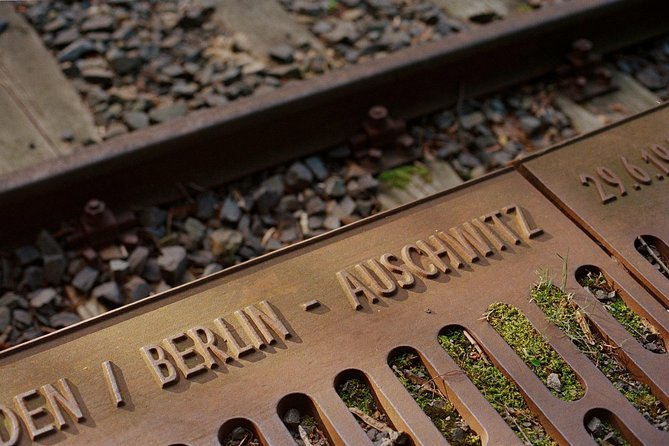
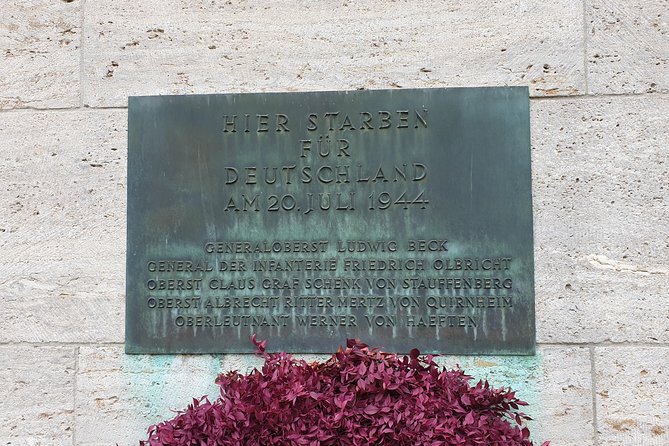
One of the most meaningful stops is the German Resistance Memorial Center. It is located at the place where the operation Valkyrie was directed, and the center illustrates German resistance to National Socialism from 1933 to 1945.
You get a focused message here: resistance was not just a legend from history books. The memorial’s goal, as described for the tour, is to show how individual people and groups took action against the Nazi dictatorship during those years.
This stop is scheduled for about 25 minutes, which is a good length for reading the space, listening to the guide, and letting the idea of resistance feel concrete. If you are someone who usually thinks of World War II only in terms of battles, this is where the story becomes personal and moral, not only military.
The T4 Memorial: Nazi euthanasia program victims and the danger of ideology
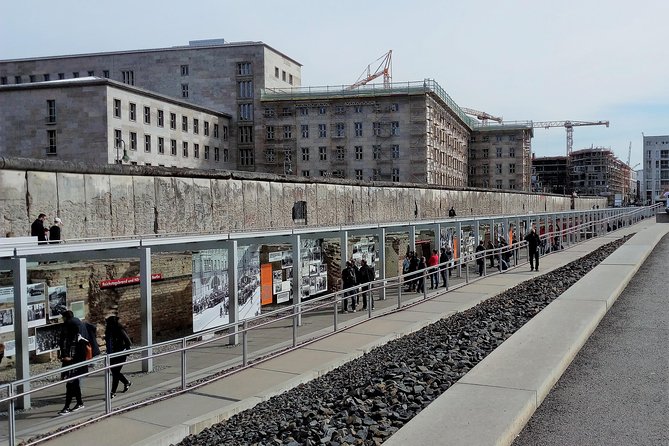
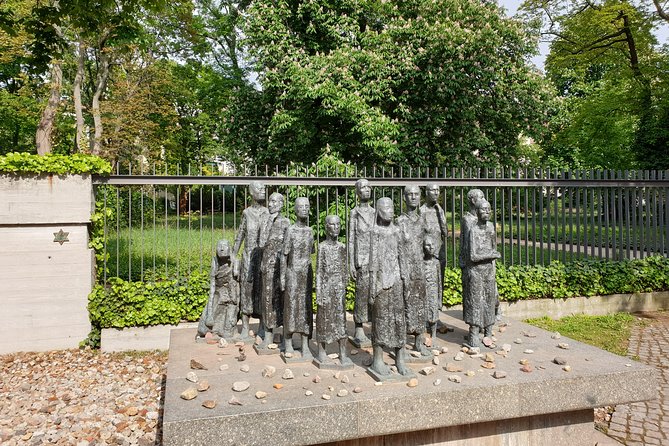
Next comes the T4 Memorial for the Victims of the Nazi Euthanasia Program. The tour frames it as a Berlin monument for about 300,000 victims, including people killed because of mental or physical disabilities or with chronic diseases.
It also spells out a key term: the Nazi eugenics program was known as T4, from the office at Tiergartenstrasse number 4 where it was directed. And importantly, it is considered a precursor to the Holocaust.
This stop is about 15 minutes, so it moves at a measured pace. You are not meant to rush past it, but the tour also avoids lingering so long that you lose the thread. If you are sensitive to difficult topics, this is the kind of place where you might want to pause, look, and breathe before continuing.
Anhalter Bahnhof ruins and the death trains (1942-1945)
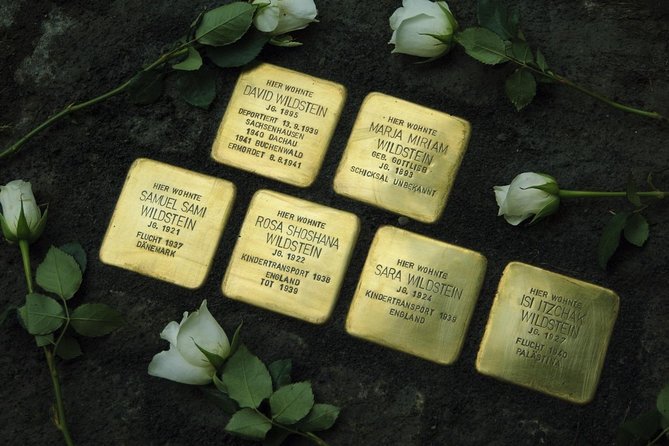
Then you hit Anhalter Bahnhof, and it feels like history left unfinished. The tour explains it was once the biggest European station at the end of 1800, and today only ruins remain after Second World War destruction.
The guide ties that space to real deportations: from the railway station, many death trains departed from 1942 to 1945. That detail matters, because it forces you to see transportation as part of the system, not just a background detail.
The stop is scheduled for about 10 minutes, which is short, but the meaning here is so concentrated that you do not need long speeches. If you can, take a slow look around yourself first, then let the guide connect what you see to what happened.
Scheunenviertel Jewish Quarter: living heritage and targeted destruction
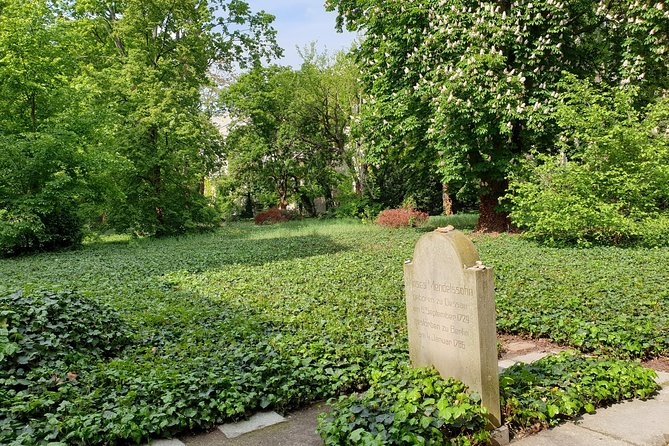
After the concentration of Nazi violence in the earlier stops, the tour pivots toward Jewish Berlin through Scheunenviertel, a part of Mitte often referred to as the Jewish Quarter. The itinerary includes visits to some of the most important Jewish institutions in Berlin, such as the New Synagogue and also a school founded by the philosopher Moses Mendelssohn.
This portion is scheduled for about 45 minutes, so it is one of the longer segments of the walk. That time helps because the story needs room to breathe: you are not just naming victims, you are also understanding a community life that existed before it was shattered.
The New Synagogue (Neue Synagoge) as a symbol of community
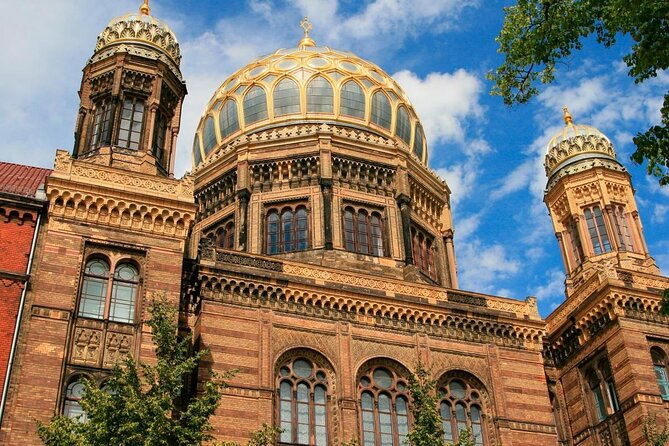
The Neue Synagoge stop is one of the tour’s highlight moments. The tour description emphasizes that it was built in 1866 to seat 3,200 people, making it the largest Jewish place of worship in Germany at the time.
Even with all the tragic context around it, the guide can frame the synagogue as a symbol of a thriving Jewish community. Scheduled for about 10 minutes, it is long enough to grasp its scale and meaning without turning it into a quick photo stop.
If you like architecture, this stop is a good one. And if you are more of a history-focused traveler, it still works, because the story here is about community building, not only suffering.
The Alter Judischer Friedhof: a cemetery, then and now
The tour also includes a visit to the Alter Judischer Friedhof, the Old Jewish Cemetery in Hamburger Straße. It is described as the oldest recognizable cemetery in the inner city, and the tour notes that during the Nazi period the Gestapo destroyed the original cemetery.
This stop is about 10 minutes. That is enough time for a respectful look and for the guide to connect what you see to the fact that destruction targeted not only people, but memory and places.
If you want a takeaway from Berlin that lasts beyond your photos, cemeteries often do that. This one is a clear example of how physical space carries the weight of history.
Museum Blindenwerkstatt Otto Weidt: the Berlin Schindler story
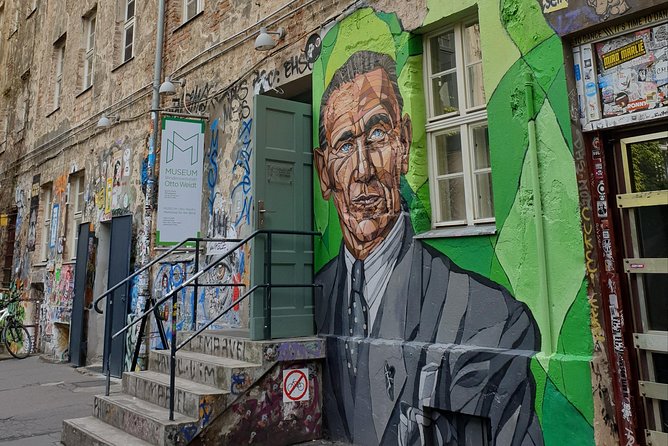
Another standout is the Museum Blindenwerkstatt Otto Weidt. Otto Weidt, known as the Schindler from Berlin in the tour description, hired Jewish workers, including blind and disabled employees, to help save them from deportation to Nazi extermination camps.
This is a rare kind of stop because it centers on survival through work and protection, not only on violence. The itinerary schedules about 15 minutes here, which gives you time to understand the logic of what he did and why the museum remembers the original location of his factory.
This stop is also where the tour earns extra emotional balance. After resistance, euthanasia victims, and deportations, you get an example of people using opportunities to help others. That contrast can make the entire day easier to hold mentally.
How the guides in Italian keep a hard day understandable
The route depends heavily on the guide, because the topic is intense and the stops are closely linked. In the provided experience history, guides like Lorenzo, Fabio, Paolo, Vita, Federica, Zuleika, and Silvio are named, and the recurring pattern is professionalism and the ability to keep the group focused.
Many guides are praised for staying organized and for presenting facts with passion rather than sensational drama. One review notes the experience was not rhetorical or sensationalist, which matters here. You want your guide to explain the structures behind what happened, not just perform emotions.
If you are choosing this tour specifically for Italian, think of it as a story you follow through space. The short stop times help, because your guide can reset attention at each location instead of pushing you through one long lecture.
Practical tips: what to bring and what to expect on your feet
This is a walk-heavy tour through central Berlin, and the itinerary includes multiple short stops. That is a good fit if you like moving through cities and you want history connected to what you see outside.
Wear comfortable shoes. One practical hint that shows up clearly in the experience is that you do walk a lot, and it is worth being prepared. Bring a jacket for rain, because the tour operates in all weather conditions, and you will not be waiting indoors to stay dry.
Service animals are allowed, and the route is near public transportation. That combination makes it easier if you want the historical day without overcomplicating logistics.
Is this the right tour for you?
This tour makes the most sense if you want a structured Nazi-era Berlin experience that includes both resistance and Jewish historical sites. It is also a good choice if you prefer a small group, since the tour caps at 20 travelers.
If you are traveling with teens, it can work well because the tour is designed to keep attention during difficult material and keeps stops short. If you need a lighter itinerary or you are not ready for themes tied to euthanasia programs, deportations, and destruction, you might want to save this for a day when you can emotionally handle it.
Should you book Berlin during Nazism in Italian?
Book it if you want a guided, Italian walk that links Berlin locations to how Nazi power expanded, how resistance showed up, and how Jewish life was both celebrated and targeted. The mix of the German Resistance Memorial Center, the T4 Memorial, Anhalter Bahnhof, and Jewish landmarks creates a coherent arc that you can actually remember.
Consider skipping or choosing a different format if you hate walking in crowds, if language barriers would block understanding, or if you strongly prefer upbeat historical sightseeing. The topic is serious, and this tour does not pretend otherwise.
FAQ
FAQ
What language is the tour offered in?
The guide is provided in Italian.
How long is the tour?
The duration is listed as about 3 hours.
How much does the tour cost?
The price is $27.87 per person.
Where does the tour start and end?
It starts at Potsdamer Platz 10, 10785 Berlin and ends at Hackescher Markt, 10178 Berlin.
Is admission included for the sites on the itinerary?
The itinerary lists each stop with admission ticket free, and the tour also includes a professional guide and local taxes.
Is food or drinks included?
No. Food and drinks are not included.
Do I need public transportation tickets?
The tour notes that you should buy a day card for Berlin public transport zones AB.
What kind of ticket do I receive?
You get a mobile ticket.
Is free cancellation available?
Yes. You can cancel up to 24 hours in advance for a full refund.
Everything else we filed on Berlin
- East Berlin: City of Shadows Walking Tour
★ 5.0 · 11 reviews - Berlin: Die Stachelschweine – Frank Lüdecke – Träumt Weiter
★ 4.7 · 11 reviews - Potsdam Day Trip from Berlin with a Local: Private & Personalized
★ 4.0 · 11 reviews - An Introduction to Berlin Walking Tour
★ 5.0 · 11 reviews - DJ for a Day: Learn to Mix Like a Pro in Berlin
★ 5.0 · 11 reviews - 2-H Segway Sightseeing Tour Berlin
★ 4.5 · 11 reviews
Tours, side by side.
 ★ 4.7Berlin: Reichstag, Dome and Government District Guided TourFrom $1818,288 reviews
 ★ 4.3Berlin: 1-Hour City Tour by Boat with Guaranteed SeatingFrom $2516,993 reviews
 ★ 4.7Hamburg: Sex and Crime in St. Pauli Tour for Ages 18+From $29515,447 reviews
 ★ 4.7Dresden: Semperoper Tickets and Guided TourFrom $1812,102 reviews
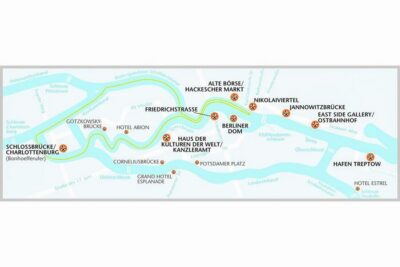 ★ 4.4Berlin: Boat Tour Along the River SpreeFrom $3411,252 reviews
 ★ 5.0Discover Berlin Half-Day Walking TourFrom $249,624 reviews
 ★ 4.3Berlin: Hop-on Hop-off Bus Tour with Live CommentaryFrom $228,579 reviews
 ★ 4.7Berlin: Government District around the Reichstag Guided TourFrom $2848,447 reviews