
REVIEW · GUIDED
BERLIN FULL in 3.5h (Guide + Headphones)
Berlin comes into focus fast. This 3.5-hour walk is built for clarity, with headphones so you hear the story no matter where you are in the group, and with guides like Pablo who keep the narration interactive and easy to follow. I like how it links medieval Berlin to today’s capital in one continuous route, but the one possible drawback is the tight timing at each stop, so you’ll move on quickly.
You start at Azem Bistro near Rathausstraße, you finish by Pariser Platz 1A close to the Brandenburg Gate, and the whole thing runs at a pace that works for most visitors. It’s a small group by city standards, up to 50 people, and you’ll use a mobile ticket.
In This Review
- Key highlights you will actually feel during the walk
- Getting oriented fast: Azem Bistro start and a finish at Pariser Platz
- Why headphones make this route worth paying attention to
- Humboldt Forum: architecture as a living record of change
- Alexanderplatz and Museum Island: the city’s “map points” for first-timers
- Unter den Linden and Neue Wache: royal promenade to war memory
- Nikolaiviertel and Bebelplatz: medieval streets and a warning about ideas
- Checkpoint Charlie and the Gendarmenmarkt contrast: borders and symmetry
- Berlin Wall Memorial plus the Third Reich sites: the city explains itself, fast
- The Holocaust Memorial stop: the most emotional moment on the route
- Reichstag and Brandenburg Gate: Germany’s politics, seen up close
- Price and time value: what $23.76 buys you in 3.5 hours
- Tips for a smooth walk (and who this tour fits best)
- Should you book the Berlin Full in 3.5 hours tour?
- FAQ
- How long is the Berlin FULL in 3.5h tour?
- Where is the meeting point and where does the tour end?
- Is the tour guided and do I get headphones?
- Do I need to pay extra for entrances during the tour?
- What size group is this tour?
- What weather conditions affect the tour?
- Can I cancel and get a full refund?
Key highlights you will actually feel during the walk
- Headphones included so the guide stays audible even when traffic noise and building echoes kick in.
- A straight shot through major neighborhoods from Museum Island and Unter den Linden to Nikolaiviertel’s old-street feel.
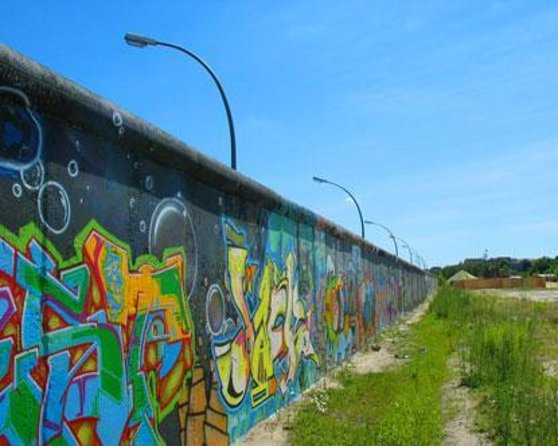
- Wall history explained in context around Checkpoint Charlie and the Berlin Wall Memorial area, not just as photo stops.
- Hard history handled carefully in a short time with the Holocaust Memorial as the emotional centerpiece.
- Reichstag background without pressure learning about the glass dome design by Norman Foster as part of the political story.
- Free entries noted for the stops so you get a lot of value without scrambling for tickets.
Undecided? The closest Berlin write-ups we have are these.
- Berlin: Reichstag, Dome and Government District Guided Tour★ 4.7 · 18,288 reviews
- Berlin: 1-Hour City Tour by Boat with Guaranteed Seating★ 4.3 · 16,993 reviews
- Berlin: Boat Tour Along the River Spree★ 4.4 · 11,252 reviews
- Discover Berlin Half-Day Walking Tour★ 5.0 · 9,624 reviews
Getting oriented fast: Azem Bistro start and a finish at Pariser Platz
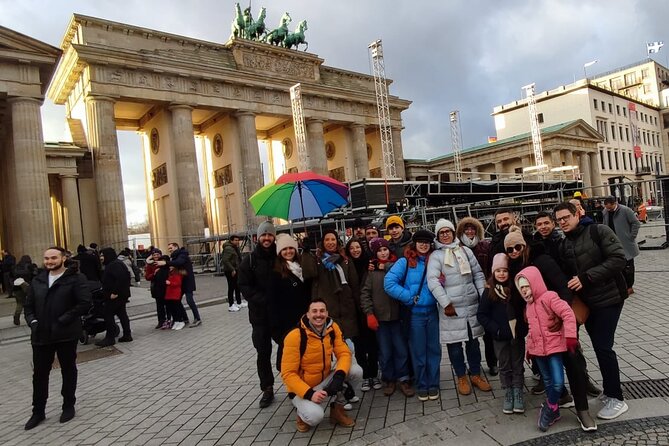
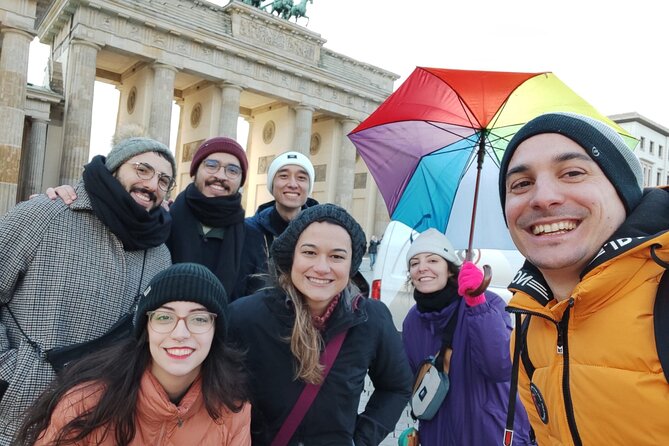
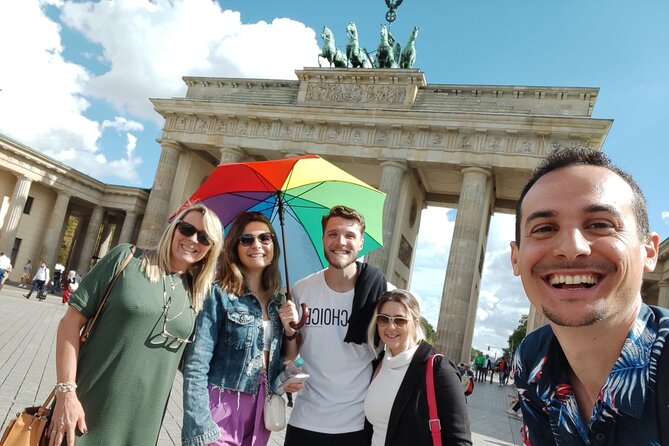
This tour is set up for people who want to understand Berlin without overthinking logistics. The meeting point is Azem Bistro at Rathausstraße 17, and you’ll spot your guide with a multicolored umbrella. Starting at 10:00 am also helps, because you beat some of the later-day crowds around the center.
You end at Pariser Platz 1A, which is in the Brandenburg Gate zone. That matters because Berlin landmarks can feel spread out. Ending near the Gate means you can keep sightseeing right after the tour rather than hopping across town.
Group size stays capped at a maximum of 50. That’s not tiny, but it’s small enough that you are not lost in a parade, especially with headphones keeping you on track.
Why headphones make this route worth paying attention to
Berlin is loud and wide. Even when you want to focus, you’re dealing with street noise, wind, and the way sound bounces off stone and glass. That’s exactly why this tour includes headphones, and it changes the experience.
With headphones, you are not forced into the classic walking-tour problem: half the group turns away at every stop, and you miss the best part of the explanation. Here, you can keep your eyes moving and still catch the story as the guide moves the group along.
If you’re the type who likes context, this is also a smart way to avoid the “random landmark photos” problem. The narration ties the stops together, so Brandenburg Gate doesn’t feel like a lonely icon, and Checkpoint Charlie doesn’t feel like a gimmick.
Humboldt Forum: architecture as a living record of change
The tour begins with Humboldt Forum, and you get a chance to visit the interior first. Even if you already know Berlin’s outline, this stop works because it’s a visible lesson in rebuilding, shifting priorities, and what the city chooses to emphasize.
Berlin’s history isn’t just dates. It’s buildings that carry competing meanings at the same time. Humboldt Forum is a great opener because it lets you reset your expectations early, before you head into the more clearly historic streets and memorial zones later.
One practical note: the tour marks this as a short stop, about 10 minutes. That means you’ll get the main ideas, but you’ll want to slow down and look on your own if something catches your attention.
Alexanderplatz and Museum Island: the city’s “map points” for first-timers
From Humboldt Forum, you move to Alexanderplatz, one of Berlin’s most recognizable squares. The key here is how the tour frames it: not just as a big open area, but as a reference point surrounded by historic buildings and anchored by the Spree River area.
Then comes Museum Island, right by Berliner Dom and again tied to the Spree. This stop is valuable because the guide helps you see why these museum areas matter in Berlin’s layout. You are learning how the city organizes culture, power, and “what’s worth remembering.”
If you like a sense of geography, this pair of stops helps you build a mental map. After this, you’ll understand where you are relative to the major corridors and why some stretches feel more monumental than others.

Unter den Linden and Neue Wache: royal promenade to war memory
Next is Unter den Linden, described as the oldest promenade in the city. You walk a classic Berlin axis idea, stretching from the Brandenburg Gate area toward Berlin Cathedral and the Schlossbrücke direction.
This is also where the tone shifts in a way that makes the tour feel like more than sightseeing. The guide connects the grandeur of former royal residence space to what Berlin later had to confront.
Neue Wache is the stop that brings you right into the meaning of remembrance. It’s set up as the monument to victims of war and dictatorship, and the guide explains the artwork and the Prussian artist behind it. This is often the part where you feel the stories land physically, not just intellectually.
Time is short again, around 10 minutes. So if you are someone who gets emotional and wants to stand longer, plan to return after the tour for extra time.
Nikolaiviertel and Bebelplatz: medieval streets and a warning about ideas
Nikolaiviertel is one of the most “Berlin-old” areas on the route. Here, you get a medieval essence, with alleys and businesses that preserve German heritage. The tour keeps it upbeat but still grounded: you are learning what makes the old streets feel old, not only looking at a staged look.
You then move to Bebelplatz, which is tied to book burning and reflection. This is one of those stops that reminds you Berlin’s history is not only about borders and wars, but also about control of information and the consequences of silencing ideas.
The stop is about 10 minutes, which means you get the emotional and historical framing, then you move on. If you like to read about what you see, take a moment before you leave the square and decide what question you want answered later.
Checkpoint Charlie and the Gendarmenmarkt contrast: borders and symmetry
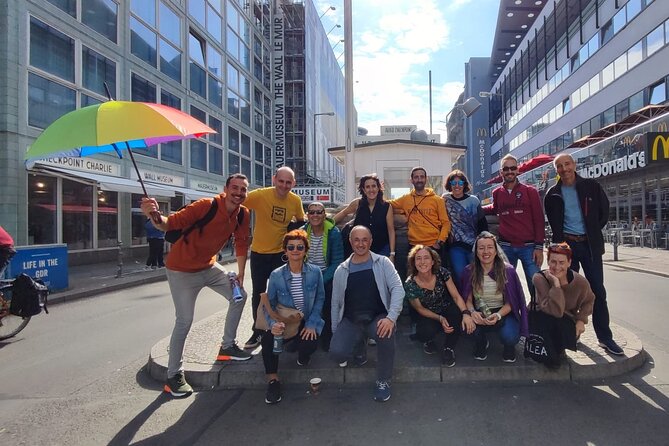
Checkpoint Charlie is included as a key lesson about the Wall’s border crossings. The guide goes further than the postcard version and explains who Charlie was and what happened there, including details that you would likely miss if you just walked by.
Then the tour shifts to Gendarmenmarkt, the Plaza de los Gendarmes, with the French and German twin churches and the Konzerthaus. This contrast is smart. You move from a border-history hotspot to one of Berlin’s prettiest squares with carefully balanced architecture.
If you enjoy variety in a walking tour, this is where it starts to feel fun in a grown-up way. You’re not only in heavy historical mode. You also get beauty that helps you recover your energy before the more intense memorial sections.
Berlin Wall Memorial plus the Third Reich sites: the city explains itself, fast
One of the tour’s main arcs is Berlin’s division and the end of it. The Berlin Wall Memorial stop is framed as a must-see, with painful history alongside stories of triumph and joy from 1989. You are also guided through the area with Checkpoint Charlie again in the narrative, so the border-crossing story gets reinforced with the Wall context.
After that, the itinerary points toward buildings tied to Nazi era history, including the Bundesministerium der Finanzen. This is presented as a building that remained intact despite the war, with an added clue that it has a reason. The guide also connects it to what you need to understand about how power was structured.
Then comes a particularly thought-provoking stop: Fuhrerbunker, presented around the question of where Hitler theoretically died. The guide lays out why it is phrased theoretically and the theories behind it, including which one is described as the most prevalent.
This entire section is about uncomfortable clarity. You’re not just hearing what happened. You’re learning how Berlin talks about what’s certain, what’s contested, and what’s remembered.
Time is limited again, about 15 minutes for the Berlin Wall Memorial and shorter for the Nazi era focus points. If you already know a lot about WWII and the Wall, you may still appreciate how the guide ties the pieces together quickly. If you’re new to German history, this is also a lot to absorb in one go, so headphones help keep it organized.
The Holocaust Memorial stop: the most emotional moment on the route
The Holocaust Memorial, officially the Memorial to the Murdered Jews of Europe, is described as one of the most emotional parts of the tour. The guide sets the right expectation: this is not a “look and move on” type of stop.
Here you get about 10 minutes. That’s short, but it’s long enough to sit with what you’re seeing and let the emotional weight do its work. The tour also frames it as a moment each visitor experiences in their own way based on beliefs and personal understanding, which matters because this is history that can land differently for different people.
If you are sensitive to heavy content, plan your day so you’re not rushing right afterward into something upbeat. This stop works best when you let it affect your thinking before you go back to normal life.
Reichstag and Brandenburg Gate: Germany’s politics, seen up close
Reichstag is included as a key finale. The focus here is on the seat of the German Parliament and the glass dome designed by Norman Foster. The dome matters not only because it’s famous, but because the guide uses it to explain how modern Germany visualizes transparency and public access to governance.
You don’t need to wait for a separate museum visit to understand why people get excited about this building. The tour uses it to connect past and present political meaning.
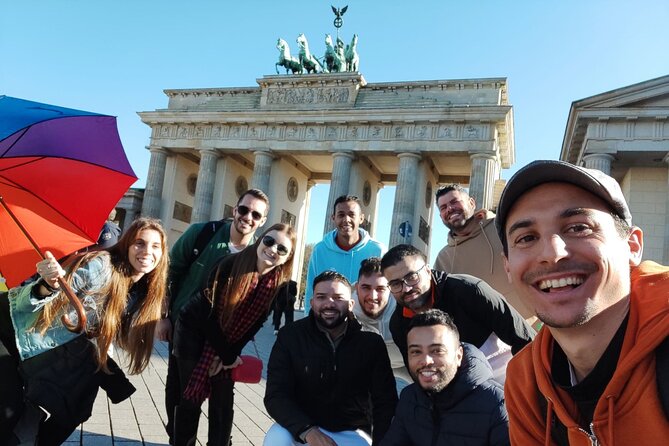
Finally, you reach Brandenburg Gate. It’s presented as an icon and a former gateway to Berlin, now the epicenter for social and political demonstrations. The guide also emphasizes a key theme: Berlin rebuilt itself from ashes, and the Gate became part of that comeback story.
This ending is effective because it ties together the whole walk: medieval beginnings, centuries of changing power, division and reunification, and then the visible symbol of political life in modern Berlin.
Price and time value: what $23.76 buys you in 3.5 hours
At $23.76 per person for about 3 hours and 15 minutes, the value comes from three things.
First, the route covers many major landmarks in the central part of Berlin. You’re not paying to stand in front of one site for an hour. You’re paying for the connective tissue, meaning the guide’s explanations across a long arc of history.
Second, headphones are included. That’s not just a comfort perk. It’s a way to keep the narration clear across multiple streets and quick transitions.
Third, the stops list admission tickets as free. That matters because some Berlin “highlights” come with separate entry fees. Here, you can keep your budget predictable while still getting a mix of outdoor icons and interior time at Humboldt Forum.
The main trade-off for the value is the tight schedule. With many stops, you won’t get long wandering time at every point. If you prefer slow, deep visits, you may want to treat this as a first pass, then return later on your own.
Tips for a smooth walk (and who this tour fits best)
This tour works best if you like a guided route with structure and storytelling. It’s also a solid choice if it’s your first time in Berlin and you want the city’s biggest themes in one morning.
Wear comfortable shoes. Some stops are described in minutes, and that usually means more walking between points, plus standing near historic sites while you listen.
Plan for good weather. The tour notes it requires good weather, and if it’s canceled due to poor weather you’ll get a different date or a full refund. That’s important because Berlin winters and rainy days can make outdoor pacing uncomfortable.
If you want photos, bring your camera, but don’t treat it like a pure photo safari. The best parts come from the explanations, especially around the border crossing, the bunker question, and the memorial sections.
Who will love it most?
- First-time visitors who want orientation and context
- People who enjoy hearing history told in plain language
- Anyone who values headphones to stay focused in a busy city
If you already live in Berlin and want only deep time inside a few museums, you might prefer a longer museum-focused plan. This one is built for breadth and coherence.
Should you book the Berlin Full in 3.5 hours tour?
I’d book it if your goal is to understand Berlin quickly and accurately, without getting stuck in logistics. The guide format, especially the headphone setup, makes it easier to follow a long central route. You also get a strong mix: medieval-feeling streets, major squares, the Wall story, the Holocaust Memorial moment, and a political finale at Reichstag and the Brandenburg Gate.
I’d skip it or pair it with other time if you hate moving every few minutes or if you need a slower pace for heavy emotional sites. This tour is meaningful, but it is not slow.
If you want Berlin’s “why” as much as its “what,” this is a good fit.
FAQ
How long is the Berlin FULL in 3.5h tour?
It runs for about 3 hours 15 minutes.
Where is the meeting point and where does the tour end?
You meet at Azem Bistro, Rathausstraße 17, 10178 Berlin. The tour ends at Pariser Platz 1A, 10117 Berlin near Brandenburger Tor.
Is the tour guided and do I get headphones?
Yes. It includes a guide and headphones so you don’t miss the explanations.
Do I need to pay extra for entrances during the tour?
The tour notes admission tickets as free for the listed stops, including time at Humboldt Forum.
What size group is this tour?
The maximum group size is 50 travelers.
What weather conditions affect the tour?
The tour requires good weather. If it is canceled due to poor weather, you will be offered a different date or a full refund.
Can I cancel and get a full refund?
You can cancel up to 24 hours in advance for a full refund. If you cancel less than 24 hours before the start time, the amount paid is not refunded.
Everything else we filed on Berlin
- East Berlin: City of Shadows Walking Tour
★ 5.0 · 11 reviews - Berlin: Die Stachelschweine – Frank Lüdecke – Träumt Weiter
★ 4.7 · 11 reviews - Potsdam Day Trip from Berlin with a Local: Private & Personalized
★ 4.0 · 11 reviews - An Introduction to Berlin Walking Tour
★ 5.0 · 11 reviews - DJ for a Day: Learn to Mix Like a Pro in Berlin
★ 5.0 · 11 reviews - 2-H Segway Sightseeing Tour Berlin
★ 4.5 · 11 reviews
Guided, side by side.
 ★ 4.7Berlin: Reichstag, Dome and Government District Guided TourFrom $1818,288 reviews
 ★ 4.7Dresden: Semperoper Tickets and Guided TourFrom $1812,102 reviews
 ★ 4.7Berlin: Government District around the Reichstag Guided TourFrom $2848,447 reviews
 ★ 4.7Hamburg: Elbphilharmonie Plaza Guided TourFrom $275,882 reviews
 ★ 4.8Berlin: Hidden Backyards Guided Walking TourFrom $235,360 reviews
 ★ 4.7Berlin: 1-Hour Boat Tour with Bilingual Live GuideFrom $223,629 reviews
 ★ 4.6Bamberg: Guided Walking TourFrom $143,202 reviews
 ★ 4.5Bremen: City Center Guided Walking TourFrom $142,709 reviews