
REVIEW · CYCLING TOURS
Berlin: Green City Guided Bike Tour
Berlin shifts gears when you pedal it.
I really like how this guided bike ride mixes city energy with green breathing room. You start at Kulturbrauerei and roll northeast toward Gesundbrunnen, then follow the Panke River corridor where the city shows how it is trying to heal and adapt. The guide also frames what you see with stories you can use, not just facts, so you understand the parks, architecture, and public spaces as part of a bigger urban plan.
The second thing I like is the relaxed flow. You do not feel rushed, and you get real stopping points for photos and simple look-around moments, especially when the route turns from built-up streets to calmer park paths. Still, here is the one consideration: if you expect non-stop landmark sightseeing, the focus on nature, sustainability, and neighborhood texture can feel slower and more thought-provoking than flashy.
In This Review
- Key highlights you will actually care about
- Why this “green city” route feels different in Berlin
- Getting going at Kulturbrauerei, and why the meeting spot matters
- The ride to Gesundbrunnen and the “urban transformation” feel
- Gliding along the Panke River, then seeing renaturation up close
- Mauerpark: community energy without losing the park vibe
- Volkspark Humboldthain, WWII bunker, and views worth slowing down for
- Bürgerpark Pankow and Schönholzer Heide for a softer landing
- Creative urban spaces and old factories repurposed for culture
- Gentrification, housing pressure, and what “balance” really means
- Bikes, comfort, and how to set yourself up for a smooth 3-hour ride
- Price and value: what $41 buys you in Berlin
- Who should book this bike tour, and who might want to skip it
- Should you book Berlin’s Green City Guided Bike Tour?
- FAQ
- Where is the meeting point?
- What is the best entrance to use at Kulturbrauerei?
- How do I get there by metro?
- How long is the tour?
- What languages are the live guides available in?
- What is included with the ticket?
- Are bikes equipped with storage?
- Can I choose my bike on arrival?
- Is the tour suitable for kids or very elderly riders?
- What is not allowed during the tour?
Key highlights you will actually care about
- Kulturbrauerei start in Prenzlauer Berg, easy metro access and a clear entry setup with Berlin on Bike signage
- Panke River route plus a stop focused on renaturation, so the green story is not just scenery
- Mauerpark and Volkspark Humboldthain with views and a WWII bunker stop for serious context without killing the vibe
- Park-to-park rhythm that keeps the ride comfortable, with photo breaks along the way
- Bike choice on arrival from a larger fleet, which matters if you have specific fit or comfort needs
The wider Berlin sightseeing pile
- Berlin: 1-Hour City Tour by Boat with Guaranteed Seating★ 4.3 · 16,993 reviews
- Berlin: City Sightseeing Hop-On Hop-Off Bus Tour★ 4.1 · 4,233 reviews
- Berlin: 1-Hour City Sightseeing Cruise★ 4.4 · 2,210 reviews
- Berlin City Hop-on Hop-off Tour with Optional Cruise★ 3.5 · 1,155 reviews
Why this “green city” route feels different in Berlin
Berlin is famous for big sights. But this tour leans into something many first-timers skip: the city’s in-between spaces, where daily life happens and where Berlin’s idea of progress gets tested. You are not only chasing views. You are learning how neighborhoods, housing pressures, and culture collide, and how green projects are used as part of the solution.
The route is built around a clear theme. You get urban transformation, then you slide into public parks and community spaces, and you come back out with a sense of how Berlin balances growth and livability. That balance is the point. And because you cover ground by bike, you see more than you would on foot while still having time to stop and take things in.
Getting going at Kulturbrauerei, and why the meeting spot matters
You start at Kulturbrauerei in Prenzlauer Berg, and that is a win for two reasons: it is in a lively area, and it is practical to reach. The nearest metro station is Eberswalder Straße, and it is just three stops from Alexanderplatz, which makes it simple to connect your plan to the rest of the city.
If you want to find the right door quickly, use the address at Knaackstraße 97, near the corner with Danziger Straße. Look for the yellow signs that say Berlin on Bike. That matters because Berlin stations can be confusing if you arrive late or with a tired brain.
Once you are matched with your bike, you roll out with the tour guide leading in a live format. Languages offered are German and Dutch, so you get that hands-on local perspective rather than just a self-guided audio trail.
The ride to Gesundbrunnen and the “urban transformation” feel
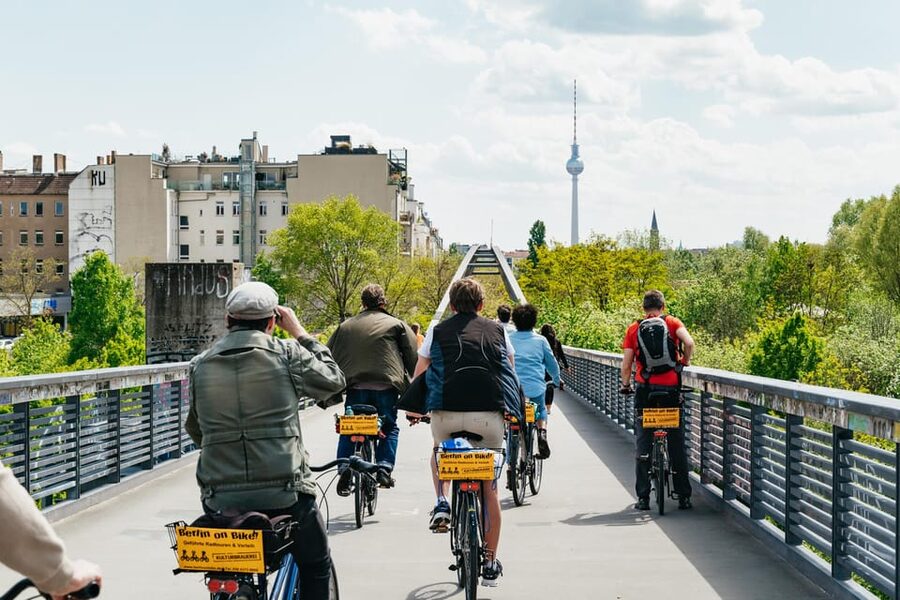
After kickoff, the route heads up toward northeast Berlin and the Gesundbrunnen district. This stretch is not random. It is where the city’s shift becomes visible, especially when you are moving steadily by bike.
What you should pay attention to is how the built environment changes. Streets tighten, open spaces appear, and the vibe goes from dense and busy to more layered and green. You start to notice how Berlin handles space: not just with buildings, but with edges, corridors, and public routes that connect people to nature.
This is also where your guide’s role matters most. You are not just passing scenery. You are hearing how the “future of Berlin” gets shaped in real places, and how those changes affect everyday life. If you like context that makes the city feel coherent, this part delivers.
Gliding along the Panke River, then seeing renaturation up close
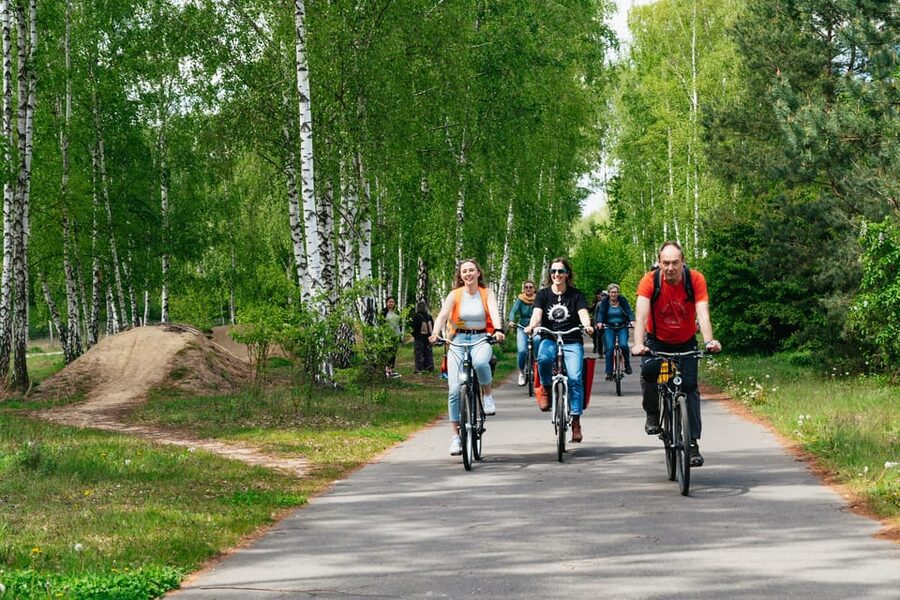
One of the tour’s strongest threads is the Panke River corridor. You ride along it in a way that makes the city’s green geography feel obvious. Even before stops, you get the sense that Berlin’s waterways and green strips are part of how neighborhoods breathe.
Then you get a stop focused on the renaturation of the Panke River. That is the kind of detail that changes your understanding. Instead of thinking of a river as just water running through the city, you learn it as an ecosystem and a project. It is the difference between watching nature and understanding how the city plans for it.
Practical tip: be ready for the fact that river-adjacent areas can change mood fast. Some sections feel more open and airy, and others feel tucked in. That is normal. Keep your eyes up for traffic patterns where the route blends bike lanes with street sections.
More handlebar time in Berlin
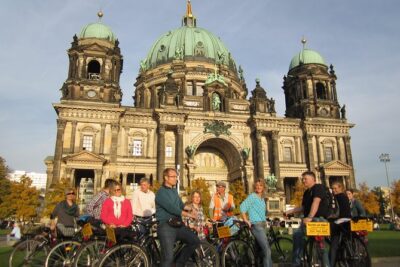
Mauerpark: community energy without losing the park vibe
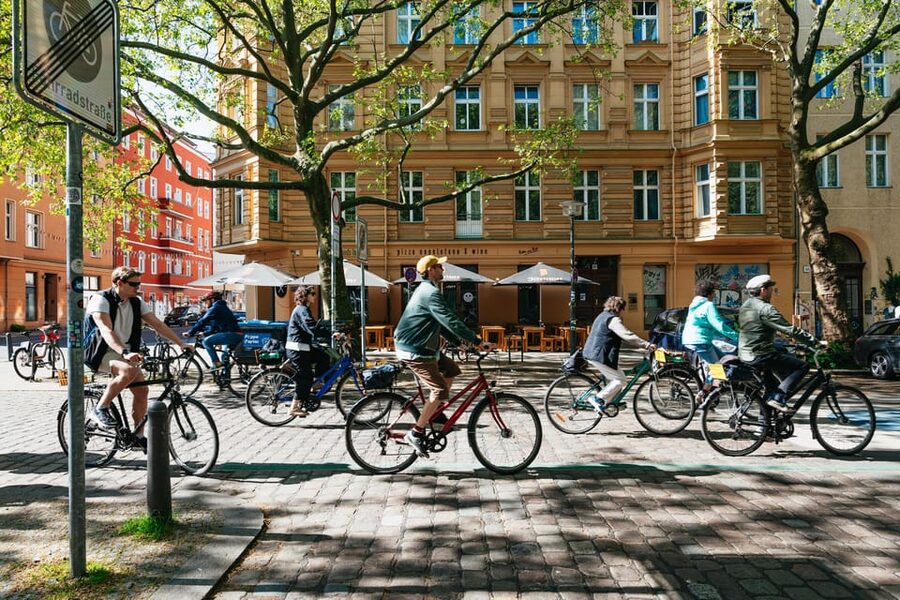
You visit Mauerpark as a lively community hub. This is not a quiet meadow stop. It is a place where people gather and the neighborhood shows itself in how it is used.
What makes Mauerpark useful on this tour is that it is not just a photo break. It fits the bigger theme of how Berlin layers history and present-day life. The park helps you understand why some spaces become anchors, even as the city changes around them.
You also get a reminder that Berlin’s story is not only told in museums and official monuments. It is also performed in everyday public space. If you like observing how people use parks, this stop will click.
Volkspark Humboldthain, WWII bunker, and views worth slowing down for
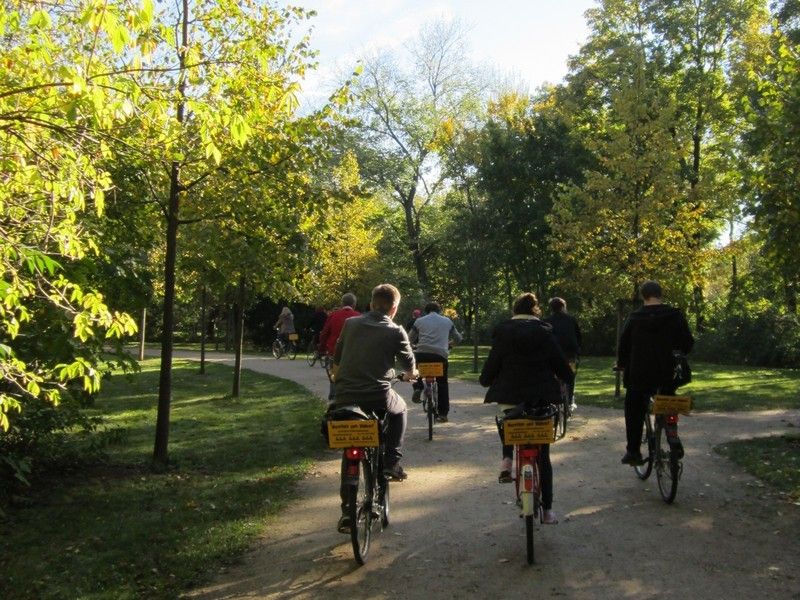
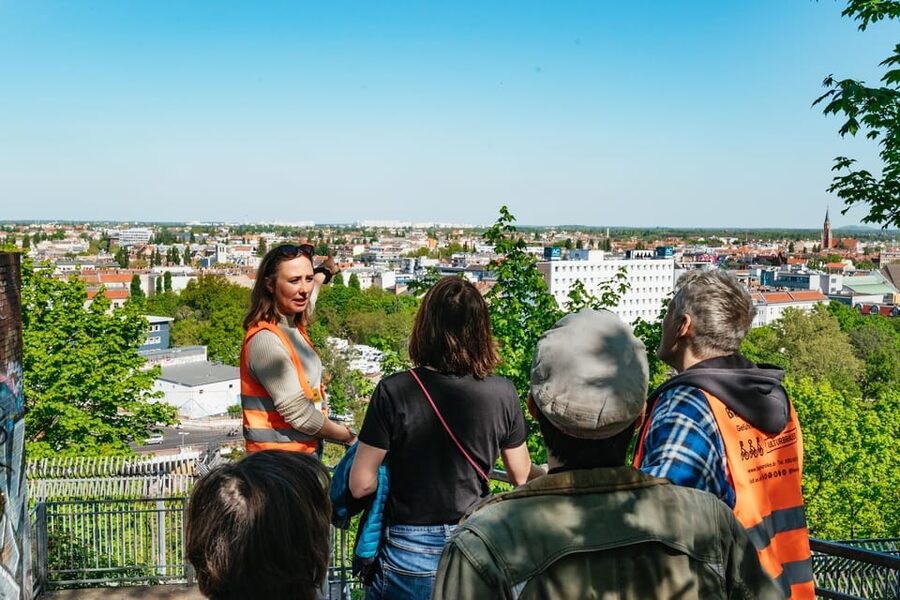
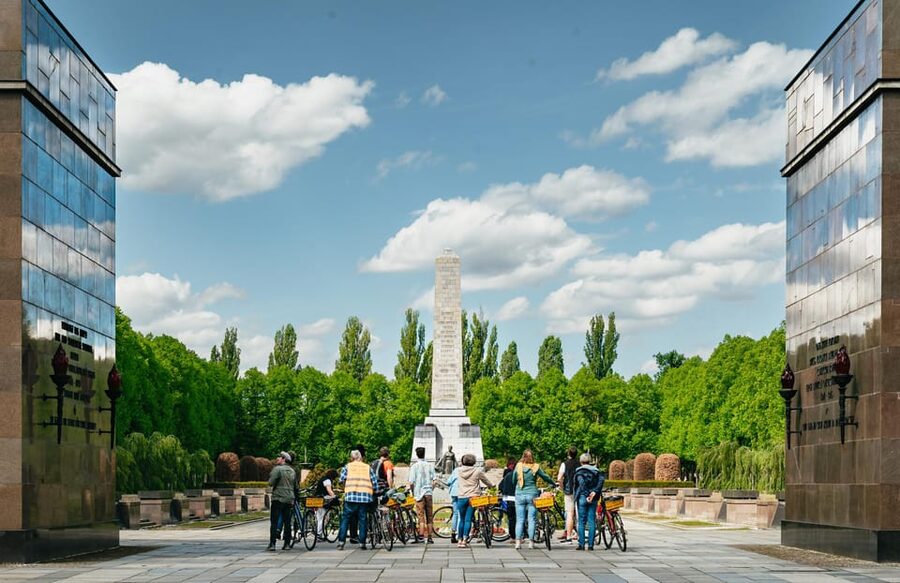
From Mauerpark you continue to Volkspark Humboldthain, and the tour brings you to a WWII bunker stop along the way. That is a serious moment in the middle of what otherwise feels like a relaxed bike day, and it adds weight to the nature-and-sustainability theme.
You also get stunning views here. The mix matters: you see why people want to live near green spaces with good sightlines, and you see how history sits inside the present landscape rather than being separated from it.
One more thing to plan for: this park section is where you might feel the bike rhythm changing. Expect some paths that feel more “park-like” than “city-like.” That is great for comfort, but keep your focus on staying balanced, because park routes can include uneven surfaces.
Bürgerpark Pankow and Schönholzer Heide for a softer landing
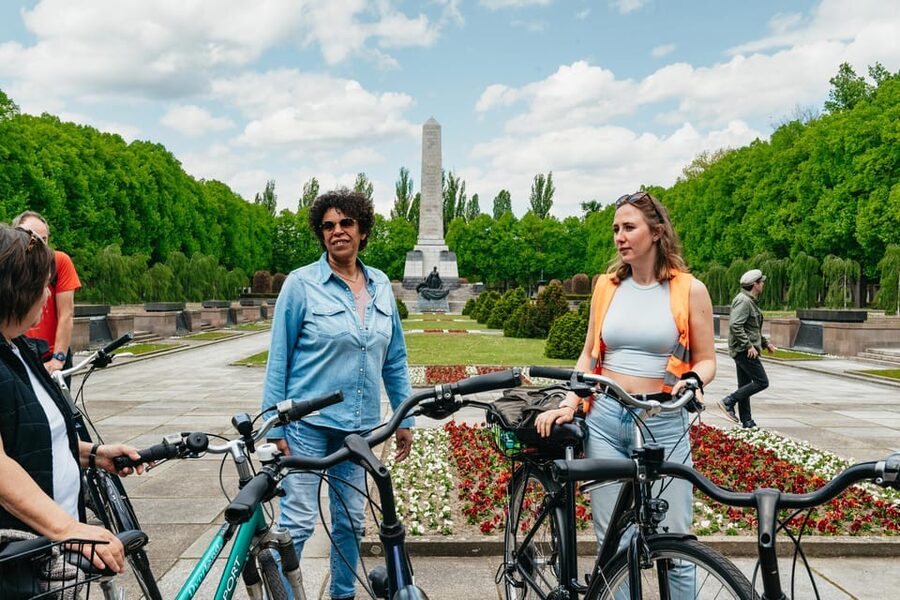
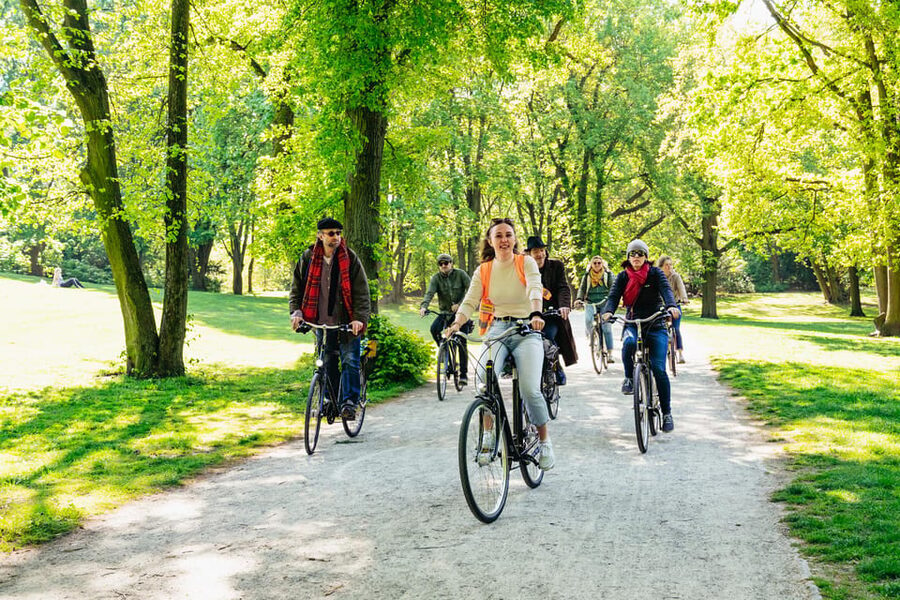
After the historical stop, the tour shifts into calmer territory. You explore Bürgerpark Pankow and then head toward Schönholzer Heide. These areas are your chance to reset after the more intense moments.
This is where the tour earns its “green” promise. You unwind a little amid nature, and you get a different pace of thinking. If Berlin had a default mode, it would be creative and fast. Parks like these are where Berliners slow down, and you get to see that without leaving the city.
If you are someone who gets restless on tours, this segment is the antidote. It is also a great place to stop and just take in how the landscape changes even within one city.
Creative urban spaces and old factories repurposed for culture
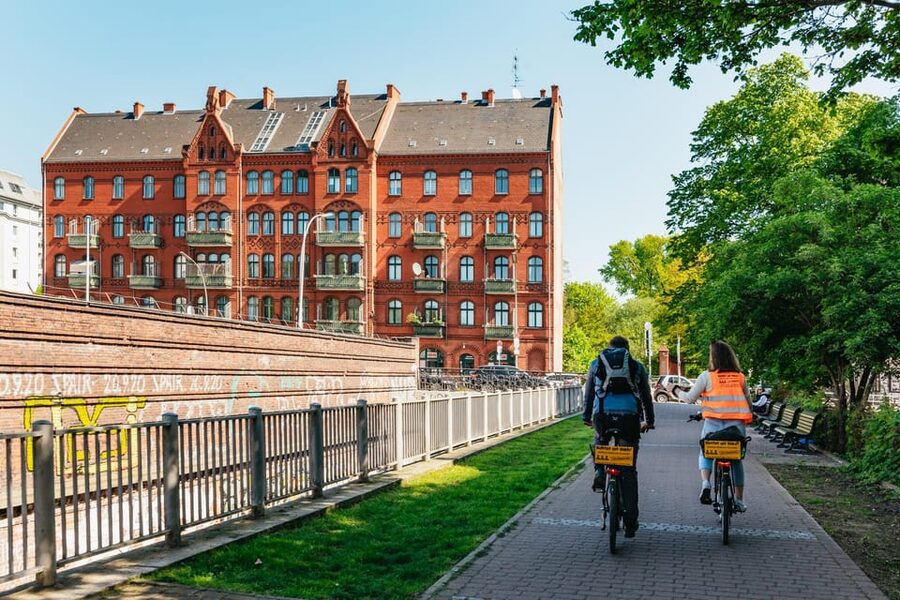
The tour includes stops tied to creative urban spaces, including repurposed older factory buildings turned into cultural uses. This matters because it connects sustainability to people, not just to the environment.
Reusing a building is a sustainability move. It is also a cultural move. It tells you the city values second lives for structures instead of treating everything as disposable. It also helps you see why Berlin feels creatively experimental in some neighborhoods, even when the surrounding city is under pressure.
The guide also talks about urban art. As you ride, look at walls and underpasses with more care than you normally would. The tour framing encourages you to read street art as part of the social conversation, not just decoration.
Gentrification, housing pressure, and what “balance” really means
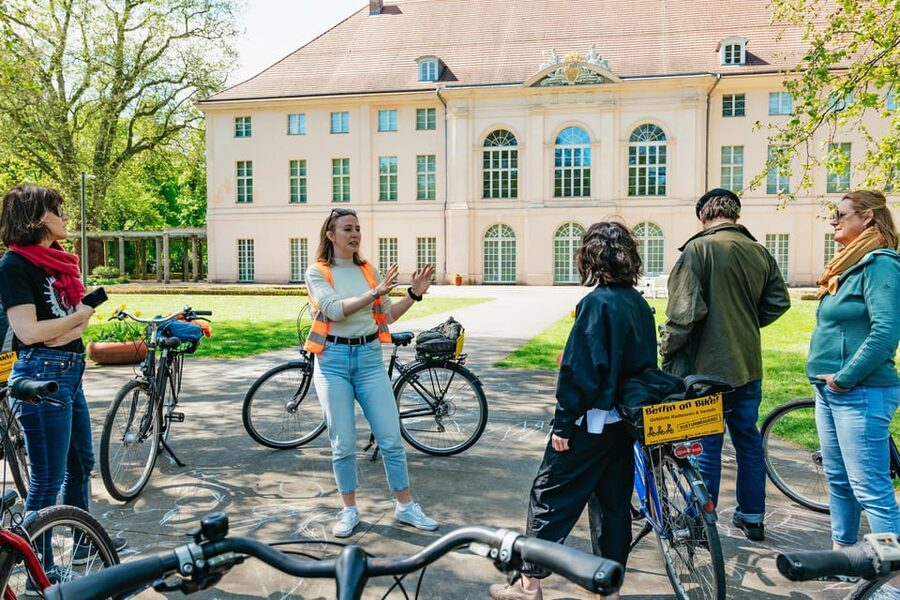
One of the more useful parts of this tour is how it addresses gentrification and Berlin’s balancing act between housing, culture, and nature. You do not just hear the buzzword. You hear it tied to the spaces you are using today.
When you bike through parks and community zones, you can feel the contrast. Some places seem protected and cared for. Others feel like they are being pulled into the future faster than people can adjust.
That is why the tour works well for understanding Berlin in a way that a simple sightseeing walk cannot. You connect the social and environmental stories because you experience both as you move.
Bikes, comfort, and how to set yourself up for a smooth 3-hour ride
The tour is about three hours, listed as 210 minutes, at a relaxed pace. That does not mean you will do nothing. You will ride. So your comfort matters more than people expect.
Here is what you should take seriously before you show up:
- wear comfortable shoes and clothes
- plan for small adjustments, not just the first 10 minutes
- bring a light bag if you need one, since bikes come with baskets designed for a lightweight load
On arrival, you can pick a bike that fits you best from a large fleet. This is a quiet quality-of-life upgrade. A good fit can make a longish ride feel easy, while a poor fit makes every pedal push feel like work.
If you want extra protection, helmets and gloves are available upon request. You also get sunscreen and trouser clips, and there are rain ponchos available if the weather turns. That package is practical, not fancy, and it helps you keep the day comfortable instead of improvising.
One small note from the rules: alcohol and drugs are not allowed. Keep snacks and drinks sensible, and focus on the ride and the stops.
Price and value: what $41 buys you in Berlin
At about $41 per person for roughly three hours, this tour sits in a fair middle zone for a guided experience. You are paying for three things: a reliable bicycle, the guide’s live storytelling in German or Dutch, and the structured loop that connects multiple neighborhoods and park areas without wasting time.
If you are doing Berlin for the first time, the value is in efficiency plus understanding. You will see the green side of the city and also get the historical and social context behind why certain places matter. If you only wanted parks and photos, you could do it on your own. But if you want the narrative thread, the guide adds real weight.
Also consider the bike choice. Being able to select from a larger fleet can reduce hassle. That alone can make the price feel more reasonable because comfort affects your whole experience.
Who should book this bike tour, and who might want to skip it
This works especially well if you:
- want a Berlin tour that is not just monuments
- enjoy parks, rivers, and city planning stories
- like active travel at a relaxed pace with photo stops
- want a local-style perspective on how sustainability and history show up in daily life
It might not be your best match if you:
- expect nonstop big attractions and constant spectacle
- get impatient with reflective topics like gentrification and urban transformation
- do not want a ride that lasts a full three hours
Age limits are also part of the decision. It is not suitable for children under 10, and it is not suitable for people over 95.
Should you book Berlin’s Green City Guided Bike Tour?
Yes, if you want to understand Berlin as a living system. I think this is a strong pick for people who like context, practical sightseeing, and a route that connects parks with real stories. The Panke River renaturation stop plus the blend of Mauerpark and Volkspark Humboldthain gives you both the green and the deeper background in the same afternoon.
I would hesitate only if you are chasing the most iconic postcard highlights the whole time. This tour rewards curiosity and a willingness to slow down for nature, architecture that has been reused for culture, and the city’s real-life balancing act.
If you do book it, show up ready to ride, give your guide a little trust, and keep your camera handy. The best moments tend to happen when the city opens up into park space, and the stories finally match what you are seeing.
FAQ
Where is the meeting point?
Meet at Kulturbrauerei in Prenzlauer Berg.
What is the best entrance to use at Kulturbrauerei?
Use the entrance at Knaackstraße 97, near the corner of Danziger Straße, and follow the yellow signs that say Berlin on Bike.
How do I get there by metro?
The nearest metro station is Eberswalder Straße, which is three stops from Alexanderplatz.
How long is the tour?
The duration is 3 hours, listed as 210 minutes.
What languages are the live guides available in?
The live tour guide is available in German and Dutch.
What is included with the ticket?
You get a reliable bicycle for the tour. Sunscreen and trouser clips are provided. Helmet and gloves are available upon request. Rain ponchos are also available if the weather is bad.
Are bikes equipped with storage?
Yes. Bikes come with baskets for a lightweight bag.
Can I choose my bike on arrival?
Yes. You can select a bike that fits you best from a large fleet.
Is the tour suitable for kids or very elderly riders?
It is not suitable for children under 10, and it is not suitable for people over 95.
What is not allowed during the tour?
Alcohol and drugs are not allowed.
The Berlin Bike Lanes
Seeing Berlin in One Go
Everything else we filed on Berlin
- East Berlin: City of Shadows Walking Tour
★ 5.0 · 11 reviews - Berlin: Die Stachelschweine – Frank Lüdecke – Träumt Weiter
★ 4.7 · 11 reviews - Potsdam Day Trip from Berlin with a Local: Private & Personalized
★ 4.0 · 11 reviews - An Introduction to Berlin Walking Tour
★ 5.0 · 11 reviews - DJ for a Day: Learn to Mix Like a Pro in Berlin
★ 5.0 · 11 reviews - 2-H Segway Sightseeing Tour Berlin
★ 4.5 · 11 reviews
Cycling Tours, side by side.
 ★ 4.8Berlin: Sights and Highlights Bike Tour with a Local GuideFrom $412,698 reviews
 ★ 4.5Munich 3-Hour Guided Bike TourFrom $401,731 reviews
 ★ 4.8Hamburg 3-Hour Bike TourFrom $441,353 reviews
 ★ 5.0Classic Mike’s Bike Tour daily @ 11.30 incl Beer Garden & SurfersFrom $421,246 reviews
 ★ 5.0Berlin Highlights 3-Hour Bike TourFrom $42948 reviews
 ★ 5.0Berlin City Bike Tour with Beer Garden StopFrom $83917 reviews
 ★ 4.8Cologne: 3-Hour Guided Bike TourFrom $50878 reviews
★ 4.9Berlin Highlights: 3-Hour Bike TourFrom $37809 reviews
★ 4.8Cologne: 3-Hour Guided Bike TourFrom $50878 reviews
★ 4.9Berlin Highlights: 3-Hour Bike TourFrom $37809 reviews
Other lists this tour is on