
REVIEW · TOURS
Berlin: Modernist Architecture Tour in the Hansaviertel
Berlin can surprise you with modernism.
This Hansaviertel walking tour is a bold postwar experiment in urban design, between the Spree and the Tiergarten. I love how you get up close to major modernist architects like Gropius and Niemeyer, not just name-checks. A small catch: it is a true walk, about 2 hours on your feet, so wear comfortable shoes and plan for standing.
The best part is the range of layers in one neighborhood. You start with 19th-century villas and famous residents like Rosa Luxemburg, Nelly Sachs, and Käthe Kollwitz, then the tour turns serious with a memorial connected to a major Jewish community destroyed by Nazi persecution and later Allied bombing. After that, the story flips to West Berlin’s Cold War showcase, Interbau 1957, and the ideas behind the buildings.
In This Review
- Key things to know before you go
- Why Hansaviertel is worth your time (and not just another Berlin block)
- Starting at Biergarten der Tiergartenquelle, then meeting the 1800s Berlin you rarely notice
- The memorial stop: when the story turns from style to what was lost
- Interbau 1957: the Cold War’s architecture exhibition, staged in real neighborhoods
- Walking among Gropius, Niemeyer, and Aalto, and learning what modernism promised
- What the Hansaviertel setting does for the architecture (and for your photos)
- Pace, timing, and what to wear for a smooth 2-hour walk
- Price and value: is $23 a smart buy for this kind of tour?
- Who this tour suits best (and who might want another option)
- Should you book the Hansaviertel modernist architecture tour?
- FAQ
- How long is the Berlin Hansaviertel modernist architecture tour?
- What is the price per person?
- Where do we meet and where does the tour end?
- Which languages are offered?
- Is it wheelchair accessible, and is there an age recommendation?
- What should I bring, and what’s included?
Key things to know before you go
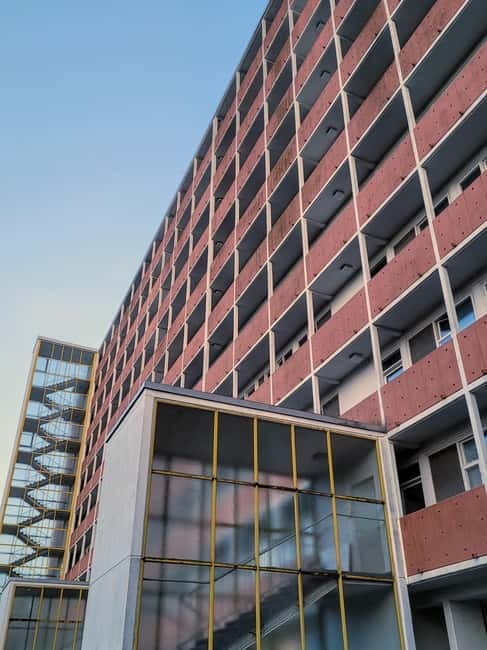
- Interbau 1957, explained in the actual streets: You walk the modernist statement West Berlin built after WWII.
- Big-name architects, clear context: Gropius, Niemeyer, Aalto, plus others, with the thinking behind the forms.
- More than architecture: The tour includes a memorial tied to lost Jewish community life.
- A leafy middle-class pocket from the 1800s: Villas, gardens, and elegant façades set the stage before the Cold War.
- Meet at the beer garden for easy start: Biergarten der Tiergartenquelle, with the guide looking for you under an orange umbrella.
Undecided? The closest Berlin write-ups we have are these.
- Berlin: Reichstag, Dome and Government District Guided Tour★ 4.7 · 18,288 reviews
- Berlin: 1-Hour City Tour by Boat with Guaranteed Seating★ 4.3 · 16,993 reviews
- Berlin: Boat Tour Along the River Spree★ 4.4 · 11,252 reviews
- Discover Berlin Half-Day Walking Tour★ 5.0 · 9,624 reviews
Why Hansaviertel is worth your time (and not just another Berlin block)
If you only chase Berlin’s top sights, you can miss a neighborhood that explains the city’s mind-set shift. Hansaviertel sits in a quieter corner of central Berlin, tucked between the Spree and the Tiergarten. Instead of monuments that scream history, this place shows history as design choices, street layouts, and housing experiments.
What I like here is that modernism is not treated like a museum piece. You walk through it, see it next to greener space, and hear how the buildings were meant to shape everyday life. West Berlin used architecture as a message, and the message still reads today if you know what to look for.
Starting at Biergarten der Tiergartenquelle, then meeting the 1800s Berlin you rarely notice
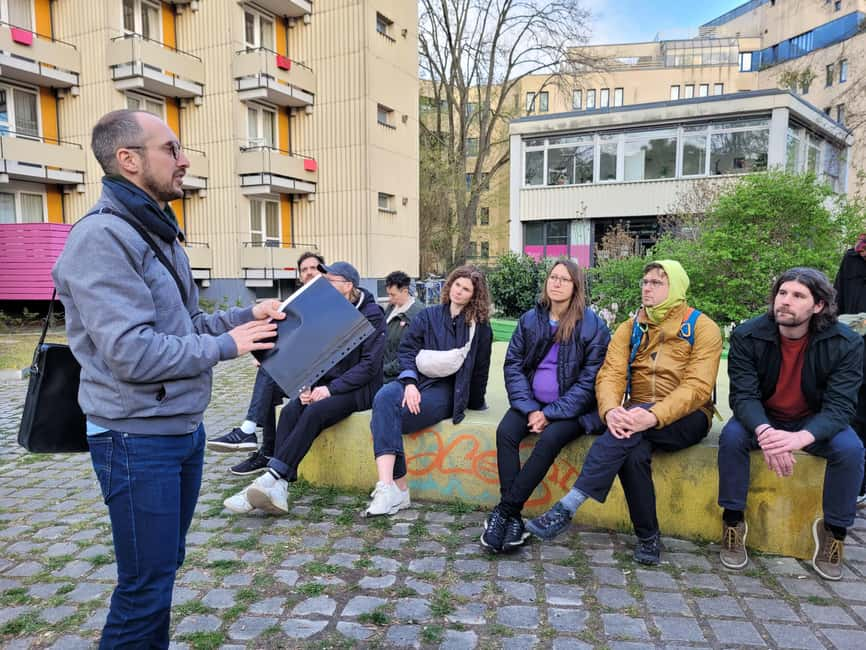
The tour starts in a very practical spot: in front of Berlin-Tiergarten S-Bahn (Exit Siegmunds Hof / Bachstraße), next to the beer garden Biergarten der Tiergartenquelle. Look for the guide with the orange umbrella. It is an easy meetup point, and you get your bearings fast before you move into quieter residential streets.
In the opening stretch, the story goes back to when Berlin was growing fast and the Hansaviertel area was developed as a middle- and upper-class enclave. Think villas, manicured gardens, and elegant façades. This matters, because it gives you something to compare against later. You are not just “seeing modernist buildings,” you are watching Berlin replace one idea of city life with another.
You also get human anchors right away. The tour connects this neighborhood to people like Rosa Luxemburg, Nelly Sachs, and Käthe Kollwitz. Even if you are not a specialist in Berlin’s cultural history, these names help the streets feel personal, not just planned.
Tip for you: do not rush the first part. The early segment is where you learn the neighborhood’s “before” look, which makes the Cold War makeover much more striking.
The memorial stop: when the story turns from style to what was lost
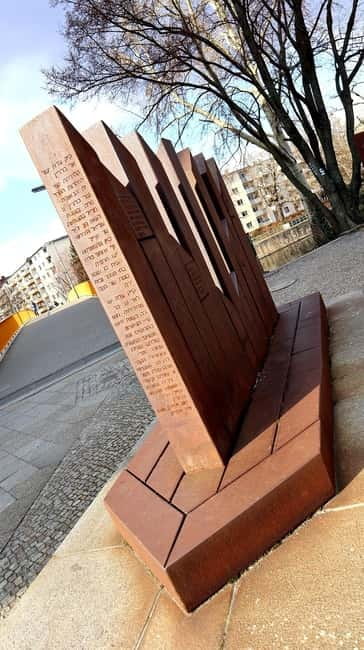
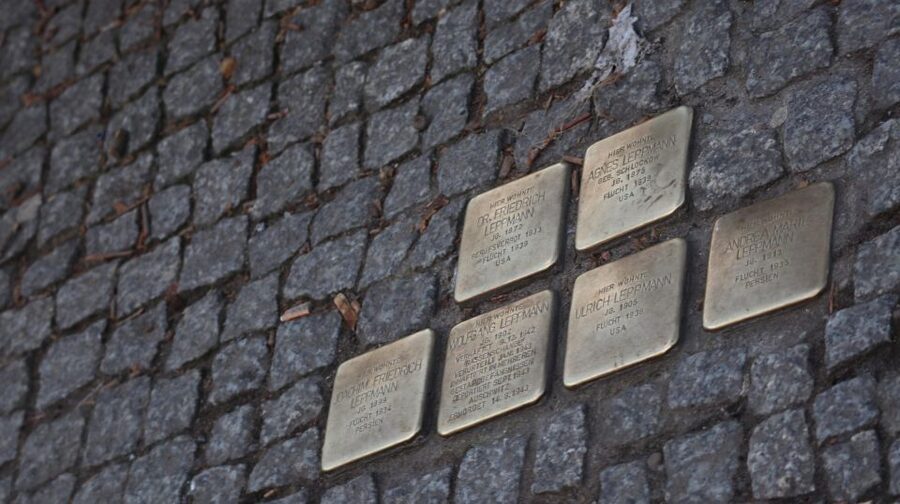
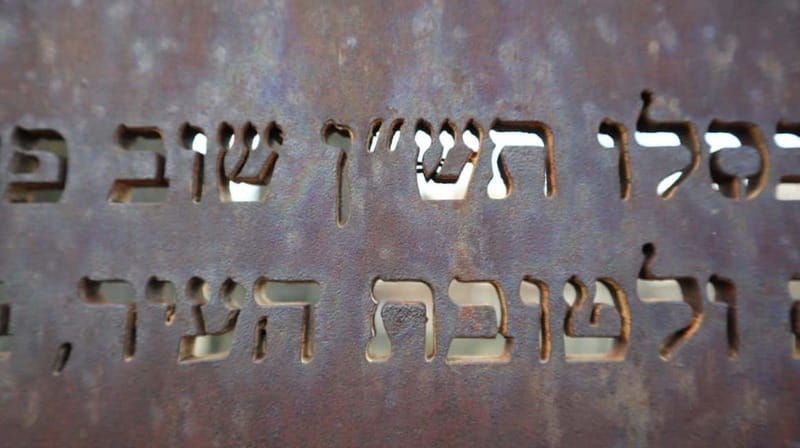
After you’ve mapped the older neighborhood, the route takes a serious turn. You visit a site linked to Jewish life in Berlin that was destroyed by Nazi persecution, and then further damaged by the Allied bombing raids that followed.
This is not a vague history lecture. The tour frames it as both social and physical loss, which is important. Buildings can be rebuilt or redesigned. Communities, networks, and daily life are harder to replace, and the tour makes that distinction clear.
A moment like this can feel heavy in the middle of a walking schedule, so pace yourself. Keep an eye on how the guide holds the tone, and if you have questions, ask them. You will get more value if you treat this stop like part of the core story, not a detour.
Interbau 1957: the Cold War’s architecture exhibition, staged in real neighborhoods
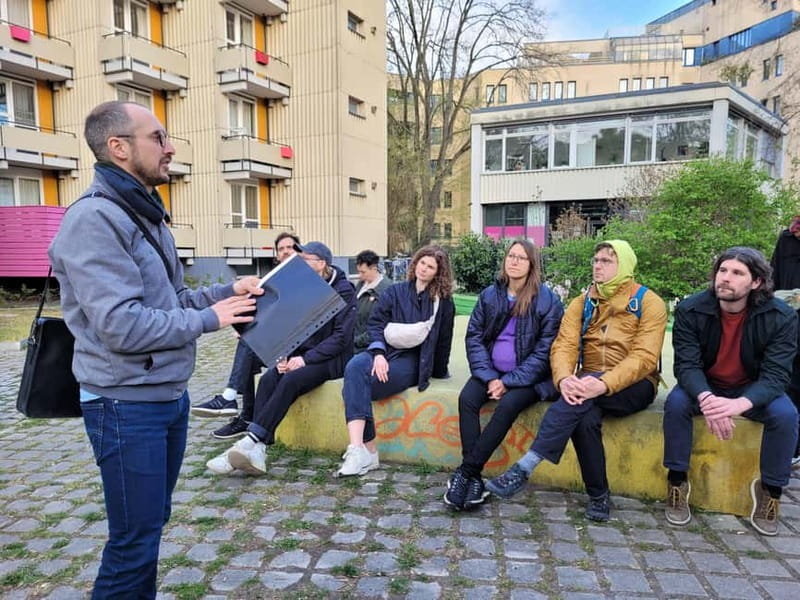
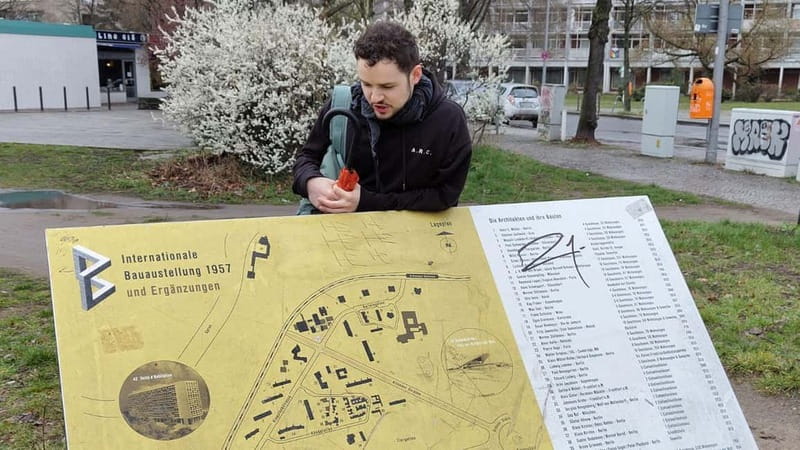
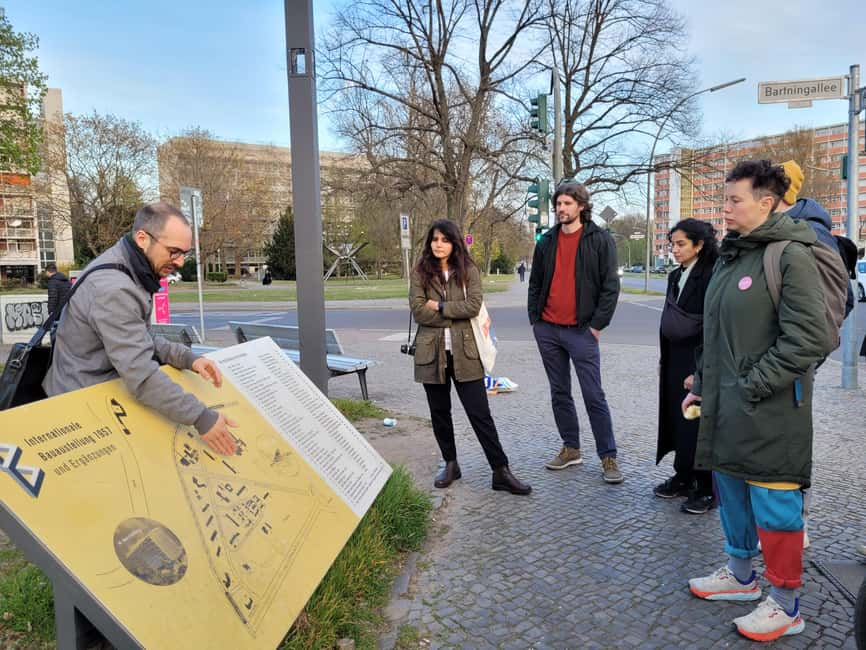
Then the tour flips into the postwar world and West Berlin’s big pitch for the future. In 1957, West Berlin hosted Interbau, an international architecture exhibition meant to redefine how a city could look and function in the postwar period.
You learn that the building effort happened on land cleared by war, which makes the whole project feel both hopeful and political. Architecture here is not just about beauty. It is about competing visions of modern identity and the kind of life a city should support.
This is where Hansaviertel becomes a lesson in Cold War rivalry. You are walking through West Berlin’s idea of progress, built by top architects and designed to show that the future could be planned, ordered, and improved. Even if you have visited modern architecture before, the context changes what you think you’re seeing.
Walking among Gropius, Niemeyer, and Aalto, and learning what modernism promised
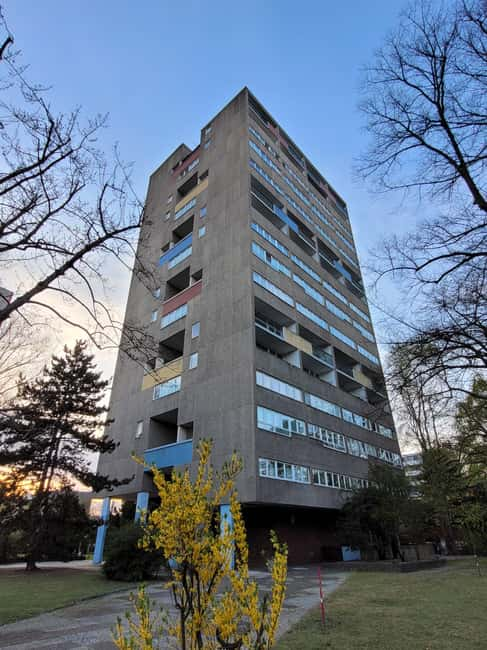
The tour highlights designs by Walter Gropius, Oscar Niemeyer, Alvar Aalto, and other major modernist figures. That lineup alone is enough to justify the trip if you are an architecture fan. What makes it better is the way the guide connects each design to its underlying philosophy.
You get asked, in a practical way, to think like a planner, not just like a tourist. What did these buildings promise? What kind of life did they hope to create? Does it still feel modern, or does modernism today read as old ideas wearing new clothes?
On the street, you will notice how the neighborhood layout supports the architecture. You are surrounded by a planned environment rather than random city growth. The buildings do not just sit there. They interact with open space, sightlines, and the sense of movement through a district.
I also like that the tour does not force everything into one interpretation. The designs can feel elegant and experimental, sometimes even a bit provocative. That honesty keeps the walk from turning into a single-voice textbook.
What the Hansaviertel setting does for the architecture (and for your photos)
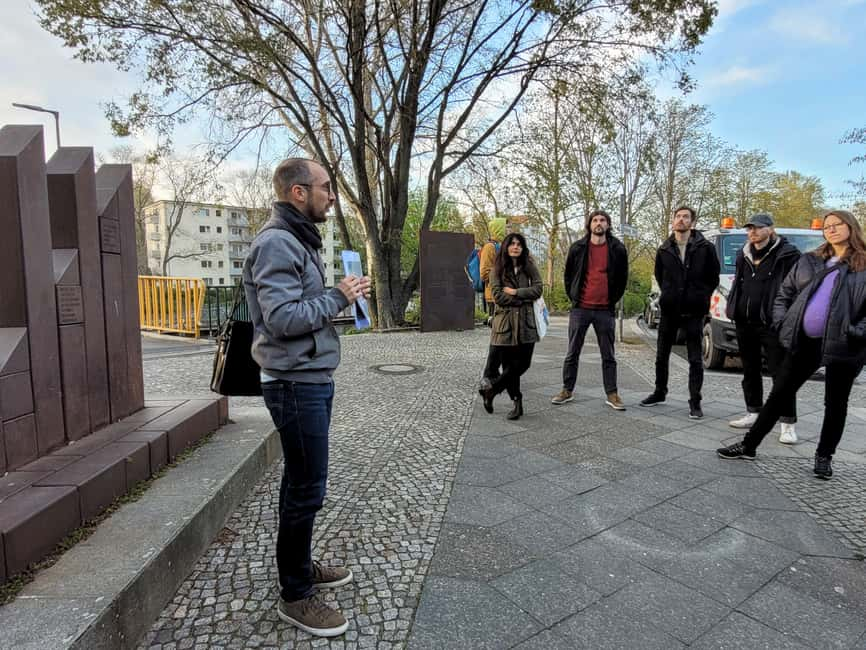
Hansaviertel’s location helps the experience. Because it sits between the Spree and the Tiergarten, you do not feel trapped inside a dense, noisy corridor. Instead, the modernist buildings come with a calmer, more park-adjacent rhythm. That makes the architecture easier to read, and it helps you slow down enough to notice details.
Your best photo angles are not always the dramatic “straight on” views. Since the area is planned and somewhat open, you often get more by walking to corners and letting the buildings appear in relation to surrounding space. If you like architecture photography, this is one of the better places in Berlin to work with light and pacing.
Tip for you: bring water, even if the first stop is a beer garden. You will be moving for about 2 hours, and the route is best enjoyed with energy left in the tank.
Pace, timing, and what to wear for a smooth 2-hour walk
The tour runs about 2 hours total. The guided walking time inside Hansaviertel is described as about 1.5 hours, so you have time for orientation, story setup, and transitions between eras. It is not a sprint. It is a focused stroll with explanations that build on each other.
Plan for comfortable shoes. You are on your feet and standing while you listen. The tour is also recommended for ages 14 and up, since the content is historically dense. If you have mobility needs, good news: the tour is listed as wheelchair accessible.
The guide speaks German and English, so you can match your comfort level. If you want to ask questions, this setup works well because you have multiple story beats across time periods.
Price and value: is $23 a smart buy for this kind of tour?
At $23 per person for a roughly 2-hour guided experience, this is good value if you like meaningful context. You are paying for an expert local guide and a structured walk that connects architecture to politics, culture, and tragedy in one district.
If you tend to skip guided tours because you feel like you can read about things later, this one is worth reconsidering. The value is in how the guide helps you interpret what you see, especially the shift from 19th-century villas to Cold War modernism and the inclusion of a memorial tied to lost Jewish life. That kind of connective storytelling is hard to recreate on your own without a lot of planning.
Also, since food and drinks are not included, you can keep the day flexible. You can grab something nearby before or after, without feeling locked into a package.
Who this tour suits best (and who might want another option)
You’ll get the most out of this walk if you like architecture, urban planning, or history that shows up in everyday streets. It is also strong for travelers who want a different side of Berlin, one that goes beyond the usual “big-name landmarks.”
It is a good fit if you:
- want to understand modernism as an idea, not just a style
- enjoy stories that connect buildings to real people and events
- prefer walking through neighborhoods rather than sitting in a museum
It might be less ideal if you:
- want short, light content with no historical weight
- dislike guided walking or standing for around 2 hours
- are traveling with children under 14 (the tour is not suitable for that age group)
Should you book the Hansaviertel modernist architecture tour?
I’d book it if you want Berlin that feels smart and human at the same time. Hansaviertel gives you a rare combo: major modernist architects, the Cold War reason this district was rebuilt, and a memorial component that keeps the story grounded in what happened to real communities.
Check it especially if your itinerary is packed and you still want a meaningful “off the main drag” experience. And if your dates are uncertain, the “reserve now, pay later” approach can make it easier to plan without stress.
If your idea of Berlin only includes famous monuments, you might find this tour quieter than you expect. But if you’re open to walking a planned neighborhood and learning how design can carry politics, memory, and hope, this one is a very satisfying use of two hours.
FAQ
How long is the Berlin Hansaviertel modernist architecture tour?
The tour lasts about 2 hours. The guided walking portion in Hansaviertel is described as about 1.5 hours, with time for starting and transitioning between areas.
What is the price per person?
The price is listed as $23 per person.
Where do we meet and where does the tour end?
You start at Biergarten der Tiergartenquelle, near the Berlin-Tiergarten S-Bahn station (Exit Siegmunds Hof / Bachstraße). The tour finishes at Hansaplatz.
Which languages are offered?
The live guide offers the tour in German and English.
Is it wheelchair accessible, and is there an age recommendation?
The tour is listed as wheelchair accessible. It is recommended for ages 14 and up, and it is not suitable for children under 14.
What should I bring, and what’s included?
Bring comfortable shoes and water, since it is a walking tour of about 2 hours. What’s included is an expert local guide, while food and drinks and any additional museum or monument entry are not included.
If you want, tell me what day you’re going and what else is on your Berlin plan, and I can help you slot this tour into a smart route.
Everything else we filed on Berlin
- Private Photo Tour in Kreuzberg
★ 5.0 · 3 reviews - Kreuzberg Private Walking Tour: Immigrants, Artists & Hipsters
★ 5.0 · 3 reviews - Berlin’s Jewish Heritage: Private Tour of the Vibrant Jewish District
★ 5.0 · 3 reviews - Individual city tour Berlin for max. 8 persons
★ 5.0 · 3 reviews - Berlin & The Third Reich Private Guided Tour
★ 5.0 · 3 reviews - Private Analogue Photography Experience in Berlin
★ 5.0 · 3 reviews
Tours, side by side.
 ★ 4.7Berlin: Reichstag, Dome and Government District Guided TourFrom $1818,288 reviews
 ★ 4.3Berlin: 1-Hour City Tour by Boat with Guaranteed SeatingFrom $2516,993 reviews
 ★ 4.7Hamburg: Sex and Crime in St. Pauli Tour for Ages 18+From $29515,447 reviews
 ★ 4.7Dresden: Semperoper Tickets and Guided TourFrom $1812,102 reviews
 ★ 4.4Berlin: Boat Tour Along the River SpreeFrom $3411,252 reviews
 ★ 5.0Discover Berlin Half-Day Walking TourFrom $249,624 reviews
 ★ 4.3Berlin: Hop-on Hop-off Bus Tour with Live CommentaryFrom $228,579 reviews
 ★ 4.7Berlin: Government District around the Reichstag Guided TourFrom $2848,447 reviews