
REVIEW · GERMANY
Berlin: The Feuerle Collection Meditation Experience
Silence in front of art sounds rare. The Feuerle Collection Meditation Experience in Berlin is built for a quiet, phone-free reset, placing you in front of Khmer sculptures and Imperial Chinese furniture, then letting modern artists pull the focus in a totally different direction. I love that you can treat it like a genuine mobile detox, not a performance. I also love how the art history shifts across centuries without you needing an explanation. One catch: this is not a traditional guided visit, so you have to be comfortable slowing down with no narration.
In practice, you move through a calm route that includes a Sound Room passage and a walk in the underground Lake Room. Meditation is available for you to do, but it is not forced, and you can also simply walk quietly and view the works at your own pace. They provide a yoga mat and blanket, which helps you settle in for the hour without fuss.
In This Review
- Key takeaways before you go
- Berlin’s quiet art route: what makes this feel different
- The 1-hour flow: how the experience unfolds
- Sound Room and the passage: silence as a design tool
- Underground Lake Room: where walking becomes part of the practice
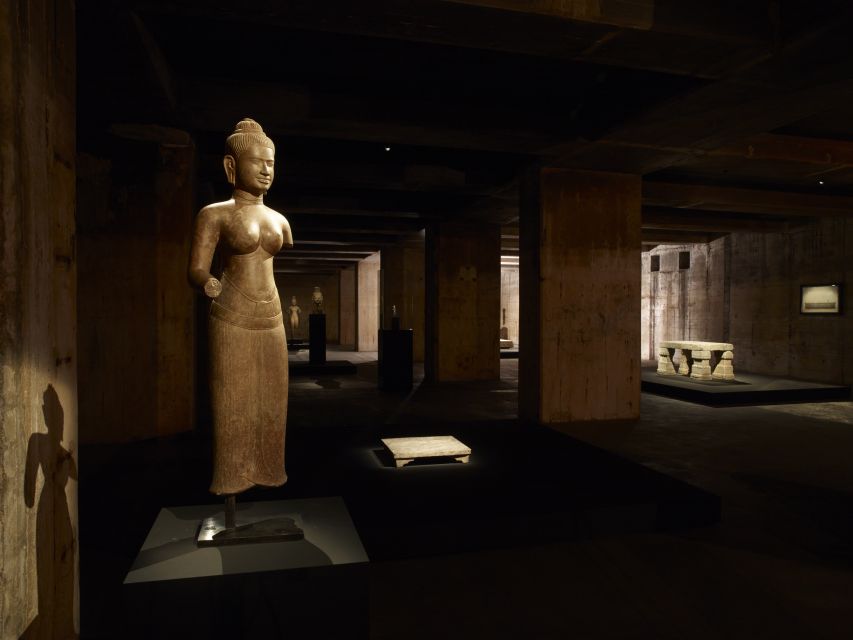
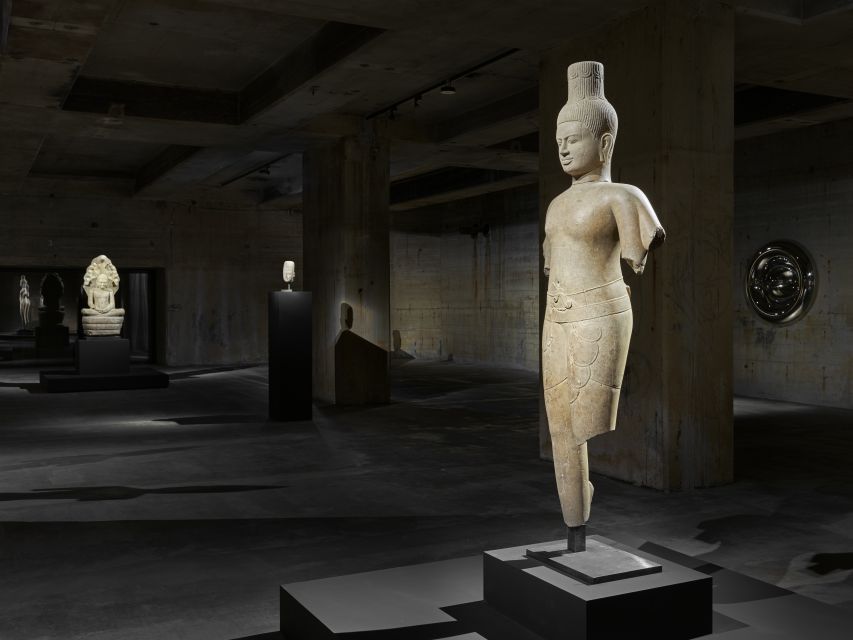
- Art you’ll sit with: Khmer sculpture (7th to 13th century A.D.)
- Imperial and Scholar Chinese furniture (2nd century B.C. to 17th century A.D.)
- Contemporary artists: when modern emotion sits beside ancient form
- Meditation is optional, but the environment does the guiding
- What to bring (and what not to bring)
- Price and value: is $25 worth an hour of silence?
- Who should book this (and who should skip it)
- A short checklist so you enjoy the experience more
- Should you book The Feuerle Collection Meditation Experience?
- FAQ
- How long is the Feuerle Collection Meditation Experience?
- Is there a guided tour?
- Do I have to meditate?
- What is included with the ticket?
- How much does it cost?
- Is it wheelchair accessible?
- Is it suitable for children?
- What is the cancellation policy?
Key takeaways before you go
- A silent, phone-free focus designed as a mobile detox, not a talk-through tour
- Sound Room and underground Lake Room as built-in places to slow your mind
- Khmer sculptures and Imperial Chinese furniture that reward quiet looking
- Contemporary art in the same breath with artists like Anish Kapoor and Nobuyoshi Araki
- Meditation is optional, so you can choose between sitting and quiet roaming
Undecided? The closest Berlin write-ups we have are these.
- Berlin: Reichstag, Dome and Government District Guided Tour★ 4.7 · 18,288 reviews
- Berlin: 1-Hour City Tour by Boat with Guaranteed Seating★ 4.3 · 16,993 reviews
- Berlin: Boat Tour Along the River Spree★ 4.4 · 11,252 reviews
- Discover Berlin Half-Day Walking Tour★ 5.0 · 9,624 reviews
Berlin’s quiet art route: what makes this feel different
If you are tired of art tours that move like checkpoints, this experience changes the pace on purpose. It runs as a one-hour silent encounter with art, so your attention has to do the work instead of a guide doing the work for you.
What makes it interesting is the way the collection stacks cultures and time periods without smoothing the edges. Early Khmer sculpture sits beside long-running traditions of Chinese art and furniture, and then contemporary pieces show up like a sudden change of station. Your job is not to “understand everything.” Your job is to notice what happens when you let the objects sit in your awareness.
And yes, it is a little unusual that the museum visit is basically “open only for meditation.” For some people that is exactly the point. For others, it means you should show up ready for stillness, not ready to ask questions.
The 1-hour flow: how the experience unfolds
Plan on a steady, unhurried hour. The structure is simple: you enter the collection and follow the route toward the Sound Room and then the Lake Room, stopping along the way to meditate. The whole point is that you are not bouncing between multiple guided stations. Instead, you are moving through spaces meant to change how you listen to yourself.
There is no guided tour. That matters because you will not get a lecture version of art history. You will get a quiet environment where your perceptions can sharpen, especially if you already like slow looking.
You also have flexibility. Meditation is not mandatory. If sitting still does not work for you, you can walk around quietly and just enjoy the artworks. That “either meditate or quietly observe” approach makes the experience easier to fit into real travel life, where your energy changes day to day.
Sound Room and the passage: silence as a design tool
The Sound Room is where you start to feel how this experience is staged around attention. Even without details on audio effects, the idea is clear: you pass through a space dedicated to sound and then move forward still carrying that quiet.
For me, the value here is psychological. You do not go straight to a chair and try to meditate on willpower alone. You transition into it. That matters because the minute you arrive, your brain is still in “city mode,” checking what you should do next. The Sound Room passage gives your brain a bridge into slow time.
Practical tip: treat this part like a warm-up. If you normally scan rooms fast, resist that urge. Let your steps become slower than your thoughts. If you catch yourself rushing, that is your cue to return to breath and posture.
Underground Lake Room: where walking becomes part of the practice
Next comes the underground Lake Room. The big difference is that it is not just a sitting moment. You walk in the space, stopping as the mood strikes you.
Underground spaces tend to naturally reduce the sense of street noise and keep you physically grounded. That can make it easier to stay in the present, especially during an experience that is deliberately not led. If you like movement more than stillness, this is often the best section to use that preference.
A consideration: if you are expecting an “explore and read plaques” museum visit, this can feel too quiet. This room is built for calm and reflection, not for sightseeing with your phone camera snapping every angle.



Art you’ll sit with: Khmer sculpture (7th to 13th century A.D.)
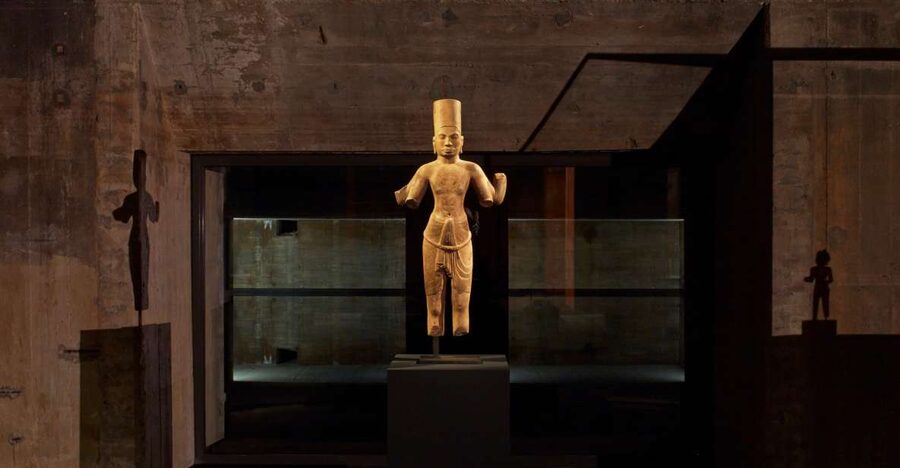
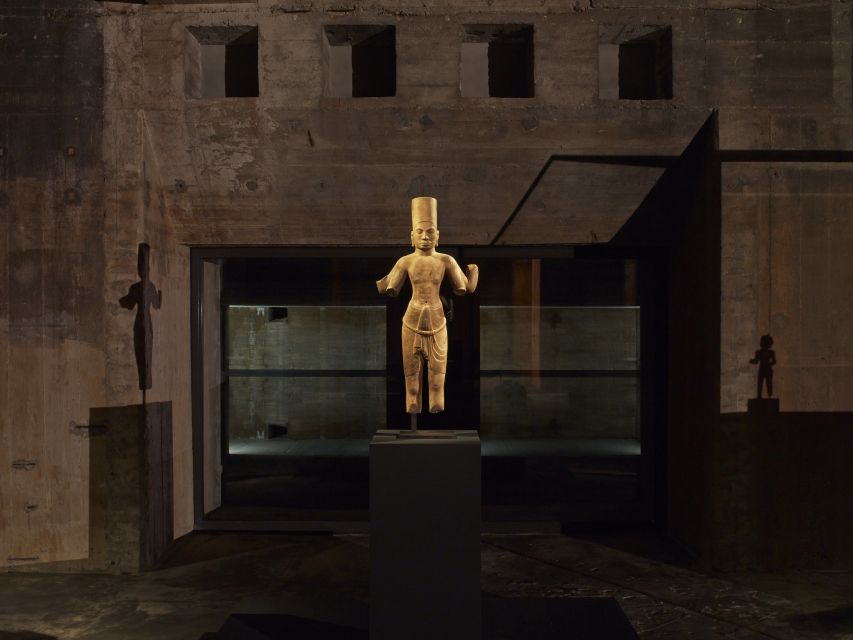
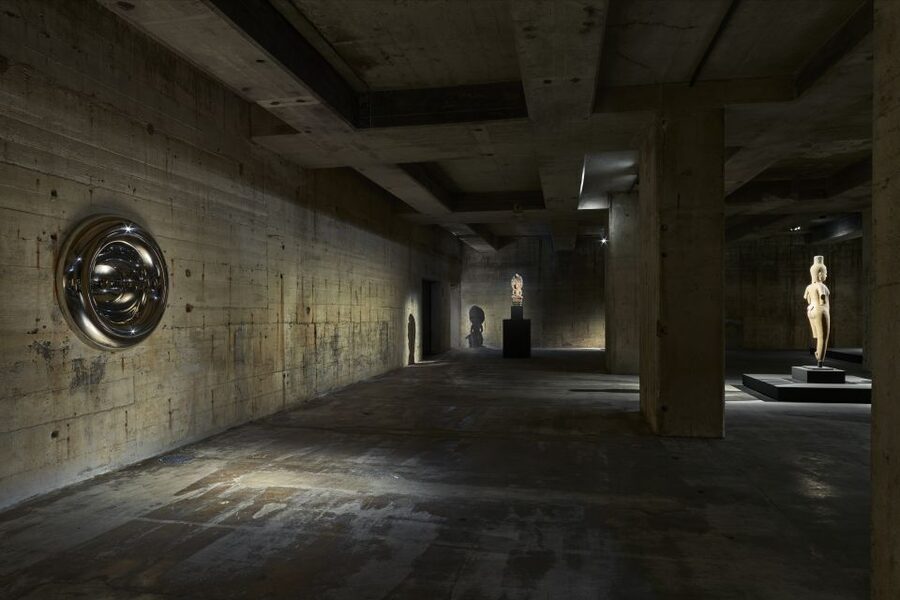
One of the most praised strengths of this experience is the way the early art works feel in silence. You enter the exhibition of early Khmer sculptures from the 7th to the 13th century A.D., and you do it with your mind in a slower mode than usual.
Quiet looking works especially well for sculpture. In a normal museum setting, you can rush toward the “interesting details” list. Here, you are more likely to notice the overall presence first, the shape language, the rhythm of surfaces, and how your attention settles as you keep returning to the same forms.
What you might find helpful: do not try to catalog everything. Instead, pick one sculpture to anchor you for a few minutes. Let your eyes do micro-returns, like reading the same line of text again and again until it stops being a blur.
Imperial and Scholar Chinese furniture (2nd century B.C. to 17th century A.D.)
You also spend time with Imperial and Scholar Chinese furniture spanning from the 2nd century B.C. to the 17th century A.D. This is a smart pairing for a meditation format, because furniture invites physical imagination. Even if you are not touching anything, you can feel what it would be like to sit, rest, or live with it.
In a guided tour, furniture can become a set of facts. In this setting, the experience can shift to sensory appreciation: form, proportion, and the way objects carry cultural ideas about comfort, rank, and scholarly life.
A useful mindset: treat furniture as a conversation between stillness and function. Even if you do not know the background, you can compare how different pieces “hold space” and how your own body responds when you look at something made to support a human posture.
Contemporary artists: when modern emotion sits beside ancient form
Then the collection turns toward contemporary works by Anish Kapoor, Cristina Iglesias, Adam Fuss, Zeng Fanzhi, James Lee Byars, and Nobuyoshi Araki. This part is key because it is not a separate museum wing experience. The contemporary art appears inside the same quiet encounter.
This is where you may notice the most contrast, because contemporary art often asks for emotional response, not just visual recognition. Seeing those artists in a meditation setting can change the way the works land. Instead of trying to decode a message, you can notice what your body does when you stand before something strange, bold, or intensely personal.
Practical advice: if you get stuck thinking you should “get it,” loosen the goal. Ask a simpler question, like what feels heavy, what feels calm, and what draws your attention without your permission.
Meditation is optional, but the environment does the guiding
This experience is built around the idea that a silent environment can guide you even without a teacher. Meditation is available, but you are not required to do it in any specific way. You can choose to sit, or you can choose to walk quietly and just be present with the art.
That choice matters if you are new to meditation. Some people freeze when they feel watched, even if nobody is watching. Here, the structure gives you permission to be in-between, to try stillness lightly, or to take a wandering approach.
What helps in real life: use the mat and blanket. Even if you think you will only sit briefly, having comfortable support makes it easier to stop fidgeting. Less movement usually means less mental noise.
What to bring (and what not to bring)
You do not need much, but a little prep makes the hour feel easier.
- Wear layers you can sit in comfortably. Berlin can be cool, and indoor stillness tends to feel colder than movement.
- Leave your expectations at the door. This is silent and not guided, so bring curiosity rather than a “must learn everything” plan.
- You will be given a yoga mat and blanket, so you probably do not need to pack your own unless you have strong personal preferences.
Also, set your phone to silent mode before you arrive. The whole experience is about a mobile detox, so treat your devices like they are part of the problem, not part of your entertainment.
Price and value: is $25 worth an hour of silence?
At $25 per person for a one-hour experience, the value depends on what you want from Berlin. If you are chasing a classic highlight tour, this will not satisfy you. There is no guided tour, no lecture, and you are not moving through rooms at museum-speed.
But if you want something rarer, an art time that is quiet enough to actually affect your attention, $25 can feel like a bargain. Think of it less as “paying for access” and more like renting a focused hour in a special environment. You get thoughtful pacing, support items (mat and blanket), and a route through spaces designed for silence and contemplation.
The best way to judge it is simple: do you like museums where you can slow down, or do you need explanations to connect? If you like slowing down, this likely hits the sweet spot.
Who should book this (and who should skip it)
This works best for adults and older teens who like art, but especially for people who do not want a standard tour format.
It is particularly a good fit if:
- You enjoy meditation or want to try a non-intimidating meditation setting.
- You like Asian art and sculpture traditions, especially Khmer and Chinese furniture.
- You are curious about contemporary art, but you prefer to encounter it quietly.
It is not suitable for children under 16. So if you are traveling as a family with younger kids, plan another Berlin art stop nearby.
A final consideration: if you need constant stimulation, you may find the hour slow. There is room to simply walk, but the setting still demands silence and patience.
A short checklist so you enjoy the experience more
You do not need to prepare like a marathon. Just make it easy for yourself to stay comfortable and present.
- Give yourself time to settle before you start. When you arrive rushed, the silence takes longer to catch up to you.
- Decide ahead of time whether you will sit or mostly walk. You can change your mind during the hour, but having a first intention helps.
- Choose one section to treat as your anchor: Sound Room passage, a specific sculpture, or the Lake Room walking segment.
That small planning reduces mental chatter. And in an experience like this, mental chatter is the enemy.
Should you book The Feuerle Collection Meditation Experience?
Book it if you want a Berlin art experience that is calmer than typical museum visits, and you like the idea of letting Khmer sculpture, Imperial Chinese furniture, and contemporary art share the same quiet space. The combination of a silent setting, optional meditation, and the route through Sound Room and the underground Lake Room gives you a genuine change of pace for a very reasonable price.
Skip it if you are expecting a guided tour with explanations and museum-style storytelling. Also skip it if silence sounds like punishment rather than relief. You will get the most out of it when you treat it as an hour for your attention, not an hour for facts.
FAQ
How long is the Feuerle Collection Meditation Experience?
It lasts 1 hour.
Is there a guided tour?
No. This is not a guided tour, and the collection is open only for meditation.
Do I have to meditate?
No. Meditation is not mandatory. You can also walk around quietly and simply enjoy the art.
What is included with the ticket?
You get a yoga mat and a blanket.
How much does it cost?
The price is $25 per person.
Is it wheelchair accessible?
Yes, it is wheelchair accessible.
Is it suitable for children?
No, it is not suitable for children under 16.
What is the cancellation policy?
You can cancel up to 24 hours in advance for a full refund.
Everything else we filed on Berlin
- East Berlin: City of Shadows Walking Tour
★ 5.0 · 11 reviews - Berlin: Die Stachelschweine – Frank Lüdecke – Träumt Weiter
★ 4.7 · 11 reviews - Potsdam Day Trip from Berlin with a Local: Private & Personalized
★ 4.0 · 11 reviews - An Introduction to Berlin Walking Tour
★ 5.0 · 11 reviews - DJ for a Day: Learn to Mix Like a Pro in Berlin
★ 5.0 · 11 reviews - 2-H Segway Sightseeing Tour Berlin
★ 4.5 · 11 reviews