

REVIEW · TOURS
Berlín y el Nacionalsocialismo. Group Tour in Spanish
Berlin’s Nazi-era story hits differently on foot. This half-day walk pulls you from the Treaty of Versailles to Hitler’s final days, with key stops tied to propaganda and power. I especially like how it keeps the timeline straight while you’re actually moving through the city, and how it includes the Memorial for Sinti and Roma Victims of National Socialism rather than skipping the human cost. One thing to plan for: you need a Berlin transport ticket for zones AB, and it is not included.
I found the tone helpful for first-timers, with guides who explain what you’re seeing without turning it into a lecture you can’t process. Recent bookings highlight guides such as Sam and Martín for solid explanations, and Celia for patience, which matters when the subject is heavy and you may need extra time to take it all in. The overall feedback is very strong, with a rating of 4.8 from 36 reviews.
The walking format is focused and stays around central Berlin sites tied to the regime, but there can be moments where the pacing feels a little slow or pause-heavy for some people. If you prefer fast, point-to-point walking, keep that in mind and plan to wear comfortable shoes.
In This Review
- Key highlights you will actually feel on this walk
- Where you start: Alexanderplatz and the green flag by the Fernsehturm
- Versailles, Weimar, and why Berlin’s political collapse matters
- Goebbels and the street machines of propaganda
- Wilhelmstrasse to the Luftwaffe Ministerium: power with a uniform on it
- The Berlin-Rome-Tokyo axis in front of the embassies
- The Sinti and Roma memorial stop you should not rush
- Imagining Germania: how utopia talk hid mass harm
- Ending near the Führer Chancellery area, with context for the bunker
- Price and value: why $29 can be a fair deal
- Who this tour suits best
- Should you book Berlín y el Nacionalsocialismo?
- FAQ
- How long is the Berlín y el Nacionalsocialismo tour?
- What language is the tour in?
- Where do I meet the guide?
- How much does it cost?
- Do I need a public transport ticket?
- Is wheelchair access available?
- Is free cancellation available?
- How do I reserve?
- What are the main places covered?
- Will I learn about Hitler’s rise and the Third Reich timeline?
Key highlights you will actually feel on this walk
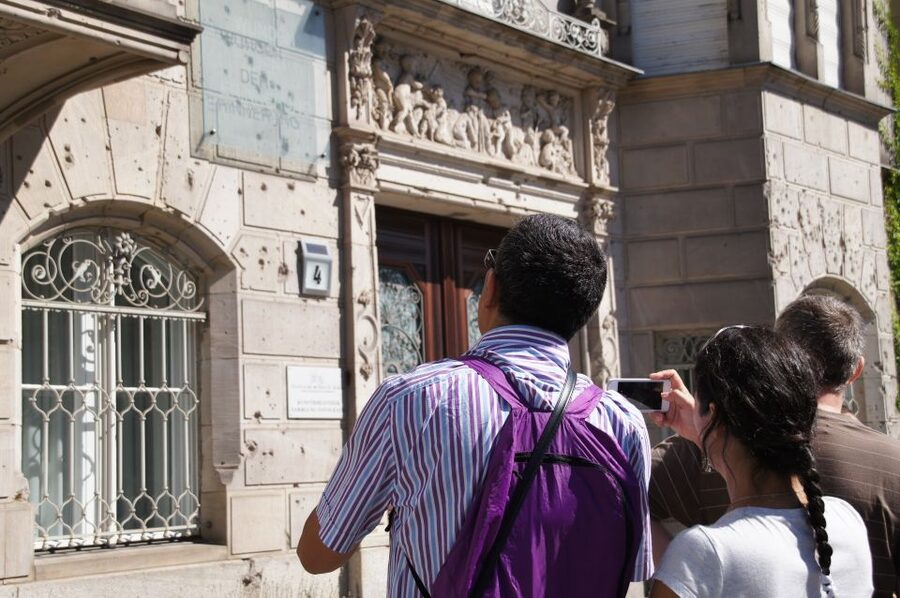
- A clear build-up from Versailles and Weimar so Berlin’s Nazi story makes sense, not just a list of places
- Propaganda in real locations, including stops around Wilhelmstrasse and Nazi offices tied to messaging and control
- Axis messaging in front of embassies, with the Berlin-Rome-Tokyo storyline shown where it mattered
- A required reminder at the Sinti and Roma memorial, keeping the human impact in view
- A finish at the exact area of the Führer Chancellery, then context about the bunker’s final chapter
Undecided? The closest Berlin write-ups we have are these.
- Berlin: Reichstag, Dome and Government District Guided Tour★ 4.7 · 18,288 reviews
- Berlin: 1-Hour City Tour by Boat with Guaranteed Seating★ 4.3 · 16,993 reviews
- Berlin: Boat Tour Along the River Spree★ 4.4 · 11,252 reviews
- Discover Berlin Half-Day Walking Tour★ 5.0 · 9,624 reviews
Where you start: Alexanderplatz and the green flag by the Fernsehturm
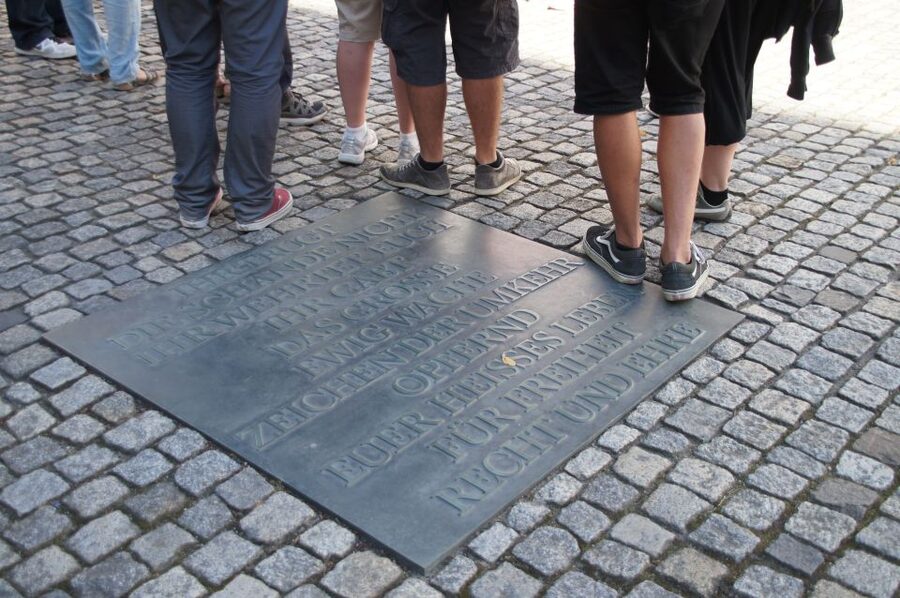
You meet near Alexanderplatz by the Fernsehturm, at street level by the only entrance to the tower area. You’ll spot a green flag that says tours en español, plus the landmark help of Espresso House nearby. If you’ve ever felt that Berlin meeting points can be vague, this one is pretty direct, which helps you get into the right mindset quickly.
This start location is also smart for history-tied walking tours. You’re beginning in one of Berlin’s most recognizable squares, then gradually moving into government and power zones tied to the Nazi regime. That “from public city to command center” feeling is part of what makes this tour work.
Wear comfortable shoes. It’s four hours, and you’ll be outside most of the way. Also, go in with the expectation that you are hearing about a regime that caused enormous suffering. That means questions are allowed, but you should also be ready for the guide to keep it factual and firm.
Versailles, Weimar, and why Berlin’s political collapse matters
The tour doesn’t jump straight to Hitler’s bunker. It starts with the Treaty of Versailles and the Weimar Republic, which is exactly what you want if you do not already know how Germany got pulled into radical politics. In practice, this context changes how you read the later stops. Instead of memorizing names, you understand why certain promises landed.
You’ll hear about Hitler’s rise to power and the role of key figures in the Nazi project. A major thread is how the regime used propaganda as a tool, especially through the programs associated with Joseph Goebbels. That matters because a street-level tour of official buildings can feel abstract unless you understand the system behind the walls.
If you’ve only seen one or two Nazi history documentaries, you might notice something right away on this walk: it’s not just about ideology as a concept. It’s about how power gets built step by step, including the rhetoric, the pressure, and the way public life can shift.
Goebbels and the street machines of propaganda
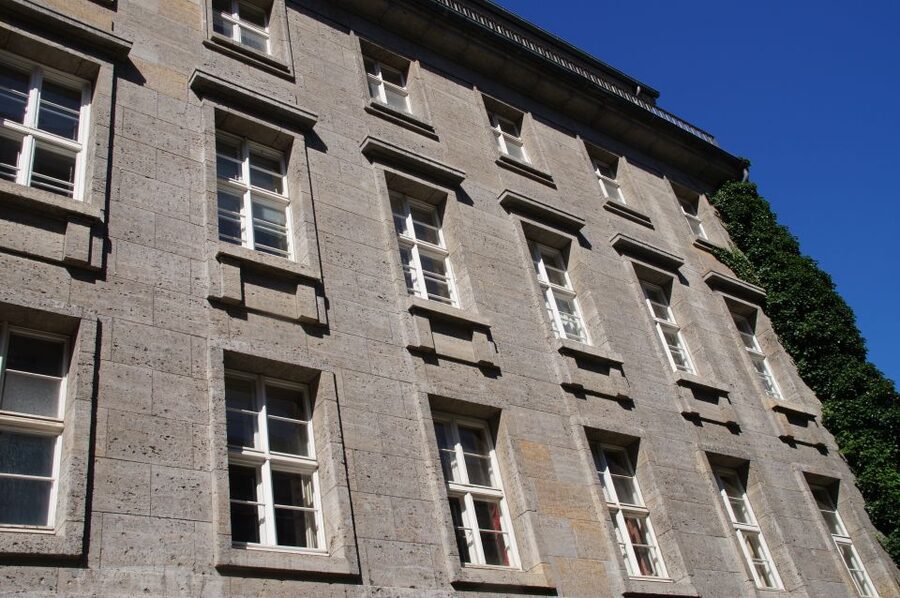
One of the best parts of the experience is how it connects propaganda to real places you can stand in front of. You’ll hear about Goebbels and Nazi propaganda efforts, then continue onward toward government districts where communication and control weren’t separate from administration.
As you move up Wilhelmstrasse, the guide ties the story to what these institutions were doing during the Third Reich. You’re walking where state power concentrated, and that physical movement helps your brain organize the story. It turns “propaganda” from a vague word into something you can see as infrastructure: offices, ministries, and decision-making spaces.
This is also where the tour feels especially valuable if you like history that connects politics to day-to-day mechanisms. You are not just collecting facts. You’re learning the logic of how the regime operated.
Wilhelmstrasse to the Luftwaffe Ministerium: power with a uniform on it
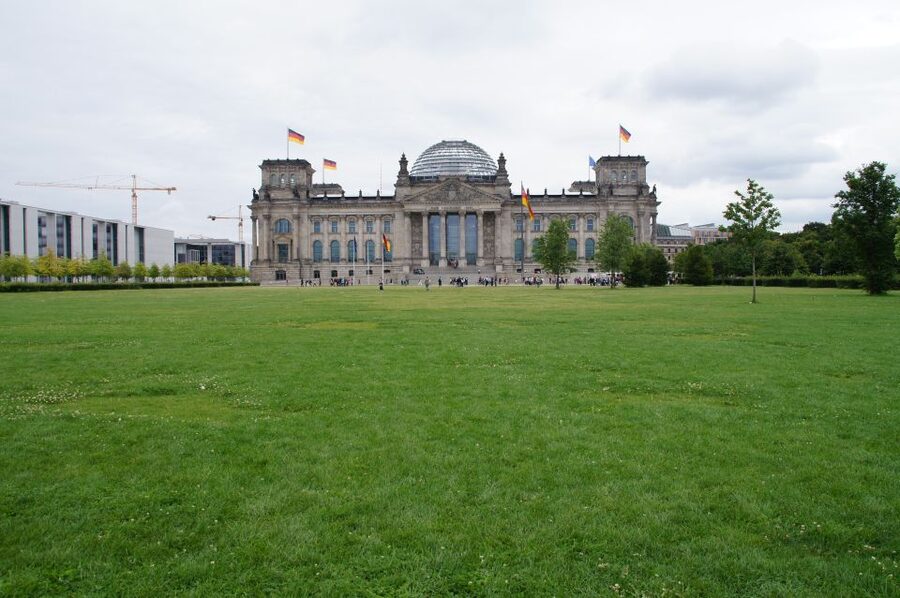
One of the named stops is the Luftwaffe Ministerium, the Air Defense Ministry. That detail gives the tour a sharper angle. This isn’t only about speeches and posters. It is about how the regime organized its military planning and state function, and how that military focus fed into everything else.
Walking Wilhelmstrasse with this in mind changes how you interpret the area. The buildings you see are now part of modern Berlin, but the guide frames them as former command points. You start to notice how government corridors are designed to make authority feel normal and permanent.
Practical note: if you’re sensitive to heavy topics, the tone here can be direct, since the subject is the regime’s institutions. That’s not a flaw. It’s part of what makes the tour useful, because you learn the truth of what these places represented.
The Berlin-Rome-Tokyo axis in front of the embassies
Another standout segment is the story of Germany’s axis with Italy and Japan, explained as you pass in front of their embassies. The tour frames this as more than a diplomatic slogan. It’s presented as a narrative about alliance-building, shared goals, and how different regimes coordinated and supported each other.
I like this kind of stop because embassies are public and recognizable. You see the present-day city face, then the guide connects it back to the wartime relationships and ideological alignment that shaped the period.
If you want a tour that explains how Berlin fits into a bigger European and global story, this is one of the most direct ways to get that context while still doing a manageable walking route.
The Sinti and Roma memorial stop you should not rush
The walk includes a pass to the Memorial to the Sinti and Roma Victims of National Socialism. This is one of the places where the tour’s value becomes personal. It shifts the emphasis away from the regime as machinery and brings you back to the people harmed by Nazi policies.
Even if you know some Holocaust-adjacent history already, this kind of stop matters because it signals the tour’s priorities. It does not treat victims as a footnote. It gives you a moment in the middle of the walking route to absorb what the regime’s “plans” meant in human terms.
If you tend to rush on tours, slow down here. Look, listen, and let the information land. This is the part where respectful silence or brief reflection is usually more useful than taking notes at top speed.
Imagining Germania: how utopia talk hid mass harm
The guide also explains Nazi plans for a future Germania, described as the capital of the world. That sounds like grand architecture talk, but on this walk it is framed as something colder. Plans for a transformed Berlin were not harmless city visions. They were tied to power, control, and the removal and persecution of targeted groups.
I like that the tour includes this because it helps you understand the regime’s mind-set. The Nazis sold an image of destiny and greatness, while the reality was violence and systematic oppression. Once you grasp that, later details about Nazi offices and propaganda feel even more consistent.
This part also helps you connect “big ideas” to “small steps.” The tour’s strength is that it keeps moving forward in time, not letting the story float as abstract ideology.
Ending near the Führer Chancellery area, with context for the bunker
The tour finishes at the exact spot where the Führer Chancellery once stood. From there, you hear about Hitler’s final days in his bunker, tying the last chapters of the Third Reich directly to the ground you are standing on.
This ending works well for two reasons. First, it gives a clear end point rather than a vague finale. Second, it turns the bunker story into part of a timeline you already built earlier in the walk. You are not starting from the end and hoping everything else fits. You already know how the regime got there.
You might find this emotionally heavy, but it’s also the reason this tour exists. A Berlin Nazi tour that ends by the Chancellery area does not let you treat the period like a museum exhibit. It stays connected to the real geography of power.
Price and value: why $29 can be a fair deal
At about $29 per person for a four-hour Spanish walking tour, this price is comparatively good for what you get: a live Spanish guide, a structured route through major Third Reich related sites, and built-in historical context that connects street scenes to political events.
What can affect your overall cost is the one item not included: the transport ticket for Berlin zones AB. You are also told to bring a public transport ticket, so plan for that. If you already travel with a card for AB zones, you are mostly set. If not, factor that into your budget.
In short, the value is strong if you want a guided narrative, not just self-guided browsing. If you prefer full freedom and do not want to pay for interpretation, you might decide differently. But if Spanish is your preferred language and you want someone to connect the dots between Versailles, Weimar, propaganda, Axis alliances, and the final Chancellery chapter, $29 looks like a solid bargain.
Who this tour suits best
This experience is a good fit if you want a focused Berlin Nazi history walk in Spanish that connects political causes to specific sites. It also suits you if you like tours that cover the propaganda angle, not just the military or the final bunker story.
It may not be ideal if you dislike walking for four hours, or if you strongly prefer very fast pacing with minimal stops. One piece of feedback pointed out that some pauses felt unnecessary, so if you’re in a hurry, keep your expectations flexible.
Should you book Berlín y el Nacionalsocialismo?
Yes, consider booking if you:
- want a four-hour Spanish walking tour with a coherent storyline from Versailles and Weimar to the bunker
- care about understanding propaganda and how the regime used public messaging as power
- appreciate that the route includes the Memorial for Sinti and Roma Victims of National Socialism
- prefer guided context over sorting through the sites on your own
Skip it if you only want the lightest possible history overview, or if you really cannot work around the need for a Berlin transport ticket for zones AB. But if you’re serious about learning the Third Reich in a way that makes Berlin’s streets click into place, this is a smart choice.
FAQ
How long is the Berlín y el Nacionalsocialismo tour?
The tour lasts 4 hours.
What language is the tour in?
It is guided in Spanish with a live tour guide.
Where do I meet the guide?
You meet by a green flag that says tours en español next to the only entrance to the Fernsehturm (TV tower) in Alexanderplatz, between the TV tower and Alexanderplatz train station, beside Espresso House.
How much does it cost?
The price is listed as $29 per person.
Do I need a public transport ticket?
Yes. You need a public transport ticket for zones AB, and it is not included in the price.
Is wheelchair access available?
Yes, the tour is wheelchair accessible.
Is free cancellation available?
Yes, you can cancel up to 24 hours in advance for a full refund.
How do I reserve?
You can reserve now and pay later.
What are the main places covered?
The tour covers key Third Reich related sites in central Berlin, including areas connected to Nazi propaganda, the Luftwaffe Ministerium, the axis story in front of embassies, and it ends at the spot where the Führer Chancellery once stood with context about the bunker.
Will I learn about Hitler’s rise and the Third Reich timeline?
Yes. The tour includes context from the Treaty of Versailles and the Weimar Republic through Hitler’s rise to power and the role of leading figures like Goebbels.
Everything else we filed on Berlin
- East Berlin: City of Shadows Walking Tour
★ 5.0 · 11 reviews - Berlin: Die Stachelschweine – Frank Lüdecke – Träumt Weiter
★ 4.7 · 11 reviews - Potsdam Day Trip from Berlin with a Local: Private & Personalized
★ 4.0 · 11 reviews - An Introduction to Berlin Walking Tour
★ 5.0 · 11 reviews - DJ for a Day: Learn to Mix Like a Pro in Berlin
★ 5.0 · 11 reviews - 2-H Segway Sightseeing Tour Berlin
★ 4.5 · 11 reviews
Tours, side by side.
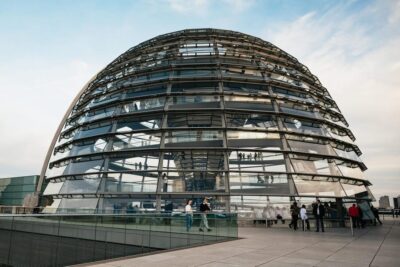 ★ 4.7Berlin: Reichstag, Dome and Government District Guided TourFrom $1818,288 reviews
 ★ 4.3Berlin: 1-Hour City Tour by Boat with Guaranteed SeatingFrom $2516,993 reviews
 ★ 4.7Hamburg: Sex and Crime in St. Pauli Tour for Ages 18+From $29515,447 reviews
 ★ 4.7Dresden: Semperoper Tickets and Guided TourFrom $1812,102 reviews
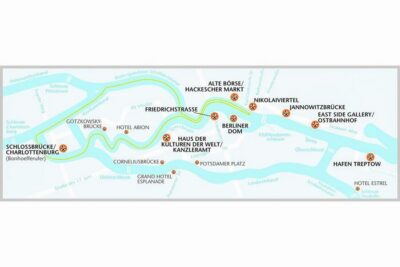 ★ 4.4Berlin: Boat Tour Along the River SpreeFrom $3411,252 reviews
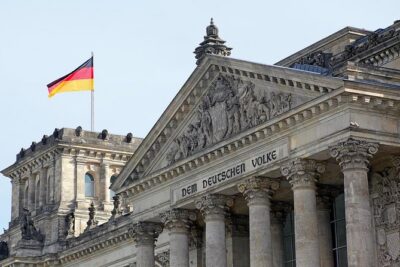 ★ 5.0Discover Berlin Half-Day Walking TourFrom $249,624 reviews
 ★ 4.3Berlin: Hop-on Hop-off Bus Tour with Live CommentaryFrom $228,579 reviews
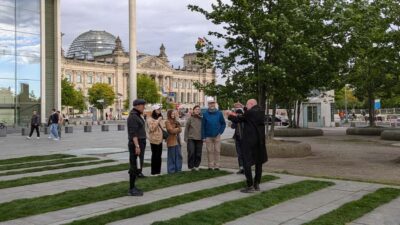 ★ 4.7Berlin: Government District around the Reichstag Guided TourFrom $2848,447 reviews