
REVIEW · 1-DAY TOURS
Day trip through multicultural city landscapes & photo highlights
Berlin is a lot to fit in one day.
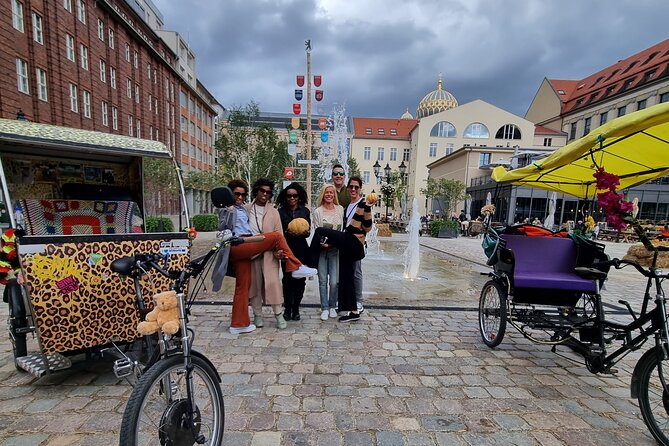
This 3 to 6 hour Berlin tour strings together key landmarks and multicultural neighborhoods with a photo-forward route, plus a live guide in English and a photographer along for the ride. You also get private transportation, music on request, and drinks like coffee or tea (and alcoholic beverages), which makes it feel less like a checklist and more like a move-through-the-city day.
What I really like is the speed without the usual chaos. You cover big sights such as the Brandenburg Gate, the Reichstag area, Potsdamer Platz, Museum Island, and Checkpoint Charlie, while also slipping into calmer lanes and park space in places like Tiergarten and Kreuzberg. The one catch to keep in mind: several major stops are listed with admission tickets not included, so you may want to plan for extra entry time or budgeting if you want to go inside (like the Reichstag/Bundestag, the German Chancellery, and a few museums and domes).
In This Review
- Key things to know before you go
- How the rickshaw format changes your Berlin day
- First landmarks: Brandenburg Gate, Reichstag area, and the Tiergarten memorial
- Potsdamer Platz and Topography of Terror: reinvention and remembrance
- Art, the Wall, and iconic city geometry
- Book burning at Bebelplatz, then museum grandeur on Museum Island
- Old Berlin recreated: Nikolaiviertel, Neptunbrunnen, and the East Side Gallery
- Kreuzberg streets and city canals: Bergmannstraße, Landwehrkanal, and Oranienstraße
- Görlitzer Park, Tempelhofer Feld, and Park am Gleisdreieck for breathing space
- Timing, price, and value for $140.77
- Should you book this Berlin multicultural tour?
- FAQ
- How long is the tour in Berlin?
- Is pickup included, and where do you get on and off the tour?
- Is the tour private, and is it offered in English?
- What is included in the tour price?
- Are admission tickets included for stops like the Reichstag/Bundestag and German Chancellery?
- Which stops in the route are listed as free entry?
- Is alcohol or coffee included?
- What happens if the weather is poor?
- What is the cancellation policy?
- Are service animals allowed?
Key things to know before you go
- Photographer included: great if you want Berlin shots without juggling your camera and your footing.
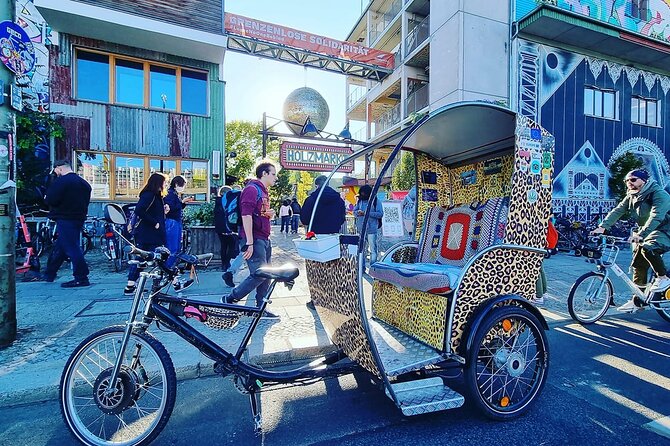
- Rickshaw-style routing: you can see both monuments and smaller pedestrian-friendly areas that walking alone does not make time for.
- Multicultural sweep: you’ll move from Mitte-style classics to Kreuzberg’s everyday energy, including Oranienstraße and Bergmannstraße.
- Berlin Wall in two versions: you get both a memorial stop and the longer, outdoor art section known as the East Side Gallery.
- Parks and canals are part of the plan: Tiergarten, Landwehrkanal, and Tempelhofer Feld keep the day from feeling too heavy.
The wider Berlin sightseeing pile
- Berlin: 1-Hour City Tour by Boat with Guaranteed Seating★ 4.3 · 16,993 reviews
- Berlin: City Sightseeing Hop-On Hop-Off Bus Tour★ 4.1 · 4,233 reviews
- Berlin: 1-Hour City Sightseeing Cruise★ 4.4 · 2,210 reviews
- Berlin City Hop-on Hop-off Tour with Optional Cruise★ 3.5 · 1,155 reviews
How the rickshaw format changes your Berlin day
Berlin can feel split into eras: Imperial grandeur, wartime scars, Cold War geography, then modern reinvention. What makes this tour work well is that it treats the city like one continuous story you can watch move past you. You are not just staring at buildings from far away. You are getting context, and you’re getting a route that keeps shifting between monumental architecture and street-level life.
The guide, Leo, is the kind of person who can help you connect the dots fast. In the route style you’ll see parks, small pedestrian lanes, and night-life areas, not only the big-photo targets. It is an efficient way to get your bearings, especially if it’s your first visit or you do not want to spend your whole day walking.
Also, the tour is private, meaning it is only your group. That matters more than people expect. You can ask quick questions, adjust pace, and avoid the “run and catch up” feeling that comes with larger groups.
First landmarks: Brandenburg Gate, Reichstag area, and the Tiergarten memorial
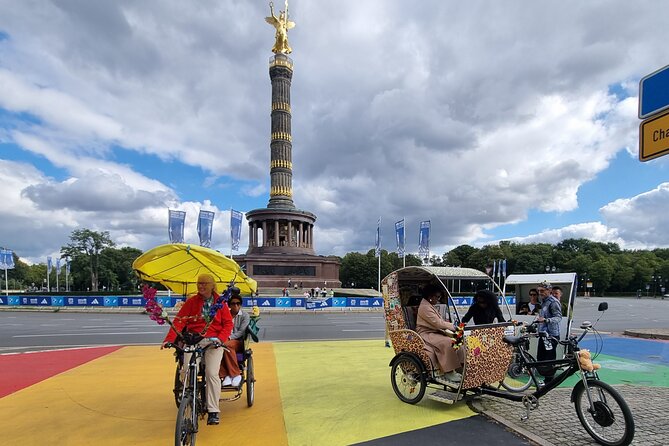
You start with one of Berlin’s most recognizable anchors: Brandenburg Gate. Built from sandstone between 1788 and 1791, it was designed based on ideas linked to the Athens Acropolis propylaea. That reference is not just trivia. It helps you see the gate as a symbol built to feel timeless and state-like, not a random monument someone stuck in the middle of the city.
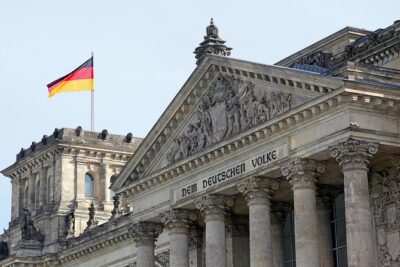
Next comes Reichstag/Bundestag. This is where German history gets dramatically specific. On November 9, 1918, SPD politician Philipp Scheidemann called for the Republic from the west portal balcony. Then the Reichstag fire in 1933 burned through the building and destroyed the plenary hall and dome. Later, the Soviet victory symbolism arrived when Red Army soldiers raised a Soviet flag on April 30, 1945.
One practical note: admission for the Reichstag/Bundestag is listed as not included, so if you want to go in, you’ll likely need to plan for that separately.
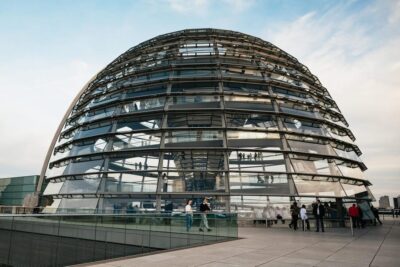
Then you move to the German Chancellery, where the architecture does a bit of political messaging of its own. The center rises high at about 36 meters, framed between administrative wings. Large glass surfaces cut into heavy walls create a feeling of transparency and lightness. If you like architecture that tells you something about the government rather than just housing it, this stop hits.
From there, the day takes a darker, more reflective turn at the Soviet War Memorial Tiergarten. The scene includes two T 34 tanks and a bronze statue of a Red Army soldier. Behind, you’ll see names of fallen Soviet soldiers, and farther back are graves of around 2,500 soldiers. This is one of those stops where you slow down naturally, even if the tour keeps moving.
You round out the early arc with Tiergarten. This is one of Berlin’s major green spaces, shaped by history as much as trees. In the late 1600s, Friedrich III developed a pleasure park from earlier hunting grounds. Later, landscape designer Peter Joseph Lenné reshaped it between 1833 and 1838 into something closer to an English-style public park plan. And even if you are not into garden design, the park’s monuments and memorials make it feel like an outdoor museum. The English Garden area by a pond is one of the prettiest pauses.
Potsdamer Platz and Topography of Terror: reinvention and remembrance
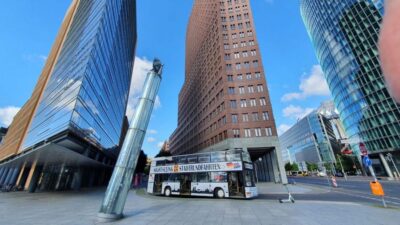
Potsdamer Platz is where Berlin’s story gets modern and fast. Planned as an entire district by architects, it developed into a place where locals actually hang out, not only a tourist stop. You’ll pass cafes, cinemas, shops, and the large shopping arcade vibe, plus the futuristic high-rise environment around it. If you want a visual contrast to the classical edges you saw earlier, this is it.
Then you head to Topography of Terror, which is marked as free and kept as a central site for understanding Nazi terror planning and control. Between 1933 and 1945, key SS and police institutions were housed here, including the Secret State Police Office and other Reich security structures. It’s not a quick “look and move” experience. The value here is the clarity of place. When you see what happened in the exact area where offices were operating, the history lands differently.
If you prefer a lighter day, you can treat this stop like a focused chapter. Spend your time reading what you can, then move on before you feel overloaded.
Art, the Wall, and iconic city geometry
After Topography of Terror, you shift toward art and memory.
At Gropius Bau, admission is listed as not included. This museum focuses on cultural history, contemporary art, and photography. Even if you do not buy tickets, the area and the building setting can still help you reframe the day from Cold War sites to visual culture.
Then comes the Memorial of the Berlin Wall stop, also listed as not included for admission. The idea here is to acknowledge the division as a real system, not just a photo subject. It’s one of those moments where Berlin’s political geography becomes physical.
Next is Checkpoint Charlie. This used to be the most famous border crossing among the American-controlled points nearby Glienicke Bridge. The other checkpoint areas were Helmstedt-Marienborn (Checkpoint Alpha) and Dreilinden-Drewitz (Checkpoint Bravo). The crossing rules were strict: it was for foreigners and staff of the Permanent Representation of the FRG in the GDR, and for GDR officials. Checkpoint Charlie is free in this route, so you can spend as much time as you want without extra ticket friction.
Right after that, you flow along Friedrichstraße, Berlin’s north-south axis. After the fall of the wall, it became a shopping mile between Checkpoint Charlie and Friedrichstraße station. It’s a good street-level breather, especially if you want to feel how Berlin turned border space into everyday routes.
Then you hit Gendarmenmarkt, a square created at the end of the 17th century with French Huguenot settlement in mind. The naming history is part of the charm, from Esplanade to Lindenmarkt and Neuer Markt, before becoming Gendarmenmarkt in 1799 due to the Gens d’armes guard and stables. It is a beautiful change of pace.
Nearby you’ll see Deutscher Dom and Konzerthaus. The Deutscher Dom includes the permanent exhibition about ways, wrong trails, and detours, tied to liberal parliamentary democracy. Konzerthaus is classicist and connected to Karl Friedrich Schinkel. Both are listed as not included for admission in this route, so use the exterior and the square to your advantage if you want to keep time tight.
Book burning at Bebelplatz, then museum grandeur on Museum Island
Now you step into one of Berlin’s more chilling public memorial stories: Bebelplatz. This stop is free. In 1933, Nazis burned more than 20,000 books at this location. They targeted books they considered non-German spirit, including works by Erich Kästner, the Mann family, Magnus Hirschfeld, Lion Feuchtwanger, Karl Marx, Else Lasker-Schüler, and almost 400 other authors, plus Heinrich Heine’s books.
If you care about freedom of thought, this stop hits hard, but it also feels grounded because it is tied to a specific place and action. It is history you can stand on.
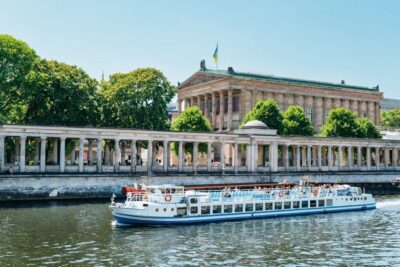
From there, you move to Museum Island, where the museum complex on the Spreeinsel is free in this route. It is one of Europe’s standout museum ensembles, shaped over about a century and included in UNESCO’s world cultural heritage list in 1999. The area has been restored since the late 1990s, with a new reception building added. Even if you do not step inside a gallery, the island’s museum setting is a strong “this is why people come here” kind of moment.
You then reach Berliner Dom. Admission is listed as not included. The cathedral is hard to miss, with its striking dome. It served as the court and cathedral church of the Hohenzollerns, rebuilt between 1894 and 1905 under Emperor Wilhelm II. Again, this is a great exterior stop if you are managing tickets and time.
After domes and museums, you get a transport-and-life hub moment at Alexanderplatz, locally known as Alex. It is free in this route and works well as a wide angle city reset point.
Old Berlin recreated: Nikolaiviertel, Neptunbrunnen, and the East Side Gallery
Next is Nikolaiviertel, an “open-air museum” feel for old Berlin. In its current form it was created for Berlin’s 750th anniversary in 1987, so it is not just original medieval fabric, but a curated historical vibe. Admission is listed as not included, so think of it more as wandering and atmosphere.
You’ll also pass Neptunbrunnen at the Red City Hall area. Berliners call it Forckenbecken, tied both to the mayor Forckenbeck and to Neptune standing with his trident in the basin. At Neptune’s feet, four female figures symbolize rivers Elbe, Rhine, Oder, and Vistula. This is a nice “small photo moment” between bigger monuments.
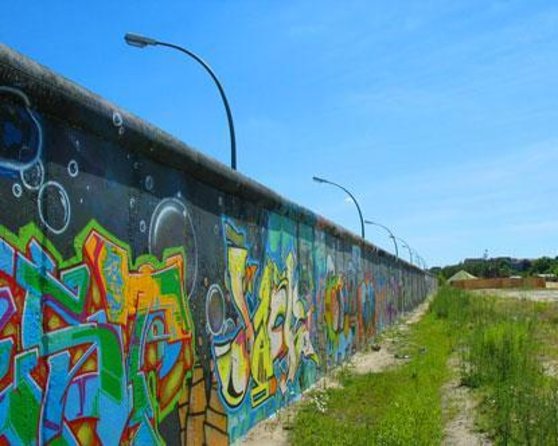
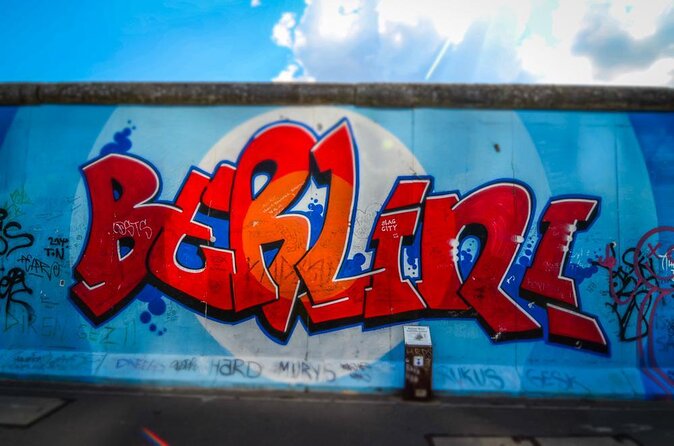
Then you reach the East Side Gallery, described as a painted 1.3 kilometer section of the former Berlin Wall along the Spree. With over a hundred original wall paintings, it is the longest open-air gallery in the world. This is one of the best parts of the day for photos because you have color, scale, and street energy in the same frame.
A practical tip: for mural-type stops, bring your camera settings phone-friendly if you like crisp images. Low late-day light can look great too, but you’ll want to be ready.
Kreuzberg streets and city canals: Bergmannstraße, Landwehrkanal, and Oranienstraße
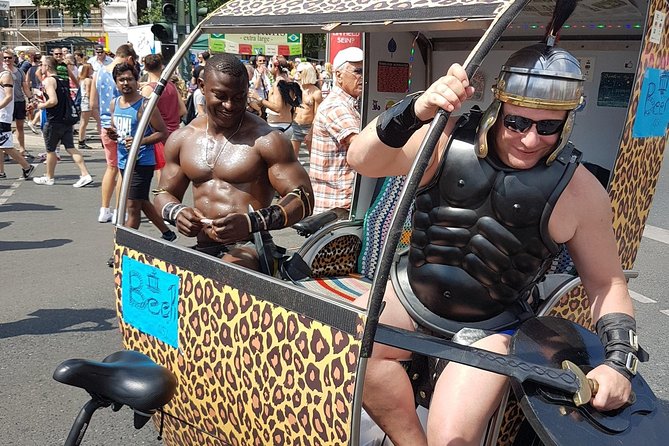
Now the tour shifts from historic core to day-to-night neighborhood life.
At Bergmannstraße, you get a well-kept area of older buildings in Kreuzberg SW 61. The route notes this is a bit more sedate than the wild SO 36 club scene, but still multicultural and lively. It is the kind of street where you can find everyday Berlin details fast.
Then comes Landwehrkanal, an inner-city canal running straight through multiple districts including Treptow, Kreuzberg, Neukölln, Tiergarten, and Charlottenburg. This matters because it’s not a museum canal. It is part of how Berlin has moved goods and people. The canal began as an artificial waterway plan in the 1840s during industrialization, with design work linked to master gardener Peter Joseph Lenné commissioned by Friedrich Wilhelm IV. It carried building materials for Berlin’s rapid Gründerzeit development.
If you like city infrastructure as culture, this stop is a sleeper hit.
Next is Admiralbrücke, described as a popular summer meeting place. The old bridge has cobblestone streets and gas lanterns. Evenings turn social, with small groups talking, sharing drinks, and enjoying sunset views over the Landwehrkanal. There’s also a local note: after complaints about nightly volume, the bridge is cleared peacefully every evening at 10 p.m. with police support. It’s a good example of how Berlin balances nightlife with limits.
Then you hit Oranienstraße, where gastronomy and the scene dominate. The street is described as very lively at night, with about 100 small shops, bars, and restaurants with international flair. If you want a real feel for Berlin’s multicultural food and street life, this is the lane.
Görlitzer Park, Tempelhofer Feld, and Park am Gleisdreieck for breathing space
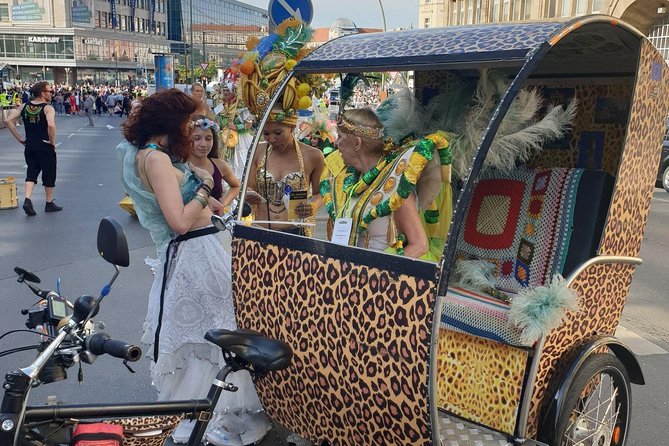
Finally, the tour adds park and open-air reset stops that keep the whole day from feeling like only history and stone.
Görlitzer Bahnhof is the route’s entry point, but what you’re really visiting is the Görlitzer Park. The park was created in the early 1990s on the former site of Görlitz train station. Today you get spacious lawns, sports fields, playgrounds, and a children’s farm near Glogauer Straße. There’s also a swimming pool nearby called Spreewaldbad on Wiener Strasse. This stop is free in the route, so you can treat it like a long exhale.
Then comes Tempelhofer Feld, the former Tempelhof Airport. After flight operations stopped, the site opened to the public in May 2010, and now it’s being redesigned as a park for multiple uses with citizen participation. After a successful referendum in May 2014, the Tempelhofer Feld Law came into force in June 2014 with plans for development and care drawn up with the population.
This is a great place to see Berlin’s planning culture at work, an open space that carries history and future intent at the same time.
Last, Park am Gleisdreieck gives you another example of Berlin greening reclaimed rail-area space. The railway area near the Gleisdreieck traffic junction lay fallow after World War II, and plants grew while development stayed dense around it. Citizens formed a group and succeeded in permanently greening the area. It’s a calm end to the tour, with that special “city happens, then nature returns” feeling.
Timing, price, and value for $140.77
At $140.77 per person, this tour is priced like a guided experience, not like a self-guided hop-on route. For that money, you are not only buying a guide. You are buying private transportation, a photographer, and included extras like music on request and drinks such as coffee or tea, plus alcoholic beverages. That shifts the value equation.
Duration is listed as 3 to 6 hours, so the route is meant to feel complete without dragging into a full day of museum tickets and long transit lines. The tradeoff is that some stops include history narration from the outside, while others list admission tickets as not included. If your goal is to go inside every major building, plan to spend time or add separate tickets.
Where this tour really shines is when you want:
- a first-time Berlin orientation across multiple eras,
- plenty of photo opportunities with less walking fatigue,
- and a route that includes both monuments and real neighborhood streets.
Who should book it? You’ll get the most from it if you like guided context, want a manageable time window, and enjoy seeing how Berlin’s culture shifts block by block, from Mitte classics to Kreuzberg sidewalks.
Should you book this Berlin multicultural tour?
If you want a strong hit of Berlin’s most famous landmarks plus real neighborhood texture, I’d say yes. The structure is ideal for people who do not want to spend the day strategizing transit, but still want their photos and their explanations. The included photographer and drinks help make it feel like a guided outing, not a grind.
I’d think twice if you are set on entering every single ticketed site along the way. The Reichstag/Bundestag area, the German Chancellery, and several museums and domes are listed as not included, so you may need extra time planning.
FAQ
How long is the tour in Berlin?
The tour lasts about 3 to 6 hours.
Is pickup included, and where do you get on and off the tour?
Pickup is offered at hotels, the central station, and cafes. The activity ends back at the meeting point.
Is the tour private, and is it offered in English?
Yes, it is a private tour/activity, so only your group participates. It is offered in English.
What is included in the tour price?
The package includes private transportation, a photographer, a travel guide, music on request, alcoholic beverages, and coffee or tea.
Are admission tickets included for stops like the Reichstag/Bundestag and German Chancellery?
No. Admission tickets are listed as not included for several major stops, including the Reichstag/Bundestag and the German Chancellery.
Which stops in the route are listed as free entry?
Stops marked free entry in the route include Brandenburg Gate, Soviet War Memorial Tiergarten, Tiergarten, Potsdamer Platz, Topography of Terror, Soviet War Memorial Tiergarten (noted as free), Checkpoint Charlie, Gendarmenmarkt, Bebelplatz, Museum Island, and several neighborhood/open-air stops such as Bergmannstraße, Landwehrkanal, Admiralbrücke, Oranienstraße, Görlitzer Bahnhof, Tempelhofer Feld, and Park am Gleisdreieck.
Is alcohol or coffee included?
Yes. Alcoholic beverages and coffee and/or tea are included.
What happens if the weather is poor?
This experience requires good weather. If it is canceled due to poor weather, you are offered a different date or a full refund.
What is the cancellation policy?
You can cancel for free up to 24 hours in advance of the experience for a full refund. If you cancel less than 24 hours before the start time, the amount paid is not refunded.
Are service animals allowed?
Yes, service animals are allowed.
Seeing Berlin in One Go
Everything else we filed on Berlin
- Private Photo Tour in Kreuzberg
★ 5.0 · 3 reviews - Kreuzberg Private Walking Tour: Immigrants, Artists & Hipsters
★ 5.0 · 3 reviews - Berlin’s Jewish Heritage: Private Tour of the Vibrant Jewish District
★ 5.0 · 3 reviews - Individual city tour Berlin for max. 8 persons
★ 5.0 · 3 reviews - Berlin & The Third Reich Private Guided Tour
★ 5.0 · 3 reviews - Private Analogue Photography Experience in Berlin
★ 5.0 · 3 reviews
1-Day Tours, side by side.
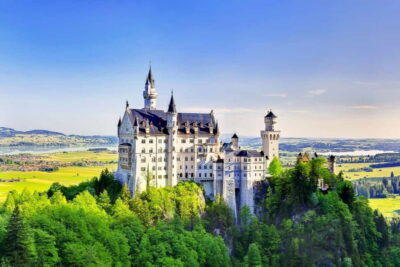 ★ 4.5From Munich: Neuschwanstein & Linderhof Castle Full-Day Trip12,494 reviews
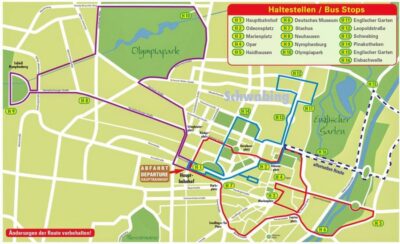 ★ 4.3Munich Hop-On Hop-Off Tour: 1-Day or 2-Day TicketFrom $274,161 reviews
 ★ 4.7From Munich: Neuschwanstein Castle Full-Day TripFrom $933,977 reviews
 ★ 4.5Dresden: 1-Day Hop-On-Hop-Off Bus TourFrom $292,813 reviews
 ★ 4.7From Munich: Dachau Memorial Site Half-Day TripFrom $622,526 reviews
 ★ 4.5Neuschwanstein Castle and Linderhof Palace Day Trip from MunichFrom $911,756 reviews
 ★ 4.4From Munich: Rothenburg and Nördlinger Ries Day Trip by BusFrom $701,748 reviews
 ★ 4.4From Frankfurt: Rhine Valley Day TripFrom $1751,317 reviews
Other lists this tour is on