

REVIEW · GERMANY
Delicious Deutsch: Learn German while creating German Breakfast
Fresh breakfast plus German words is a great deal. This Berlin experience turns Frühstück into a practical language lesson, with you handling fresh produce and cooking as you practice real sentences. I like the mix of market time plus kitchen work, because it forces you to use German in the moments that matter, not just repeat lines.
Two things I especially appreciate: first, you learn by doing, with seeing, touching, preparing, cooking, and tasting all part of the lesson. Second, the host, Kit, comes across as warm and genuinely helpful, with clear support for families too. One drawback to consider is that this is hands-on by design, so you should be comfortable with food prep and participating, not just watching.
In This Review
- Key highlights you should care about
- Why a German breakfast class is better than a typical language lesson
- Goltzstraße start point, and what to know before you go
- From produce to vocabulary: how the market stage builds speaking
- The kitchen part: cooking German breakfast like a Berliner
- Language level: how beginner-friendly this really feels
- What you actually eat: breakfast as both meal and lesson
- Price and value: is $110 a fair deal?
- Hosting style that makes or breaks the class
- Who should book this German breakfast lesson
- Should you book Delicious Deutsch for your Berlin trip?
- FAQ
- Where does the experience start in Berlin?
- How long is the class?
- How much does it cost?
- What is included in the ticket price?
- Is this a private tour or shared group activity?
- What time does the experience begin?
- Is the experience near public transportation?
- Can service animals attend?
- What language level is this best for?
- What is the cancellation policy?
Key highlights you should care about
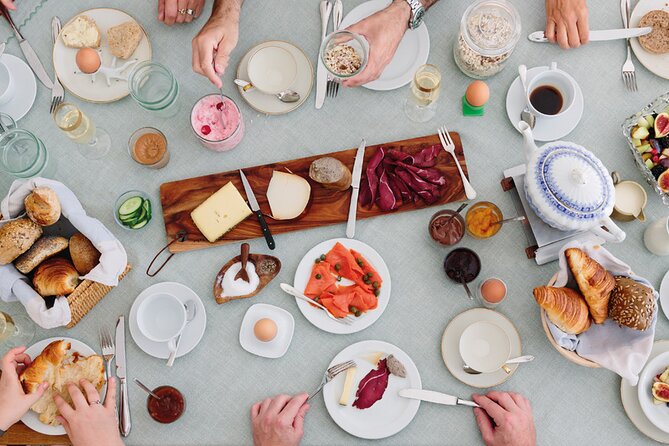
- German through cooking tasks, not textbook drills
- A market-style start, with you selecting fresh ingredients
- Kit as a host, friendly and accommodating, including help for kids
- Beginner to intermediate friendly, with speaking built into each step
- Multi-sensory learning, using sight, smell, taste, and touch to stick the language
Undecided? The closest Berlin write-ups we have are these.
- Berlin: Reichstag, Dome and Government District Guided Tour★ 4.7 · 18,288 reviews
- Berlin: 1-Hour City Tour by Boat with Guaranteed Seating★ 4.3 · 16,993 reviews
- Berlin: Boat Tour Along the River Spree★ 4.4 · 11,252 reviews
- Discover Berlin Half-Day Walking Tour★ 5.0 · 9,624 reviews
Why a German breakfast class is better than a typical language lesson

If you are learning German in Berlin, you probably already know the hard truth: saying the words matters more than knowing the rules. This kind of class makes speaking unavoidable. You name ingredients, follow recipe steps, ask small questions, and talk about what you are doing while your hands are busy.
And that is the point. Breakfast is daily life. It is practical. It is short cycles of action, like wash, chop, mix, taste, adjust. Those repeatable steps help your brain link new German words with real meaning. The program is built around that kind of learning, using multiple senses to create stronger memory connections.
Plus, Berlin has its own rhythm for breakfast and brunch, even when you do not chase the trendy places. Learning food culture through a hands-on session is one of the fastest ways to understand how people think about what they eat and why.
Goltzstraße start point, and what to know before you go
The experience starts at Goltzstraße 36, 10781 Berlin. It also ends back at the meeting point, so you do not need to plan a separate return route after cooking and eating.
Logistics are simple in other ways too. It is listed as near public transportation, and you get a mobile ticket. It is also a private activity, meaning only your group participates, not a shared large tour where you disappear into the crowd.
One timing note worth your attention: the start time is shown as 9:30 pm. This is a breakfast-themed activity called Frühstück, so before you lock it into your day, double check the exact local time when you book. That small check can save you from an embarrassing scramble later.
From produce to vocabulary: how the market stage builds speaking
Even though the experience focuses on breakfast, the heart of it is ingredient selection and preparation. You will be seeing, touching, handling, preparing, cooking, and tasting fresh produce, all while learning the language. That structure makes the German stick because the words are not floating in the air. They are attached to what you are doing.
What you can expect at the market-style part (or the ingredient selection portion) is practical language. You will talk about what you see, what you want, what looks fresh, and what is in season. In the reviews for this host and format, there is a clear pattern of the market walk being lively and specific, with the host pointing out ingredients she likes to cook with and seasonal treats.
Here is the real value for you: market conversations are short and direct. That is perfect for beginner to intermediate learners. You can practice:
- simple ingredient names
- basic descriptions like fresh, ripe, and ready
- recipe-related words that come up in cooking later
The kitchen part: cooking German breakfast like a Berliner
Once you move into the cooking stage, the lesson becomes more than vocabulary. It becomes sequencing. German is full of step-by-step logic, and recipes are basically a built-in grammar lesson.
You are not just reading instructions. You are performing them. You might chop, mix, layer, or assemble parts of the meal. Then you taste. Then you adjust. Each action is a chance to use German in context, and the program is explicitly designed to reinforce understanding and speaking by explaining recipes, cooking techniques, and ingredients.
This is where the multi-sensory approach helps. You learn with your eyes (what it should look like), your nose (what it smells like), and your tongue (what it tastes like). That embodied learning idea is not just academic talk. When you taste something and hear the German word for it at the same moment, you build a stronger memory link than you do from a flashcard.
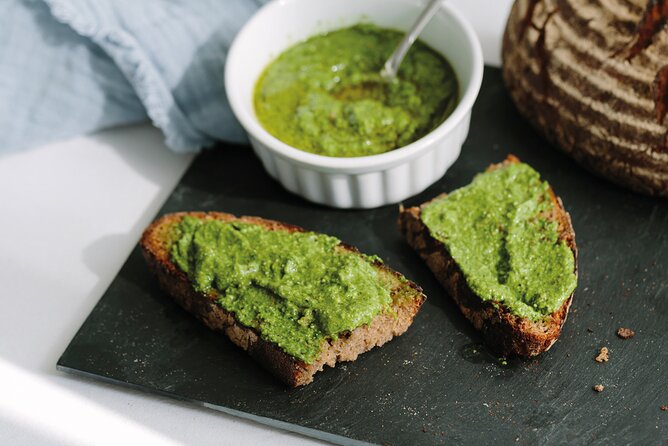
Also, breakfast foods tend to be ingredient-forward. That means you can connect German words to visible items quickly. No mystery sauces. No hours of complicated technique. You are learning in a way that fits real life at home too.



Language level: how beginner-friendly this really feels
The program is described as ideal for beginner to intermediate language levels. That matters because many German classes either move too fast or focus on theory before you can speak.
In this format, speaking is built into the flow of cooking. That keeps pressure reasonable, because you are not asked to perform a long speech. You are asked to participate in the next action: name something, follow the next step, confirm what you just did.
If you are new to German, you will likely rely on short responses and repeated phrases. If you are intermediate, you can push for more detail, like discussing ingredients or talking about how you like the final dish.
Either way, this is the kind of lesson where you leave with usable sentences, not just facts.
What you actually eat: breakfast as both meal and lesson
The included meal is breakfast. You are creating an elaborate breakfast, which means the class is not just one quick plate. You will be working through enough components to make the lesson feel like a real breakfast, not a snack-sized demo.
The other takeaway is that you learn German through the food experience itself. It is not only cooking. It is also tasting, with language tied to flavor and texture. That is exactly the moment when words feel real.
One detail from the reviews that signals the host’s teaching style: the way Kit interacts with food includes lots of explanation about cooking and German food culture, plus small touches of Berlin context. Even when the main goal is language, these side stories help you build mental hooks. When you know the story behind a dish or ingredient, you remember the word longer.
Price and value: is $110 a fair deal?
$110 for about 3 hours is not the cheapest thing in Berlin. But it is not overpriced either, if you judge it the way locals do: what you get for your time.
Here is the value equation for you:
- You pay for an instructor who combines language teaching with cooking instruction.
- You get the full ingredient and breakfast experience included.
- You get a private format for your group.
- You get cultural context, not just a worksheet with flour.
If you compare this to paying for a language tutor plus buying ingredients plus trying to find your own kitchen setup, it becomes more reasonable. It also saves you the mental work of figuring out where to start, what to cook, and how to connect German words to steps.
One practical thought: the experience is listed at around 3 hours, but some groups report longer sessions in this general market tour plus class format. If you are planning your day tightly, give yourself some buffer time so you do not feel rushed after dessert.
Hosting style that makes or breaks the class
A cooking lesson can go two ways: either it feels like an efficient production line, or it feels like a real home experience. The reviews point strongly to the second option.
Kit is described as warm and inviting, and there is a consistent theme of treating people like old friends. That matters because speaking a new language is easier when the room feels safe. If you are worried you will make mistakes, a relaxed host helps.
There is also mention of accommodation for dietary restrictions in at least one similar class context. The key detail for you is not the exact diet options (not listed here), but the fact that the host has experience adjusting so people feel included. If you have dietary needs, confirm them at booking so the class can plan appropriately.
Family friendliness shows up too. One review highlights how well Kit included a daughter. That suggests the teaching style works not just for adults focused on grammar, but also for families where the kids need a role and attention.
Who should book this German breakfast lesson
I think this is a great match if:
- you want to learn German by speaking in real situations
- you enjoy food, markets, and hands-on cooking
- you are a beginner to intermediate learner who wants support
- you want Berlin culture through everyday life, not only museum stops
It might be less ideal if:
- you hate kitchen work or prefer purely observational activities
- you cannot commit to tasting and participating
- your schedule is so tight that a longer session would stress you
The good news is the private format helps. You are not stuck being quiet in a large group. The lesson can adapt to your group’s pace.
Should you book Delicious Deutsch for your Berlin trip?
I would book this if your goal is to leave with German you can use on your next day out. It is not only about breakfast. It is about turning German into a set of actions you can actually repeat: name ingredients, follow steps, and talk about taste.
Do it if you like learning with your hands, and if you want a lesson that feels like Berlin life, not classroom life. Before you pay, just double check the start time shown as 9:30 pm, and make sure you confirm any dietary restrictions you have so the menu can work for your group.
If that all checks out, this is one of those rare classes where you get food, language practice, and culture in one sitting, without needing a big planning effort.
FAQ
Where does the experience start in Berlin?
It starts at Goltzstraße 36, 10781 Berlin, Germany.
How long is the class?
The duration is approximately 3 hours.
How much does it cost?
The price is $110.
What is included in the ticket price?
Breakfast is included.
Is this a private tour or shared group activity?
It is a private tour or activity, with only your group participating.
What time does the experience begin?
The start time is listed as 9:30 pm.
Is the experience near public transportation?
Yes, it is near public transportation.
Can service animals attend?
Yes, service animals are allowed.
What language level is this best for?
It is designed for beginner to intermediate language levels.
What is the cancellation policy?
This experience is non-refundable and cannot be changed for any reason. If it is canceled because the minimum number of travelers is not met, you will be offered a different date or a full refund.
Everything else we filed on Berlin
- Private Photo Tour in Kreuzberg
★ 5.0 · 3 reviews - Kreuzberg Private Walking Tour: Immigrants, Artists & Hipsters
★ 5.0 · 3 reviews - Berlin’s Jewish Heritage: Private Tour of the Vibrant Jewish District
★ 5.0 · 3 reviews - Individual city tour Berlin for max. 8 persons
★ 5.0 · 3 reviews - Berlin & The Third Reich Private Guided Tour
★ 5.0 · 3 reviews - Private Analogue Photography Experience in Berlin
★ 5.0 · 3 reviews