
REVIEW · GERMANY
eSIM for Germany and 34 European Countries
My phone stayed online from day one. What makes this eSIM interesting is that it is built for real travel days, not just one city, and it is usually cheaper than an airport SIM while still promising 4G and 5G at local rates. The plan also covers Germany plus Europe (it is pitched as working across 27 countries, and the product info says up to 34 European countries), so you can keep one setup while your route changes. The main thing to watch is upfront setup and compatibility, since you must have an eSIM-capable phone and provisioning can take a few minutes at first.
I like that you get this as a true digital product, basically a mobile ticket delivered by email, so there is no hunt for a kiosk or a line at the airport. It starts counting on a calendar-day basis, defined as 00:00 to 23:59 in the destination local time, which matches how most trips actually feel. The one drawback is that after you hit your included high-speed amount, your speed switches to 3G, so heavy video streaming may not be your best plan.
If you run into trouble, you are not stuck guessing. There is remote support via email at [email protected], and at least one reviewer reported that support helped correct APN settings after provisioning. It is an easy way to get your bearings fast, especially on day one in Berlin.
In This Review
- Key things I’d pay attention to
- eSIM Value For Germany and a Multi-Country Europe Plan
- What You Receive: A Digital Mobile Ticket by Email
- Day One in Berlin: Calendar-Day Validity Starts at 00:00
- Coverage That Works for City Wandering and Train Days
- Speed Rules: 4G/5G at Local Rates, Then a Drop to 3G
- Price, Duration, and the Real Value Question
- Setup Experience: Fast When It Works, Calm if You Prep
- Potential Drawbacks You Can Actually Plan Around
- Who This eSIM Suits Best (And Who Should Rethink It)
- Should You Book This eSIM Plan?
- FAQ
- Does this eSIM include mobile data for Germany and multiple European countries?
- How much does it cost?
- How long can I buy it for?
- Is it a physical SIM card?
- How do I get the eSIM after booking?
- What phone do I need?
- When does the data plan start?
- What happens after I use the included high-speed data?
- Is there free cancellation?
Key things I’d pay attention to
- Email delivery as your mobile ticket, so you can set up before you land
- 4G and 5G at local rates, then a clear drop to 3G after your high-speed cap
- Works across Germany and multiple European countries, so one eSIM can cover a multi-city trip
- Setup can take a few minutes, but support is reachable if provisioning stalls
- Great for day-to-day travel, including train rides and getting service in smaller areas
Undecided? The closest Berlin write-ups we have are these.
- Berlin: Reichstag, Dome and Government District Guided Tour★ 4.7 · 18,288 reviews
- Berlin: 1-Hour City Tour by Boat with Guaranteed Seating★ 4.3 · 16,993 reviews
- Berlin: Boat Tour Along the River Spree★ 4.4 · 11,252 reviews
- Discover Berlin Half-Day Walking Tour★ 5.0 · 9,624 reviews
eSIM Value For Germany and a Multi-Country Europe Plan
This eSIM is designed for travelers who want connection without extra errands. You pay $4.75 per person and pick a data duration from 3 to 30 days, which is useful if you know your travel rhythm now. And for many people, that airport-SIM “tax” is the real reason they choose eSIM in the first place.
I also like the way this plan is framed for moving around. The coverage messaging includes Germany plus a broad set of European countries, with two numbers floating around in the product info: 27 countries in the highlights, and up to 34 European countries in the overview. Either way, it is aimed at routes where you hop between cities and countries without wanting a new SIM every time.
The practical question is not just cost, it is friction. A physical SIM means a stop, a purchase, and sometimes a second attempt if it does not activate right away. With an eSIM, you are trading that friction for a one-time setup on your own phone, which is often a fair swap.
What You Receive: A Digital Mobile Ticket by Email
This is a purely digital product. Instead of picking anything up, you receive delivery of the eSIM via email, and you can share the info or contact Xplori at [email protected] if needed.
That email step matters because timing is everything with mobile data. If you set it up after you arrive, you can lose precious hours when you are tired, hauling bags, and trying to find transit. If you set it up before you travel, you are more likely to start using data on the first real moment you need it.
One reviewer experience stood out in a helpful way: provisioning took a few minutes and created some initial worry, but support responded quickly and helped update APN settings. Another person said the supplier asked them to send an email and then sent a QR code right away. Translation: if something feels stuck, contact support early, and do not assume your only option is waiting in silence.
Day One in Berlin: Calendar-Day Validity Starts at 00:00
The plan is organized by calendar days. Each day runs from 00:00 to 23:59 local time of the destination, so your “day count” behaves like a normal travel calendar, not a vague number of hours.
There is also a start time listed as 12:00 am. That is exactly the kind of detail that can trip people up if they assume it starts when they activate it. So I would treat the start time as part of your planning, especially if you are close to midnight in Berlin or you have a late arrival.
Why does this matter for you? Because it changes how you choose your duration. If your trip is 2.5 days and you buy a 3-day plan, you might be fine. But if your schedule is awkward, a calendar-day plan can feel shorter or longer than you expected, based on when your first full local day begins.
The itinerary card references Berliner Dom, which is a good reminder that this plan is meant for active sightseeing days in Berlin, not a slow, stay-at-home kind of trip. You get the idea: you pay for coverage tied to when you are out and about.
Coverage That Works for City Wandering and Train Days
The headline promise is staying connected across Germany and Europe. But what you really care about is whether it holds up in the real travel scenarios that eat your data and drain your patience.
One reviewer described it as better than expected and reported not one problem, with fast service even in small areas and during train trips through remote areas. That lines up with how many people use mobile data in Europe: transit time becomes social time, mapping time, and logistics time all at once.
Here is the practical takeaway. If your plan includes trains between cities, you need a SIM that does not only work in big stations. This eSIM is positioned as a “use it everywhere you go” option, and the feedback I saw supports that spirit.
You should still keep expectations grounded. You cannot control network coverage in every corner of Europe from a product description alone. But the presence of positive remote-area and train performance feedback is a strong sign that this is not just fine for walking around central districts.





Speed Rules: 4G/5G at Local Rates, Then a Drop to 3G
This is one of the most important parts of the plan. The highlights say you get 4G and 5G at local rates only, but there is also a clear speed rule: high-speed data usage is capped at the mentioned amount, and after that the data speed switches to 3G.
What does that mean for your day-to-day use? In normal travel terms, 4G/5G is for fast loading, map searches, messaging, posting photos, and video calls. Once you drop to 3G, you can still do the core stuff, but you should expect slower uploads and slower loading for heavier pages and media.
One reviewer specifically tested this mindset. They bought a 3-day 3G plan because they were worried it would not be enough, but they still found it smooth for mobile games and for uploading videos, photos, and posts. They were not trying to watch TV series or movies online, which is a good reality check. Their result suggests 3G can be workable for everyday travel use, especially if your “data hunger” is mainly social and functional rather than streaming-heavy.
My practical advice: decide what your trip needs.
- If you livestream or binge video, you will likely notice the cap.
- If you mainly use maps, messages, and occasional uploads, you can probably relax and let the plan do its job.
Price, Duration, and the Real Value Question
On paper, $4.75 sounds straightforward. The better way to judge value is what you avoid spending elsewhere and what you gain in convenience.
First, you avoid the airport SIM shuffle. The product highlights explicitly call it out as cheaper than buying a physical SIM at the airport. That is not a tiny difference when you are traveling with multiple people.
Second, you reduce the risk of being offline. Missing connectivity is not just annoying. It impacts getting from the airport, confirming transit, checking hotel info, and staying on top of plans. A low-cost plan that works on day one can save you time that you cannot measure in dollars.
Third, you get a long maximum window. It is sold for durations from 3 to 30 days, so you can match the plan to short city breaks or longer multi-country travel.
One small detail that might help your planning: the average booking lead time is listed as 14 days. That implies many people decide ahead of time, rather than waiting until the last minute. If you want fewer surprises, you should follow the same pattern and buy when your route is already clear.
Setup Experience: Fast When It Works, Calm if You Prep
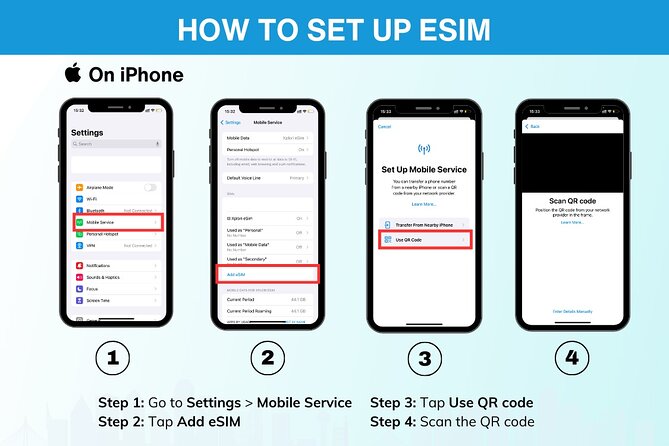
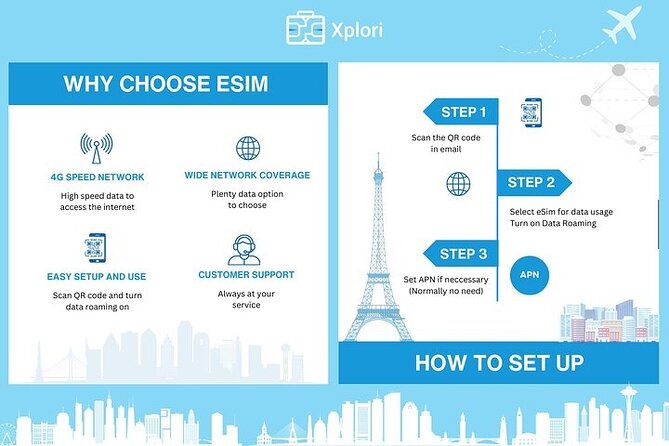
For an eSIM, the biggest make-or-break moment is provisioning. And the reviews give you realistic expectations.
In one case, provisioning took a few minutes, which made the reviewer nervous that it was not working. Support was responsive and helped update APN after that, and then it was flawless. In another case, the reviewer emailed the supplier, got a QR code right away, and found setup easy.
So what should you do to make this feel painless?
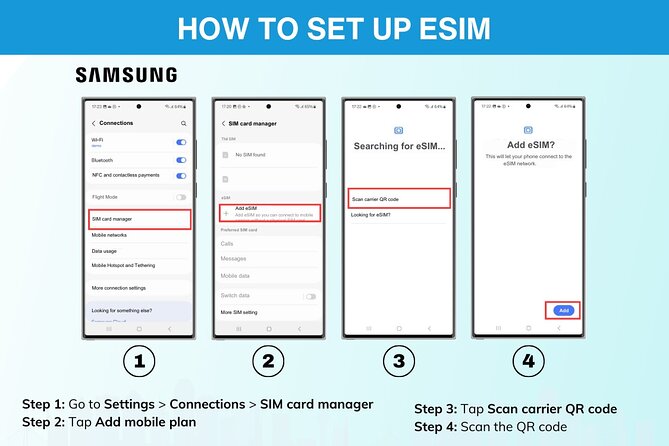
- Set it up before your travel day when possible, even if you do not turn data on right away.
- Expect that provisioning can take a few minutes, not instant magic.
- If it does not connect, email [email protected] and be ready to follow the APN guidance support provides.
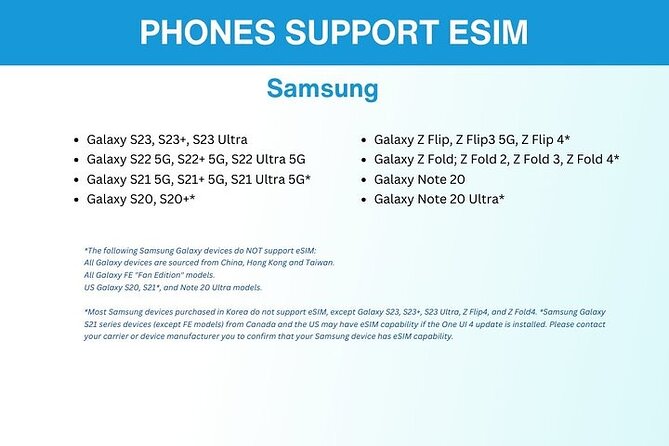
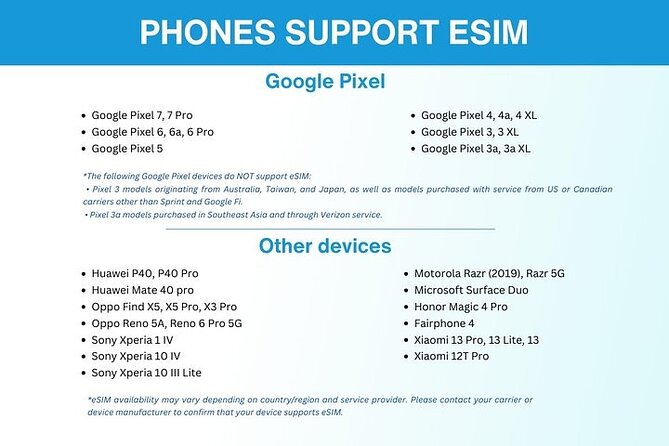
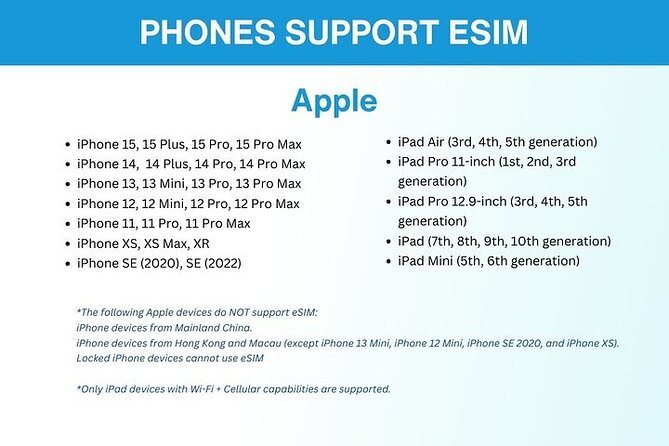
Also, double-check phone compatibility before you buy. The product explicitly says to double-check that your phone supports eSIM, and to ask if you are unsure. That is not a minor checklist item. If your phone cannot use an eSIM, none of the rest matters.
Finally, remember that this is not a physical pickup. There is no meet-up point, no staff waiting with a card, and no replacement SIM handed over at a kiosk. Your email delivery is the starting line.
Potential Drawbacks You Can Actually Plan Around
This eSIM is simple, but simplicity still has edges.
The first edge is the 3G fallback after your high-speed cap. If your trip is data-heavy, you might feel the downgrade. If your trip is more messaging, maps, and occasional posting, the 3G stage can be surprisingly usable based on the feedback.
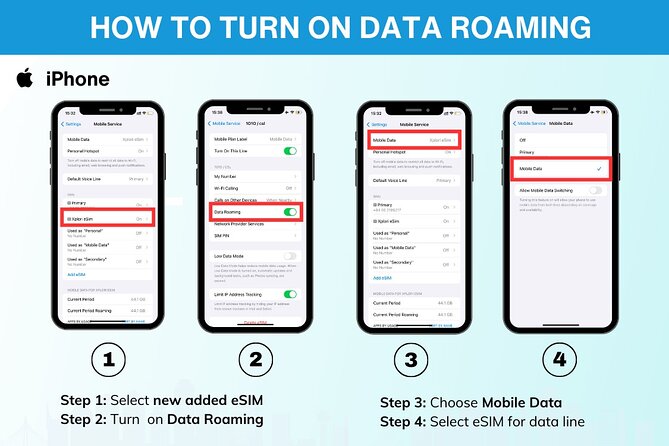
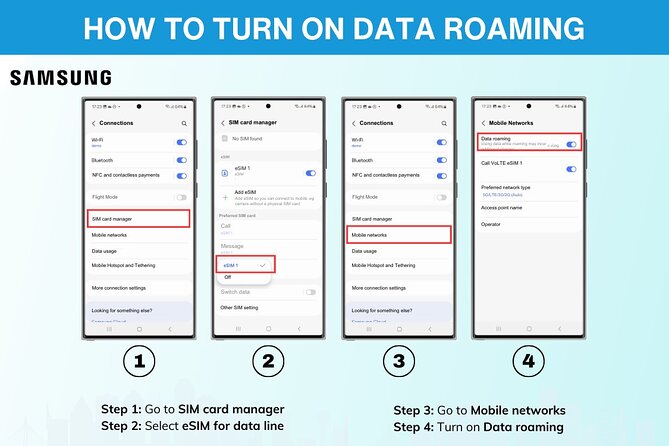
The second edge is early setup. Provisioning can take a few minutes, and if settings need adjustment, support may need to update your APN. That is not a dealbreaker, but it is a reason not to wait until you are starving for directions.
The third edge is the requirement for an eSIM-capable phone. That one is binary. If your device does not support eSIM, you cannot make the plan work just by wanting it badly.
Who This eSIM Suits Best (And Who Should Rethink It)
This is a strong fit if you want a low-effort way to stay connected while moving around. I especially like it for:
- First-time Europe trips where you do not want to learn SIM-buying in every country
- Short-to-medium trips where you want predictable data coverage
- Train-heavy itineraries where you need connection for navigation and messaging
- Travelers who can handle a speed drop after an included high-speed amount
It may be less ideal if you:
- Need nonstop high-bandwidth streaming for hours
- Arrive with no time to set up and you rely on activation at the last possible moment
- Have a phone that does not support eSIM
If you are a cautious planner, you will probably love the “arrive connected” feeling. If you are a “deal with it later” planner, you might feel the provisioning pressure.
Should You Book This eSIM Plan?
I would book this if your main goal is simple, affordable connectivity across Germany and multiple European countries, without an airport SIM quest. The value is strongest when you set it up early, understand the speed cap, and use the plan like a travel utility rather than a streaming subscription.
You should skip it or at least reconsider if you know you will need constant high-speed data for heavy video streaming, or if your phone does not support eSIM. For everyone else who wants 4G/5G when you need it and a workable 3G backup after your cap, this is a practical choice with solid real-world feedback behind it.
FAQ
Does this eSIM include mobile data for Germany and multiple European countries?
Yes. It is an eSIM for Germany and European countries, and it is marketed for use across many countries in Europe.
How much does it cost?
The price is listed as $4.75 per person.
How long can I buy it for?
It is available for durations from 3 to 30 days, depending on what you select.
Is it a physical SIM card?
No. It is a purely digital product delivered by email. There is no pickup or meetup.
How do I get the eSIM after booking?
You receive delivery by email. If you have questions or issues, you can contact Xplori at [email protected].
What phone do I need?
You need a phone that supports eSIM. The information provided asks you to double-check compatibility before purchase.
When does the data plan start?
It is based on calendar days, with each day running from 00:00 to 23:59 local destination time, and the listed start time is 12:00 am.
What happens after I use the included high-speed data?
After your high-speed data cap is used up, the speed switches to 3G.
Is there free cancellation?
Yes. You can cancel up to 24 hours in advance for a full refund.
Everything else we filed on Berlin
- East Berlin: City of Shadows Walking Tour
★ 5.0 · 11 reviews - Berlin: Die Stachelschweine – Frank Lüdecke – Träumt Weiter
★ 4.7 · 11 reviews - Potsdam Day Trip from Berlin with a Local: Private & Personalized
★ 4.0 · 11 reviews - An Introduction to Berlin Walking Tour
★ 5.0 · 11 reviews - DJ for a Day: Learn to Mix Like a Pro in Berlin
★ 5.0 · 11 reviews - 2-H Segway Sightseeing Tour Berlin
★ 4.5 · 11 reviews