
REVIEW · GERMANY
Explore Berlin: See All The Iconic Sights & Some Hidden Gems
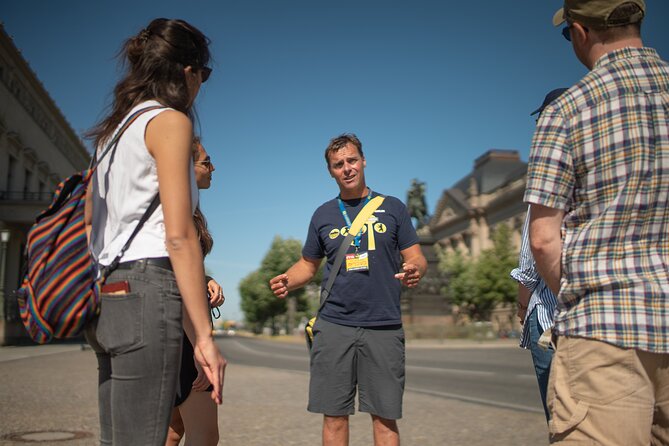
Berlin hits hard, and this walk makes sense of it. In just three hours, you move through the places that shaped modern Germany, from Nazi-era sites and Hitler’s bunker to the wall, checkpoints, and reconciliation symbols. It is a straight line through big turning points, explained clearly by a local guide.
I especially like how the tour connects the story, not just the sightseeing. You get two standout anchor moments, Checkpoint Charlie and the Memorial to the Murdered Jews of Europe, with Cold War detail and real emotional context. I also love the variety of architectural stops, from grand institutions like the Reichstag area to squares like Bebelplatz where history is literally marked.
The main drawback is simple: it is a lot of walking in a short time. Expect close to 3 miles, and some seniors will feel it, especially in colder weather.
In This Review
- Key highlights you will notice fast
- Why this Berlin “division story” tour works in 3 hours
- Price and what you really get for $24.07
- Meeting point, timing, and the walk that adds up
- The start near Friedrichstrasse and why the Cold War theme begins early
- Museum Island and the grand civic buildings: history you can look at
- Bebelplatz and the book burning memorial: small square, huge weight
- From Gendarmenmarkt to Checkpoint Charlie: the moment the border becomes a set piece
- Hitler’s bunker location and the Holocaust memorial: the hardest part, handled through context
- Brandenburg Gate, Pariser Platz, and the modern meaning of unity
- Optional paid entries you may want to plan before you book
- Who this tour is best for, and who should skip it
- Should you book this Berlin highlights and Cold War walk?
- FAQ
- What is the duration of the tour?
- Where do I meet the guide?
- Is the tour in English?
- Are tickets for the main sites included?
- How big is the group?
- Is the tour suitable for most people?
- Is there free cancellation?
Key highlights you will notice fast
- A guide-led timeline that moves from Third Reich to Cold War division without feeling like a lecture
- Brandenburg Gate to Checkpoint Charlie in one flow, so the division story lands quickly
- Wall remains and memorials in the same route, including a 200m Wall section at Topography of Terror
- Frequent easy stops that break up the walk, with guides like Hannah and Tina praised for steady pacing
- Optional museum add-ons so you can choose how deep to go, like Pergamonmuseum or the big Museum Island stops
- Hitler-related sites handled carefully, including the Fuhrerbunker location and context around the Holocaust memorial
Undecided? The closest Berlin write-ups we have are these.
- Berlin: Reichstag, Dome and Government District Guided Tour★ 4.7 · 18,288 reviews
- Berlin: 1-Hour City Tour by Boat with Guaranteed Seating★ 4.3 · 16,993 reviews
- Berlin: Boat Tour Along the River Spree★ 4.4 · 11,252 reviews
- Discover Berlin Half-Day Walking Tour★ 5.0 · 9,624 reviews
Why this Berlin “division story” tour works in 3 hours
Berlin is famous for icons, but it is also famous for what happened between those icons. This route gives you the through-line: how dictatorship, war, and state control became physical walls, checkpoints, and public memory. The walk is short enough to do on a first trip, but structured enough to help you understand what you are looking at.
You will start by meeting your local English-speaking guide in central Berlin, and then you get pulled into the city’s big story right away. The group stays moving, but the stops are frequent, so you get context at each location instead of waiting for the next big headline.
One thing I like from the guide quality in past groups is the way they handle questions. In reviews, guides like Joseph were praised for welcoming questions early, and that matters because Berlin history comes with lots of follow-ups. A good guide can also slow down at the heavy parts, something people specifically called out with Holocaust-focused explanation.
If you want Berlin without getting lost in museum schedules, this tour is a strong starting point. It also works well if you plan to return later for deeper visits, because you will know what to prioritize.
Price and what you really get for $24.07
At about $24.07 per person for a roughly three-hour guided walk, this is one of those deals where the value is in the time and the story. You are paying for a local guide to stitch together multiple eras, from WWII through the Cold War, in a single route.
A big part of the cost efficiency is that many stops along the way are admission-free, including major memorials and key streetscapes. The tour also gives you built-in options for paid entries at certain highlights, so you are not forced into extra costs everywhere.
The one thing to watch is that not everything is included. The itinerary includes the Berliner Dom and several Museum Island museums, plus another government building site, and those entries are marked as not included. So your final total depends on what you choose to add once you are there.
Meeting point, timing, and the walk that adds up
You will want to arrive about 15 minutes early, because the whole experience depends on the group staying together. The meeting point details include central Berlin and mention Friedrichstrasse train station as the place you meet your expert guide.
Once you are on the move, this feels like an organized stroll with frequent stops, not an all-day marathon. Still, the route covers enough ground that one review explicitly flagged it as about a 3-mile walk.
That is the practical trade-off. You get a lot of meaningful stops in a short time, but you do need decent walking shoes. If you are visiting in winter, you may want to dress for sudden wind and short outdoor waits during photo breaks.
Also, group size is capped at 25. That generally keeps the pacing manageable, though group flow depends on the specific guide and how the group connects at each stop.
The start near Friedrichstrasse and why the Cold War theme begins early
The tour kicks off in central Berlin around Friedrichstrasse station, a fitting start because this area sits close to the parts of Berlin that became symbolic during the Cold War. From the first minutes, you are guided toward the idea that borders were not abstract. They were procedures, buildings, and daily pressure.
One early stop is the Palace of Tears, also known as the Traenenpalast. This place is famous for its role as an international checkpoint, which makes it a powerful opener. You hear how controlled movement shaped emotions and family separations, long before you get to the better-known tank and guard imagery.
Then you continue toward Neue Wache, a national memorial site reflecting on war and tyranny. This matters because Berlin’s story is not just uniforms and politics. It is also how societies mourn, remember, and try to prevent repetition.
The result is a route that sets the emotional tone early. Instead of only pointing at monuments, you get the sense that each stop is part of a system, and that system had consequences.

Museum Island and the grand civic buildings: history you can look at
From there, you glide into a stretch where Berlin shows off its big civic face. You will see Humboldt University, with the note that Marx, Engels, and Einstein studied and taught there. That one stop helps you see how Germany’s intellectual life developed alongside its political extremes.
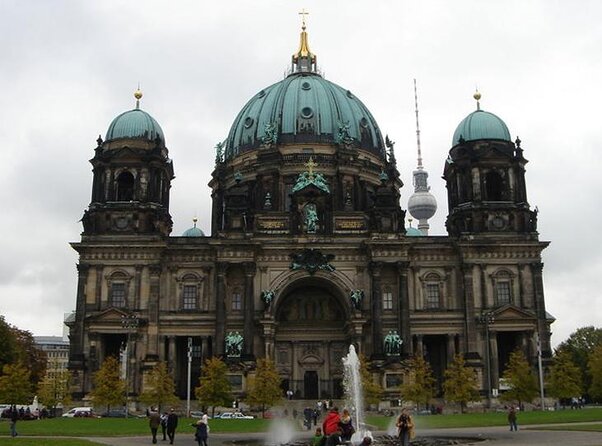
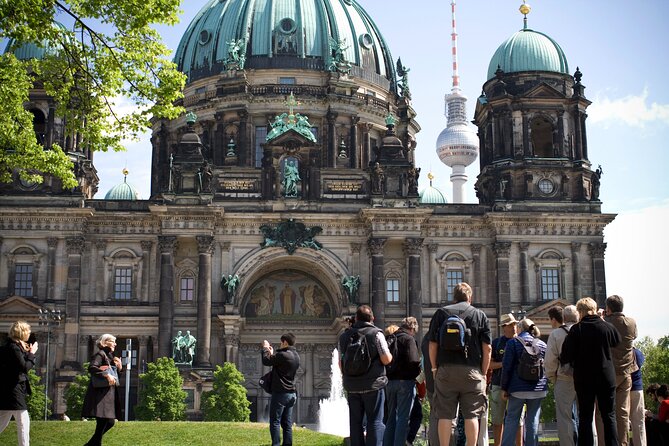
Next comes the cluster around major landmarks like Berliner Dom. This is the biggest church in Berlin, and the surroundings add context with Lustgarten and the City Palace area, plus the Humboldt Forum discussion nearby. The Berliner Dom entry is not included, so you will likely view it from outside or decide on your own whether to pay for an interior look.
From the itinerary, you also pass major museum names on Museum Island, including Pergamonmuseum, Neues Museum, and Altes Museum. These are not included, but it is useful to recognize what each place is known for. Pergamonmuseum is linked to major Islamic art and the Ishtar Gate and Market Gate of Miletus, while Neues Museum points to the Ancient Egyptian collection.
Even if you skip museum tickets during the walk, these stops help you plan. You can walk away knowing which museum focus you want to return for later, instead of guessing.
Bebelplatz and the book burning memorial: small square, huge weight
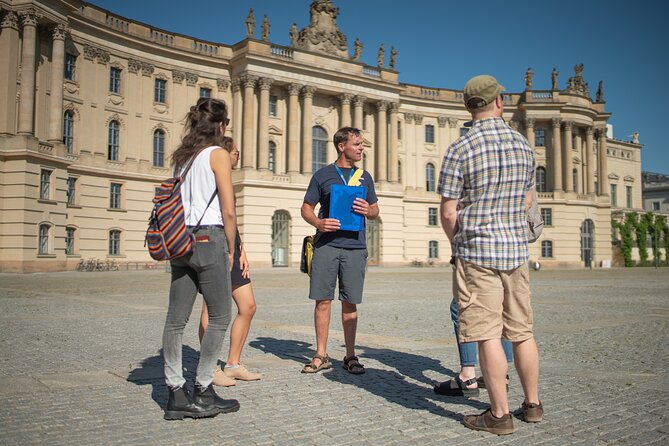
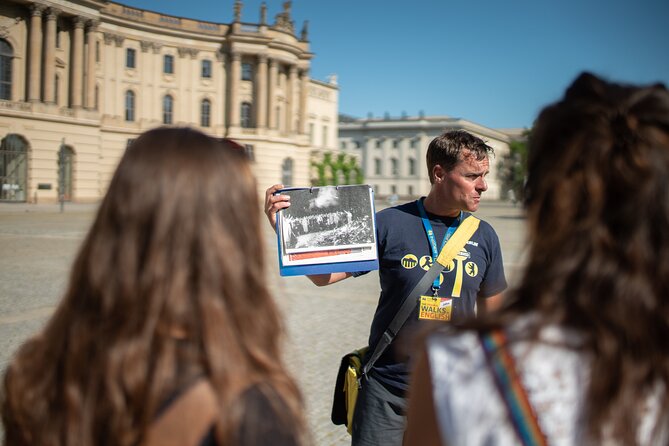
Bebelplatz is one of those spots where the scale feels wrong until you learn what happened there. The tour includes the book burning memorial at Bebelplatz, marking the location where Nazi book burnings took place in 1933.
This is one of the stops I think many visitors remember because it is tangible. It is not just a wall of information. It is a named location where state power tried to control ideas, and that makes the wider Berlin story click.
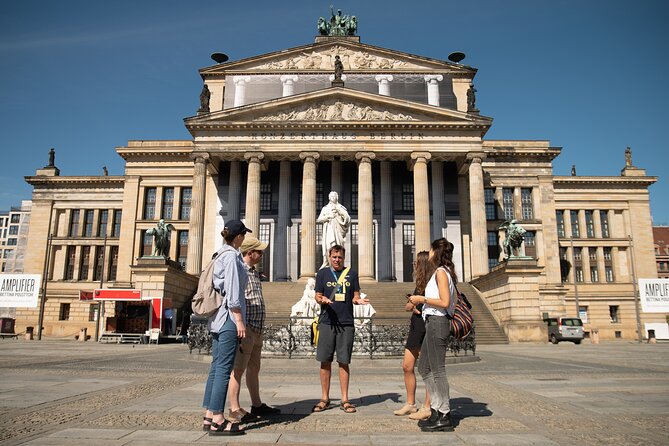
Right around this area, you also pass classic Berlin institutions like Staatsoper and Konzerthaus. Both are noted for impressive historical architecture, with Staatsoper built under Friedrich the Great in 1743, and the Konzerthaus completed in 1821. Those buildings provide contrast, reminding you that Berlin also had culture and spectacle, not only repression.
Then you move into Gendarmenmarkt, known for religious tolerance themes. The twin churches and the square layout are part of a Berlin identity built on competing faiths and public life.
From Gendarmenmarkt to Checkpoint Charlie: the moment the border becomes a set piece
The next phase of the walk is where Berlin’s division story turns visual. You reach Checkpoint Charlie, and you learn what made this crossing so famous between East and West Berlin.
Checkpoint Charlie is not just a logo. The tour explanation includes the 1961 tank stand-off between Soviet and American armed forces, which turns the site into a symbol of global tension played out in one city street.
Then you keep moving toward Topography of Terror. This includes a piece of the Berlin Wall, noted as around 200 meters. Seeing Wall remains in the open air, with the explanation attached, changes your perspective. Instead of thinking of the Wall as a single event, you start thinking about it as a system, built into everyday movement and surveillance.
This section of the walk is where Berlin stops being a set of postcards and becomes a lived reality. It can feel intense, but it is also one of the best ways to understand how quickly cities can change under pressure.
Hitler’s bunker location and the Holocaust memorial: the hardest part, handled through context
The tour reaches the Fuhrerbunker area, where you stand above the location where Hitler spent the last days of WWII. The point is not to romanticize or sensationalize. It is to locate history in space so you understand what the city went through at the end of the war.
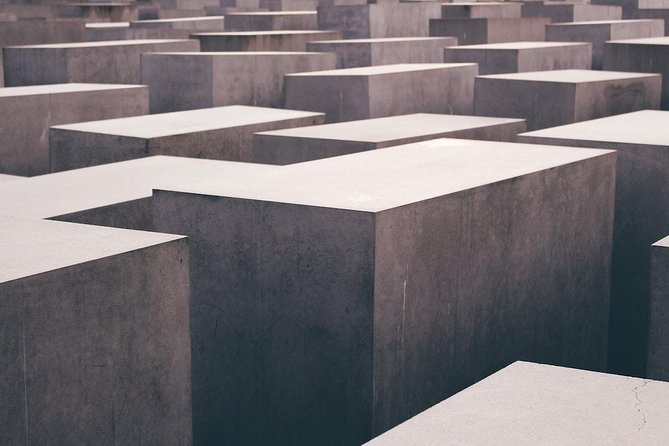
After that, you walk through the Holocaust Memorial, the Memorial to the Murdered Jews of Europe. This is a self-paced area, but the guide’s context matters because people often come in with questions about why it is shaped the way it is and what it is meant to hold.
One review specifically praised a guide named Grayson for delivering Holocaust explanation in a way that felt especially meaningful. That is the kind of delivery you want here: calm, clear, and respectful, with room for the moment to land.
If you are sensitive to heavy topics, plan your day so you are not rushing to a party right after this stop. This portion earns its weight, and a short walk can still hit you emotionally.
Brandenburg Gate, Pariser Platz, and the modern meaning of unity
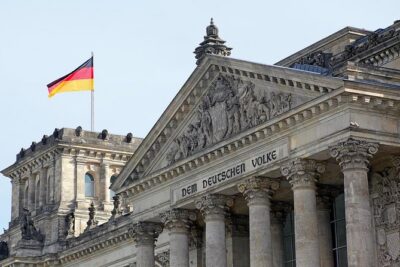
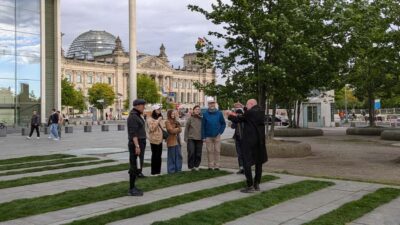
After the most difficult stops, the walk pulls you toward symbols of political change. You reach the government quarter and then the Reichstag parliament area experience includes the Reichstag building itself as a key moment.
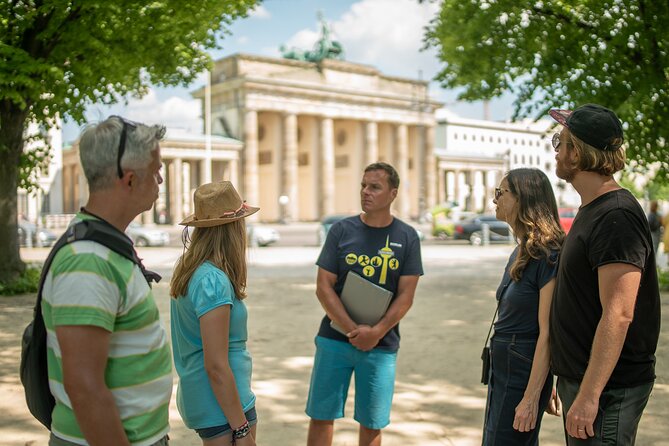
From there, you walk under the Brandenburg Gate, described as a national symbol of peace and unity now. The guide’s framing matters here because Brandenburg Gate was once tied to division between Berlin and Germany during the Cold War, even though it is one of Berlin’s most photographed landmarks.
Pariser Platz is another square area in the same orbit, with the American and French embassy locations and the Hotel Adlon visible from this vantage point. It is a good way to see how Berlin’s political centers are embedded in everyday tourism scenes.
This is where the tour ends, so you finish with momentum. You have seen the Wall story, the checkpoint story, and the memory story, and now you stand in the place that gets used as a symbol of unity and national identity.
Optional paid entries you may want to plan before you book
Not every museum is included, and the tour makes it clear that some key places are not included in your ticket price. In practical terms, you have two paths.
If you want a light day, you will likely focus on the free memorials and exterior views, then return to one or two museum sites later. If you want depth, you can pair this walk with a separate entry to Berliner Dom or one of the Museum Island museums listed on the route.
Here is what the itinerary indicates are not included:
- Berliner Dom
- Pergamonmuseum
- Neues Museum
- Altes Museum
- Aviation Ministry of Berlin, including the Hermann Göring air force ministry area and related government building references
If you are trying to manage costs, decide in advance what you most want to pay for. The walk gives you the map and the context, so your later ticket choices become easier.
Who this tour is best for, and who should skip it
This tour is ideal if you:
- are visiting Berlin for the first time and want a fast, coherent timeline from WWII through the Cold War
- care about how monuments, memorials, and checkpoints connect to real events
- want an English-speaking local guide to explain what you are seeing at each stop
It is less ideal if:
- you struggle with longer walking days, since the route adds up in a short time
- you want a slow, museum-heavy day with minimal outdoor time
- you prefer learning through a single building or exhibit instead of moving between multiple sites
If you have limited time, a short guided walk can beat a self-guided approach because you will not waste hours figuring out what to pay attention to.
Should you book this Berlin highlights and Cold War walk?
If you want a smart first-pass overview that connects the big icons to the hard history, I think you should book it. For the price, you get a compact route through Brandenburg Gate, Reichstag area context, Checkpoint Charlie, Wall remains, Hitler-related context, and the Holocaust memorial, all with a guide who can answer questions.
Just go in with the right expectations. This is not a quiet stroll with long cafe breaks. It is a moving timeline with outdoor stops, and the walking adds up. Wear good shoes, bring layers if the weather is cool, and treat the memorial sections as the emotional center of the day. You will leave Berlin with a much clearer sense of how the city’s divisions and reminders fit together.
FAQ
What is the duration of the tour?
The tour lasts about 3 hours.
Where do I meet the guide?
You meet your expert local guide outside Friedrichstrasse train station in central Berlin. The tour’s start location is also listed as Reichstagufer 17, 10117 Berlin, Germany.
Is the tour in English?
Yes, the tour is offered in English.
Are tickets for the main sites included?
Many stops are listed as free, but some are not included, including Berliner Dom, Pergamonmuseum, Neues Museum, Altes Museum, and Aviation Ministry of Berlin.
How big is the group?
The maximum group size is 25 travelers.
Is the tour suitable for most people?
It notes that most travelers can participate. It is still a walking tour, and one review mentioned the walk can feel long for seniors.
Is there free cancellation?
Yes, free cancellation is available. You can cancel up to 24 hours in advance for a full refund. If you cancel less than 24 hours before, the amount paid is not refunded.
Everything else we filed on Berlin
- East Berlin: City of Shadows Walking Tour
★ 5.0 · 11 reviews - Berlin: Die Stachelschweine – Frank Lüdecke – Träumt Weiter
★ 4.7 · 11 reviews - Potsdam Day Trip from Berlin with a Local: Private & Personalized
★ 4.0 · 11 reviews - An Introduction to Berlin Walking Tour
★ 5.0 · 11 reviews - DJ for a Day: Learn to Mix Like a Pro in Berlin
★ 5.0 · 11 reviews - 2-H Segway Sightseeing Tour Berlin
★ 4.5 · 11 reviews