
REVIEW · SCAVENGER HUNTS AND CITY GAMES
Ghosts of Munich: The Haunted Apprentice Exploration Game
Munich feels different when you solve spooky clues. This self-guided offline adventure game sends you past famous sights and tucks in haunting stories you answer with quick challenges. I especially like the flexible pacing, so you can pause for photos, snacks, or a breather without falling behind anyone.
One thing to consider: some of the stops are tied to churches or viewpoints where extra entry tickets are not included, so you may want a few euros ready.
In This Review
- Key points to know before you play
- A haunted puzzle run through Munich’s best-known corners
- Price and time: $7.21 that feels like more than a gimmick
- Self-guided means you control the crowds
- Route overview: your haunted walk from Odeonsplatz to Rindermarkt
- Stop 1: Odeonsplatz, where a political clash turns ominous
- Stop 2: Hofgarten, roses in daylight and secrets in shade
- Stop 3: Theatinerkirche St. Kajetan, Baroque contrast you can see with your eyes
- Stop 4: Sitzender Keiler, the sitting boar with a luck legend
- Stop 5: Frauenkirche and the devil’s footprint at the entrance
- Stop 6: Marienplatz, where the city’s meetings always left a mark
- Stop 7: St. Peter’s Church, 299 steps for a view and a mix of styles
- Stop 8: New Town Hall (Neues Rathaus), Glockenspiel stories and the final clue
- What you should know about tickets and timing inside churches
- Family and groups: why this works for teamwork
- Technology in the real world: mobile ticket, offline play, and what to do if it fails
- Should you play Ghosts of Munich?
- FAQ
- FAQ
- How long does the Ghosts of Munich game take?
- Can I start at any time and pause during the experience?
- Does it work offline?
- Is there a physical tour guide with you?
- Is the experience in English?
- Are entry tickets included for all stops?
- What if I need a refund?
Key points to know before you play
- Offline access means you can avoid phone data costs while you wander.
- Start and pause anytime so the game fits your day, not the other way around.
- English audio stories guide you through the route.
- Private, self-guided format helps you dodge tour-group crowds.
- Mixed inclusion: some major interiors and viewpoints need separate tickets.
- Family-friendly teamwork works well, especially if you like solving clues together.
More puzzles to walk a city with
- Ghosts of Munich: The Haunted Apprentice Exploration Game★ 4.0 · 19 reviews
A haunted puzzle run through Munich’s best-known corners
This is not a guided lecture. It’s a roaming game where the city becomes the script. You walk a compact, central route, hear English audio stories, and answer prompts tied to what you see around you.
The big win for me is the offbeat tone. You get classic Munich landmarks, but you also get reasons to look closely: unusual details at facades, symbols at entrances, and small legends you would normally speed past. Instead of treating the day like a checklist, you treat it like a mystery.
And since it’s self-guided, you’re not stuck with one pace. If you want to linger at a square or speed through a church exterior, you can. If your group has different interests, the structure still keeps everyone moving.
Price and time: $7.21 that feels like more than a gimmick
At $7.21 per person, this is the kind of activity that can fit almost any Munich budget. You are not paying for a museum ticket or a private driver. You are paying for a structured way to explore, with audio storytelling and challenges that push you to slow down.
Timing matters here. The game is roughly 1 to 2 hours, which is a sweet spot when you want something fun without eating your whole day. It also helps if you’re juggling kids, jet lag, or a day packed with timed entries, because you can slot this in between other plans.
Booking tends to happen in advance, with an average of about 12 days. If you like to plan tightly, book earlier. If your schedule is flexible, you’ll still be fine since the experience is usable without needing a strict meeting time later.
Self-guided means you control the crowds
Munich is busy, especially around top sights like Marienplatz and the large churches. What makes this game practical is that you can play it privately as your group. That means no waiting for a leader, no herding, and no feeling like you have to keep up.
You also get real flexibility:
- You can start at any hour.
- You can pause when you want.
- You can resume later without rescheduling.
That freedom is great for real travel days. Maybe you need a quick coffee stop. Maybe you want to take a longer photo break. The game keeps its rhythm without punishing you for being human.
Route overview: your haunted walk from Odeonsplatz to Rindermarkt

The game runs through a set sequence across central Munich. You begin at Odeonsplatz and finish at Rindermarkt 17. Expect short stops, each designed to be handled in a quick chunk, then linked to the next.
Here’s how the route feels in practice, stop by stop.
More routes you can walk on your own

Stop 1: Odeonsplatz, where a political clash turns ominous
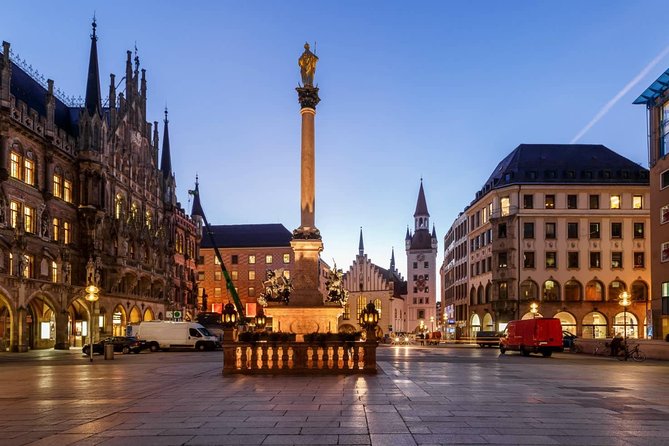
You start at Odeonsplatz, a central square created in the early 19th century by Leo von Klenze with an Italian-like style. The story angle here is the kind that makes you look twice at a place that otherwise feels like a pretty arrival point.
The game points you toward a tense moment in 1921, when authorities were prepared with machine guns and a controversial leader of a small band tried to seize control of Bavaria. Some people were killed, and the leader later became a major source of tragedy in Europe.
Why this stop works: it sets the tone fast, and it gives you a reason to notice the square’s dramatic presence instead of walking through it on autopilot.
Potential snag: you’re dealing with a public square. If it’s crowded, you might need a moment to stand where you can read and play comfortably.
Stop 2: Hofgarten, roses in daylight and secrets in shade
Next is the Hofgarten, a historic green space on the edge of Munich’s old town. It was designed in the 17th century by Elector Maximilian I, with inspiration from an Italian Renaissance garden.
The game blends atmosphere and history by reminding you that this was once reserved for high-class personalities like dukes or electors. Now it’s for everyone, but the story asks whether calm settings always stay calm.
Why this stop works: it’s a reset. The outdoor setting gives you breathing room in the middle of the adventure.
What to watch for: it’s an easy place to get comfortable and slow down. That’s not a problem, but keep in mind the game is structured as a sequence, so if you wander too far from the likely clue area, you may lose your thread.
Stop 3: Theatinerkirche St. Kajetan, Baroque contrast you can see with your eyes
Now you head to the Theatinerkirche St. Kajetan. This Catholic church was built in the mid 17th century by Elector Ferdinand Maria and his wife Henriette Adelaide, as a tribute tied to the birth of the long-awaited heir to the Bavarian throne.
The best clue in this area is visual contrast: the white, ornate interior versus the yellow facade, which is tied to Munich identity and influenced German Baroque architecture. The game nudges you not to treat it as a pretty exterior stop only.
Drawback to know: the church admission is not included, so you may want to plan for a paid entry if the interior is part of your challenge path.
Stop 4: Sitzender Keiler, the sitting boar with a luck legend
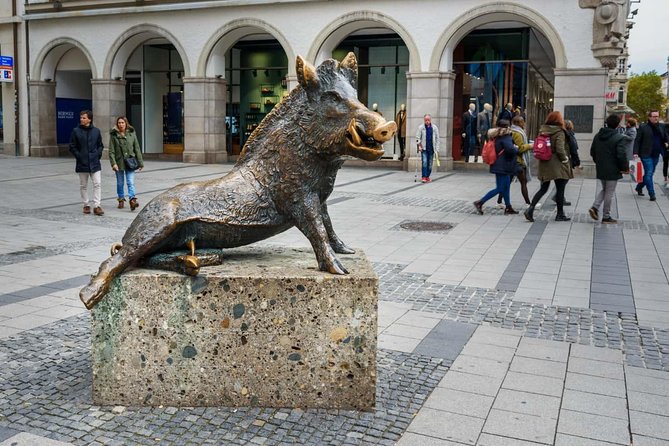
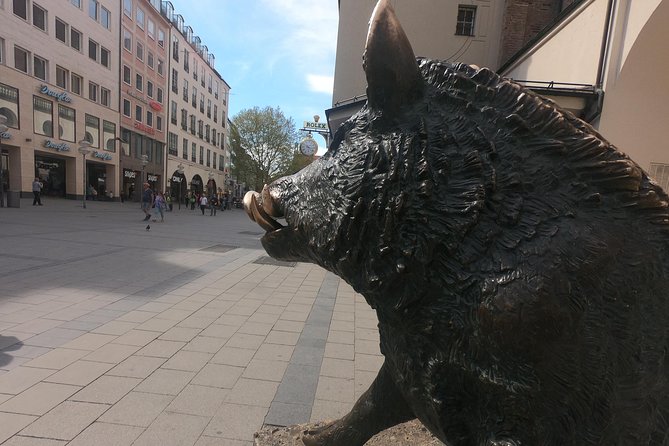
This one is quirky on purpose: Sitzender Keiler, the Sitting Boar. The statue shows a pig perched like it’s watching something in the distance, with its hind legs resting on the ground.
The game links the statue to the Hunting and Fishing Museum entrance and gives you the classic local ritual: rub its nose for luck to help you solve the boar’s mystery.
Why this stop works: it’s playful. After churches and legends, a symbol you can touch and interpret makes the experience feel hands-on.
Practical note: you still want to be respectful near museum entrances. Quick, light interaction is best.
Stop 5: Frauenkirche and the devil’s footprint at the entrance
Now you arrive at Frauenkirche, with its two twin towers around 100 meters tall. It’s one of Munich’s most recognizable landmarks, and the game steers you toward its interior glory too, including intricate vaulted ceilings and long stained glass windows.
But the challenge is attached to a legend: at the church entrance there’s said to be the Devil’s footprint. The story goes that the builder bet the Devil that the church would have no windows, and when the Devil realized he’d been tricked, the footprint was left behind. Your job is to solve the challenge and connect the legend to what you find.
Drawback to know: interior access and related costs are not included, so if your game path expects you inside, budget for tickets.
Stop 6: Marienplatz, where the city’s meetings always left a mark
The route continues to Munich Marienplatz, the central square that acts like the city’s living room. It’s where you’ll see big moments, from Christmas markets to celebrations tied to the city and major sports wins.
Historically, Marienplatz has been central since Munich was founded in the 12th century by Henry the Lion. It was the meeting point of important streets, and tournaments and events took place here.
The game asks you a question and sends you forward once you answer.
Why this stop works: it anchors the whole adventure in real civic space. Even if you’re not a history person, the square gives context fast.
Practical note: Marienplatz is often crowded. Build in a minute to step aside and focus on your screen and audio.
Stop 7: St. Peter’s Church, 299 steps for a view and a mix of styles
Next is St. Peter’s Church, Munich’s oldest Catholic church, shaped by centuries of reconstruction after fires and wars. You can see a blend of architectural styles, including Gothic, Baroque, and Rococo.
The game’s pull is the climb. You get a bird’s eye viewpoint by going up 299 steps to the tower.
Why this stop works: the combination of architecture variety plus a physical climb makes this one memorable, and the payoff is a better sense of central Munich.
Drawback: entry for the viewpoint is not included, so plan for that cost if you want the full experience.
Stop 8: New Town Hall (Neues Rathaus), Glockenspiel stories and the final clue
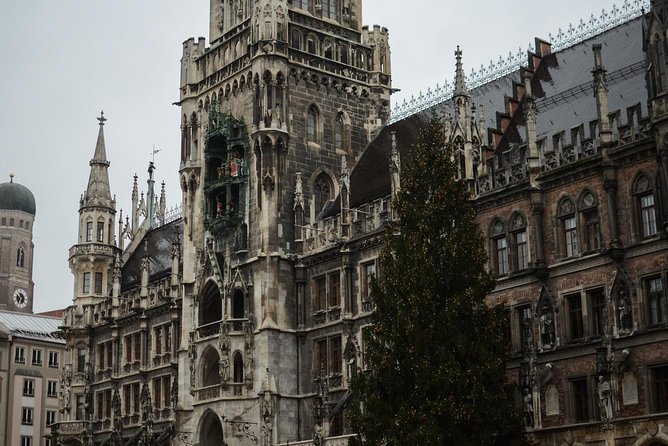
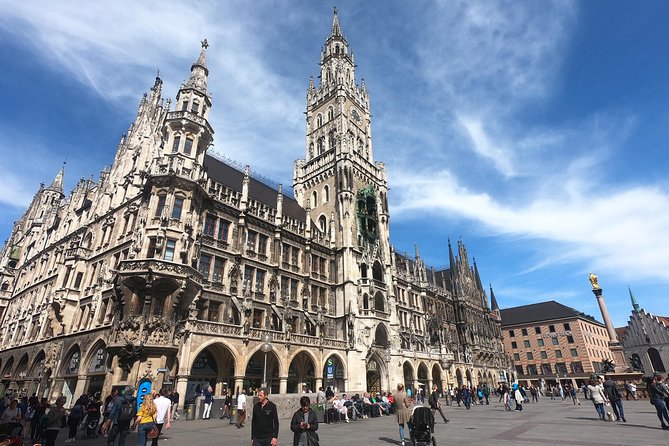
Your final destination is Neues Rathaus or New Town Hall. It’s tied to city council life, and it’s also known for the FC Bayern balcony moment when championships are celebrated.
The game places extra attention on the tower Glockenspiel, which performs and tells stories. One tale in the mix involves a terrible plague epidemic. The story says barrel makers were the first to risk returning to the streets, dancing for people gripped by fear.
In the final stretch, you handle a last challenge and walk yourself to the ending point near Rindermarkt 17.
Potential snag: the New Town Hall experience is not included, so any paid access linked to the game will cost extra.
What you should know about tickets and timing inside churches
A key practical point: some of the most famous stops are marked as not included. That means the outdoor square parts may be free-flow, while certain interiors or viewpoints you are guided toward will require separate tickets.
So how do you handle this smoothly?
- If you want the full story, bring a small buffer for entry fees.
- If you’d rather keep costs down, be strategic about which churches or tower climbs you treat as must-do.
This is one reason I like the structure. Even if you skip an interior ticket, you can still get the city walk value. But for maximum satisfaction, plan for at least one paid sight.
Family and groups: why this works for teamwork
The best reviews for this type of activity tend to share one theme: it gets people looking and talking, not just staring at landmarks.
This game is built for team participation because the challenges require observation and discussion. You might spot something, trade ideas, and move on together. It’s especially good for groups where one person wants photos, another wants stories, and another wants the next “clue” moment.
For a family setup, it also has an advantage: you can keep everyone moving without a strict tour-group tempo. Start when you’re ready, pause when you need a break, resume when the energy returns.
If your group is large, the system supports it by allowing multiple bookings when group size goes above 15 people. You also get a group discount option, which can help if you’re splitting among friends.
Technology in the real world: mobile ticket, offline play, and what to do if it fails
You’ll use a mobile ticket and play through the English audio stories. The standout travel benefit is that the game can be accessed offline, which is a smart way to avoid phone data charges while wandering.
Still, any app-based travel product can face bumps. In one low-rated case, the experience didn’t work for the purchaser. The provider’s guidance in that situation was simple: email [email protected] so they can help you get it sorted.
My practical advice: before you leave your hotel, check that you can access your mobile ticket and that the app/game runs on your device. Offline does not mean “never needs setup.”
Should you play Ghosts of Munich?
Book it if:
- You want a fun, self-paced way to explore central Munich.
- You like using landmarks as clues, not just background scenery.
- You value offline access, and you want to avoid data costs.
- Your group enjoys light problem-solving, especially families and mixed-age groups.
Skip it if:
- You only want free, walk-up sightseeing and dislike paying separate ticket costs at churches or viewpoints.
- You hate tech-based experiences and prefer a live guide for every step.
- Your schedule is so tight that you can’t fit the 1 to 2 hour wandering block.
FAQ
FAQ
How long does the Ghosts of Munich game take?
It takes about 1 to 2 hours.
Can I start at any time and pause during the experience?
Yes. You can start at any hour, and you can pause and resume later without rescheduling.
Does it work offline?
Yes. The game can be accessed offline, which helps you avoid expensive phone data charges.
Is there a physical tour guide with you?
No. It is a private self-guided experience, with no physical tour guide.
Is the experience in English?
Yes. The English version includes audio stories.
Are entry tickets included for all stops?
Not for every stop. Some sights are listed as not included, meaning you may need extra tickets for certain churches or viewpoints.
What if I need a refund?
You can cancel for a full refund with free cancellation, as long as you cancel at least 24 hours before the experience start time.
Unguided Around Munich
Play the City, Reviewed
Everything else we filed on Munich
- Munich Beer and Bavarian Bites Private Tour
★ 5.0 · 11 reviews - Private Day Trip from Munich to Neuschwanstein and Linderhof
★ 4.0 · 11 reviews - Private Munich Old Town Walking Tour – with optional Breakfast
★ 5.0 · 11 reviews - Festive Concert in the All-Saints Court Church
★ 4.6 · 11 reviews - Private Castle Tour from Munich: Neuschwanstein, Hohenschwangau, and Linderhof
★ 4.5 · 12 reviews - Munich: Oktoberfest Big Beer Tent Evening including table reservation
★ 4.8 · 12 reviews
Scavenger Hunts and City Games, side by side.
 ★ 4.5Hamburg: Scavenger Hunt Self-Guided Tour for ChildrenFrom $47319 reviews
 ★ 4.5Dresden: Old Town Self-Guided Scavenger Hunt TourFrom $41151 reviews
 ★ 4.6Berlin: Self-Guided Family and School Class Scavenger HuntFrom $47128 reviews
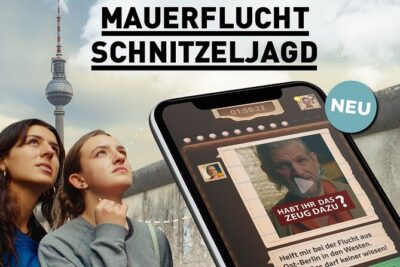 ★ 4.5Escaping and spying on the Berlin Wall Scavenger huntFrom $22128 reviews
 ★ 4.6Düsseldorf: Scavenger Hunt Self-Guided TourFrom $47127 reviews
 ★ 4.6Dresden: Old Town Scavenger Hunt for ChildrenFrom $41117 reviews
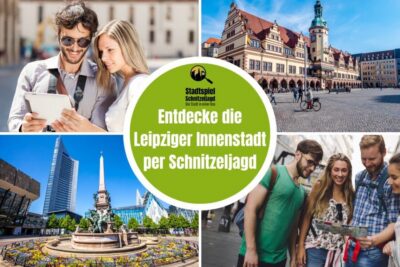 ★ 4.4Leipzig City Centre: Scavenger Hunt Self-Guided TourFrom $47114 reviews
 ★ 4.2Leipzig’s Mystery Morning: Breakfast & Escape GameFrom $61108 reviews
Other lists this tour is on