
REVIEW · AUDIO TOURS
800 Years of History: A Munich GPS Audio Tour
Munich’s history plays on your phone. This self-paced GPS audio tour takes you past the city’s biggest landmarks with narration timed to your location, covering 800 years in about an hour on foot. Two things I really like: offline maps and audio so you are not stuck hunting for signal, and the ability to pause and restart whenever you want to shop, snack, or just slow down. One drawback to consider is that a few people found the navigation harder during busy squares or if short-term construction changes the feel of the route.
If you want a low-stress way to get oriented fast, this is a smart pick. It starts at Marienplatz, runs in English, and is labeled as private, limited to just your group. The route is compact, but it still covers a lot of famous stops, so go in ready to walk.
In This Review
- Key highlights worth your attention
- How this GPS audio tour works (and what to expect)
- Starting at Marienplatz: the easiest first step in Munich
- The full route, stop by stop (what each segment feels like)
- 1) Marienplatz to St. Peters Church
- 2) St. Peters Church area to Viktualienmarkt
- 3) Viktualienmarkt to Honighäusl
- 4) Honighäusl to Hofbräuhaus
- 5) Brief stop at Alter Hof
- 6) Alter Hof to Max Joseph Platz
- 7) Max Joseph Platz to Residenz
- 8) Residenz to Feldherrnhalle
- 9) Feldherrnhalle to Theatine Church
- 10) Theatine Church to Palais Holnstein
- 11) Palais Holnstein to Frauenkirche
- 12) Frauenkirche to Frauenplatz, and back to Marienplatz
- What the 800 years of history narration feels like
- Price and value: $9.99 for a repeatable city walk
- Navigation tips that prevent the most common headaches
- Who this is best for (and who should skip it)
- Should you book this Munich GPS audio tour?
- FAQ
- How long is the Munich GPS audio tour?
- Where does the tour start and where does it end?
- What language is the audio available in?
- Can I pause and restart during the tour?
- Does it work offline?
- What do I need to bring?
- Is this tour private?
- What is included with the purchase?
- When can I do the tour?
- Is there free cancellation?
Key highlights worth your attention
- Offline access for audio, maps, and geodata, so you can keep going without data
- Live GPS guidance with a map on your screen to help you stay on track
- Stop-and-start flexibility with lifetime access to replay it later
- Marienplatz to Frauenkirche area finale, a classic Munich sweep through the old center
- Clear, engaging English narration, with many people praising how easy it is to follow
- Private-by-group format, so you do your thing at your own pace
More history walks in Munich
- Munich: Guided Tour of the historic Town Hall on Marienplatz★ 4.8 · 63 reviews
- Munich Craft Beer & Cultural Tour With Snack★ 5.0 · 46 reviews
- Munich and Nazi History Combination Day Tour Small Group★ 5.0 · 31 reviews
- Munich: Nazi History 2-Hour Small Group Walking Tour★ 5.0 · 30 reviews
How this GPS audio tour works (and what to expect)
This is a self-guided walking experience delivered through the VoiceMap audio system. You download it to your smartphone, then hit play when you are ready. The narration follows along with you as you move, with your position used to trigger each chapter. You get a real-time map, and that matters because you are crossing major squares and changing streets often enough that it is easy to get turned around without guidance.
The tour length is listed as roughly 1 hour 10 minutes to 1 hour 30 minutes. That range is practical: you can speed up to “just cover the route,” or you can linger. The tour description explicitly supports pausing as needed, and several people liked that it makes time for a beer or quick bites in the middle of the walk.
One note for smooth sailing: you should use the VoiceMap app setup that uses GPS guidance, not a non-GPS experience mode. A few comments complained about a format where you had to advance manually many times. In practice, GPS-triggered audio is what keeps the tour feeling effortless.
Starting at Marienplatz: the easiest first step in Munich
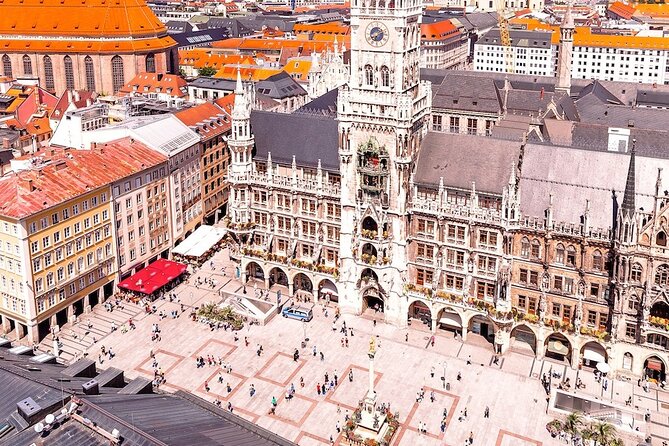
The tour begins at Marienplatz, and it ends back at the same meeting point. That loop is useful. You are not committing to a long one-way walk that leaves you stranded miles from transit. You can also do this as your first big sightseeing session, then build your next days around what you liked.
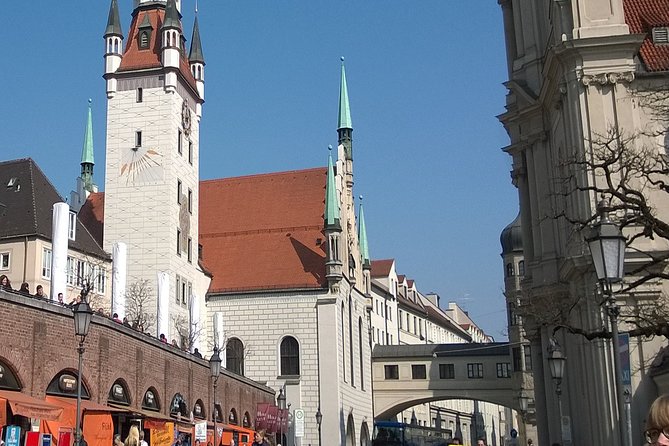
Marienplatz is the kind of place where Munich feels instantly recognizable. In the audio flow, it works as a natural starting “chapter one,” because you are in the center of the action from step zero. From there, the route quickly moves you into church landmarks, the market area, and the historic core.
Tip for your first attempt: take one minute to check that your headset volume is comfortable before you start. With GPS audio, you want to hear details clearly the moment the story begins, especially in the early stops where people tend to be learning the rhythm of the guide.
The full route, stop by stop (what each segment feels like)
The itinerary is structured as a sequence of “pass by” points, plus a couple of brief stops. That matters because you will not spend equal time at every landmark. Think of it as a walking playlist, with some tracks being a quick look, and others asking you to slow down and listen longer.
1) Marienplatz to St. Peters Church
You start at Marienplatz and then move toward St. Peters Church. This opening segment sets the tone: it is classic Munich center, with historic landmarks clustered close enough that the audio stays tightly connected to what you see. If you like learning while moving, this early portion is a good warm-up.
What to watch for: keep an eye on the on-screen map so you do not drift in crowded streets. A couple of people flagged that large squares can create confusion if you are not reading your direction cues carefully.
More routes you can walk on your own

2) St. Peters Church area to Viktualienmarkt
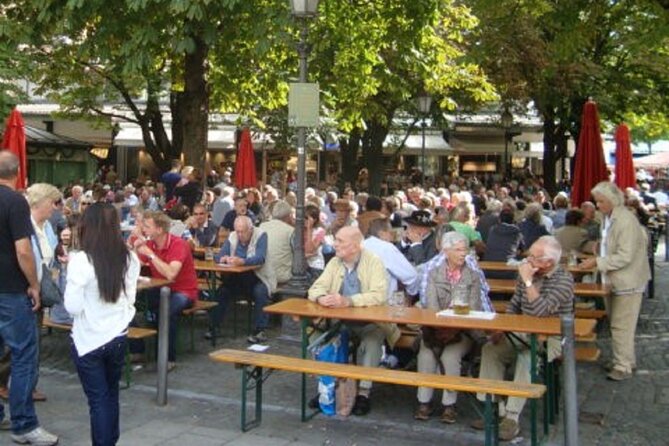
Next you pass through Viktualienmarkt. This is where the tour shifts from “landmark viewing” to “Munich daily life energy.” You can see market stalls and the kind of foot traffic that makes the old center feel alive.
Practical upside: the tour format lets you pause. If you want to grab something quickly, this is the type of stop where it works well. One strong theme from feedback is that being able to pause for shopping or eating keeps the experience from feeling rushed.
3) Viktualienmarkt to Honighäusl
From the market area you go by Honighäusl. Even if you are just listening and walking through, this section gives your feet a break while you take in the surroundings. It is also the kind of stop that can be a natural “reset point” in your mental map of where you are.
4) Honighäusl to Hofbräuhaus
The route then passes by Hofbräuhaus. This is another major landmark on the central streets, and in a walking tour like this it helps anchor the narration. The audio keeps you connected to the story rather than treating it as random sightseeing.
If you tend to stop for photos, this portion can fill quickly. Just remember, the best use of this kind of tour is not to freeze at every viewpoint, but to walk and listen, then pause strategically.
5) Brief stop at Alter Hof
The tour includes a brief stop in Alter Hof. A short “pause point” can be especially helpful because it gives your brain room to connect what you are hearing to where you are standing. You get that momentary emphasis without losing momentum.
6) Alter Hof to Max Joseph Platz
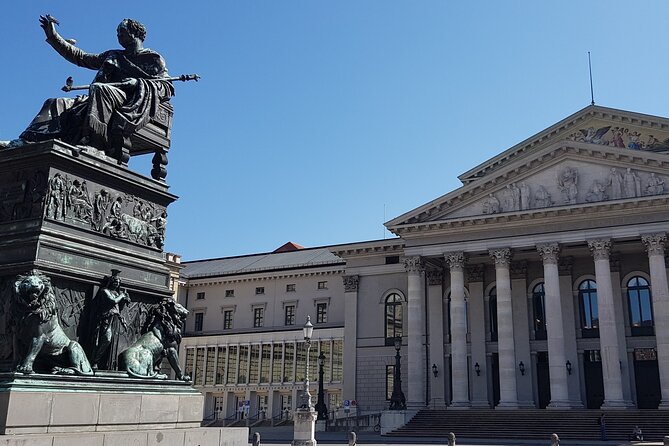
Then you pass through Max Joseph Platz. This segment is a transition from the densest historic-center streets toward broader open space. It tends to feel like your walking rhythm shifts slightly, which is exactly when GPS audio helps, because the route is still guided even as the environment changes.
7) Max Joseph Platz to Residenz
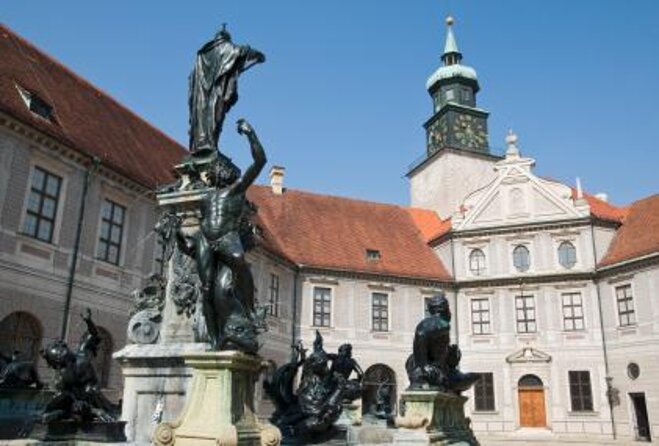
After that, you pass through Residenz. This is one of the core “big name” stops on the route list. In a story-driven audio walk, these major sites often carry more context, because they are high-value listening points.
A practical approach: slow down a bit at the edge of the area so you do not miss the start of a new section. GPS audio is helpful, but if you walk too fast, you can cut off the beginning of the narration.
8) Residenz to Feldherrnhalle
You then pass by Feldherrnhalle. This is another ceremonial-style anchor stop, the kind of location that makes the “800 years of history” promise feel real. Even without lingering forever, it helps your brain tie together the centuries being referenced in the narration.
9) Feldherrnhalle to Theatine Church
Next is Theatine Church. This is one of the stops people specifically got excited about in feedback, including a small “look for it” moment tied to artwork. Here is a tip you can use: listen for the reference to a pretzel in a church fresco. Then actually look up and scan the detail the guide points to. It turns a normal church stop into a memorable “wait, I see it” moment.
10) Theatine Church to Palais Holnstein
You pass by Palais Holnstein after that. This segment keeps you moving through the refined parts of central Munich, so the narration likely has a different flavor than the market and square chapters. The benefit of a GPS audio structure is that it keeps your attention from wandering, even when you are walking through longer stretches.
11) Palais Holnstein to Frauenkirche
Then you pass by Frauenkirche. The tour list ends with a strong finish in the Frauenkirche area. If you are doing this earlier in your trip, this stop helps you understand why Munich’s old center keeps drawing people back.
12) Frauenkirche to Frauenplatz, and back to Marienplatz
Finally, you pass through Frauenplatz. The tour ends back at Marienplatz, giving you a clean full loop through the same central district you started in.
What the 800 years of history narration feels like
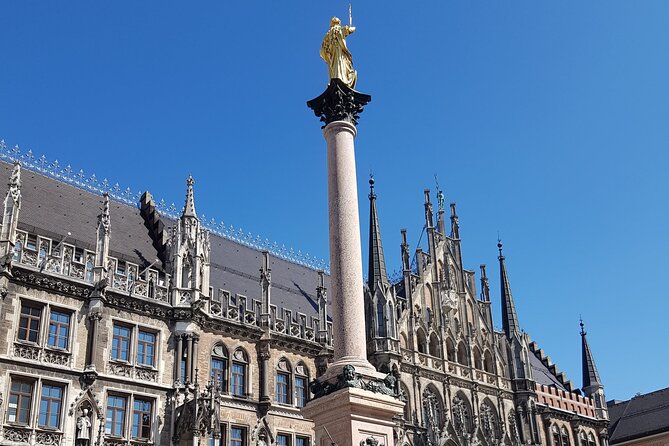
The tour’s core pitch is simple: you learn Munich through its storied landmarks, moving across centuries while you walk. The experience is built around stop-by-stop chapters, not a long lecture with no breaks. That format is what makes it work for different travel styles.
From the feedback, the narration is often praised for being clear and engaging, with people noting it is an easy way to learn when time is limited. I agree with the logic here: if you are doing only a short walk one day, a GPS audio route gives you the “headlines” without waiting for a meeting time.
Two listening habits that can make a big difference:
- Use the pause button when you want to absorb details, not just when you want a snack.
- If you want the best story flow, try not to jump around. Finish the sequence in order, even if you are tempted to shortcut.
One other practical consideration from a less enthusiastic comment: if a guide’s accent or the pacing does not click for you, it can make the experience feel boring. This is one of the risks with all voice tours. If you know you struggle with certain accents, bring headphones you trust and start at a time when you are not distracted.
Price and value: $9.99 for a repeatable city walk
At $9.99 per person, this is priced like an affordable “orientation add-on,” not a premium private guide. The value comes from three things that are clearly stated:
- Lifetime access, meaning you can redo it on a quieter day.
- Offline access to audio, maps, and geodata, which makes it usable even if your plans change.
- The 1 hour 10 minutes to 1 hour 30 minutes time window, which fits neatly into a first evening, a free afternoon, or any day where you want something structured but not rigid.
A good way to think about it: you are buying a guided walk without the scheduling hassle. If you like flexibility and self-direction, this kind of product often feels like a bargain. If you prefer a fully guided human guide with Q and A, you might not get the interactive part you want, because this is audio-led.
Navigation tips that prevent the most common headaches
Here are the practical details that matter most for success:
- Bring headphones if you can. The tour data says headphones and a smartphone are not included.
- Download before you start so you can rely on offline audio, maps, and geodata.
- Use the map on your screen. One response mentioned it can be especially helpful when short-term construction makes the route feel different. That is exactly when GPS visual guidance saves time and patience.
- If directions ever feel confusing, pause and regroup using the on-screen map rather than pushing forward blindly.
One more tip based on feedback: do not assume you can just start anywhere and have it “work like magic.” You start at Marienplatz, and the GPS triggers are built around the route. Starting at the correct point keeps the tour feeling smooth.
Who this is best for (and who should skip it)
This tour fits best if you want:
- A self-paced walk through central Munich without committing to a fixed group schedule
- English narration while you move between major landmarks
- A route that includes both historic sites and market life, so it feels like Munich, not just museum stops
- A format you can replay thanks to lifetime access
Skip it or think twice if:
- You strongly need back-and-forth conversation with a live guide
- You know you get frustrated with voice-led instructions or with GPS-based navigation in busy squares
- You are trying to do it while severely rushed. It is short, but it still asks you to walk.
Best “fit moments” in your trip: a first evening when you want orientation, or a “light structure” afternoon when you want to wander while learning.
Should you book this Munich GPS audio tour?
I would book it if you want an easy, flexible Munich walk with offline audio support, a clear route through the historic center, and a price that does not require a big budget. The strongest reasons to choose it are the stop-and-start control, the lifetime access, and the fact that the audio seems to be built to be user-friendly.
I would hesitate if navigation and voice clarity are big dealbreakers for you, or if you dislike self-guided formats where you cannot ask questions. In that case, you may prefer a live guided tour where someone can adjust on the spot.
FAQ
How long is the Munich GPS audio tour?
It is listed as about 1 hour 10 minutes to 1 hour 30 minutes.
Where does the tour start and where does it end?
The tour starts at Marienplatz, 80331 München-Altstadt-Lehel, Germany, and ends back at the meeting point.
What language is the audio available in?
The tour is offered in English.
Can I pause and restart during the tour?
Yes. The tour is designed so you can stop and start as you like.
Does it work offline?
Yes. It includes offline access to the audio, maps, and geodata.
What do I need to bring?
You need a smartphone and headphones. They are not included.
Is this tour private?
It is a private tour/activity, limited to just your group.
What is included with the purchase?
You get lifetime access, the VoiceMap app for Android and iOS, and offline access to audio, maps, and geodata.
When can I do the tour?
Opening hours are listed as 12:00 AM to 11:59 PM within the provided date range.
Is there free cancellation?
Yes, free cancellation is available up to 24 hours in advance for a full refund.
Unguided Around Munich
The Longer History of Munich
Everything else we filed on Munich
- Munich Beer and Bavarian Bites Private Tour
★ 5.0 · 11 reviews - Private Day Trip from Munich to Neuschwanstein and Linderhof
★ 4.0 · 11 reviews - Private Munich Old Town Walking Tour – with optional Breakfast
★ 5.0 · 11 reviews - Festive Concert in the All-Saints Court Church
★ 4.6 · 11 reviews - Private Castle Tour from Munich: Neuschwanstein, Hohenschwangau, and Linderhof
★ 4.5 · 12 reviews - Munich: Oktoberfest Big Beer Tent Evening including table reservation
★ 4.8 · 12 reviews
Audio Tours, side by side.
 ★ 4.6Berlin: Solar Powered Sunset Catamaran Cruise & Audio GuideFrom $421,043 reviews
 ★ 3.7Füssen: Neuschwanstein Castle Entry Ticket and Audio GuideFrom $51524 reviews
 ★ 3.5Neuschwanstein Castle Ticket With Audio Guided TourFrom $54473 reviews
 ★ 4.1Berlin: Panoramic Boat Tour with Bilingual Audio GuideFrom $22136 reviews
 ★ 4.1Berlin: Französischer Dom Viewing Platform with Audio GuideFrom $1143 reviews
 ★ 4.0Lübeck Scavenger Hunt and Highlights Self Guided Audio TourFrom $930 reviews
 ★ 4.0Freiburg Scavenger Hunt and Highlights Self Guided Audio TourFrom $829 reviews
 ★ 4.0Heidelberg’s Altstadt: A Self-Guided Audio TourFrom $526 reviews
Other lists this tour is on