
REVIEW · LOWER SAXONY
Hanover: Guided Walking Tour of the Linden-Limmer District
Factory ghosts and everyday life in one walk. I love how this walk ties Küchengarten to the royal supply gardens and the later worker-town reality, and I also like the stop-and-stare street energy around Limmerstraße. You come away understanding why Linden looks the way it does, not just what it looks like.
One caution: at only 2 hours, the pace is brisk, so if you want extra time to read plaques or hang outside cafes, plan to linger on your own after the tour ends.
In This Review
- Key things you’ll notice on this Hanover walk
- Why Linden-Limmer feels different from central Hanover
- Starting at TAK Die Kabarett Bühne and getting the orientation right
- Küchengarten and the royal kitchen garden story in 2025 terms
- Weberstraße 20/21: weavers’ houses that stayed put
- From royal kitchen garden to Prussian change and new neighborhoods
- Ihme Center: the brutalist stop that divides Hanoverian taste
- Faust Cultural Center: former bed factory turned concert and exhibition space
- Nedderfeldstraße: graffiti, pubs, and the Apollo arthouse cinema
- Limmerstraße and the Limmern: kiosks, restaurants, and café time
- Price and time: is $17 worth it for a 2 hour guided walk?
- Who should book this Linden-Limmer walking tour
- Should you book this Hanover guided walk?
- FAQ
- How long is the Hanover: Guided Walking Tour of the Linden-Limmer District?
- Where do I meet the guide?
- What is included in the price?
- What language is the tour in?
- Is the tour wheelchair accessible?
- Can I pay later?
- What is the cancellation policy?
Key things you’ll notice on this Hanover walk
- Weavers’ houses at Weberstraße 20/21: preserved from the courtly period, you can still sense the old craft life.
- The kitchen garden pavilion from 1749, moved in 1913: a small structure with a big story about how space got repurposed.
- Johann Egestorff and the start of factory growth: the industrial turn that reshaped Linden from village to workers’ quarter.
- Ihme Center’s brutalist reputation: a modern building that some Hanoverians call an eyesore, yet it sparks real curiosity.
- Faust Cultural Center in a former bed factory: today’s concerts and exhibitions inside Werner & Ehlers industrial bones.
- Nedderfeldstraße, graffiti, pubs, and the Apollo arthouse cinema: street culture and film culture in one stretch.
More of Lower Saxony on foot
- Hannover: 24-Hour Hop-On Hop-Off Sightseeing Bus Ticket★ 4.2 · 298 reviews
- Hanover: Crime Walking Tour★ 4.5 · 243 reviews
- Hanover: Royal Gardens of Herrenhausen Guided Tour★ 4.6 · 78 reviews
- Hanover: Night tour with night watchman Melchior★ 4.4 · 72 reviews
Why Linden-Limmer feels different from central Hanover

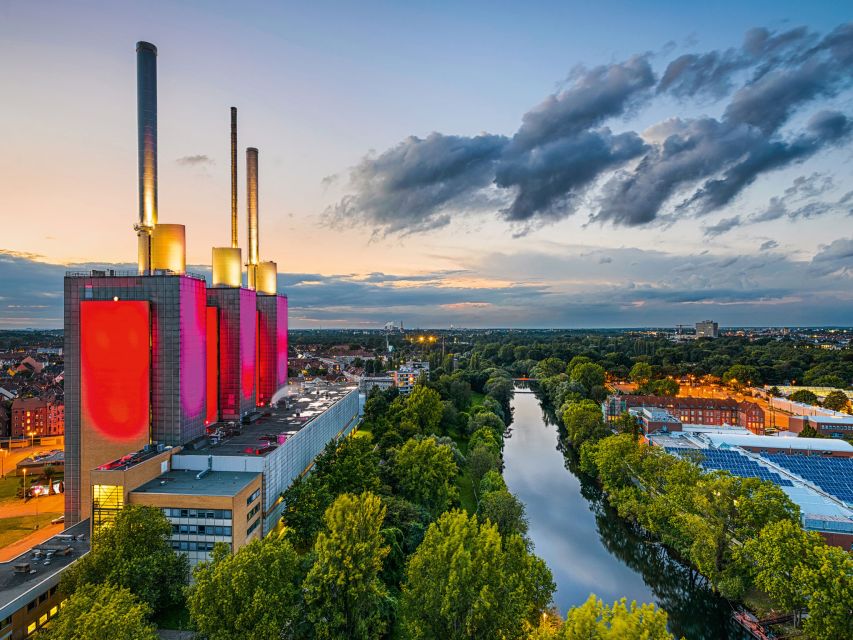
Linden-Limmer is where Hanover shows its industrial résumé. In a short walk, you watch the area shift from a royal-adjacent world of gardens and craft houses into factories, freight infrastructure, and the everyday neighborhoods that grew around them. It is not a museum day. It is history you can still read in doorways, blocks, and street corners.
What I like most is how the tour keeps zooming in. You get the big timeline, but you also get enough details to make the streets make sense. That is how you get beyond photo stops and actually understand a place.
Starting at TAK Die Kabarett Bühne and getting the orientation right
You meet at TAK – Die Kabarett Bühne. Your guide will be easy to spot, wearing a Hannover Marketing & Tourismus GmbH card around their neck, and the tour runs in German.
Because this is a guided walking format, the first minutes matter. You do not just start walking. You get the “why” that will help every later stop click. You’ll hear how Hanover’s northern districts developed, and what to look for as you move from garden space to industry to street life.
Küchengarten and the royal kitchen garden story in 2025 terms
The Küchengarten is the early anchor for everything that follows. This kitchen garden area was once connected to supplying the royal household, which means it was functional in a very real way. Not a decorative park, but land tied to provisioning.
On the walk, you’ll also hear about the kitchen garden pavilion from 1749. That pavilion has its own twist: it was moved to the Lindener Berg in 1913. When you learn that, you start seeing the garden as something that changed with time, not something that sat still.
Why this matters to you: the tour gives you a mental map for Linden-Limmer’s transformation. When you later see industrial sites and housing, you can track what was displaced, what was repurposed, and what grew because of the new economy.
Practical tip: this part of the walk is where your curiosity can run ahead of the group. If you like taking photos, do it early here, because later stops can feel more fast-moving as the route heads toward busier streets.
Weberstraße 20/21: weavers’ houses that stayed put
One of the most tangible moments is at Weberstraße 20/21, where the weavers’ houses have been preserved from the courtly period. That word matters. Preserved means you are not guessing based on imagination alone. You are standing near surviving fabric of earlier craft life.
You’ll connect those houses to the start of the area’s industrial push. The founding of factories is tied to (lime) Johann Egestorff, and the story explains how Linden shifted as machine and textile industry grew. It goes from being described as the most beautiful village in the Kingdom of Hanover to a more worker-focused quarter.
For you, this is the moment where the tour becomes more than a stroll. You start linking architecture to economics. Why were there weavers’ homes near factory growth? Why did the neighborhood character change? The tour helps you hold those questions in your head while you walk.
Other walking routes through Hanover


From royal kitchen garden to Prussian change and new neighborhoods
A key turning point comes with the annexation by Prussia in 1866. That is when the royal kitchen garden area became free, and the development path changes.
This is where the walk moves from “old” to “newer.” You’ll hear that a freight station was built on what had been royal garden land. After that, a middle-class residential area developed around Lichtenbergplatz.
You do not need to be a transport nerd to enjoy this part. The value is the cause and effect. A freight station signals movement of goods and jobs. Once that happens, housing patterns and neighborhood demographics shift. By the time you reach later cultural and street stops, you’ll already understand why they exist where they do.
Ihme Center: the brutalist stop that divides Hanoverian taste
The Ihme Center is one of those places you learn to see two ways. Many Hanoverians call it an eyesore. At the same time, it creates strong interest, especially among young people, including because of its brutalist construction method.
On the tour, that contrast is the whole point. You are not asked to “love” the building. You are encouraged to look at the design choices and understand why they spark debate. That kind of conversation is rare on a short city walk, and it makes the experience feel real.
Consideration for you: if you prefer pretty facades over design arguments, this stop may feel more like a design discussion than a postcard moment. But even then, it’s worth it because it teaches you how modern architecture fits into a neighborhood with industrial roots.
Faust Cultural Center: former bed factory turned concert and exhibition space
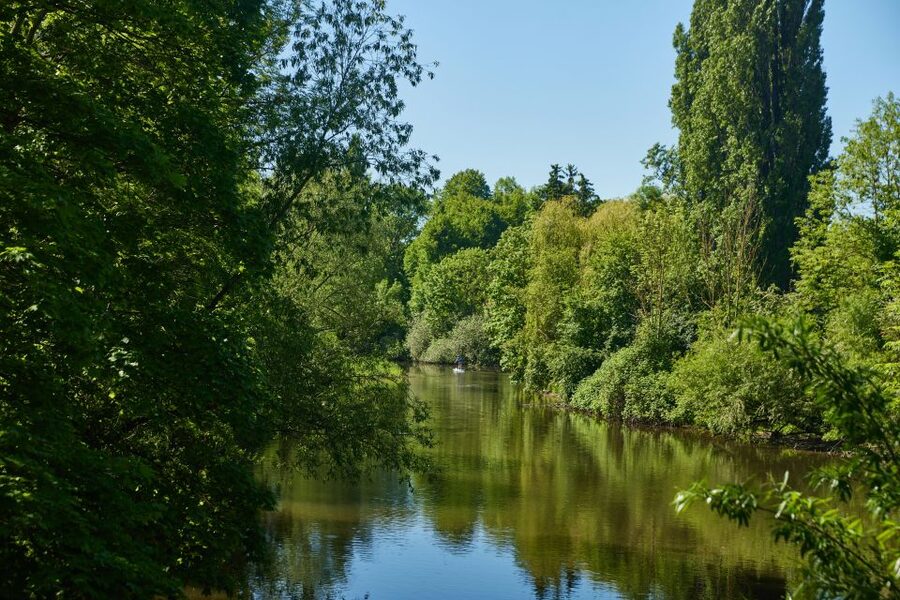
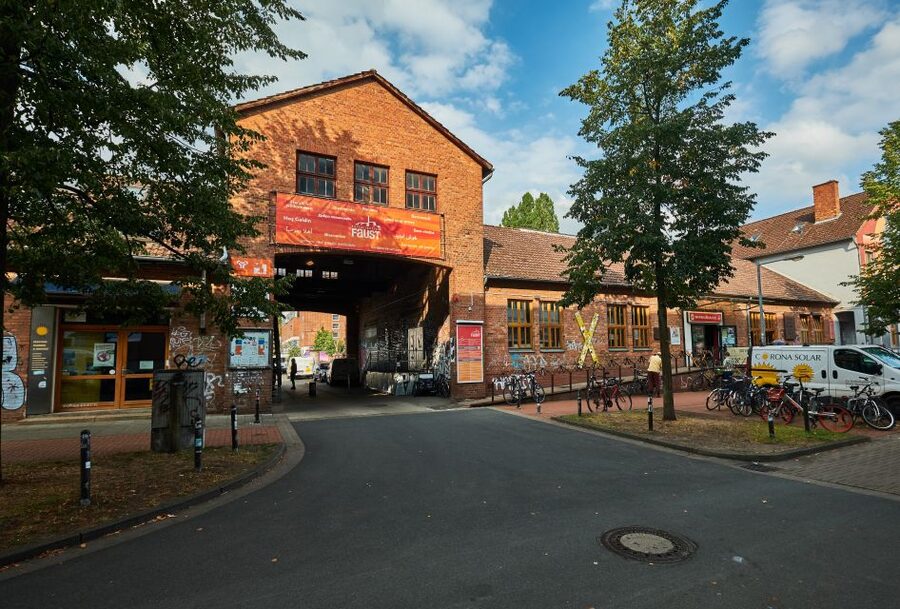
Next comes the Faust cultural center, located in the former Werner & Ehlers bed factory. That is a powerful transformation to hear out loud while you stand in the space.
Today, the site is used for concerts, exhibitions, readings, and other cultural events. So instead of treating the old factory as a sealed-off past, the area keeps working. People still gather there, but for music and ideas instead of production and distribution.
Why this matters: the tour shows you a practical model of reuse. Industrial structures often get either demolished or trapped as empty shells. Here, the story is about continued public use, which helps you understand the neighborhood’s modern identity.
Nedderfeldstraße: graffiti, pubs, and the Apollo arthouse cinema
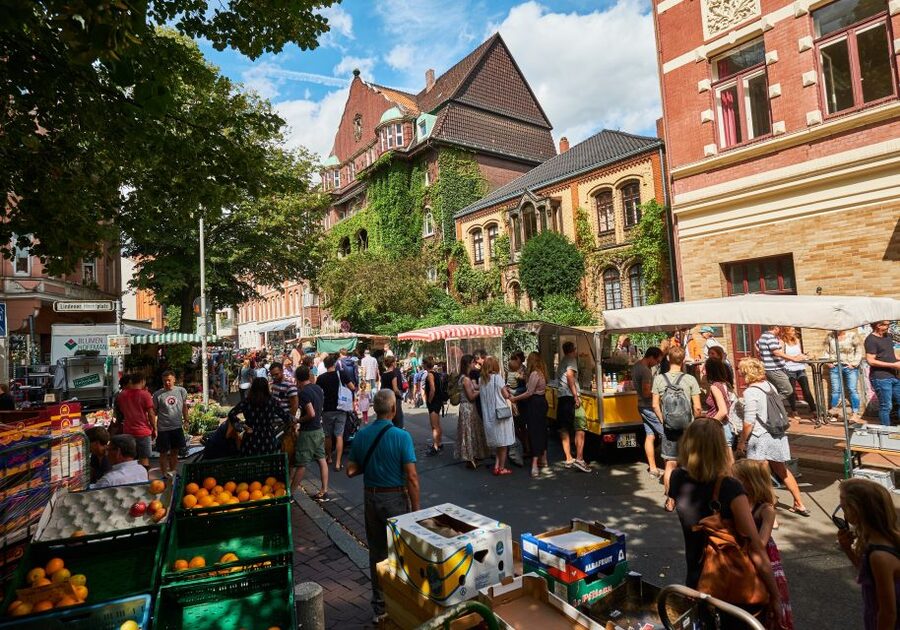
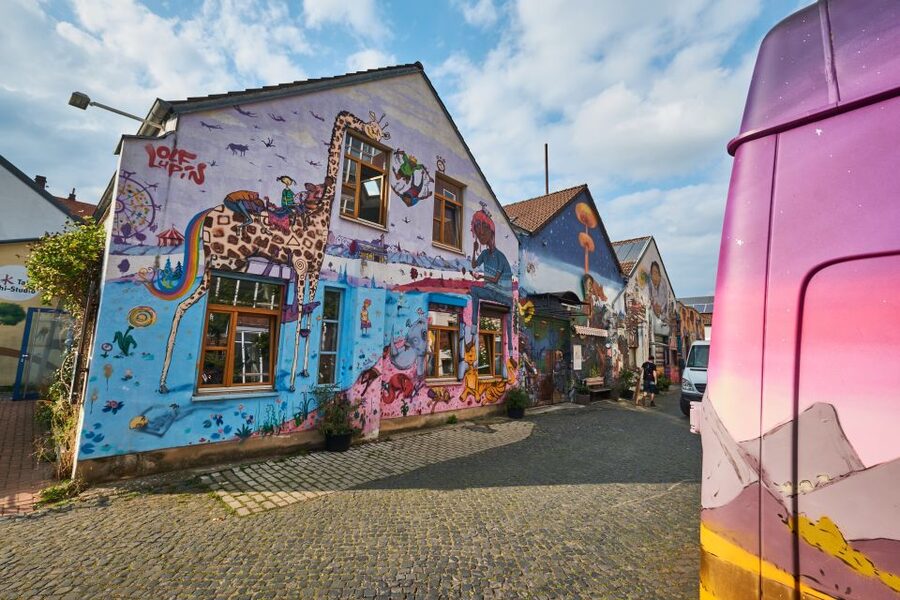
As the route shifts toward Nedderfeldstraße, the vibe gets louder and more casual. You can immerse yourself in an area with graffiti art and numerous pubs. It is street culture you can see immediately, and it changes how the earlier history feels. The “industrial past” is not separate. It sits right next to the everyday present.
Right next to this stretch, you can also learn about one of the first arthouse cinemas in Germany, the Apollo cinema. That pairing, graffiti and a cinema, is a good reminder that neighborhoods do not only reinvent their economy. They also reinvent how people spend evenings.
Practical tip: if you like photographing street art, do it thoughtfully. The route is short, and the streets can be busy. Let the group move through first, then circle back afterward if you want more close-up shots.
Limmerstraße and the Limmern: kiosks, restaurants, and café time

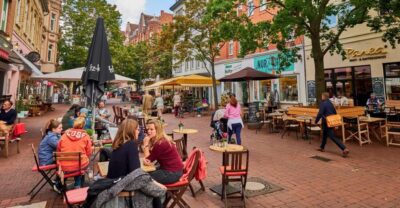
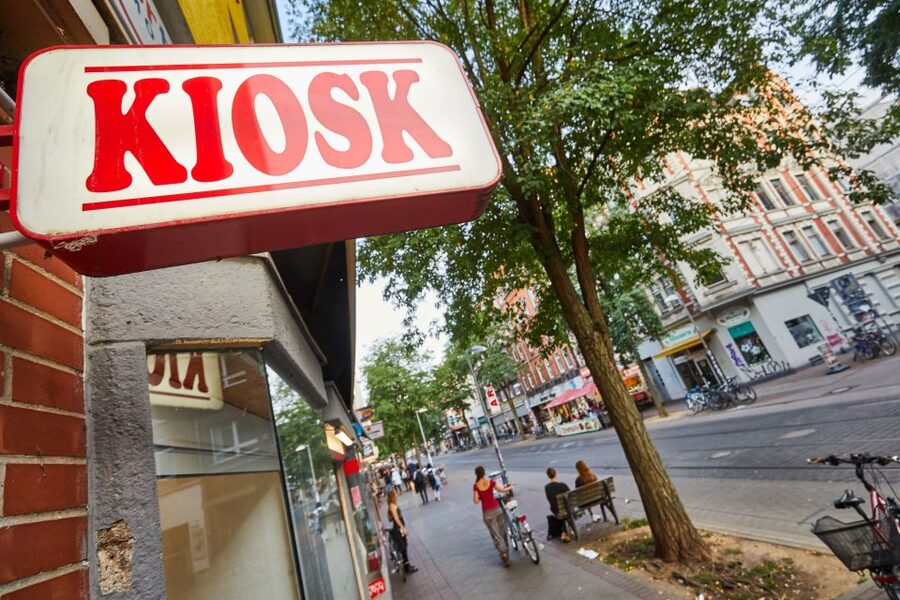
The tour ends with the high-density rhythm of Limmerstraße, where the “Limmern” is especially popular. You’ll notice kiosks, plus plenty of restaurants and cafés, which tells you something important about how the neighborhood functions today.
This is the part where the walk feels like a preview. You get enough context to make sense of the present-day choices, then you can decide where you want to linger after the 2 hours.
If you travel with a group of mixed interests, this is a smart stop to keep everyone happy. Food and cafés turn a history walk into something social and relaxing.
Price and time: is $17 worth it for a 2 hour guided walk?
$17 per person for a 2-hour guided walking tour is a strong value if you care about context. You are not just paying for someone to point at sights. You’re paying for a guided narrative that connects the royal kitchen garden, the factory shift, the Prussian-era changes, and modern cultural reuse.
Also, the pacing can be a good thing. The tour is timed, which means you avoid the “stand around, decide what to do next” problem that can happen with self-guided walks. The experience also feels relaxed in a small group, which helps the explanation land without rushing you past the key ideas.
If you only have a short window in Hanover and you want a neighborhood story that goes beyond the center, this one fits well.
Who should book this Linden-Limmer walking tour
This is a great fit if you like city walks that explain how a place evolved. You do not need to be a history expert. The tour gives you the timeline, then points you to the surviving details that make the story believable.
It is also a good choice if you enjoy design and culture alongside street life. The route balances older craft housing, industrial remnants reused as culture, and modern architecture like the Ihme Center that provokes strong opinions.
And if you just want a relaxed group outing, the format works. The tour feels small and easygoing rather than rigid.
Should you book this Hanover guided walk?
Yes, if you want a practical, human-sized tour that helps you read Linden-Limmer. Küchengarten, the preserved weavers’ houses at Weberstraße 20/21, and the reuse story at Faust are the kind of stops that stick with you after you leave the street.
I’d pass only if you want mostly scenic sights with minimal explanation. This walk is more about understanding the neighborhood through its buildings and land-use changes than about ticking off landmark photos.
FAQ
How long is the Hanover: Guided Walking Tour of the Linden-Limmer District?
The tour lasts 2 hours.
Where do I meet the guide?
You meet at TAK – Die Kabarett Bühne. The guide will be wearing a Hannover Marketing & Tourismus GmbH card around their neck.
What is included in the price?
The guided tour is included.
What language is the tour in?
The live tour guide speaks German.
Is the tour wheelchair accessible?
Yes, the tour is wheelchair accessible.
Can I pay later?
Yes. You can reserve now and pay later, so you do not pay today.
What is the cancellation policy?
You can cancel up to 24 hours in advance for a full refund.
Pavements of Hanover
Lower Saxony, Town by Town
Everything else we filed on Hanover
- Hannover: Guided tour of the Berggarten
★ 4.1 · 4 reviews - Hanover: Guided Walking Tour of the Linden-Limmer District
★ 5.0 · 6 reviews - Hannover: Private pub crawl with insider-guide & free shots
★ 4.0 · 11 reviews - Hanover: Old Town Historical Walking Tour by Geo Epoche
★ 4.4 · 11 reviews - Hanover Center: Outdoor Escape Game
★ 4.7 · 13 reviews - Hanover: Linden-Limmer Krimi-Rätsel-Tour
★ 4.5 · 15 reviews
Hanover Bremen and Lower Saxony Tours, side by side.
 ★ 4.7Bremen: Walking Tour in German with Night GuardFrom $182,922 reviews
 ★ 4.5Bremen: City Center Guided Walking TourFrom $142,709 reviews
 ★ 4.1Bremen: Underground Guided TourFrom $181,408 reviews
 ★ 4.6Soltau: Heide Park Resort Day TicketFrom $421,160 reviews
 ★ 4.6Bremen: 3-Hour Beck’s Brewery TourFrom $281,091 reviews
 ★ 4.8Bremen: Walking Tour of Historic Schnoor DistrictFrom $14429 reviews
 ★ 4.5Hannover: Guided Old Town Walking TourFrom $13338 reviews
 ★ 4.6Bremen: Universum Science Center Entrance TicketFrom $21324 reviews
Other lists this tour is on