
REVIEW · HISTORICAL TOURS
Historic Dresden Small-Group Walking Tour in English
Dresden reads like a guided story. In this 2-hour English small-group walk, I love how the route stitches together Semper Opera, the Zwinger, and the rebuilt Frauenkirche into one clear timeline. The small group size means you get focused answers, and the guide makes time for questions. The main catch is that there are no headsets, so you’ll want to stand where you can hear well if the group is bigger than usual.
You start at Schloßplatz and loop through the city’s most important power centers, including the Residenzschloss courtyards, the porcelain tile mural, and the best Elbe views at Brühl’s Terrace. Expect plenty of “wait, look at that” moments, especially when the guide points out details most people miss.
In This Review
- Key things I’d circle on your Dresden map
- Starting at Schloßplatz: how this tour sets your bearings fast
- Theaterplatz: Dresden’s royal and musical crossroads
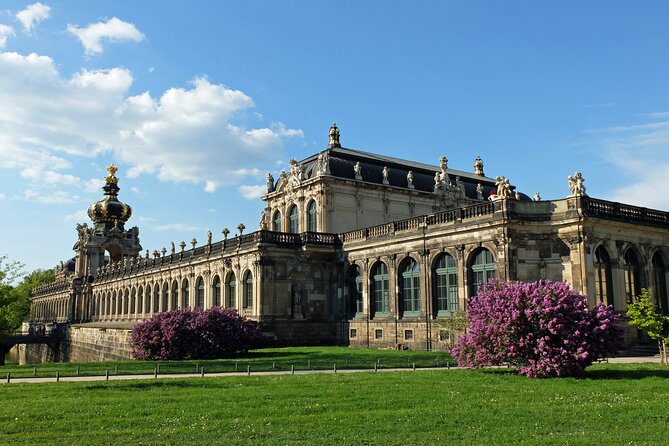
- The Dresden Zwinger: a showpiece with a twist
- Residenzschloss courtyards: built, burnt, rebuilt, and explained
- Stallhof and the quieter side of court life
- The 100-meter porcelain mural: Fürstenzug spotting game
- Dresden Cathedral from the outside: a secret build with public meaning
- Brühl’s Terrace: the Balcony of Europe viewpoint drill
- Neumarkt and Frauenkirche: why Dresden rebuilt the skyline
- Group size, pace, and why the guide matters more than you think
- Price and value: is $30.25 a smart spend for 2 hours?
- Who should book this walking tour (and who might skip it)
- Should you book this Dresden small-group walk?
- FAQ
- What is the duration of the Dresden walking tour?
- Is the tour offered in English?
- What is the meeting point?
- Where does the tour end?
- How big is the group?
- Do I need to buy separate tickets for the stops?
- Do I get a mobile ticket?
- Are tips included in the price?
- Are service animals allowed?
- Can I cancel and get a full refund?
Key things I’d circle on your Dresden map
- The “from opera to palace” opening at Theaterplatz: you get Dresden’s cultural headline first, then the royal context right away.
- Zwinger, explained as a grand plan that never fully happened: it is tied to court ambition and court taste, not just pretty stone.
- Residenzschloss courtyards and Sgraffito technique: you learn why the palace looks the way it does, without being rushed through a museum.
- The Fürstenzug tile mural prompts real detective-style spotting: it is 100 meters long and packed with stories you can try to pick out.
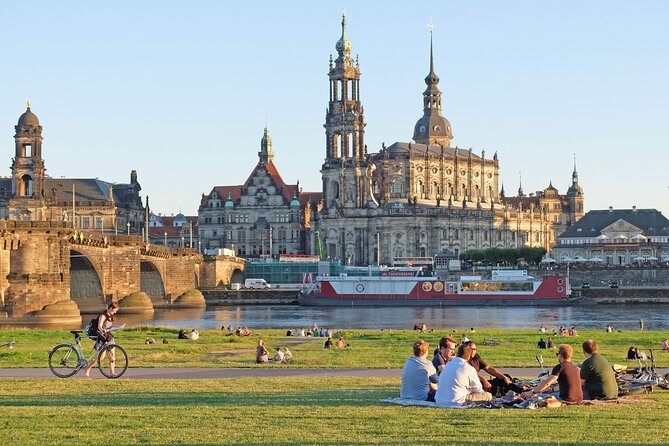
- Brühl’s Terrace viewpoints turn architecture into geography: you scan the river, church steeples, and distant slopes in one sweep.
- Neumarkt and Frauenkirche connect destruction to reconstruction: you come away understanding why this church matters beyond its looks.
Other walking routes through Dresden
- Dresden: City & Semperoper Guided Walking Tour★ 4.8 · 2,293 reviews
- Dresden: Guided City Walk with a Cup of Coffee★ 4.7 · 1,568 reviews
- Dresden: Complete Walking Tour with Frauenkirche Visit★ 4.8 · 700 reviews
- Dresden: Walking Tour with a Night Watchman and Meal★ 4.4 · 487 reviews
Starting at Schloßplatz: how this tour sets your bearings fast
Schloßplatz is a strong opening move. From the start, you are placed near the city’s main “big story” zone, where music, royalty, and urban rebuilding all sit in the same line of sight. That matters because Dresden can feel overwhelming at first, with major sites spread out but tied together historically.
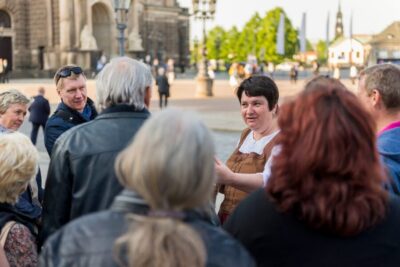
This is a walk built for listening. You get a professional guide speaking in English, and the pace is designed for asking questions. If you like understanding what you are looking at before you move on, this format works well.
Theaterplatz: Dresden’s royal and musical crossroads
Your first stop is Theaterplatz, one of Dresden’s most striking squares. It is the kind of place where you naturally look around and realize it is not just “a nice square,” it is a cluster of meanings. The guide uses the views to connect the dots between power, culture, and the city’s built identity.
The highlight here is the Semper Opera House, an elegant 19th-century landmark that signals Dresden’s musical heritage. Nearby, the Zwinger Palace and the Residenzschloss sit close enough that you can mentally map where court life and cultural display met.
A helpful tip from the tour style: ask your guide to point out the Old Masters Gallery view from this area. Even if you do not go inside right away, it gives you a “future visit” cue and helps you recognize the right building later.
One practical note: this stop is mostly about sightlines and narration, so even if you are tired from the train or hotel walk, you can still enjoy it.
The Dresden Zwinger: a showpiece with a twist
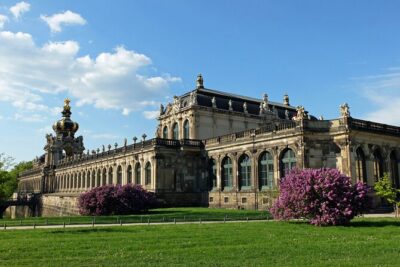
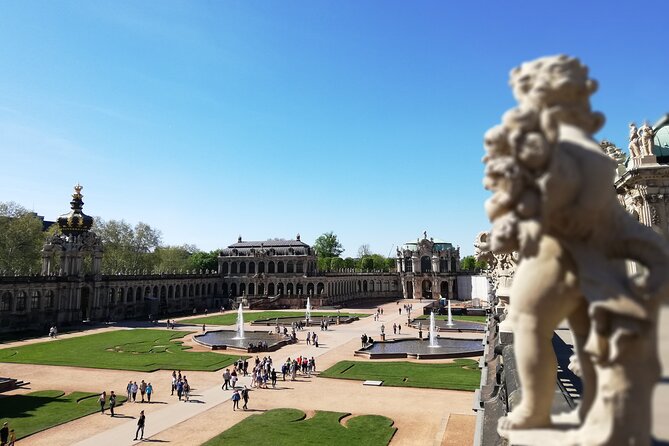
Next you head to the Zwinger, described as a single sculptural design meant to act like an opulent gateway. The story is extra interesting because the grand plan behind it was not fully realized. That changes how you look at the architecture, because it becomes a monument to ambition, not just a finished palace feature.
You also hear about the man who commissioned it. He comes across as bigger than life, with a real love for beauty in every detail. You can almost treat the building like a checklist of taste, scale, and self-confidence.
If time permits and if the area is open, there may be a chance to see an open-air grotto that is usually not front-and-center. That kind of “only if it works out” detail is exactly the reason I like guided walks: you may get an extra layer without needing to hunt for it on your own.
The big value here is context. Without a guide, you can still appreciate the Zwinger. With a guide, it becomes a window into how the Saxon court wanted to present itself.
Residenzschloss courtyards: built, burnt, rebuilt, and explained
From there, you move into the Residenzschloss realm, where the story is blunt and repeated: built, burnt down, rebuilt, repaired, extended. That cycle shapes how the palace reads today. You are not just looking at pretty architecture. You are seeing evidence of survival and constant change.
You walk through one of the palace courtyards and pay attention to Sgraffito, a Renaissance art technique that creates a patterned surface using layers and careful detail. This is one of those “slow down for the small stuff” stops. It is also where a good guide helps you avoid missing what matters.
Important for your planning: you do not go into the museum during the tour walk. That is actually a smart trade. You get the courtyard story and the visual cues first, then you can decide later whether to buy museum tickets based on what you care about.
Practical move: ask your guide what collections are most worth your time. If you only have half a day in Dresden, this helps you choose well instead of paying for the wrong thing.
More history walks in Dresden


Stallhof and the quieter side of court life

Behind the palace sits the Stallhof, an enclosed Renaissance courtyard that feels calmer than the headline sites nearby. The court used this space for jousting tournaments and royal festivities, so even though it looks still and architectural now, it carries a memory of spectacle.
The arcaded galleries and sandstone columns create a real sense of enclosure. That changes your experience from “seeing Dresden from the outside” to “stepping into a space where scenes would have played out.”
This is also a nice pause. If your feet need a breather, the pace gives you moments to stand, look up, and absorb what the guide is explaining.
The 100-meter porcelain mural: Fürstenzug spotting game
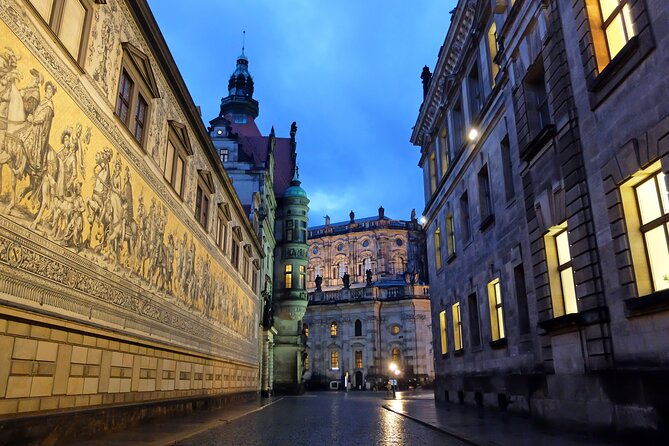
Then comes a stop that is easy to love because it is specific and visual: a porcelain artwork that runs 100 meters long, made of 24,000 tiles. It is often called the longest outdoor porcelain artwork in the world, and the tour treats it like a story you can try to read with your eyes.
The guide points out secrets and stories hidden within it. Even if you are not a formal art person, you can still play along by searching for figures, scenes, and recurring themes. It turns the tour into something more active than passive sightseeing.
If you like photography, this is the part where you’ll likely want to spend an extra minute framing details. Just remember other people are learning too, so keep your steps and angles reasonable.
Dresden Cathedral from the outside: a secret build with public meaning
Next you see the Royal Cathedral of Dresden from the outside. This is a major plot point in the city’s religious history, because it was built in secret by a Catholic ruler in Protestant Saxony.
The outside views matter here because the guide connects the cathedral to how power operated in Dresden. It is also noted as one of the burial sites of the Royal family, so you are seeing a place that is both architectural and deeply personal.
Even without going in during this walk, you leave with the story. That makes any later stop inside feel more grounded.
Brühl’s Terrace: the Balcony of Europe viewpoint drill

After the palace and the tiled stories, you get a change of pace and a change of mindset at Brühl’s Terrace, often called the Balcony of Europe. This promenade is the perfect place to switch from “what happened here” to “how Dresden sits in the world.”
From the terrace you get sweeping views over the Elbe River and beyond. The guide may lead you up steps to point out key landmarks, including:
- the Elbe river itself
- Dresden’s historic steamboat concept, called the White Fleet
- buildings along the river
- church steeples across the city
- distant wine slopes
This kind of scan is more than pretty. It helps you plan your remaining time. If you know where the river runs and which steeples line up with major neighborhoods, you can navigate better and pick good viewpoints without guessing.
One realistic consideration: there are stairs involved. That said, the overall walk is paced for a broad range of visitors, and you can always pause if you need to catch your breath.
Neumarkt and Frauenkirche: why Dresden rebuilt the skyline
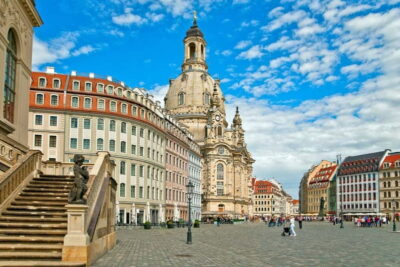
Your tour’s energy shifts at Neumarkt, a restored square with 18th-century charm. It is anchored by the Frauenkirche, and the whole area works like a living explanation of Dresden’s pre-war identity and post-war resurrection.
The guide tells the moving story of the church’s destruction and the long rebuild. You learn that the dome was reconstructed from ruins after World War II, and that there was a global effort behind bringing the baroque masterpiece back.
When the guide ties all this together, you stop thinking of Frauenkirche as a single photo subject. It becomes a symbol of reconciliation and persistence. That emotional weight is exactly what makes Neumarkt feel different from other restored European squares.
The tour usually ends here, which gives you a natural way to continue on your own. You can explore the church interior later, and you can also go to the crypt, where there is a small exhibition about the rebuilding.
Group size, pace, and why the guide matters more than you think
This is a small-group walk, with a maximum of 15 people. In practice, that usually means the guide can respond to questions without feeling rushed. It is a big deal in Dresden because so much of the city’s story is about cause and consequence, not just dates.
The best part is that the narration feels tailored to the eye level you are already using. The guide does not just recite facts. They guide your attention to architectural details, city layout cues, and the “why this place looks this way” logic.
One thing to plan around: there are no headsets mentioned in the experience. If the group runs larger than expected, you may find it harder to hear from farther back. My practical advice is simple: arrive with a bit of patience, get close to the guide when you can, and if you have any hearing concerns, sit or stand where sound carries best.
Price and value: is $30.25 a smart spend for 2 hours?
At about $30.25 per person for roughly 2 hours, this is priced as a guided “high signal” introduction, not a museum day. For me, value comes from what you do not have to figure out alone: how the sights connect, what to look for, and which parts are worth your money later.
You also get structure. In a short visit, it is easy to hop between major sites and still leave with a scattered understanding. This tour keeps the timeline tight, especially around the Dresden theme of building, destruction, rebuilding, and how cultural identity persisted.
If you only have one morning or one early afternoon, this walk can save time later. If you have more days, it still pays off because it tells you which neighborhoods and buildings deserve return visits.
Who should book this walking tour (and who might skip it)
I’d say this tour is a great fit if you want:
- a clear, story-based orientation to Dresden
- a guide who answers questions and points out details like Sgraffito and the porcelain mural
- a compact route that includes major hits like the Zwinger and Frauenkirche
It may be less ideal if:
- you strongly prefer museum time over walking explanations, since you do not enter the palace museum during the walk
- you depend on headsets for hearing comfort, since the experience does not include them and hearing can vary with group size
If you travel solo, this still works well because the guide’s explanations help you understand the city without needing to coordinate with anyone else.
Should you book this Dresden small-group walk?
Book it if you want a smart first look at Dresden that connects the big sights into one coherent story. For the money, you get a guided route that prioritizes context, not just “standing in front of buildings.”
Skip it only if you already know you want a purely independent plan, or if you dislike walking with stairs and would rather spend your time inside museums and churches on your own schedule.
If you do book, do one thing before you head out: decide what you care about most, music, royal life, art details, or the rebuilding story. Then let the guide tailor their pointers around that. You’ll come away with the kind of understanding that makes Dresden feel personal, not just historical.
FAQ
What is the duration of the Dresden walking tour?
The tour lasts about 2 hours.
Is the tour offered in English?
Yes, it is offered in English.
What is the meeting point?
The tour starts at Schloßplatz (Schloßpl., 01067 Dresden-Altstadt, Germany).
Where does the tour end?
It ends back at the meeting point.
How big is the group?
The experience has a maximum of 15 people.
Do I need to buy separate tickets for the stops?
The itinerary notes admission tickets are free at the listed stops. The tour itself does not include admission to the palace museum area, since you do not go into the museum during the walk.
Do I get a mobile ticket?
Yes, the tour includes a mobile ticket.
Are tips included in the price?
No. Tips and gratuities are not included.
Are service animals allowed?
Yes, service animals are allowed.
Can I cancel and get a full refund?
You can cancel up to 24 hours in advance for a full refund.
The Longer History of Dresden
Pavements of Dresden
Everything else we filed on Dresden
- Outdoor escape game – the magical portal
★ 5.0 · 11 reviews - City Tour and Guided Tour in the New Green Vault – Program C – The Festive
★ 5.0 · 11 reviews - Bohemian and Saxon Switzerland Day Trip All inclusive-Winter Tour
★ 5.0 · 11 reviews - Escape Game Outdoor: Operation Mindfall
★ 5.0 · 12 reviews - Moritzburg: Scavenger Hunt Self-Guided Walking Tour
★ 4.8 · 12 reviews - Dresden: Bike Rental – City Bike with Option Children Seat
★ 4.5 · 13 reviews
Historical Tours, side by side.
 ★ 4.7Leipzig: City History Canal Sightseeing Tour on a MotorboatFrom $186,232 reviews
 ★ 4.6Berlin: Natural History Museum Entrance TicketFrom $123,382 reviews
 ★ 4.7Leipzig: 1.5-Hour Historical Walking Tour in GermanFrom $172,217 reviews
 ★ 4.5Berlin: World Heritage Cruise to PotsdamFrom $251,435 reviews
 ★ 4.7Heidelberg: Night Watchman Historic Adventure TourFrom $3051,186 reviews
 ★ 5.0The Local Tour of Hamburg Historic CentreFrom $31,058 reviews
 ★ 4.8Elbfloren: Historical city tourFrom $15819 reviews
 ★ 4.6Bamberg: Guided Beer History Tour with Optional TastingFrom $21772 reviews
Other lists this tour is on