
REVIEW · HISTORICAL TOURS
The Local Tour of Hamburg Historic Centre
Hamburg history clicks into place on foot. In about two hours, you’ll get a compact guided walk through Hamburg’s big landmarks, including a WWII memorial and the city’s modern concert hall, with 500+ years of stories shared along the way. I especially like the easy meet-up right at the historic town hall, and I like the small-group format that keeps the pace friendly and the questions flowing. One thing to consider: the route is built for seeing and hearing a lot, so if you want lots of time right up close at Elbphilharmonie, plan to do that on your own afterward.
This is offered in English with a mobile ticket, and it’s priced like a low-friction orientation: you pay a small reservation fee upfront, then you settle guide payment based on what feels fair after the tour. The best part is the way guides talk to the group in plain language, with humor when it fits, and practical context that helps you read the city instead of just passing it.
In This Review
- Key highlights you will feel right away
- Entering the Historic Centre on a tight, 2-hour route
- Town Hall to St. Nikolai, where Hamburg explains itself
- Trostbrücke to Deichstraße, the old city meets the everyday
- Speicherstadt warehouses and the Elbphilharmonie reality check
- St. Michael’s Church finish, and how to use it
- Guide styles that can make or break a walking tour
- Price, reservation fee, and what you’re really buying
- Who should book this Hamburg Historic Centre walk
- Should you book this Hamburg Historic Centre tour?
- FAQ
- Is the tour in English?
- How long is the Hamburg Historic Centre local tour?
- Where do I meet the guide, and where does the tour end?
- Is admission included for all stops?
- What do I pay upfront, and how does the guide payment work?
- Do I get a mobile ticket?
- Is the group small?
- Can I cancel if my plans change?
Key highlights you will feel right away
- Meet at Rathausmarkt and start with a clear, easy landmark
- Small group format focused on conversation, with a stated limit of 8 travelers and a maximum of 25
- Pay-what-you-feel approach after the tour, with a low reservation fee upfront
- Free admission for key stops, plus a short look at Elbphilharmonie from the route
- WWII memory at St. Nikolai, not just postcard sightseeing
- End near St. Michael’s Church in a park area that makes it easy to keep exploring
More history walks in Hamburg
- Hamburg: Historical Tour of the St. Pauli Sex Work District★ 4.4 · 215 reviews
- Hamburg: UNESCO-World Heritage Sites Tour★ 4.7 · 137 reviews
- Sightseeing Tour – Free Tour – Historic Center-Hamburg On Foot★ 5.0 · 112 reviews
- German Hamburg Historic City Center Pay-What-You-Want Tour★ 4.8 · 80 reviews
Entering the Historic Centre on a tight, 2-hour route
If Hamburg feels like a city with multiple faces, this tour helps you connect them fast. You start in the historic core and keep moving on foot through the old commercial heart, the memorial sites, and the waterfront warehouses. The whole thing is about two hours, so it works well on a first day when you want your bearings and a basic understanding of how Hamburg became Hamburg.
The walking time is broken into short segments, usually 10 to 25 minutes at each stop. That matters because you are not stuck dragging yourself through one long stretch. You get frequent chances to refocus, snap photos, and hear why each place matters.
The group size is also part of the value. The tour is described as limited to 8 travelers for a more personal feel, and it lists a maximum of 25. In practice, that usually means you’re unlikely to feel lost in a crowd. I also like that the tour notes moderate physical fitness rather than “hard hike.” You should still expect walking on uneven sidewalks and standing at street points.
Town Hall to St. Nikolai, where Hamburg explains itself
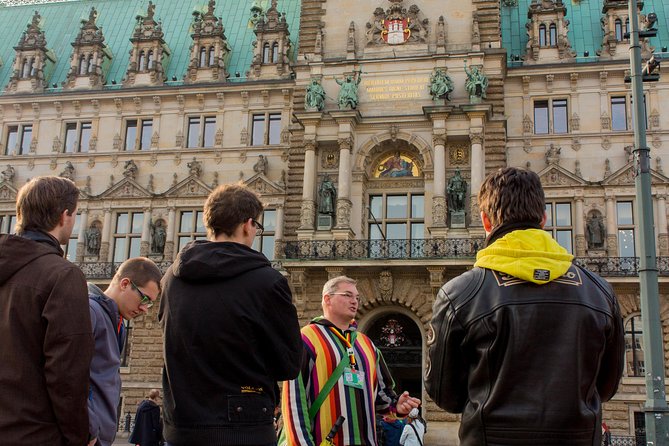
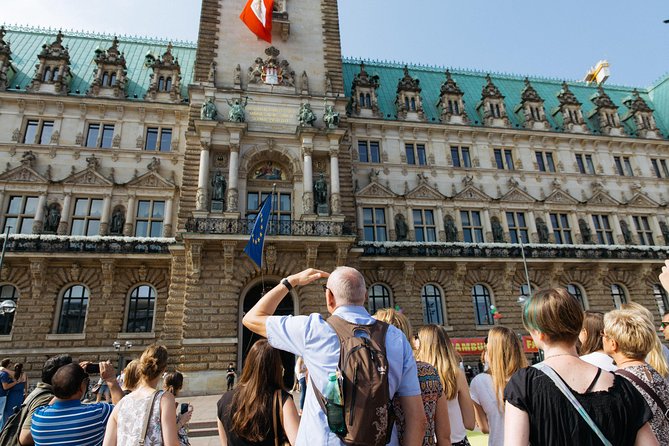
Your tour begins at Rathausmarkt, at Rathausmarkt 46, 20095 Hamburg. That matters because it is a recognizable starting point in the old city, not a hidden side street. From there, you head to the first landmark: the Hamburg Town Hall. You’ll spend about 25 minutes here, and the tour lists admission as free.
Town Hall stops are more than a photo moment. For many visitors, this is where the city’s identity clicks: Hamburg was built as a trading city with its own civic muscle, not just as a stopover between bigger places. When your guide points out details and explains what the town hall symbolizes, you start seeing the city as organized and political, not just scenic.
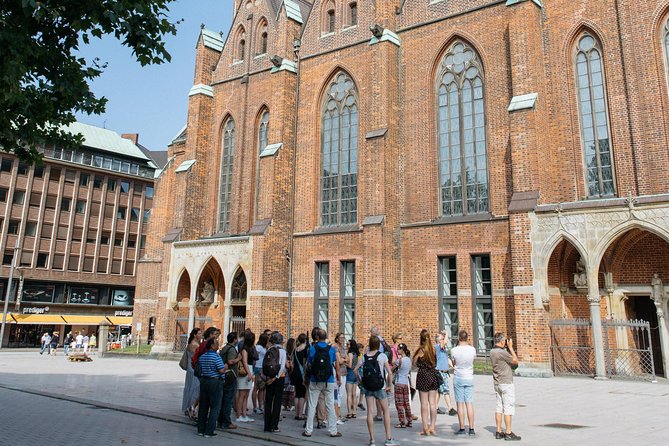
Next comes a quieter, more serious stop: the Mahnmal St. Nikolai. You get around 15 minutes here, and admission is free. This is where Hamburg’s WWII story is addressed directly, including the impact of the bombings. I like tours that don’t treat memorials as a quick checkpoint. Even in a short time, a guided approach helps you understand why it is placed here and what it represents, without turning it into an awkward lecture.
Trostbrücke to Deichstraße, the old city meets the everyday
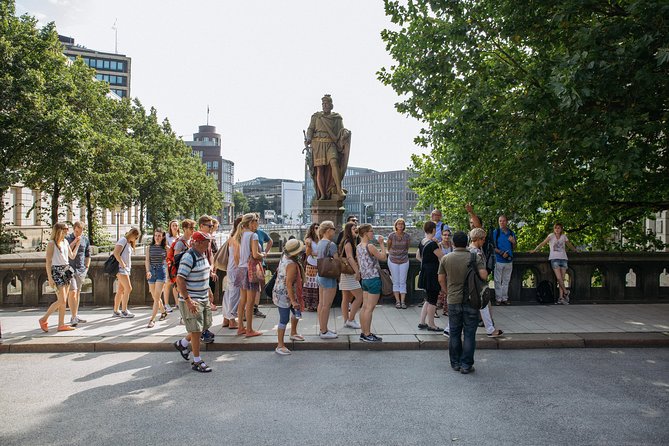
After the memorial, the route shifts back to movement and connection. You’ll visit Trostbrücke, with about 10 minutes on the bridge. This is described as one of the most historic bridges connecting the old and the new city. Bridges are good teaching tools because they force a comparison: this is where you literally cross from one “Hamburg” to another.
Then you head to Deichstraße, also about 10 minutes. This is the street stop focused on traditional Hamburg cuisine. Even if you do not eat during the tour, it gives you something useful: a sense of where locals would go, and where the city’s food culture is rooted. It also helps you later when you’re deciding where to grab lunch or a snack. You can follow your guide’s cues rather than guessing from a map.
One practical note: this section is built for street-level viewing and conversation, so if it is windy or cold, dress for it. A nice detail from the guide experience is that at least one guide used a small speaker to improve audibility when ambient noise was high. That is the difference between hearing stories and straining through them.
Speicherstadt warehouses and the Elbphilharmonie reality check
The next stop is Speicherstadt, the former warehouses in the historic ports area. You’ll spend about 10 minutes, with free admission listed. This part of Hamburg is all about scale and function. The warehouse district is not just architecture, it’s evidence of how the port shaped everyday life and wealth. When your guide explains what these buildings were for, you start seeing why they are arranged the way they are.
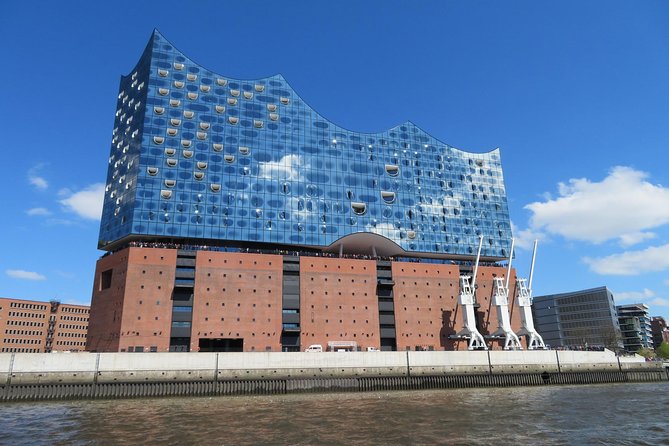
After that, you reach the modern headline stop: Elbphilharmonie. You get about 10 minutes here, but admission is not included. So here’s what to expect in a realistic way: you’ll see the concert hall and likely get context about why it became such a symbol of Hamburg, but you should not count on going inside unless you arrange it separately.
This is also the main spot where your expectations matter. One possible drawback that comes up with short walking tours is proximity. If your goal is to be very close for photos or to plan a full visit, you might find the time and access here limited. My advice is simple: treat Elbphilharmonie on this tour as orientation and storytelling, then plan a second visit if you want the full experience.



St. Michael’s Church finish, and how to use it
The tour ends with St. Michael’s Church. You’ll spend around 15 minutes there, and free admission is listed. Your walking tour finishes near a park area right by St. Michael’s, and the official end point is Martin-Luther-Straße 35, 20459 Hamburg.
I like that ending. You get a dramatic landmark, and then you end somewhere that is easy to transition into independent exploring. After the tour, you can keep walking along the waterfront or simply pause nearby to map what you just learned. Finishing by a major church also helps you remember where you are, which sounds basic until you’ve walked through a city center that all looks similar.
Guide styles that can make or break a walking tour
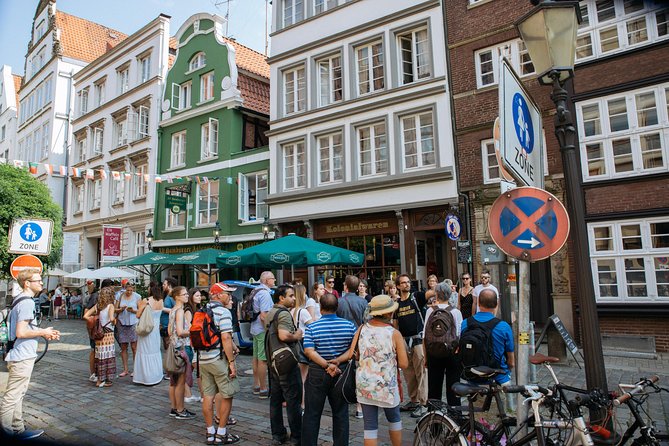
The tour is led by a professional guide, and the guide can genuinely change the experience. From the information you’re given, you can expect guides who mix facts with storytelling and keep a comfortable pace. Names that come up include Viktor, Leo, Lucas, Lukas, Brent, Nawaz, and Calvin (and one guide listed as Kalvin Brookes).
Here’s what those names point to for you as a practical visitor. Some guides are praised for humor and for making history feel like it belongs to the streets you’re standing on. Others are praised for patience, handling questions well, and keeping the group engaged without rushing. One guide even helped a guest by lending a charger when a phone battery ran out, which tells you something important about the day-to-day care your guide might bring.
At the same time, a short, two-hour format means the guide has to manage how much time they spend talking versus how much time you have to look and take photos. There is a feedback note about some tours covering history in extra detail, which can reduce the number of places you cover. Another note points to wanting to go closer to Elbphilharmonie. So bring your preferences: if you want more time at fewer spots, you may want to plan extra time on your own afterward. If you want broad coverage and context, this format is usually a win.
Price, reservation fee, and what you’re really buying
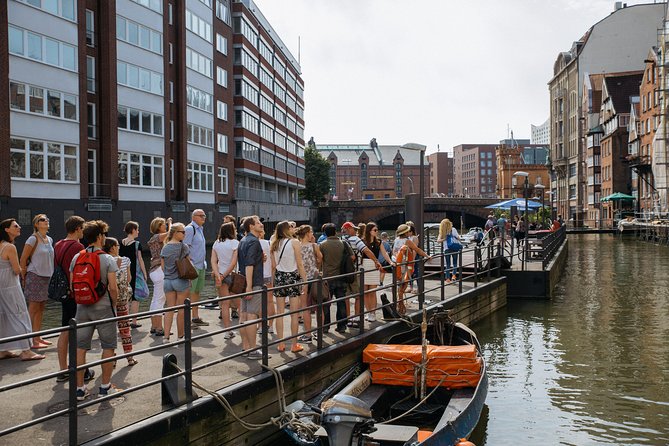
The tour price is listed at $3.62 per person, and it uses a mobile ticket. More importantly, it uses a pay-what-you-feel system: you pay a small reservation fee upfront (the listing notes $3), then you pay guide payment after the tour based on what you feel is correct.
That pricing model changes how you should think about value. You are not paying for a fixed, heavy “product.” You’re paying for a guided experience you can judge in real time. If you love the route, the explanations, and the pace, this is the kind of tour where tipping or additional payment makes sense. If you do not, the model gives you a path to adjust what you pay.
Given the overall rating shown (4.9) and the recommendation rate (97%), this is the kind of tour that usually works as a first-city-introduction. The small-group angle also makes the money feel more rational. You’re not just buying sightseeing, you’re buying context.
Finally, it’s usually booked about 17 days in advance. That doesn’t mean you must book early, but it’s a clue: this is a popular, limited-format tour. If your schedule is tight, reserve ahead.
Who should book this Hamburg Historic Centre walk
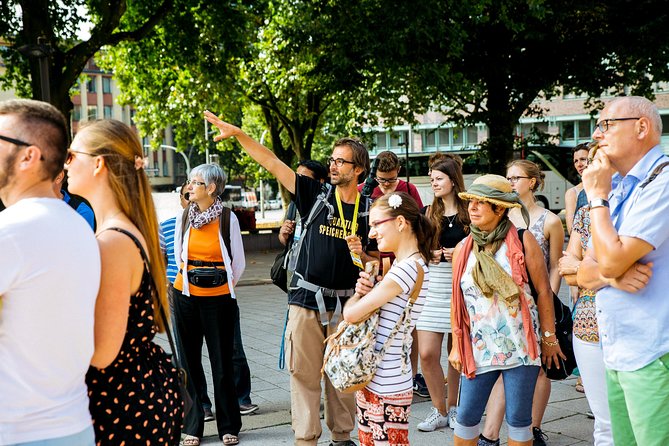
This tour is a strong fit if you:
- Want an orientation walk that connects key landmarks into one story
- Like WWII context included in the same day as architecture and city life
- Prefer a smaller group where questions and conversation are realistic
- Need English interpretation, with a guide who handles the street noise and crowd pace
It may not be ideal if you:
- Want lots of time inside Elbphilharmonie or guaranteed closeness for photos
- Prefer a more laid-back walk where you spend more time lingering at just one or two spots
- Hate any chance of a guide talking at length. Short tours require some explanation to be worthwhile.
A good strategy is to book this early in your visit. It helps you decide what to return to later, like where you want to eat on Deichstraße or where you want to spend more time in the Speicherstadt area.
Should you book this Hamburg Historic Centre tour?
Yes, I would book it if you want a practical, two-hour “get it” introduction to Hamburg. The route covers the town hall, a WWII memorial at St. Nikolai, the historic bridge, a classic food street area, Speicherstadt warehouses, and the Elbphilharmonie viewpoint, then finishes at St. Michael’s Church. That mix gives you both structure and emotion, not just sights.
I would book with a clear expectation: Elbphilharmonie is mostly a viewing and explanation stop, not an all-access visit. If that’s exactly what you want, you’ll likely leave with a cleaner mental map and stories that make the city feel less random.
FAQ
Is the tour in English?
Yes. The tour is offered in English.
How long is the Hamburg Historic Centre local tour?
It’s listed as about 2 hours.
Where do I meet the guide, and where does the tour end?
You start at Rathausmarkt 46, 20095 Hamburg, Germany. The tour ends in a park area next to St. Michael’s Church at Martin-Luther-Straße 35, 20459 Hamburg, Germany.
Is admission included for all stops?
Many stops list admission as free, but Elbphilharmonie’s admission is not included.
What do I pay upfront, and how does the guide payment work?
You pay a small reservation fee upfront (listed as $3). Payment for the guide is expected after the tour, with payment described as pay what you feel is correct.
Do I get a mobile ticket?
Yes, it’s a mobile ticket.
Is the group small?
It is limited to 8 travelers, with a maximum of 25 travelers.
Can I cancel if my plans change?
Yes. The tour offers free cancellation, and you can cancel up to 24 hours in advance for a full refund.
The Longer History of Hamburg
Everything else we filed on Hamburg
- Hamburg: Safari tour in St. Pauli
★ 4.9 · 11 reviews - Hamburg: Party Bingo with the Bingo Gringos
★ 4.8 · 11 reviews - Hamburg Harbor: 3.5-Hour Guided Tour by Bike
★ 4.7 · 11 reviews - Hamburg: 2-Hour St. Georg Walking Tour
★ 4.8 · 11 reviews - Hamburg: Guided Walking Tour in Danish
★ 5.0 · 11 reviews - Discover Hamburg in a retro Bulli
★ 3.0 · 12 reviews
Historical Tours, side by side.
 ★ 4.7Leipzig: City History Canal Sightseeing Tour on a MotorboatFrom $186,232 reviews
 ★ 4.6Berlin: Natural History Museum Entrance TicketFrom $123,382 reviews
 ★ 4.7Leipzig: 1.5-Hour Historical Walking Tour in GermanFrom $172,217 reviews
 ★ 4.5Berlin: World Heritage Cruise to PotsdamFrom $251,435 reviews
 ★ 4.7Heidelberg: Night Watchman Historic Adventure TourFrom $3051,186 reviews
 ★ 4.8Elbfloren: Historical city tourFrom $15819 reviews
 ★ 4.6Bamberg: Guided Beer History Tour with Optional TastingFrom $21772 reviews
 ★ 4.7Trier: Guided Old Town Highlights and History Walking TourFrom $16687 reviews
Other lists this tour is on