
REVIEW · NUREMBERG
Nuremberg 2-Hour Old Town Highlights Walking Tour in English
Nuremberg hits different when you walk it. On this 2-hour Old Town Highlights tour, you glide through medieval streets, squares, and courtyards with an English-speaking guide who makes the story easy to follow. I like that it mixes major sights with practical local guidance, so you finish with a plan for what to do next.
Two things I really like: you see the Craftsmen’s Court area and the Imperial Castle courtyards in a way that connects daily life to power and politics, and you also get pointed advice for food and drinks. The Hauptmarkt stop is especially valuable because it is the historic center for markets and festivals, not just a pretty backdrop.
One possible drawback: this is not suitable for people with mobility impairments, and it is rain or shine. Also, because it is a short walk, you will be looking more at sights and stories than going deep inside museums or spending long stretches in one place.
In This Review
- Key tour highlights at a glance
- Why Nuremberg old town is perfect for a short walk
- Meeting at Hauptbahnhof and getting oriented fast
- Handwerkerhof and the city walls, where the old town starts to make sense
- St. Lorenz Church and the medieval center’s religious heartbeat
- Hauptmarkt and Old Town Hall, Nuremberg’s main stage for markets
- St. Sebaldus Church and the story shift toward Empire and Renaissance
- Imperial Castle courtyards and Albrecht-Dürer-Platz, power meets creativity
- Congress Hall, Zeppelin Field, and Luitpold Arena, handling the darker chapters
- Food and drink direction, how to eat like you live there
- Timing, weather, and photo strategy for a 2-hour route
- Price and value, is $21 a smart deal?
- Should you book this Nuremberg Old Town highlights walking tour?
Key tour highlights at a glance
- Pedestrian-friendly route: Most of the old town is walkable, which makes the 2 hours actually feel full.
- Medieval-to-Renaissance flow: You move through the Holy Roman Empire era and German Renaissance landmarks without needing a chart.
- Hauptmarkt plus Christkindlesmarkt context: You get the square’s role, including how it turns into the Christmas Market in December.
- Imperial Castle courtyards: You see the castle grounds and learn what made Nuremberg matter politically.
- Food and drink direction: Your guide will point you toward Nuremberg grilled sausages and amber lager, plus modern options if you want them.
- Rally grounds sights: You also catch key locations tied to the Nazi Party, including Congress Hall, Zeppelin Field, and Luitpold Arena.
More of Nuremberg inside the walls
- Nuremberg: Old Town Guided Walking Tour★ 4.6 · 2,416 reviews
- Nuremberg: Tunnels and Secret Passages in the City Wall Tour★ 4.8 · 2,334 reviews
- Nuremberg: Medieval Dungeons Guided Tour★ 4.8 · 1,726 reviews
- Nuremberg: Walking Tour of Former Nazi Party Rally Grounds★ 4.7 · 1,665 reviews
Why Nuremberg old town is perfect for a short walk
If you only have a slice of time in Nuremberg, walking is the right move. The historic center is largely a pedestrian zone, so you can move between sights without fighting traffic. That also means the tour stays focused on what you came for: streets, squares, churches, and viewpoints.
What you gain is momentum. In a city like Nuremberg, the past shows up in layers, from medieval walls to Renaissance flourishes. A tight walking route helps you connect those layers quickly, instead of bouncing around far apart places.
Meeting at Hauptbahnhof and getting oriented fast
Your tour starts at Nuremberg Central Station (Hauptbahnhof), in front of the big center arched entrance. The guide holds a red and white Nuremberg Tours in English sign, so you can identify the group without stress. I like meeting at a major transit hub because you can arrive on your schedule, even if your train is late.
The first minutes matter. You are not just getting instructions, you are getting a framework for the city. A good guide will shape how you look at what you see next, and this tour’s format pushes you to start thinking like a visitor who can navigate on your own afterward.
Handwerkerhof and the city walls, where the old town starts to make sense
Your walk begins near Handwerkerhof Nuremberg and the area around the city’s older structures. This is one of those stops where the details do the talking. You will get to admire the surrounding city walls and learn why this type of fortification mattered in daily life, not only in wars.
What I find useful here is the way medieval Nuremberg is framed. You are not handed a list of monuments. You are shown how craftsmen, trade, and civic life fed into the bigger story of who held power in the region.
If you like photos, this part helps. Under the line of medieval walls, you get built-in angles for skyline shots and street views. It is also a great moment to slow down and look up at the façades, since later on you will be hopping between squares and churches.
St. Lorenz Church and the medieval center’s religious heartbeat
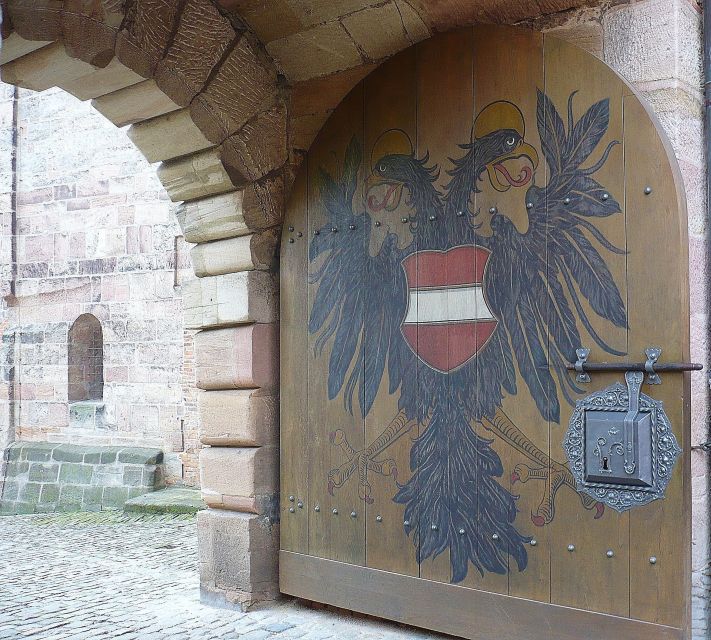
As you continue, you pass St. Lorenz Church, one of the major religious landmarks in the old town. Even if you do not step inside, the building works like a landmark in your head. It gives you a sense of where the city’s major civic life and belief system anchored itself.
Churches like this can feel overwhelming if you do not have context. On this tour, the guide’s job is to connect what you see to why it mattered, so the stop becomes more than architecture spotting. You learn to notice the practical, human side of these landmarks: they were meeting points, not just art pieces.
And because the tour is paced for a visitor, it helps you decide whether you want to return later for a longer look.
Other walking routes through Nuremberg

Hauptmarkt and Old Town Hall, Nuremberg’s main stage for markets
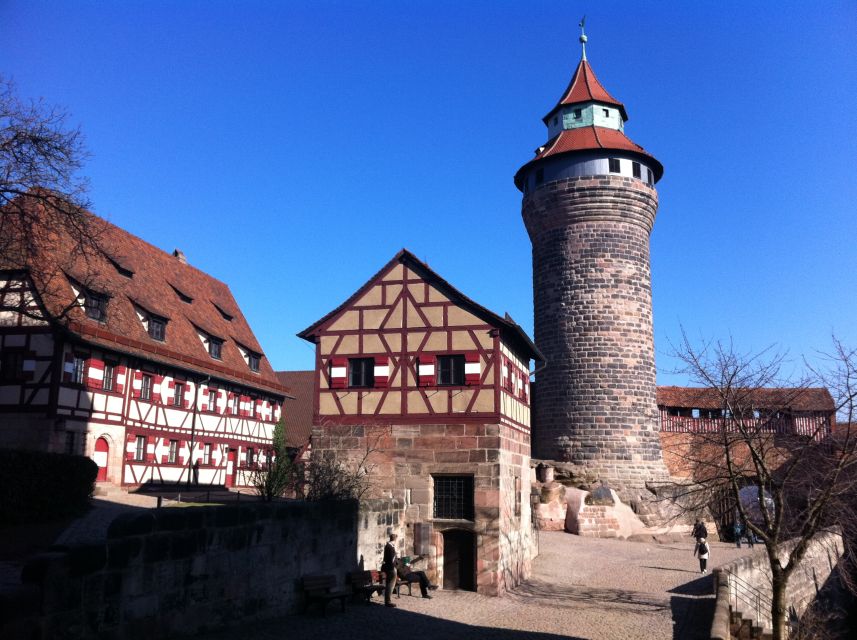
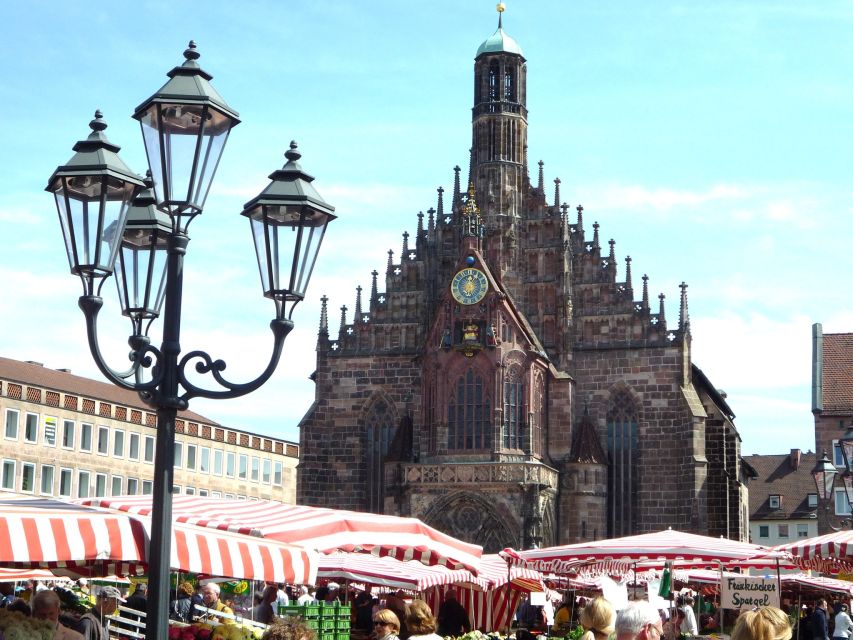
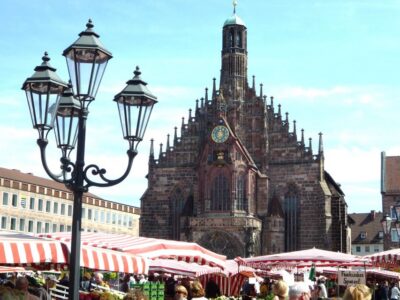
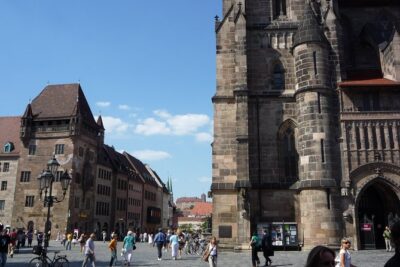
The walk brings you to Hauptmarkt Nürnberg, the historic marketplace. This square is central to the city’s identity, and it is also where major seasonal moments happen. The best-known one is the Christkindlesmarkt in December, but the important detail is that Hauptmarkt keeps working year-round with other markets and festivals.
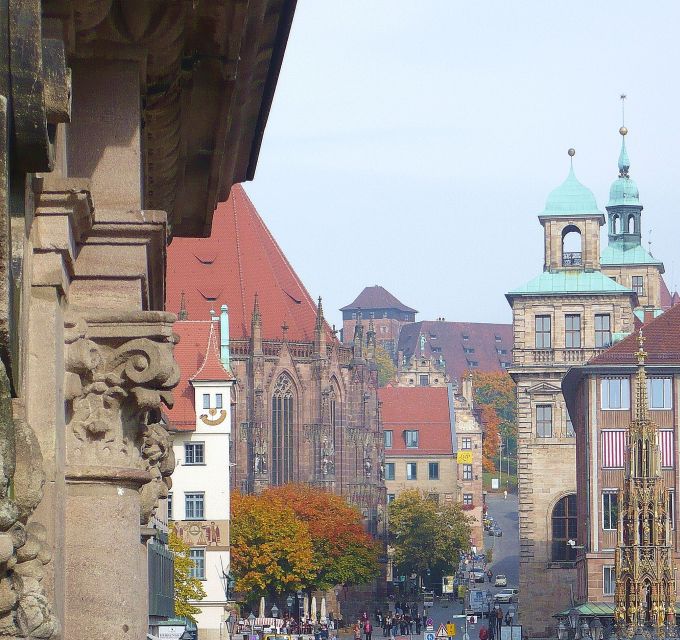
You will also see the Beautiful Fountain and the Old Town Hall, which help explain why this square is more than a photo stop. It is tied to how Nuremberg governed itself and traded with the wider world.
If you are wondering what to do with your time in Nuremberg, this is a smart moment to pause. After the tour guide’s explanation, you can look at the square and guess where crowds will be in different seasons. You can also plan where to go next for a meal, since the center naturally concentrates many options nearby.
St. Sebaldus Church and the story shift toward Empire and Renaissance
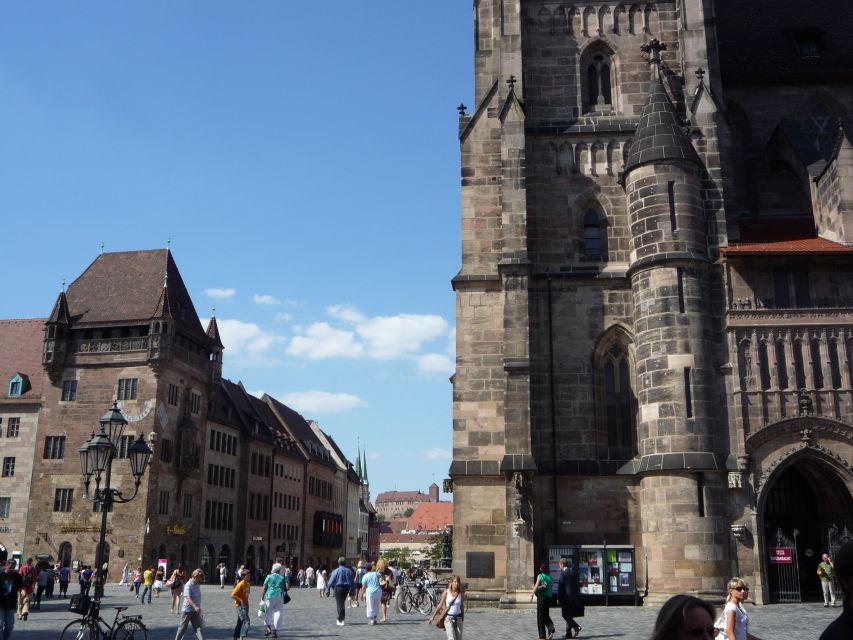
Next you pass St. Sebaldus Church. It functions like another anchor point, but it also signals that the city’s story is not frozen in one era. Your guide ties the landmarks together as you move through different chapters of Nuremberg’s development.
This stop is valuable because it helps you notice changes in tone and style across the city. Nuremberg is often talked about in terms of medieval significance, but you will also hear how it connects to larger movements, including the Holy Roman Empire roots and the German Renaissance era. When you hear that while you are standing in the right place, it stops sounding abstract.
If you like history that you can walk through, this is where the tour starts paying off. You begin to feel the city’s timeline instead of memorizing names.
Imperial Castle courtyards and Albrecht-Dürer-Platz, power meets creativity
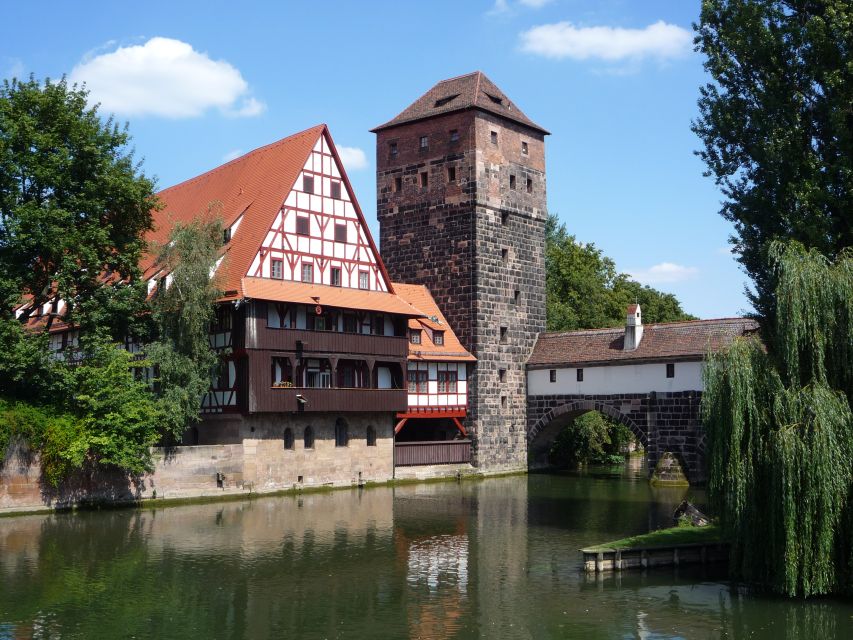
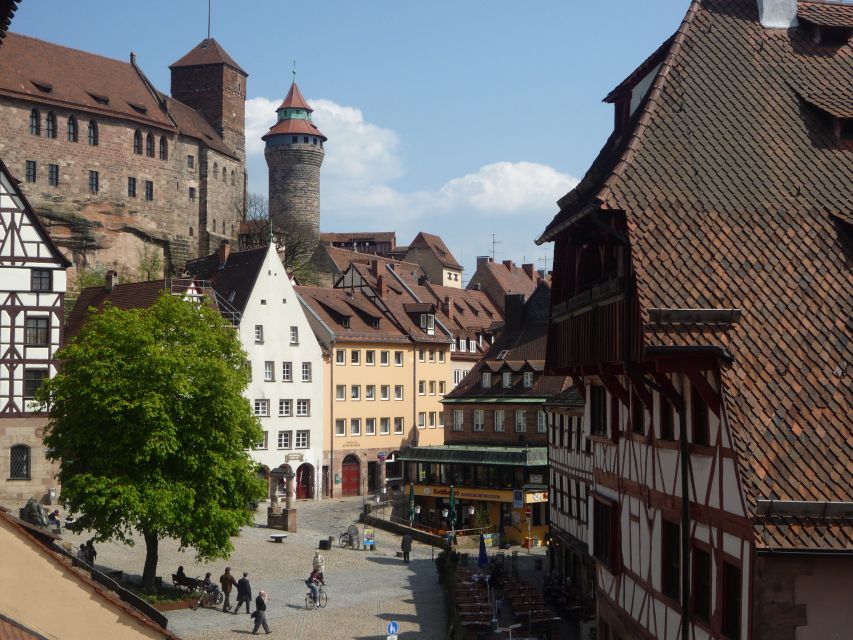
One of the most satisfying parts of this walk is the Imperial Castle of Nuremberg courtyards. Courtyards work well for tours because they show you scale without needing a museum ticket. You can look across open spaces and take in the layout, which makes it easier to grasp how a seat of authority could shape the city.
This is also where the theme of Nuremberg’s importance in the wider region clicks. The guide talks about the city’s roots and why it mattered. You come away with a clearer picture of Nuremberg as a place where political and cultural forces overlapped.
From there, you reach Albrecht-Dürer-Platz and then the area of Albrecht Dürer’s House. This shift to a creative landmark matters because it balances the heavier political themes you will hear later. When your walking route moves from imperial courtyards toward an artistic figure associated with Renaissance culture, you get a fuller sense of what Nuremberg produced, not only what it controlled.
If you are a street-level architecture fan, keep an eye out for the half-timbered buildings you pass along the way. Those façades are part of the charm, and the guide’s explanations help you understand why this style ended up shaping the city’s look.
Congress Hall, Zeppelin Field, and Luitpold Arena, handling the darker chapters
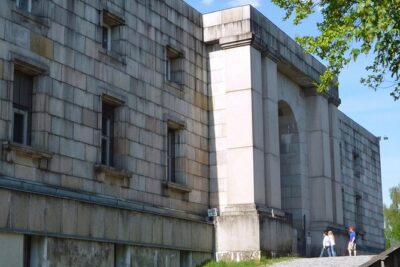
The tour also includes a look at significant sites tied to the Nazi Party and the rally grounds area, including Congress Hall, Zeppelin Field, and Luitpold Arena. Even if you are not a history buff, it is important these locations are part of the experience. Nuremberg is one of the places where modern European history cannot be separated from its physical geography.
How you experience these sites depends on your mindset going in. If you prefer a lighter mood, plan for a more serious tone here. If you want context, this is exactly where a guide earns their pay, because it is easy to get lost in impressions without meaning.
Practical note: these kinds of locations can feel exposed if the weather is bad. One reason this tour tends to work well is that the guide helps you stay comfortable in real conditions, including finding shelter when needed.
Food and drink direction, how to eat like you live there
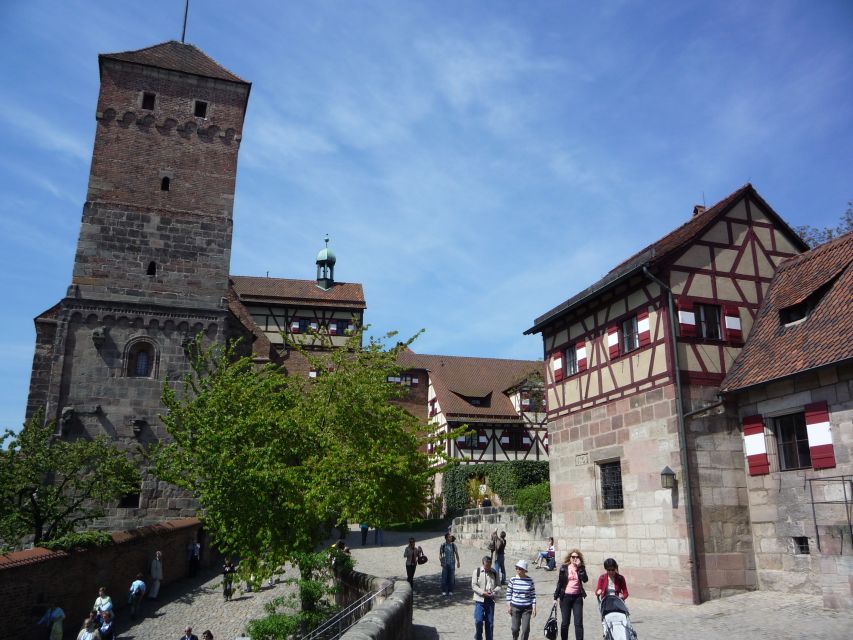
One of the smartest parts of this tour is the practical food advice. You will learn where to find Nuremberg grilled sausages and amber lager. That matters because Nuremberg is famous for these things, and the hardest part for many visitors is knowing where to go without accidentally choosing a place built only for tourists.
The tour also points you toward more modern food options if you want a break from classic local fare. I like having both in the same package, because sometimes you want tradition, and sometimes you want something familiar after a day of walking.
My suggestion: after the tour, pick your next meal using the guidance you were given, then walk a little away from the very center if you want more calm. Hauptmarkt is iconic, but you do not need to eat directly in the middle to get the same atmosphere.
Timing, weather, and photo strategy for a 2-hour route
This tour lasts about 2 hours, and it runs rain or shine. That means you should treat it like a dependable orientation walk, not a one-off outdoor photo shoot. Wear shoes you can stand in, and if rain is likely, bring a light rain jacket. You will still be outside between stops.
For photos, the route is naturally photo-friendly because you hit varied textures: medieval walls, church exteriors, the market square, and the open courtyards at the castle area. The half-timbered streets also give you quick visuals that look good even without special settings.
One more useful habit: decide ahead of time what you care about most, churches, castles, markets, or the rally grounds. Then when the guide shifts topics, you can follow the story with less effort. The pacing is tight, so your focus helps you get more meaning per minute.
Price and value, is $21 a smart deal?
At $21 per person for a 2-hour guided walk, the value comes from what is included, not just the time. You get an English-speaking guide who covers multiple high-impact stops, plus the practical guidance that helps you plan your next meals and day.
If you have spent money on tours that mainly read off plaques, this one aims for more than that. The best part is the mix of entertainment and explanation, with real attention to the flow of the city. You will also appreciate the guide’s ability to handle weather interruptions when they happen, since the tour still runs.
Is it worth it? If you want a concentrated introduction to Nuremberg Old Town and you like learning as you walk, yes. If you want a deep, slow museum-style experience with long interior time, this may not be the right fit, simply because it is a short highlights route.
Also consider comfort and language tone. One guest felt the guide used more profanity and crude sexual references than they wanted, which is a good reminder that humor and conversational style can vary by guide. If you prefer a strictly family-friendly tone, it is reasonable to ask about the guide style or set expectations when you meet.
Should you book this Nuremberg Old Town highlights walking tour?
I would book this if you are arriving in Nuremberg with limited time and you want a smart overview that keeps you moving through real historic spaces. You will see the city walls area, major churches like St. Lorenz and St. Sebaldus, the market heart at Hauptmarkt with the Beautiful Fountain and Old Town Hall, and the Imperial Castle courtyards plus Albrecht Dürer’s House area.
It is also a good choice if you want practical guidance for food, including where to get Nuremberg grilled sausages and amber lager. And if you want to understand Nuremberg’s 20th-century history in its physical setting, the views tied to Congress Hall, Zeppelin Field, and Luitpold Arena add an important layer.
I would skip it if you need wheelchair-friendly accessibility, since it is not suitable for people with mobility impairments. And I would think carefully if you strongly prefer a lighter mood throughout, because the Nazi Party rally sites are part of the experience.
If that sounds like your style, this $21, English-language, 2-hour walk is a practical way to get your bearings fast and leave with a clear sense of where Nuremberg’s stories live.
Pavements of Nuremberg
Nuremberg Within the Walls
Everything else we filed on Nuremberg
- Nuremberg: Medieval Time Travel for Kids
★ 4.9 · 15 reviews - PRIVATE Nuremberg WW2 and Old Town Day Tour (Product code: 87669P16)
★ 4.5 · 15 reviews - Nuremberg: St. Johannis Friedhof &Hesperidengärten IN GERMAN
★ 4.4 · 15 reviews - Nuremberg: Private guided tour of the Old Town in German
★ 4.9 · 17 reviews - PLAYMOBIL®-FunPark Entrance Ticket
★ 4.5 · 17 reviews - Stein: Public guided tour of the “Old Mine” museum
★ 4.5 · 18 reviews
Nuremberg Old Town and Castle Tours, side by side.
 ★ 4.4Nuremberg: City Tour with the Bimmelbahn TrainFrom $122,475 reviews
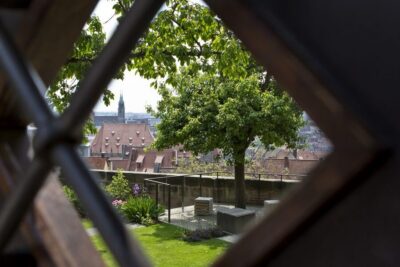 ★ 4.6Nuremberg: Old Town Guided Walking TourFrom $182,416 reviews
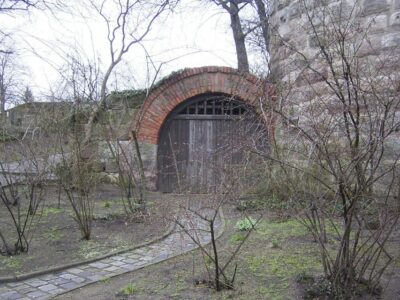 ★ 4.8Nuremberg: Tunnels and Secret Passages in the City Wall TourFrom $142,334 reviews
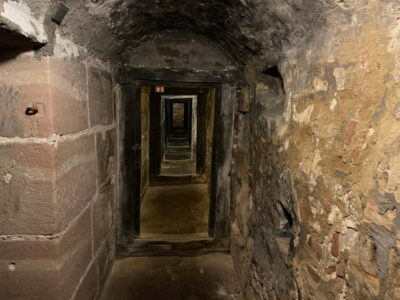 ★ 4.8Nuremberg: Medieval Dungeons Guided TourFrom $111,726 reviews
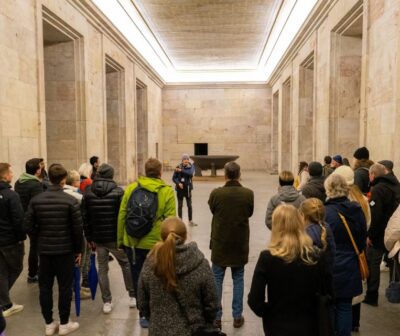 ★ 4.7Nuremberg: Walking Tour of Former Nazi Party Rally GroundsFrom $151,665 reviews
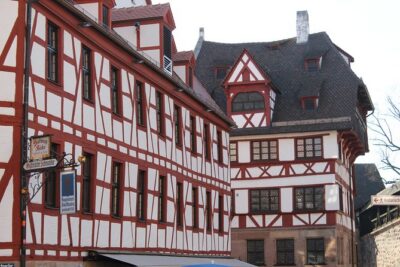 ★ 5.0Medieval Tour in Nuremberg in SpanishFrom $191,374 reviews
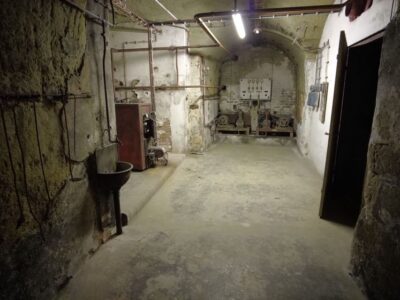 ★ 4.8Nuremberg: Historischer Kunstbunker WWII Art Bunker TourFrom $14921 reviews
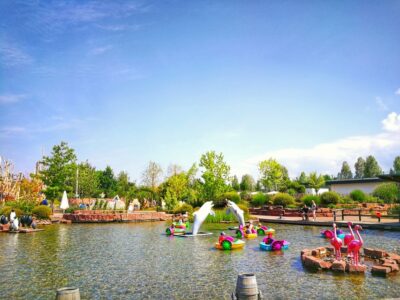 ★ 4.7Nuremberg: PLAYMOBIL®- FunParkFrom $29863 reviews
Other lists this tour is on