
REVIEW · NUREMBERG
Nuremberg Old Town and Nazi Rally Grounds Walking Tour
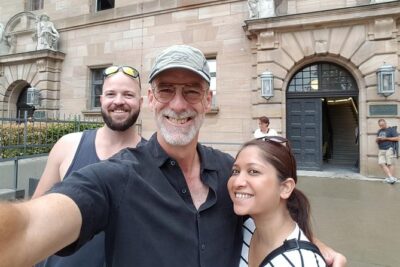
Nuremberg tells two stories in one walk. I love the medieval Old Town sights, especially the castle courtyards and old streets that still feel walled and self-contained. I also love the way this tour connects that setting to the Nazi Rally Grounds without turning the experience into shock-value theater. English guides like Hannes and Natasha (and others you might be paired with) keep the pace moving and the explanations clear.
The main drawback is simple: this is a walking tour and it is not suitable if you have trouble walking or need step-free routes. Wear comfortable shoes, because the day runs rain or shine.
In This Review
- Key things I’d bet on (before you go)
- Meeting at Hauptbahnhof, then walking into two eras
- Handwerkerhof and Mauthalle: the city’s working heart
- St. Lorenz and St. Sebaldus: Gothic churches as emotional landmarks
- Hauptmarkt and Old City Hall: where the market energy never stops
- Imperial Castle courtyards: seeing power without the script
- Albrecht Dürer’s House: art history that feels human
- Lunch in the marketplace: where to eat and what to order
- The bus to the former rally grounds: changing gears without losing the thread
- Zeppelin Field and Luitpold Arena: reading propaganda in open space
- Kongresshalle: Hitler’s half-finished Roman Colosseum idea
- Tram back to Hauptbahnhof: a sensible end to a tough day
- Price and value: why $43 can make sense
- Who should book this tour, and who should skip it
- Should you book it?
- FAQ
- Where do I meet the guide?
- How long is the tour?
- What does the price include?
- Is lunch included?
- Is the tour rain or shine?
- Is the tour suitable for people with mobility impairments?
- What should I bring?
Key things I’d bet on (before you go)
- Old Town first, then the Nazi sites, so you understand the city before you judge what happened here
- Town Hall, castle courtyards, and Dürer’s House, with practical orientation built in
- A true marketplace lunch break in the area where Christmas markets take over in December
- Bus out, tram back, with public transport costs included in the price
- Sensitive storytelling, including how Nuremberg deals with its past today
Further wartime history walks we have written up
- Nuremberg: Walking Tour of Former Nazi Party Rally Grounds★ 4.7 · 1,665 reviews
- Nuremberg: Historischer Kunstbunker WWII Art Bunker Tour★ 4.8 · 921 reviews
- Nuremberg Old Town and Nazi Party Rally Grounds Walking Tour in English★ 4.5 · 504 reviews
- Nuremberg Old Town and Nazi Rally Grounds Walking Tour★ 4.7 · 377 reviews
Meeting at Hauptbahnhof, then walking into two eras
This tour starts at Nuremberg Central Station, outside the large arched entrance. Your guide holds a red and white Nuremberg Tours in English sign, and it helps to arrive a few minutes early so you do not waste daylight regrouping with the group.
Right away, the format makes sense. You begin with Nuremberg’s medieval layout, then shift gears to the Nazi Rally Grounds by bus. That pacing matters. If you go straight to the rally sites first, the scale and symbolism can feel abstract. Doing the Old Town first helps you see how a city can function normally on one side of history, while its shadows stretched out on the other.
Plan on about 4 hours total, including a lunch break. The exact timing can vary slightly, but the flow is built so you get time for food, plus enough walking to see the key highlights.
Handwerkerhof and Mauthalle: the city’s working heart
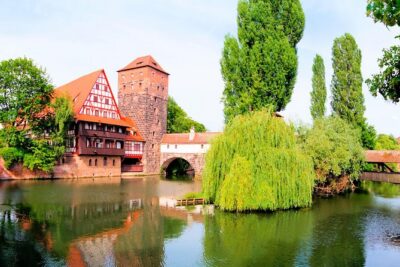
One of the best surprises here is how “old” Nuremberg still looks like it does something. Early stops like Handwerkerhof bring you to Craftsmen’s Court, a place where traditional trades have kept a presence. You are not just looking at stones. You are watching the idea of craftsmanship survive.
You also pass through Mauthalle, which fits the theme of trade and city life. Even if you move through quickly, the guide’s framing helps. Nuremberg was not just a backdrop for power. It was a working place, with merchants, workshops, and systems that kept goods moving.
If you like tours that give you more than postcard views, this early segment sets the tone. You get a mental map before you crowd into the big central squares.
St. Lorenz and St. Sebaldus: Gothic churches as emotional landmarks
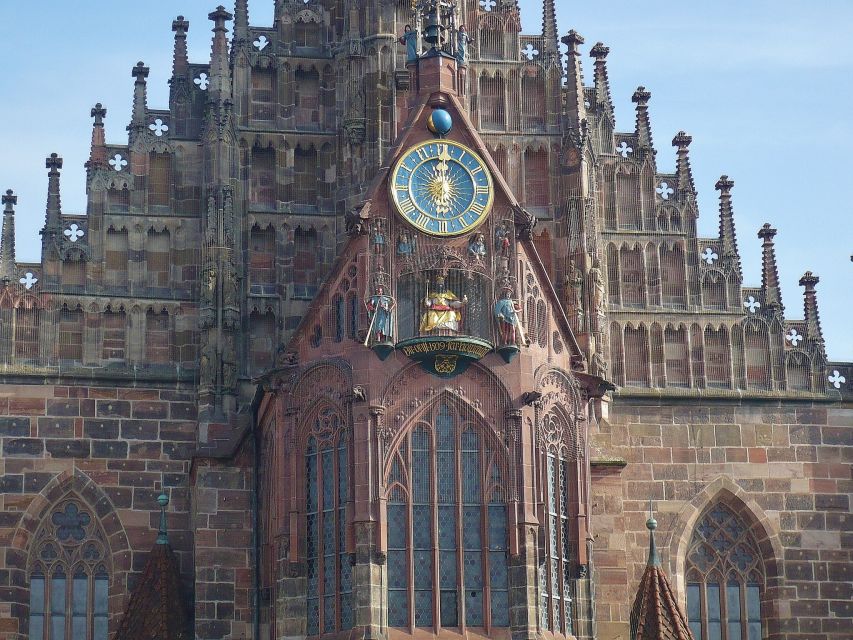
As you work your way toward the Hauptmarkt, you pass major Gothic landmarks like St. Lorenz Church and St. Sebaldus Church. You do not linger in a museum way, but you get the guide’s explanation of what makes these churches important in the city’s story.
This is useful because Nuremberg’s churches are not only religious structures. They are civic anchors. They also help you understand why people built and supported art and monuments in the first place, long before the 20th century.
So even if you are not a cathedral fanatic, you’ll leave with a clearer sense of where Nuremberg’s pride sits in the skyline.
Hauptmarkt and Old City Hall: where the market energy never stops
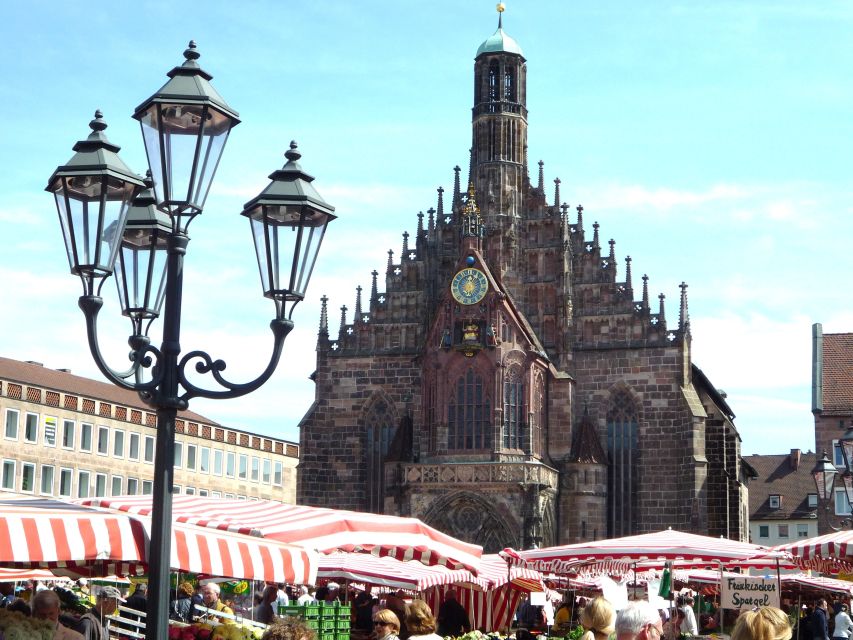
The heart of the walking portion is the Hauptmarkt area. You spend guided time here, and it is easy to see why this square has hosted colorful markets for nearly 700 years. The space itself does the work. It is designed for crowds, speeches, shopping, and seasonal celebrations.
You will also get time at Old City Hall, one of the places where Nuremberg’s self-government and public life become visible in architecture. The tour connects these civic moments to later turning points, so you are not just collecting sights. You’re building a timeline you can actually remember.
If you are visiting in December, the timing is especially good. The Christmas markets here are world-famous, and you’ll get practical context for how this square transforms in winter. Even outside December, the guide’s recommendations help you find the city’s everyday rhythm and not only tourist corners.
Further guided walks over the former rally grounds
Imperial Castle courtyards: seeing power without the script
Next you head up toward the Imperial Castle of Nuremberg. The focus is the castle courtyards, where you get views over the city. This part is not about one interior room. It’s about scale and location.
The guide explains how Holy Roman Emperors ruled Germany for over 500 years, and the courtyards help you feel what that means. From up here, Nuremberg looks like a fortress city built to control movement and defend authority. If you have only seen castles from a distance, this is where the geography clicks.
This stop also gives you a breather from street-level crowding. Even if you are traveling in colder months, the views are worth the climb.
Albrecht Dürer’s House: art history that feels human
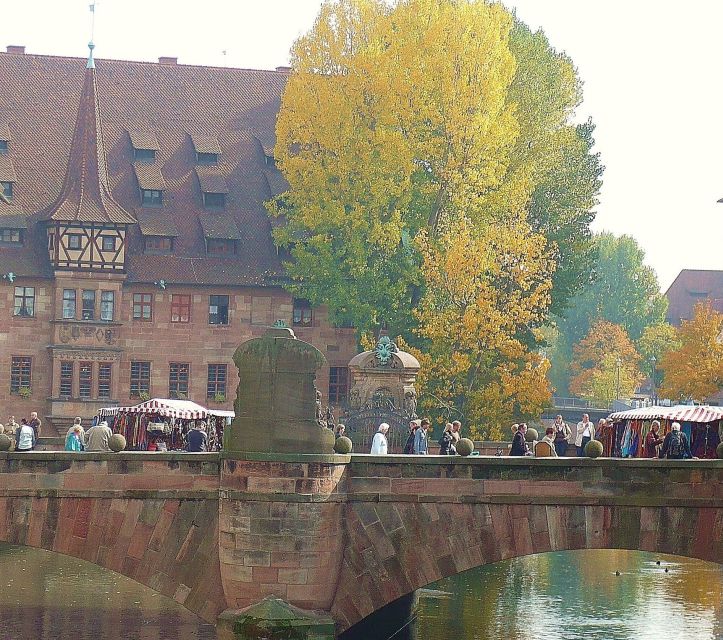
Albrecht Dürer’s House is one of the tour’s guided highlights. The point here is not just that Dürer was famous. It’s that art in Nuremberg was connected to the people, the workshop culture, and the networks that made the city matter.
You’ll get context that turns the name into something concrete. The guide’s explanation makes it easier to appreciate the house as part of a living tradition, not as a sealed artifact behind a ticket window.
If you like art history with practical grounding, this is a good stop. If you just want the big views and fast facts, you still get enough to connect Dürer to the broader city story.
Lunch in the marketplace: where to eat and what to order
After the Old Town segment, you break for lunch in the marketplace area. Lunch is not included, but the time is set up so you can eat without rushing. In practice, this is also your window to handle bathroom breaks, grab a hot drink, or settle into the day before the Nazi sites.
Here is what I’d do if I were you: use your guide’s food pointers. Nuremberg is known for sausages and amber lager, and you’ll be steered toward traditional choices rather than random menus that only look German.
If you are there during Christmas market season, expect the area to be busy. That is not a deal-breaker, but you’ll feel the crowds more than you would at other times of year.
The bus to the former rally grounds: changing gears without losing the thread
Once lunch ends, the tour shifts by bus to the former Nazi Party Rally Grounds. This is where the day gets heavier, and the guide’s pacing becomes important.
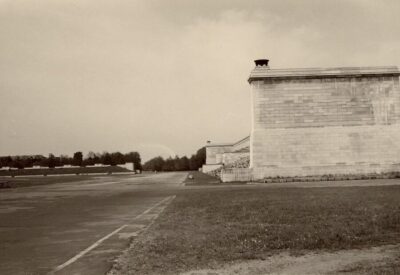
You’re shown the parade grounds where Adolf Hitler inspected columns of SS men and performed pseudo-religious rituals as part of Nazi propaganda. The guide also talks about how Nuremberg handles this history today. That matters, because without that part, many tours stop at spectacle, then leave you with unanswered questions.
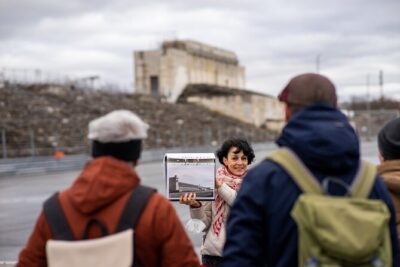
In this section, some guides use photos on an iPad or tablet to help you picture what you are standing in front of. That kind of visual support is useful here, since many structures are ruins, and your brain needs help filling in the intended scale.
Zeppelin Field and Luitpold Arena: reading propaganda in open space
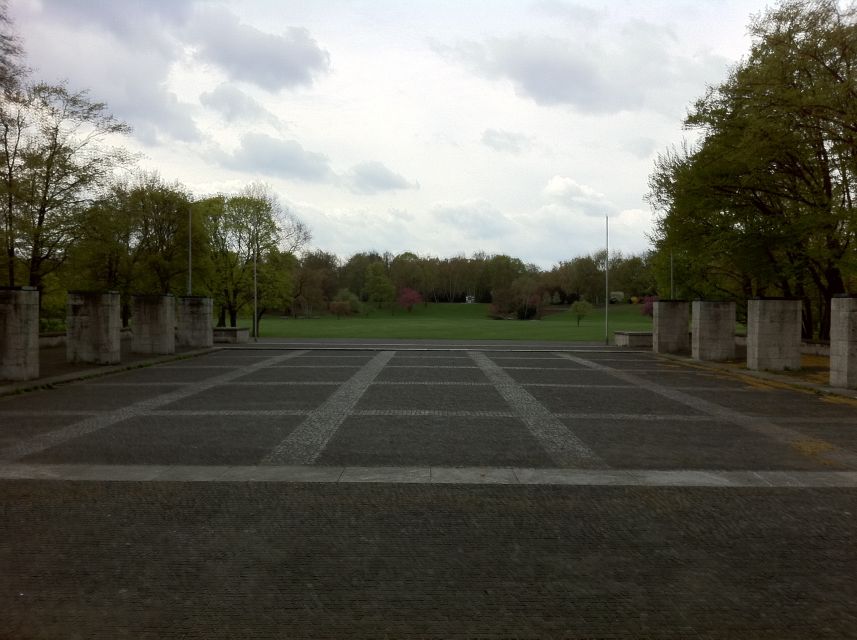
You continue through key areas like Zeppelin Field and Luitpold Arena. These places are big, open, and meant for mass performances. From your perspective on the ground, you start to see how the choreography of power worked.
The guide’s job is to keep the story understandable. You get context about Hitler’s Third Reich and how the rally grounds were designed to project control, unity, and inevitability. Even if you know the headline facts, hearing it connected to the physical layout changes the way you process it.
This part can be emotionally intense, but the tone on this tour aims for clarity over theatrics. Several guides have been praised for handling World War II material with sensitivity and honesty, and that’s exactly the approach you want for this subject.
Kongresshalle: Hitler’s half-finished Roman Colosseum idea
The tour then enters the remains of the Congress Hall, commonly called Kongresshalle. This building connects directly to Hitler’s grand architectural ambition, his attempt to build a Roman Colosseum-like monument in Nuremberg.
Standing near the remains makes the idea feel both grand and absurd. The scale shows how seriously the regime invested in imagery. The unfinished state underlines how human plans can collapse under reality and catastrophe.
The guide brings you back to meaning, not just structure. You’ll hear how the city confronts what was built here, and how the site fits into Nuremberg’s present-day identity.
Tram back to Hauptbahnhof: a sensible end to a tough day
After the rally grounds, you take a tram back to Nuremberg Central Station, where the tour started. The transport timing is part of the value. It prevents you from having to figure out public transit while your head is full.
I also like that the day includes built-in movement between areas. The bus out and tram back make the contrast between neighborhoods and eras feel intentional, not accidental.
The overall result is that you finish with your bearings. Even if you plan to come back later to explore on your own, you’ll know where you are and what you should prioritize.
Price and value: why $43 can make sense
At $43 per person for a 4-hour guided tour, this is priced like an orientation experience with serious content. The biggest value lever is that public transportation costs to and from the rally grounds are included in the tour price.
Lunch is not included. Admission to the Documentation Center after the tour is not included either. That said, you’re still getting a guided walk through the Old Town, a guided look at major Nazi-era sites, and guided transit between the two zones. It’s a lot of ground for one ticket, especially when you consider the subject requires careful explanation.
If you are a first-timer, this kind of tour can save you time. You do not need to piece together route logic and historical context on your own.
Who should book this tour, and who should skip it
This tour is a strong fit if you want a structured introduction to Nuremberg, with both the medieval city and the modern reckoning. It also suits you if you appreciate guides who can keep the pace up and still talk about difficult history thoughtfully.
It may not be a fit if you have mobility limitations or you struggle with walking routes. The tour also runs rain or shine, so you’ll want shoes you trust in wet conditions.
If you like food stops with local recommendations, you’ll appreciate the lunch break built right into the market area. And if you enjoy learning from humor and storytelling, you’re likely to connect with guides like Hannes, Nic, Natasha, and Dimitri, who have been praised for making the hours fly by.
Should you book it?
I think you should book this tour if you want the most efficient way to understand Nuremberg as a real city, not just a set of separate attractions. The Old Town segment helps you see what made the city livable and visually distinctive, and the rally grounds segment shows why its past cannot be ignored.
Skip it if your priority is a long, slow museum day with minimal walking, or if you need step-free access. Otherwise, this is a solid way to get your bearings fast, eat something local, and leave with a clearer picture of how Nuremberg holds two eras in the same frame.
FAQ
Where do I meet the guide?
Meet your guide outside the large center arched entrance of Nuremberg train station (Hauptbahnhof). The guide will be holding a red and white Nuremberg Tours in English sign.
How long is the tour?
The tour takes about 4 hours total, including the lunch break.
What does the price include?
The price includes an English-speaking tour guide and public transportation costs to the former rally grounds and back.
Is lunch included?
No. Lunch is not included, but there is a break for lunch in the marketplace.
Is the tour rain or shine?
Yes, the tour takes place rain or shine.
Is the tour suitable for people with mobility impairments?
No. The tour is not suitable for people who have trouble walking or who have mobility impairments.
What should I bring?
Bring comfortable shoes, since it is a walking tour and you will spend time on foot.
Nuremberg Within the Walls
The Rally Grounds and the Trials
Wartime History Walks We Have Reviewed
Everything else we filed on Nuremberg
- Nuremberg: Medieval Time Travel for Kids
★ 4.9 · 15 reviews - PRIVATE Nuremberg WW2 and Old Town Day Tour (Product code: 87669P16)
★ 4.5 · 15 reviews - Nuremberg: St. Johannis Friedhof &Hesperidengärten IN GERMAN
★ 4.4 · 15 reviews - Nuremberg: Private guided tour of the Old Town in German
★ 4.9 · 17 reviews - PLAYMOBIL®-FunPark Entrance Ticket
★ 4.5 · 17 reviews - Stein: Public guided tour of the “Old Mine” museum
★ 4.5 · 18 reviews
Nuremberg Old Town and Castle Tours, side by side.
 ★ 4.4Nuremberg: City Tour with the Bimmelbahn TrainFrom $122,475 reviews
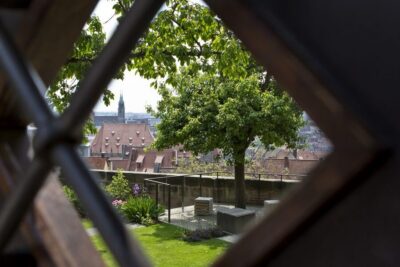 ★ 4.6Nuremberg: Old Town Guided Walking TourFrom $182,416 reviews
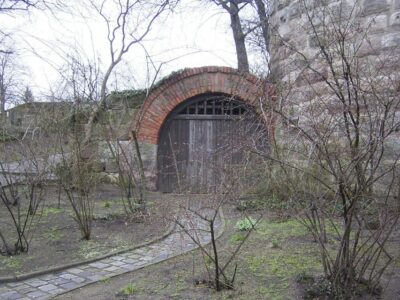 ★ 4.8Nuremberg: Tunnels and Secret Passages in the City Wall TourFrom $142,334 reviews
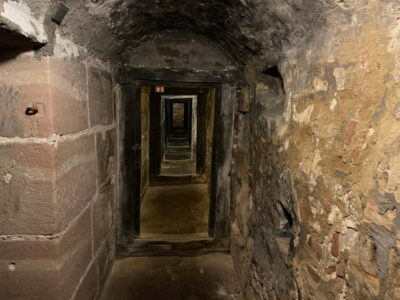 ★ 4.8Nuremberg: Medieval Dungeons Guided TourFrom $111,726 reviews
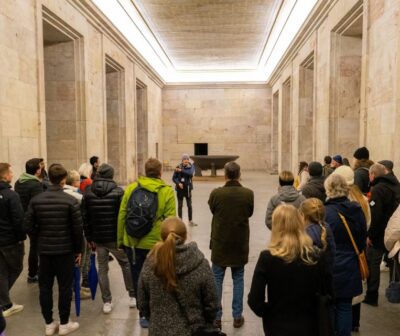 ★ 4.7Nuremberg: Walking Tour of Former Nazi Party Rally GroundsFrom $151,665 reviews
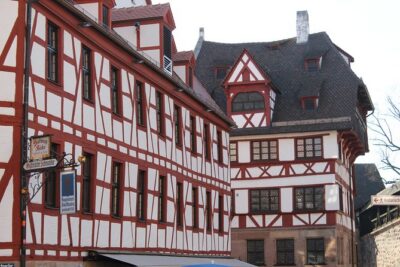 ★ 5.0Medieval Tour in Nuremberg in SpanishFrom $191,374 reviews
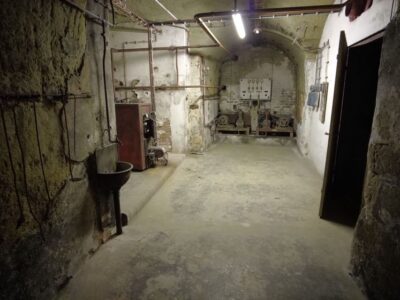 ★ 4.8Nuremberg: Historischer Kunstbunker WWII Art Bunker TourFrom $14921 reviews
 ★ 4.7Nuremberg: PLAYMOBIL®- FunParkFrom $29863 reviews