
REVIEW · NUREMBERG
Nuremberg Third Reich Tour in Spanish
Nuremberg tells a hard story, street by street. This Spanish-language tour links the city’s key Nazi-era locations with memorials and survivor-focused reminders, all in about 3 hours.
I really like how each stop is timed well, so you get momentum instead of wandering. I also love that the tour stays practical, with a mobile ticket and no extra paid site tickets listed for the major stops.
One thing to consider: this route covers antisemitism, persecution, destruction, and trials, so it is emotionally heavy. Since it depends on good weather and stays outside between points, bring sun protection and water.
In This Review
- Key things I’d plan for on this Nuremberg Third Reich Tour (Spanish)
- Why This 3-Hour Nuremberg Third Reich Tour Works
- Starting at Hauptmarkt, then reading Nuremberg like a map
- Frauenkirche: the Pogrom of 1349 and how propaganda starts
- St. Sebaldus Church: from medieval antisemitism to National Socialism
- Nuremberg Rathaus: why Hitler linked the city to power
- Gedenkstätte an der Nürnberger Hauptsynagoge: Night of the Broken Crystals
- Katharinenkirche: ruins, battle, and the reconstruction of Nuremberg
- St. Lorenz: Via Crucis, and its link to the concentration camp
- Nuremberg State Theater: opera house and National Socialism
- Charterhouse Gate: the Nuremberg Trials connection
- Straße der Menschenrechte: ending with the rebirth theme
- Price and value for a Spanish-language historical walk
- What the group size and timing mean for your experience
- Who this Nuremberg Third Reich Tour in Spanish is best for
- Should you book it?
- FAQ
- Is the Nuremberg Third Reich Tour available in Spanish?
- How long is the tour?
- Where does the tour start and what time does it begin?
- Where does the tour end?
- Do I need to buy entrance tickets for the stops?
- What ticket format do I get?
- What is the group size limit?
- Is there a weather requirement?
- Is free cancellation available?
- Are service animals allowed and is public transportation nearby?
Key things I’d plan for on this Nuremberg Third Reich Tour (Spanish)
- A tight 3-hour route with short, focused stops that keep the story moving
- Spanish guide with strong historical explanation at each location
- Memorial stops in real places, including the synagogue memorial and sites tied to the Pogrom of 1349
- Trials and rebuilding themes end up side by side, so the city’s transformation makes sense
- Small group size (max 30), which helps the guide keep control of the pace
- Ending near the central station area, so it’s easy to continue your day
Further wartime history walks we have written up
- Nuremberg: Walking Tour of Former Nazi Party Rally Grounds★ 4.7 · 1,665 reviews
- Nuremberg: Historischer Kunstbunker WWII Art Bunker Tour★ 4.8 · 921 reviews
- Nuremberg Old Town and Nazi Party Rally Grounds Walking Tour in English★ 4.5 · 504 reviews
- Nuremberg Old Town and Nazi Rally Grounds Walking Tour★ 4.7 · 377 reviews
Why This 3-Hour Nuremberg Third Reich Tour Works
You get Nuremberg’s story in a format that fits real travel days. At 3:30 pm, the timing is smart, because you’re not rushing in the morning, and you can still eat well afterward.
The big win is the structure. The route goes from early antisemitism and persecution signals, through Nazi propaganda power, to physical destruction and then the moral reckoning of the trials, finishing at a human-rights message. It feels like the city is a timeline you can walk.
Also, you are not asked to buy extra site tickets for the listed stops. That matters when you are budgeting, and it reduces the usual friction of “wait, where do I pay?”
Starting at Hauptmarkt, then reading Nuremberg like a map
You meet at Hauptmarkt 14, right in the core of old Nuremberg. This is the kind of starting point that helps you get your bearings fast, especially if you are arriving from the station area.
From there, the guide builds connections across centuries. In a city with medieval churches, civic buildings, and Nazi-era monuments close together, that connecting thread is what keeps everything from feeling random.
One practical tip: wear shoes you trust. The tour is only about 3 hours, but it moves from stop to stop on foot, and several locations are churches and memorial areas where you will stand, look, and listen.
Frauenkirche: the Pogrom of 1349 and how propaganda starts
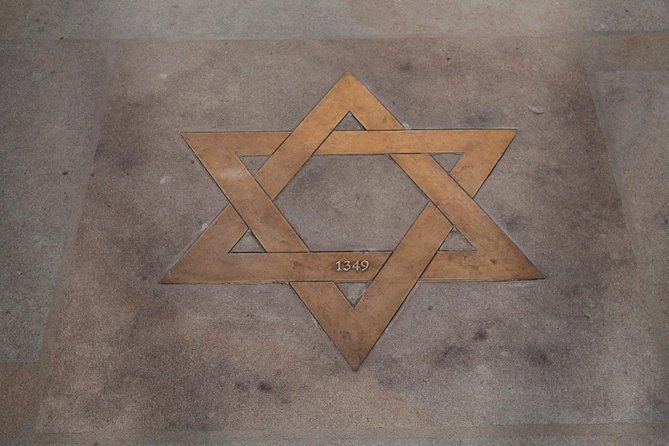
The first stop is Frauenkirche, used here as a doorway into the Jewish quarter and the Pogrom of 1349. This is not about a single event stuck in the past. It’s about how fear, blame, and stereotypes can become part of a city’s routine.
What I like about starting here is that it gives you context before the tour reaches the Third Reich. You get a foundation for understanding how prejudice can be older than the regime that later turns it into state policy.
The payoff is mental, not just visual. After this stop, later places tied to National Socialism land with more weight, because you see the ideological roots rather than only the dramatic moments.
St. Sebaldus Church: from medieval antisemitism to National Socialism
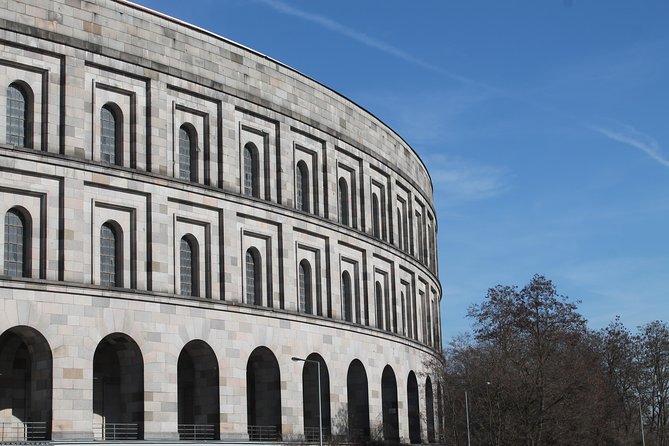
Next comes St. Sebaldus Church, where the focus shifts to antisemitism from the Middle Ages to National Socialism. The tone here is direct: it’s a reminder that the Nazi ideology did not appear in a vacuum.
Even if you know the basics, you’ll likely appreciate the continuity. The guide’s job, at each stop, is to explain why Nuremberg became so useful to the Nazis and why those ideas resonated locally.
Drawback to expect: churches can be visually beautiful, which can tempt people to treat them like normal sightseeing. This stop intentionally pushes you to look beyond architecture and toward the human consequences.
More of Nuremberg inside the walls
Nuremberg Rathaus: why Hitler linked the city to power
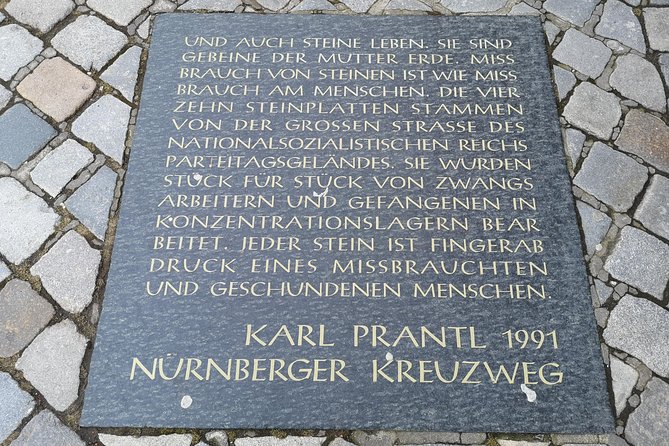
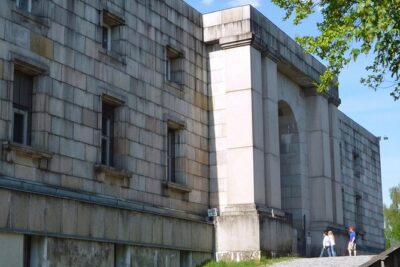
At Nuremberger Rathaus, the story connects Hitler and Nuremberg. This is where the tour turns toward ideology and branding: Hitler saw Nuremberg as a city with deep Germanic symbolism, and the Nazis used that symbolism to create legitimacy.
It helps that Nuremberg was treated as a “congress capital” in the Nazi plan. You start to understand that the regime wasn’t only governing. It was also performing history.
If you like explanation that shows cause and effect, this is a key stop. It’s not only describing events. It’s showing how leaders choose settings that make their message feel inherited, not invented.
Gedenkstätte an der Nürnberger Hauptsynagoge: Night of the Broken Crystals
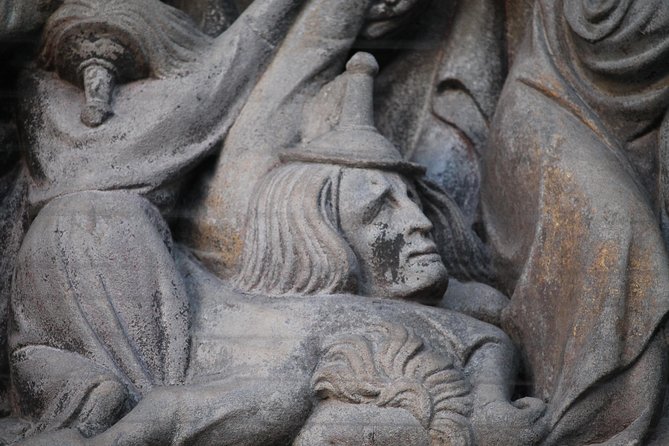
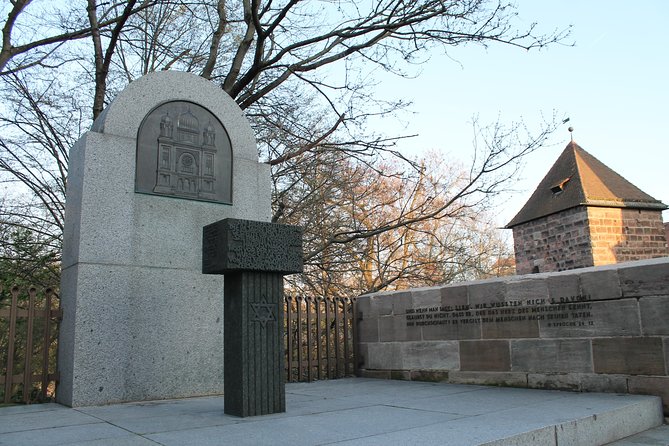
Then you reach the Gedenkstätte an der Nürnberger Hauptsynagoge, the memorial connected to the synagogue’s destruction and the Night of the Broken Crystals. This is one of those places where the story becomes sharply real.
The guide’s pacing matters here, because memorial sites need respectful attention. Expect a short stop, but with a lot of meaning packed in.
I like that the tour places this after the earlier antisemitism context. It shows how the ideology moved from social hostility to violence that the entire system enabled.
Katharinenkirche: ruins, battle, and the reconstruction of Nuremberg
At Katharinenkirche, you look at the ruins of the Church of Saint Catherine and the way the city was shaped by battle and liberation. The emphasis here is on destruction and later reconstruction.
That’s useful, because many people only associate World War II with ruins and then immediately jump to postwar rebuilding as if it were simple. Nuremberg’s reconstruction, as framed by this stop, is tied to what had happened and what the city chose to remember.
One consideration: ruins and memorial settings can be open to weather. If your afternoon is hot or stormy, you’ll feel it more here, so plan for that.
St. Lorenz: Via Crucis, and its link to the concentration camp
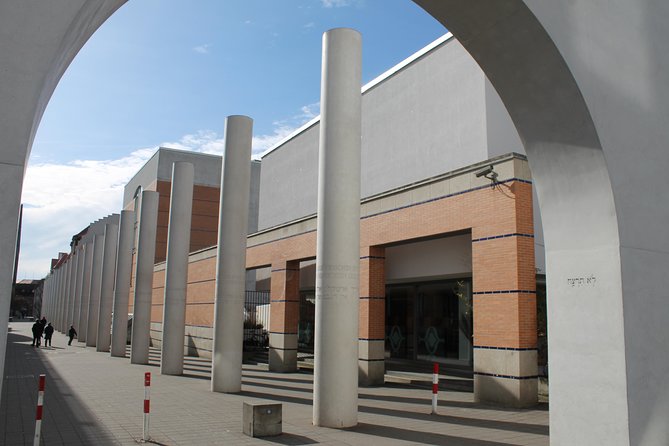
At St. Lorenz, the tour addresses the Via Crucis in relation to the Nuremberg concentration camp. This is a tough junction of religious imagery and the machinery of persecution.
I appreciate that the tour doesn’t treat symbols as neutral. It explains that meaning changes depending on who controls the narrative, and how physical spaces can be repurposed to support ideology.
If you want your tour to be emotionally challenging but still historically grounded, this is a highlight. The guide gives you the “why” behind the connection.
Nuremberg State Theater: opera house and National Socialism
Next is the Nuremberg State Theater, discussed for its connection with National Socialism. This stop shifts from churches and memorials to culture and performance.
That matters because the Nazis understood propaganda was not only speeches and banners. It also lived inside public life, art, and institutions.
So, when you stand in front of a cultural building, you’ll get asked to think differently. Instead of only admiring the structure, you consider how regimes use culture to shape what feels normal.
Charterhouse Gate: the Nuremberg Trials connection
The route then reaches the Charterhouse Gate, tied here to the Nuremberg Trials. This is the “after” part of the story, when the world tried to make sense of what had been done.
This stop feels different because it changes the purpose of the tour from explanation of ideology to confrontation with responsibility. It’s not just “what happened,” it’s “how the world answered it.”
If you’ve read about the trials before, you’ll still likely enjoy this stop because it anchors the legal reckoning to real city geography, not only books and dates.
Straße der Menschenrechte: ending with the rebirth theme
Finally, the tour finishes on Street of Human Rights near Kartäusergasse 1, close to the central train station. The end point ties back to the idea of rebirth from the ashes of the city of Nuremberg.
This ending choice is smart. You leave with a forward-looking message rather than only staying in the destruction. It doesn’t erase the horror, but it frames memory in a way that points to prevention and responsibility.
Logistically, ending near the station area is practical. You can grab a meal, hop on transit, or continue walking to other sights without fighting your way back across town.
Price and value for a Spanish-language historical walk
The price is $19.70 per person, with a guided tour in Spanish and an average booking window of 35 days in advance. For a 3-hour route that covers multiple major sites tied to antisemitism, Nazi propaganda, destruction, and the trials, it’s strong value.
The value is not only about cost. It’s about time. Instead of piecing together locations yourself, the guide connects them so your brain doesn’t treat each site as a separate postcard.
Also, the tour includes a mobile ticket, and the start and finish locations are clear. That reduces the usual small hassles that can make a history day stressful.
What the group size and timing mean for your experience
This tour has a maximum group size of 30 people. That’s big enough to feel social, but small enough for a guide to keep pace and direction.
Start time is 3:30 pm, and the duration is about 3 hours. If your day includes museums in the morning, this can work well as your afternoon anchor, especially because it ends near central transport.
One more practical angle: reviews specifically call out that it stays enjoyable even in heat. So on sunny days, think like a local, shade if you can, and bring water. Soda is not included, so pack your drink plan.
Who this Nuremberg Third Reich Tour in Spanish is best for
You’ll enjoy this most if you want history that explains connections, not just dates and names. The stops are chosen to show a chain of events across centuries, and that approach helps you understand why Nuremberg mattered so much to the Nazis.
It’s also a good fit if you prefer walking tours that feel focused and guided. You’ll see a lot of key places without it turning into a long day.
If you hate heavy topics or you want a lighter sightseeing route, this may not match your mood. This is a serious subject tour, even when the pacing is friendly.
Should you book it?
If your goal is to understand Nuremberg’s Nazi-era role through real locations, this tour is an easy yes. The Spanish guidance, small-group size, and well-paced stops make it a practical way to learn without getting lost in a self-made route.
Book it if you appreciate a story that links antisemitism’s older roots to the regime’s public power, then to destruction, and finally to accountability and human rights. Also, if you want to end near the train station, this itinerary finishes in a convenient place.
Skip it only if you know you want a lighter afternoon, or if you are not comfortable with emotionally difficult material. Otherwise, for the price, the structure, and the clarity of the route, it’s one of the most sensible ways to spend a few hours in Nuremberg with meaning attached.
FAQ
Is the Nuremberg Third Reich Tour available in Spanish?
Yes. The tour includes a guide in Spanish.
How long is the tour?
It lasts about 3 hours.
Where does the tour start and what time does it begin?
It starts at Hauptmarkt 14, 90403 Nürnberg, Germany at 3:30 pm.
Where does the tour end?
It ends at the Street of Human Rights near Kartäusergasse 1, 90402 Nürnberg, Germany, close to the central train station (about a 10-minute walk from the start area).
Do I need to buy entrance tickets for the stops?
The stop details list admission ticket free for the listed locations, so there are no extra paid site tickets mentioned.
What ticket format do I get?
You receive a mobile ticket.
What is the group size limit?
The tour has a maximum of 30 travelers.
Is there a weather requirement?
Yes. The experience requires good weather. If it’s canceled for poor weather, you’ll be offered a different date or a full refund.
Is free cancellation available?
Yes. You can cancel up to 24 hours in advance for a full refund.
Are service animals allowed and is public transportation nearby?
Service animals are allowed, and the tour is near public transportation.
Nuremberg Within the Walls
Wartime History Walks We Have Reviewed
Everything else we filed on Nuremberg
- Nuremberg: Medieval Time Travel for Kids
★ 4.9 · 15 reviews - PRIVATE Nuremberg WW2 and Old Town Day Tour (Product code: 87669P16)
★ 4.5 · 15 reviews - Nuremberg: St. Johannis Friedhof &Hesperidengärten IN GERMAN
★ 4.4 · 15 reviews - Nuremberg: Private guided tour of the Old Town in German
★ 4.9 · 17 reviews - PLAYMOBIL®-FunPark Entrance Ticket
★ 4.5 · 17 reviews - Stein: Public guided tour of the “Old Mine” museum
★ 4.5 · 18 reviews
Nuremberg Old Town and Castle Tours, side by side.
 ★ 4.4Nuremberg: City Tour with the Bimmelbahn TrainFrom $122,475 reviews
 ★ 4.6Nuremberg: Old Town Guided Walking TourFrom $182,416 reviews
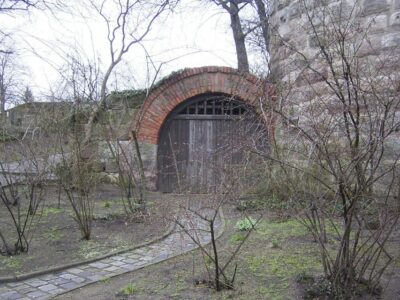 ★ 4.8Nuremberg: Tunnels and Secret Passages in the City Wall TourFrom $142,334 reviews
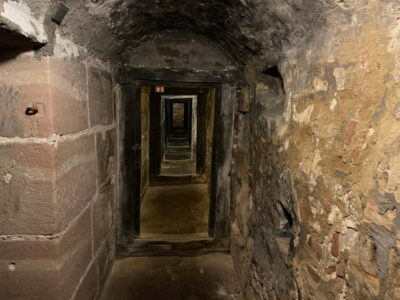 ★ 4.8Nuremberg: Medieval Dungeons Guided TourFrom $111,726 reviews
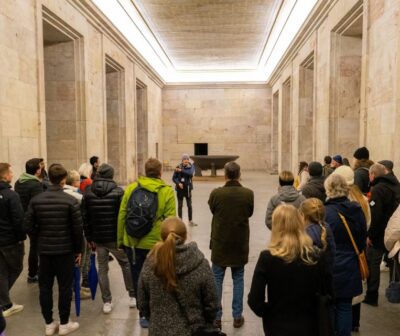 ★ 4.7Nuremberg: Walking Tour of Former Nazi Party Rally GroundsFrom $151,665 reviews
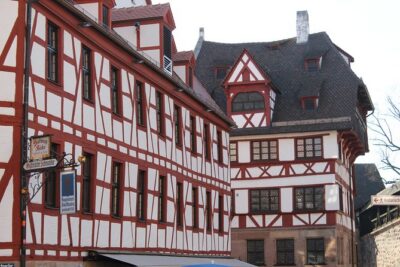 ★ 5.0Medieval Tour in Nuremberg in SpanishFrom $191,374 reviews
 ★ 4.8Nuremberg: Historischer Kunstbunker WWII Art Bunker TourFrom $14921 reviews
 ★ 4.7Nuremberg: PLAYMOBIL®- FunParkFrom $29863 reviews
Other lists this tour is on