
REVIEW · NUREMBERG
Nuremberg WWII Tour, Courtroom 600 and 3rd Reich Sites
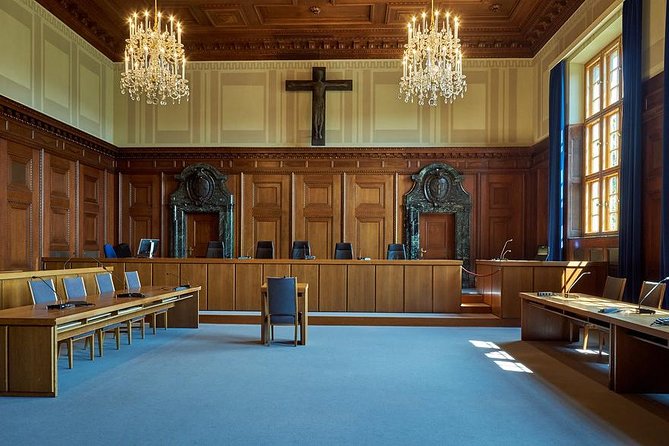
Courtroom 600 makes Nuremberg feel uncomfortably close. This half-day tour takes you to major Third Reich rally grounds and ends in the room where the world watched accountability happen. I love the simple setup, private transport for a small group up to 8, and the way guides like Rob and Seba explain what you are seeing while you are seeing it. One thing to consider is that the Palace of Justice can be closed on Tuesdays, and Courtroom 600 time is limited, with extra entry fees.
The payoff is less “bus tour facts” and more a guided route that saves you from map work and lets you ask questions as you go. You’ll spend time outdoors at monumental sites, so dress for weather. If you prefer very slow, easy-to-follow narration, be aware that speaking speed and accents can vary by guide.
In This Review
- Key things I’d plan around
- A 4-hour route that trades driving for context
- Hall of Honour: where spectacle became policy
- Kongresshalle and the Documentation Center: propaganda as an engineered system
- Zeppelinfeld: the grandstand that connects design, power, and rupture
- Nuremberg Palace of Justice and Courtroom 600: where history became judgment
- Pace, questions, and the reality of short visits
- How much you are really paying for, and what you get
- Who should book this WWII and Courtroom 600 tour
- Should you book it? My honest recommendation
- FAQ
- FAQ
- How long is the Nuremberg WWII tour?
- What is the maximum group size?
- Where do you pick up passengers in Nuremberg?
- Is the Palace of Justice always open?
- What entrance fees are not included?
- What language is the tour offered in?
- Is free cancellation available?
Key things I’d plan around
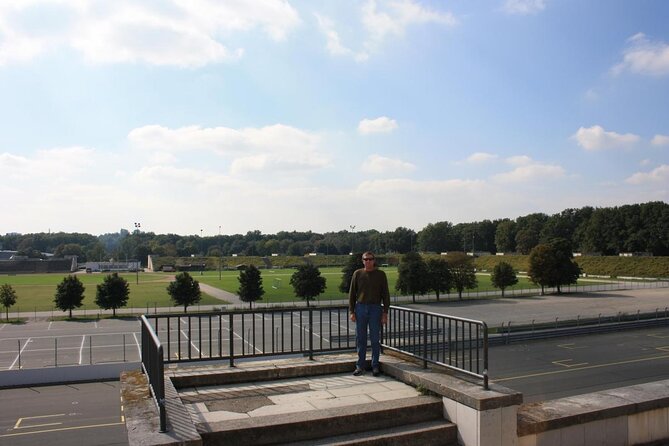
Small group, private vehicle means you are not squeezed into a big crowd and you can actually ask questions.
Courtroom 600 is the emotional centerpiece but the visit window is short, so go in with focused questions.
You get the rally grounds in order so the propaganda becomes more understandable, not just dramatic scenery.
Some entries cost extra at the Kongresshalle and the Palace of Justice, so budget for tickets.
Tuesdays can change the plan since the Palace of Justice is closed that day.
Further wartime history walks we have written up
- Nuremberg: Walking Tour of Former Nazi Party Rally Grounds★ 4.7 · 1,665 reviews
- Nuremberg: Historischer Kunstbunker WWII Art Bunker Tour★ 4.8 · 921 reviews
- Nuremberg Old Town and Nazi Party Rally Grounds Walking Tour in English★ 4.5 · 504 reviews
- Nuremberg Old Town and Nazi Rally Grounds Walking Tour★ 4.7 · 377 reviews
A 4-hour route that trades driving for context
This tour is built around comfort and efficiency. You ride in a private vehicle with your small group, up to 8 people, which matters in Nuremberg because the sites are spread out and each stop needs time to breathe, not just a quick photo.
Pickup is straightforward if you are staying in the Old Town or at the river cruise port area. The tour offers pickup there, and the vehicle meets you in the Old Town zone. If your hotel is outside the Old Town, you do not get curbside pickup, you go to the stated meeting point: Novotel Hotel Centre Ville, Bahnhofstrasse 12.
You also get a mobile ticket and the tour runs in English. There are group discounts, and the experience is priced at $160.90 per person, which is not cheap, but the value logic is clear: you are paying for a dedicated guide and private transportation rather than just tickets and general admission.
Hall of Honour: where spectacle became policy
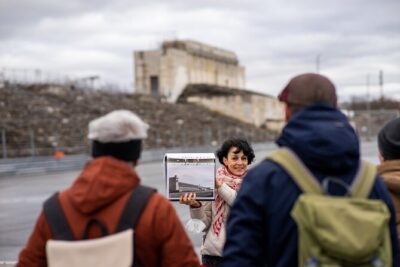
Stop 1 is the Hall of Honour area at the Nazi Party Rally Grounds, a big site that covers more than 16.5 square kilometers. The rallies of the NSDAP took place here from 1933 to 1938, and the design is strongly associated with Albert Speer’s basic concept, with Walter Brugmann handling the detail and implementation.
What I like about starting here is that it sets the scale. Once you stand in the environment where mass gatherings were staged, it is easier to understand how the regime turned ideology into architecture and ceremony. This is not just “Nazi history,” it is how the state tried to choreograph collective emotion.
The stop is about 1 hour, and the admission ticket for the Hall of Honour is free. That means your money goes to the experience, not another line item at the counter. The outdoor setting also makes this a weather-dependent stop, so if you are visiting in colder months, plan on dressing for it, since much of the tour is outdoors.
Kongresshalle and the Documentation Center: propaganda as an engineered system
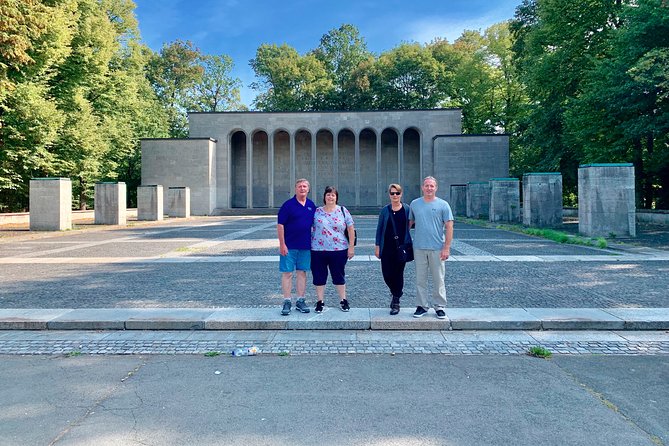
Stop 2 is the Kongresshalle area, now linked with the Documentation Center at the Nazi Party Rally Grounds. From 1933 to 1938, the party rallies were organized and produced as a major public display. Today, you still see enormous remains, which is exactly what makes this stop powerful.
You are given about 40 minutes here. The admission ticket is not included, so you should expect to pay for entry at the site. Because the structures are huge, you can use that time well by looking for the “why” behind the design, not just the size.
This is also a stop where your guide’s phrasing helps. A good guide explains how these spaces were built to direct attention, amplify symbolism, and make the crowd feel like part of something bigger than themselves. The Documentation Center adds the written and visual framing that turns the buildings into evidence, not just ruins.
Zeppelinfeld: the grandstand that connects design, power, and rupture
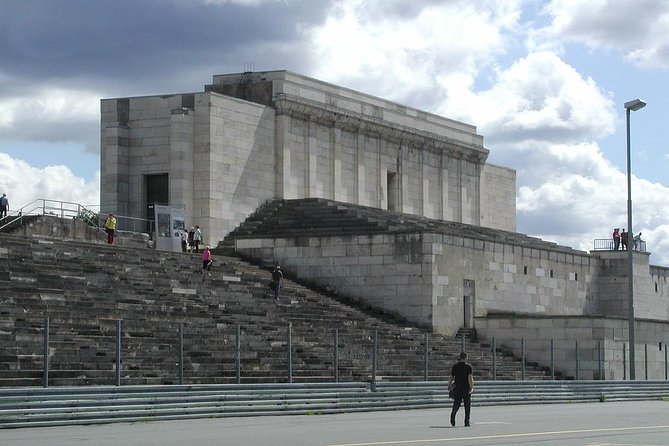
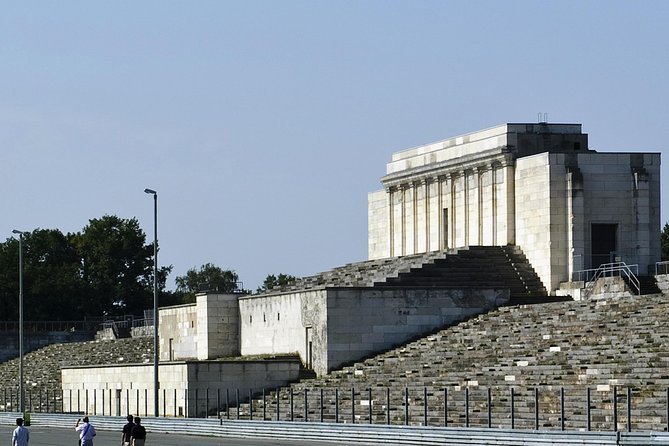
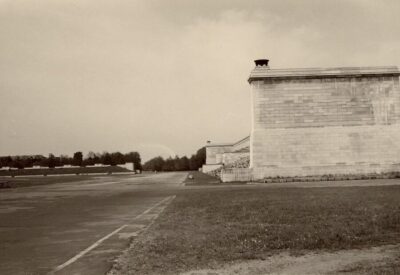
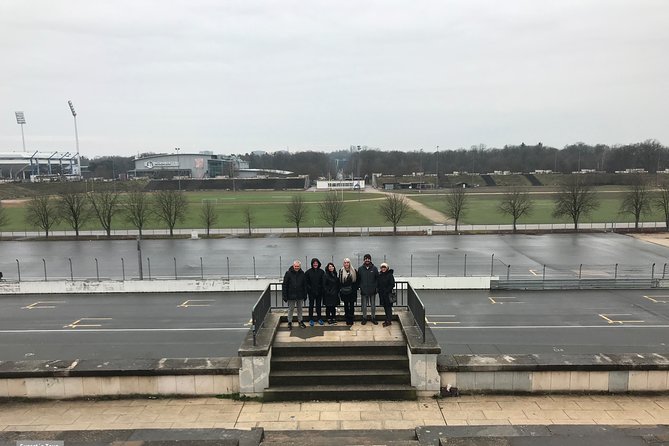
Stop 3 is Zeppelinfeld, located east of the Great Road. The centerpiece is a grandstand called the Zeppelinhaupttribüne, famous for its scale: 360 meters wide, with a smaller stand as well. Albert Speer’s early involvement is part of the story, and the design is said to be based on the Pergamon Altar, an interesting reminder that regimes often borrow from older forms to look timeless and inevitable.
The square piers connect to architectural influence from Paul Philippe Cret, and the story keeps going past the Nazi era. Zeppelinfeld is also remembered for 1945, when the swastika was blown from the top of the grandstand after Germany’s fall in World War II. On top of that, the name Zeppelinfeld, or Zeppelinwiese, ties the location to an earlier moment: Ferdinand Graf von Zeppelin landed with one of his airships, LZ6, in August 1909.
You get about 30 minutes, and entry is free for this stop. In practice, that timing works well because you are not expected to “master” every dimension of a massive space. Instead, you get enough minutes to grasp the scale and let the guide connect the architecture to the way power was performed.
Photographically, this is the kind of place where a lot of angles work, but wide-open views can be windy or rainy. If the weather is rough, a private-vehicle small group is a real advantage because you can move quickly between covered moments without losing people to confusion.
Further guided walks over the former rally grounds
Nuremberg Palace of Justice and Courtroom 600: where history became judgment
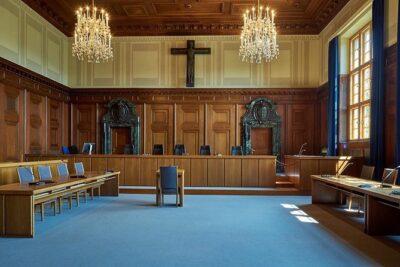
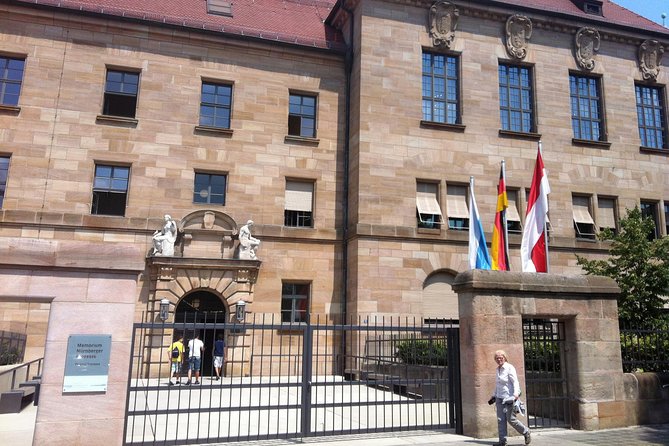
Stop 4 is the Nuremberg Palace of Justice, the anchor of the tour. This is where the Major War Criminals Trial happened, held before the International Military Tribunal in Nuremberg from November 20, 1945, to October 1, 1946. The courtroom itself, Courtroom 600, became world-famous because it is where the trial unfolded and the record of the proceedings took shape.
From 1946 to 1949, 12 subsequent trials were held in the same courtroom, but those were exclusively U.S. American military tribunals. That detail matters because it shows how Nuremberg was not a single headline event. It was a process, and Courtroom 600 was the stage that carried it.
Here is the practical part: Courtroom 600 admission is not included, and the Palace of Justice entrance fee is €7.50 per person. Also, the Palace of Justice is closed on Tuesdays. That alone is reason enough to check your calendar before booking, because you do not want to show up on a closure day and end up with a reduced experience.
Timing is another consideration. The tour stop here is listed at about 30 minutes, and reviews mention times around 35 to 40 minutes at Courtroom 600. That is enough time to absorb what you need, especially if you focus on key displays and the courtroom layout. But if you are the type who could spend hours reading every panel, you will probably want extra time on your own at the Palace of Justice complex, assuming it is open.
This is also a place where the tone of the guide matters. Many people describe this tour as somber and meaningful, and that usually comes down to the way the guide balances facts with respect. The best guides keep it clear and human without turning tragedy into a spectacle.
Pace, questions, and the reality of short visits
This tour runs about 4 hours total. With four major stops, that means each location has a defined window, and the guide uses that structure to keep the day coherent. The advantage of this format is that you get a route that flows from rally grounds to trial space without wasting time on navigation.
The disadvantage is that you cannot expect deep museum time at every stop. Even within the Courtroom 600 window, you might wish you had more minutes. One of the most useful strategies is to go into the courtroom with a short list of questions you actually care about, then ask them. The private format makes that easier than on a standard group bus tour.
One more real-world note: review comments mention that some guides can speak quickly or with heavy accents, and that can make it harder to follow if you are not comfortable with that pace. If you are sensitive to this, ask the guide to slow down when you meet them. A good guide should respond to the group’s needs, especially in a small group setting.
Finally, be aware that certain parts of museum programming can change due to operational issues like closures for repair or holidays, which can affect what is accessible inside the courtroom area. You should assume the guide may adjust the plan if an exhibit door is closed.
How much you are really paying for, and what you get
At $160.90 per person for about 4 hours, you are paying for three things at once: private transport, a tour guide, and access to the main WWII sites as part of a planned route. The small group cap at 8 helps keep the experience personal, and the pickup service reduces hassle.
You should also budget for what is not included. The Palace of Justice entry fee is €7.50 per person, and the Kongresshalle admission ticket is not included. Since those are fixed costs, you can estimate a more honest total before you go.
Is it worth it? For me, the “yes” case is strong if you are interested in how the Third Reich built public power and then how the world tried to prosecute it afterward. If you only want a casual photo walk of famous structures, you might not need a private guide. But if you want interpretation, context, and the ability to ask questions, this kind of guided route tends to feel like money well spent.
One extra practical clue: the tour is commonly booked about 91 days in advance on average, which suggests it stays in demand. If you are traveling in a busier season, it is smart to reserve early.
Who should book this WWII and Courtroom 600 tour
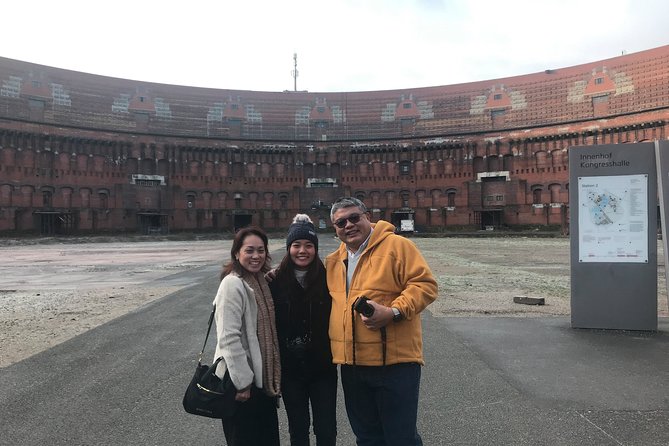
You will probably love this tour if you are a WWII history buff, if you care about international law and how trials work, or if you want to understand the transition from Nazi rule to postwar accountability in a way that connects spaces to events.
This also suits people who dislike driving and parking in an unfamiliar city. The “leave the map work to a guide” approach is not just comfort. It is a way to keep the day focused, because you can stay mentally on the story instead of juggling routes.
If you are visiting with limited mobility, this tour’s outdoor time at monumental grounds might be harder than a fully indoor tour. The tour info says most travelers can participate, but it does not spell out step-free details, so if that matters to you, you should check directly with the provider.
Should you book it? My honest recommendation
If Courtroom 600 is on your Nuremberg must-do list, book this. The structure of the day is logical, the stops are the real deal, and you are not just staring at stones. You are seeing how the regime’s propaganda spaces relate to the legal process that followed.
Book it especially if you want the small-group feel. You get private transport, room to ask questions, and guides like Rob and Seba are specifically praised for making heavy material clear and human. Plan for the sobering tone and accept that courtroom time is limited.
Before you confirm, check two things: your day of travel relative to Tuesday closures, and your budget for the Palace of Justice entrance fee and any additional admission at Kongresshalle.
FAQ
FAQ
How long is the Nuremberg WWII tour?
The tour lasts about 4 hours.
What is the maximum group size?
The group is capped at 8 travelers.
Where do you pick up passengers in Nuremberg?
Pickup is offered in the Nuremberg Old Town and at the river cruise port. If your hotel is outside the Old Town, you need to go to the pickup point at Novotel Hotel Centre Ville, Bahnhofstrasse 12.
Is the Palace of Justice always open?
No. The Palace of Justice is closed on Tuesdays.
What entrance fees are not included?
The entrance fee for the Nuremberg Palace of Justice is not included, at €7.50 per person. The Kongresshalle stop also notes that admission is not included.
What language is the tour offered in?
The tour is offered in English.
Is free cancellation available?
Yes, you can cancel up to 24 hours in advance for a full refund.
Nuremberg Within the Walls
The Rally Grounds and the Trials
Wartime History Walks We Have Reviewed
Everything else we filed on Nuremberg
- Nuremberg: Medieval Time Travel for Kids
★ 4.9 · 15 reviews - PRIVATE Nuremberg WW2 and Old Town Day Tour (Product code: 87669P16)
★ 4.5 · 15 reviews - Nuremberg: St. Johannis Friedhof &Hesperidengärten IN GERMAN
★ 4.4 · 15 reviews - Nuremberg: Private guided tour of the Old Town in German
★ 4.9 · 17 reviews - PLAYMOBIL®-FunPark Entrance Ticket
★ 4.5 · 17 reviews - Stein: Public guided tour of the “Old Mine” museum
★ 4.5 · 18 reviews
Nuremberg Old Town and Castle Tours, side by side.
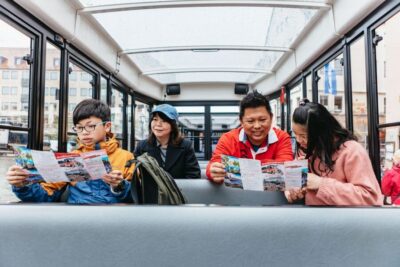 ★ 4.4Nuremberg: City Tour with the Bimmelbahn TrainFrom $122,475 reviews
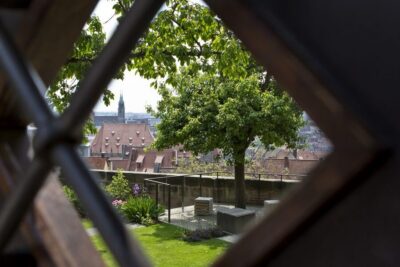 ★ 4.6Nuremberg: Old Town Guided Walking TourFrom $182,416 reviews
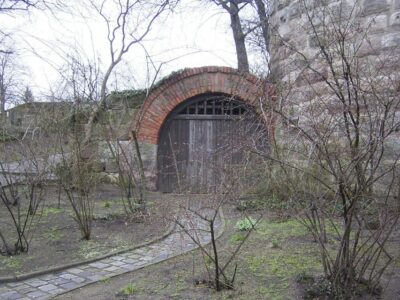 ★ 4.8Nuremberg: Tunnels and Secret Passages in the City Wall TourFrom $142,334 reviews
 ★ 4.8Nuremberg: Medieval Dungeons Guided TourFrom $111,726 reviews
 ★ 4.7Nuremberg: Walking Tour of Former Nazi Party Rally GroundsFrom $151,665 reviews
 ★ 5.0Medieval Tour in Nuremberg in SpanishFrom $191,374 reviews
 ★ 4.8Nuremberg: Historischer Kunstbunker WWII Art Bunker TourFrom $14921 reviews
 ★ 4.7Nuremberg: PLAYMOBIL®- FunParkFrom $29863 reviews