
REVIEW · NUREMBERG
Nuremberg World War II
Three hours, two Nazi chapters of Nuremberg. This guided route links the Documentation Center to the courtroom where major war criminals were tried. I especially like the tight, preplanned itinerary and the way guides can make the trial details feel real at Courtroom 600. The main catch is simple, the Palace of Justice is closed on Tuesdays, so timing matters.
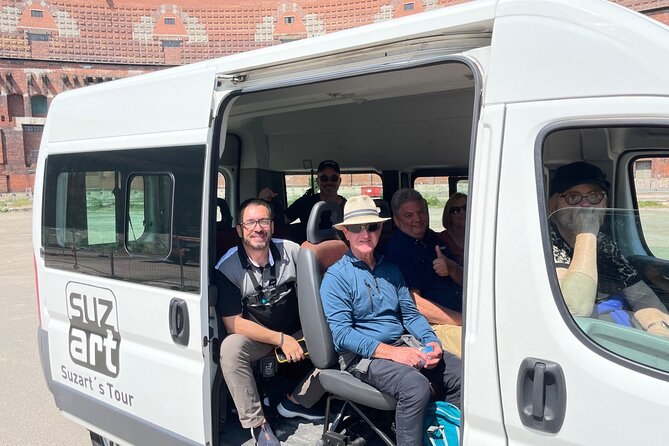
You’ll get pickup in the Nuremberg Old Town (and the River Cruise Port too) and ride in private transportation, so you are not juggling taxis or parking. The tour is capped at 8 people, which keeps the experience from turning into a noisy bus shuffle.
The value is strong for what you get in just a few hours, but you should budget one extra line item: the Palace of Justice entry fee (not included) is €7.50 per person. Depending on the day, you may also feel you want more time in the courtroom exhibition than the schedule allows.
In This Review
- Key points to know before you go
- A 3 hour Route Through Nazi Rallies and the Nuremberg Trials
- Documentation Center Nazi Party Rally Grounds: Where the Propaganda Math Gets Explained
- Zeppelinfeld: Short Time at a Speer Designed Parade Stage
- Nuremberg Palace of Justice and Courtroom 600: The Trials in Plain Sight
- Price and Logistics: Is It Worth the $91.71?
- Pickup, Small Groups, and How to Start Smooth
- What the Guides Actually Do Well (Rob, Gabriel, and the Storytelling Factor)
- How Much WWII You Get in 3 Hours, and How to Fill the Gaps
- Should You Book This WWII Nuremberg Tour?
Key points to know before you go
- A 3-stop, time-managed WWII route: rally grounds first, then Zeppelinfeld, then the Palace of Justice.
- Courtroom 600 is the emotional anchor: it is still used for trials, which adds a real-world edge.
- Private transportation saves stress: pickup in Old Town and quick transfers between sites.
- Tickets are mixed: Nazi rally sites are free, but the Palace of Justice costs extra.
- Guides can shape your experience a lot: the best versions feel interactive, with clear storytelling and visuals shared during the walk.
Further wartime history walks we have written up
- Nuremberg: Walking Tour of Former Nazi Party Rally Grounds★ 4.7 · 1,665 reviews
- Nuremberg: Historischer Kunstbunker WWII Art Bunker Tour★ 4.8 · 921 reviews
- Nuremberg Old Town and Nazi Party Rally Grounds Walking Tour in English★ 4.5 · 504 reviews
- Nuremberg Old Town and Nazi Rally Grounds Walking Tour★ 4.7 · 377 reviews
A 3 hour Route Through Nazi Rallies and the Nuremberg Trials
If you want the big ideas of WWII Nuremberg without spending your day on logistics, this tour is built for you. You cover three major Third Reich sites in a single loop, and your driver-guide keeps the pace steady so you actually get to see the places that matter.
This is not a “read every label” museum marathon. It is more like a guided shortcut through the parts of Nuremberg that explain how Nazi power was staged, then how it was judged afterward. The tour’s structure is also part of the appeal: you start with the rally grounds and propaganda machinery, then you move toward the judicial process that followed the war.
You also get a small-group setup, maximum 8 travelers. That matters here, because the subject is heavy, and you do not want to shout over a crowd while you stand where history unfolded. When the guide is on form, the stops feel like a story with momentum, not a checklist.
Documentation Center Nazi Party Rally Grounds: Where the Propaganda Math Gets Explained
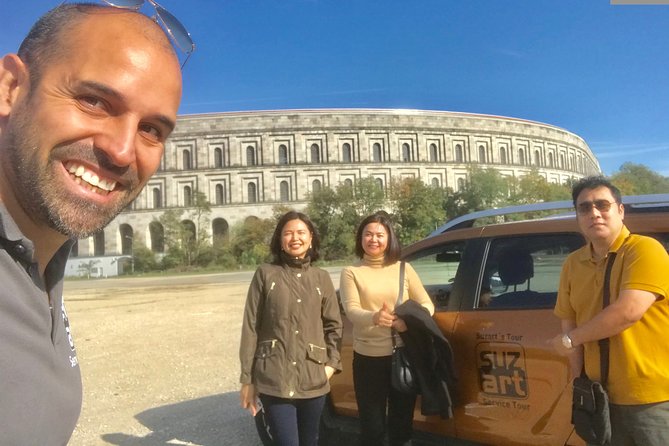
Your first stop is the Documentation Center Nazi Party Rally Grounds, with about 1 hour on site. Admission is free, and the format is straightforward: you are shown what the National Socialists built and used for mass political theater from 1933 to 1938.
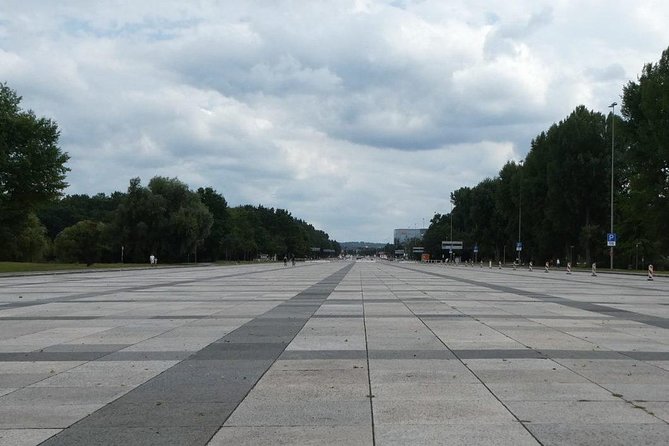
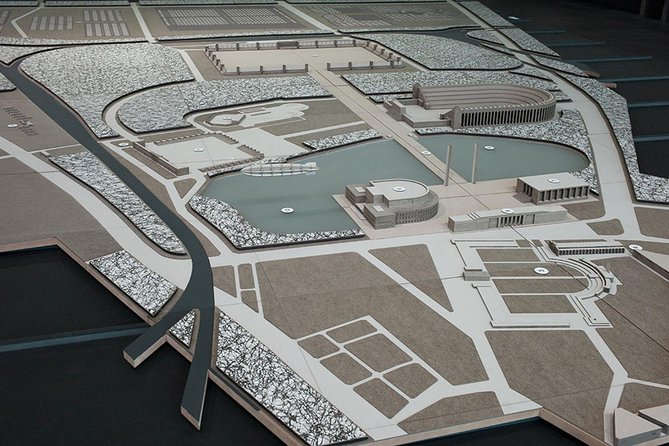
This is one of those places where the physical scale helps your brain understand the message. The rally grounds covered about 4 square kilometers, and the remaining structures still give you a sense of how the Nazis engineered atmosphere, movement, and spectacle. Boards and exhibitions explain how the dictatorship presented itself to the public, and how the party rallies were organized and produced.
Why I think this stop is so useful: it gives you context before you walk through the next spaces. Without this first step, Zeppelinfeld can feel like just another monumental ruin. With it, you start connecting the dots between architectural design and political messaging.
The only drawback is also predictable. One hour is enough to get oriented, but it can feel short if you want to linger over specific panels or related programs. If you are the type who reads everything slowly, plan to return later on your own day.
Zeppelinfeld: Short Time at a Speer Designed Parade Stage
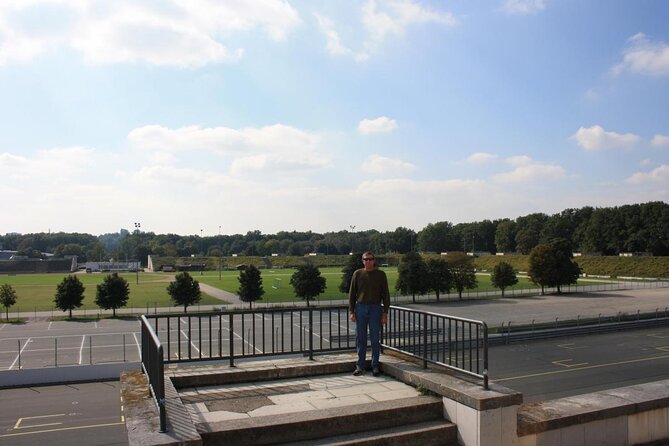
Next up is Zeppelinfeld for about 20 minutes, and entry is free. This stop is smaller in time, but it is not small in meaning.
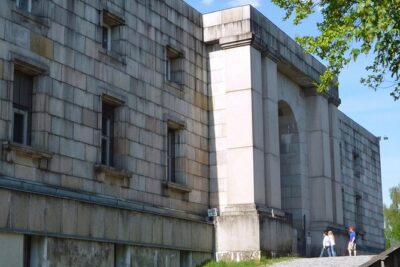
Between 1935 and 1937, the parade grounds were redesigned based on Albert Speer’s plan. The area has grandstands, and the Zeppelin grandstand built on the northeast side becomes a dominant backdrop. In the big scheme of the Reichsparteitagsgelände, Zeppelinfeld is also important because it is the only completed building on that larger grounds.
In practical terms, that means you will actually be able to see the shape of the space clearly during your short visit. It also means your guide can point out details that are hard to pick up when you arrive cold.
From the feedback I received about how guides handle this stop, the best moments often happen in small demonstrations, like showing how sound behaves in the space. That kind of “stand here and imagine it” trick makes the architecture hit harder, even when the stop is brief.
Nuremberg Palace of Justice and Courtroom 600: The Trials in Plain Sight
The final stop is the Nuremberg Palace of Justice, and it is the part of the tour that many people remember most. Plan about 1 hour here, but with an important warning: the Palace of Justice is closed on Tuesdays. If your schedule lands on a Tuesday, you should not count on this stop running as described.
The entry fee is not included, and it costs €7.50 per person. This is also where you feel the most “ticketed” nature of the experience, because your guided time is only part of the total visit. Still, the extra cost can be worth it if you want a guide to connect the courtroom to why it was chosen and how the trial worked.
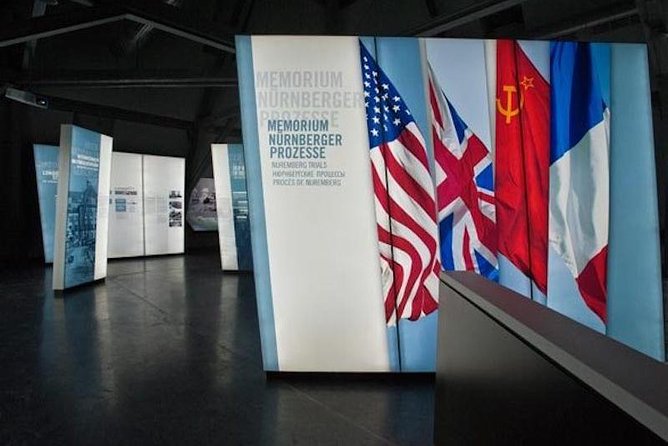
Here is what makes this building essential to understand. The Nuremberg Trials were held from 1945 to 1949 for the main surviving German war criminals of WWII. The Palace of Justice was selected because it was almost undamaged, it had enough space, and it included a large prison complex. Nuremberg itself carried symbolism too, since the Nazis had hosted big Nuremberg rallies in the city.
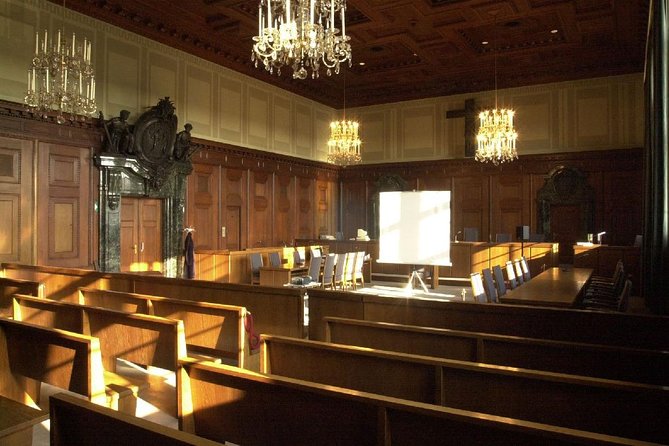
Your guide focuses on Courtroom 600, located in the eastern wing. The courtroom is still used today, including for murder trials, which gives the space a present-day edge. During the trials, the judges’ bench faced a window side, and the courtroom was larger. Afterward, it was refurbished, made smaller, and changes were reversed: a wall that had been removed was re-erected, and the judges’ bench was turned 90 degrees so it no longer sits in front of the window but where the witness box had been.
This is the emotional hinge of the whole tour. The architecture alone can feel chilling, but the real impact comes from understanding what happened there and why the room looks the way it does now.
A practical note: some tours offer extra time in Courtroom 600 if it is possible that day. If you want deeper reading inside, ask your guide if you can extend your stay. One tradeoff to keep in mind is that staying longer can affect your return timing, especially if you have to get back by public transport.
More of Nuremberg inside the walls
Price and Logistics: Is It Worth the $91.71?
At $91.71 per person, the tour is not a “cheap and cheerful” stop-and-go sightseeing add-on. But it does include driver-guide time and private transportation, which often saves more than you think in a city like Nuremberg where transfers between these specific sites can be awkward.
Then add the extra fee you must plan for. Documentation Center and Zeppelinfeld are free entry on this route. The Palace of Justice entry fee is €7.50 per person and is listed separately. So, in real-world budgeting, you should think in terms of “tour price plus €7.50” for the courtroom stop.
Where people may feel shortchanged is not the itinerary itself, it is the time allocation at the courtroom. Some folks want more time in Courtroom 600’s exhibition area, not just the guided walk-through. Others feel the tour runs fast overall because you are packing a lot into about 3 hours.
My take on value: if you want the sites connected by a story and you do not want to coordinate transit yourself, this is a solid deal. If you want maximum time inside the museum elements, you might feel like the schedule is too tight. For that, pair it with a longer self-guided visit on another day.
Pickup, Small Groups, and How to Start Smooth
The meeting setup is straightforward, and it is one of the quiet strengths of this tour.
Pickup is offered in the Nuremberg Old Town and at the River Cruise Port. If you are staying outside the Old Town, you need to get to the pick up point at Novotel Hotel Centre Ville, Bahnhofstrasse 12.
This matters because a delay at pickup can ripple through the whole route. One review mentioned a guide being late due to traffic and the tour being cut short. You cannot control traffic, but you can help by being ready early at the pickup point.
The small-group limit of 8 travelers also changes the feel. You are more likely to get your questions answered, and you are less likely to lose your place when the guide is moving the group between stops.
You also receive a mobile ticket, and confirmation is received at booking. That combination is usually a good sign for smooth check-in on the day.
What the Guides Actually Do Well (Rob, Gabriel, and the Storytelling Factor)
A tour like this lives or dies by the guide’s ability to explain heavy material clearly without turning it into a textbook. The best versions of this experience seem to follow a pattern: energetic delivery, practical framing, and visuals.
For example, Rob is repeatedly praised in the feedback for being friendly, for arriving early, and for sharing extra visuals, including photos shown during the tour. People also liked that he could explain how the propaganda worked, and one review highlighted a demonstration related to acoustics in the Nazi-era monumental space.
Family handling also comes up. One review specifically mentioned Rob being good with kids ages 12 and 9, which tells me the guide likely knows how to pace information and keep the group engaged without becoming too dry.
Gabriel also receives strong mentions, including for high emotional intelligence and for being competent not only on the WWII focus but also offering context that makes the broader story easier to place.
Language is where you should be ready for a reality check. A review noted that English pace or clarity can be an issue for some listeners. If you know you struggle with fast speech, you can still manage this by asking your guide to slow down if needed, and by choosing seats where you can hear well during any walking segments.
How Much WWII You Get in 3 Hours, and How to Fill the Gaps
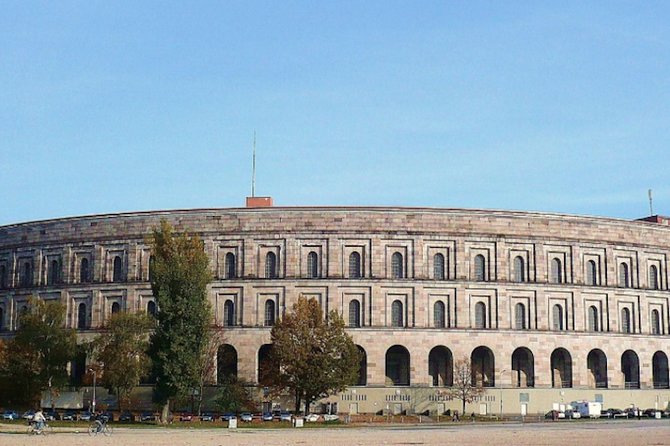
In three hours, you cannot cover everything. Nuremberg connects to WWII in layers: propaganda, infrastructure, the political theater of rallies, then the postwar legal response. This tour gives you the backbone of that story in a tight sequence.
So here is how I would plan your day for the best results. Think of this as your orientation phase. Afterward, decide what you want more of. If you leave wanting more on the propaganda side, you can return to the Documentation Center and spend longer reading. If the courtroom is what got your attention, spend extra time there on your own, since that is where you will naturally want to linger.
Also, pay attention to opening hours. The Palace of Justice being closed on Tuesdays can change the meaning of your entire day. If your trip includes a Tuesday in Nuremberg, you might want a different tour or a self-guided approach for the courthouse area.
Should You Book This WWII Nuremberg Tour?
Book it if you want:
- A guided route through Nazi rally sites and the Nuremberg Trials without planning transit between stops
- A small-group experience (max 8)
- Clear explanations that connect architecture to what it was used for, then to what the trials accomplished
- A focused visit, about 3 hours, rather than an all-day museum session
Skip or reconsider if:
- Your dates include a Tuesday, because the Palace of Justice is closed then
- You want a long, slow museum-style visit inside the courtroom exhibition area
- You expect a fully flexible schedule, because this tour is built around a preplanned sequence and limited time at each stop
If you are choosing between DIY and guided for Nuremberg WWII, I lean guided here. This is one of those places where context is not optional, it is the difference between seeing big structures and understanding what they were designed to do.
Nuremberg Within the Walls
Wartime History Walks We Have Reviewed
Everything else we filed on Nuremberg
- Nuremberg: Medieval Time Travel for Kids
★ 4.9 · 15 reviews - PRIVATE Nuremberg WW2 and Old Town Day Tour (Product code: 87669P16)
★ 4.5 · 15 reviews - Nuremberg: St. Johannis Friedhof &Hesperidengärten IN GERMAN
★ 4.4 · 15 reviews - Nuremberg: Private guided tour of the Old Town in German
★ 4.9 · 17 reviews - PLAYMOBIL®-FunPark Entrance Ticket
★ 4.5 · 17 reviews - Stein: Public guided tour of the “Old Mine” museum
★ 4.5 · 18 reviews
Nuremberg Old Town and Castle Tours, side by side.
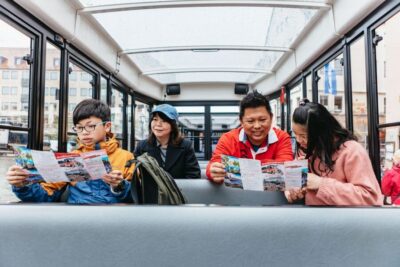 ★ 4.4Nuremberg: City Tour with the Bimmelbahn TrainFrom $122,475 reviews
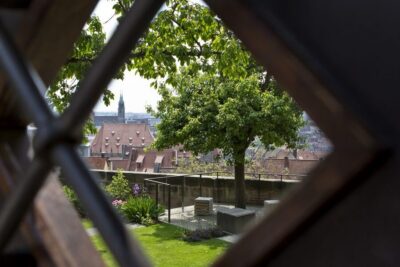 ★ 4.6Nuremberg: Old Town Guided Walking TourFrom $182,416 reviews
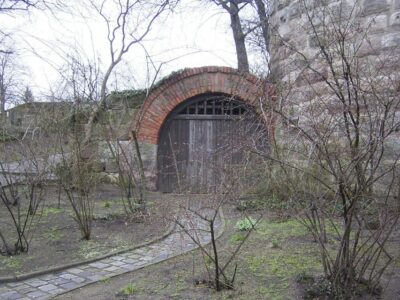 ★ 4.8Nuremberg: Tunnels and Secret Passages in the City Wall TourFrom $142,334 reviews
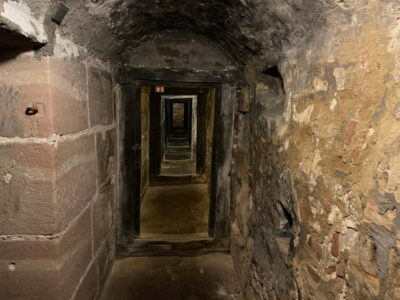 ★ 4.8Nuremberg: Medieval Dungeons Guided TourFrom $111,726 reviews
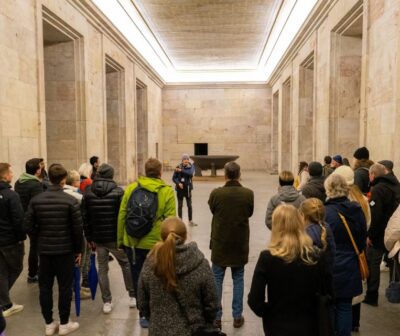 ★ 4.7Nuremberg: Walking Tour of Former Nazi Party Rally GroundsFrom $151,665 reviews
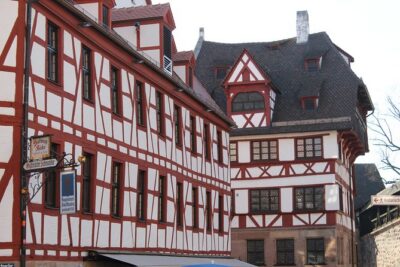 ★ 5.0Medieval Tour in Nuremberg in SpanishFrom $191,374 reviews
 ★ 4.8Nuremberg: Historischer Kunstbunker WWII Art Bunker TourFrom $14921 reviews
 ★ 4.7Nuremberg: PLAYMOBIL®- FunParkFrom $29863 reviews
Other lists this tour is on