
REVIEW · NUREMBERG
PRIVATE Nuremberg Old Town Walking Tour
A great walk starts with context, not just photos. This private Nuremberg Old Town tour helps you connect medieval street names, churches, and market life into one clear story, with St. Lawrence Church among the big stops. I also like that you get a guide who can keep different ages and interests moving together.
The one thing to consider is time pressure. In about three hours, you cover a lot of ground, so if you want long sits at each stop or optional detours, you may feel the pace.
In This Review
- Key Points at a Glance
- Why Nuremberg’s Old Town Is Better With a Local Guide
- Meeting at Le Méridien Grand Hotel, Then Getting Your Bearings
- The Altstadt Route: From Frauentorturm Up Toward the Castle
- Frauentorturm and the Mauthalle Connection
- St. Lawrence Church, Where the Town Shows Its Values
- Nassauerhaus and the Civic-Era Details
- Heilig-Geist-Spital and the Human Side of History
- Chapel of Our Lady, then Back Toward the Main Market Square
- Fleischbrücke, Unschlitthaus, and the Trade Lanes
- Kettensteg and the Think-About-Structures moment
- Tanners’ Alley and the Fun of Being in the Right Place
- Church of St. Sebald and the Second Big Church Anchor
- Tiergärtnertorplatz (Albrecht Dürer Haus) and the Walk Toward the Castle Area
- What You’re Really Paying for: Private Time and Smart Adaptation
- Pacing and Practical Tips for a 3-Hour Walk
- Who This Tour Fits Best in Your Nuremberg Plan
- Should You Book This Nuremberg Old Town Walking Tour?
- FAQ
- How long is the Nuremberg Old Town walking tour?
- Where does the tour start?
- Where does the tour end?
- Is this tour private?
- What language is the tour offered in?
- What sights are included?
- Is there an admission fee for the sites?
- Do I need a printed ticket?
- What is the cancellation policy?
Key Points at a Glance
- Private guide, private group only so your route can match what you care about
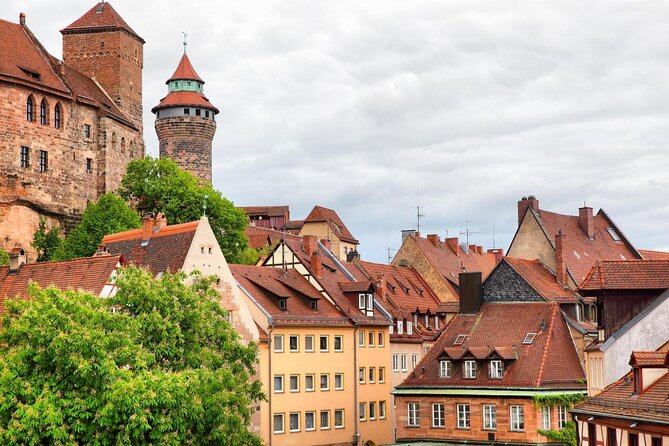
- Fast orientation in Altstadt, starting near the Frauentorturm and working toward the castle area
- Major landmarks on one loop, including St. Lawrence Church, Main Market Square (Hauptmarkt), and Church of St. Sebald
- Historic lanes you might miss on your own, like Tanners’ Alley and the Weinstadel area
- 3-hour format that’s ideal for first-time Nuremberg visitors who want highlights without overplanning
More of Nuremberg inside the walls
- Nuremberg: Old Town Guided Walking Tour★ 4.6 · 2,416 reviews
- Nuremberg: Tunnels and Secret Passages in the City Wall Tour★ 4.8 · 2,334 reviews
- Nuremberg: Medieval Dungeons Guided Tour★ 4.8 · 1,726 reviews
- Nuremberg: Walking Tour of Former Nazi Party Rally Grounds★ 4.7 · 1,665 reviews
Why Nuremberg’s Old Town Is Better With a Local Guide
Nuremberg’s center can look like a postcard until you start asking questions. Where did people walk, trade, work, and pray? Why do certain buildings cluster, and what do all those old street names hint at? This is the kind of tour where the guide does the heavy lifting for you.
What I like most is that you’re not stuck with a generic lecture. The private setup means your guide can shape the walk around the group’s mix of interests. In one recent group experience, the guide kept everyone involved, from 19 to 77, and adjusted the day toward medieval topics with a light WWII thread. That kind of flexibility matters, because Nuremberg has layers, and you do not want to miss the thread that connects them.
Meeting at Le Méridien Grand Hotel, Then Getting Your Bearings
The tour starts at Le Méridien Grand Hotel Nuremberg, Bahnhofstraße 1-3. The walking portion begins at the Frauentorturm, which is right across from the hotel. If you’re the type who likes to know where you are before you start walking, this helps.
The finish is near the Hauptmarkt area (Main Market Square). The route description ends in front of the New City Hall, and the stated end point is Hauptmarkt Nürnberg, which is exactly the kind of ending that makes your next step easy. You can grab a bite, refill water, or continue exploring without having to regroup.
You also get practical benefits from the way this is run:
- It’s a private tour, so you’re not waiting on stragglers inside a big group.
- It’s offered in English.
- It uses a mobile ticket, which is handy if you like your plans in one place.
- It’s near public transportation, so you’re not stuck if your schedule shifts.
The Altstadt Route: From Frauentorturm Up Toward the Castle
This tour is designed like a “highlights route,” but it stays human. You cover a lot, yet it doesn’t feel like a checklist because the guide can connect each stop to the next.
You start at Frauentorturm and work your way through a sequence of places that show Nuremberg’s urban rhythm: gates, churches, civic buildings, market life, and the older lanes that sit behind the main squares.
Here’s what your walk includes, and why each part is worth your attention.
Frauentorturm and the Mauthalle Connection
Starting at a gate makes sense because Nuremberg used to be more contained, more defensive, and more planned than it feels today. A gate is a simple landmark that also sets up the bigger idea: this town evolved under pressure and opportunity, not in isolation.
From there, you head via the Mauthalle, and you get a sense of how movement through the city shaped daily life. In practical terms, you’re walking the same kind of corridor that once mattered for arrivals and trade.
Other walking routes through Nuremberg

St. Lawrence Church, Where the Town Shows Its Values
One of the signature stops is St. Lawrence Church. This is the kind of place where a guide helps you read the building instead of just looking at it. Churches like this are not only spiritual spaces. They often reflect power, wealth, civic pride, and the priorities of the community at different moments.
If you’re a first-timer, this is a good “anchor stop,” the one you’ll remember when the rest of the walk turns into streets, details, and smaller surprises.
Nassauerhaus and the Civic-Era Details
Next up is Nassauerhaus. Stops like this are why a walking tour is more than speed-watching. Buildings here help explain how Nuremberg’s identity shifted over time, moving from medieval structures toward later eras of civic order.
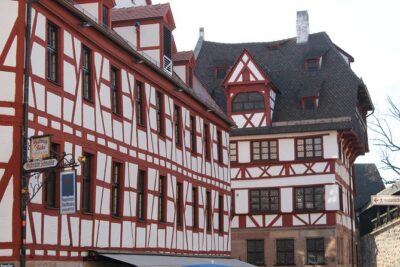
You’ll get context that makes the architecture feel intentional instead of random. That means you can look at similar half-timbered facades elsewhere in the city and actually understand what you’re seeing.
Heilig-Geist-Spital and the Human Side of History
The route includes Heilig-Geist-Spital, which is a reminder that “old town” is not only about rulers and wars. This is where you learn to notice the community support systems that historically mattered: charity, care, and the social infrastructure that kept a city functioning.
If your group includes mixed ages, this kind of stop often lands well. It gives people something concrete to picture, not just dates to memorize.
Chapel of Our Lady, then Back Toward the Main Market Square
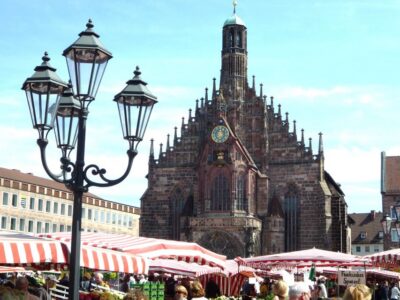
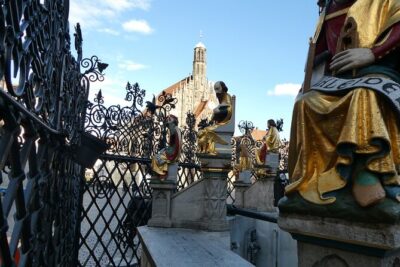
You also pass the Chapel of Our Lady, another way the route links faith to daily rhythm. Then you reach the big social center: Main Market Square (Hauptmarkt), plus the area around the Beautiful Fountain.
Hauptmarkt is the heart of Nuremberg’s public life. With a guide, you’ll learn how this space functioned beyond shopping. It’s where people gathered, where civic identity was visible, and where the city’s “public face” showed up in a very physical way.
Fleischbrücke, Unschlitthaus, and the Trade Lanes
From the square, you head toward Fleischbrücke. Bridges in old European cities are rarely just convenient crossings. They often connect neighborhoods that traded, worked, or moved goods through different layers of the town.
Then the itinerary brings you to stops like Unschlitthaus and Weinstadel. These names are clues. With a guide, you can interpret what those buildings likely supported in the old city economy. You end up seeing the city as a system, not as isolated landmarks.
Kettensteg and the Think-About-Structures moment
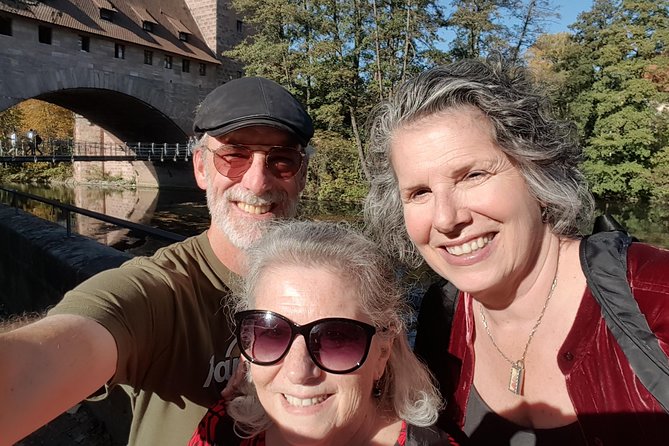
Kettensteg is a nice break from the church-plus-market routine. It’s the sort of stop that helps you slow down just enough to notice how crossings, water, and built features shaped movement.
This is also where your guide’s storytelling helps most. You get facts, but you also get the “why” that makes the structures make sense.
Tanners’ Alley and the Fun of Being in the Right Place
The walk includes Tanners’ Alley. Even if you think you already know Nuremberg, you’ll probably remember a place like this because it’s so specific. A guide helps you connect the street name to the craft and the city’s working life.
This stop is where a private tour feels worth it. On your own, you might enjoy the scenery but miss the point of the lane.
Church of St. Sebald and the Second Big Church Anchor
The route continues to Church of St. Sebald, another major church landmark. When you have two big church anchors in one walk, it helps you compare how the town’s religious and civic identity played out across different periods.
This is a great stop if your group likes architecture, art, or just understanding what made Nuremberg feel like a major urban center.
Tiergärtnertorplatz (Albrecht Dürer Haus) and the Walk Toward the Castle Area
You finish the walking section by reaching Tiergärtnertorplatz, with the Albrecht Dürer Haus area noted along the way. After that, the route heads up toward the castle area.
Even if you do not spend a long time “inside” the castle, getting to the area by foot at the end gives you a sense of how the town sits against its own defenses and high ground.
What You’re Really Paying for: Private Time and Smart Adaptation
At $237.69 per person, this tour is not a bargain-basement option. But it also is not a generic, fixed route with no flexibility. The value comes from the format: a private guide for your group.
The experience is also framed as being provided by a high-rated Nuremberg tour guide. That matters less for marketing and more because it’s a signal that you’re likely to get clear English and good pacing.
The strongest praise tied to this tour type is not just facts. It’s the way the guide keeps people involved, answers questions without rushing, and can tailor parts of the route to what the group wants. One guide experience described strong history explanations, and importantly, the guide kept engaging even when the group spanned wide ages. That tells me the guide is thinking about energy levels, not just reciting notes.
You should also consider the “group discount” angle. If you’re traveling with people you trust and you can share the cost, your per-person value often improves quickly on private tours like this.
Pacing and Practical Tips for a 3-Hour Walk
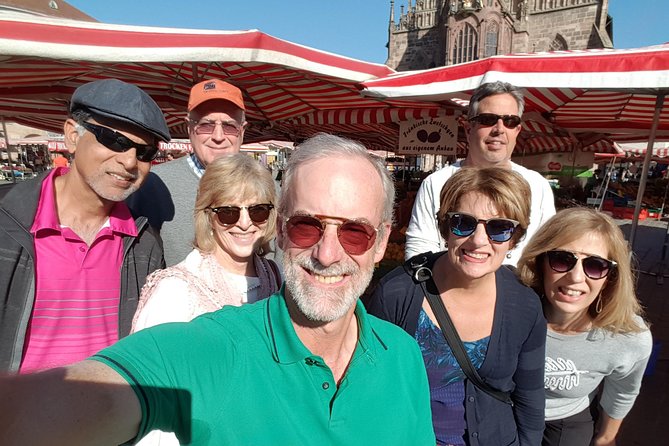
This tour runs about 3 hours. That’s long enough to cover meaningful sights, but short enough that you still keep the rest of your day open.
Here’s how to set yourself up for a comfortable experience using only the reality of the itinerary:
- Wear shoes you can walk in for an uninterrupted period, because the route moves between squares, churches, and older lanes.
- Bring a light layer if you’re sensitive to changing indoor and outdoor temperatures, since you’ll likely pass through or near churches and open public spaces.
- If you have mobility limits, plan to ask your guide how they handle pacing for the group, since the tour is described as suitable for most travelers but still covers a full old-town circuit.
The start time is 10:00 am, so it’s a good choice if you want a big slice of highlights early, before crowds and before your day splinters into random stops.
Who This Tour Fits Best in Your Nuremberg Plan
You’ll get the most from this if:
- You want a clean “greatest hits” overview of Altstadt without doing map math all morning.
- You like the feeling of having a person to ask, not just a self-guided audio app.
- Your group has mixed interests, because the private format makes it easier to adjust.
It’s also a good fit for people who want to understand Nuremberg beyond the obvious. The route covers places like Heilig-Geist-Spital and Tanners’ Alley, which help you see how real daily life worked, not only how monuments look.
If you’re the type who wants every building visited in depth and you hate moving on before you feel done, this may feel “just enough” rather than slow and lingering. For that style, you might need extra time after the tour.
Should You Book This Nuremberg Old Town Walking Tour?
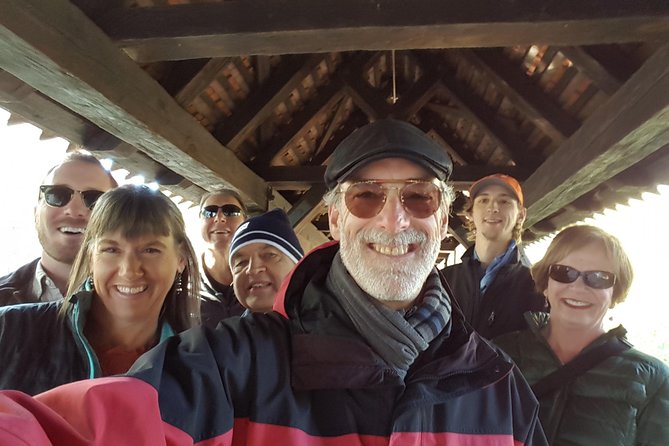
Book it if you want an efficient, guided highlights walk through Nuremberg’s core. The private setup, English guide, and the smart mix of churches, market square, bridges, and older lanes are exactly what you need when you want your first visit to feel connected.
Skip it or pair it with extra time if you know you want to linger for long interior visits, because the route is built to cover a lot in about three hours. Also think about your priorities. This is about orientation and stories tied to the old city. If you want more of a single site deep-dive, you can do that later.
If you’re aiming for: great bearings, a clear sense of how the city developed, and a walk that feels tailored to your group, this one is a strong choice.
FAQ
How long is the Nuremberg Old Town walking tour?
The tour is about 3 hours.
Where does the tour start?
It starts at Le Méridien Grand Hotel Nuremberg, Bahnhofstraße 1-3, and the walking begins at the Frauentorturm across from the hotel.
Where does the tour end?
The tour ends around the Hauptmarkt area, with the route description ending in front of the New City Hall.
Is this tour private?
Yes. It is a private tour, and only your group participates.
What language is the tour offered in?
The tour is offered in English.
What sights are included?
The itinerary includes places such as St. Lawrence Church, Main Market Square (Hauptmarkt), Beautiful Fountain, Fleischbrücke, Tanners’ Alley, Church of St. Sebald, Tiergärtnertorplatz (Albrecht Dürer Haus), and the route continues up toward the castle area.
Is there an admission fee for the sites?
The experience notes that an admission ticket is free.
Do I need a printed ticket?
No. It uses a mobile ticket.
What is the cancellation policy?
You can cancel for a full refund up to 24 hours in advance of the experience start time. If you cancel less than 24 hours before, the amount paid is not refunded.
Pavements of Nuremberg
Nuremberg Within the Walls
Everything else we filed on Nuremberg
- Private transfer from Nuremberg to Munich with 2h for sightseeing
★ 5.0 · 4 reviews - Nuremberg Culinary Walking Tour
★ 4.0 · 4 reviews - Nuremberg: World War 2 History Tour with Beer Tasting
★ 5.0 · 4 reviews - PRIVATE – Nuremberg Combo Tour WWII + Old Town
★ 5.0 · 4 reviews - Get to know Nuremberg. Highlights in the old town
★ 5.0 · 4 reviews - Nuremberg Old Town Highlights Private Walking Tour
★ 5.0 · 5 reviews
Nuremberg Old Town and Castle Tours, side by side.
 ★ 4.4Nuremberg: City Tour with the Bimmelbahn TrainFrom $122,475 reviews
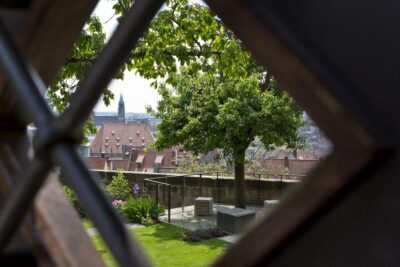 ★ 4.6Nuremberg: Old Town Guided Walking TourFrom $182,416 reviews
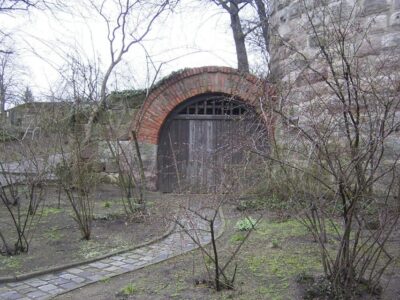 ★ 4.8Nuremberg: Tunnels and Secret Passages in the City Wall TourFrom $142,334 reviews
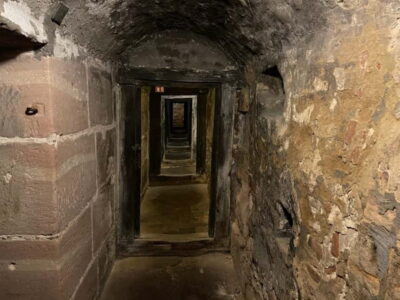 ★ 4.8Nuremberg: Medieval Dungeons Guided TourFrom $111,726 reviews
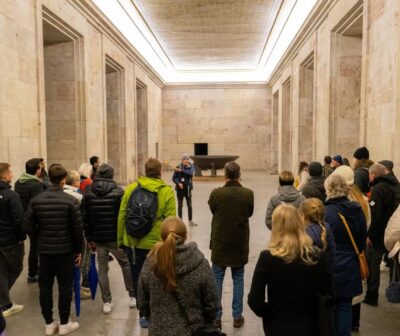 ★ 4.7Nuremberg: Walking Tour of Former Nazi Party Rally GroundsFrom $151,665 reviews
 ★ 5.0Medieval Tour in Nuremberg in SpanishFrom $191,374 reviews
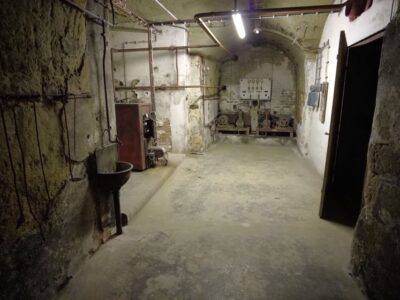 ★ 4.8Nuremberg: Historischer Kunstbunker WWII Art Bunker TourFrom $14921 reviews
 ★ 4.7Nuremberg: PLAYMOBIL®- FunParkFrom $29863 reviews
Other lists this tour is on