
REVIEW · SEGWAY AND RICKSHAW CITY RIDES
Rickshaw Tours Berlin – Groups of up to 16 people with several rickshaws
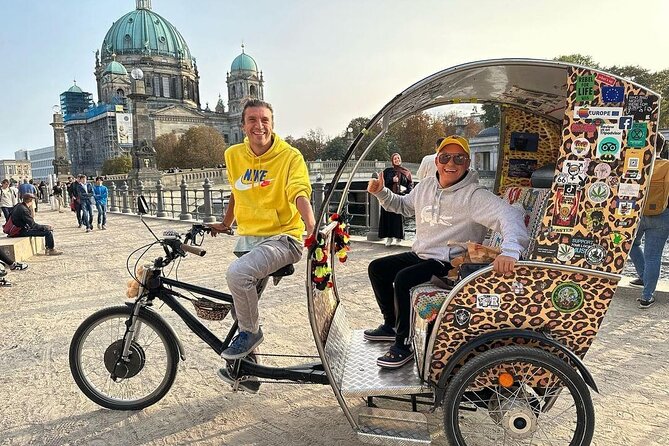
Berlin hits different on wheels. You’ll zip through the landmarks that made the city. Rickshaws keep you low, close, and moving, not stuck in a line. I like that the route starts right at Brandenburg Gate, then strings together the political, cultural, and Wall era sights in a way that helps you connect the dots fast.
Two other big wins: you get English-guided narration plus a photographer included, so you don’t spend the whole day playing phone cameraman. Pickup within 2 km of the Brandenburg Gate is also a practical touch, especially if you want to cut down on walking. One drawback to think about, though: with a tour this packed, your experience depends a lot on the specific guide and how they manage the ride, including music volume and how much time you get at each stop.
In This Review
- Key things to know before you ride
- What you are paying for on this Berlin rickshaw tour
- How the pacing works in 1 to 4 hours
- Brandenburg Gate to Reichstag: the story opens with classicism, then turns to power
- Brandenburg Gate: German classicism at street level
- Reichstag and Bundestag: the building that keeps changing meaning
- German Chancellery: glass and concrete for a modern government image
- Tiergarten and the Soviet War Memorial: Berlin’s park breaks between heavy topics
- Potsdamer Platz to Topography of Terror: new Berlin energy meets Nazi planning
- Potsdamer Platz: modern district planning you can actually feel
- Topography of Terror: a fast look at a grim machine
- Gropius Bau: a cultural pause that keeps the route interesting
- Berlin Wall Memorial to Checkpoint Charlie: the border turns into street corners
- Gedenkstätte Berliner Mauer: where escape stories live
- Checkpoint Charlie: the most famous crossing, explained without needing a ticket
- Friedrichstraße: shopping street as a north-south axis
- Gendarmenmarkt and the cathedral-and-concert hall vibe
- Gendarmenmarkt: a classic square with a French immigrant story
- Deutscher Dom and Konzerthaus: democracy, church, and music
- Bebelplatz to Museum Island: books burned, then a city of learning
- Bebelplatz: where book burning became a memorial
- Museum Island: archaeological collections and 19th-century art
- Berlin Cathedral: the dome view you can aim for
- Lustgarten and Alexanderplatz: the day ends in public spaces
- The guides, music, and photos: what makes the ride feel worth it
- Music on request, but keep control of the sound
- Photographer included, so you should plan to use it
- Comfort and group mix
- What can go wrong, and how you protect your time
- Who should book this Berlin rickshaw tour
- Should you book this rickshaw tour of Berlin?
- FAQ
- Where does the tour start?
- Is pickup available?
- How long is the rickshaw tour?
- What language is the tour offered in?
- What’s included in the price?
- Are admission tickets included for major sights?
- Do I need good weather for this experience?
Key things to know before you ride
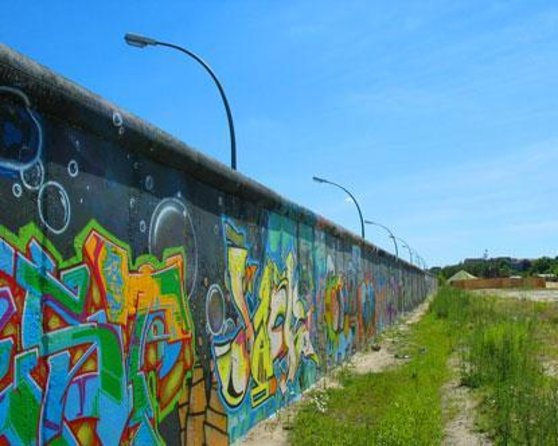
- Up to 16 people, multiple rickshaws: You’ll split into smaller groups, which can mean more personal guidance or less speaking time depending on how your rickshaw is set up.
- English-speaking guide plus included WiFi: Handy for checking transit ideas while you’re on the move.
- Photo help is part of the deal: Your guide/driver will take photos for you, so you can focus on enjoying the street-level views.
- A political and memorial-heavy route: Expect quick stops at major sites linked to German history, the Nazi era, and the Berlin Wall.
- Some stops are outside-only: Several landmarks list ticket not included, so you’ll mostly see them from the street or plaza, not go inside.
- Good-weather matters: The tour requires good weather, and power issues in cold weather have led to cancellations in past incidents.
More wheels for covering ground fast
- Berlin 2-Hour Segway Tour★ 4.6 · 238 reviews
- Berlin: Private Guided E-Rickshaw Tour★ 4.9 · 157 reviews
- Berlin: 2-Hour Premium Segway Tour★ 4.5 · 157 reviews
- 2-Hour Segway Discovery Tour Berlin★ 5.0 · 154 reviews
What you are paying for on this Berlin rickshaw tour
At $53.10 per person, you are not buying museum entry. You are buying time, comfort, and direction. Think of it as a guided city sampler with the speed of a vehicle and the sightlines of being outdoors, close to the buildings and crowds.
You also get practical extras that are easy to overlook until you need them: WiFi on board, private transportation for your group, music on request, and a photographer. For many people, that combination is the real value. You spend less energy figuring out logistics, and you come away with photos you actually like.
The route is designed for an efficient pass through a lot of iconic stops. That means it can feel like a whirlwind if you expect long museum time. If your priority is to sit in a theater, go deep in an exhibit, or linger for an hour at one place, you’ll probably feel rushed.
How the pacing works in 1 to 4 hours
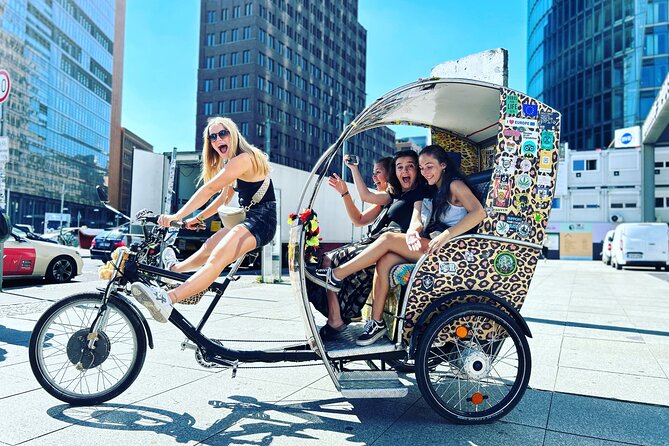
The duration is listed as about 1 to 4 hours, which is a wide range. In real life, that usually translates into one of two things: either you’ll keep photo stops tight and focus on exterior views, or you’ll get a bit more breathing room at key points.
Most stops on this route are short windows, often around 1 to 5 minutes. So you should plan to do this tour for orientation and highlight collecting, not as your only Berlin activity. I recommend using the ride to understand where things are, then returning later for deeper time.
Brandenburg Gate to Reichstag: the story opens with classicism, then turns to power
Brandenburg Gate: German classicism at street level
The day starts at the Brandenburg Gate, built in the late 1700s. It sits on the boulevard Unter den Linden, and its design connects it to classical architecture ideas from outside Germany. Seeing it at street level, framed by traffic and pedestrians, is the quickest way to get your bearings fast.
This first stop matters because it sets the theme. Berlin is a city where you constantly read history in architecture, and the Gate is one of the cleanest “begin here” monuments.
Reichstag and Bundestag: the building that keeps changing meaning
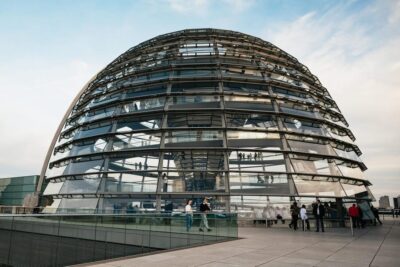
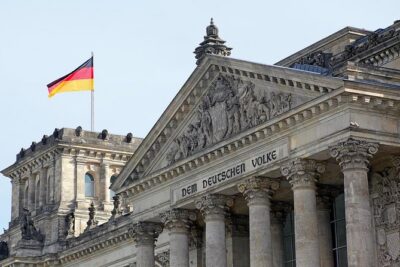
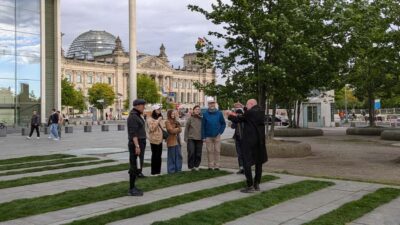
Next comes the Reichstag/Bundestag area. You’re looking at a structure tied to turning points: the Republic being declared from the balcony in 1918, the Reichstag fire in 1933, and the Red Army flag planted in 1945. Even if you do not go inside, a short stop here gives your brain the timeline anchor you need for the rest of the day.
One practical consideration: entry to certain areas is not included, so you should treat this as an exterior view with a guided explanation, not a full guided inside visit.
German Chancellery: glass and concrete for a modern government image
The tour then moves to the German Chancellery, a striking 36-meter-high building where you can see the design play between heavy concrete and big glass surfaces. The explanation focuses on how it functions as an administrative space that still feels unusually open for a government complex.
In my view, this stop is a good contrast. It tells you Berlin did not just rebuild, it rethought how power should look.
Tiergarten and the Soviet War Memorial: Berlin’s park breaks between heavy topics

After the political landmarks, you get a reset in Tiergarten. One stop highlights the Soviet War Memorial, including the bronze statue and the names on the pillars, plus the presence of graves in the back area. It is a quiet, solemn moment amid the greenery.
Right near this area, the route also references the park’s history, including how the zoo developed from earlier grounds and how it was later redesigned by Peter Joseph Lenné. Even with short stops, this is a helpful reminder: Berlin did not become important only because of wars. It also evolved as a place to wander.
The practical value here is pacing. If your day started with heavy themes, Tiergarten gives you a visual breath while still keeping history in view.
Potsdamer Platz to Topography of Terror: new Berlin energy meets Nazi planning
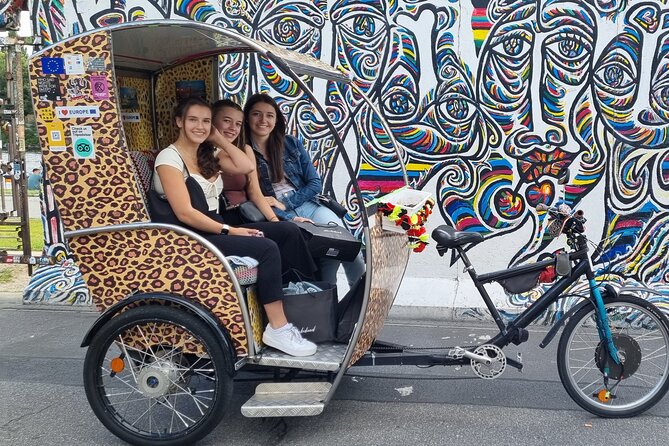
Potsdamer Platz: modern district planning you can actually feel
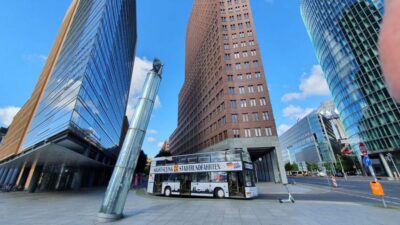
Then you roll into Potsdamer Platz, the planned district built with a whole urban concept. The area is known for cafes, cinemas, shops, and high-rises, and the tour stops briefly to show you the scale and layout.
I like this stop because it gives you an immediate sense of “today Berlin” instead of keeping everything locked in the past.
Topography of Terror: a fast look at a grim machine
Next is Topography of Terror, a site tied to Nazi terror planning and control. The stops are short, but the message is clear: key SS and police institutions were housed here between 1933 and 1945.
If you care about the darker chapters of the city, this stop works well as an orientation point. If you want real time inside exhibits, plan to come back later with a ticket or self-guided time. On this rickshaw ride, you are mostly getting the geographic and narrative setup.
Gropius Bau: a cultural pause that keeps the route interesting
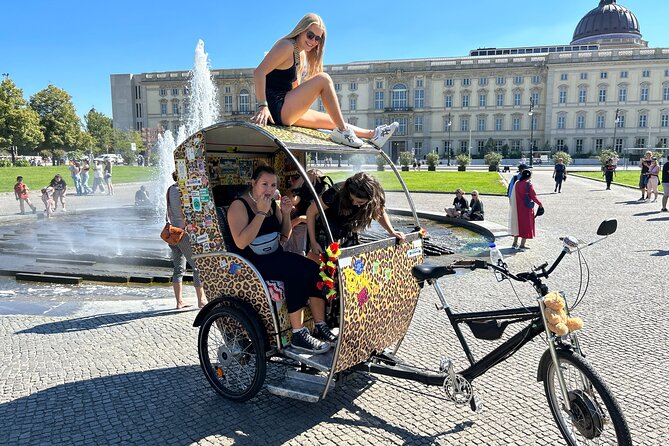
You also pass Gropius Bau, which is dedicated to cultural history, contemporary art, and photography. The stop time is short, but it adds variety so the day does not become purely memorial after memorial.
If you like art and photography, it helps to know this building is part of the route. You might find that seeing it from the street makes you more likely to return when you have time to read the exhibitions.
Berlin Wall Memorial to Checkpoint Charlie: the border turns into street corners
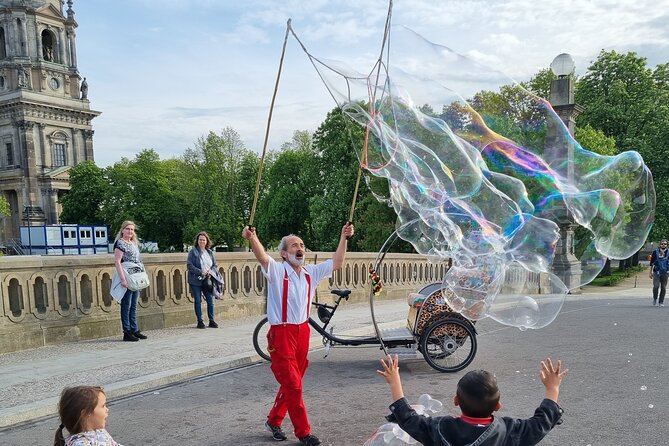
Gedenkstätte Berliner Mauer: where escape stories live
The Berlin Wall Memorial is in Bernauer Straße, and the key detail is the boundary between Wedding (West) and Mitte (East). The tour explains the tragic escape attempts where people in East Berlin tried to reach freedom, even by jumping from windows.
This is one of those stops where the fast pace still lands. The place itself makes the story feel real.
Checkpoint Charlie: the most famous crossing, explained without needing a ticket
Then comes Checkpoint Charlie, the best-known border crossing controlled by the Americans during Berlin division. You hear how it differed from other checkpoints and that transitions were limited to foreigners and certain officials.
You are not just looking at a sign. You are seeing how a border was run and enforced, which makes the earlier Wall stop click.
Friedrichstraße: shopping street as a north-south axis
After that, Friedrichstraße is presented as a major north-south axis and a shopping mile that developed after the Wall fell. This is a useful bridge from the old dividing line to the city’s everyday life.
Gendarmenmarkt and the cathedral-and-concert hall vibe

Gendarmenmarkt: a classic square with a French immigrant story
The route reaches Gendarmenmarkt, where French immigrants, especially Huguenots, settled. The square’s name history matters here, because it connects the architecture to the people who shaped that neighborhood.
Short stop time is enough because the space is visually clear: it feels like a designed stage in the middle of Berlin.
Deutscher Dom and Konzerthaus: democracy, church, and music
You also stop near the Deutscher Dom, with an exhibition focused on the development of liberal parliamentary democracy. Nearby is the Konzerthaus am Gendarmenmarkt, a classicist masterpiece associated with Karl Friedrich Schinkel.
This cluster works well because it gives you three angles at once: civic politics, religious architecture, and performance spaces.
Bebelplatz to Museum Island: books burned, then a city of learning
Bebelplatz: where book burning became a memorial
At Bebelplatz, the story is painfully specific. The Nazis burned over 20,000 books there in 1933, targeting what they called non-German spirit. The stop includes names of authors and connects the memorial to the idea that burning books was really about controlling people.
This is one of the emotional stops on the route. Even in a quick exterior view, it hits hard because it is tied to a concrete action.
Museum Island: archaeological collections and 19th-century art
Then you reach Museum Island between the Spree and the Kupfergraben. The route notes the Old Museum as a starting point and frames the island as a major ensemble of museum buildings.
On this ride, you are not getting ticket time into exhibits. You’re getting the geography and the wow-factor of how tightly the museum district is clustered.
Berlin Cathedral: the dome view you can aim for
Next is Berliner Dom, the cathedral with a huge dome. The tour highlights that you can climb for a view over Berlin center, including areas around the Spree and Museum Island.
Treat this as an exterior stop if you are on tight time. If you want the dome view, plan a separate visit so you are not rushing at the end of your rickshaw window.
Lustgarten and Alexanderplatz: the day ends in public spaces
From the cathedral area you go to Lustgarten, a traditional pleasure garden space connected to the old palace area. It is the kind of place where you can imagine summer hangs and where the lines of trees help you reset.
Finally, you arrive at Alexanderplatz, one of Berlin’s liveliest squares, with a skyline feel and landmarks like the TV tower. It’s a fitting end because the square symbolizes how Berlin shifted from division to a city that pulls everyone in.
The guides, music, and photos: what makes the ride feel worth it
This is not a set-it-and-forget-it tour. The guide drives the whole experience, and the included features are designed to support that.
In the feedback patterns, certain names show up for a reason. Guides like Leo and Hugo are described as great at mixing stories with humor and keeping the day fun even when the route is packed. Ufuk Ayik also gets praise for being accommodating, including in tough weather.
Music on request, but keep control of the sound
Music is included as an option. That can be a good mood setter. Just know that at least some rides had issues with audio being too loud, making it hard to hear the guide. If you want the narration to be the main event, ask for lower volume early.
Photographer included, so you should plan to use it
Since a photographer is included, you should actually take advantage of it. I like tours where I’m not scrambling for the perfect shot. Here, your guide/driver can take pictures as you pass key sights, which is perfect for a first visit.
Comfort and group mix
Rickshaws can be a great alternative to long walking days. Some riders mentioned mobility concerns, and service animals are allowed. Still, you might split across rickshaws if the group is larger, which can lead to cramped seating if you end up grouped tightly.
What can go wrong, and how you protect your time
This tour’s weak spot is not the route. It is reliability and consistency.
A pattern in the feedback includes no-shows or situations where nobody is reachable, even close to the start time. Another pattern includes cancellations tied to cold weather and battery/power issues. That is not something you should ignore if you only have one day in Berlin.
Here is how you protect yourself without turning the vacation into a spreadsheet:
- Confirm your exact pickup time the day before, and again on the day itself.
- Keep your phone charged and make sure your messenger apps work.
- Have a backup plan for the same hour you booked, ideally something near your hotel.
- If it is freezing, ask what powered equipment they are using and whether cold impacts it.
Also, driving style matters. One rider reported a rough driving moment and a collision with another vehicle. You cannot eliminate all risk, but you can speak up. If you feel unsafe, ask the driver to slow down and give more space.
Who should book this Berlin rickshaw tour
Book it if you want:
- A fast first pass across major landmarks, from Brandenburg Gate to Alexanderplatz.
- A guided explanation you can hear while you move, with plenty of photo chances.
- A comfortable way to reduce walking time while still seeing famous sights up close.
- A mix of political sites, memorials, architecture, and public squares.
Consider skipping or pairing it with more time elsewhere if you:
- Want long museum visits or deeper indoor time at places like the Reichstag or other ticketed venues.
- Are very sensitive to loud audio on the ride.
- Travel in very cold conditions when power-related cancellations are more likely.
Should you book this rickshaw tour of Berlin?
If you are on a short trip, this is a strong way to get your bearings and collect the big visual hits without burning your whole day walking. I especially like it as a first or second day activity because the tour helps you understand what connects, from German government sites to Wall-era streets, then out to modern Berlin squares.
If your schedule is extremely tight or you cannot afford a cancellation, I would book with a backup plan in mind. With a tour that can be weather-dependent and guide-dependent, you win when you confirm details early and keep an alternative ready.
FAQ
Where does the tour start?
The tour starts at Brandenburger Tor, 10117 Berlin, Germany, and it ends back at the meeting point.
Is pickup available?
Yes. Pickup is included within a 2 km radius from Brandenburg Gate. More than 2 km has a 10 EUR per km charge.
How long is the rickshaw tour?
The duration is listed as approximately 1 to 4 hours.
What language is the tour offered in?
The tour is offered in English.
What’s included in the price?
WiFi on board, private transportation, music on request, a photographer, and a tour guide are included.
Are admission tickets included for major sights?
Not always. The tour notes that some stops have admission ticket not included, while other stops are listed as admission ticket free.
Do I need good weather for this experience?
Yes. The experience requires good weather.
On Two Wheels and Three
Everything else we filed on Berlin
- East Berlin: City of Shadows Walking Tour
★ 5.0 · 11 reviews - Berlin: Die Stachelschweine – Frank Lüdecke – Träumt Weiter
★ 4.7 · 11 reviews - Potsdam Day Trip from Berlin with a Local: Private & Personalized
★ 4.0 · 11 reviews - An Introduction to Berlin Walking Tour
★ 5.0 · 11 reviews - DJ for a Day: Learn to Mix Like a Pro in Berlin
★ 5.0 · 11 reviews - 2-H Segway Sightseeing Tour Berlin
★ 4.5 · 11 reviews
Segway and Rickshaw City Rides, side by side.
 ★ 4.9Dresden: Segway Tour Along the Elbe and Old TownFrom $74392 reviews
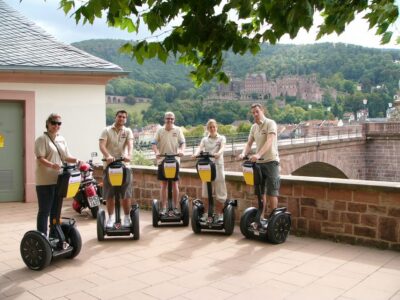 ★ 4.8Heidelberg: Philosophers’ Walk Guided Segway TourFrom $67322 reviews
 ★ 4.6Munich: City Highlights Guided Segway TourFrom $99266 reviews
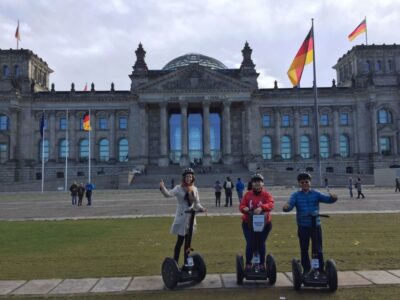 ★ 4.6Berlin 2-Hour Segway TourFrom $69238 reviews
 ★ 4.8Heidelberg & Neckar Valley: Segway Tour – 360 DegreesFrom $88227 reviews
 ★ 4.9Munich 3-Hour Segway Tour: Nazi Munich & Royal ArchitectureFrom $91194 reviews
 ★ 4.8Heidelberg Highlights Segway Tour with CastleFrom $74191 reviews
 ★ 5.0Munich Segway TourFrom $90181 reviews
Other lists this tour is on