
REVIEW · STUTTGART
Ulm: Evening stroll through the old town
Ulm at dusk feels like a movie set. This 1.5-hour stroll strings together the biggest sights and the coziest medieval corners, with Ulm Minster as your opening act and the fishermen’s and tanners’ quarter as your romantic finale. You’ll get a guided, story-heavy walk that connects architecture, old trades, and even astronomy, all at a relaxed evening pace.
My favorite part is how the tour moves beyond postcard views. You start at Minster Square and learn how Ulm Minster was built, then you shift to the motto Medieval meets modern as you pass newer buildings in the city center. The other big plus is the variety in what you see in a short time, from an astronomical clock to leaning towers and old-world lanes.
One consideration: the live commentary is in German. If your German is limited, you may miss details, even though you can still enjoy the sights visually.
In This Review
- Key highlights you’ll actually feel on the walk
- Minster Square at night: why this start is the smart move
- Ulm Minster exterior: learning the tower story while you can see it all
- Medieval meets modern: the contrast that makes Ulm feel current
- Ulm Town Hall: fresco cycle and an astronomical clock you can understand at night
- The leaning Butcher tower and the city wall walk: where views get practical
- Fishermen’s and tanners’ quarter after dark: the medieval lanes that feel real
- Price and value: why $14 makes sense for 90 minutes
- Language and guide style: what to expect if your German is limited
- Who should book this Ulm evening walk
- Should you book this Ulm evening stroll?
- FAQ
- Where does the tour start?
- How long is the Ulm evening old town stroll?
- What language is the tour guide speaking?
- Is Ulm Minster included inside the church or outside?
- What can I see at Ulm Town Hall?
- What is the leaning landmark on the route?
- What area of Ulm feels most medieval?
- How much does the tour cost?
- Is free cancellation and pay later available?
Key highlights you’ll actually feel on the walk
- World-famous Ulm Minster exterior: a close look at the building story, starting right from Minster Square
- Medieval meets modern: newer architecture placed right in the historic core
- Ulm Town Hall clockwork: zodiac signs and moon phases on the astronomical clock
- Leaning landmarks: the Butcher tower and the Crooked House set this tour apart
- Fishermen’s and tanners’ quarter at night: bridges, footbridges, and tight alleyways under lights
Other Swabian days we have reviewed
- Ulm: City Center Walking Tour with Minster Visit★ 4.7 · 831 reviews
- Ulm: Scavenger Hunt Self-Guided Walking Tour★ 4.6 · 71 reviews
- Ulm: Evening stroll through the old town★ 4.7 · 41 reviews
Minster Square at night: why this start is the smart move
An evening start in Ulm makes the whole old town easier to enjoy. The highlights are spread out, so beginning at Minster Square helps you get your bearings fast and then let the group flow naturally from landmark to landmark. Plus, when buildings light up after dark, stonework and façades look more dramatic without you having to sprint between stops.
This tour begins with background on the construction of Ulm Minster. That matters because it changes how you see what’s in front of you. Instead of only thinking, big church tower, you start noticing the scale and design choices that made Ulm Minster such a standout long before modern visitors show up with cameras.
You also benefit from the timing. At dusk, you can enjoy exterior views and streets without the day’s peak crowds, while still covering a lot of ground in just 90 minutes.
Ulm Minster exterior: learning the tower story while you can see it all
Ulm Minster is the anchor of the city. Even though this is an exterior tour, that’s a good thing for an evening walk because you can keep moving and still take in the building as a whole. You’ll learn interesting background on how it was constructed, and you’ll connect that story to why it’s famous for having the highest church tower in the world.
Why I like the exterior approach: it keeps the focus on the real experience of Ulm Minster in context. You’re not stuck waiting around indoors. You’re walking, looking up, and understanding the tower as part of the skyline rather than as a single entry ticket moment.
A practical note for your comfort: bring something for cooler evenings. The tour is outside for the main photo moments, and 1.5 hours can still feel long if you’re underdressed.
Medieval meets modern: the contrast that makes Ulm feel current
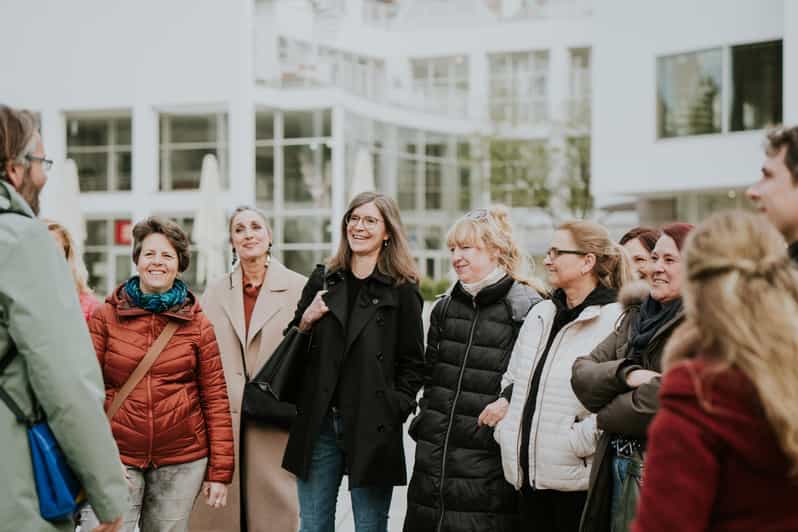
After Ulm Minster, the tour heads into the neighborhood north of the minster area and toward the newer city center. This is where the motto comes in, Medieval meets modern, and it’s one of the reasons this walk feels more interesting than a straight museum route.
You’ll see new buildings constructed in the heart of Ulm in recent years and decades. The guide frames them as a tribute to unique modern architecture, and what I find useful is the contrast. It helps you notice how Ulm’s planners kept the old core while still allowing forward-looking design.
This section also sets the tone for the Town Hall stop. When you move from old Gothic scale to modern urban placements, you’re primed to spot details rather than just chase the biggest silhouette.
If you’re the type who likes cities that keep working, not just cities that freeze in time, this part is for you.
Ulm Town Hall: fresco cycle and an astronomical clock you can understand at night
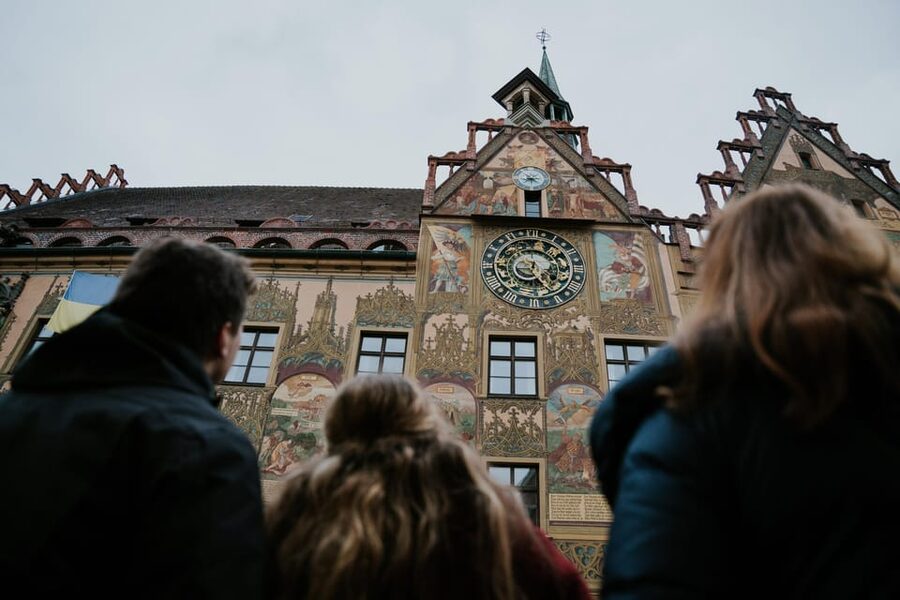
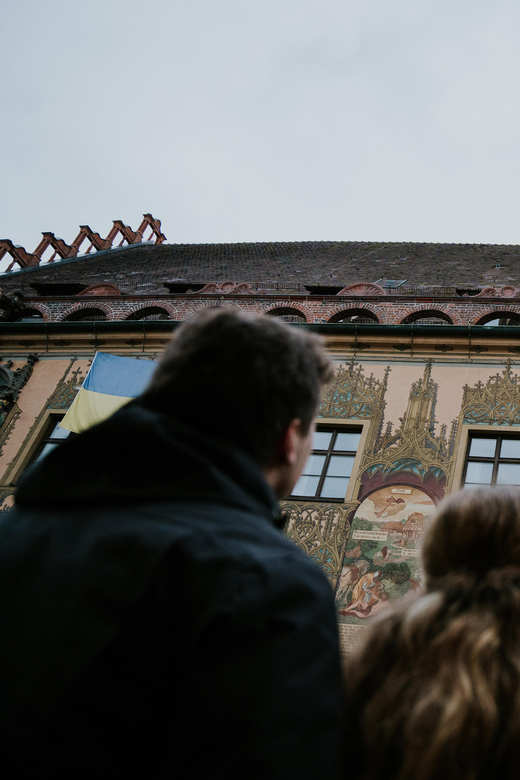
Next up is the Ulm Town Hall, right near the path. The building is early Renaissance in style, and the tour focuses on two major attractions.
First, you’ll hear about what’s probably Germany’s largest fresco cycle from the 16th century. Even if you don’t memorize every panel, learning that scale in plain terms helps you understand why this building matters to the city’s identity.
Second, you’ll look at the astronomical clock with zodiac signs and moon phases. This is one of those details that can sound technical until someone explains what you’re seeing and why it was useful. It’s not just decoration. It’s a public way of tracking time and the sky, built into a civic building people would pass during their daily lives.
At night, a clock and fresco-themed stop can be tricky because your visual access may depend on lighting and what the guide can show from the outside. Still, the value here is the guide’s explanations, which turn a façade detail into something you can actually interpret while you stand there.
The leaning Butcher tower and the city wall walk: where views get practical
From the Town Hall area, the tour passes the leaning Butcher tower and continues toward the city wall. That sequence is clever because it gives you two different kinds of atmosphere.
The leaning Butcher tower adds personality. It gives Ulm a quirky edge, and it’s the kind of landmark that sticks in your mind because it looks wrong in a memorable, human way. Then the city wall shift changes the mood again. You’re moving into the defensive perimeter story of the city, even if you’re experiencing it at a walking-tour pace rather than as a long hike.
For you, the main payoff is variety. You’re not only looking at points of interest. You’re moving through a topography of streets, walls, and transitions that helps Ulm feel like a connected whole.
A small tip: slow down for photos along the wall sections. Evening lighting can be flattering, but it also makes glare a factor on stone. If you take a second to adjust your camera, you’ll get cleaner shots.
Fishermen’s and tanners’ quarter after dark: the medieval lanes that feel real
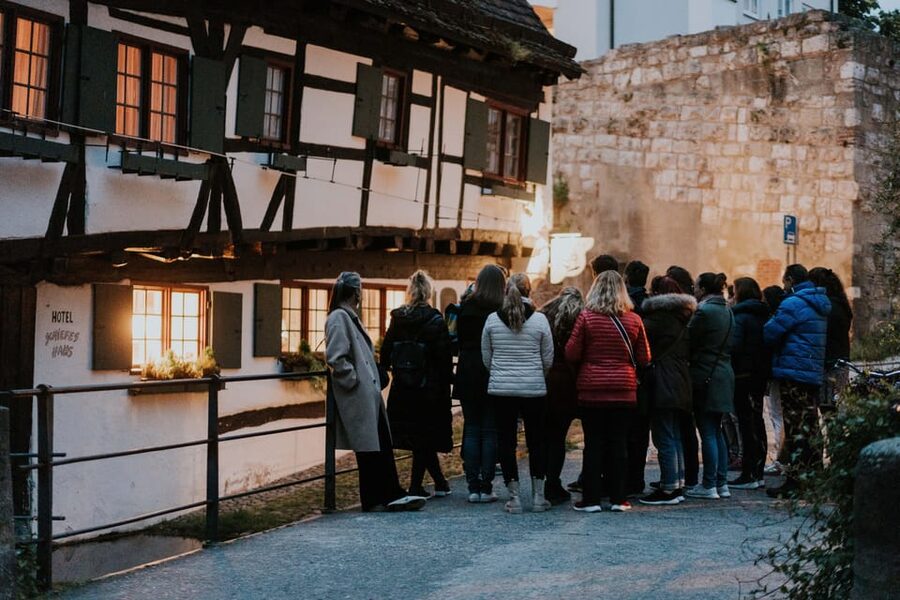
The most romantic stretch comes near the end: the fishermen’s and tanners’ quarter. The tour leans into the atmosphere here with small alleyways, bridges, and footbridges, all of which create that medieval-feel maze. The highlight isn’t just that the quarter is old. It’s that the layout still creates tight sightlines, crossing paths, and sudden corners you don’t get on wide boulevards.
The guide also connects the quarter to its past crafts. Fishermen’s and tanners’ were essential to how cities like Ulm functioned, and hearing that context makes the architecture feel purposeful instead of just atmospheric.
Today, the area is known for top-restored buildings, including the Crooked House. And the Crooked House is famous enough to have a Guinness Book of World Records mention for being the world’s most leaning hotel. Even if you’re not a records person, it’s a concrete visual reward at the end of the walk.
Why the night version works: illuminated streets help old façades look softer and more inviting. The quarter can feel like a small theater set, but it’s not staged for tourists in the cheesy sense. You’re moving through streets that still read as a historic working neighborhood.
If you want an evening photo, aim to linger a few seconds at the bridges and footbridges. Those crossing points are usually where the best angles happen.
Price and value: why $14 makes sense for 90 minutes
At about $14 per person, this tour is priced for value, not for luxury. You’re paying for a professional guide and for the structure of a route that hits several major highlights in only 1.5 hours.
Here’s what you’re really getting for your money:
- Expert context, starting with Ulm Minster’s construction story
- Two major civic stops, Ulm Town Hall and the astronomical clock details
- Landmark variety, including leaning towers and the Crooked House
If you tried to DIY this route on your own, you could see the places, but you’d likely spend more time figuring out what each building is and why it matters. This guided evening format saves your energy and gives you the interpretation as you go.
So this isn’t a budget hack. It’s a way to turn a short evening into a coherent experience.
Language and guide style: what to expect if your German is limited
This tour is listed as German. That’s the most important practical detail for whether you’ll enjoy the experience.
One review perspective you should take seriously is the reality that language can affect how much you enjoy the details. Even if English speakers can still follow the walking route, the story parts can be harder. If you speak basic German, you’ll catch some threads. If you don’t, plan on enjoying the buildings and using the guide explanations as best you can, rather than expecting a fully translated experience.
The good news is that the guide approach has been praised for being informative and humor-friendly, and there’s emphasis on keeping things engaging. That kind of pacing helps even when your vocabulary is not perfect.
If you’re traveling with someone who speaks German, this is a strong shared activity. You can still appreciate the architecture, and your German speaker can follow the finer points.
Who should book this Ulm evening walk
Book it if you want:
- A compact, 1.5-hour evening route that covers both big landmarks and charming medieval streets
- A guided explanation of Ulm Minster and Ulm Town Hall rather than just photos
- A city walk with contrast, where modern architecture sits beside medieval lanes
It’s also a nice fit for first-time Ulm visitors because the route naturally introduces the key identity of the city, from the minster to civic life to craft quarters.
If you’re someone who only wants indoor museums or you need an English-speaking guide, this may not match your expectations, since the tour language is German.
Should you book this Ulm evening stroll?
Yes, if you want a guided evening that mixes the famous and the atmospheric in one loop. The mix of Ulm Minster exterior, the Town Hall with its fresco cycle and astronomical clock, and the fishermen’s and tanners’ quarter ending at the Crooked House is a strong set of reasons to choose this over a random self-guided wander.
One last decision tip: if German is comfortable for you, you’ll likely get the full value. If it isn’t, go for the visual storyline and the architecture, and accept that some of the detailed explanations may be harder to follow.
FAQ
Where does the tour start?
It starts at Minster Square.
How long is the Ulm evening old town stroll?
The duration is 1.5 hours.
What language is the tour guide speaking?
The live tour guide speaks German.
Is Ulm Minster included inside the church or outside?
This is described as an exterior tour of Ulm Minster.
What can I see at Ulm Town Hall?
The tour includes the Ulm Town Hall, with what is probably Germany’s largest fresco cycle from the 16th century, and an astronomical clock showing zodiac signs and moon phases.
What is the leaning landmark on the route?
You’ll pass the leaning Butcher tower.
What area of Ulm feels most medieval?
The fishermen’s and tanners’ quarter, with small alleyways, bridges, and footbridges, gives the medieval flair.
How much does the tour cost?
The price is listed as $14 per person.
Is free cancellation and pay later available?
Free cancellation is available up to 24 hours in advance for a full refund, and you can reserve now and pay later.
Across Swabia
Everything else we filed on Ulm
- Ulm: Evening stroll through the old town
★ 4.7 · 41 reviews - Ulm: Scavenger Hunt Self-Guided Walking Tour
★ 4.6 · 71 reviews - Ulm: City Center Walking Tour with Minster Visit
★ 4.7 · 831 reviews
Stuttgart and Swabia Tours, side by side.
 ★ 4.4Stuttgart 24-Hour Hop-On Hop-Off Sightseeing Bus TourFrom $281,647 reviews
 ★ 4.8Stuttgart: Mercedes-Benz Museum Entry TicketFrom $181,400 reviews
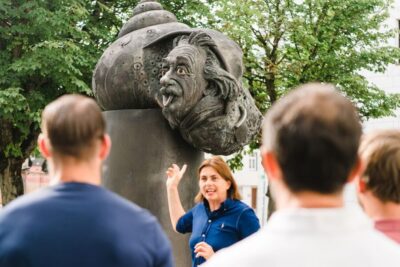 ★ 4.7Ulm: City Center Walking Tour with Minster VisitFrom $11831 reviews
 ★ 4.5Tickets SWR Fernsehturm StuttgartFrom $14674 reviews
 ★ 4.5Stuttgart: Guided Ghost Walking TourFrom $17662 reviews
 ★ 4.8Sinsheim: Technik Museum Day Pass and IMAX 3D TicketFrom $35616 reviews
 ★ 4.2Stuttgart: Museum of Illusions Entry TicketFrom $16507 reviews
 ★ 4.1Stuttgart: Vineyard Tour by Covered WagonFrom $46217 reviews
Other lists this tour is on