
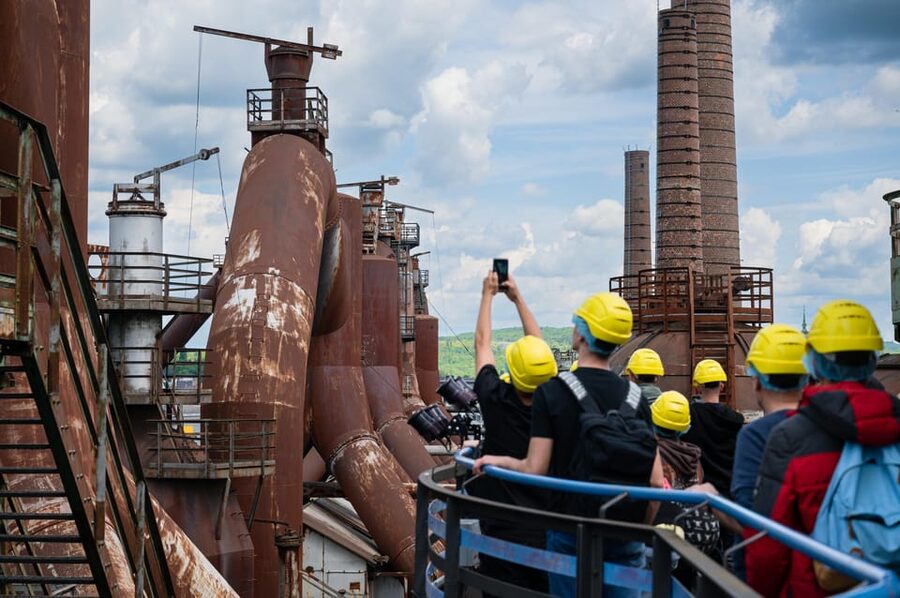
REVIEW · TRIER
Völklingen Ironworks World Heritage Site: Guided tour of the ironworks site
Steel, pipes, and the story of industry.
This guided visit to the Völklingen Ironworks (UNESCO World Heritage Site) lets you follow the machines from the blower hall to the blast furnace, then keep exploring on your own. You’ll also get into the Ferrodrom® Science Center and the site’s reclaimed Paradise garden, which turns an old industrial landscape into a place for plants and animals.
I especially love two things about this experience. First, the guide makes the old technology feel understandable, not just impressive, with clear explanations of how pig iron was produced and how workers lived and worked here. Second, you get real “site time”: the tour is only part of the visit, and afterward you can wander the halls, old industrial areas, and exhibitions at your own pace.
One possible drawback: the guided portion moves along in a tight 2 hours, so if you want to linger over museum labels or shoot lots of photos, you may feel a bit rushed during the guided route. The good news is you still have time after the tour to slow down.
In This Review
- Key Things You’ll Like Most
- Entering Völklingen Hütte: UNESCO Industry Made Human
- The 2-Hour Guided Tour Route, and What It Really Means for Your Visit
- A small trade-off to plan for
- Blower Hall to Blast Furnace: How Pig Iron Production Comes into Focus
- What to do if you want photos
- The Ironworks Exhibitions and the Freedom to Explore
- Ferrodrom® Science Center: Industrial Learning With a Different Tone
- The Paradise Garden: From Former Coking Plant to Living Nature
- The Rooftops and Heights Consideration at the Viewing Platform
- Price and Time: Is This a Good Value at About $25?
- Practical Logistics: Meeting Point, Pacing, and What to Bring
- What I’d bring
- Who This Tour Fits Best
- Should You Book the Völklingen Ironworks Guided Tour?
- FAQ
- How long is the guided tour of the Völklingen Ironworks?
- How much does the tour cost?
- Where do I meet for the guided tour?
- What’s included with the guided tour?
- Are there discounts or free tickets available?
- What language is the live tour guide?
- Is the site wheelchair accessible?
- Is this experience suitable if I am afraid of heights?
- Can I explore the site after the guided tour?
Key Things You’ll Like Most
- UNESCO Völklingen Ironworks guided walk through the key production areas, from blower hall to blast furnace
- Pig iron production explained with an expert guide who can handle questions
- Ferrodrom® Science Center access, adding a learning layer beyond the machines
- Paradise reclaimed garden in the former coking plant area, with flora and fauna
- Photo and reading time is limited during the tour, so plan for your own exploration afterward
- You get both structure and freedom, guided overview first, self-guided browsing after
More Roman stone and river corners
- Völklingen: Völklingen Ironworks World Heritage Site Ticket★ 4.4 · 35 reviews
Entering Völklingen Hütte: UNESCO Industry Made Human
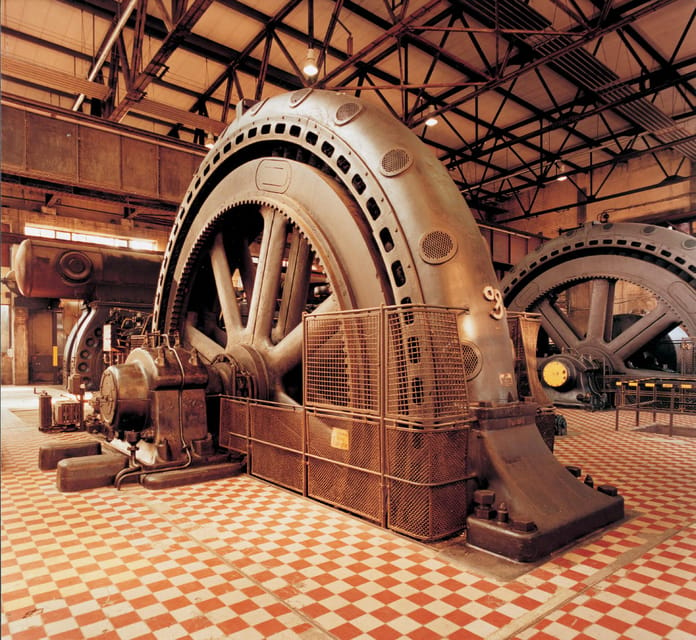
The Völklingen Ironworks in Saarland is not a generic museum set behind glass. It’s the actual industrial site, with the halls, machinery, and pipe systems left in place from the era of heavy industry. That matters because you don’t just read about blast furnaces and labor. You see scale. You feel how tightly the whole operation was designed, with everything built to work together.
I like how the tour connects steelmaking to people. The story isn’t only about machines and outputs. You also learn how the people who lived and worked in this industrial world managed their daily lives, and what the Saarland’s industrial rise and change meant in real terms.
If you’re the kind of visitor who enjoys details, you’ll appreciate the guide’s focus on how things actually worked. And if you prefer a more relaxed pace, you’ll also be relieved by the structure: a guided overview first, then free time to explore the exhibitions and outdoor areas without a timer on your back.
The 2-Hour Guided Tour Route, and What It Really Means for Your Visit
The tour lasts about 2 hours, starting in the entrance area at the ticket office. That timing is a sweet spot for most people because it gives you enough orientation to understand what you’re looking at, without turning the visit into a full day of only guided talking.
Here’s the practical reality: a site this size can’t be “fully covered” in a short tour. The best way to think about it is this: the guide gives you a guided map in your head. Once you finish, you can decide where to linger.
During the tour, you’ll move through the most important areas of the ironworks, including the machinery and technology that explain the production process. The description highlights the route from the blower hall to the blast furnace, which is exactly what you want if you’re trying to understand the heart of the operation. The guide explains how pig iron was produced and connects it to the broader industrial story of Saarland.
A small trade-off to plan for
Because the guided portion is timed, you’ll likely have less time for slow photo stops or reading every panel while the group is moving. If you care most about photography or text, use the guided tour to figure out where you want your own time later.
Blower Hall to Blast Furnace: How Pig Iron Production Comes into Focus
This is the part you’ll remember. The ironworks is built around heavy systems, and the route through the blower hall and up to the blast furnace gives you a “process in motion” view of how iron production worked.
What’s useful here is the explanation, not just the sight. The tour focuses on old technology and the machines that made it possible. You learn what the equipment is doing in the production chain, so the industrial spaces stop feeling like a random collection of parts.
You’ll also see why this site matters in a UNESCO context. It’s described as the only fully preserved ironworks from the heyday of industrialization, which is a big deal. Many industrial sites either disappear over time or get rebuilt in modern versions. Here, the original layout and industrial machinery are part of the experience, so your understanding comes from seeing the system as it once functioned.
What to do if you want photos
You can absolutely take pictures, but plan smart. The most effective strategy is to do “quick capture” during the tour for later reference, then focus on careful photos in the areas you choose afterward during self-exploration.
The Ironworks Exhibitions and the Freedom to Explore
After the guided route ends, you can explore the whole site and visit exhibitions. This is where you control your pace, and it’s especially valuable if you found the guided tour informative but a bit fast.
You’ll have access to all permanent and special exhibitions, which helps because different exhibits may match different interests. If you’re curious about technology, machinery and production will likely draw you in. If you prefer social history, you’ll likely appreciate the parts that discuss the human side of the industrial era.
The site also includes the old coking plant area. That matters because coking is one of the major processes tied to steelmaking. Seeing that part of the complex helps you understand how the ironworks worked as an interconnected system, not as one isolated machine.
Ferrodrom® Science Center: Industrial Learning With a Different Tone
This experience includes entry to the Ferrodrom® Science Center. Even if you’re not a “science museum person,” it can be a helpful bridge between old industrial technology and how we think about processes today.
The value here is pacing and variety. After walking through large steel structures and production halls, the science center offers a change of perspective. You get to connect what you saw in the ironworks to learning in a more interactive setting.
Because the tour data doesn’t spell out what specific sections you’ll see, treat this like an extra ticket to spend time on what interests you most once you’re inside. If you’re traveling with mixed ages or different interests, this stop often helps everyone find something engaging.
The Paradise Garden: From Former Coking Plant to Living Nature
One of the most interesting parts of the visit is the Paradise area. The description explains that this is a reclaimed landscape that grew out of the former coking plant, often described as a former hell of industry. The idea is powerful: a place built for intense production later becomes a site where flora and fauna can return.
This part of the experience gives your brain a breather. After concentrated industrial imagery, you can step into a garden setting and appreciate how the site’s transformation adds meaning to the preservation. It’s not only about freezing the past. It’s also about showing what can happen when industry changes and nature returns.
If you like photography of people and place rather than just machines, this is where you can slow down. It also helps to think of Paradise as part of the UNESCO value story, because it demonstrates how the preserved site can evolve beyond its original purpose.
The Rooftops and Heights Consideration at the Viewing Platform
The site includes a viewing platform above the rooftops of Völklingen. That can be a great payoff if you want to see how the ironworks fits into the surrounding town.
But the tour is also marked as not suitable for people afraid of heights. So if you have any anxiety around exposed viewpoints, be cautious about relying on the viewing platform as a must-do part of your visit. Stick to the areas that feel comfortable once you see the layout.
Price and Time: Is This a Good Value at About $25?
At $25 per person for 2 hours, the value comes from two things you’re getting together: a guided explanation of the key production areas and paid access to the site’s exhibitions.
You’re not only paying for a walk. You’re paying for:
- A guided tour through major ironworks areas, including the blower hall and blast furnace area
- Day admission to the UNESCO site
- Access to permanent and special exhibitions
- Access to Ferrodrom® Science Center
- Access to the Paradise garden
For many visitors, that mix is the sweet spot. If you tried to do this alone, you might still enjoy the industrial structures, but you could miss how the machines connect and why pig iron production mattered. With a guide, you get context fast, and the rest of your time becomes more intentional.
Also, the tour language is German, so if you understand German at least at a basic level, you’ll likely get more out of the explanations. If you need English or another language, you might find the site more rewarding if you’re prepared for some content to be in its original language.
Practical Logistics: Meeting Point, Pacing, and What to Bring
You meet in the entrance area at the ticket office and the guided tour starts from there. Since the visit includes self-exploration afterward, it helps to plan for a bit of time beyond the 2-hour tour so you can actually use the extra access you paid for.
Pacing is the main practical point to remember. One review note you might relate to is that the guided tour can feel relatively quick, with fewer opportunities for photography or reading during the route. That’s normal for group tours in industrial sites. Bring your patience, and use your own time after the tour to slow down.
What I’d bring
- Comfortable walking shoes for moving through industrial grounds
- A camera plan: quick shots on the tour, slower sessions afterward
- A notepad or phone notes if you like remembering explanations so you can revisit them during self-guided browsing
Who This Tour Fits Best
This guided tour is a great match if you want:
- A clear introduction to the Völklingen Ironworks and what you’re seeing
- The story of Saarland and the people behind the industrial era
- A structured visit that still gives you free time to explore the site
It’s also a good fit for visitors who like the idea of a preserved industrial site used for exhibitions and events, because the ironworks is described as a unique venue for exhibitions, festivals, and concerts. You’re seeing a place that still plays a role in culture today.
You might want to skip or adjust your plan if you’re strongly afraid of heights, due to the viewing platform element. And if you need lots of quiet time during the guided portion, go in with the understanding that you’ll do more reading and photos after the tour.
Should You Book the Völklingen Ironworks Guided Tour?
Yes, I think you should book it if you want a smart, efficient way to understand the site. At around $25, you’re getting more than a walk, you’re getting guided context plus full access to the exhibitions, the Ferrodrom® Science Center, and the Paradise garden. The guided route helps you interpret the blast furnace machinery and the broader industrial story of Saarland, and your free time afterward is when you can slow down for photos, reading, and wandering.
Book it if you enjoy industrial history with a practical explanation and you’re okay with a 2-hour pace. If you hate heights, treat the viewing platform carefully. If you love taking lots of photos, plan to do your best work after the tour, when you can choose your spots.
If you want, tell me your travel dates and whether you speak German. I can suggest a simple plan for how to fit the ironworks into your day in Saarland and how to structure your self-exploration time.
FAQ
How long is the guided tour of the Völklingen Ironworks?
The tour duration is about 2 hours.
How much does the tour cost?
The price is listed as $25 per person.
Where do I meet for the guided tour?
The meeting point is in the entrance area at the ticket office.
What’s included with the guided tour?
You get a guided tour of the World Cultural Heritage Site at the Völklingen Ironworks, day admission to the site, access to all special and permanent exhibitions, access to the Ferrodrom® Science Center, and access to the Paradise garden.
Are there discounts or free tickets available?
Yes. Free admission is available for under 18s. Free admission is available for under 27s with a valid student ID. There is reduced admission for disabled persons (from GdB 60%). You get free or reduced tickets at the entrance ticket office.
What language is the live tour guide?
The live tour guide is in German.
Is the site wheelchair accessible?
Yes, it is wheelchair accessible.
Is this experience suitable if I am afraid of heights?
No. It is marked as not suitable for people afraid of heights.
Can I explore the site after the guided tour?
Yes. After the guided tour, you are free to explore the entire site and visit the various exhibitions.
The Longer History of Volklingen
Trier, Koblenz and the Saarland
Everything else we filed on Volklingen
- Völklingen: Völklingen Ironworks World Heritage Site Ticket
★ 4.4 · 35 reviews
Trier Koblenz and the Saarland, side by side.
 ★ 4.4Koblenz: Rhine Valley Castles and Palaces Boat TourFrom $211,824 reviews
 ★ 4.8Trier: Guided City Walk with Wine TastingFrom $43979 reviews
 ★ 4.6Koblenz: 2-Hour Sightseeing Cruise on the RhineFrom $20839 reviews
 ★ 4.7Trier: Guided Old Town Highlights and History Walking TourFrom $16687 reviews
 ★ 4.5Koblenz: Old Town Sightseeing Cruise along the RhineFrom $16305 reviews
 ★ 4.4Koblenz: Panoramic Cruise on Moselle River to WinningenFrom $22283 reviews
 ★ 4.7Trier: Discovery Tour – Germany’s Oldest Wine CellarFrom $20218 reviews
 ★ 4.6Trier: City Walking TourFrom $17118 reviews
Other lists this tour is on