
REVIEW · TRIER
Trier: City Walking Tour
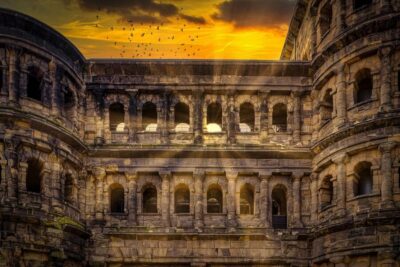
Trier compresses big eras into 90 minutes. I like how the walk strings together Roman Trier with the city’s later power struggles, so each stop explains the next one instead of feeling like random landmarks. The centerpiece is Porta Nigra, and you see why this gate became a symbol long before it became a UNESCO name.
I also really value the way this is guided by an official local team and structured around four UNESCO monuments, not just “here’s what it looks like” sightseeing. One consideration: with only 1.5 hours, you get strong orientation and smart highlights, but it is not a slow, linger-in-every-chapel kind of tour.
In This Review
- Key Things I’d Plan Around
- Entering Trier’s Story at the Tourist Information
- Starting in the City Center by Porta Nigra
- Roman Trier’s Gate, Then the Streets That Follow It
- Hauptmarkt, Dreikönigenhaus, and the Feel of the Middle Ages
- The Bishop vs Empire Story, With Church Towers and Wild Imagery
- Trier Cathedral Courtyard and the Big Shift to Later Centuries
- Church of Our Lady and the Basilica Complex as UNESCO Anchors
- Ending at Aula Palatina and Kurfürstliches Palais Area
- Why the Four UNESCO Monuments Make This Tour Worth It
- Price and Value for $17 in 1.5 Hours
- Pace, Group Feel, and How to Get More Out of It
- Who This Tour Suits Best
- Should You Book Trier: City Walking Tour?
- FAQ
- How long is the Trier City Walking Tour?
- What is the price per person?
- How many UNESCO monuments does the tour include?
- Where does the tour start?
- What languages are offered?
- Is the tour wheelchair accessible?
Key Things I’d Plan Around
- UNESCO monuments, counted clearly: you’re visiting four official UNESCO sites in one compact route
- Porta Nigra as your opening scene: the Roman foundation sets the pace for everything that follows
- Middle Ages with real street-level drama: fortified citizens, bishops, and imperial arguments show up in place names and architecture
- Cathedral area plus baroque energy: you move from Roman scale to medieval faith to later grandeur
- Ala Palatina as the late highlight: you end with a Roman interior space that ties back to the bigger story
More Roman stone and river corners
- Trier: Guided City Walk with Wine Tasting★ 4.8 · 979 reviews
- Trier: Guided Old Town Highlights and History Walking Tour★ 4.7 · 687 reviews
- Trier: Discovery Tour – Germany’s Oldest Wine Cellar★ 4.7 · 218 reviews
- Trier: City Walking Tour★ 4.6 · 118 reviews
Entering Trier’s Story at the Tourist Information
The tour meets in front of Trier Tourismus und Marketing GmbH, right by the Tourist Information. Practically, that’s a good setup because you are already at the main orientation hub, and you can ask staff there if anything is unclear. It also helps that the tour is an official one led by a local guide, with German and English spoken.
This matters because Trier can feel like a “Roman city tour” if you only stop for big photos. Here, you get a line of explanation that connects buildings to the people who used them, fought over them, and rebuilt around them.
Starting in the City Center by Porta Nigra
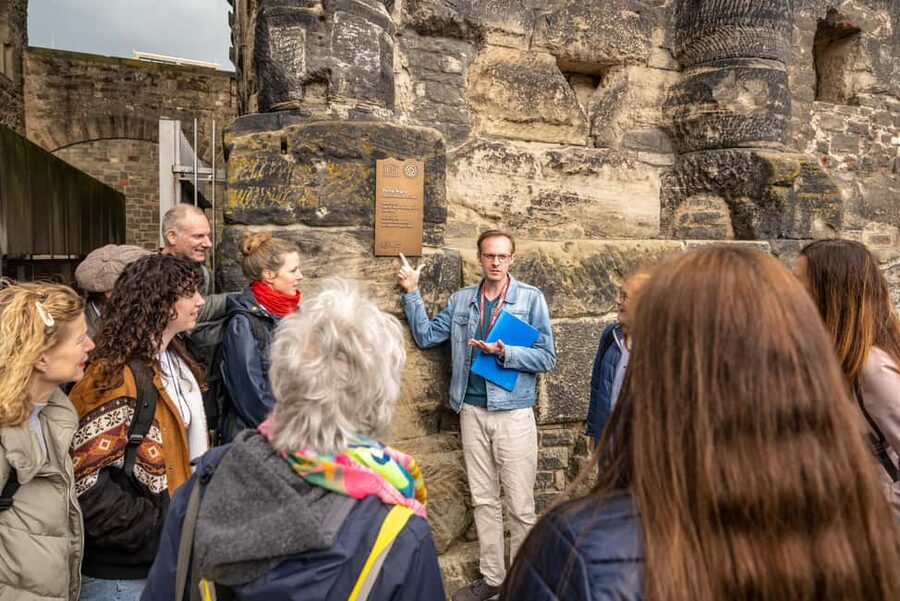
You kick things off with a guided look at Porta Nigra, Trier’s most famous Roman landmark. It’s not just impressive because it is old. It’s impressive because it shows how a city boundary, a gate, and a statement of power can survive centuries of reuse and reinterpretation.
As you stand near it, listen for how the guide frames it as the beginning of the walk through the city’s “center of antiquity.” That framing is what turns this stop from a photo moment into the opening chapter of your visit.
Roman Trier’s Gate, Then the Streets That Follow It
After Porta Nigra, you keep walking through the city center and into periods where you can feel the shift from Roman planning to medieval survival. The route is built around recognizable anchors, which helps you stay oriented even if you are seeing Trier for the first time.
What I like is the logic: you do not just jump from one landmark to another. You travel from Roman grandeur into the Middle Ages by passing places tied to real social life, including where communities lived and how streets could function as defenses.
Hauptmarkt, Dreikönigenhaus, and the Feel of the Middle Ages
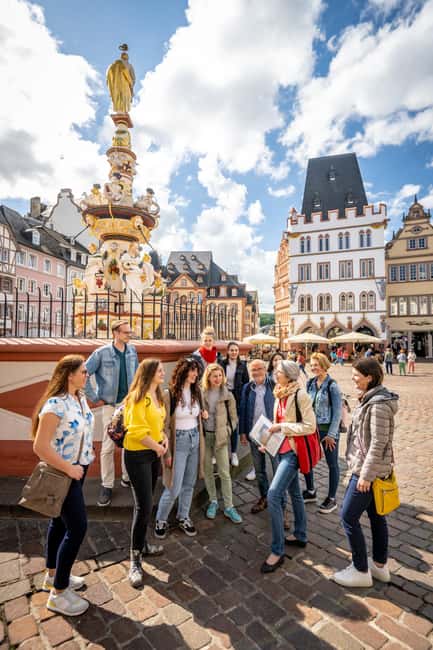
One of the best parts of this tour is that the Middle Ages is not described in vague terms. You get specific ideas you can connect to what you see next, starting around Hauptmarkt, Trier’s main square.
Near there, you also pass the Dreikönigenhaus. A stop like this is where a good guide earns their fee. The building becomes more than a facade when you understand it as part of the city’s medieval identity, tied to how citizens held their ground.
Then the route goes through Judengasse, a street name that invites questions and context. Even without going deep into every detail, the guide’s explanation helps you understand why these places matter, and it gives you better instincts for what to notice during your own follow-up walk.
The Bishop vs Empire Story, With Church Towers and Wild Imagery
This tour has fun in the right way: the medieval story includes sharp conflict over power. The tour describes a battle between fortified citizens and the bishop, tied to the fight over imperial immediacy, and it mentions that the rivalry sometimes played out with knights, monkeys, and church towers.
That kind of detail does something practical. It keeps your brain engaged while you’re walking, and it helps the city feel lived-in rather than like a diagram of dates. It is also a reminder that medieval Europe was political and messy, not just solemn stone.
If you like historical storytelling more than facts on a slide, this is exactly where the tour’s value shows up.
Trier Cathedral Courtyard and the Big Shift to Later Centuries
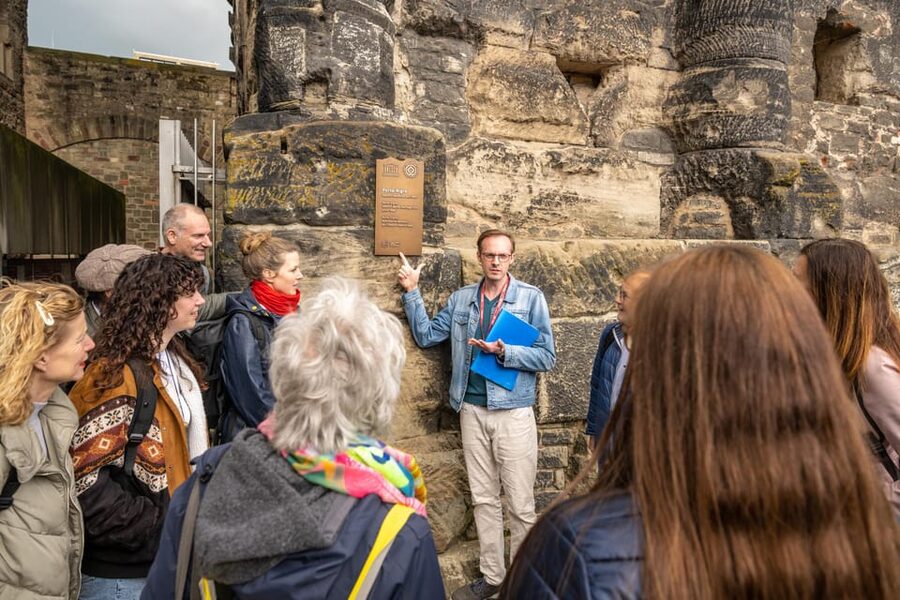
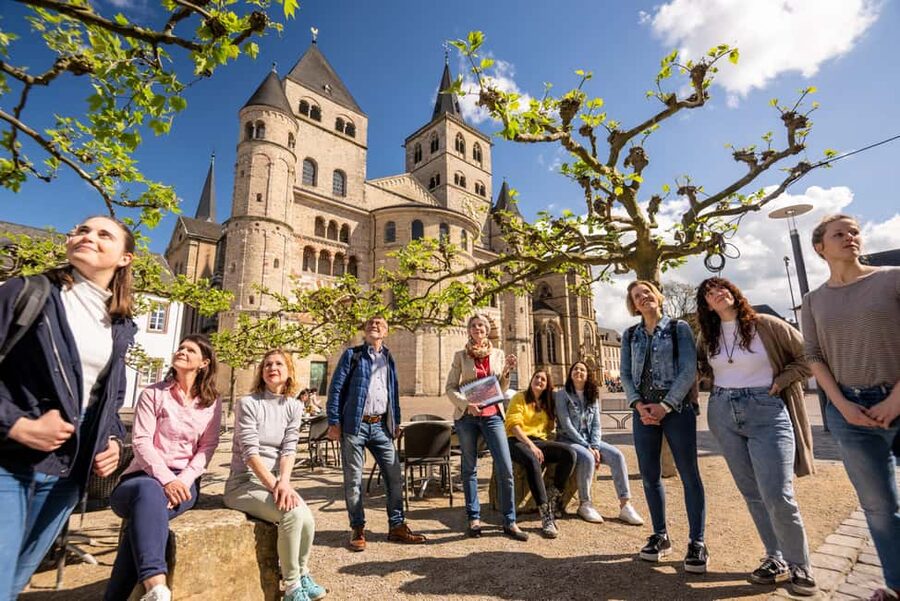
Next you move into the cathedral area, and you do more than look at the main building. The tour includes the Trier Cathedral and the cathedral courtyard, which is an underrated way to understand how religious power worked in public space.
A cathedral is often treated like a single object. Here, you get a sense of how the surrounding areas support the building’s role, from daily flow to ceremonial presence. That courtyard stop helps you place the cathedral in the city’s rhythm.
And it gets more interesting as the tour transitions toward later grandeur. You are guided to connect the cathedral complex to what came after, so the walk does not feel like three separate mini-tours stitched together.
Church of Our Lady and the Basilica Complex as UNESCO Anchors
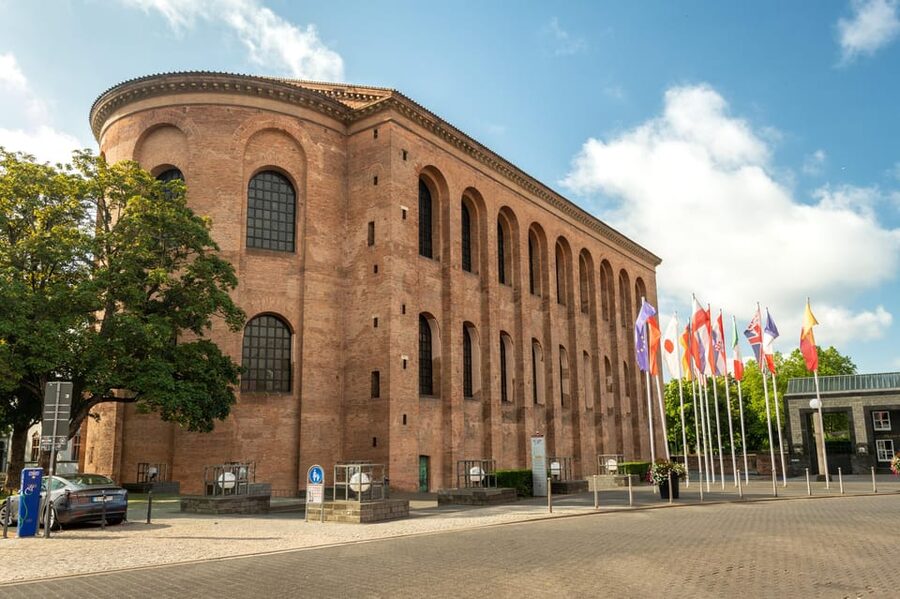
The tour explicitly passes the Church of Our Lady and a nearby basilica connected to the UNESCO World Heritage grouping. This is one of the key reasons I think the tour is a good use of time in Trier: you are not picking through UNESCO sites one by one on your own.
You get help spotting the differences in style and purpose as you move. Roman structures emphasize scale and engineering. Later religious and civic buildings shift the focus toward devotion and status. When the guide ties those contrasts together, you start seeing patterns instead of just collecting sights.
Ending at Aula Palatina and Kurfürstliches Palais Area
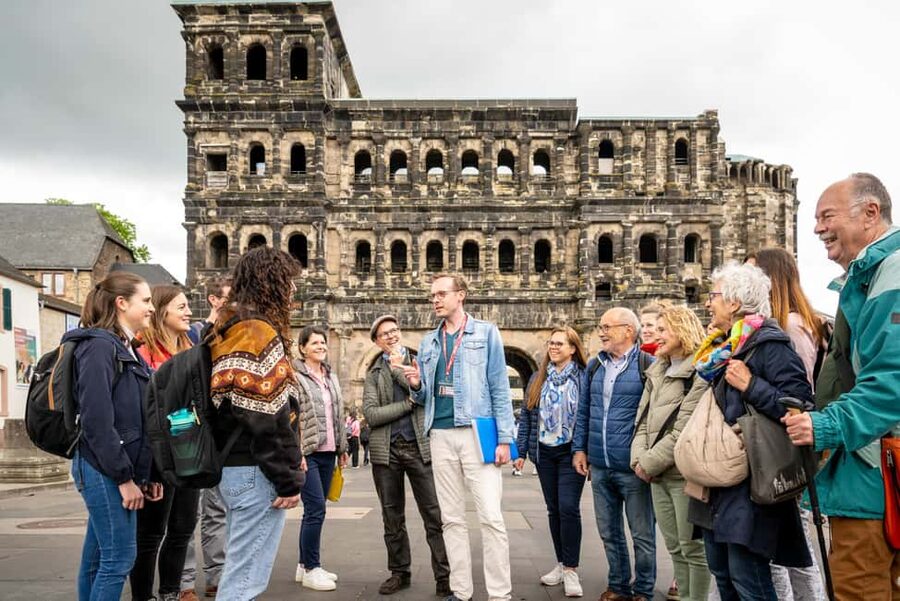
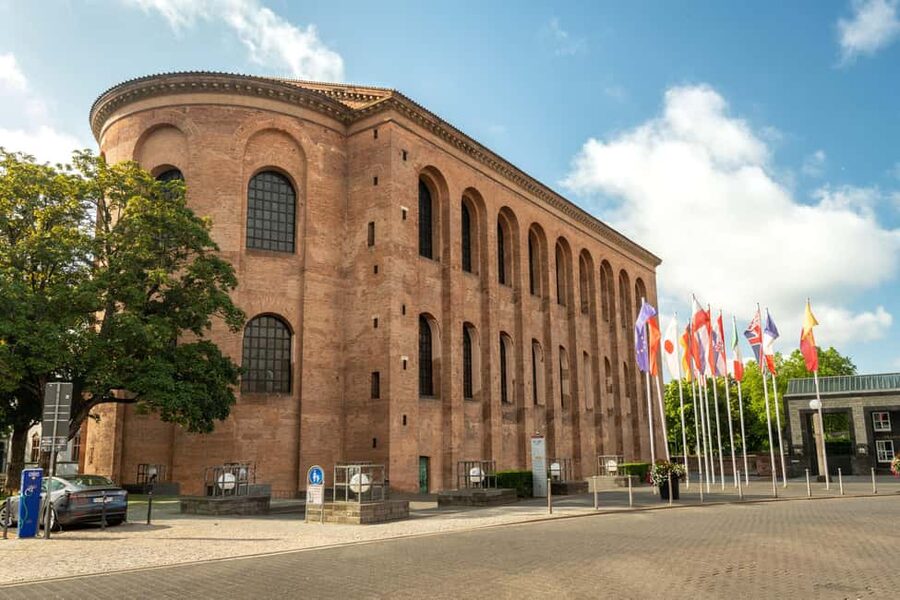
You finish with Aula Palatina, a Roman space that feels like a final “proof” that this city’s story starts with the Romans and then adapts. If you’ve been thinking, Wait, is Trier only Roman? this is where you get the answer. The architecture shows Roman sophistication, and it also explains why those later eras cared so much about the same ground.
After that, the walk ends at Kurfürstliches Palais and Palastgarten. Even if you do not go far into the palace grounds, seeing the area near the palace gives you a baroque landing point, so the tour closes with a sense of later authority and styling.
Why the Four UNESCO Monuments Make This Tour Worth It
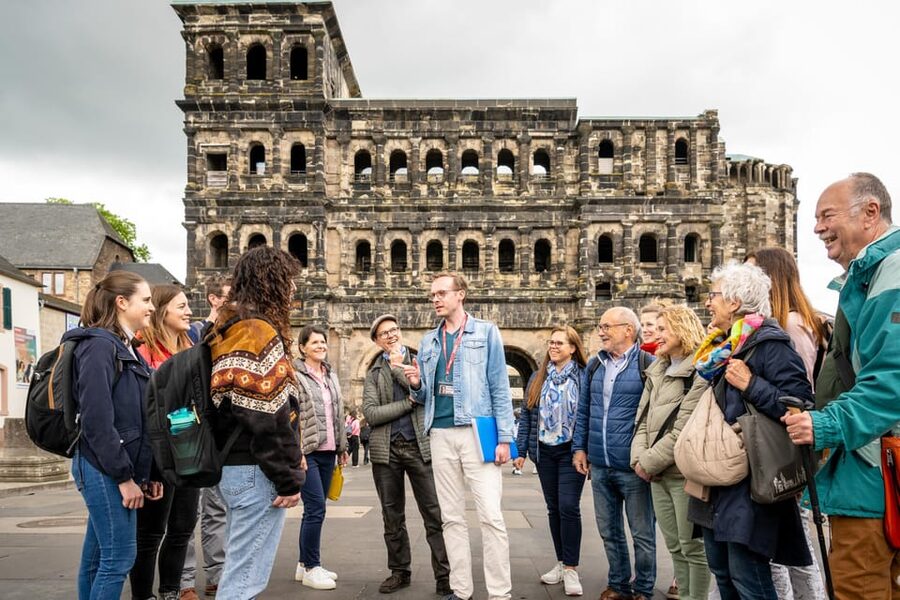
At first glance, a short walking tour plus four UNESCO stops can sound like a checklist. But the value here is how the route is organized so the sites reinforce each other.
- Porta Nigra gives you the Roman frame
- The cathedral complex anchors the medieval and religious center
- Church of Our Lady shows the city’s enduring spiritual identity
- Aula Palatina connects you back to the Roman core, then lets later influence land around it
Because you hit four UNESCO buildings in 1.5 hours, you save time compared with designing your own route from scratch. And because it is guided, you are more likely to notice details that you would otherwise miss when you are moving independently.
Price and Value for $17 in 1.5 Hours
The tour costs $17 per person, and for a guided route with four UNESCO monument stops, that is solid value. The math is simple: you are paying for local guidance plus structured access to major sights, not for a long transportation day or a full-day museum schedule.
The smarter part of the value is time. If you have a limited window in Trier, this tour helps you orient quickly and decide what to revisit afterward. If you have more time, it still works well as a “first pass” so your later independent walks have a clearer storyline.
Pace, Group Feel, and How to Get More Out of It
This is a walking tour built for a compact schedule, so the pace is steady. Plan to wear comfortable shoes, and bring a small curiosity mindset. The guide’s explanations are doing real work here, especially in the Middle Ages portion where the story includes vivid conflict imagery.
A practical tip: after major stops like Porta Nigra and the cathedral area, pause for a minute on your own. Let what you heard settle before you move on. It improves recall, and it keeps you from treating the day like a rapid-fire sightseeing sprint.
Also, since the tour is wheelchair accessible, that’s helpful if you need a route designed for mobility needs. It is always smart to confirm what you personally require in advance, but the accessibility detail is clearly part of the offering.
Who This Tour Suits Best
I’d put this tour high on the list if you:
- are seeing Trier for the first time and want clear orientation
- like historical storytelling with people and conflicts, not only stone facts
- want a fast, guided way to hit UNESCO World Heritage sites
- prefer a compact 1.5-hour plan over longer tours
If you prefer deep, slow time inside buildings with minimal walking, you might want to pair this with extra time on your own later. But as a first contact with Trier’s top landmarks, it is a strong plan.
Should You Book Trier: City Walking Tour?
Yes, I think you should book if your goal is to understand Trier quickly and walk away with a coherent story. For $17, you get an official guided route that hits four UNESCO monuments, including the big Roman start at Porta Nigra, plus the cathedral area and Aula Palatina.
I’d skip it only if you want a long, inside-heavy itinerary where you spend lots of time sitting, reading, and wandering without structure. Otherwise, this is exactly the kind of tour that turns a compact visit into something you can actually remember.
FAQ
How long is the Trier City Walking Tour?
The tour lasts 1.5 hours.
What is the price per person?
It costs $17 per person.
How many UNESCO monuments does the tour include?
The tour includes a visit of 4 UNESCO monuments.
Where does the tour start?
You meet in front of the Tourist Information at Trier Tourismus und Marketing GmbH, right by the Porta Nigra.
What languages are offered?
The live guide speaks German and English.
Is the tour wheelchair accessible?
Yes, the tour is listed as wheelchair accessible.
Seeing Trier in One Go
Pavements of Trier
Trier, Koblenz and the Saarland
Everything else we filed on Trier
- Trier: Your Adventure Awaits – The Return of the Elector
★ 4.0 · 12 reviews - Trier, Moselle: Wine excursion with boat trip
★ 3.9 · 13 reviews - Trier: Private Guided Walking Tour
★ 4.2 · 32 reviews - Trier: Solve the Mystery of the Merchant’s Gold!
★ 4.2 · 61 reviews - Trier: City Walking Tour
★ 4.6 · 118 reviews - Trier: Discovery Tour – Germany’s Oldest Wine Cellar
★ 4.7 · 218 reviews
Trier Koblenz and the Saarland, side by side.
 ★ 4.4Koblenz: Rhine Valley Castles and Palaces Boat TourFrom $211,824 reviews
 ★ 4.8Trier: Guided City Walk with Wine TastingFrom $43979 reviews
 ★ 4.6Koblenz: 2-Hour Sightseeing Cruise on the RhineFrom $20839 reviews
 ★ 4.7Trier: Guided Old Town Highlights and History Walking TourFrom $16687 reviews
 ★ 4.5Koblenz: Old Town Sightseeing Cruise along the RhineFrom $16305 reviews
 ★ 4.4Koblenz: Panoramic Cruise on Moselle River to WinningenFrom $22283 reviews
 ★ 4.7Trier: Discovery Tour – Germany’s Oldest Wine CellarFrom $20218 reviews
 ★ 4.6Koblenz: Rhine Valley Castle Sightseeing CruiseFrom $1698 reviews
Other lists this tour is on