
REVIEW · TRIER
Trier: Guided Old Town Highlights and History Walking Tour
Trier tells its story in stone. This guided walk connects Roman Trier to medieval landmarks and even Karl Marx’s life, all in about 90 minutes. I like that the guide keeps the focus on what you can actually see, not just big lecture stuff. I also really enjoy the human touch, especially when guides bring history to life with humor, like Patrick did with his entertaining explanations.
You’ll start right by the Porta Nigra, then work your way through the key squares and buildings that shape Trier’s old town feel. The one possible drawback is simple: the tour is in German, so if you do not feel comfortable with the language, you may miss some of the fine details.
In This Review
- Key highlights to know before you go
- Where the tour starts, and how to get oriented fast
- Porta Nigra: the Roman gate that still runs the show
- Trier Cathedral and the middle ages, seen with fresh eyes
- Main Market: where Trier’s everyday energy meets old stones
- Karl Marx’s house: philosophy, politics, and the city that shaped them
- A 1.5-hour walking tour that feels like a guided city map
- Price and value: $16 for a focused, guide-led experience
- Tips to make the most of your walk (and your follow-up plans)
- Should you book the Trier old town highlights tour?
- FAQ
- Where does the guided tour meet?
- How long is the Trier Old Town Highlights and History Walking Tour?
- What language is the live guide?
- How much does the tour cost?
- Can I get a refund if I cancel?
- Do children get a discount or free entry?
- Can I reserve now and pay later?
- Are there different starting times?
Key highlights to know before you go
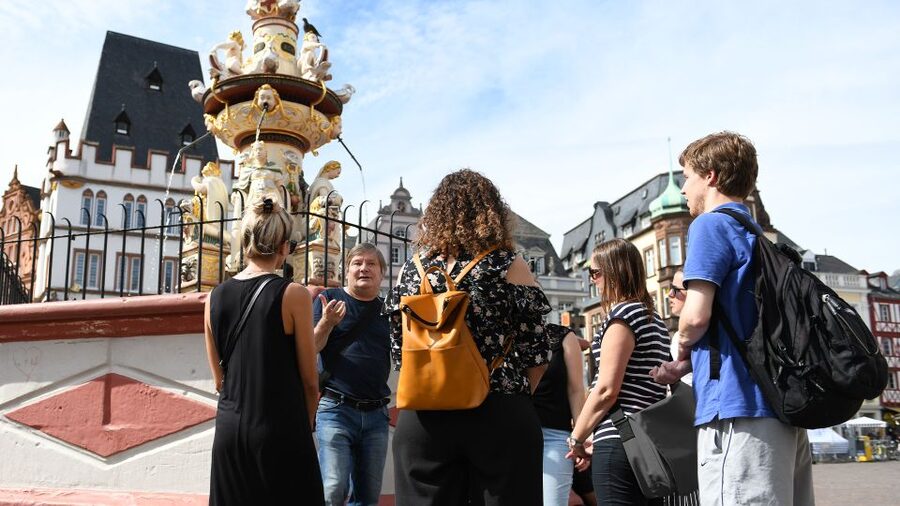
- Porta Nigra from street level: You get the Roman context for this landmark built as early as 170 AD.
- Roman daily life, not just dates: The guide explains what life could feel like under Roman rule.
- Trier Cathedral and medieval evolution: You’ll see how architectural styles shift across time.
- Main Market as a center of everyday life: Great for getting your bearings in the city center.
- Karl Marx’s former home: A philosopher’s residence adds a surprising modern layer.
- A guide you can quiz: Expect space for questions, plus practical ideas for where to eat and drink afterward.
More Roman stone and river corners
- Trier: Guided City Walk with Wine Tasting★ 4.8 · 979 reviews
- Trier: Guided Old Town Highlights and History Walking Tour★ 4.7 · 687 reviews
- Trier: Discovery Tour – Germany’s Oldest Wine Cellar★ 4.7 · 218 reviews
- Trier: City Walking Tour★ 4.6 · 118 reviews
Where the tour starts, and how to get oriented fast
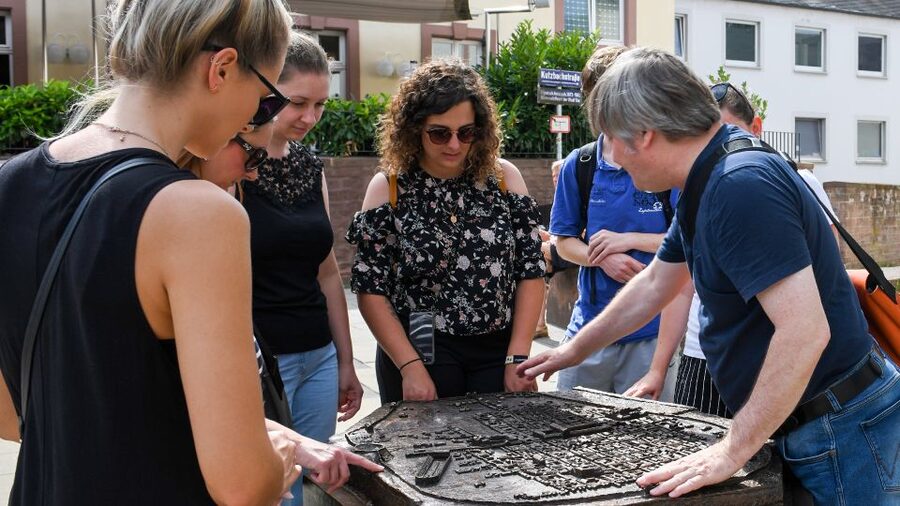
The meeting point is easy to find once you know the landmark: meet your guide in front of the Mercure Hotel, opposite the Porta Nigra. That is a smart setup. It means you begin with the single most recognizable Roman structure in Trier, and your walk immediately makes sense.
From the start, you are not wandering randomly. The guide gives you a line of reasoning for each turn. You learn what to look for, what changed over time, and why Trier has layers you can still spot on the street. It is the kind of orientation that helps even after the tour ends, because you now understand what parts of town connect.
Porta Nigra: the Roman gate that still runs the show
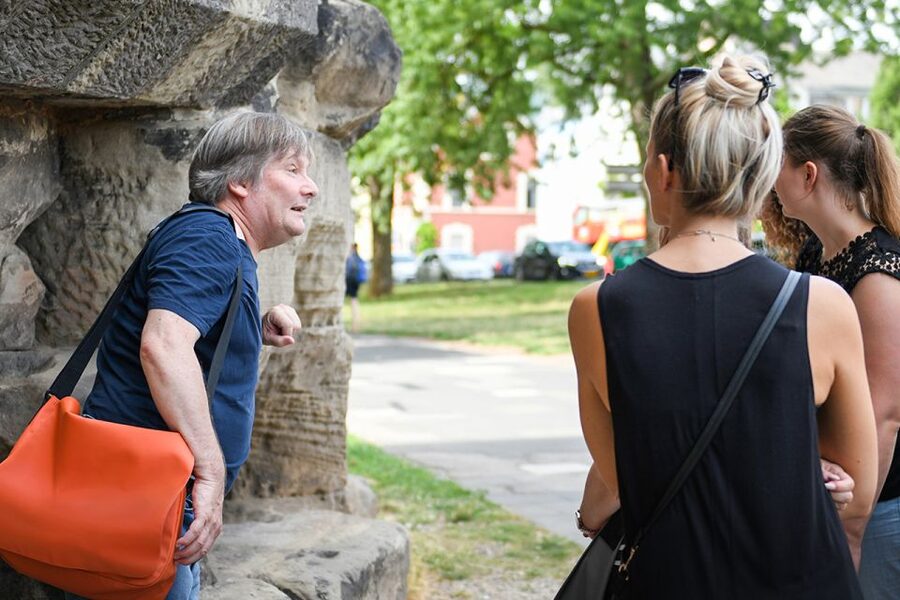
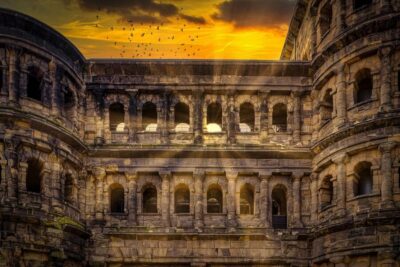
The tour’s anchor is the Porta Nigra, a Roman gate built as early as 170 AD. Standing here, it is hard not to feel how solid Roman engineering was. But the best part is that the guide ties the stonework to daily life under Rome, not just impressive architecture.
This is where you learn how Roman power showed up in a city entrance. You also get context for why this gate became such an enduring symbol for Trier. The guide walks you through what the Romans built, and then you notice how the structure fits into the modern city around it.
One of the most praised things about the tour is the way guides explain and entertain at the same time. Patrick and Herbert were singled out for being both sharp and humorous, and that matters here. Instead of memorizing a list of facts, you get stories you can actually picture.
Trier Cathedral and the middle ages, seen with fresh eyes
After the Roman starting point, the walk shifts into Trier’s medieval architecture. This section is not meant to be a long museum stop. Instead, it is about seeing how styles evolve while you keep moving and looking.
You’ll admire Trier Cathedral and hear how the architecture reflects different periods. The value here is timing. You are already warmed up by the Roman story, so when the tour moves into later centuries, you can spot the changes more clearly.
A heads-up, though. If you are the type who wants deep, stop-by-stop photo notes, you might wish the tour were longer than 1.5 hours. The pace is designed for an overview. You come away with direction and context, not every last detail.
Main Market: where Trier’s everyday energy meets old stones
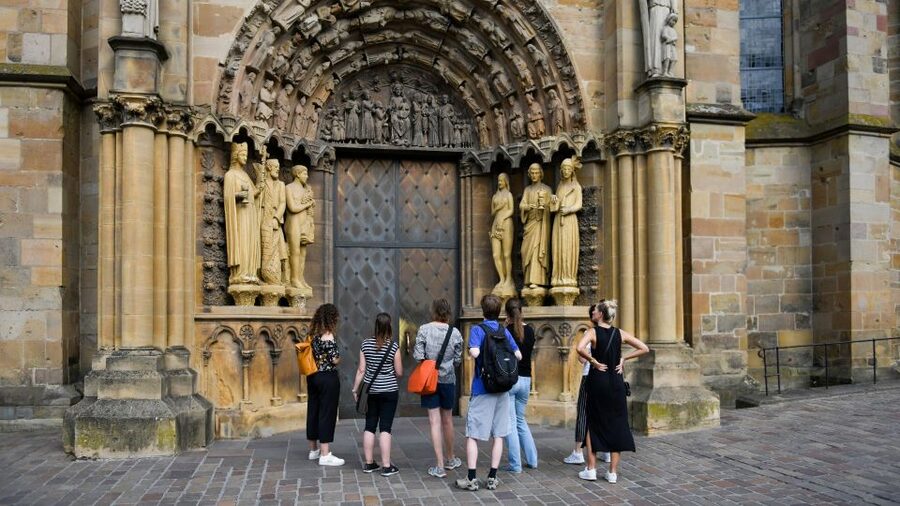
Next you will reach the Main Market, the kind of place that feels built for meeting up. Even if you visit it later on your own, this is the spot that helps you understand Trier as a living city, not just a history stop.
The guide uses the square to connect the dots between past and present. You learn how the city’s public spaces worked, and why a market area becomes important again and again through centuries. It is also a good mental break. You can step back, look around, and absorb the city layout.
I like that this kind of stop is included because it gives you a practical payoff. When you later decide where to wander, you already know where the center is. That saves time, especially if Trier is new to you.

Karl Marx’s house: philosophy, politics, and the city that shaped them
One of the tour’s standout moments is learning about the residential house of Karl Marx. This is a great twist, because Trier is often marketed first as Roman and medieval. Marx brings a modern intellectual layer that makes the walk feel less fixed in time.
Your guide explains who Marx was in the context of Trier and what it means to see his former home within a city packed with older monuments. Even if you are not a deep Marx reader, it is still a powerful contrast. You are standing in the same place where 19th-century ideas formed, while just minutes away you can still see Roman structures.
The guide’s storytelling style really matters here. In the reviews, Herbert and Patrick were praised for mixing structured explanations with lighter moments. That approach helps you stay interested when the history gets more philosophical and less architectural.
A 1.5-hour walking tour that feels like a guided city map
At 1.5 hours, this tour is a solid “first day” activity. It gives you a framework quickly, so you can explore on your own later with less guesswork. You will be walking, enough to make comfortable shoes important, but it is not positioned as an all-day trek.
The pace is also ideal if you have limited time in Trier. You can fit it between other sightseeing blocks without needing a whole morning or afternoon. I also like that it does not overwhelm you with too many stops. You hit the major anchors, learn why they matter, and move on.
Who it suits best:
- First-time visitors who want Trier context fast
- People who enjoy stories more than memorizing dates
- Travelers who like a mix of Roman, medieval, and modern cultural threads
Who should think twice:
- Anyone who needs a tour in a language other than German
- Visitors who prefer very slow walking and lots of time to linger at each building
Price and value: $16 for a focused, guide-led experience
The price is $16 per person, and for a 1.5-hour guided walk with a live German guide, it usually feels like fair value. You are paying for more than pointing at buildings. You are buying interpretation, which is exactly what turns old stones into a place you understand.
Also, because the tour covers several of Trier’s key sights in one go, the cost feels more reasonable than doing the same landmarks separately with no guidance. The big value is the narrative thread. You leave with a clearer sense of what you are looking at.
Could it be a better deal? Some longer tours sometimes offer more time for the same cost. But in this case, the short duration is part of the value. You get high-impact highlights without spending your whole day in transit.
Tips to make the most of your walk (and your follow-up plans)
This tour ends with an easy next step: ask your guide for restaurant and bar recommendations afterward. That is one of those small perks that can save you time. You do not have to gamble on where to eat in a city you just started learning.
Here are practical things I recommend before you go:
- Wear shoes you trust. You will be on foot for the full 1.5 hours.
- Come with curiosity. The best questions are simple: what changed over time here, and why does Trier still show it today?
- If German is a stretch for you, focus on the visuals and the main names. You will still catch the big story beats around Porta Nigra, Trier Cathedral, the Main Market, and Karl Marx.
I also like arriving with mental anchors. If you already know you want to photograph the gate and then the cathedral area, you can relax and enjoy the guide’s storytelling without worrying about what comes next.
Should you book the Trier old town highlights tour?
Yes, if you want a smart overview of Trier’s layers with a guide who can explain and keep things fun. This is especially worth it for first-timers, because the route starts at Porta Nigra, then moves through the city’s big public landmarks, and ends at a historically surprising modern connection with Karl Marx.
Book it if you like guided interpretation and you enjoy questions and answers. Also, if you are visiting with kids, the reviews note that children enjoyed the experience, which is a good sign that the guide can adapt the tone.
Skip it only if German-only explanations would be frustrating for you, or if you prefer to wander without a structured path. Otherwise, for $16 and 1.5 hours, you get a lot of Trier for your time.
FAQ
Where does the guided tour meet?
Meet your guide in front of the Mercure Hotel, opposite the Porta Nigra.
How long is the Trier Old Town Highlights and History Walking Tour?
The tour lasts 1.5 hours.
What language is the live guide?
The live tour guide speaks German.
How much does the tour cost?
The price is $16 per person.
Can I get a refund if I cancel?
You can cancel up to 24 hours in advance for a full refund.
Do children get a discount or free entry?
Children aged 0 to 5 years can join for free.
Can I reserve now and pay later?
Yes, you can reserve now and pay later.
Are there different starting times?
Starting times can vary, so check availability for the times offered.
Pavements of Trier
Trier, Koblenz and the Saarland
Everything else we filed on Trier
- Trier: Your Adventure Awaits – The Return of the Elector
★ 4.0 · 12 reviews - Trier, Moselle: Wine excursion with boat trip
★ 3.9 · 13 reviews - Trier: Private Guided Walking Tour
★ 4.2 · 32 reviews - Trier: Solve the Mystery of the Merchant’s Gold!
★ 4.2 · 61 reviews - Trier: City Walking Tour
★ 4.6 · 118 reviews - Trier: Discovery Tour – Germany’s Oldest Wine Cellar
★ 4.7 · 218 reviews
Trier Koblenz and the Saarland, side by side.
 ★ 4.4Koblenz: Rhine Valley Castles and Palaces Boat TourFrom $211,824 reviews
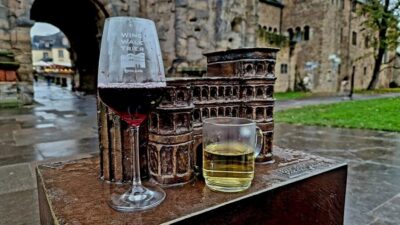 ★ 4.8Trier: Guided City Walk with Wine TastingFrom $43979 reviews
 ★ 4.6Koblenz: 2-Hour Sightseeing Cruise on the RhineFrom $20839 reviews
 ★ 4.5Koblenz: Old Town Sightseeing Cruise along the RhineFrom $16305 reviews
 ★ 4.4Koblenz: Panoramic Cruise on Moselle River to WinningenFrom $22283 reviews
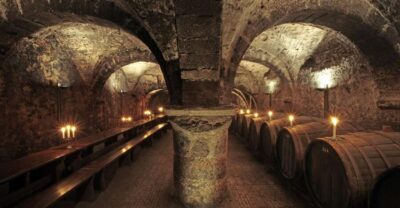 ★ 4.7Trier: Discovery Tour – Germany’s Oldest Wine CellarFrom $20218 reviews
 ★ 4.6Trier: City Walking TourFrom $17118 reviews
 ★ 4.6Koblenz: Rhine Valley Castle Sightseeing CruiseFrom $1698 reviews
Other lists this tour is on