
REVIEW · PRIVATE DRIVERS
Welcome/Farewell SightseeingTaxi Tour +Transfer from/to the airport
Berlin makes more sense in a car.
This taxi sightseeing tour with airport transfer turns a chaotic first day into a clean, logical route. I especially like how GAT-Productions handles the “get there and start seeing” part, plus the way your guide connects monuments to cause-and-effect history without drowning you in details.
I also love the balance of big icons and human-scale moments. You get short stops at places like the Brandenburg Gate and Pariser Platz, then you shift into neighborhoods where Berlin feels lived-in rather than staged, like Hackesche Höfe and Nikolaiviertel. One thing to consider: it is designed for quick viewing, so if you want long museum time or slow wandering, you will still need a second plan.
In This Review
- Key Things to Know Before You Go
- Taxi Comfort Plus Real Orientation From the First Minutes
- Price and Value: What $171.52 Really Buys You
- Brandenburg Gate, Reichstag Area, and the Wall’s Afterlife
- Unter den Linden to Pariser Platz: Old Splendor With a Division-Era Backstory
- Churches, Courtyards, and Bebelplatz: The Forum Fridericianum Area
- Unter den Linden Icons You Might Walk Away Thinking About
- Stadtschloss Rebuild, Berlin Cathedral Inside, and Museum Island’s UNESCO Five
- Hackescher Höfe and the Small-Town Feeling in Central Berlin
- Alexanderplatz, Berlin City Squares, and the Red City Hall Option
- Nikolaiviertel, the Garlic House, and the Spree Lock View
- The 2711 Stelae Memorial and Potsdamer Platz’s “Death Strip” Story
- How to Get the Most From a Short 1 to 3 Hour Ride
- Should You Book This Taxi Tour With BER Transfer?
- FAQ
- How long is the tour?
- Is the Berlin airport transfer included?
- What pickup options do I have?
- What language is the guide?
- Are tickets and snacks included?
- Can I cancel for free?
Key Things to Know Before You Go
- Airport transfer + taxi sightseeing are built together, so you do not have to juggle separate bookings
- English narration with a guide, Gunter Bauer, who keeps the ride flowing and helps you plan the rest of your days
- Photo-friendly timing, with frequent pull-offs where you can actually get pictures rather than just watching from a moving car
- A smart mix of eras, from Berlin Wall landmarks and division-era crossings to reunification rebuilds and modern Potsdamer Platz
- Flexible stops based on your interests, including options around the Reichstag area, Museum Island, and church-and-square sights
Undecided? The closest Berlin write-ups we have are these.
- Berlin: Reichstag, Dome and Government District Guided Tour★ 4.7 · 18,288 reviews
- Berlin: 1-Hour City Tour by Boat with Guaranteed Seating★ 4.3 · 16,993 reviews
- Berlin: Boat Tour Along the River Spree★ 4.4 · 11,252 reviews
- Discover Berlin Half-Day Walking Tour★ 5.0 · 9,624 reviews
Taxi Comfort Plus Real Orientation From the First Minutes
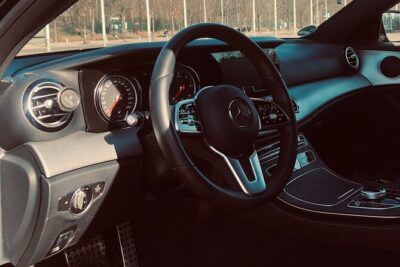
This tour is built for people who want Berlin to click fast. You do not just get dropped at random viewpoints. You get picked up, you settle in, and you start learning as you move, with an air-conditioned vehicle and WiFi on board. That matters in Berlin, where weather can flip quickly and waiting around can eat your time.
The other quiet win is how the format protects your energy. You cover a lot of ground, including major landmarks that would take you a full day on foot. If you are dealing with jet lag, a tight schedule, or you simply hate the feeling of always looking for the next metro connection, the taxi approach feels like a big simplifier.
And you are not trapped in one pace. Some sights are quick photo stops, some are drive-by depending on what you want to focus on, and a few spots can turn into short “look closely” moments. That flexibility is part of why this works well as an orientation tour.
Price and Value: What $171.52 Really Buys You
At $171.52 per person for about 1 to 3 hours, this is not priced like a no-frills city hop. What makes it feel reasonable is what it includes:
- Pickup from your city location (hotel or accommodation)
- Transfer from and to BER airport included
- The taxi ride according to the tariff and the city tour are both included, with VAT covered
- Parking fees are included
- You ride in an air-conditioned car with WiFi
In practical terms, you are combining two things that normally cost you separately: airport logistics plus a guided highlights run. If you already know you will want to see the core sights quickly, this becomes good value because you stop paying “time tax” in transit confusion.
Brandenburg Gate, Reichstag Area, and the Wall’s Afterlife
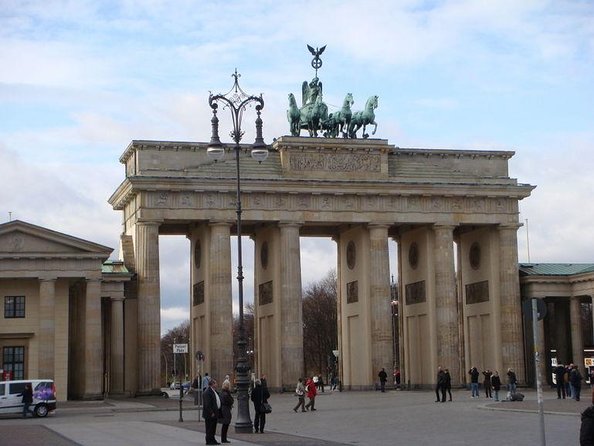
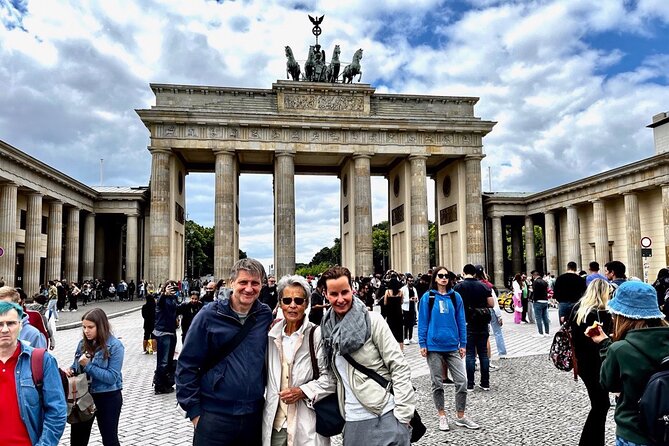
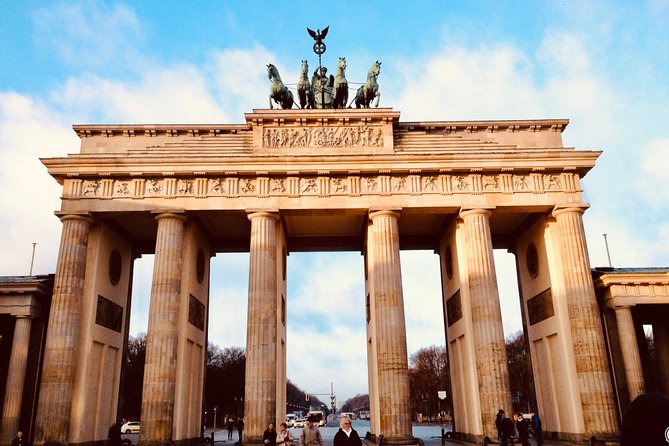
The tour’s first concentration of landmarks is where Berlin history gets loud and visual. It starts at the Brandenburg Gate, which you will hear described as more than a postcard. It has shifted meaning over and over: originally a city gate, later caught in Napoleonic storylines, then reshaped by the city’s division. During the Berlin Wall years, it stood isolated, cut off from one side and separated by barriers on the other, until the wall fell and the gate re-emerged as a symbol of German reunion.
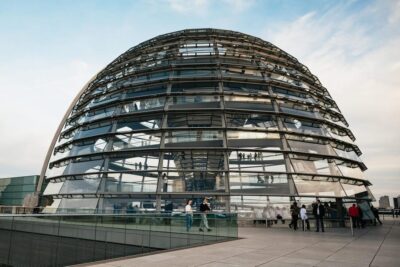
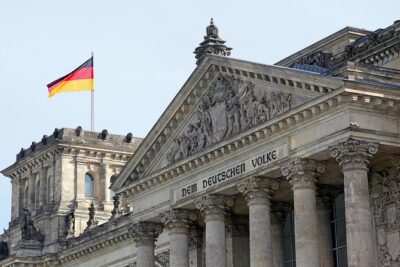
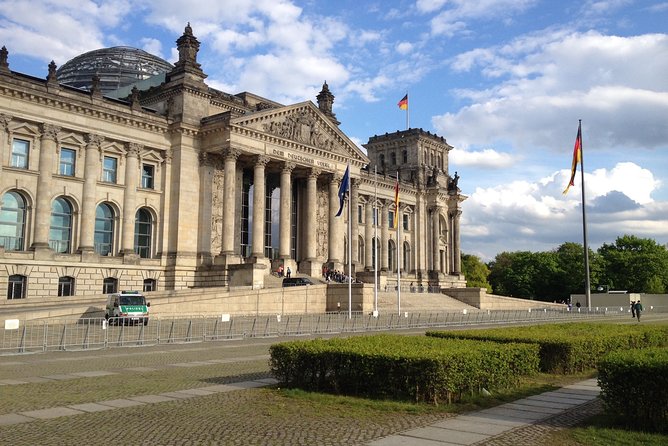
Right near there, you move into the Reichstag-adjacent zone. The guide’s storytelling is strongest when the buildings are treated like evidence. You get context for why the German parliament area looks the way it does now, including the glass dome that became part of Berlin’s new image after rebuilding and redesign. You also hear about the dome’s story as a design choice, plus the visual memory of Christo’s wrapping project.
Then the route expands into the government architecture in a way most quick walking tours never manage. You pass the Chancellery, described as a huge complex with a very “top office” layout, and you hear fun scale comparisons that keep the facts sticky. After that, you get the “engine” of parliamentary work, where the real committee process happens across a long, glass-forward structure. The key point for you: this is not just scenery. It’s the machine room behind final speeches.
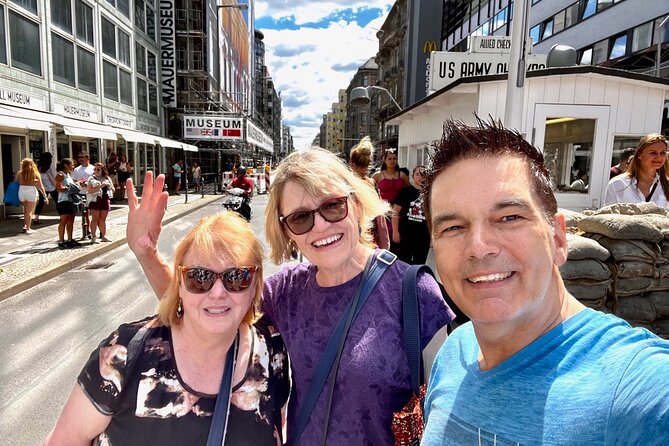
From there, the tour pivots to the Berlin Wall era in a way that hits differently because you are not stuck only with dramatic monuments. You reach Friedrichstraße station, historically important because it was one of the rare crossings for rail travel between East and West Berlin. You hear about how it functioned with barriers, checkpoints, and even Stasi observation routines, plus the emotional side of those separations at places tied to goodbyes.
If you like history that you can see and trace, this portion is the heart of the ride. If you prefer only pretty views, you may still appreciate it, because the guide explains why the city layout looks the way it does today.
Unter den Linden to Pariser Platz: Old Splendor With a Division-Era Backstory
After the government cluster, the tour moves into the ceremonial spine of central Berlin: Unter den Linden. You get the idea that this boulevard is not an accident. It started as a quieter route linked to elite hunting grounds, and later became the grand avenue you know today. The guide’s details about tree choices, plus the way the street was lined with prominent institutions, help you see the boulevard as a timeline, not just a street.
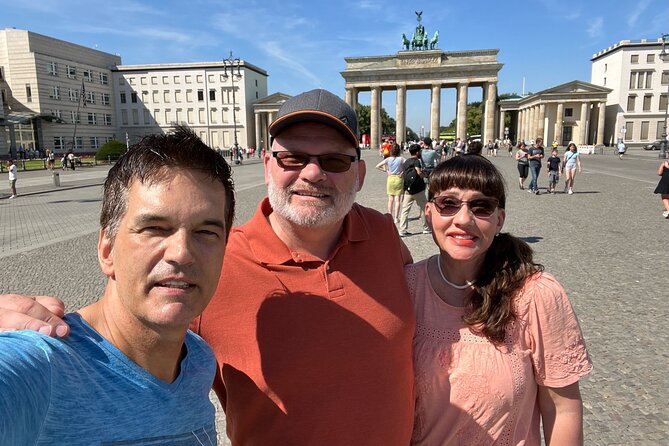
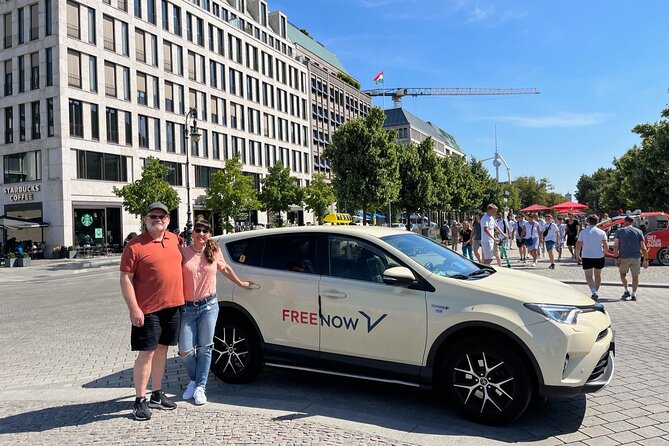
This also sets up one of the most effective contrasts in Berlin: Pariser Platz. The tour frames it as a kind of front room for the city, where the Brandenburg Gate feels like a guest of honor. But you also learn why this space was once so isolated during the division years, including the barrier setup from each side and the fact that major buildings near it were demolished.
You also get a tour-style walkthrough of what surrounds the square. The rebuilt modern ensemble includes key cultural and embassy-related buildings, and you get the story of how Berlin chose to modernize while keeping the overall “volume” that matched earlier plans.
Then the tour adds a layer of Cold War scale with the big Soviet foreign representation building. You hear how it was designed with an inner courtyard concept that did not follow the usual street alignment rules, plus the way it symbolized the power balance of its time. Even if the building’s specific political story is uncomfortable, it helps you understand Berlin’s obsession with architecture as messaging.
Churches, Courtyards, and Bebelplatz: The Forum Fridericianum Area
One reason I like this tour format is that the guide often shifts from “big government” to “small spaces with sharp meaning.” The German and French cathedral area, now used as theater and concert spaces, is a good example. The key learning moment here is the mismatch between name and original function. The structures were parish-house style buildings with cathedral-like design flourishes, and today you get both the cultural role and the religious continuity, including a French-speaking reformed congregation and a Huguenot museum story.
Next comes the cluster around the Forum Fridericianum. You move through one of Berlin’s classic square-and-building ensembles where a library, cathedral, the State Opera area, and the Humboldt University zone are all part of one broader identity. The tour connects this beauty to political conflict too, including the forced party union story tied to early 20th-century political history.
Then you reach the emotionally heavy stop connected to Bebelplatz. The guide explains the May 10, 1933 book burning in a direct, fact-based way and shows why the square includes a glass window floor element that points to an empty space below. It’s one of those Berlin moments where the architecture teaches you how to remember.
If you want your sightseeing to have weight, this zone delivers. If you prefer lighter stories, you can still enjoy it visually, but mentally you should be ready for the subject matter.
Unter den Linden Icons You Might Walk Away Thinking About
Two additional stops in this region tend to leave people thinking, even when the visit is short.
First is Neue Wache, the memorial linked to Käthe Kollwitz’s Pieta sculpture. The guide connects it to war and terror victims, and you get a sense of how a place used for solemn remembrance has become part of Berlin’s annual rhythm of commemoration.
Second is the palace zone around the Kronprinzessinnenpalais and the neighboring palace complex. Many people rush through it because the scale of Unter den Linden can overwhelm your attention. This tour helps you slow down. You learn what these spaces were for historically, why they were linked to royal life, and how modern use continues to reflect the area’s rebuilding and administrative needs.
Stadtschloss Rebuild, Berlin Cathedral Inside, and Museum Island’s UNESCO Five
When the route reaches the Stadtschloss Berlin, you get the story of a long-empty gap after war destruction and later demolition, followed by a rebuild now known as the Humboldt Forum area (opened in the 2021 to 2022 period). You hear why the external reconstruction is considered “externally exact” based on documentation, plus why the courtyard rebuilding matters as more than an architectural gimmick.
Then the tour shifts to the viewpoint payoff. The roof terrace view is usually the highlight here, and it makes sense. Berlin’s major sights can feel spread out, but from the right angle you can start to see how the city pieces connect.
After that, you get an option depending on interests: the tour can include the Berlin Cathedral, with an emphasis on what it feels like inside. The guide frames it as Berlin’s “compressed story” in built form, mixing the city’s repeated cycles of destruction and rebuilding. You also get the chance to discuss the dome and what makes the interior feel different from the outside.
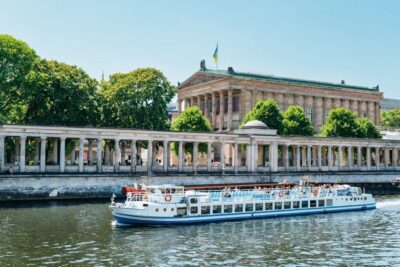
Finally, the route can include Museum Island, which is one of Berlin’s signature UNESCO clusters. The tour explains how the five world-famous museums share a peninsula identity, and how each museum’s focus differs. You’ll hear about early museum architecture, collections from the 1800s and 1930s, and standouts like the ancient Egypt collection that includes Nefertiti, plus the Pergamon Museum as the big “architecture and scale” draw.
Even if you do not plan to enter every museum, the ride-by context helps you choose better later. You stop seeing Museum Island as five separate buildings and start seeing it as a curated timeline.
Hackescher Höfe and the Small-Town Feeling in Central Berlin
Not all “old Berlin” is truly old, and this tour makes that clear in a helpful way. The stop at Hackescher Markt and Hackesche Höfe is where the city suddenly feels more human. You get the sense of a preserved ensemble that survived through war damage, later poor storage-era use, and then restoration after reunification.
What I like here for you: this is the kind of place where you can walk after the tour and still feel the Berlin vibe without having to battle huge crowds immediately. Studios and working spaces exist alongside cafes and small shops, so it feels like a live district rather than just a backdrop.
The guide then can add a longer or optional segment along Hamburger Straße. This can include sights tied to multiple communities and old religious buildings, including a Jewish cemetery area, Sophienkirche, and references to Catholic hospital buildings. You also learn how a once prominent Jewish synagogue project was built in a Moorish style, and how its main hall was lost during bombing.
Alexanderplatz, Berlin City Squares, and the Red City Hall Option
A typical highlight tour often skips the “everyday Berlin” parts. This one does not have to. Depending on your interests, you might get time around Alexanderplatz, where you see the iconic TV tower area and learn about the GDR-era desire to reshape the square into a broad, socialist-style vision with modernist institutions around it.
You can also get a stop or short visit around the Red City Hall. The guide explains what the name really refers to, built in a Gothic style, and that it can be visited for free with interesting rooms, including plaster cast displays of well-known statues. Even if you do not go inside, the context makes it easier to understand why this part of Berlin holds administrative weight.
Nikolaiviertel, the Garlic House, and the Spree Lock View
To me, this section is where Berlin becomes charming without turning into theme-park fake. The tour can include Nikolai church, the “garlic house,” and the nearby streets around the Spree.
You get the reconstruction story tied to the 1980s era approach, including how this part of Berlin was rebuilt with a strong intention to create an older look, even though the original surviving structure situation was more limited than many people imagine. The tour also connects these buildings to the idea of a densely lived river district, and then you get a city museum component through the oldest church in Berlin.
The garlic house moment, plus the idea of Biedermeier-style interiors and family stories, is a nice contrast to the heavy memorial stops earlier. If you are traveling with someone who wants variety, this helps a lot.
Then you add the practical geography: the oldest crossing area, and how the Spree lock works conceptually in that spot. You hear that older mill and water-management traditions came before modern lock design, and that the current double-chamber lock replaced earlier arrangements in the 1930s.
The 2711 Stelae Memorial and Potsdamer Platz’s “Death Strip” Story
A Berlin trip cannot be accurate without confronting its worst periods. This tour includes two of the most direct visual references.
First is the memorial made of 2711 stelae, with a focus on how you experience it. The guide explains it can initially confuse, then teaches you how the arrangement reflects fear, uncertainty, and the idea of what a person might take while facing Nazi persecution. You also get the pointer that there is more information available in the basement. The point here is not a dramatic lecture. It is a guided way to understand how the memorial tries to translate human psychology into space.
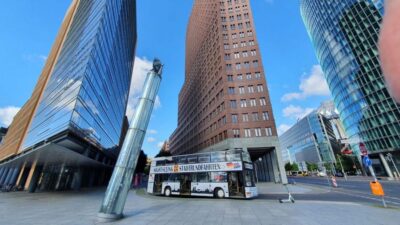
Second is Potsdamer Platz, where the story becomes modern, commercial, and fast-paced. You learn how the area was nearly erased during the Wall era, and how the war destruction and later demolition created an 80 meter death strip. Then the guide connects that trauma to what came after, including the entertainment and shopping quarter built around the Daimler Chrysler and Sony development phase, plus museums and major brand-driven redevelopment.
This pairing works well because it gives you a before, a during, and an after. You look at modern Potsdamer Platz differently once you understand what once lay there.
How to Get the Most From a Short 1 to 3 Hour Ride
This tour succeeds when you treat it like a smart day-starter. Here is how I suggest you work it:
1) Pick your top 2 focus themes before you go. If you love political history, ask for more time around the parliament buildings and Wall-related crossing sites. If you prefer architecture and neighborhoods, steer the guide toward Unter den Linden, Forum Fridericianum, Hackesche Höfe, and Nikolaiviertel.
2) Use the car time to plan walking days. After you learn where things sit and why they matter, Berlin is easier to navigate. The guide’s approach is built for that, including the way stops are arranged so you can take pictures at key points and then decide what to return to later.
3) Bring a phone camera habit. The ride includes pull-offs and photo opportunities, so have battery and storage ready. When your guide knows you want photos, the timing feels more helpful.
If you’re traveling with someone who gets tired easily, the taxi format is also a gift. You can keep the day moving while still getting meaning from the stops.
Should You Book This Taxi Tour With BER Transfer?
Book it if you want three things in one shot:
- Door-to-door logistics with the BER airport transfer included
- A guided route that hits big landmarks without wasting hours on transit
- A clear, practical introduction that helps you plan the rest of your Berlin days
Skip it if you know you want long museum visits or deep walking time at one single neighborhood. This tour is built for highlights and orientation, not for staying inside every building all day.
One final reason to feel confident: the guide, Gunter Bauer, is known for keeping the experience comfortable and practical in a car. The ride is designed to help you learn the city story and still enjoy yourselves, with frequent opportunities for photos and a route that makes it easier to choose what you do next.
FAQ
How long is the tour?
It runs for about 1 to 3 hours.
Is the Berlin airport transfer included?
Yes. Transfer from/to BER airport is included, along with the taxi ride and city tour.
What pickup options do I have?
You can be picked up from your hotel or accommodation for the farewell tour, and for the welcome tour the guide picks you up at BER Airport. You should follow the SMS or WhatsApp instructions after landing or when you are ready to go outside.
What language is the guide?
The tour is offered in English.
Are tickets and snacks included?
Snacks are not included. Some major stops are listed as admission ticket free, but the tour does not market snacks as part of the package.
Can I cancel for free?
Yes. You can cancel up to 24 hours in advance for a full refund. If you cancel less than 24 hours before the start time, the amount you paid is not refunded.
Everything else we filed on Berlin
- Private Photo Tour in Kreuzberg
★ 5.0 · 3 reviews - Kreuzberg Private Walking Tour: Immigrants, Artists & Hipsters
★ 5.0 · 3 reviews - Berlin’s Jewish Heritage: Private Tour of the Vibrant Jewish District
★ 5.0 · 3 reviews - Individual city tour Berlin for max. 8 persons
★ 5.0 · 3 reviews - Berlin & The Third Reich Private Guided Tour
★ 5.0 · 3 reviews - Private Analogue Photography Experience in Berlin
★ 5.0 · 3 reviews
Private Drivers, side by side.
 ★ 4.8Berlin: Listening Station Teufelsberg Tour with TransferFrom $62354 reviews
 ★ 4.0Shared Arrival Transfer: Munich Airport to Munich Central StationFrom $15266 reviews
 ★ 4.5Private Transfer from Munich Airport to Munich City by Luxury VanFrom $11882 reviews
 ★ 5.0Private Berlin Custom Half-Day Tour with Private Driver and GuideFrom $36159 reviews
 ★ 4.5Hamburg: 3-Hour Limousine Tour with Driver-GuideFrom $32456 reviews
 ★ 3.5Shared Departure Transfer: Munich Central Station to Munich AirportFrom $1554 reviews
 ★ 4.0Berlin Private Transfer to/from Berlin Brandenburg AirportFrom $5732 reviews
 ★ 4.5Berlin Private Airport/Hotels Transfer Service | English SpeakingFrom $18727 reviews
Other lists this tour is on