
REVIEW · CITY TOURS
Augsburg’s Water Management System – City Walking Tour
Water runs under Augsburg’s feet.
On this 2-hour walking tour, I like the way the story comes alive as you step through Augsburg’s Old Town cobblestones, and I especially enjoy the payoff at Rotes Tor, where you learn about the oldest existing waterworks in central Europe. One possible drawback: the guide’s style is strongly fact-and-dates focused, so if you come for lots of personal anecdotes, you may find it a bit dry.
You’ll also see the city’s famous fountains, including the Augustus fountain, plus the smaller historic canal scenes in the Lech quarter. The tour is built around Augsburg’s UNESCO water management system, with several of the 22 elements explained in a simple, walkable route.
In This Review
- Key highlights you get on this Augsburg water tour
- Augsburg’s water management system, mapped for real humans
- Start at the Tourist Information Center, then get your bearings fast
- Old Town basics: how the system works where you can see it
- Fountains you can name after the tour: Augustus, Merkur, Herkules
- Lech quarter walking: small historic canals and red-roofed charm
- Rotes Tor waterworks: the UNESCO anchor stop
- Hearing the facts: guide style in German and English
- Optional elysium sound system: when your smartphone helps
- Walking logistics that matter for a 2-hour UNESCO tour
- Price and value: what you’re really paying for
- What to bring so the tour feels easy
- Who should book this Augsburg water management tour?
- Should you book this tour or not?
- FAQ
- How long is the Augsburg water management system walking tour?
- Where do I meet the guide?
- How much does the tour cost?
- What languages are available for the live guide?
- Is the tour wheelchair accessible?
- What’s included in the price?
- Are attraction entry tickets included?
- Is food and drinks included?
- Do I need a smartphone to use the elysium sound system?
- What should I bring and wear for the tour?
Key highlights you get on this Augsburg water tour
- Old Town cobblestones under your shoes as the water system story unfolds
- Lech quarter canal walking, with small historic waterways and red-roofed streets
- Rotes Tor waterworks and why they matter, including the oldest existing waterworks in central Europe
- Fountains with names like Augustus, Merkur, and Herkules that you can picture later
- UNESCO World Heritage context tied directly to what you’re seeing on the ground
- Optional elysium smartphone sound amplification if you want extra clarity
Other walking routes through Augsburg
- Augsburg’s Water Management System – City Walking Tour★ 4.5 · 168 reviews
- Augsburg: Illuminated Guided Evening Walking Tour★ 4.6 · 67 reviews
Augsburg’s water management system, mapped for real humans
Augsburg’s water management system is not one big fountain or one building you can photograph and move on from. It is a whole network, made up of multiple elements, that worked together for a long time. This tour is the easiest way I’ve found to understand that network without turning your day into a full-on museum marathon.
What makes it work is the pacing. You’re walking through Old Town, getting key points connected to place, then shifting to the Lech quarter canals, and finally landing at Rotes Tor. That final stop gives you the “why this matters” feeling, because you’re standing at the site tied to the oldest existing waterworks in central Europe.
Start at the Tourist Information Center, then get your bearings fast
Your meeting point is straightforward: meet your guide in front of the Tourist Information Center. That matters because Augsburg’s Old Town streets can feel like a puzzle until you understand the direction your walk is taking.
Once you’re moving, the tour sticks to a clear rhythm. You start in the heart of the city, then head off to see several of the system’s elements. Expect plenty of walking for a 2-hour experience, and bring comfortable shoes because you will be on cobblestones more than once.
Old Town basics: how the system works where you can see it
In the Old Town portion, you’re not learning water science in a lab. You’re learning how Augsburg used water management as a practical piece of daily life, and how the city kept building and refining its system over time.
This is also where you’ll notice the tour’s information style. The focus is very heavily on historical facts and dates, and the guide tends to explain the logic of the water system step by step. I love that approach when I want to understand a place quickly. If you’re the kind of traveler who prefers storytelling first, you’ll want to go in with the right expectations.
Fountains you can name after the tour: Augustus, Merkur, Herkules
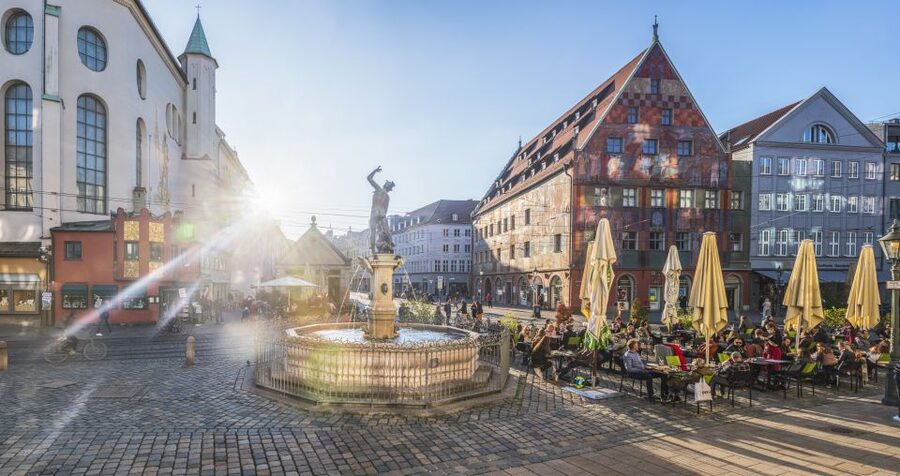
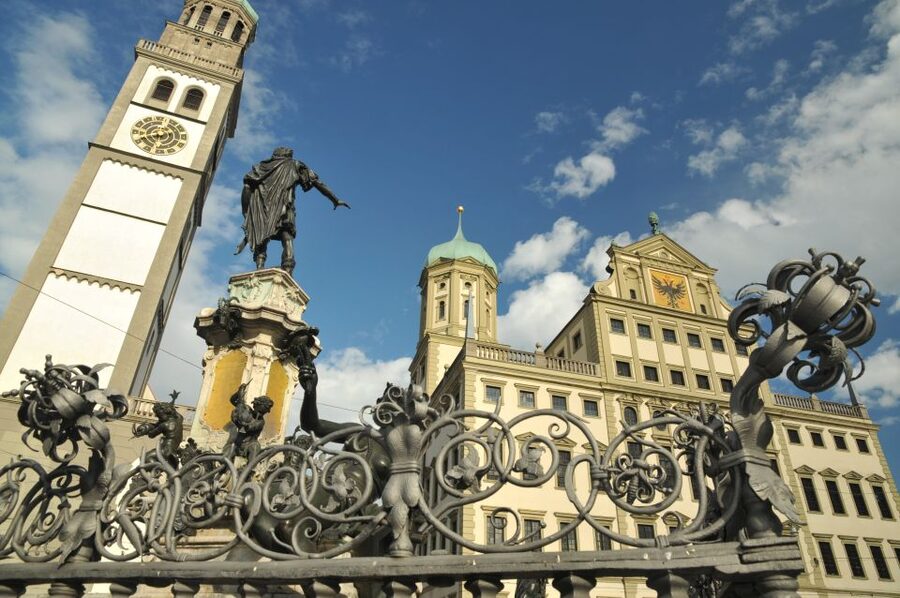
Augsburg is famous for fountains, and this tour puts several of the most notable ones on your mental map. You’ll admire major fountains, including the Augustus fountain, plus the Merkur fountain and the Herkules fountain.
The practical win here is that you’re not just seeing fountains as pretty objects. The guide connects them to the broader water management system, so you learn what role they played and why the fountains are part of the system’s history. When you come back later to take photos on your own, you’re not guessing which fountain is which, because the names stick.
The wider Augsburg sightseeing pile
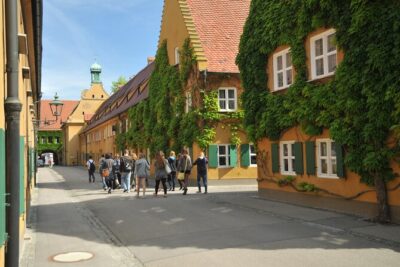
Lech quarter walking: small historic canals and red-roofed charm
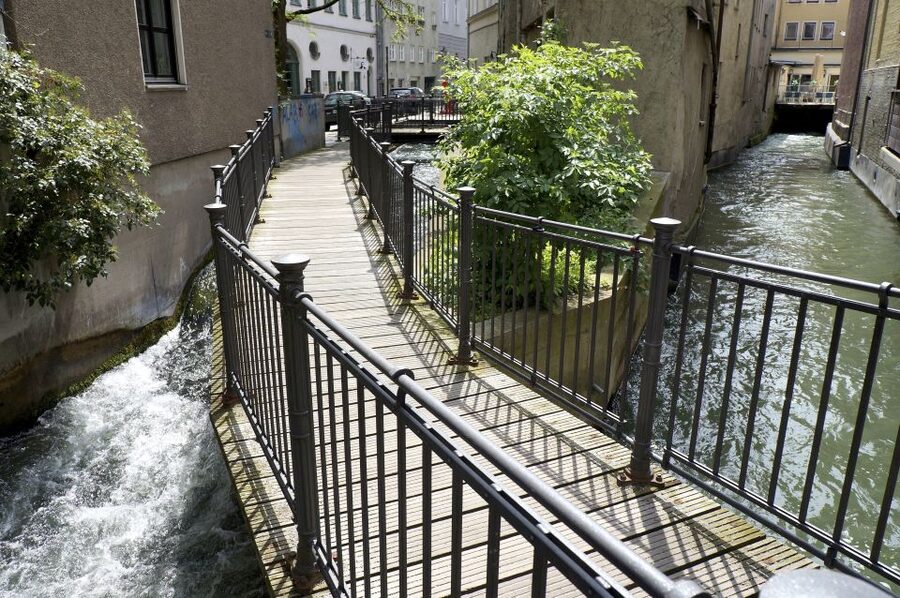
After the central Old Town portion, the route shifts into the Lech quarter, where the water story looks more intimate. This is where you stroll along small and historic Lech canals, threading through streets that feel traditional and close to the water itself.
What I like about this segment is how visual it is without being touristy. You get the cobblestone street feel, you pass red-roofed houses, and you’re watching the canal environment while the guide explains the system. It’s the kind of walking that makes you feel like you’re seeing how the city was built around its water.
A small consideration: weather matters here. If it’s raining, cobblestones can get slick, and the guide can’t control that. I’d plan for good grip shoes, and go slow on turns near canal edges.
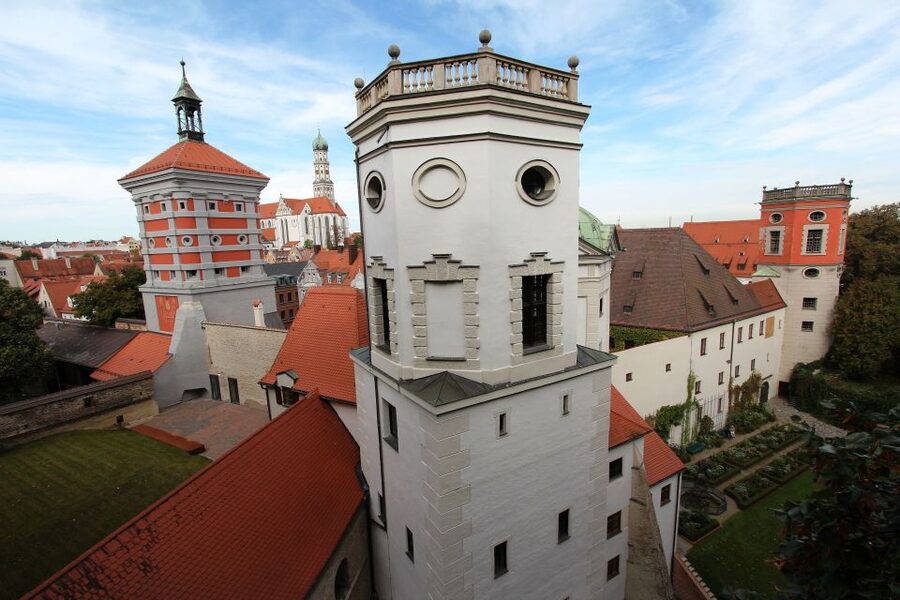
Rotes Tor waterworks: the UNESCO anchor stop
Every UNESCO-related tour has a moment where the theme becomes real. For this one, that moment is the waterworks at Rotes Tor. This is where you discover the oldest existing waterworks in central Europe, and the significance clicks into place.
Standing near Rotes Tor changes how you interpret the earlier stops. The fountains and canals start to feel less like separate sights and more like a connected system working across time. In a 2-hour tour, this kind of anchor stop is smart, because it prevents the whole experience from becoming a list of locations.
If you like explanations that are grounded in place, you’ll appreciate this part a lot. It’s not just a photo stop. You’re being shown what you’re looking at and why it’s historically important.
Hearing the facts: guide style in German and English
The tour includes a live local guide in German or English. That means you’re not relying on an audio device for every detail, and you can ask follow-up questions if something clicks differently for you.
One guide name that came up was Brigitte Plonner, and her teaching style is described as very clear and engaging, even in situations where the group size was smaller than usual. That’s worth noting because small-group dynamics can affect how much personal exchange you get. When the guide is enthusiastic, you usually get more back-and-forth, which helps the facts land.
That said, there’s also a clear pattern in the way information is delivered. Some people find the tour very fact-driven, with less focus on personal stories or anecdotes. I think that can be a plus for travelers who want accuracy and clarity, but it’s a mismatch if you want a more chatty, narrative style.
Optional elysium sound system: when your smartphone helps
One of the smoother modern touches is the optional elysium sound amplification system. If you want it, the setup is simple: you bring your smartphone with internet connection and headphones.
I like this option when I’m walking in older streets where sound can bounce around. Also, a guide’s voice is easier to follow if you can listen without competing with surrounding street noise. If you already know you prefer quiet, you can skip it and just follow normally.
Two practical tips:
- Bring your headphones even if you think you might not use the system.
- Check your internet connection readiness before you start, since the setup relies on your phone.
Walking logistics that matter for a 2-hour UNESCO tour

This is a 2-hour walking tour, so you’ll want to pace yourself. The route is long enough to feel like a real walk, but short enough that you’re not trapped all day.
The good news: the activity is wheelchair accessible. The better news: because it’s a walking tour through the Old Town and canal-adjacent areas, you’ll want to assume you’re on paved surfaces and cobblestones in at least some sections. If you use a wheelchair, it’s smart to plan a slower pace and be ready for turns.
You’ll also see the “skip the ticket line” note listed as part of the experience. That’s helpful when stops involve ticketed entry, but it does not mean entrance fees are included. Plan on additional costs if you decide you want to enter anything along the way.
Price and value: what you’re really paying for
The price is listed as $20 per person, and it also shows as 14,00€ plus a 3,00€ administration fee. Either way, you’re paying for a trained local guide and a structured walking route through Augsburg’s UNESCO water management system.
Here’s the value logic I’d use to decide:
- If you want the context to make Augsburg’s fountains, canals, and waterworks meaningful, the guide earns the price quickly.
- If you only want photos and minimal explanation, you could probably DIY the walk. But the whole point of this tour is connecting the system elements so they stop feeling random.
The tour includes the guide, walking tour, and optional use of the elysium sound system. It does not include entry tickets to attractions or food and drinks. So budget for any entrances you choose and plan a snack or drink outside the tour.
What to bring so the tour feels easy
Pack for comfort, not for adventure gear. The tour’s biggest comfort requirement is simple: comfortable shoes and weather-appropriate clothing. Augsburg can go from fine to rainy fast, and cobblestones plus wet conditions are when good shoes save your day.
If you plan to use elysium, bring your smartphone, headphones, and make sure you have internet access. That’s the only extra tech you need.
Who should book this Augsburg water management tour?
This tour is a great fit if you want:
- A clear explanation of a UNESCO World Heritage site on foot
- A shortcut to understanding why Augsburg’s water system includes canals, fountains, and historic waterworks
- An experience built around major named sights like the Augustus, Merkur, and Herkules fountains
- A route that ends at Rotes Tor, giving the theme a historical anchor
It’s less ideal if:
- You want lots of storytelling, comedy, and personal anecdotes
- You’re hoping for a hands-on technical workshop about water engineering details
- You don’t enjoy walking around historic centers, especially on cobblestones
Should you book this tour or not?
I’d book it if your top priority is understanding Augsburg through its water management system, not just ticking off sights. The combination of Old Town walking, Lech quarter canals, major fountains, and the Rotes Tor waterworks stop gives you a complete arc in just 2 hours.
Skip it if you’re chasing a more casual, story-heavy vibe, or if you expect the focus to be more hands-on and technical than historical and factual. For the right kind of traveler, this is exactly the sort of guided walk that turns a city into something you can explain back at home.
FAQ
How long is the Augsburg water management system walking tour?
The tour duration is 2 hours.
Where do I meet the guide?
Meet your guide in front of the Tourist Information Center.
How much does the tour cost?
The price is listed as $20 per person, or 14,00€ plus a 3,00€ administration fee.
What languages are available for the live guide?
The tour is offered with live guidance in German and English.
Is the tour wheelchair accessible?
Yes, it is listed as wheelchair accessible.
What’s included in the price?
The price includes a tour guide and the walking tour, plus optional use of the elysium sound amplification system.
Are attraction entry tickets included?
No, entry tickets to attractions are not included.
Is food and drinks included?
No, food and drinks are not included.
Do I need a smartphone to use the elysium sound system?
You only need a smartphone if you want the optional elysium sound amplification system. You must bring a smartphone with internet connection and headphones.
What should I bring and wear for the tour?
Bring comfortable shoes and weather-appropriate clothing. If you plan to use the sound system, bring your smartphone and headphones.
Seeing Augsburg in One Go
Pavements of Augsburg
Everything else we filed on Augsburg
- Pubcrawl Augsburg: Tour through best Bars and Clubs in Town
★ 4.4 · 13 reviews - Classic city tour in the World Heritage City of Augsburg
★ 4.0 · 41 reviews - Augsburg: Illuminated Guided Evening Walking Tour
★ 4.6 · 67 reviews - Augsburg’s Water Management System – City Walking Tour
★ 4.5 · 168 reviews
City Tours, side by side.
 ★ 4.3Berlin: 1-Hour City Tour by Boat with Guaranteed SeatingFrom $2516,993 reviews
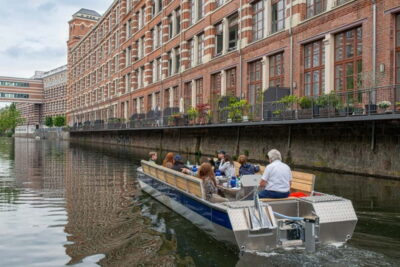 ★ 4.7Leipzig: City History Canal Sightseeing Tour on a MotorboatFrom $186,232 reviews
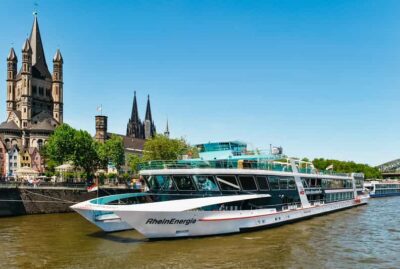 ★ 4.3Cologne: Panoramic City CruiseFrom $235,698 reviews
 ★ 4.1Berlin: City Sightseeing Hop-On Hop-Off Bus TourFrom $254,233 reviews
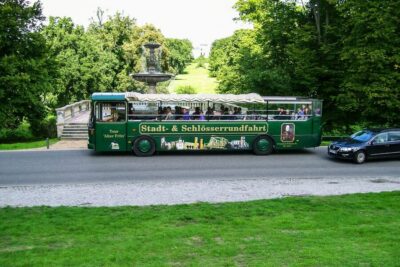 ★ 4.7Potsdam: City and Castles TourFrom $293,721 reviews
 ★ 4.1Düsseldorf: City Sightseeing Cruise on the RhineFrom $232,954 reviews
 ★ 4.5Bremen: City Center Guided Walking TourFrom $142,709 reviews
 ★ 4.7Freiburg: Gässle, Bächle and More City TourFrom $132,632 reviews
Other lists this tour is on