
REVIEW · HISTORICAL TOURS
Augsburg: Historical Highlights Private Walking Tour
Roman clues are everywhere if you know where to look. This private walking tour strings together Augsburg’s big moments from 15 B.C. to today, with a real local guide shaping the walk around what your group cares about. I also love that it focuses on a compact old city route, so you get a sense of the place fast without rushing past everything.
I particularly liked the stop at the Town Hall, famous for being the first building in the world with six floors, and the way the Fuggerei connects Augsburg’s Roman-era power to its later social responsibility. I came away with a clearer picture of why Augsburg grew into a provincial center and then became the Swabia region capital in Bavaria.
The one drawback to plan for is value. At $362 per group (up to 15), the price can feel steep if you are comparing against cheaper public options, and entrance fees are not included, so a couple of sites may cost extra if you want to go inside.
In This Review
- Key highlights at a glance
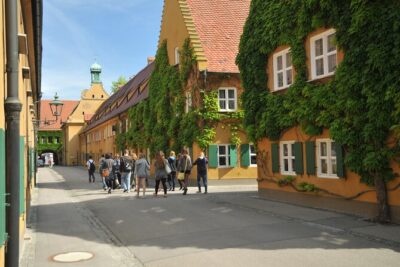
- Starting at the Fuggerei, Augsburgs living time capsule
- Roman roots to imperial status, why Augsburg mattered from 15 B.C.
- Augsburg Town Hall and the six-floor architecture story
- Fugger influence and the social settlement that changed the frame
- Mozart’s father and Berthold Brecht, culture stops that feel specific
- Schaezlerpalais finish, a WWII survivor in the middle of history
- Customizing the walk on the spot, private guide advantage in real life
- Timing and route reality, how 2 hours works
- Price and value for a private group up to 15
- Who should book this Augsburg highlights walking tour?
- Should you book this Augsburg Historical Highlights private tour?
- FAQ
- FAQ
- How long is the Augsburg Historical Highlights Private Walking Tour?
- Where do we meet for the walking tour?
- Is this a private tour, and how big is the group?
- What is included in the price?
- Are entrance fees included?
- What languages is the live guide available in?
- Is the tour suitable for wheelchair users?
- Can I cancel and get a refund?
Key highlights at a glance
- Two millennia in two hours, starting with Augsburg’s Roman colony roots from 15 B.C.
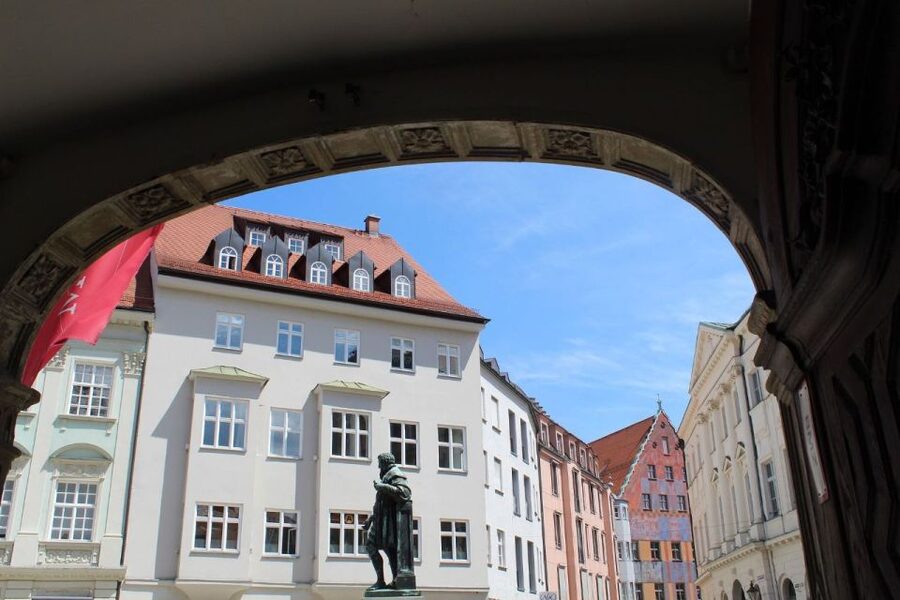
- Augsburg Town Hall’s six floors, a standout architectural claim tied to the city’s clout
- Fuggerei at the start, meeting at the world’s oldest social settlement concept
- Music history through Mozart’s family, including Wolfgang Amadeus Mozart’s father’s birthplace
- Berthold Brecht’s birthplace, a literature stop that adds modern cultural weight
- Schaezlerpalais ending point, a building that survived World War II without a scratch
Other walking routes through Augsburg
- Augsburg: Walking Tour with Fuggerei★ 4.6 · 2,245 reviews
- Augsburg’s Water Management System – City Walking Tour★ 4.5 · 168 reviews
- Augsburg: Illuminated Guided Evening Walking Tour★ 4.6 · 67 reviews
- Historical Walking Tour of Augsburg★ 4.9 · 10 reviews
Starting at the Fuggerei, Augsburgs living time capsule
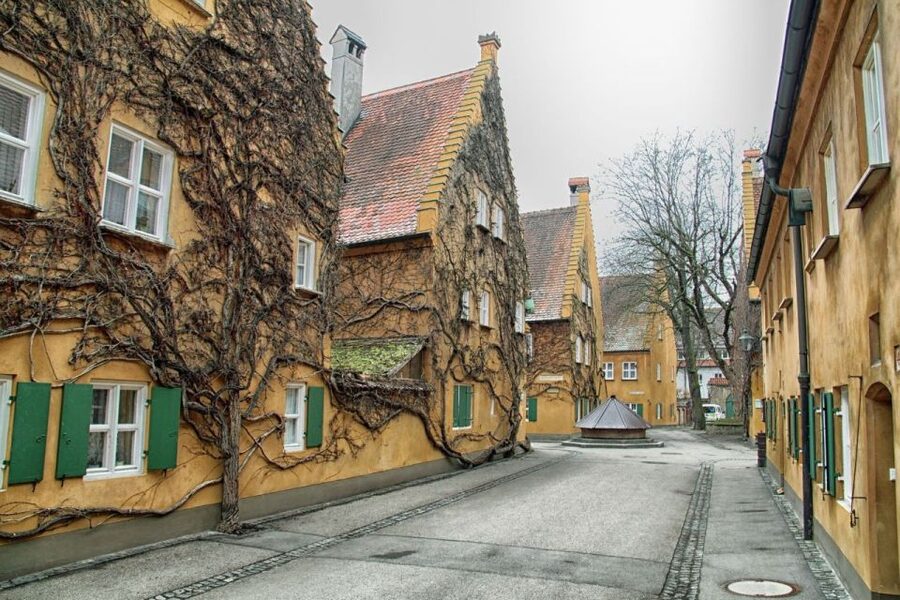
Your tour starts at the Fuggerei. That matters because it sets the tone immediately: Augsburg was never just about kings and emperors, it also learned how power and responsibility can live side by side. Even if you only know Augsburg as a pretty Bavarian city, the Fuggerei puts the story on a human scale right away.
The Fuggerei is tied to the Fugger family, who are often described as among the biggest economic movers in the region’s history. On this walk, you get the background you need to understand what that meant locally, and why Augsburg could afford to build reputation, institutions, and stability over centuries. You also get a practical advantage, too. Starting here helps you orient your brain for the rest of the old city route.
The only consideration is that if you are expecting a tour that mainly focuses on grand views and scenic photos, the emotional weight of the social settlement theme might pull your attention in a different direction. I think that’s a good thing, but it changes the vibe.
Roman roots to imperial status, why Augsburg mattered from 15 B.C.
Augsburg’s origin story is the anchor of this tour. You’ll learn how the city began as a Roman colony in 15 B.C., and what it took to grow into a provincial capital in the Roman Empire. The guide’s job here is to connect dots you might miss if you wander alone, like why Romans chose this location and how cities gained importance.
What I like about this Roman segment is that it is not a list of dates. It’s more about understanding the “why.” A provincial capital had responsibilities, trade connections, and an administrative role. When you know that, modern Augsburg feels less like random medieval streets and more like a city with layers of planning.
It also helps explain the bigger historical pattern behind the whole itinerary. When you later see buildings tied to civic pride or wealthy families, the Roman foundation makes the growth feel logical instead of sudden. In a two-hour format, that kind of context is gold.
Augsburg Town Hall and the six-floor architecture story
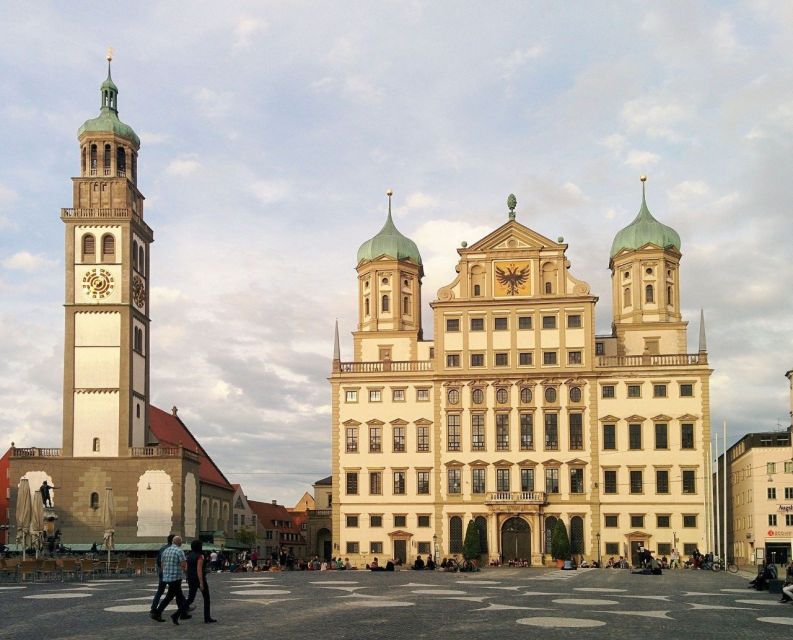
Then you hit the Town Hall, and this is one of those places that sounds like a trivia line until you understand the claim behind it. Augsburg’s Town Hall is noted as the first building in the world to have six floors. That sounds like a headline, but on the walk it becomes a clue to how Augsburg wanted to project power through civic architecture.
Here is the value for your visit: town halls often function as more than meeting spaces. They represent authority, local government, and the ability to coordinate resources. When a city builds something unusual in height and structure, it is usually announcing that it has both money and organizational muscle.
If you enjoy architecture, this stop gives you a reason to look up. You’ll also likely see how the surrounding old city layout supports the idea of a central civic core, even if you are not thinking about it at first.
One practical note: if you plan to go inside for photos or exhibits, remember entrance fees are not included. If you simply want the exterior and the story, you are covered.
Fugger influence and the social settlement that changed the frame
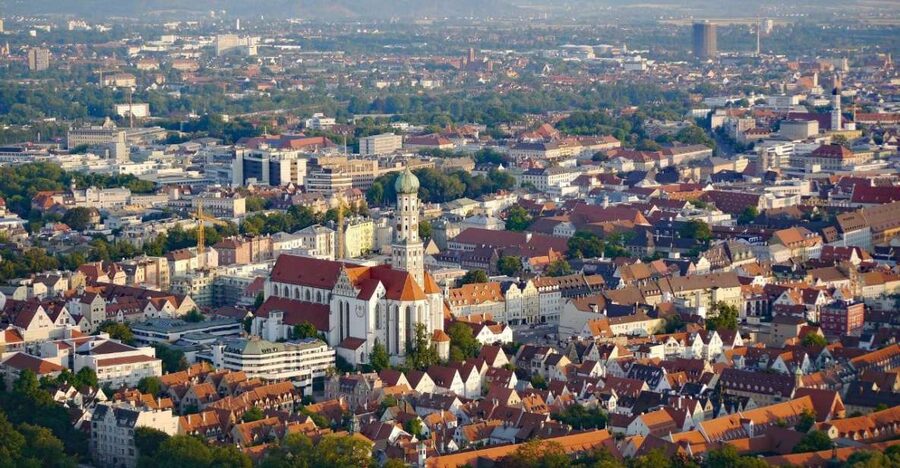
The Fugger family comes up again and again, and the tour treats them like more than a name on a museum plaque. You’ll learn how they founded the oldest social settlement concept in world history, and how that idea worked in practice. The guide’s explanations help you avoid the common trap of thinking “rich family” is the full story.
What you should take away here is the contrast. Medieval and early modern history can feel like a parade of power. But the Fuggerei story shifts the narrative toward how wealth can be organized into a system that supports real people over time. That gives Augsburg a distinct angle compared with some other cities where the history feels purely political or purely religious.
This is also where the walking tour feels like more than sightseeing. You start connecting the big imperial picture (Roman roots, provincial leadership) with what citizens and rulers did once they had influence. I especially liked that the guide framed it so it felt like a continuation of the same city story, not a random side topic.
More history walks in Augsburg
Mozart’s father and Berthold Brecht, culture stops that feel specific
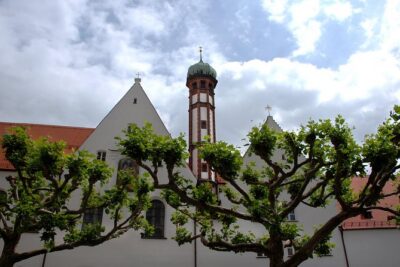
Two of the best “human” moments on the tour are the cultural birthplaces. First, you’ll see the birthplace of Wolfgang Amadeus Mozart’s father. That gives you a direct link to the family behind one of music’s biggest names, and it works even if you are not a deep classical-music scholar.
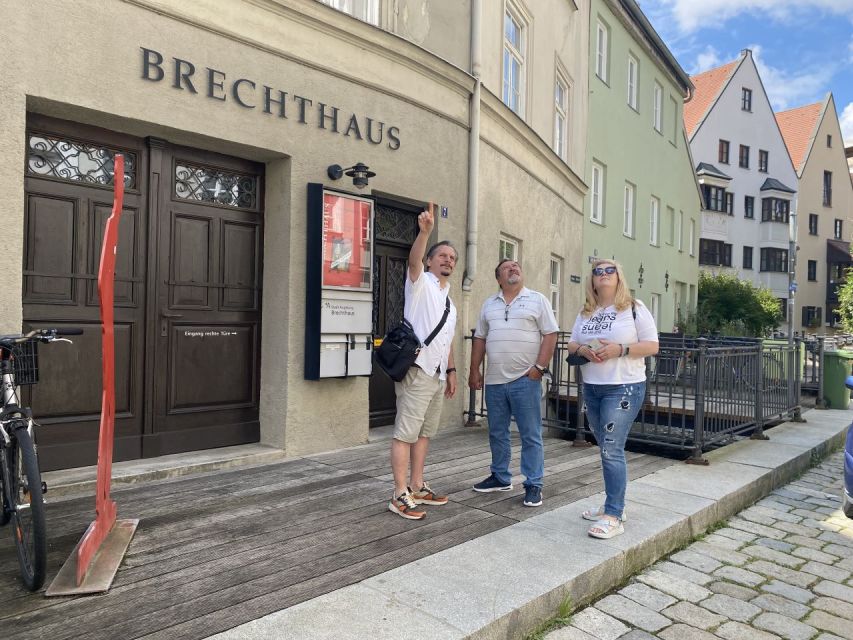
Later, you explore the birthplace of Berthold Brecht, the acclaimed German artist and writer. Brecht is one of those cultural figures whose influence travels far beyond Germany, so it feels meaningful to see a direct physical anchor in Augsburg. It turns the city into a place where major ideas were born, not just a place where historical buildings stand.
Why these stops are worth it in a short tour: they keep the walking route from becoming only about institutions. Museums can do culture in a big way, but birthplaces do it differently. They create a sense of place around creativity, and the guide can connect it to Augsburg’s identity in a way that feels personal rather than academic.
The only thing to adjust mentally is expectation. You are not being asked to spend hours in culture venues. This is a highlights walk, so these sites are concise. Think of them as story stations that enrich everything else you see.
Schaezlerpalais finish, a WWII survivor in the middle of history
Your tour finishes at the Schaezlerpalais, a building noted for surviving World War II without a scratch. That is the kind of detail that changes how you look at a city. Old places often make you assume they survived intact, but history is rarely that tidy.
Finishing here also gives the walk a satisfying arc. You began with long-rooted origins at the Fuggerei, moved through Roman and civic identity, then passed through cultural birthplaces, and you end at a site that helps you understand what the 20th century spared as well as what it destroyed.
For me, this ending point is also practical. You get a clear end to your two hours, and you leave with one last strong image, which makes the rest of the story stick.
Customizing the walk on the spot, private guide advantage in real life
One of the most valuable parts of this tour is that you can customize the highlights with your local group guide on the spot. That sounds like marketing copy until you try a private walking format and realize how it changes the pace.
If you care most about Roman roots, your guide can keep pulling the conversation back to Augsburg’s origins and imperial growth. If your group is more into architecture and civic buildings, you can spend more time around the Town Hall story. If culture is your focus, the Mozart and Brecht stops can be emphasized.
This flexibility is especially helpful for mixed groups, like adults who like history, plus younger visitors who want culture touchpoints. In a compact two-hour experience, the ability to steer makes the tour feel like it belongs to you instead of to a fixed script.
Just manage expectations: customization still happens within the constraints of a walking highlights tour. It is not a full-day deep study of one theme.
Timing and route reality, how 2 hours works
This is a 2-hour private walk, and that timing is smart. It is long enough to cover the major landmarks you care about, but short enough that you still feel fresh afterward and can continue exploring on your own.
Because you are moving on foot, you’ll also get that “you can read the city” effect. Augsburg is a place where details help. Even if you are not stopping at every curbside plaque, your guide’s story cues make what you see make sense.
For the best experience, come with one simple plan. Decide which themes your group wants most: Roman-era beginnings, the Fugger social legacy, civic architecture, or the Mozart and Brecht cultural link. Then be ready to let your guide adjust the emphasis.
If you only want a quick photo walk with minimal talking, this might feel too story-heavy. But if you enjoy learning while you walk, it fits perfectly.
Price and value for a private group up to 15
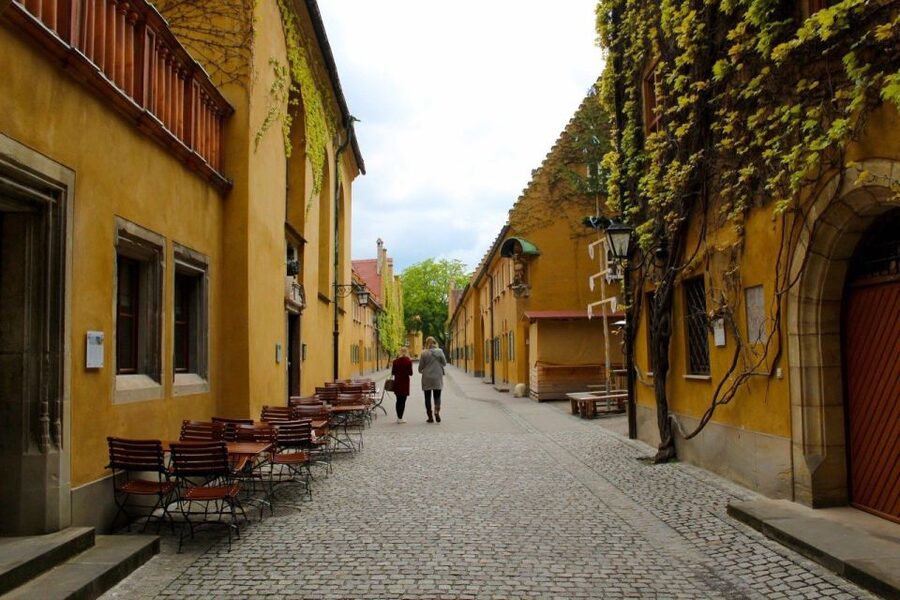
Let’s talk money plainly. The tour is priced at $362 per group up to 15, for about two hours. That means the real cost per person depends on how many of you are in your group. If you are traveling as a couple or a small family, it can feel pricey compared with public tours. If you have a bigger group, the price becomes easier to justify.
There is also the factor of what you get for that price: a local professional guide in German or English, a private guided tour, and an organized route that hits Augsburg’s biggest story beats in one go. You are paying for interpretation and time management, not just for walking between sights.
One more value angle: entrance fees are not included. So if you plan to add paid entries at any stop, your total will rise. On the other hand, if your priority is the guide’s context and the exterior landmarks, you can keep costs predictable.
My take: this is a strong value if you are a history-minded group that wants context quickly. It is harder to justify if you are budget-driven and happy with self-guided sightseeing.
Who should book this Augsburg highlights walking tour?
You should book if you want a fast, guided way to understand why Augsburg is important, not just what it looks like. It’s ideal for first-timers who want the big themes in one compact walk: Roman origins, imperial growth, the civic identity around the Town Hall, the Fugger social legacy, and culture via Mozart’s father and Berthold Brecht.
It’s also a good fit for private groups that want flexibility. The on-the-spot customization feature means you are not locked into one rigid order of topics.
Two cautions to keep in mind. It is not suitable for wheelchair users, so plan other options if mobility is an issue. And if you hate walking, this might feel like work, since it’s a walking tour and you cover multiple stops.
Should you book this Augsburg Historical Highlights private tour?
Yes, with two smart conditions.
First, book it if you care about context and want a guide to connect Augsburg’s Roman past, civic architecture, and cultural identity into one clear story. Second, do a quick reality check on group size. If you can spread the $362 cost across more people, it becomes much more attractive.
If your budget is tight, consider whether your priorities justify a paid private guide versus self-guided wandering. But if you want the city to make sense quickly, this one is built for that exact goal.
FAQ
FAQ
How long is the Augsburg Historical Highlights Private Walking Tour?
The tour lasts 2 hours.
Where do we meet for the walking tour?
You meet at the Fuggerei.
Is this a private tour, and how big is the group?
This is a private guided tour, priced for a group up to 15 people.
What is included in the price?
The included items are a local professional tour guide and the private guided tour.
Are entrance fees included?
No, entrance fees are not included.
What languages is the live guide available in?
The tour guide is available in German and English.
Is the tour suitable for wheelchair users?
No, it is not suitable for wheelchair users.
Can I cancel and get a refund?
Free cancellation is available up to 24 hours in advance for a full refund.
The Longer History of Augsburg
Pavements of Augsburg
Everything else we filed on Augsburg
- Augsburg – Private Historic Tour
★ 5.0 · 3 reviews - LETTL Museum of Surreal Art Entry Ticket
★ 5.0 · 9 reviews - Historical Walking Tour of Augsburg
★ 4.9 · 10 reviews - Pubcrawl Augsburg: Tour through best Bars and Clubs in Town
★ 4.4 · 13 reviews - Classic city tour in the World Heritage City of Augsburg
★ 4.0 · 41 reviews - Augsburg: Illuminated Guided Evening Walking Tour
★ 4.6 · 67 reviews
Historical Tours, side by side.
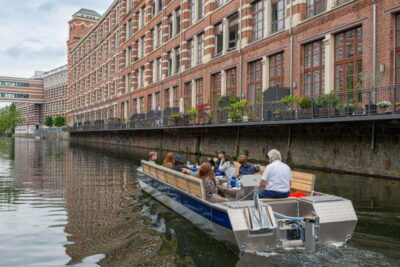 ★ 4.7Leipzig: City History Canal Sightseeing Tour on a MotorboatFrom $186,232 reviews
 ★ 4.6Berlin: Natural History Museum Entrance TicketFrom $123,382 reviews
 ★ 4.7Leipzig: 1.5-Hour Historical Walking Tour in GermanFrom $172,217 reviews
 ★ 4.5Berlin: World Heritage Cruise to PotsdamFrom $251,435 reviews
 ★ 4.7Heidelberg: Night Watchman Historic Adventure TourFrom $3051,186 reviews
 ★ 5.0The Local Tour of Hamburg Historic CentreFrom $31,058 reviews
 ★ 4.8Elbfloren: Historical city tourFrom $15819 reviews
 ★ 4.6Bamberg: Guided Beer History Tour with Optional TastingFrom $21772 reviews
Other lists this tour is on