
REVIEW · WALKING TOURS
Augsburg: Walking Tour with Fuggerei
A social settlement in the middle of town. That contrast is exactly why this Augsburg walking tour works so well, pairing a visit to the Fuggerei with UNESCO World Heritage sights you can see on foot, plus stories tied to famous names like Mozart and Brecht.
I especially like two things: first, you get more than a checklist stop at the Fuggerei, you get context that makes the place feel understandable instead of just historical. Second, the walk is made for your senses, from the old town streets to the Augustus Fountain, where you can actually hear the water.
One possible drawback to plan around: it’s only a 2 hour tour, so you’ll focus on highlights rather than fully exploring every area you pass.
In This Review
- Quick hits worth knowing
- Where the tour starts, and what your time slot really means
- The Fuggerei visit that turns place into people
- Augustus Fountain and the UNESCO sights you can actually reach on foot
- Following Fugger, Mozart, and Brecht across Augsburg
- Römerlager and Brechthaus at 2 PM, and why it matters
- The 2 hour walking pace, plus how to get the most out of it
- elysium® sound amplification: a small tech bonus
- Price and value: what you’re really paying for
- Who should book this Augsburg walking tour with Fuggerei
- Should you book this tour or do it on your own?
- FAQ
- FAQ
- Where do I meet for the Augsburg walking tour with Fuggerei?
- How long is the tour?
- What time slots are available, and what languages are offered?
- Is the Fuggerei ticket included?
- Is there a skip-the-ticket-line benefit?
- What about Römerlager/Brechthaus, is it part of every tour?
- Is the tour wheelchair accessible?
- Do I need anything for the optional elysium sound amplification system?
- Do I get a live guide?
- Is hotel pickup included?
Quick hits worth knowing

- World’s oldest social settlement: the Fuggerei isn’t treated like a random attraction, it’s explained as a living idea in city life.
- Augustus Fountain, with real sound: you’ll hear the gentle water splash, not just read about it.
- UNESCO Augsburg sights you can walk between: the tour links old town monuments with UNESCO World Heritage like the Lech canals.
- Augsburg through famous personalities: you follow the traces of the Fugger family, Mozart, and Brecht.
- Römerlager and Brechthaus depends on your time slot: the 2 PM tour includes this stop ticket.
Other walking routes through Augsburg
- Augsburg’s Water Management System – City Walking Tour★ 4.5 · 168 reviews
- Augsburg: Illuminated Guided Evening Walking Tour★ 4.6 · 67 reviews
Where the tour starts, and what your time slot really means

You meet at the Tourist-Information Augsburg. That sounds simple, but it matters: you start in the city center area where the rest of the walk makes sense, and you’re not wasting time figuring out how to get to the first attraction.
There are two departures. One tour runs at 11 AM in German. A second option runs at 2 PM in a bilingual format (German and English). If you care specifically about the Römerlager/Brechthaus stop, pick your timing accordingly, because the ticket to that site is tied to the 2 PM schedule.
Also note: there’s no hotel pickup. You’ll be walking and arriving under your own steam, so build in a little buffer if you’re coming from a train station or a hotel outside the center.
The Fuggerei visit that turns place into people
The Fuggerei is the big reason to book this tour. It’s described as the world’s oldest social settlement, and the guide’s job is to help you see what that actually means. Instead of treating it like a quick photo stop, you get the background that makes the concept click.
You’ll also connect it to the Fugger family, a prominent upper bourgeois banking family in Europe. Even if you don’t know the name today, the tour explains why their role matters in Augsburg’s story. That connection helps you understand why this place sits where it does and why it remained memorable enough to be visited centuries later.
One practical perk: your entrance ticket to the Fuggerei is included, so you skip the hassle of figuring out timing and paying separately. The tour is also set up to help you avoid ticket line friction, which is useful in a city where popular spots can still get slow.
The setting itself is part of the experience. People tend to remember it as respectful, grounded, and human. The main point is that you leave with the sense that the Fuggerei is more than a museum shell. It’s a real social idea with a long timeline.
Augustus Fountain and the UNESCO sights you can actually reach on foot
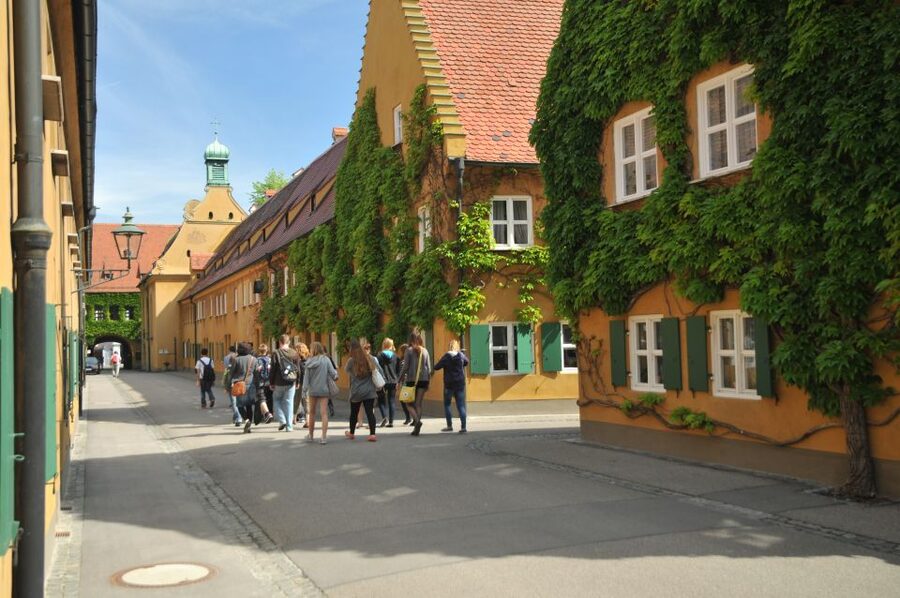
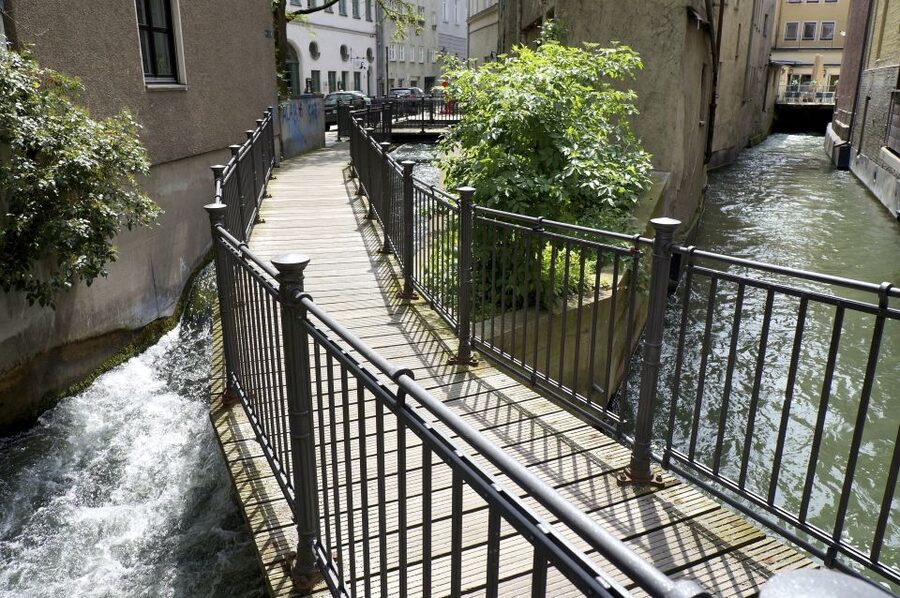
Augsburg is the kind of city where a short walking route can still feel full. The tour is designed around that. As you move through the old town, you’ll pass key sights tied to UNESCO World Heritage listings, including the Lech canals and magnificent fountains.
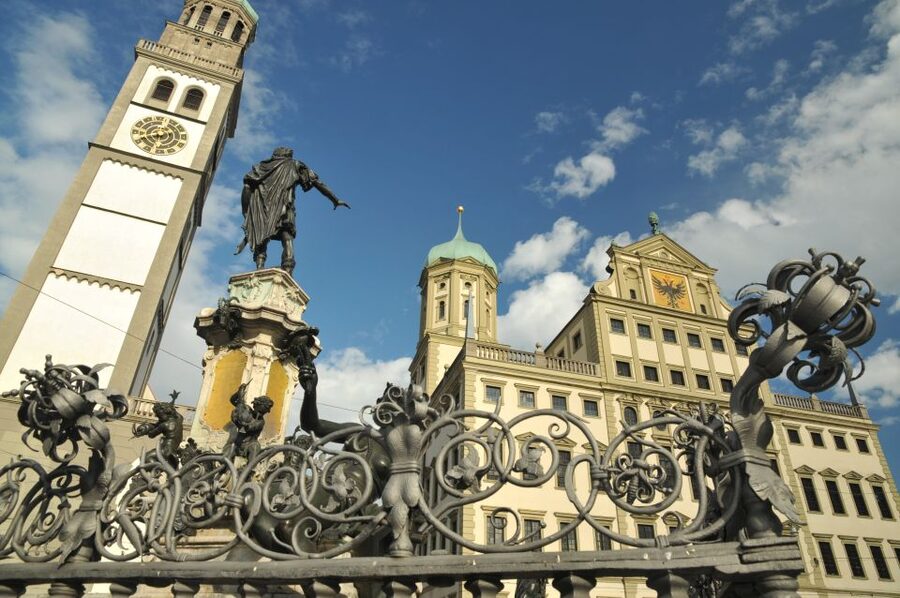
The Augustus Fountain deserves its own mention because it’s both visual and audible. You’ll hear the gentle splash of the water as you approach. That’s a small thing, but it changes how the stop lands. You’re not just looking at a photo-worthy monument, you’re experiencing it in the middle of real street noise and real city movement.
You’ll also get guided interpretation about what you’re seeing, especially when the guide ties the fountains and canal system to the way Augsburg worked historically. That makes the UNESCO component easier to follow. UNESCO can feel abstract if nobody connects it to daily life, but a good guide does that job for you.
As you walk, you’ll also pass through charming old town streets. They’re not just decoration. The city layout helps explain why the sights are where they are and why people historically moved between waterways and public spaces.
Following Fugger, Mozart, and Brecht across Augsburg
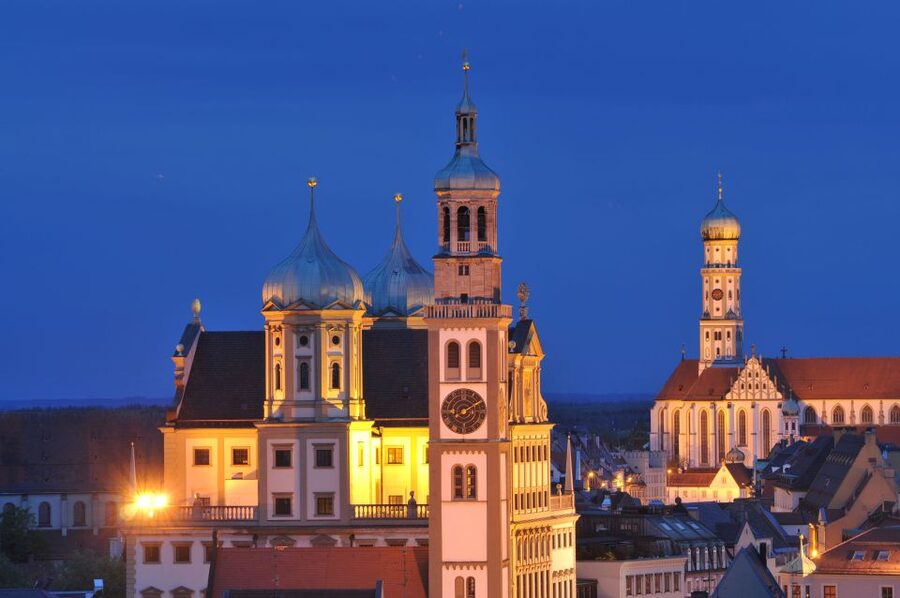
This tour does a smart thing: it doesn’t treat Augsburg as a set of unrelated monuments. Instead, you follow a set of names and traces tied to the city.
You’ll learn about the Fugger family and why their banking influence mattered, then you’ll see how that thread connects back to places like the Fuggerei. If you like history that has characters, not just dates, this approach is satisfying.
Then comes the creativity angle: Mozart and Brecht. You’ll follow the traces of famous personalities including Mozart. The guide also highlights that Mozart’s father was born in Augsburg. You don’t need to be a music expert to appreciate this, because the tour uses it as a springboard to explain Augsburg’s cultural links.
Brecht is included too. You’ll learn about traces of Brecht, tying his name back to Augsburg sites you’ll visit along the walk. If you like theater, writing, and the way cities shape artists, this part can feel especially fun because it turns your route into a storyline.
The value here is the guide’s linking. Names can feel random if you only collect facts. With a guided walking route, those facts become a map you can mentally carry.

Römerlager and Brechthaus at 2 PM, and why it matters
There’s a clear difference between the two tour options, and it affects what you end up seeing. The entrance ticket to the Römerlager/Brechthaus is included for the tour at 2 PM.
So if your priority is the Brecht-related stop, choose the 2 PM departure. That way, you don’t just hear about the city’s famous personalities, you also get the admission tied to the site in that time slot.
If you’re an 11 AM person, you can still have a great tour, but you should understand that the Römerlager/Brechthaus ticket is part of the later option. Planning your timing this way prevents that annoying feeling of realizing you missed the one stop you cared about most.
The 2 hour walking pace, plus how to get the most out of it
This is a 2 hour walking tour. That duration is short enough to fit into a travel day without draining it, but long enough for the guide to connect points rather than just rushing you from one landmark to the next.
Because it’s a walking route with multiple stops, your best strategy is simple: wear comfortable shoes and show up a few minutes early so you’re not stressed at the start. You’ll be moving through old town areas, and those streets are exactly the kind of place where you’ll want to pause briefly, listen, and look up.
The pace also matters for the UNESCO component. You’re not touring UNESCO like it’s one giant museum hall. You’re seeing it as part of the city’s flow, which makes the information feel practical. When the guide points out why a canal matters or why a fountain is significant, you can see the structure around you immediately.
I also recommend bringing a phone with enough battery. Not because you need to stream anything, but because you’ll likely use your phone for maps, notes, and quick reference while the guide is talking.
elysium® sound amplification: a small tech bonus
There’s an optional upgrade built in: the elysium® sound amplification system. It’s free of charge, but you do need to bring your own smartphone, plus headphones and internet connection.
This is one of those “not everyone needs it, but it helps a lot” tools. If you’re sitting farther back, have any hearing sensitivity, or you’re traveling with a friend who struggles with outdoor audio, this can make the tour feel easier from start to finish. It also means you can hear the guide clearly enough to follow the stories tied to the Fuggerei, the fountains, and the famous personalities.
If you plan to use it, do a quick sanity check before you leave: headphones work, phone battery is charged, and you have internet access available.
Price and value: what you’re really paying for
The price is $22 per person for a 2 hour guided walk. That sounds almost too reasonable until you break down what’s included.
You get:
- a walking tour with a live guide
- an entrance ticket to the Fuggerei
- an entrance ticket to Römerlager/Brechthaus for the 2 PM option
- skip-the-ticket-line handling for the included sites
So you’re not paying just for walking around and hearing generic commentary. You’re paying for guided interpretation plus admission value at major stops. For many visitors, that combination saves both time and decision fatigue.
When might it feel like less value? If you only want one single attraction, like the Fuggerei alone, you could technically build your own day. But if you want Augsburg to feel connected, with UNESCO sights and name-based storytelling tied together, this format is a good deal.
The tour also has a strong overall reputation, with a 4.6 rating based on 2,245 reviews. That’s not a guarantee of perfection, but it’s a signal that the tour consistently lands well.
Who should book this Augsburg walking tour with Fuggerei
This tour is a great fit if you’re:
- visiting Augsburg for the first time and want the main highlights without planning every step
- interested in how social history, culture, and city design connect
- a fan of Mozart and want the Augsburg tie-in explained (including the detail that Mozart’s father was born in Augsburg)
- curious about Brecht and prefer seeing his Augsburg connection through a guided route
- the type of traveler who likes learning from a local guide while you walk, not after you’ve sat down at a café
It’s also a solid choice if you like UNESCO, but you don’t want it presented as a checklist. The guide helps translate UNESCO into what you can see and hear right there in the streets.
One more note: the tour is listed as wheelchair accessible, which is important for planning, especially on a walking route.
Should you book this tour or do it on your own?
Book it if you want a guided story that connects the Fuggerei, UNESCO sights like the Lech canals, and cultural traces tied to Fugger, Mozart, and Brecht, all in just 2 hours. The included admissions and the skip-the-ticket-line setup reduce friction, and the small sensory detail like the Augustus Fountain water sound makes the experience memorable.
Do it on your own instead if you prefer totally flexible wandering and you plan to spend longer than two hours at each stop. This tour is about focus and interpretation, not endless time at every corner.
If you’re trying to make the most of a day in Augsburg, I think this one is a smart, cost-effective choice.
FAQ
FAQ
Where do I meet for the Augsburg walking tour with Fuggerei?
Meet at the Tourist-Information Augsburg.
How long is the tour?
The tour lasts about 2 hours.
What time slots are available, and what languages are offered?
There is a guided tour at 11 AM in German, and a guided tour at 2 PM that is bilingual (German and English). You choose your option during booking.
Is the Fuggerei ticket included?
Yes. The entrance ticket to the Fuggerei is included.
Is there a skip-the-ticket-line benefit?
Yes. Skip the ticket line is included.
What about Römerlager/Brechthaus, is it part of every tour?
The entrance ticket to the Römerlager/Brechthaus is included for the 2 PM tour.
Is the tour wheelchair accessible?
Yes, the tour is listed as wheelchair accessible.
Do I need anything for the optional elysium sound amplification system?
If you want to use it, bring your smartphone with headphones and an internet connection.
Do I get a live guide?
Yes, you’ll have a live tour guide.
Is hotel pickup included?
No, hotel pickup and drop-off are not included.
Pavements of Augsburg
Everything else we filed on Augsburg
- Pubcrawl Augsburg: Tour through best Bars and Clubs in Town
★ 4.4 · 13 reviews - Classic city tour in the World Heritage City of Augsburg
★ 4.0 · 41 reviews - Augsburg: Illuminated Guided Evening Walking Tour
★ 4.6 · 67 reviews - Augsburg’s Water Management System – City Walking Tour
★ 4.5 · 168 reviews
Walking Tours, side by side.
 ★ 5.0Discover Berlin Half-Day Walking TourFrom $249,624 reviews
 ★ 4.9Berlin: Third Reich and Cold War 2 Hour Walking TourFrom $236,830 reviews
 ★ 4.6Munich: Third Reich & WWII Walking TourFrom $316,181 reviews
 ★ 4.9Berlin: Discover Berlin Walking TourFrom $235,998 reviews
 ★ 5.0Berlin’s Best: 2 Hour Walking Tour Third Reich and the Cold WarFrom $245,486 reviews
 ★ 4.8Berlin: Hidden Backyards Guided Walking TourFrom $235,360 reviews
 ★ 4.5Third Reich Walking Tour MunichFrom $454,291 reviews
 ★ 5.0Third Reich Berlin: Hitler and WWII Walking TourFrom $243,301 reviews