
REVIEW · BERLIN
Berlin: DIY & Subculture Sightseeing in a 1972 Ford Van!
Berlin DIY starts with a van ride. This tour gives you DIY & subculture history with street-level stops, plus plenty of time at places that shaped Berlin’s music and nightlife. I love the way it targets backyards & basements, not just the postcard front doors.
It is brought to you by the founders of Ramones Museum Berlin, so the music angle is real, from classic punk vibes through later Berlin sounds. One possible drawback: the 1972 van has no air conditioning, only a fan, so you will feel the weather more than in a modern bus.
In This Review
- Key highlights at a glance
- Why this DIY Berlin tour works better than bus sightseeing
- Rolling from the East Side Gallery toward underground Berlin
- The van: small group comfort, old-school ride, and photo stops
- Friedrichshain and Kreuzberg: squats, scene-building, and May 1 context
- Behind shop windows: what you are actually looking for
- Music from Bowie to Beatsteaks, and why that range matters
- Then vs now: seeing the city as a living decision
- Price and value: is 85 dollars (or 59 euros) fair?
- Practical tips so you enjoy the van ride fully
- Who should book this DIY van tour, and who might skip it
- Should you book Berlin: DIY & Subculture Sightseeing in a 1972 Ford Van?
- FAQ
- Where does the tour start?
- How long is the Berlin DIY van experience?
- How many people are in the group?
- Is the tour wheelchair accessible?
- What languages are offered?
- What should I bring with me?
- Is food allowed in the vehicle?
- Does the tour run in bad weather?
- What is included besides the tour?
- How much does it cost, and can I pay later?
Key highlights at a glance
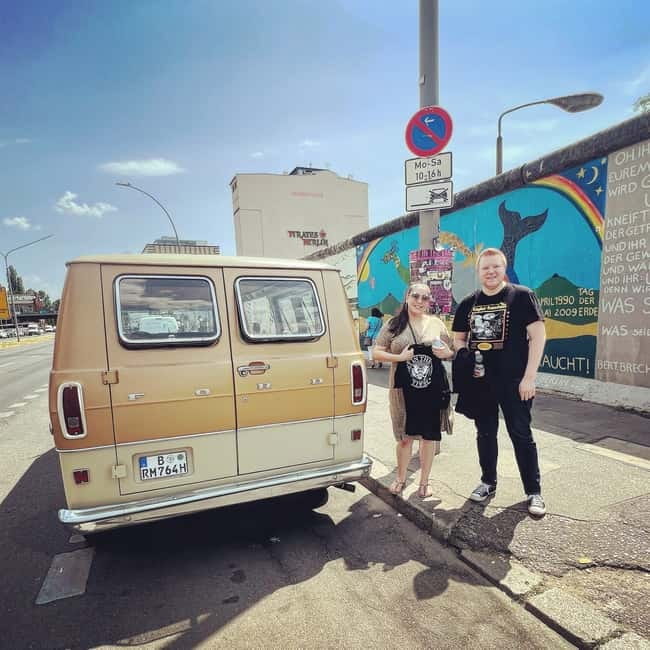
- 1972 Ford Econoline van ride with a small group of up to 6, so it feels personal instead of rushed
- East Side Gallery start by the Spree River, linking Wall-era location to DIY-era creativity
- DIY behind-the-window stops aimed at backyards, basements, and the informal spaces that made scenes happen
- Friedrichshain and Kreuzberg focus with context on squats and major May 1 events near Görlitzer Bahnhof
- Phone-powered background info using photos and videos from the past during the ride
- Ramones Museum Berlin connection plus a music timeline from Bowie to Beatsteaks
Deeper into the painted backstreets
- Berlin: Alternative Berlin Walking Tour★ 4.6 · 1,204 reviews
- Berlin: City Street Art Guided Walking Tour★ 4.8 · 886 reviews
- Berlin: 3-Hour Street Art Tour★ 4.7 · 778 reviews
- Kreuzberg: Culinary Food Tour★ 4.5 · 770 reviews
Why this DIY Berlin tour works better than bus sightseeing
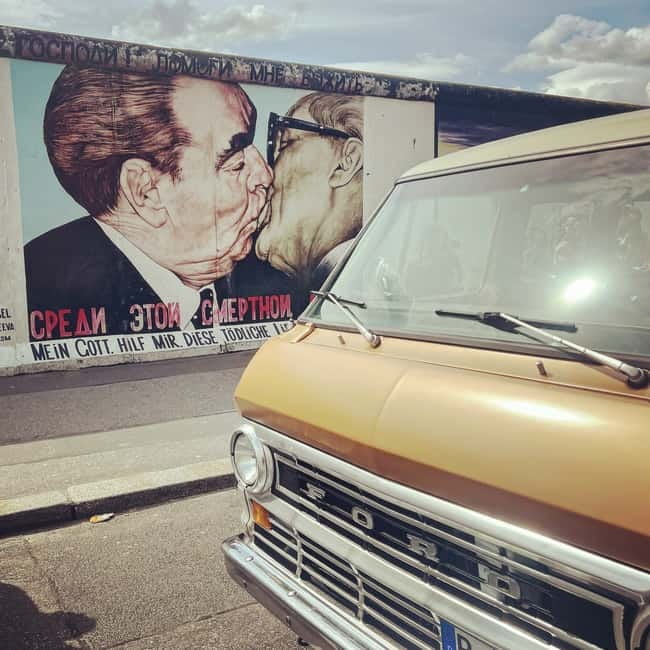
Berlin’s creative side is easy to “see,” but harder to truly understand. This tour is built around the DIY and underground scene, meaning you get the why behind the spots, not just the what. The 1972 Ford Econoline is part of the point too, because it matches the theme: a little scrappy, a little stubborn, and very Berlin.
I like that the vibe stays practical. You are in a small group, you get picture stops, and you are encouraged to follow along on your phone with background photos and videos from earlier eras. And because the guide is tied to Ramones Museum Berlin, the stop-by-stop storytelling has a strong music thread rather than generic city talk.
Rolling from the East Side Gallery toward underground Berlin
The tour starts at East Side Gallery, the longest remaining section of the Berlin Wall, right by the Spree River. That matters because Berlin DIY culture did not sprout in a vacuum. You are starting in a place that still carries political weight, then moving into the neighborhoods where people turned disruption into creativity.
You also get an easy geographic anchor. East Side Gallery sits between two key Berlin districts for this story, Friedrichshain and Kreuzberg. The tour uses that location to frame how scenes formed around movement, conflict, housing pressure, and the constant search for spaces that were not already controlled.
As you ride, you can expect the van to stop in front of multiple sites so you can take photos. The goal is to help you connect what you see on the street today to what went on there before, including the social and musical context that made people start making things themselves.
The van: small group comfort, old-school ride, and photo stops
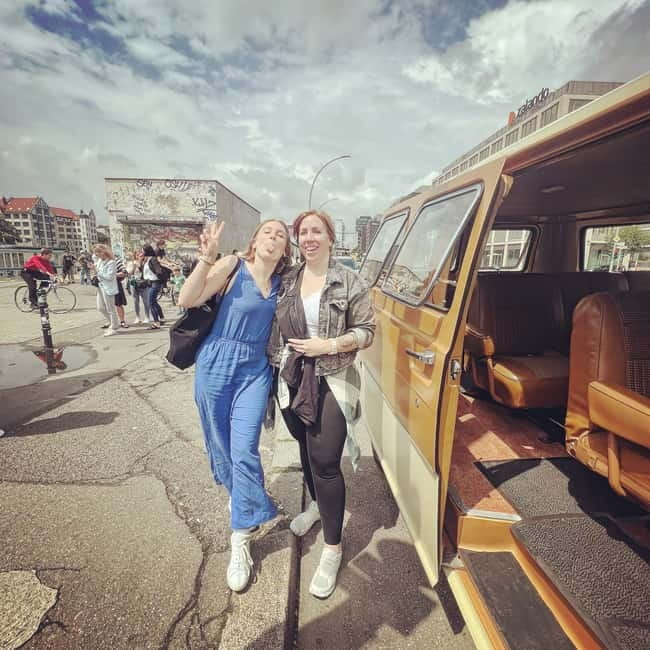
This is not a huge-group “grab-and-go” experience. You get a window seat in the 1972 Ford Econoline, and the group is limited to 6 participants, which helps the guide keep stories clear and follow up with details when you ask questions.
The vehicle itself is part of the charm, but also part of the reality check. It has no air conditioning, only a fan, so you will feel temperature swings. If you tend to get uncomfortable in heat or cold, bring layers and plan for the fact that rain or shine is part of the experience.
Your phone is a big part of how you experience it. The tour asks you to bring a charged smartphone because the guide provides background info with photos and videos from the past. That is a smart format for Berlin, where you are often looking at a street corner that has changed more than it has stayed the same.
Friedrichshain and Kreuzberg: squats, scene-building, and May 1 context
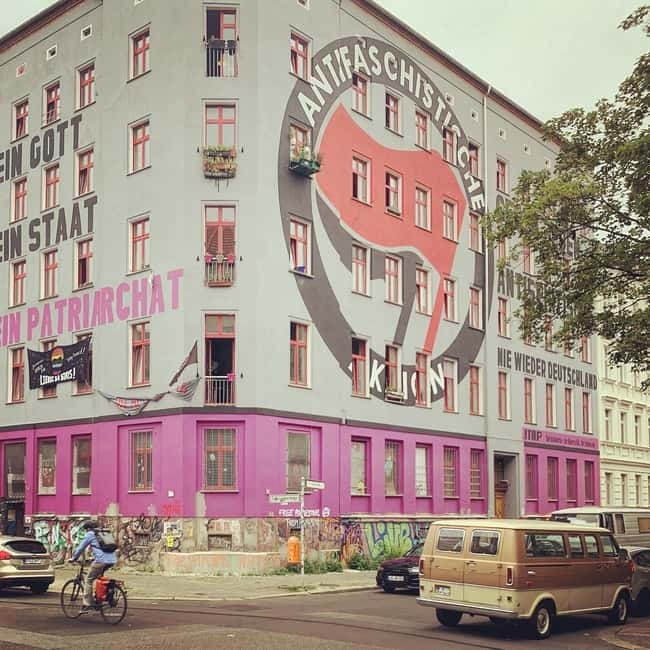
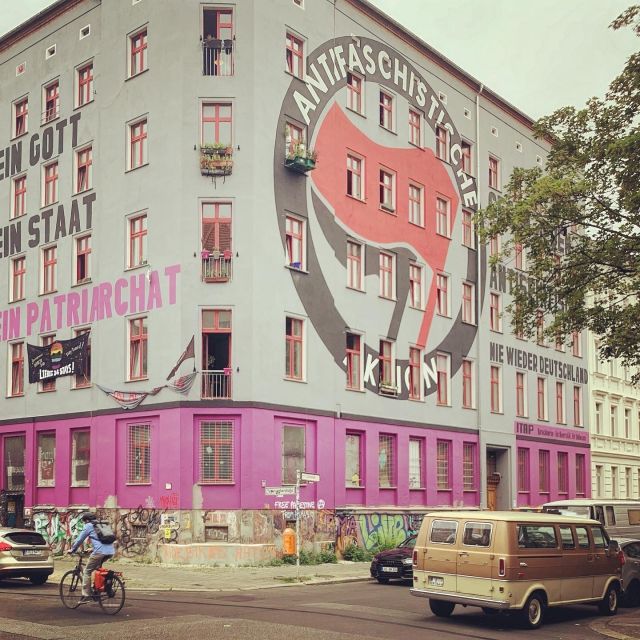
The heart of the tour swings toward Friedrichshain and Kreuzberg. This is where Berlin’s DIY spirit shows up in the real-world details, not just the theory. The tour specifically mentions squats in Kreuzberg and the May 1 riots around Görlitzer Bahnhof, and it uses those events to explain how tension and creativity can feed each other.
Here is what I think you should watch for as the neighborhoods pass by. In Berlin, many scenes are less about one famous club and more about a network of informal spaces. That network forms when people find a roof to hang out under, a basement to play in, or a storefront window that hides something more interesting behind it.
The guide’s job is to help you read those clues. So when you are standing outside a site, you will not only hear what happened there, you will understand what it meant for the people who built a life around it. That includes how DIY culture became a lifestyle, not just a phase.


Behind shop windows: what you are actually looking for
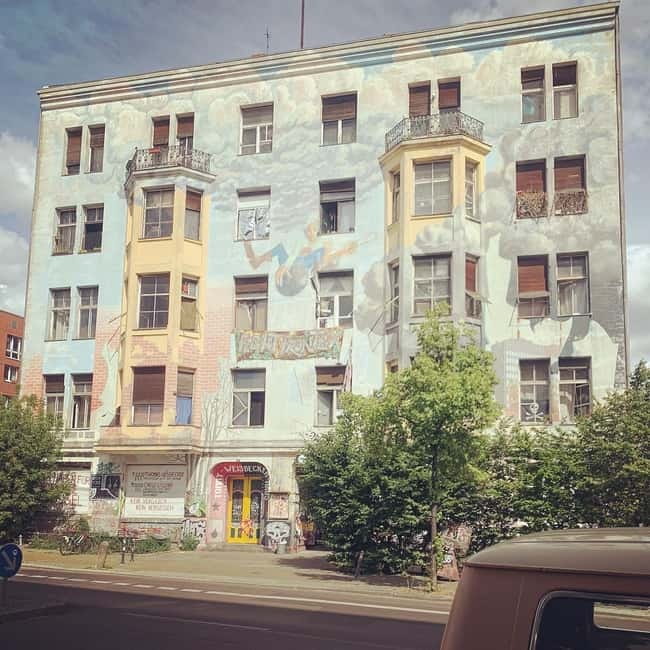
One of the tour’s stated highlights is looking behind shop windows to explore backyards and basements. That is the Berlin difference. Lots of cities show you landmarks. Berlin often shows you the edges, the spillover spaces, the places that were never meant to be tourist attractions.
During this part of the ride, pay attention to the small clues you normally ignore. Doorways that look too plain. Courtyards that seem private but feel like they used to be community hubs. Basements and side streets where you might not expect a music moment.
The guide also covers the contrast between then and now. That is key, because DIY Berlin is not frozen in time. It changes as laws change, as neighborhoods gentrify, as new generations inherit the same urge to make their own spaces. You get a sense of which DIY practices survived, which ones got pushed out, and which ones simply moved.
Music from Bowie to Beatsteaks, and why that range matters
The tour does not treat punk as a single era. It frames Berlin’s DIY and underground evolution from the 1970s into the present, with named references that span Bowie to Beatsteaks. That kind of timeline is useful because it helps you see Berlin DIY culture as a repeating pattern.
What you get, in practical terms, is storytelling that links scenes across decades. The guide uses the location stops to help you understand how bands, artists, venues, and everyday people interacted. It is not just music trivia. It is about how creativity found channels, even when mainstream routes were closed.
This is also where the Ramones Museum Berlin connection earns its keep. A music-focused guide can make any city tour feel like a checklist. Here, the music angle is used to explain why certain places mattered, and why people kept returning to the same kind of strategy: make your own room, then share it.
Then vs now: seeing the city as a living decision
Berlin DIY culture is about individual lifestyles, and this tour makes that idea concrete. You learn about improvised bars, venues, and hidden spots, then compare what those spaces represented back then with what the neighborhoods look like now.
This “then and now” approach helps you do something useful after the tour. It trains your eyes. You start to notice which parts of the city feel like they still belong to the people who use them, and which parts feel like they are waiting to be consumed. Berlin is full of change, but it is not random change. It usually follows power, money, and the willingness of people to defend their creative spaces.
If you like nightlife planning that goes beyond the obvious, this is where you get ideas you can act on. The tour’s whole arc is meant to inspire where to explore once the sun has settled, based on what you learned during the ride.
Price and value: is 85 dollars (or 59 euros) fair?
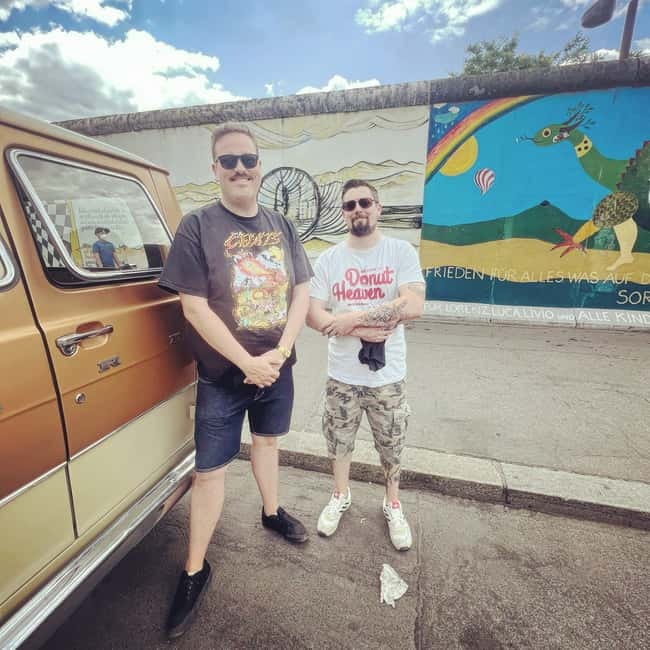
The listed price is $85 per person, and you can see a lower price point of 59 euros when booking through www.getinthevanberlin.com. Pricing alone will not tell you if it is worth it, so here is how I judge value for this type of experience.
You are paying for:
- A live guide in English and German
- A small group capped at 6
- Access to multiple scene-relevant stops with context
- A phone-based set of background photos and videos
- A window seat in the 1972 van
- A free drink per person and an exclusive Get In The Van T-shirt
Compared to standard sightseeing, the value here is the specificity. Berlin DIY and subculture history is not easily packaged in a normal walking tour, because so much of it lives in the in-between spaces: basements, courtyards, backyards, and storefront shadows. If that is what you care about, this tour gives you a shortcut.
If you prefer big-ticket attractions and want lots of time on foot, you might feel the price is higher than you need. But if you want the scene context and the storytelling, this is the kind of experience where the cost starts making sense.
Practical tips so you enjoy the van ride fully
A few details can make or break your comfort level.
- Bring a charged smartphone, because the guide uses it for background photos and videos from the past.
- Plan for rain or shine. The tour is not cancelled just because the sky gets moody.
- Wear layers. The van is old and has no air conditioning, only a fan, so temperatures can swing.
- Show up 15 minutes prior to the start at the beige or brown 1972 Ford Econoline. That early arrival helps you get seated and settled.
- No food is allowed in the vehicle, so plan any snacks around your meetup time.
These may sound small, but they matter. Berlin weather can shift fast, and your enjoyment depends on being comfortable enough to focus on the stories.
Who should book this DIY van tour, and who might skip it
This tour is best for you if you want Berlin nightlife and music culture explained through real locations. You will enjoy it most if you like subculture history, punk and rock connections, and the idea of learning how DIY spaces work in practice.
You might want to skip it if your travel style is purely classic attractions and long museum visits. This experience is street-level and scene-level. It is designed to help you see Berlin in a different way, not to replace major landmarks.
Should you book Berlin: DIY & Subculture Sightseeing in a 1972 Ford Van?
Book it if you want a compact, small-group Berlin experience that connects Wall-era context to DIY culture, and you care about hearing the story behind basements, backyards, and the spots that shaped music and nightlife. The Ramones Museum Berlin connection, plus the phone-powered background info, makes it feel like you are getting more than a typical driving tour.
Skip it if heat or cold bothers you easily, because the van has no air conditioning and the trip runs rain or shine. Also skip it if you want mostly on-foot wandering or if you are not interested in subculture history.
FAQ
Where does the tour start?
The tour starts at the Van, a beige or brown 1972 Ford Econoline.
How long is the Berlin DIY van experience?
The tour is listed as 1.5 hours, and the activity format includes a free drink per person.
How many people are in the group?
The group is limited to 6 participants.
Is the tour wheelchair accessible?
Yes, it is wheelchair accessible.
What languages are offered?
The live tour guide speaks English and German.
What should I bring with me?
Bring a charged smartphone.
Is food allowed in the vehicle?
No, food is not allowed in the vehicle.
Does the tour run in bad weather?
Yes, it runs rain or shine.
What is included besides the tour?
You get 1 free drink per person and an exclusive Get In The Van T-shirt.
How much does it cost, and can I pay later?
The price is $85 per person. There is also a note that you only pay 59 euros if you book through www.getinthevanberlin.com. The tour offers reserve now & pay later, and you can cancel up to 24 hours in advance for a full refund.
More Painted Walls and Backyards
Everything else we filed on Berlin
- Private Photo Tour in Kreuzberg
★ 5.0 · 3 reviews - Kreuzberg Private Walking Tour: Immigrants, Artists & Hipsters
★ 5.0 · 3 reviews - Berlin’s Jewish Heritage: Private Tour of the Vibrant Jewish District
★ 5.0 · 3 reviews - Individual city tour Berlin for max. 8 persons
★ 5.0 · 3 reviews - Berlin & The Third Reich Private Guided Tour
★ 5.0 · 3 reviews - Private Analogue Photography Experience in Berlin
★ 5.0 · 3 reviews
Street Art and Alternative City Tours, side by side.
 ★ 4.6Berlin: Alternative Berlin Walking TourFrom $291,204 reviews
 ★ 4.8Berlin: City Street Art Guided Walking TourFrom $23886 reviews
 ★ 4.7Berlin: 3-Hour Street Art TourFrom $23778 reviews
 ★ 4.5Kreuzberg: Culinary Food TourFrom $589770 reviews
 ★ 4.7Berlin: Kreuzberg Guided Walking Evening TourFrom $27555 reviews
 ★ 4.7Berlin: Alternative Bike Tour of Kreuzberg & FriedrichshainFrom $41548 reviews
 ★ 4.9Berlin: 2.5-Hour Walking Tour through Kreuzberg 61From $23525 reviews
 ★ 5.0Berlin Off-the-Beaten-Path Walking Tour: Kreuzberg, Mitte and FriedrichshainFrom $30412 reviews
Other lists this tour is on