
REVIEW · BERLIN
Berlin: Experience the Alternative Kreuzberg on a Bike Tour
Berlin has one more side, and it moves fast.
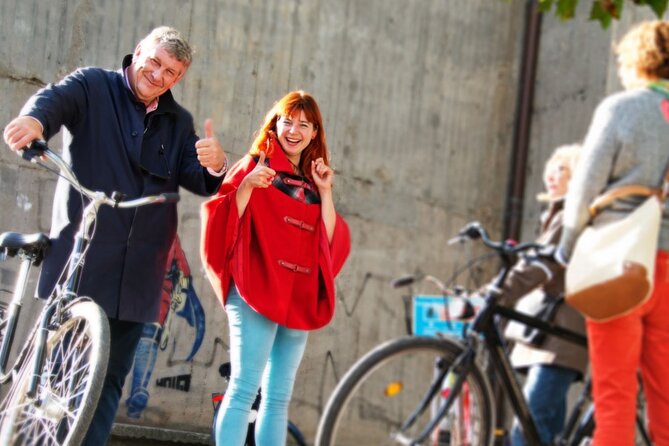
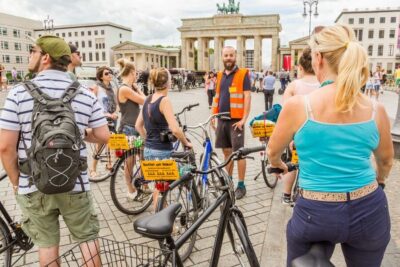
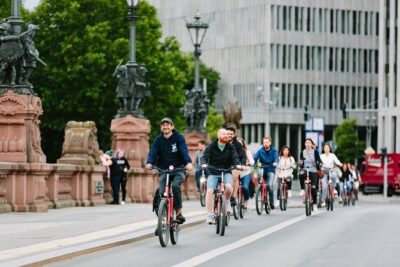
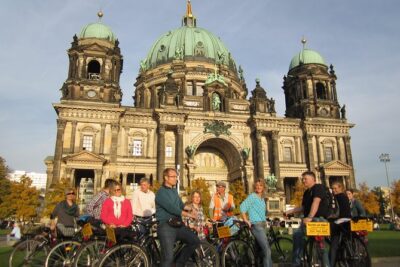
On this Alternative Kreuzberg bike tour, you ride through real neighborhoods, guided stops that connect today’s street life to the Berlin Wall story, and views you do not get from a standard hop-on ride. I especially like that you get the bike and helmet sorted for you, and the route is designed by the guides so it does not feel copy-pasted.
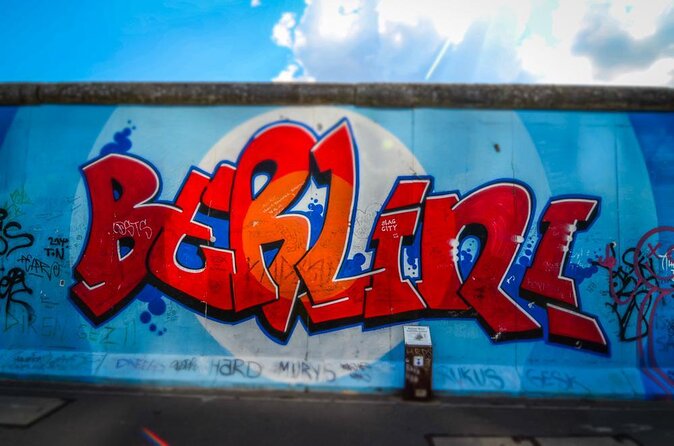
What I love most is the human touch: guides like Rico, Rufus, Jake, and Bjorn show up with stories, humor, and a focus on safety, not just facts. You also spend time in places that feel lived-in, including the Wall art at the East Side Gallery and the borderland vibe along the Spree.
One thing to consider: this is a stop-and-listen style tour. You ride plenty, but the pacing includes frequent explanations, and your clothes can get a little messy from the bike chain if you wear very light, loose fabric.
In This Review
- Key things to look forward to
- Why Kreuzberg feels like another Berlin on two wheels
- Starting in Nikolaiviertel, then stepping into the real city
- Engelbecken and Das Baumhaus, where the Wall story shows up in design
- The artists spaces and the YAAM viewpoint over the Spree
- East Side Gallery to Oberbaumbrücke, seeing the Wall with context
- Osthafen and the borderland mindset along the water
- Falckensteinstraße to Görlitzer Park, reuse and density in real life
- Liegnitzer Straße and the car loft, when politics meets real estate
- Admiralbrücke sunset energy and Kottbusser Tor’s contrast
- Bikes, time, and group size, what to expect day-of
- Price and value, what your $42.33 really covers
- Who should book this alternative Kreuzberg bike tour
- Should you book it?
- FAQ
- How long is the bike tour?
- How much does the tour cost?
- Where do I meet, and does the tour end there too?
- What languages is the tour offered in?
- What is included in the price?
- Are there any admission fees at the stops?
- Is the tour family-friendly?
- What group size should I expect?
- Does the tour run in bad weather?
- What is the cancellation policy?
Key things to look forward to
- A guide-led route that changes, because each leader builds their own path under the Free-Berlin concept
- Alternative Kreuzberg and nearby districts, with stops that show how the city works beyond the postcard zones
- Berlin Wall context you can feel, especially around East Side Gallery and Oberbaum Bridge
- All biking gear included, so you can show up and ride without hunting for rentals
- Small groups (up to 15), which makes it easier to ask questions and stay together
- Lots of photo anchors, from Wall art to river views over the Spree
Deeper into the painted backstreets
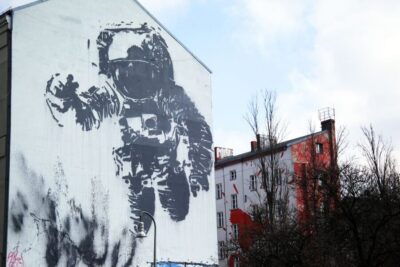
- Berlin: Alternative Berlin Walking Tour★ 4.6 · 1,204 reviews
- Berlin: City Street Art Guided Walking Tour★ 4.8 · 886 reviews
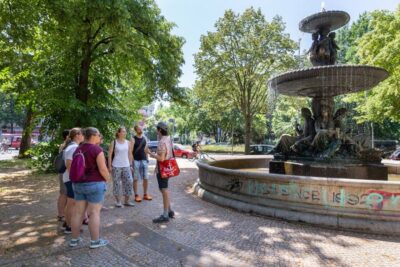
- Berlin: 3-Hour Street Art Tour★ 4.7 · 778 reviews
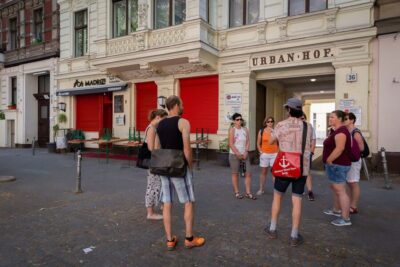
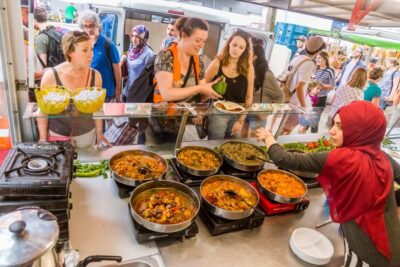
- Kreuzberg: Culinary Food Tour★ 4.5 · 770 reviews
Why Kreuzberg feels like another Berlin on two wheels
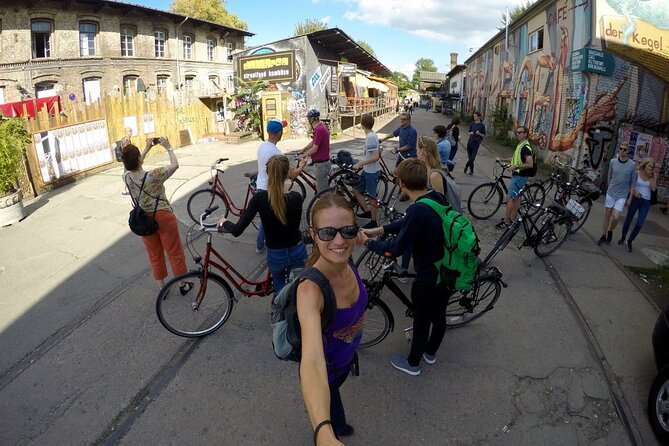
If you only do Berlin’s big sights on foot, you get the museum version. This tour is built for the city version, where architecture, street culture, and political history rub shoulders right at bike speed.
You will also notice something practical right away: the route is designed to keep the story moving. Instead of cramming landmarks in one straight line, you stitch neighborhoods together, so Kreuzberg and nearby Friedrichshain start to make sense as a single lived landscape.
And because it is in an afternoon slot, you get a nice rhythm. Morning Berlin is for errands and museums. Afternoon Berlin is for people-watching, sun breaks, and turning corners before the light changes.
Starting in Nikolaiviertel, then stepping into the real city
The ride begins at Free Berlin Bike Tours & Rental, Poststraße 11. From the first stop, the tour sets a contrast. Nikolaiviertel is near the start of your sightseeing brain, a historic inner-city area with an established feel. It works as a warm-up because it gives you a baseline for what Berlin looks like when it is neat and curated.
Then the tour quickly pivots toward neighborhoods that feel closer to everyday life. Kreuzberg is where the mood shifts. This is a district shaped by layers of migration, political activism, and constant change, and you hear those layers in the way the guide talks about buildings, public spaces, and street corners.
Practical note: because the tour is designed around frequent stops, you will not be “power biking.” That is a plus if you want stories with your sightseeing, and a minus if you came for pure cycling speed.
Engelbecken and Das Baumhaus, where the Wall story shows up in design
You next reach Engelbecken, a place that feels like a pocket of calm between different eras of building. You will notice how pre-fab style structures sit next to older architecture and newer modern forms. The effect is not just visual. It gives you a clue about why Berlin developed the way it did, with change happening in layers rather than in one clean redevelopment wave.
From there, the route moves into one of the most memorable cultural symbols on the trip: Das Baumhaus. The treehouse by the Wall is described as a story of adaptation, including how a guest worker met the Kreuzberg mentality and made space for something bolder right alongside the barrier era. Even if you are not tracking every historical detail, you feel what the guide is pointing out: people took the hard edges of history and made them part of daily culture.
Drawback here is simple: this kind of stop can be crowded with onlookers depending on the day. Plan to pause, listen, and take photos, but do not expect a long private moment.
The artists spaces and the YAAM viewpoint over the Spree
After Das Baumhaus, you move into the theme of Berlin’s alternative creative life. The tour includes an area that grew out of repeated squattings into a lasting home for artists. This is the kind of stop that makes the Berlin story feel less like a single turning point and more like a long process. People create spaces, hold them, lose them, and rebuild.
Right after, you get an especially Berlin moment: YAAM. The club itself is part of the story, but the bigger bonus on this stop is the view. From the vantage point, you can take in a skyline of landmarks, including the TV Tower, the Holzmarkt, the Oberbaumbridge, and stretches of the Spree. This is the tour’s reminder that history is not only in plaques. It is also in what you can see from where people gather.
If you like contrast, this stop delivers. You are near the Wall-era storyline, but the atmosphere shifts toward nightlife and creativity.
More handlebar time in Berlin
East Side Gallery to Oberbaumbrücke, seeing the Wall with context
East Side Gallery is one of those places where it is easy to over-expect. You know it for the art, but the tour helps you see it as part of a bigger urban shift. The stop highlights the longest remaining part of the Berlin Wall, and connects that art-covered surface to the fact that this area now sits inside a redeveloped business quarter.
So instead of treating the Wall as a dead monument, you get a sense of how Berlin keeps using these spaces. Art lives, crowds pass, and the surroundings keep changing.
Then comes Oberbaumbrücke. The bridge is not just a scenic crossing. The tour frames it as a symbol for crossing borders in every sense, physical and personal. It is a short stop, but it is the kind of one that helps you wrap your head around why the city still talks about freedom and restriction in the same breath.
Tip: bring your camera for this leg, but also give yourself one full minute with your eyes up. Views from a bridge work best when you let the story settle before you take the photo.
Osthafen and the borderland mindset along the water
Next you arrive at Osthafen, a former restricted borderland area that is now a spot for young urban creatives. The tour’s framing makes this an educational stop without turning it into a lecture. You are guided toward understanding the GDR-era obsession with the Wall, borderland control, and how restriction becomes a way of thinking.
Then you get a river break vibe. The Spree is right there, and the setting naturally invites a short pause to reset your brain and stretch your legs.
There is also an additional sculpture stop along the way, described as having multiple interpretations, with the official one being a bit unsatisfying. That moment is a good reminder of how Berlin often treats public art like a conversation rather than a final answer. The guide uses it to get you thinking, not just watching.
This is one of the best parts of the ride if you like your history tied to place, not just dates.
Falckensteinstraße to Görlitzer Park, reuse and density in real life
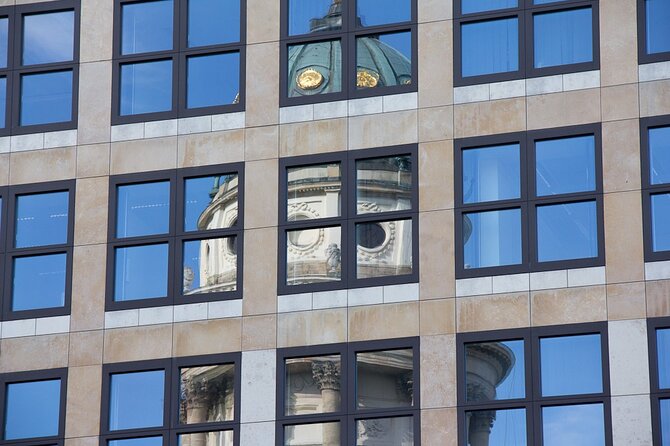
Falckensteinstraße is where the tour shows you diversity in a very practical way. You see different kinds of buildings, different kinds of people, and a sense of layered history, all in a street that feels like normal city life. The description calls it big-city life with a pocket of escapism, and that is exactly the right way to frame it. You are not leaving the city to find the alternative. The alternative is embedded in it.
After that, the tour lands at Görlitzer Park, which was once a train station and is now transformed into a park. This reuse matters because it mirrors the overall theme of the day: what was restricted or functional gets reinterpreted by the people who move in.
The tour also frames Görlitzer Park as a symbol of the line between alternative living and anarchy. That line is more about attitude than chaos. It is about how Berlin’s neighborhoods often shift boundaries through culture rather than through official planning.
Liegnitzer Straße and the car loft, when politics meets real estate
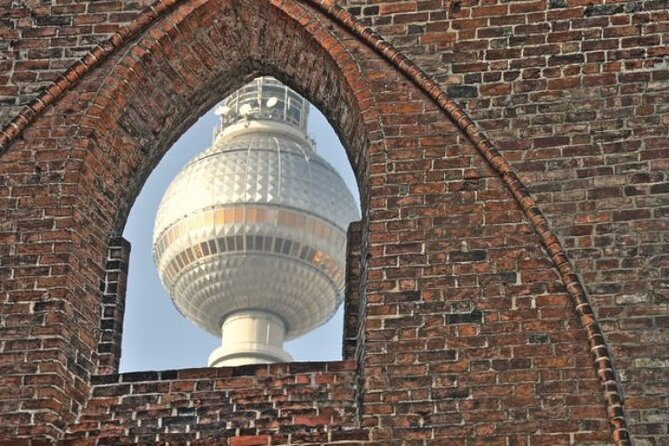
Then you hit one of the tour’s funniest contrasts: Liegnitzer Straße. It is described as inconspicuous in appearance but still connected to a major form of capitalism, right in the heart of the melting pot. Around political activism and survival-minded street culture, you find a building that is known for a very specific feature, a car loft where you can bring a car up to your balcony.
That sounds like a gimmick until the guide frames it as a contrast you cannot ignore. Berlin often packs contradictions into the same block. This is the city version of a punchline that also teaches you something about how people negotiate space and property.
The ride then includes a waterfront stop often described as Dolce Vita, with a Turkish market on Tuesdays and Fridays. If your visit lines up with those days, this is a natural place to slow down and absorb the neighborhood vibe. It is also a good time for a short break before the ride continues into the final stretch.
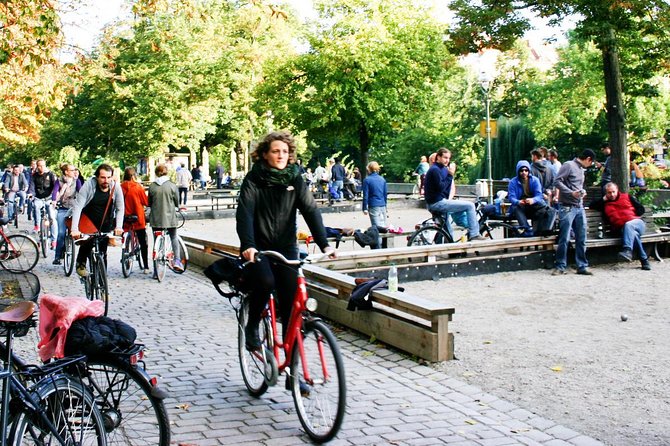
And yes, the tour includes a bohemian break moment where people play boule. Even if you do not join, watching is part of the story. It shows how Berlin’s alternative culture is not only about protest or art. It is also about everyday leisure.
Admiralbrücke sunset energy and Kottbusser Tor’s contrast
To close the tour, you ride toward Admiralbrücke, described as a place where you can begin your night in a bar, or begin it with strangers at sunset. The guide’s framing is simple: come as you are. That matters because it tells you how Berlin’s public spaces often work, casual and open.
Then comes Kottbusser Tor, the more intense contrast. You see the brutal 1970s architecture and you get a blunt sense of what the area is known for, including heavy traffic and the presence of a drug scene. The tour does not glamorize it, it contextualizes it as part of the neighborhood reality.
This final segment works well because it does not try to “sanitize” the city. Instead, it helps you keep two Berlin stories in your head at once: the sunny gathering spots and the tense street corners. Both are part of the alternative story, and the bike ride makes that contrast easier to process than a series of separate visits.
Bikes, time, and group size, what to expect day-of
This tour runs for about 3 hours and is designed for most people to participate. It includes a bicycle and a helmet, plus a professional guide.
The group size is capped at 15, with a minimum of 4. That sweet spot tends to make the tour feel guided rather than herded. You can ask follow-up questions, and the guide can actually see who is struggling.
You should also know it runs in all weather conditions. Dress for the day, not for the forecast you hope for. If it rains, plan to be comfortable getting a little wet and moving anyway.
And one small practical tip that showed up repeatedly: keep in mind that bike chains can get your trousers dirty. If you want to stay neat, wear pants you can live with being slightly marked.
Price and value, what your $42.33 really covers
At $42.33 per person for roughly three hours, you are paying for more than transportation. You are paying for:
- A professional guide who connects neighborhoods to Wall-era and post-Wall change
- Bicycle and helmet, so you do not spend time and money on rentals
- A route built for that day by the guide under the Free-Berlin concept, which reduces the cookie-cutter feel
- A small-group format that makes the stories feel personal
This is good value if your goal is understanding. If your goal is exercise only, you might feel you could do a cheaper solo ride. But if you want the city’s logic explained while you move through it, this price is reasonable.
I also like the pacing for visitors who feel “museumed out.” The tour keeps you outside, moving, and talking, so you learn without feeling stuck in one place.
Who should book this alternative Kreuzberg bike tour
Book it if you:
- Want Berlin Wall context tied to neighborhoods you can actually bike through
- Like street-level culture, architecture details, and stories from the people who know the districts
- Prefer a guide-led route over wandering with a map
- Are traveling in a small group or as a solo visitor who wants friendly structure
Skip it if you only want long, fast bike stretches with minimal stops. This tour is designed for frequent pauses, so if that irritates you, you may prefer a more direct cycling route.
It also tends to work well for families. Children are welcome, and infant seats can be provided on request, as long as children are with an adult.
Should you book it?
I think you should, especially if this is your first or second day in Berlin and you want the city’s alternative side without gambling on the right neighborhoods. The tour hits major anchors like East Side Gallery, Oberbaumbrücke, and the Spree, but it keeps the story rooted in living neighborhoods rather than turning everything into a checklist.
The guide quality is a standout strength. People come away talking about guides like Rico, Rufus, Jake, Bjorn, Vincent, and Karl for their humor, friendly energy, and safety focus. If that kind of guided experience sounds like your style, this is a strong use of a few hours.
Just go in expecting a guided cultural ride with stops, not a ride-bike-race day. If you do, you will leave with a much clearer picture of why Kreuzberg and nearby areas are still central to Berlin’s identity.
FAQ
How long is the bike tour?
It runs for about 3 hours.
How much does the tour cost?
The price is $42.33 per person.
Where do I meet, and does the tour end there too?
You meet at Free Berlin Bike Tours & Rental, Poststraße 11, 10178 Berlin. The tour ends back at the same meeting point.
What languages is the tour offered in?
It operates in English and German, depending on the option selected.
What is included in the price?
The bike tour includes use of a bicycle, a helmet, and a professional guide.
Are there any admission fees at the stops?
The tour highlights list the stops as free admission.
Is the tour family-friendly?
Yes. Children are welcome, and infant seats can be provided on request. Children must be accompanied by an adult.
What group size should I expect?
It runs with 4 to 15 travelers, with a maximum of 15.
Does the tour run in bad weather?
It operates in all weather conditions. Wear appropriate clothing.
What is the cancellation policy?
You can cancel for a full refund if you cancel at least 24 hours before the experience’s start time. Free cancellation is available up to 24 hours in advance. If the tour is canceled because the minimum number of travelers is not met, you will be offered another date or a full refund.
The Berlin Bike Lanes
More Painted Walls and Backyards
Everything else we filed on Berlin
- East Berlin: City of Shadows Walking Tour
★ 5.0 · 11 reviews - Berlin: Die Stachelschweine – Frank Lüdecke – Träumt Weiter
★ 4.7 · 11 reviews - Potsdam Day Trip from Berlin with a Local: Private & Personalized
★ 4.0 · 11 reviews - An Introduction to Berlin Walking Tour
★ 5.0 · 11 reviews - DJ for a Day: Learn to Mix Like a Pro in Berlin
★ 5.0 · 11 reviews - 2-H Segway Sightseeing Tour Berlin
★ 4.5 · 11 reviews
Street Art and Alternative City Tours, side by side.
 ★ 4.6Berlin: Alternative Berlin Walking TourFrom $291,204 reviews
 ★ 4.8Berlin: City Street Art Guided Walking TourFrom $23886 reviews
 ★ 4.7Berlin: 3-Hour Street Art TourFrom $23778 reviews
 ★ 4.5Kreuzberg: Culinary Food TourFrom $589770 reviews
 ★ 4.7Berlin: Kreuzberg Guided Walking Evening TourFrom $27555 reviews
 ★ 4.7Berlin: Alternative Bike Tour of Kreuzberg & FriedrichshainFrom $41548 reviews
 ★ 4.9Berlin: 2.5-Hour Walking Tour through Kreuzberg 61From $23525 reviews
 ★ 5.0Berlin Off-the-Beaten-Path Walking Tour: Kreuzberg, Mitte and FriedrichshainFrom $30412 reviews
Other lists this tour is on