
REVIEW · EVENING EXPERIENCES
Berlin: Live-Guided Evening Sightseeing Tour by Open-top Bus
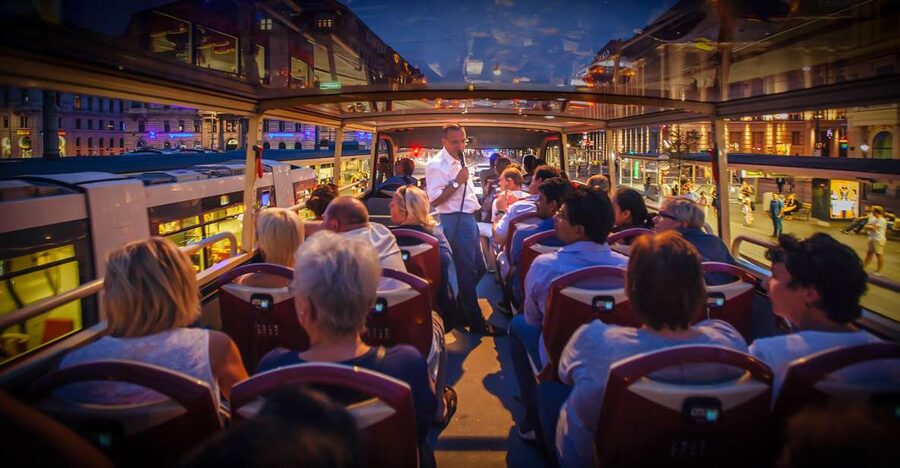
Berlin at night feels like theatre. This 75-minute open-top double-decker loop delivers iconic-lit views and a live guide in English and German who makes street names click, but the upper deck can run chilly and windows may fog in winter.
You do not hop on and off, so you are committing to one paced route, returning to Alexanderplatz at the end. It is a smart choice for a short Berlin stay or a first night when you want direction fast.
In This Review
- Key highlights worth your attention
- Why this Berlin evening bus loop makes sense
- Price and what you get for about $35
- Meet at Alexanderplatz, then settle in for a 6:00 PM start
- From Alexanderplatz to East Side Gallery: Berlin’s story in lights
- Museum Island and Brandenburg Gate: the classic center after dark
- Jewish heritage stop points: New Synagogue and Nordbahnhof area
- The Berlin Wall Memorial: the part you will remember
- Mauer Park, Prenzlauer Berg, and Volksbühne: the city after separation
- How the live guide and headphones shape your experience
- Open-top comfort: seating tips, cold weather, and window fog
- Stop-by-stop feel: what each place is good for on this route
- Who should book this tour, and who might prefer another format
- Should you book the Berlin live-guided evening bus tour?
- FAQ
- How long is the Berlin evening sightseeing tour?
- What time does the tour depart?
- Where is the meeting point?
- Is this a hop-on, hop-off tour?
- What languages are the live guide commentary available in?
- What is included in the ticket?
- Is the tour wheelchair accessible and pet friendly?
- Do infants need tickets?
Key highlights worth your attention
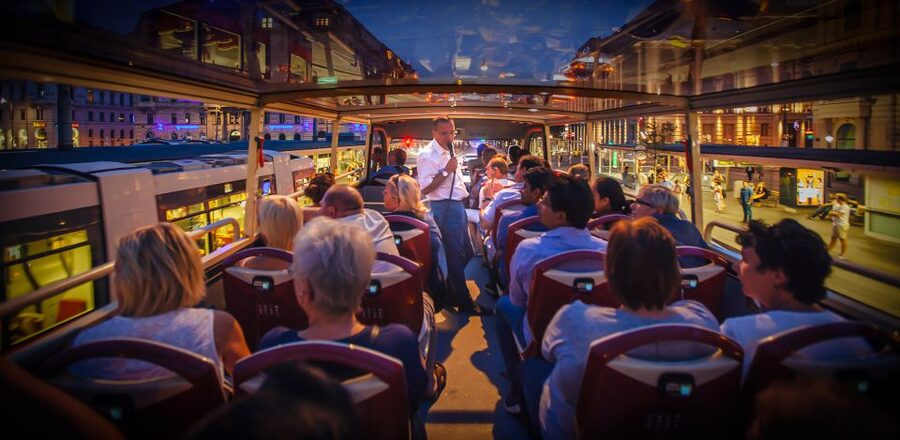
- Open-top double-decker night views of major landmarks from above the traffic
- Live commentary in English and German, with guides like Simon and Demitri praised for personality and clarity
- A single-loop route that pairs big monuments with trend districts like Kreuzberg and Prenzlauer Berg
- Wall Memorial focus for a sober look at Berlin’s divided past
- Lots of photo moments (Brandenburg Gate, East Side Gallery, Unter den Linden) without needing to stand in lines
- Practical extras: map and headphones included, plus wheelchair access and pet-friendly policy
Undecided? The closest Berlin write-ups we have are these.
- Berlin: Reichstag, Dome and Government District Guided Tour★ 4.7 · 18,288 reviews
- Berlin: 1-Hour City Tour by Boat with Guaranteed Seating★ 4.3 · 16,993 reviews
- Berlin: Boat Tour Along the River Spree★ 4.4 · 11,252 reviews
- Discover Berlin Half-Day Walking Tour★ 5.0 · 9,624 reviews
Why this Berlin evening bus loop makes sense
If your goal is to get oriented fast, an evening bus tour works better than you might expect. Berlin is wide, and neighborhoods can feel disconnected until you see how they connect along the main corridors. This one gives you a full 75-minute picture at night, when landmarks are lit and streets feel more cinematic.
I like that the focus stays on major sights plus the districts between them. You get the expected hitters like Brandenburg Gate and the Berlin Wall Memorial, but you also pass through places that look and feel different from each other. That contrast is exactly what helps you decide where to spend time the next day.
One more practical point: you are not waiting around for stops. You sit, listen, look, and move on. In a city that can eat time with walking, that is a real value.
Price and what you get for about $35
At $35 for a 75-minute guided ride, you are basically paying for three things: transport, guided interpretation, and the ability to see far more in one evening than you could on foot. The tour includes a live guide in English and German, plus map and headphones, so you are not stuck squinting at plaques or missing context.
Is it cheap? No. But it is not a luxury price either. For many people, the math works out because this kind of evening loop can replace multiple half-effort outings. You leave with a mental map, names tied to places, and suggestions for where to walk next.
You should know the trade-off: it is not hop-on hop-off. You cannot decide mid-route to exit and explore on your own. If you enjoy wandering with zero structure, you might prefer a true hop-on option. If you want guided orientation, this format is efficient.
Meet at Alexanderplatz, then settle in for a 6:00 PM start
The tour leaves from Alexanderstraße 3-5 at Stop #1: Alexanderplatz, across from the Park Inn Hotel. Aim to arrive about 15 minutes early so you can get positioned and the bus can depart on time.
Because there is no hotel pickup, you are responsible for getting yourself to Alexanderplatz. The good news is that Alexanderplatz is one of Berlin’s easiest hubs to reach, so you are not fighting the city to start your tour.
Practical tip for comfort: the bus is open-top upstairs. If you are going in cooler months, dress like you expect wind. One rider noted the bus can feel cold at night, and another pointed out that windows fogged up during winter conditions. Bring a warm layer even if you think you can tough it out.
From Alexanderplatz to East Side Gallery: Berlin’s story in lights
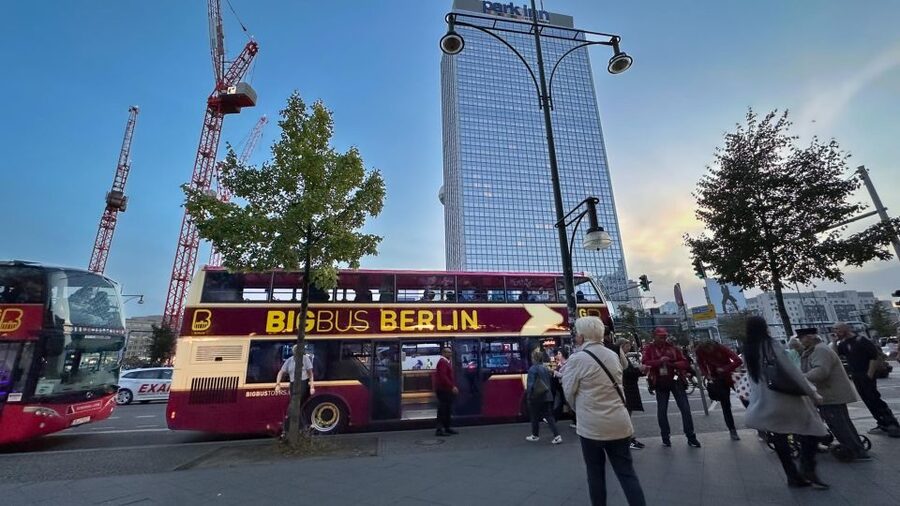
You start at Alexanderplatz, and that matters. This is one of the city’s biggest squares, a good launchpad for understanding Berlin’s scale. At night, the area reads almost like a city center hub, and it sets the tempo for the drive.
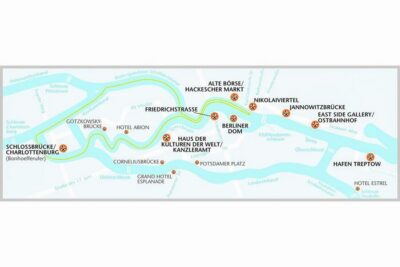
Next comes the East Side Gallery, one of Berlin’s most famous stretches of mural art. At night, you will see it from the moving bus as part of the broader city scene, not as a standalone daytime stop. That is an advantage if you want context first. It is also a reminder that Berlin’s art is often tied to history, not just aesthetics.
Soon after, the route passes Oberbaum Bridge, a recognizable crossing that visually links different parts of the city. It is the kind of spot that helps you understand geography quickly, especially if this is your first evening in Berlin.
Then you roll into Kreuzberg. Even without getting out, you can sense the neighborhood vibe from the street rhythm and the mix of buildings around you. This is also where the tour’s structure becomes useful: you are hearing a guide connect the past and the present while the bus physically moves you across Berlin’s changes.
The route continues toward Nikolaiviertel, where you can get a sense of the older, more historic-looking core area. At night, it feels less like a checklist stop and more like a contrast point to the more modern districts you have already seen.
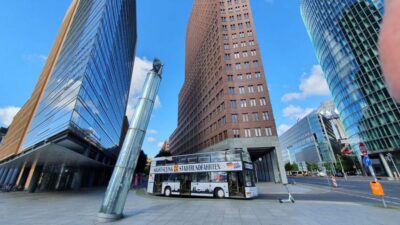
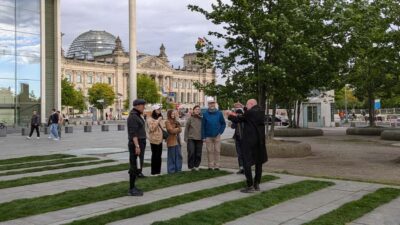
Museum Island and Brandenburg Gate: the classic center after dark
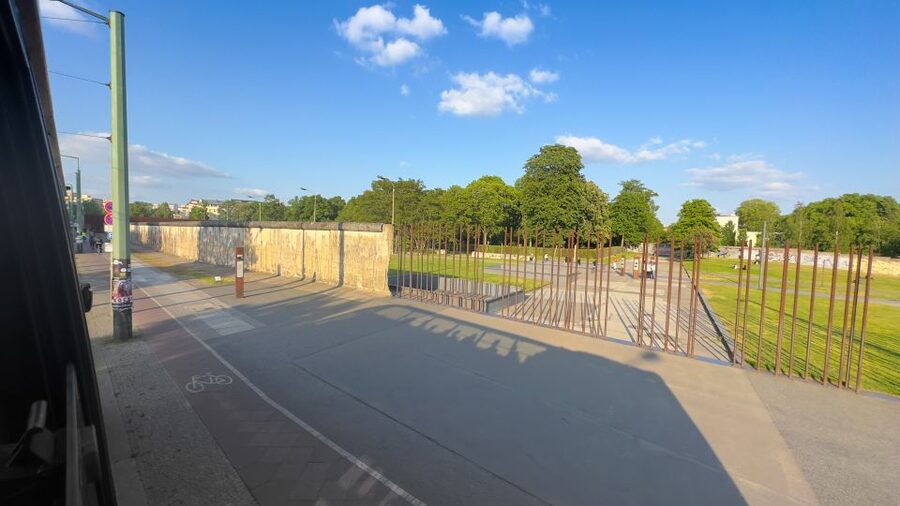
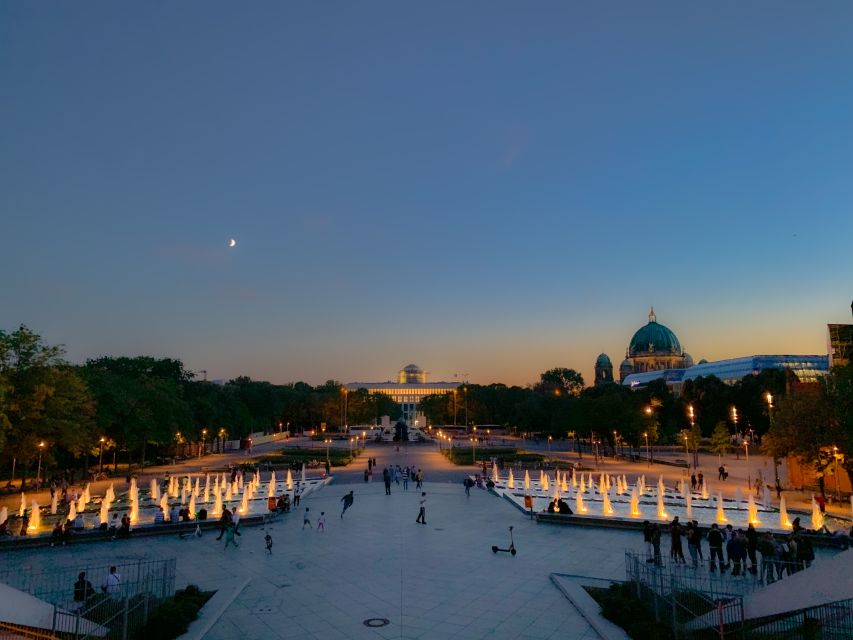
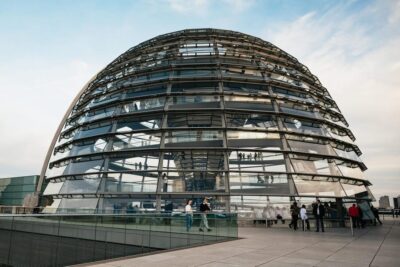
This is where Berlin turns extra photogenic. The bus passes by Museum Island, and you get that signature central axis feel, with grand institutions clustered near the Spree. Even from the bus, you understand why people plan full mornings here.
From there, you go past Berliner Schloss, then Unter den Linden. This is a corridor you will hear about in Berlin conversations for a reason. It is a key view line, and at night the street lighting makes it feel more dramatic than daytime photos can capture.
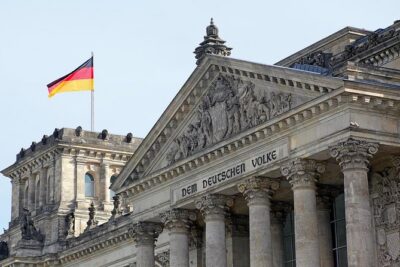
You then reach Brandenburg Gate. It is the Berlin monument most people already know, but seeing it at night gives it a different emotional weight. You get the structure, the symbolism, and the simple fact that this landmark sits at the intersection of politics, culture, and reinvention.
After the gate, the route includes more specific cultural sites, such as Friedrichstadt-Palast and Tränenpalast. The latter is particularly meaningful because it relates to the lived reality of Berliners during separation, not just an architectural story. Even though you are not getting out to read plaques, a good guide can frame what you are seeing so it lands.
Jewish heritage stop points: New Synagogue and Nordbahnhof area
The tour route includes the New Synagogue Berlin – Jewish Centre. It is another moment where you are reminded that Berlin is not only about one era or one type of monument. Looking at it from the bus keeps you moving, but it can still be a powerful marker.
The route also passes the Berlin Nordbahnhof area. Even if you are not hopping out, these pass-bys help you map the city’s rail and neighborhood connections. That matters later, because Berlin is a city you will navigate by train at least once if you stay more than a day or two.
The Berlin Wall Memorial: the part you will remember
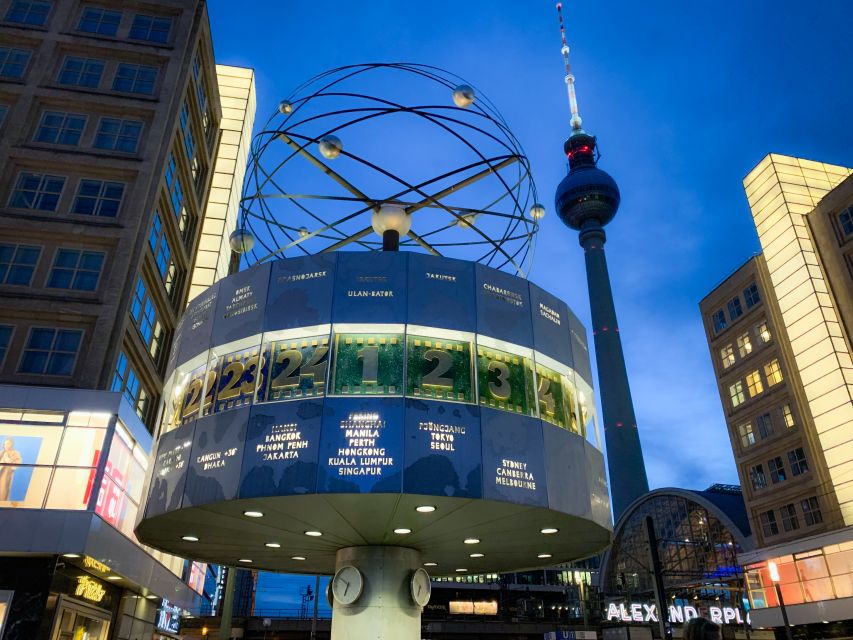
This is the moment many people book for. The bus takes you by the Berlin Wall Memorial, and this section of Berlin reads with a different tone. It is a sobering sight, even when viewed through the window and moving lane.
What I like about this tour is that it does not treat this as just another photo spot. A live guide can connect what you see with the idea of a city divided, then reconnected. The effect is stronger when it is not isolated from the rest of Berlin’s map. You see how the wall area connects to the neighborhoods around it.
If you want to focus here, do it. Sit where you have a clear view, and lower your phone distractions. In a 75-minute tour, you can still give your full attention to the one section that will linger the most.
Mauer Park, Prenzlauer Berg, and Volksbühne: the city after separation
After the Wall Memorial, the route heads toward Mauer Park. This area often comes up when people talk about Berlin culture and public space. From the bus at night, you might not see every detail, but you do get the feeling of a place that is known for gathering.
Then you pass Kulturbrauerei, a name that signals arts, community events, and the creative side of Berlin. This is one of those neighborhoods where Berlin’s newer identity feels layered on top of older infrastructure.
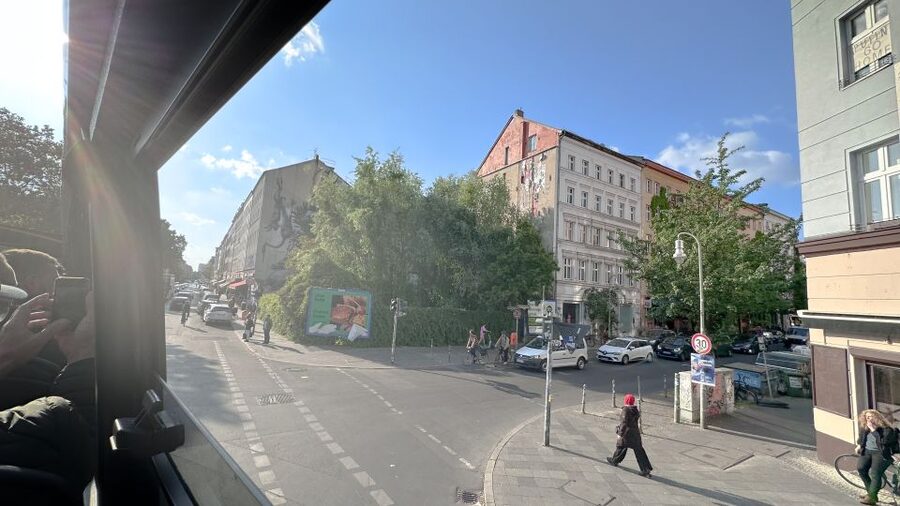
Next is Prenzlauer Berg, and you will recognize it quickly as a different mood from the center. Streets, building styles, and the flow of the area can feel more local, more neighborhood than monument.
The route also includes Volksbühne, a theater landmark that helps round out the arts angle. Even if you do not attend a show, seeing the location gives you an anchor point for later planning.
How the live guide and headphones shape your experience
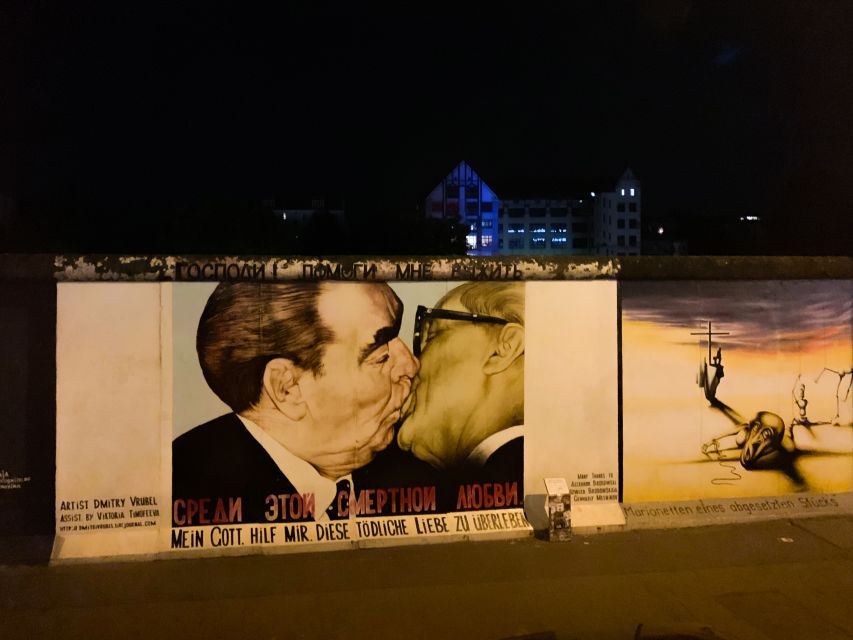
This tour wins or loses on guide quality, and the feedback around this one is strong. Guides like Simon and Demitri are praised for being personable, informative, and even funny. That matters in Berlin, because if the guide is dry, you will feel like you are just watching traffic lights.
The tour includes headphones and a map, which helps you follow along without craning your neck all the time. Commentary is delivered in English and German, and one rider noted that fast translation between languages can be a lot to manage. The practical takeaway for you: if you care most about English, position yourself so you can hear the guide clearly, and pay attention when language switches happen.
Also, the format is built for narration while moving. That means it is not the same as getting off for deep exploration. If you want to read every detail at your own speed, you will need a follow-up walk. But as an evening orientation, it is a strong use of time.
Open-top comfort: seating tips, cold weather, and window fog
Upper deck is the obvious choice for viewing. You will get the best angle on illuminated monuments, and you feel the air more. The trade-off is discomfort: one rider mentioned the bus can be cold in winter. Another said the glass fogged up, and they had to wipe it to keep visibility.
Here is what I recommend you do to make this easier:
- Wear layers you can adjust, bring a hat or hood if it is windy
- If windows fog, a small cloth can help you clear your view
- Consider sitting where you have fewer people leaning on the glass so you keep a clearer line
There is also a practical electronics note from feedback: one person found there were no USB ports on the upper section, so they spent time downstairs. If you rely on charging, plan ahead with a charged phone battery or power bank.
If it is raining, you may still have decent visibility, but your comfort will depend on how warm you dress. The bus experience can be affected more by weather than by the tour itself.
Stop-by-stop feel: what each place is good for on this route
You are not getting out for every stop, so each one serves a different purpose in your mental map. Here is the route logic as you experience it from the bus:
- Alexanderplatz: your anchor point, big-square orientation before you scatter across the city
- East Side Gallery: art as history, plus a quick sense of Berlin’s post-wall identity
- Oberbaum Bridge: a geography helper, a landmark you can remember when planning walks
- Kreuzberg: mood shift neighborhoods, you start to feel Berlin’s multiple personalities
- Nikolaiviertel: older, more historic-looking contrast to the surrounding modern districts
- Museum Island: why this central zone matters, especially if you plan daytime museums later
- Berliner Schloss: a modern focal point tied to Berlin’s evolving narrative
- Unter den Linden: the grand avenue effect, easiest way to understand the centerline
- Brandenburg Gate: the iconic stop that hits differently at night
- Friedrichstadt-Palast: a cultural landmark that broadens the tour beyond war and politics
- Tränenpalast (Palace of Tears): a more specific, human-scale connection to separation
- Bode Museum: another Museum Island reference point that keeps you oriented toward museums
- New Synagogue Berlin – Jewish Centre: reminder that Berlin’s story includes many communities
- Berlin Nordbahnhof: a hint of how rail connects areas and neighborhoods
- Berlin Wall Memorial: the emotional centerpiece
- Mauer Park: public space energy, a place for later wandering planning
- Kulturbrauerei: arts and neighborhood texture
- Prenzlauer Berg: a more local-feeling district after the monumental parts
- Volksbühne: theater location for anyone who wants culture beyond museums
That sequence is useful. It moves from iconic monuments to lived-in neighborhoods, which gives you both emotional context and practical next-step ideas.
Who should book this tour, and who might prefer another format
This is a great match if:
- It is your first time in Berlin and you only have a short window
- You want a guided overview without committing to a full day of walking
- You like history but also want the city’s modern neighborhoods included
- You want to listen in English or German and still keep up with the route
It may not be ideal if:
- You want to get out and explore repeatedly
- You hate cold weather and do not want open-air exposure upstairs
- You prefer super-detailed museum-style stops rather than pass-by sightlines
Good news for families and pet owners: the tour is pet friendly, and infants aged 4 and under travel free. It is also wheelchair accessible, so you should have more flexibility than on many older, less-adapted vehicles.
Should you book the Berlin live-guided evening bus tour?
I think you should book it if you want an easy first-night orientation and you like the idea of seeing big Berlin landmarks and real neighborhoods in one 75-minute loop. At $35, the value comes from the guide plus the included headphones and map, and from the fact that you come away with a clear sense of where things are.
Skip it if you strongly prefer stop-and-explore flexibility, because this is a single-loop ride. Also, if cold weather will derail your comfort, plan warm layers and expect that winter windows can fog.
If you want, tell me your travel month and whether this is your first Berlin visit. I can help you decide if an evening bus is the right move, or suggest a pairing for the next day’s walks.
FAQ
How long is the Berlin evening sightseeing tour?
The tour lasts about 75 minutes.
What time does the tour depart?
The tour departs at 6:00 PM from Stop #1 at Alexanderplatz.
Where is the meeting point?
You meet at Alexanderstraße 3-5, 10178 Berlin, opposite Park Inn Hotel, at Alexanderplatz (Stop #1).
Is this a hop-on, hop-off tour?
No. This is a single-loop sightseeing tour, not hop-on, hop-off.
What languages are the live guide commentary available in?
The live guide provides commentary in English and German.
What is included in the ticket?
You get the 75-minute evening sightseeing tour by open-top bus, plus a map and headphones, and live guide commentary in English and German.
Is the tour wheelchair accessible and pet friendly?
Yes. The tour is wheelchair accessible and pet friendly.
Do infants need tickets?
Infants aged 4 and under travel free and do not require a ticket.
Everything else we filed on Berlin
- East Berlin: City of Shadows Walking Tour
★ 5.0 · 11 reviews - Berlin: Die Stachelschweine – Frank Lüdecke – Träumt Weiter
★ 4.7 · 11 reviews - Potsdam Day Trip from Berlin with a Local: Private & Personalized
★ 4.0 · 11 reviews - An Introduction to Berlin Walking Tour
★ 5.0 · 11 reviews - DJ for a Day: Learn to Mix Like a Pro in Berlin
★ 5.0 · 11 reviews - 2-H Segway Sightseeing Tour Berlin
★ 4.5 · 11 reviews
Evening Experiences, side by side.
 ★ 4.5Hamburg: 90-Minute Evening Lights Harbor CruiseFrom $277,728 reviews
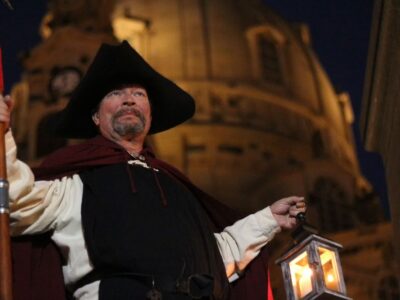 ★ 4.6Dresden: The Original Night Watchman Tour in Lantern LightFrom $176,653 reviews
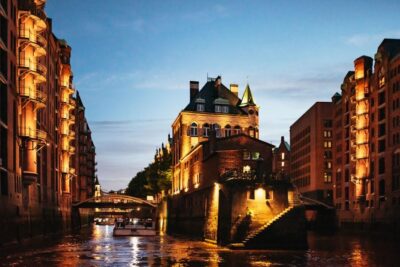 ★ 4.4Hamburg: 1-Hour Harbor Evening Lights CruiseFrom $304,861 reviews
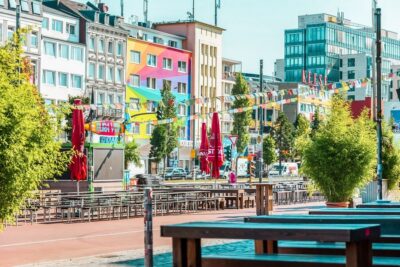 ★ 4.7Hamburg: Night Watchman’s Tour of St. Pauli in GermanFrom $234,818 reviews
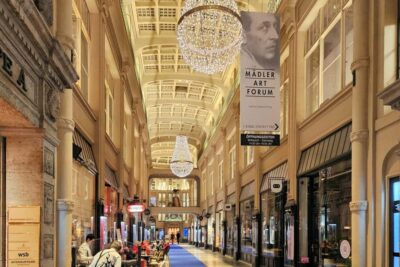 ★ 4.6Leipzig: 1.5-Hour Public Tour with Night Watchman BremmeFrom $173,116 reviews
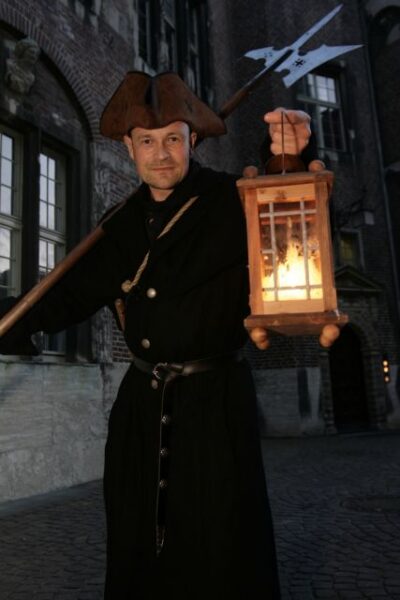 ★ 4.7Bremen: Walking Tour in German with Night GuardFrom $182,922 reviews
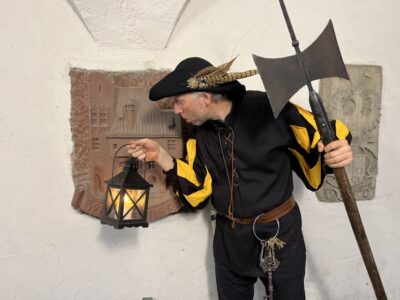 ★ 4.7Munich: Night Watchman Walking TourFrom $5302,092 reviews
 ★ 5.0Munich Ghosts and Spirits Evening Walking TourFrom $601,900 reviews
Other lists this tour is on