
REVIEW · SCAVENGER HUNTS AND CITY GAMES
Berlin: “Shadow of the Rubber Duck” Escape Room Experience
A rubber duck has secrets. In Berlin Mitte, TRABIWOOD Escape Room turns a dark, Wall-era vibe into a fast-moving murder mystery you solve with puzzles.
I especially love the tight 1 hour format, because it keeps the energy up from the first clue to the final decision. I also like how the room is built for teamwork, with more than 20 puzzles in a space that feels small but stays busy. One possible drawback: this experience is explicitly fictional, so if you’re hunting for a real museum-style explanation of the Berlin Wall, this won’t scratch that itch.
In This Review
- Key Things to Know Before You Go
- Berlin Mitte Investigator Work: What This Escape Room Really Feels Like
- Starting With a Small Team of 2 to 3
- The 1976 Berlin Wall-Themed Storyline and Puzzle Style
- How the One-Hour Countdown Changes Your Strategy
- Clues, Hidden Secrets, and Puzzle Momentum
- The Wave Splash Effect: A Small Moment With Big Impact
- Language Options and Host Support
- Price and Value: Is $35 Worth It for 1 Hour?
- Who This Escape Room Is Best For
- Booking Tips That Improve Your Experience
- Should You Book TRABIWOOD Shadow of the Rubber Duck?
Key Things to Know Before You Go
- 20+ puzzles in a compact room means you will stay mentally active the whole time
- Small group of 2 to 3 people is designed for shared problem solving, not solo wandering
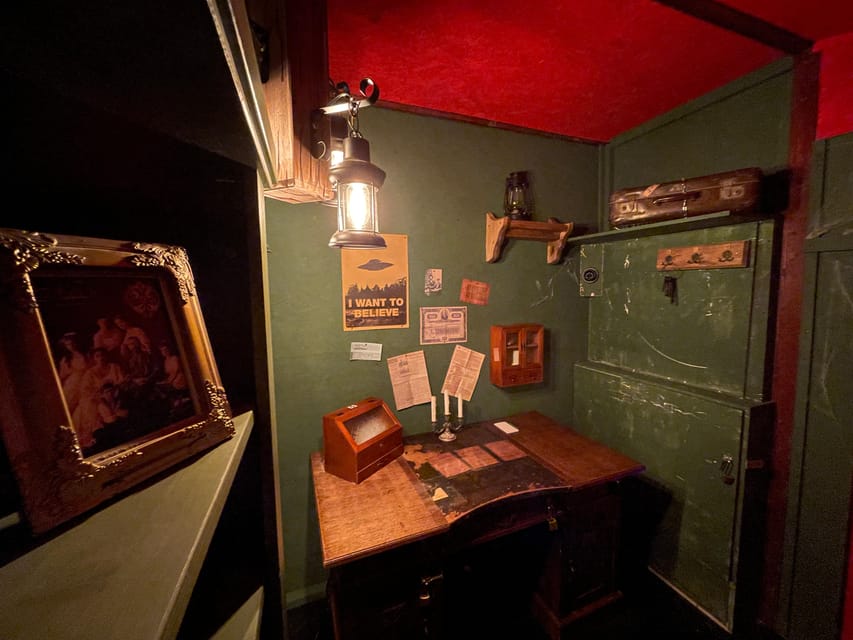
- Dark atmosphere and hidden clues push you to slow down and search, even when time feels short
- A wave-and-water splash moment adds a physical special effect to the mix
- German, English, and Russian support via a host or greeter helps you follow the story clearly
- Not for kids under 16, so plan on an adult-friendly vibe and level of challenge
More puzzles to walk a city with
- Escaping and spying on the Berlin Wall Scavenger hunt★ 4.5 · 128 reviews
- Berlin: Self-Guided Family and School Class Scavenger Hunt★ 4.6 · 128 reviews
- Berlin: “Shadow of the Rubber Duck” Escape Room Experience★ 4.7 · 95 reviews
- Berlin: Scavenger Hunt Self-Guided Tour★ 4.6 · 79 reviews
Berlin Mitte Investigator Work: What This Escape Room Really Feels Like
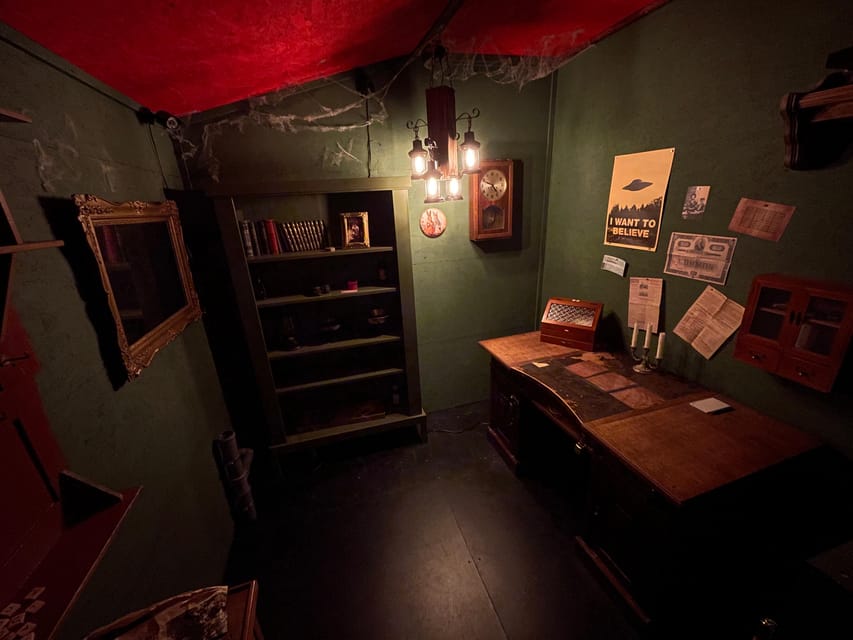
This is not a “breakout” where you just try random buttons until something happens. The Shadow of the Rubber Duck escape room is structured like a case file in motion. You come in, get oriented to the story, then immediately start acting like an investigator. The setting is inspired by Berlin Wall shadows in 1976, with a dark atmosphere that fits the theme.
From a visitor standpoint, the best part is the pacing. You are given a limited time window, and every puzzle you solve is meant to move the story forward. That matters because it turns the experience into one continuous challenge instead of a series of separate mini-games. You will feel the “case” get tighter as minutes pass.
Also, the name is a clue. Rubber duck lore is normally silly, but here it’s used as an anchor for the mystery. Expect that the theme plays a role in how puzzles are presented, not just how the room looks.
Starting With a Small Team of 2 to 3
You won’t be in a giant crowd. The setup uses a small group of two to three people as investigators, which changes the whole feel of the room.
In a small team, you can actually coordinate. One person can focus on reading and spotting clues, while another tries puzzle mechanisms or codes. A third person can keep track of what you already tried so you do not waste time repeating the same guess.
You also get a better chance to stay engaged if you do not consider yourself a “puzzle person.” If you have one strong solver and one strong observer, you naturally balance out. The room’s design leans into that. It has more than 20 tricky puzzles, so splitting tasks is the difference between finishing and running out of time.
The 1976 Berlin Wall-Themed Storyline and Puzzle Style
The room is themed around dark shadows and secrets connected to the Berlin Wall era, set in 1976. That matters because it shapes the puzzle language. You are not just solving abstract math problems. You’re collecting clues that you then stitch together to figure out what the room wants you to notice.
You can expect:
- A mystery that revolves around tracking down a murderer on the run
- Clues that build toward solving the case
- Hidden secrets in the room that reward close looking
- A dark, atmospheric environment that creates pressure and focus
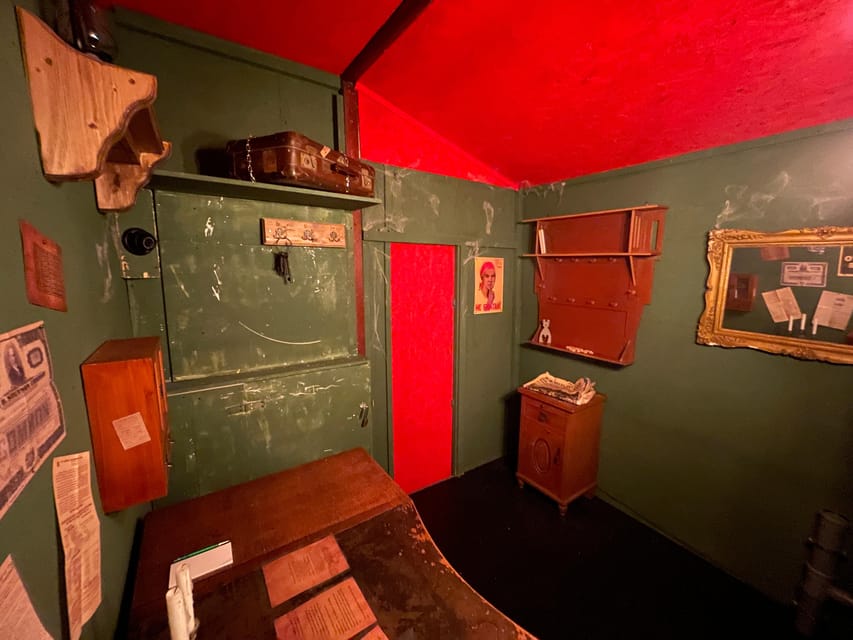
The space is described as small, yet it contains over 20 puzzles. That sounds contradictory until you do it. In practice, “small” means you’re not walking a long corridor. Instead, you’re constantly turning your attention to the next spot, the next object, the next message. Your team keeps moving mentally more than physically.
And yes, there are special effects. The highlights specifically call out the feel of water splash from waves. That’s a big clue about the room’s design: it’s meant to be felt, not only read. If you’re sensitive to water mist or sudden sensory moments, consider it when deciding if this fits your comfort level.
How the One-Hour Countdown Changes Your Strategy
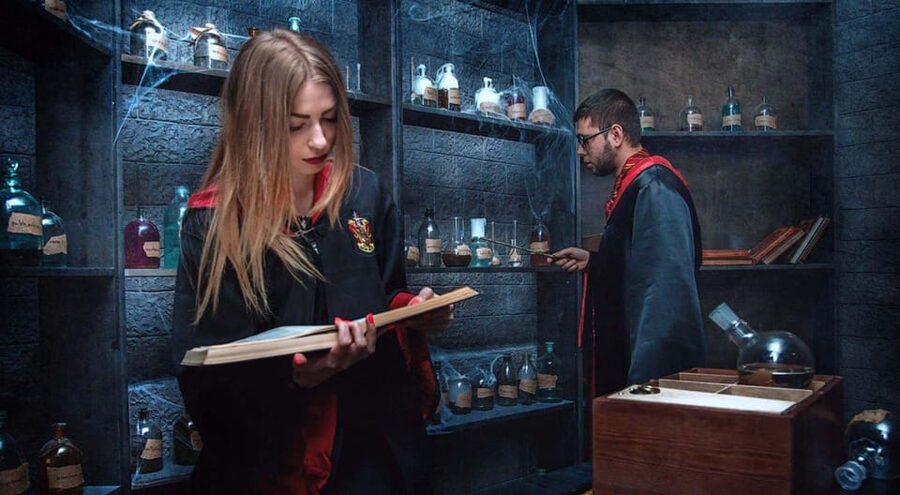
The experience runs for about 1 hour, and time runs against you as you move through the room. That’s the core tension of escape rooms, but here it’s especially important because there are so many puzzles to touch.
Here’s how I’d approach it so you enjoy it rather than panic:
- Assign roles immediately. One person scans, one person tries, and one person keeps a running “what we learned” list in your head.
- Treat each solved puzzle like a clue in the case, not a standalone win. The story is meant to connect.
- Use the team voice. Say your ideas out loud. Even wrong guesses often point you toward the right pattern faster than silent trial-and-error.
- Don’t get stuck too long. If a puzzle is resisting you, move on and come back later if the room allows it. With 20+ puzzles, you cannot afford tunnel vision.
This is the moment where the room’s fiction helps you. If the story feels coherent, your brain naturally organizes the clues. If the story falls flat for you, you’ll rely more on mechanics. Either way, the ticking clock forces you into momentum.



Clues, Hidden Secrets, and Puzzle Momentum
You’ll likely notice that the room alternates between:
- moments where you have enough information to test a guess
- moments where you must search or interpret
- moments where you need to connect two separate hints
That style is why I think this escape room works well for groups. When there are more than 20 puzzles, you need variety. You’ll get different kinds of problems, which helps different personalities shine.
Also, the dark atmosphere and hidden secrets are not just “for vibes.” In an escape room, lighting and concealment change what you notice. A well-designed room uses darkness to force deliberate searching. If you rush, you miss the clue that would have saved ten minutes.
A practical tip: when you enter, do a quick “team sweep” before you start solving. Look for anything that seems out of place or intentionally different. Then begin solving with the assumption that every object is there for a reason.
The Wave Splash Effect: A Small Moment With Big Impact
One of the listed highlights is the feel of water splash from waves. Even though it’s probably brief, effects like this do two things:
- They make the story feel more physical, which can increase focus.
- They can surprise you, so your senses need to stay steady.
I’d plan for it the way you would plan for a theatrical effect. No heroics. Just keep your posture and teamwork calm. If you’re the type who freezes when something unexpected happens, remind your group beforehand: the puzzle will continue right after the moment.
If you’re going with friends and one person is anxious about sensory surprises, that person can still contribute in other ways, like reading clues or keeping track of what you already solved.
Language Options and Host Support
The host or greeter supports German, English, and Russian. That’s a real value point, because escape rooms often hinge on understanding small story details or puzzle instructions.
If you’re booking in a language you’re comfortable with, you’ll spend more time thinking and less time translating. The story is part of the puzzle chain, so language clarity helps you stay in the “case solving” mindset.
Price and Value: Is $35 Worth It for 1 Hour?
At $35 per person for 1 hour, the value depends on what you want from a Berlin activity.
Escape rooms are usually expensive per hour compared with sightseeing, but they’re also one of the best “pay once, get instant entertainment” formats. Here, the value is boosted by two things you can actually feel:
- Over 20 puzzles in a compact space means you won’t run out of content
- The story includes special effects (like the water splash moment) and a strong murder-mystery framing
If you love puzzle games, team challenges, or any kind of mystery narrative, this price makes sense. If you only want light entertainment and minimal effort, you may find the challenge level tiring.
One extra value angle: since it’s private to your group type and sized for 2 to 3 people, you’re paying for a focused experience rather than sharing attention with strangers.
Who This Escape Room Is Best For
This is a solid choice if you:
- want a hands-on activity in Berlin Mitte that doesn’t rely on long lines
- like puzzles that require teamwork, not just speed
- enjoy mystery stories with a clear goal, find the clues, and solve the case
- are comfortable with a dark, atmospheric setting
It’s not a great fit if you:
- want a straightforward history lesson about the Berlin Wall
- need a kid-friendly experience, since it’s not suitable for children under 16
- prefer low-stress activities, because the one-hour countdown adds pressure
Booking Tips That Improve Your Experience
You don’t need a lot of prep, but two things will help you make it smoother:
- Pick your language carefully. If you want to follow instructions and story cues without friction, choose German, English, or Russian based on your comfort level.
- Plan your team communication. Agree how you’ll handle roles before you start solving. It speeds up progress and reduces frustration.
Also, the room time is one hour, so don’t schedule anything that will rush you out right after. You’ll probably want a couple minutes buffer to reset and talk through what you solved and what you missed.
Should You Book TRABIWOOD Shadow of the Rubber Duck?
I’d book this if you want a compact, high-output brain and teamwork session in Berlin Mitte. The combination of a murder mystery plot, 20+ puzzles, and a one-hour ticking clock makes it feel like a real “case” rather than a casual diversion.
I’d think twice if you’re mainly in Berlin for a factual, museum-like experience about the Wall. This is fictional and puzzle-driven, so the reward is problem solving and story momentum, not historical explanations.
If your group enjoys escape rooms and you’re comfortable with a dark atmosphere and a water splash effect, this is an easy yes.
Play the City, Reviewed
Everything else we filed on Berlin
- East Berlin: City of Shadows Walking Tour
★ 5.0 · 11 reviews - Berlin: Die Stachelschweine – Frank Lüdecke – Träumt Weiter
★ 4.7 · 11 reviews - Potsdam Day Trip from Berlin with a Local: Private & Personalized
★ 4.0 · 11 reviews - An Introduction to Berlin Walking Tour
★ 5.0 · 11 reviews - DJ for a Day: Learn to Mix Like a Pro in Berlin
★ 5.0 · 11 reviews - 2-H Segway Sightseeing Tour Berlin
★ 4.5 · 11 reviews
Scavenger Hunts and City Games, side by side.
 ★ 4.5Hamburg: Scavenger Hunt Self-Guided Tour for ChildrenFrom $47319 reviews
 ★ 4.5Dresden: Old Town Self-Guided Scavenger Hunt TourFrom $41151 reviews
 ★ 4.6Berlin: Self-Guided Family and School Class Scavenger HuntFrom $47128 reviews
 ★ 4.5Escaping and spying on the Berlin Wall Scavenger huntFrom $22128 reviews
 ★ 4.6Düsseldorf: Scavenger Hunt Self-Guided TourFrom $47127 reviews
 ★ 4.6Dresden: Old Town Scavenger Hunt for ChildrenFrom $41117 reviews
 ★ 4.4Leipzig City Centre: Scavenger Hunt Self-Guided TourFrom $47114 reviews
 ★ 4.2Leipzig’s Mystery Morning: Breakfast & Escape GameFrom $61108 reviews
Other lists this tour is on