
REVIEW · EVENING EXPERIENCES
Night magic city tour in Berlin
Berlin at night has a special kind of magic. This tour strings together central sights with focused explanations and a playful, staged feel that makes the city feel less like a checklist.
I like two things most. First, the interactive approach at key stops, where the group’s movement and occasional performances turn history into something you can actually feel. Second, the strong Berlin details you learn along the way, from the symbolism on Neptune Fountain to the local meaning of Ampelmännchen.
One thing to consider is that a past participant reported an issue with the guide not showing up at the designated meeting point. If you go, show up a few minutes early, dress for cold pavement, and keep your confirmation handy.
In This Review
- Key things to know before you go
- Starting point at St. Marienkirche, then into the night
- Neptune Fountain and the Prussia river story in the center
- Red City Hall, Rathausstraße, and what the brick color says
- Ampelmännchen: the little traffic light man with deep local meaning
- Nikolaiviertel and St. Nicholas Church, Berlin’s oldest church vibe
- Humboldt Forum and the Museum Island connection at night
- Mühlendamm, Mill Dam Bridge area, and ending near the water
- Price, timing, and whether this is good value
- Who should book this night magic tour?
- A quick heads-up on what can go wrong
- Should you book Farolero Night magic city tour?
- FAQ
- How long is the night magic city tour in Berlin?
- What is the price per person?
- Is the tour offered in English?
- Do I get a mobile ticket?
- How big is the group?
- Where does the tour start?
- Where does the tour end?
- What should I know about the weather?
- Is it suitable for most travelers?
- What is the cancellation policy?
- What company provides the tour?
Key things to know before you go
- A 90-minute, small-group night route: up to 20 people, so you are not stuck shouting over a crowd.
- English tour with a mobile ticket: you will manage it right from your phone.
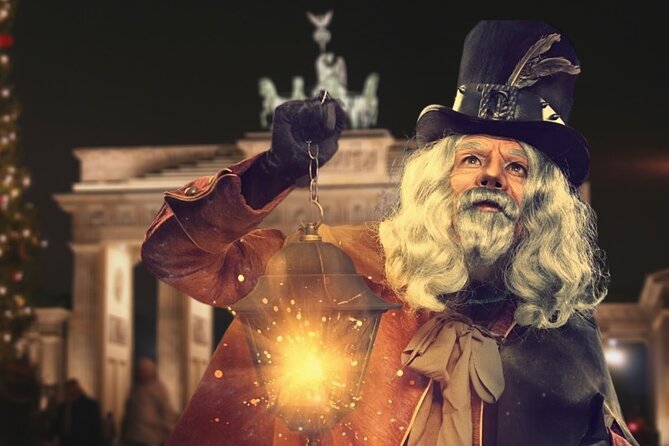
- Storytelling that uses more than facts: the best reviews mention audioguide-style elements paired with actors and visual effects.
- Berlin symbols you will remember: Prussia-era river allegories at Neptune Fountain and the meaning behind Ampelmännchen.
- A finish near the Spree: you end by the water, which helps the whole night walk feel complete.
The wider Berlin sightseeing pile
- Berlin: 1-Hour City Tour by Boat with Guaranteed Seating★ 4.3 · 16,993 reviews
- Berlin: City Sightseeing Hop-On Hop-Off Bus Tour★ 4.1 · 4,233 reviews
- Berlin: 1-Hour City Sightseeing Cruise★ 4.4 · 2,210 reviews
- Berlin City Hop-on Hop-off Tour with Optional Cruise★ 3.5 · 1,155 reviews
Starting point at St. Marienkirche, then into the night
The tour begins at St. Marienkirche on Karl-Liebknecht-Str. 8 in Mitte, a convenient area if you are also exploring Alexanderplatz and Museum Island during your trip. Because this is a 1 hour 30 minutes experience, you can treat it as a smart pre-dinner plan or an easy evening add-on after a busy day of museum time.
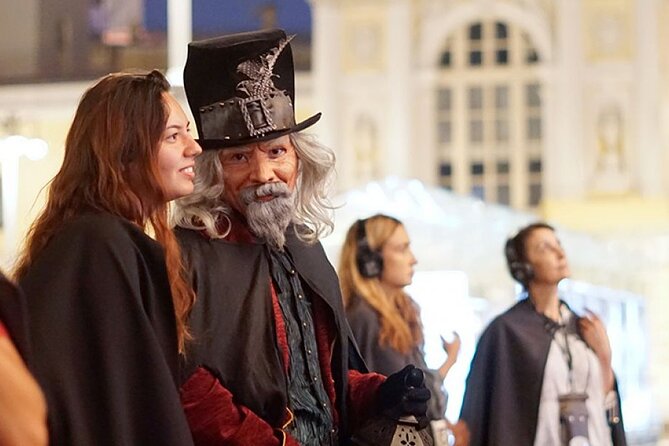
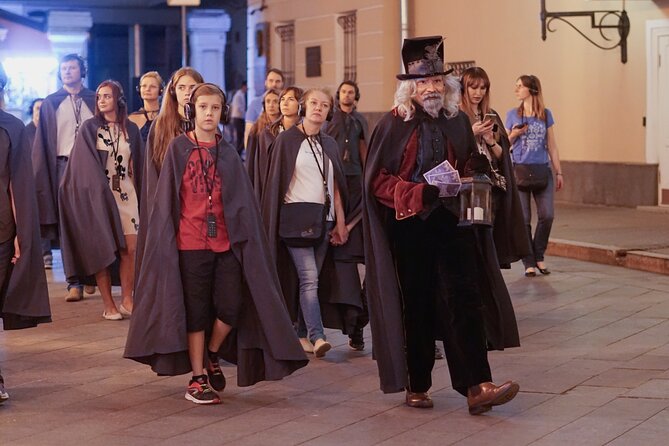
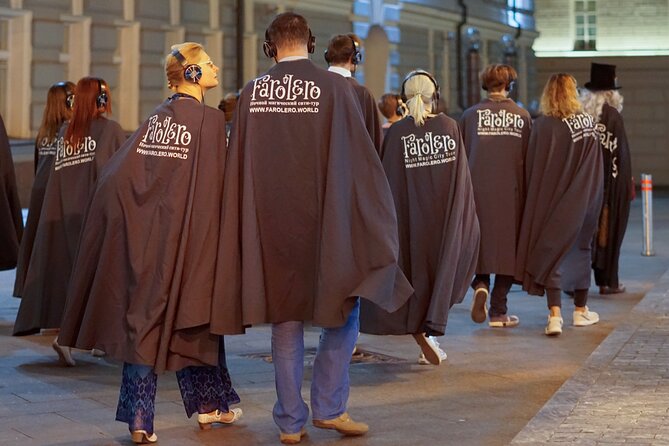
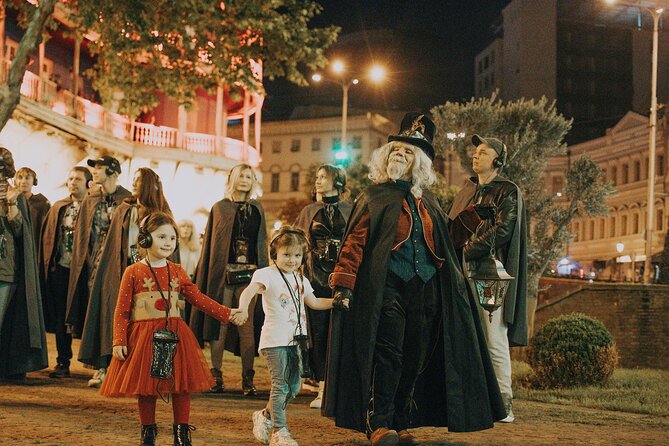
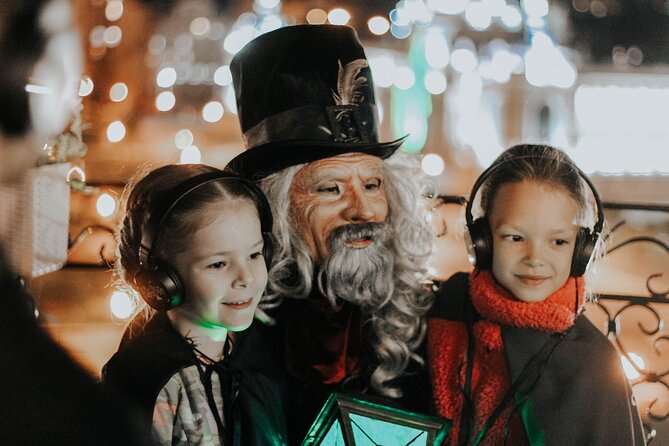
The tone is friendly from the start. One of the most praised parts is the warm welcome, plus the fact that the team may dress you for the evening. That might sound gimmicky, but in practice it helps you get into the playful mood, especially if you are traveling solo or with friends who like a bit of theater mixed into sightseeing.
Group size matters here. With a maximum of 20 travelers, you tend to move as a real group rather than a loose herd. You also get better chances to hear what the guide is explaining, even while you are near traffic and other nighttime noise.
Practical tip: Berlin nights can get cold fast in winter, and the route includes central streets and bridges. Wear shoes with solid grip. Also, if you are the type who likes to photograph quickly, arrive a few minutes early at the meeting point so you are not rushing right when the tour starts.
Neptune Fountain and the Prussia river story in the center
One of the first major stops is the Neptune Fountain in Berlin, built in 1891 and designed by Reinhold Begas. The sculpture centers on the Roman god Neptune, but the detail that makes this stop worth pausing is the ring of four women around him. They represent four main rivers of Prussia at the time: the Elbe, Rhine, Vistula, and Oder.
This is one of those places where a quick photo can miss the point. The fountain’s symbolism gives you a mini lesson in how people once viewed geography and power. The allegories include recognizable themes like fruit and corn for the Elbe, fishnet and grapes for the Rhine, forestry symbols for the Vistula, and animal imagery for the Oder.
If you like your history grounded in real objects, you will enjoy this stop. It also gives you a useful lens for the rest of the evening: Berlin’s landmarks are not just buildings. They are often built with political messages and cultural storytelling baked into stone.
One more reason the fountain works at night: the lighting helps you focus on the sculptural details, and the setting feels dramatic without needing long walks. Just plan for a brief time standing around in open air, so dress warmer than you think you need.
Red City Hall, Rathausstraße, and what the brick color says
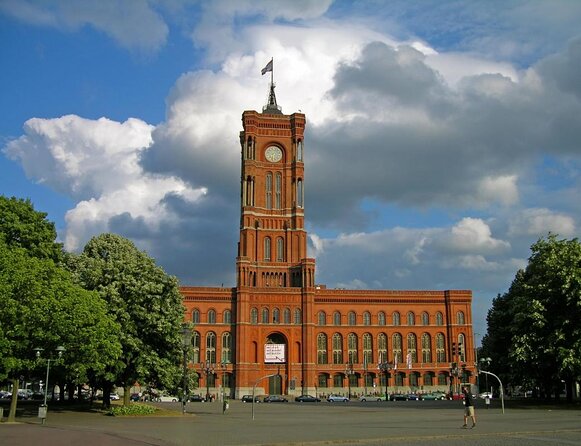
Next comes Rotes Rathaus, Berlin’s town hall, located in Mitte near Alexanderplatz on Rathausstraße. The building is known for its red clinker brick façade, and the name comes directly from that look.
This stop is a good example of why the tour format works. Instead of just naming a landmark, you get context for what you are seeing. You learn that Rotes Rathaus is tied to Berlin’s political life, including the governing mayor and the state government of Berlin. That makes the building feel less abstract and more real, especially when you are standing in the exact spot where civic decisions are made.
At night, large civic buildings can feel intimidating or just plain decorative if you do not have the background. With the tour’s commentary, the red façade becomes a clue. You start noticing how architecture communicates identity: material choices, façade design, and the sheer confidence of the place all say something about the city.
Possible drawback: because this area is central and busy, you might deal with street noise. That is where the tour’s more theatrical, guided style can help, since the group’s attention is guided to the story rather than the distractions.
Ampelmännchen: the little traffic light man with deep local meaning
If you only know Ampelmännchen as a cute German sidewalk symbol, you will leave with more respect for it. The tour includes a stop focused on the Ampelmännchen, the pedestrian signal figure. The core idea is that before German reunification in 1990, East and West Germany had different designs.
The West used a more generic human figure, while the East version was generally more “male” and included a hat. That difference turns a tiny street detail into a cultural snapshot. It is also a reminder that everyday objects often hold political history.
What I like about this stop is how it proves the tour is not only about the big, famous sights. You get something small, visible, and repeatable. After the tour, you will recognize Ampelmännchen in other places and understand why it feels uniquely German.
At night, these signals can be oddly charming. The figure is lit, the street is active, and you get a moment that feels like Berlin’s character, not just Berlin’s monuments.
Nikolaiviertel and St. Nicholas Church, Berlin’s oldest church vibe
The tour then shifts into the reconstructed historical heart of Alt-Berlin, starting with Nikolaiviertel (also spelled Nicholas’ Quarter). Founded around 1200, this area, along with nearby Cölln, makes up a rebuilt sense of Berlin’s early core. The tour places you in Mitte, about five minutes from Alexanderplatz, so it is walkable and easy to reach even if you are not staying in this exact neighborhood.
This part of Berlin is one of the best places to slow down. The Nikolaiviertel area is full of restored medieval-style buildings, and in some cases the reconstructions are more recent imitations. That mix can be fun, because it shows how a city chooses to remember itself, especially when modern Berlin is all around.
Then you move to St. Nikolai-Kirche (also called Nikolaikirche), the oldest church in Berlin. The church was built between 1220 and 1230, which makes it ancient by Berlin standards. The tour frames it as part of the Nikolaiviertel boundaries in the wider area between Spandauer Straße, Rathausstraße, the Spree, and Mühlendamm.
This stop works well for night tours because it adds atmosphere. A medieval church scale and layout can feel calm and reflective even when the surrounding district is lively. You also get the perspective that Berlin’s spiritual and political story has been layered for centuries, not just decades.
Humboldt Forum and the Museum Island connection at night
After the older-city heart, the route heads toward Humboldt Forum on Museum Island. The tour describes it as a museum of non-European art and notes its name honors the Prussian scholars Wilhelm and Alexander von Humboldt.
Here is what makes Humboldt Forum part of a good night route: it combines the feeling of old and new. The façade brings in three rebuilt baroque faces from the former Royal Palace, while the interior is modern, designed by Franco Stella. There is also a contemporary exterior overlooking the Spree river.
If you have ever walked past a museum and felt like it was just a big building, this stop gives you a reason to care. You learn what the museum is meant to hold, how it connects to broader European museum models, and why it sits where it does on Museum Island.
Even if you do not go inside during this particular tour, you will appreciate the sightline. The Spree nearby helps the evening feel fluid rather than broken up into separate monuments.
Mühlendamm, Mill Dam Bridge area, and ending near the water
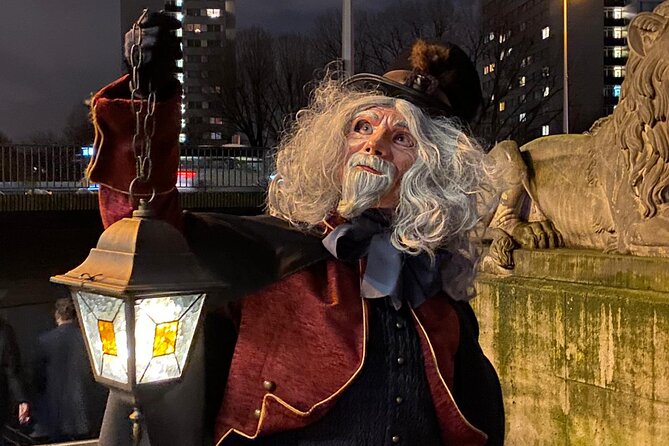
The final named stop is Mühlendamm, a central Mitte thoroughfare running from the Cölln and Fischerinsel quarters toward Molkenmarkt square via Mühlendammbrücke, crossing the Spree. The tour explains that the name comes from watermills at the site and that a historic causeway was first laid out there around 1200, becoming part of the nucleus for the city’s late medieval foundation.
It is a clever way to end: you start with fountains and symbolic statues, then move into churches and cultural institutions, and finish with a street that literally carries Berlin’s “older city base” story. The river setting makes the ending feel calmer, and the walk does not abruptly stop in a random spot.
Your tour ends at EphraimsSpreeufer 1. Ending by the Spree is smart if you want to keep the night going with a post-walk stroll, a meal nearby, or simply to take in Berlin’s water reflections.
Price, timing, and whether this is good value
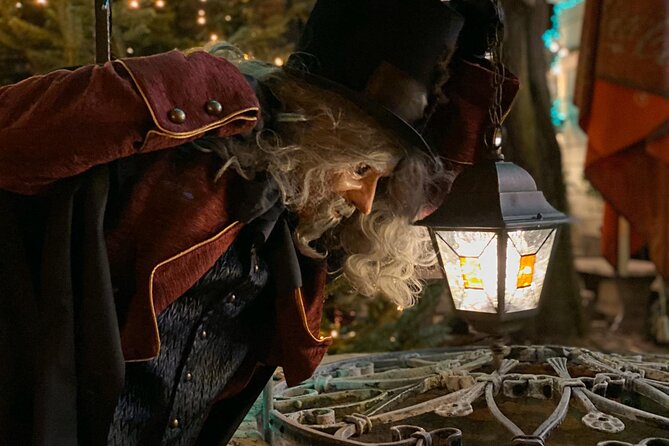
At $46.99 per person for about 1 hour 30 minutes, this is not a budget freebie. But in return, you get a compact route through central sights, English narration, a small group size capped at 20, and a format that includes more than just spoken history.
The reviews point to the main value drivers:
- an interactive, entertaining structure
- elements like audio-style components plus actors and visual effects
- small treats (coffee and chocolate were mentioned) and even a schnaps at the end in one account
That kind of added theater can turn a standard sightseeing walk into something you remember longer. If you enjoy Berlin for its stories, not just its photos, the price starts to make sense.
You might also appreciate the scheduling hint that this tour tends to be booked around 53 days in advance on average. That does not mean you must plan far ahead, but it is a sign the experience is popular enough to sell out at times.
Who should book this night magic tour?
This is a strong fit if you:
- want history with movement, not a lecture in one spot
- like the mix of big landmarks and small details (Neptune Fountain, Ampelmännchen)
- enjoy light theatrical touches, not just guided facts
It is also a good option if you are traveling with people who get bored by long museum days but still want something meaningful. The stops are short, the story is structured, and the overall time is manageable.
If you prefer quiet, purely factual tours with no performances or staging, you might feel the theater is extra. In that case, you will want to check your tolerance for interactive elements before booking.
A quick heads-up on what can go wrong
One review included a serious complaint about a guide not showing up at the designated meeting point and the person requesting a refund. That is not the typical story among the high ratings, but it is worth treating seriously when you travel.
My practical advice: double-check your meeting point exactly as written, arrive early, and keep your phone charged so you can confirm details quickly if anything feels off.
Should you book Farolero Night magic city tour?
If you want Berlin at night with storytelling that feels alive, I would book it. The best parts are the combination of careful landmark context and the extra interactive touches, including the kind of group energy that makes city walking more fun.
Choose it especially if you like:
- symbol-heavy stops like Neptune Fountain and Ampelmännchen
- a route that stays central and efficient
- English narration in a small group
Skip it only if you strongly dislike staged or performance elements, or if you need a completely silent, no-surprises experience.
FAQ
How long is the night magic city tour in Berlin?
The tour lasts about 1 hour 30 minutes.
What is the price per person?
The price is $46.99 per person.
Is the tour offered in English?
Yes, the tour is offered in English.
Do I get a mobile ticket?
Yes, the tour includes a mobile ticket.
How big is the group?
The tour has a maximum of 20 travelers.
Where does the tour start?
The meeting point is at St. Marienkirche, Karl-Liebknecht-Str. 8, 10178 Berlin, Germany.
Where does the tour end?
The tour ends at Ephraims, Spreeufer 1, 10178 Berlin, Germany.
What should I know about the weather?
This experience requires good weather. If it is canceled due to poor weather, you will be offered a different date or a full refund.
Is it suitable for most travelers?
The information states that most travelers can participate.
What is the cancellation policy?
You can cancel up to 24 hours in advance for a full refund. If you cancel less than 24 hours before the start time, the amount paid is not refunded.
What company provides the tour?
The provider is Farolero, Night magic city tour.
Seeing Berlin in One Go
Everything else we filed on Berlin
- East Berlin: City of Shadows Walking Tour
★ 5.0 · 11 reviews - Berlin: Die Stachelschweine – Frank Lüdecke – Träumt Weiter
★ 4.7 · 11 reviews - Potsdam Day Trip from Berlin with a Local: Private & Personalized
★ 4.0 · 11 reviews - An Introduction to Berlin Walking Tour
★ 5.0 · 11 reviews - DJ for a Day: Learn to Mix Like a Pro in Berlin
★ 5.0 · 11 reviews - 2-H Segway Sightseeing Tour Berlin
★ 4.5 · 11 reviews
Evening Experiences, side by side.
 ★ 4.5Hamburg: 90-Minute Evening Lights Harbor CruiseFrom $277,728 reviews
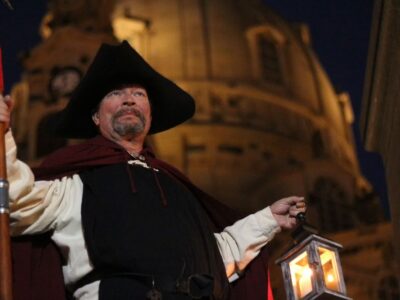 ★ 4.6Dresden: The Original Night Watchman Tour in Lantern LightFrom $176,653 reviews
 ★ 4.4Hamburg: 1-Hour Harbor Evening Lights CruiseFrom $304,861 reviews
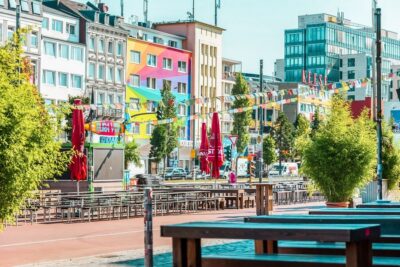 ★ 4.7Hamburg: Night Watchman’s Tour of St. Pauli in GermanFrom $234,818 reviews
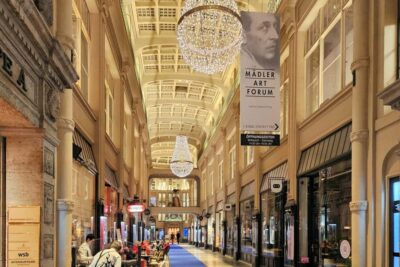 ★ 4.6Leipzig: 1.5-Hour Public Tour with Night Watchman BremmeFrom $173,116 reviews
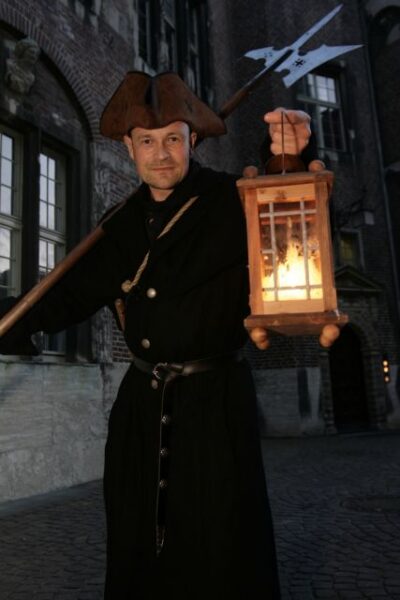 ★ 4.7Bremen: Walking Tour in German with Night GuardFrom $182,922 reviews
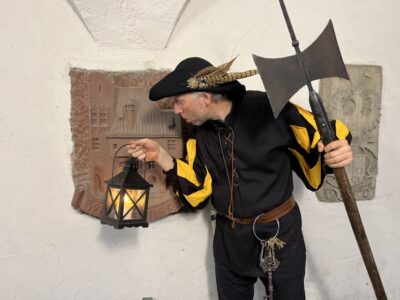 ★ 4.7Munich: Night Watchman Walking TourFrom $5302,092 reviews
 ★ 5.0Munich Ghosts and Spirits Evening Walking TourFrom $601,900 reviews
Other lists this tour is on